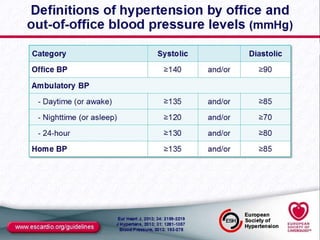
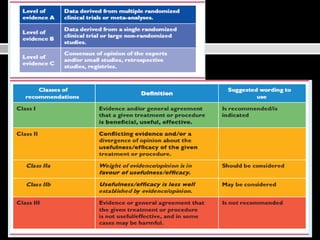
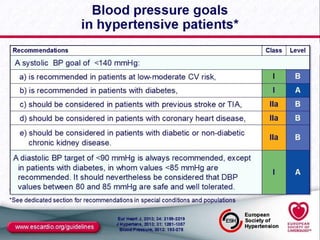
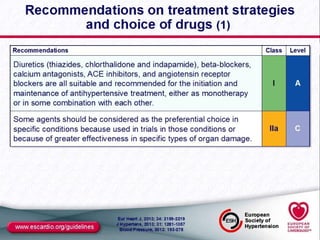
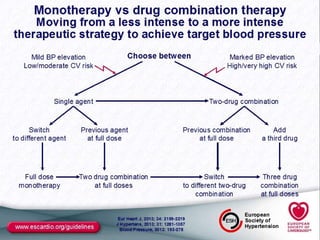
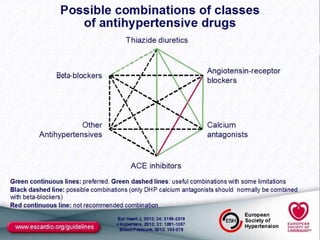


New 2014 Hypertension Guidelines 
Evidence Based Confusion? 
Asso: Professor Kyaw Soe Win 
MBBS, MMedSc (Int Med), MRCPUK, FRCP (Edin), FAsCC, FAPSIC 
6th July 2014
Published online December 18, 2013
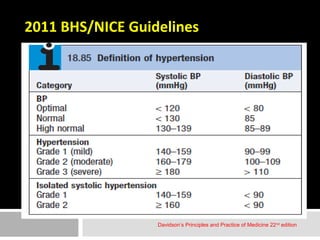
2011 BHS/NICE Guidelines 
Davidson’s Principles and Practice of Medicine 22nd edition
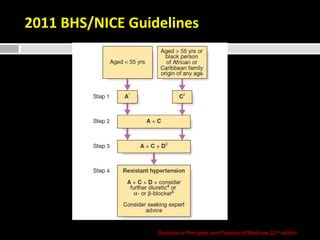
2011 BHS/NICE Guidelines 
Davidson’s Principles and Practice of Medicine 22nd edition
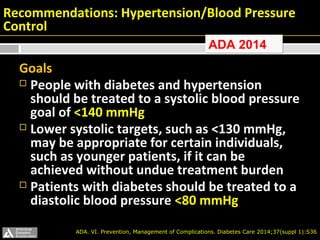
Recommendations: Hypertension/Blood Pressure 
Control 
AADDAA 22001144 
Goals 
 People with diabetes and hypertension 
should be treated to a systolic blood pressure 
goal of <140 mmHg 
 Lower systolic targets, such as <130 mmHg, 
may be appropriate for certain individuals, 
such as younger patients, if it can be 
achieved without undue treatment burden 
 Patients with diabetes should be treated to a 
diastolic blood pressure <80 mmHg 
ADA. VI. Prevention, Management of Complications. Diabetes Care 2014;37(suppl 1):S36
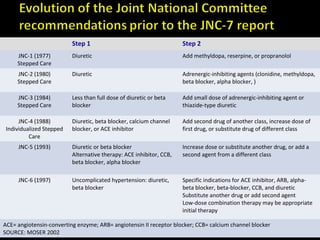
Step 1 Step 2 
JNC-1 (1977) 
Stepped Care 
Diuretic Add methyldopa, reserpine, or propranolol 
JNC-2 (1980) 
Stepped Care 
Diuretic Adrenergic-inhibiting agents (clonidine, methyldopa, 
beta blocker, alpha blocker, ) 
JNC-3 (1984) 
Stepped Care 
Less than full dose of diuretic or beta 
blocker 
Add small dose of adrenergic-inhibiting agent or 
thiazide-type diuretic 
JNC-4 (1988) 
Individualized Stepped 
Care 
Diuretic, beta blocker, calcium channel 
blocker, or ACE inhibitor 
Add second drug of another class, increase dose of 
first drug, or substitute drug of different class 
JNC-5 (1993) Diuretic or beta blocker 
Alternative therapy: ACE inhibitor, CCB, 
beta blocker, alpha blocker 
Increase dose or substitute another drug, or add a 
second agent from a different class 
JNC-6 (1997) Uncomplicated hypertension: diuretic, 
beta blocker 
Specific indications for ACE inhibitor, ARB, alpha-beta 
blocker, beta-blocker, CCB, and diuretic 
Substitute another drug or add second agent 
Low-dose combination therapy may be appropriate 
initial therapy 
ACE= angiotensin-converting enzyme; ARB= angiotensin II receptor blocker; CCB= calcium channel blocker 
SOURCE: MOSER 2002
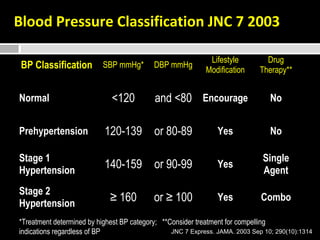
Blood Pressure Classification JNC 7 2003 
BP Classification SBP mmHg* DBP mmHg Lifestyle 
Modification 
Drug 
Therapy** 
Normal <120 and <80 Encourage No 
Prehypertension 120-139 or 80-89 Yes No 
Stage 1 
Hypertension 140-159 or 90-99 Yes Single 
Agent 
Stage 2 
Hypertension ≥ 160 or ≥ 100 Yes Combo 
*Treatment determined by highest BP category; **Consider treatment for compelling 
indications regardless of BP 
JNC 7 Express. JAMA. 2003 Sep 10; 290(10):1314
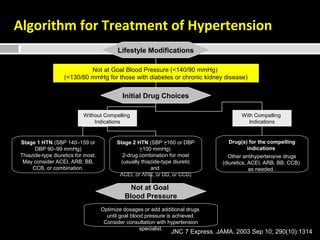
Algorithm for Treatment of Hypertension 
Not at Goal Blood Pressure (<140/90 mmHg) 
(<130/80 mmHg for those with diabetes or chronic kidney disease) 
Initial Drug Choices 
With Compelling 
Indications 
Drug(s) for the compelling 
indications 
Other antihypertensive drugs 
(diuretics, ACEI, ARB, BB, CCB) 
as needed. 
Lifestyle Modifications 
Without Compelling 
Stage 2 HTN (SBP >160 or DBP 
>100 mmHg) 
2-drug combination for most 
(usually thiazide-type diuretic 
and 
ACEI, or ARB, or BB, or CCB) 
Stage 1 HTN (SBP 140–159 or 
DBP 90–99 mmHg) 
Thiazide-type diuretics for most. 
May consider ACEI, ARB, BB, 
CCB, or combination. 
Indications 
Not at Goal 
Blood Pressure 
Optimize dosages or add additional drugs 
until goal blood pressure is achieved. 
Consider consultation with hypertension 
JNC 7 Express. JAMA. 2003 Sep 10; 290(10):1314 
specialist.
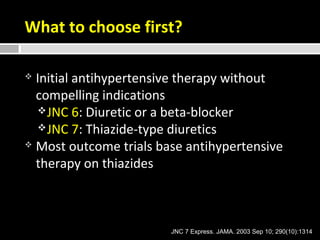
What to choose first? 
 Initial antihypertensive therapy without 
compelling indications 
JNC 6: Diuretic or a beta-blocker 
JNC 7: Thiazide-type diuretics 
 Most outcome trials base antihypertensive 
therapy on thiazides 
JNC 7 Express. JAMA. 2003 Sep 10; 290(10):1314
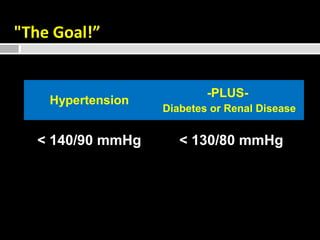
"The Goal!” 
Hypertension -PLUS-Diabetes 
or Renal Disease 
< 140/90 mmHg < 130/80 mmHg
Changes in 2014 Hypertension Guidelines
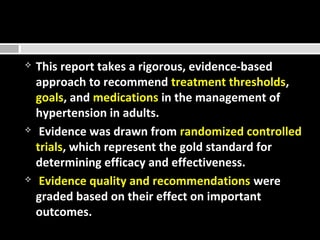
 This report takes a rigorous, evidence-based 
approach to recommend treatment thresholds, 
goals, and medications in the management of 
hypertension in adults. 
 Evidence was drawn from randomized controlled 
trials, which represent the gold standard for 
determining efficacy and effectiveness. 
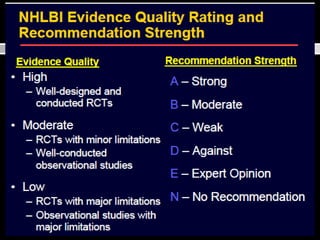
 Evidence quality and recommendations were 
graded based on their effect on important 
outcomes.
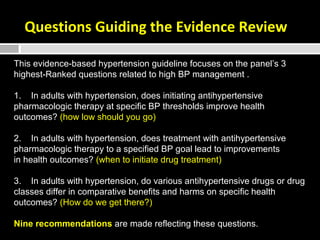
Questions Guiding the Evidence Review 
This evidence-based hypertension guideline focuses on the panel’s 3 
highest-Ranked questions related to high BP management . 
1. In adults with hypertension, does initiating antihypertensive 
pharmacologic therapy at specific BP thresholds improve health 
outcomes? (how low should you go) 
2. In adults with hypertension, does treatment with antihypertensive 
pharmacologic therapy to a specified BP goal lead to improvements 
in health outcomes? (when to initiate drug treatment) 
3. In adults with hypertension, do various antihypertensive drugs or drug 
classes differ in comparative benefits and harms on specific health 
outcomes? (How do we get there?) 
Nine recommendations are made reflecting these questions.
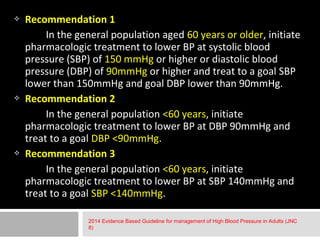
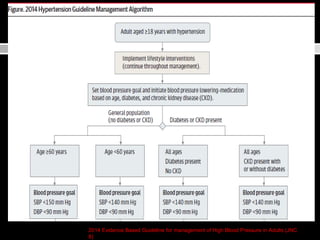
 Recommendation 1 
In the general population aged 60 years or older, initiate 
pharmacologic treatment to lower BP at systolic blood 
pressure (SBP) of 150 mmHg or higher or diastolic blood 
pressure (DBP) of 90mmHg or higher and treat to a goal SBP 
lower than 150mmHg and goal DBP lower than 90mmHg. 
 Recommendation 2 
In the general population <60 years, initiate 
pharmacologic treatment to lower BP at DBP 90mmHg and 
treat to a goal DBP <90mmHg. 
 Recommendation 3 
In the general population <60 years, initiate 
pharmacologic treatment to lower BP at SBP 140mmHg and 
treat to a goal SBP <140mmHg. 
2014 Evidence Based Guideline for management of High Blood Pressure in Adults (JNC 
8)
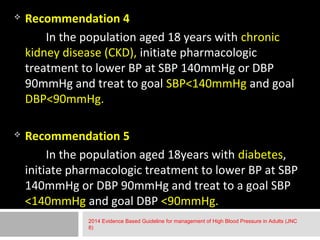
 Recommendation 4 
In the population aged 18 years with chronic 
kidney disease (CKD), initiate pharmacologic 
treatment to lower BP at SBP 140mmHg or DBP 
90mmHg and treat to goal SBP<140mmHg and goal 
DBP<90mmHg. 
 Recommendation 5 
In the population aged 18years with diabetes, 
initiate pharmacologic treatment to lower BP at SBP 
140mmHg or DBP 90mmHg and treat to a goal SBP 
<140mmHg and goal DBP <90mmHg. 
2014 Evidence Based Guideline for management of High Blood Pressure in Adults (JNC 
8)
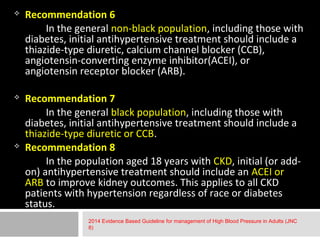
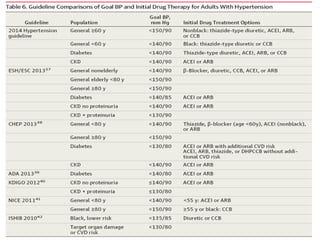
 Recommendation 6 
In the general non-black population, including those with 
diabetes, initial antihypertensive treatment should include a 
thiazide-type diuretic, calcium channel blocker (CCB), 
angiotensin-converting enzyme inhibitor(ACEI), or 
angiotensin receptor blocker (ARB). 
 Recommendation 7 
In the general black population, including those with 
diabetes, initial antihypertensive treatment should include a 
thiazide-type diuretic or CCB. 
 Recommendation 8 
In the population aged 18 years with CKD, initial (or add-on) 
antihypertensive treatment should include an ACEI or 
ARB to improve kidney outcomes. This applies to all CKD 
patients with hypertension regardless of race or diabetes 
status. 
2014 Evidence Based Guideline for management of High Blood Pressure in Adults (JNC 
8)
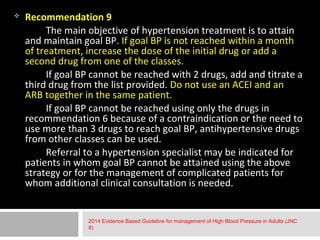
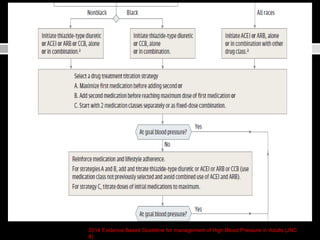
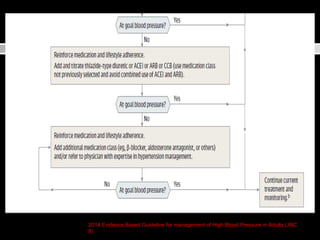
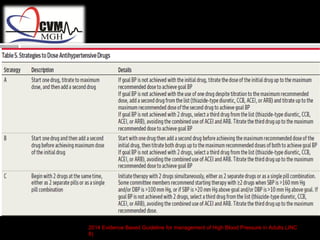
 Recommendation 9 
The main objective of hypertension treatment is to attain 
and maintain goal BP. If goal BP is not reached within a month 
of treatment, increase the dose of the initial drug or add a 
second drug from one of the classes. 
If goal BP cannot be reached with 2 drugs, add and titrate a 
third drug from the list provided. Do not use an ACEI and an 
ARB together in the same patient. 
If goal BP cannot be reached using only the drugs in 
recommendation 6 because of a contraindication or the need to 
use more than 3 drugs to reach goal BP, antihypertensive drugs 
from other classes can be used. 
Referral to a hypertension specialist may be indicated for 
patients in whom goal BP cannot be attained using the above 
strategy or for the management of complicated patients for 
whom additional clinical consultation is needed. 
2014 Evidence Based Guideline for management of High Blood Pressure in Adults (JNC 
8)
2014 Evidence Based Guideline for management of High Blood Pressure in Adults (JNC 
8)
2014 Evidence Based Guideline for management of High Blood Pressure in Adults (JNC 
8)
2014 Evidence Based Guideline for management of High Blood Pressure in Adults (JNC 
8)
2014 Evidence Based Guideline for management of High Blood Pressure in Adults (JNC 
8)
2014 Evidence Based Guideline for management of High Blood Pressure in Adults (JNC 
8)
Limitations 
 This evidence-based guideline for the management of 
high BP in adults is not a comprehensive guideline and is 
limited in scope because of the focused evidence review 
to address the 3 specific questions . 
 Clinicians often provide care for patients with numerous 
comorbidities or other important issues related to 
hypertension, but the decision was made to focus on 3 
questions considered to be relevant to most physicians 
and patients.
Limitations 
 Treatment adherence and medication costs were 
thought to be beyond the scope of this review, but 
the panel acknowledges the importance of both 
issues. 
 The evidence review did not include observational 
studies, systematic reviews, or meta-analyses, and 
the panel did not conduct its own meta-analysis 
based on prespecified inclusion criteria.
Limitations 
 Clinical guidelines are at the intersection between 
research evidence and clinical actions that can improve 
patient outcomes. 
 these recommendations are not a substitute for 
clinical judgment, and decisions about care must 
carefully consider and incorporate the clinical 
characteristics and circumstances of each individual 
patient. 
 the algorithm will facilitate implementation and be 
useful to busy clinicians
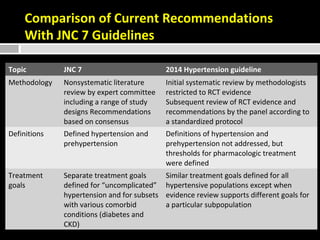
Comparison of Current Recommendations 
With JNC 7 Guidelines 
Topic JNC 7 2014 Hypertension guideline 
Methodology Nonsystematic literature 
review by expert committee 
including a range of study 
designs Recommendations 
based on consensus 
Initial systematic review by methodologists 
restricted to RCT evidence 
Subsequent review of RCT evidence and 
recommendations by the panel according to 
a standardized protocol 
Definitions Defined hypertension and 
prehypertension 
Definitions of hypertension and 
prehypertension not addressed, but 
thresholds for pharmacologic treatment 
were defined 
Treatment 
goals 
Separate treatment goals 
defined for “uncomplicated” 
hypertension and for subsets 
with various comorbid 
conditions (diabetes and 
CKD) 
Similar treatment goals defined for all 
hypertensive populations except when 
evidence review supports different goals for 
a particular subpopulation
Comparison of Current Recommendations 
With JNC 7 Guidelines 
Topic JNC 7 2014 Hypertension guideline 
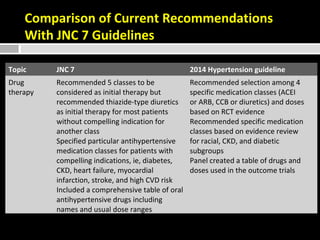
Drug 
therapy 
Recommended 5 classes to be 
considered as initial therapy but 
recommended thiazide-type diuretics 
as initial therapy for most patients 
without compelling indication for 
another class 
Specified particular antihypertensive 
medication classes for patients with 
compelling indications, ie, diabetes, 
CKD, heart failure, myocardial 
infarction, stroke, and high CVD risk 
Included a comprehensive table of oral 
antihypertensive drugs including 
names and usual dose ranges 
Recommended selection among 4 
specific medication classes (ACEI 
or ARB, CCB or diuretics) and doses 
based on RCT evidence 
Recommended specific medication 
classes based on evidence review 
for racial, CKD, and diabetic 
subgroups 
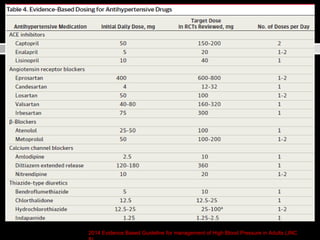
Panel created a table of drugs and 
doses used in the outcome trials
Comparison of Current Recommendations 
With JNC 7 Guidelines 
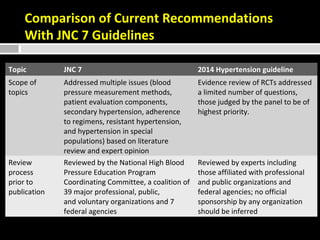
Topic JNC 7 2014 Hypertension guideline 
Scope of 
topics 
Addressed multiple issues (blood 
pressure measurement methods, 
patient evaluation components, 
secondary hypertension, adherence 
to regimens, resistant hypertension, 
and hypertension in special 
populations) based on literature 
review and expert opinion 
Evidence review of RCTs addressed 
a limited number of questions, 
those judged by the panel to be of 
highest priority. 
Review 
process 
prior to 
publication 
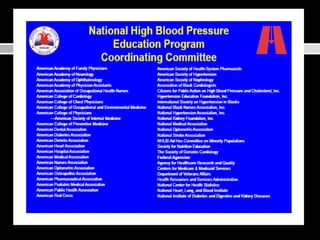
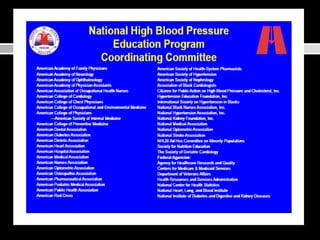
Reviewed by the National High Blood 
Pressure Education Program 
Coordinating Committee, a coalition of 
39 major professional, public, 
and voluntary organizations and 7 
federal agencies 
Reviewed by experts including 
those affiliated with professional 
and public organizations and 
federal agencies; no official 
sponsorship by any organization 
should be inferred
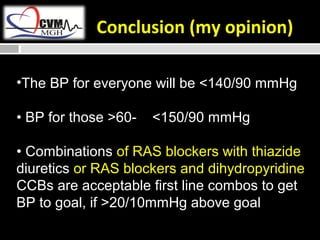
Conclusion (my opinion) 
•The BP for everyone will be <140/90 mmHg 
• BP for those >60- <150/90 mmHg 
• Combinations of RAS blockers with thiazide 
diuretics or RAS blockers and dihydropyridine 
CCBs are acceptable first line combos to get 
BP to goal, if >20/10mmHg above goal
Thank You

Hypertension 2014

  • 1.
    New 2014 HypertensionGuidelines Evidence Based Confusion? Asso: Professor Kyaw Soe Win MBBS, MMedSc (Int Med), MRCPUK, FRCP (Edin), FAsCC, FAPSIC 6th July 2014
  • 2.
  • 10.
    2011 BHS/NICE Guidelines Davidson’s Principles and Practice of Medicine 22nd edition
  • 11.
    2011 BHS/NICE Guidelines Davidson’s Principles and Practice of Medicine 22nd edition
  • 12.
    Recommendations: Hypertension/Blood Pressure Control AADDAA 22001144 Goals  People with diabetes and hypertension should be treated to a systolic blood pressure goal of <140 mmHg  Lower systolic targets, such as <130 mmHg, may be appropriate for certain individuals, such as younger patients, if it can be achieved without undue treatment burden  Patients with diabetes should be treated to a diastolic blood pressure <80 mmHg ADA. VI. Prevention, Management of Complications. Diabetes Care 2014;37(suppl 1):S36
  • 13.
    Step 1 Step2 JNC-1 (1977) Stepped Care Diuretic Add methyldopa, reserpine, or propranolol JNC-2 (1980) Stepped Care Diuretic Adrenergic-inhibiting agents (clonidine, methyldopa, beta blocker, alpha blocker, ) JNC-3 (1984) Stepped Care Less than full dose of diuretic or beta blocker Add small dose of adrenergic-inhibiting agent or thiazide-type diuretic JNC-4 (1988) Individualized Stepped Care Diuretic, beta blocker, calcium channel blocker, or ACE inhibitor Add second drug of another class, increase dose of first drug, or substitute drug of different class JNC-5 (1993) Diuretic or beta blocker Alternative therapy: ACE inhibitor, CCB, beta blocker, alpha blocker Increase dose or substitute another drug, or add a second agent from a different class JNC-6 (1997) Uncomplicated hypertension: diuretic, beta blocker Specific indications for ACE inhibitor, ARB, alpha-beta blocker, beta-blocker, CCB, and diuretic Substitute another drug or add second agent Low-dose combination therapy may be appropriate initial therapy ACE= angiotensin-converting enzyme; ARB= angiotensin II receptor blocker; CCB= calcium channel blocker SOURCE: MOSER 2002
  • 15.
    Blood Pressure ClassificationJNC 7 2003 BP Classification SBP mmHg* DBP mmHg Lifestyle Modification Drug Therapy** Normal <120 and <80 Encourage No Prehypertension 120-139 or 80-89 Yes No Stage 1 Hypertension 140-159 or 90-99 Yes Single Agent Stage 2 Hypertension ≥ 160 or ≥ 100 Yes Combo *Treatment determined by highest BP category; **Consider treatment for compelling indications regardless of BP JNC 7 Express. JAMA. 2003 Sep 10; 290(10):1314
  • 16.
    Algorithm for Treatmentof Hypertension Not at Goal Blood Pressure (<140/90 mmHg) (<130/80 mmHg for those with diabetes or chronic kidney disease) Initial Drug Choices With Compelling Indications Drug(s) for the compelling indications Other antihypertensive drugs (diuretics, ACEI, ARB, BB, CCB) as needed. Lifestyle Modifications Without Compelling Stage 2 HTN (SBP >160 or DBP >100 mmHg) 2-drug combination for most (usually thiazide-type diuretic and ACEI, or ARB, or BB, or CCB) Stage 1 HTN (SBP 140–159 or DBP 90–99 mmHg) Thiazide-type diuretics for most. May consider ACEI, ARB, BB, CCB, or combination. Indications Not at Goal Blood Pressure Optimize dosages or add additional drugs until goal blood pressure is achieved. Consider consultation with hypertension JNC 7 Express. JAMA. 2003 Sep 10; 290(10):1314 specialist.
  • 18.
    What to choosefirst?  Initial antihypertensive therapy without compelling indications JNC 6: Diuretic or a beta-blocker JNC 7: Thiazide-type diuretics  Most outcome trials base antihypertensive therapy on thiazides JNC 7 Express. JAMA. 2003 Sep 10; 290(10):1314
  • 19.
    "The Goal!” Hypertension-PLUS-Diabetes or Renal Disease < 140/90 mmHg < 130/80 mmHg
  • 22.
    Changes in 2014Hypertension Guidelines
  • 23.
     This reporttakes a rigorous, evidence-based approach to recommend treatment thresholds, goals, and medications in the management of hypertension in adults.  Evidence was drawn from randomized controlled trials, which represent the gold standard for determining efficacy and effectiveness.  Evidence quality and recommendations were graded based on their effect on important outcomes.
  • 24.
    Questions Guiding theEvidence Review This evidence-based hypertension guideline focuses on the panel’s 3 highest-Ranked questions related to high BP management . 1. In adults with hypertension, does initiating antihypertensive pharmacologic therapy at specific BP thresholds improve health outcomes? (how low should you go) 2. In adults with hypertension, does treatment with antihypertensive pharmacologic therapy to a specified BP goal lead to improvements in health outcomes? (when to initiate drug treatment) 3. In adults with hypertension, do various antihypertensive drugs or drug classes differ in comparative benefits and harms on specific health outcomes? (How do we get there?) Nine recommendations are made reflecting these questions.
  • 27.
     Recommendation 1 In the general population aged 60 years or older, initiate pharmacologic treatment to lower BP at systolic blood pressure (SBP) of 150 mmHg or higher or diastolic blood pressure (DBP) of 90mmHg or higher and treat to a goal SBP lower than 150mmHg and goal DBP lower than 90mmHg.  Recommendation 2 In the general population <60 years, initiate pharmacologic treatment to lower BP at DBP 90mmHg and treat to a goal DBP <90mmHg.  Recommendation 3 In the general population <60 years, initiate pharmacologic treatment to lower BP at SBP 140mmHg and treat to a goal SBP <140mmHg. 2014 Evidence Based Guideline for management of High Blood Pressure in Adults (JNC 8)
  • 28.
     Recommendation 4 In the population aged 18 years with chronic kidney disease (CKD), initiate pharmacologic treatment to lower BP at SBP 140mmHg or DBP 90mmHg and treat to goal SBP<140mmHg and goal DBP<90mmHg.  Recommendation 5 In the population aged 18years with diabetes, initiate pharmacologic treatment to lower BP at SBP 140mmHg or DBP 90mmHg and treat to a goal SBP <140mmHg and goal DBP <90mmHg. 2014 Evidence Based Guideline for management of High Blood Pressure in Adults (JNC 8)
  • 29.
     Recommendation 6 In the general non-black population, including those with diabetes, initial antihypertensive treatment should include a thiazide-type diuretic, calcium channel blocker (CCB), angiotensin-converting enzyme inhibitor(ACEI), or angiotensin receptor blocker (ARB).  Recommendation 7 In the general black population, including those with diabetes, initial antihypertensive treatment should include a thiazide-type diuretic or CCB.  Recommendation 8 In the population aged 18 years with CKD, initial (or add-on) antihypertensive treatment should include an ACEI or ARB to improve kidney outcomes. This applies to all CKD patients with hypertension regardless of race or diabetes status. 2014 Evidence Based Guideline for management of High Blood Pressure in Adults (JNC 8)
  • 30.
     Recommendation 9 The main objective of hypertension treatment is to attain and maintain goal BP. If goal BP is not reached within a month of treatment, increase the dose of the initial drug or add a second drug from one of the classes. If goal BP cannot be reached with 2 drugs, add and titrate a third drug from the list provided. Do not use an ACEI and an ARB together in the same patient. If goal BP cannot be reached using only the drugs in recommendation 6 because of a contraindication or the need to use more than 3 drugs to reach goal BP, antihypertensive drugs from other classes can be used. Referral to a hypertension specialist may be indicated for patients in whom goal BP cannot be attained using the above strategy or for the management of complicated patients for whom additional clinical consultation is needed. 2014 Evidence Based Guideline for management of High Blood Pressure in Adults (JNC 8)
  • 31.
    2014 Evidence BasedGuideline for management of High Blood Pressure in Adults (JNC 8)
  • 32.
    2014 Evidence BasedGuideline for management of High Blood Pressure in Adults (JNC 8)
  • 33.
    2014 Evidence BasedGuideline for management of High Blood Pressure in Adults (JNC 8)
  • 34.
    2014 Evidence BasedGuideline for management of High Blood Pressure in Adults (JNC 8)
  • 35.
    2014 Evidence BasedGuideline for management of High Blood Pressure in Adults (JNC 8)
  • 37.
    Limitations  Thisevidence-based guideline for the management of high BP in adults is not a comprehensive guideline and is limited in scope because of the focused evidence review to address the 3 specific questions .  Clinicians often provide care for patients with numerous comorbidities or other important issues related to hypertension, but the decision was made to focus on 3 questions considered to be relevant to most physicians and patients.
  • 38.
    Limitations  Treatmentadherence and medication costs were thought to be beyond the scope of this review, but the panel acknowledges the importance of both issues.  The evidence review did not include observational studies, systematic reviews, or meta-analyses, and the panel did not conduct its own meta-analysis based on prespecified inclusion criteria.
  • 39.
    Limitations  Clinicalguidelines are at the intersection between research evidence and clinical actions that can improve patient outcomes.  these recommendations are not a substitute for clinical judgment, and decisions about care must carefully consider and incorporate the clinical characteristics and circumstances of each individual patient.  the algorithm will facilitate implementation and be useful to busy clinicians
  • 40.
    Comparison of CurrentRecommendations With JNC 7 Guidelines Topic JNC 7 2014 Hypertension guideline Methodology Nonsystematic literature review by expert committee including a range of study designs Recommendations based on consensus Initial systematic review by methodologists restricted to RCT evidence Subsequent review of RCT evidence and recommendations by the panel according to a standardized protocol Definitions Defined hypertension and prehypertension Definitions of hypertension and prehypertension not addressed, but thresholds for pharmacologic treatment were defined Treatment goals Separate treatment goals defined for “uncomplicated” hypertension and for subsets with various comorbid conditions (diabetes and CKD) Similar treatment goals defined for all hypertensive populations except when evidence review supports different goals for a particular subpopulation
  • 41.
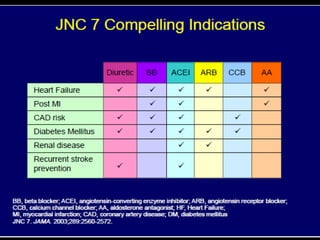
    Comparison of CurrentRecommendations With JNC 7 Guidelines Topic JNC 7 2014 Hypertension guideline Drug therapy Recommended 5 classes to be considered as initial therapy but recommended thiazide-type diuretics as initial therapy for most patients without compelling indication for another class Specified particular antihypertensive medication classes for patients with compelling indications, ie, diabetes, CKD, heart failure, myocardial infarction, stroke, and high CVD risk Included a comprehensive table of oral antihypertensive drugs including names and usual dose ranges Recommended selection among 4 specific medication classes (ACEI or ARB, CCB or diuretics) and doses based on RCT evidence Recommended specific medication classes based on evidence review for racial, CKD, and diabetic subgroups Panel created a table of drugs and doses used in the outcome trials
  • 42.
    Comparison of CurrentRecommendations With JNC 7 Guidelines Topic JNC 7 2014 Hypertension guideline Scope of topics Addressed multiple issues (blood pressure measurement methods, patient evaluation components, secondary hypertension, adherence to regimens, resistant hypertension, and hypertension in special populations) based on literature review and expert opinion Evidence review of RCTs addressed a limited number of questions, those judged by the panel to be of highest priority. Review process prior to publication Reviewed by the National High Blood Pressure Education Program Coordinating Committee, a coalition of 39 major professional, public, and voluntary organizations and 7 federal agencies Reviewed by experts including those affiliated with professional and public organizations and federal agencies; no official sponsorship by any organization should be inferred
  • 45.
    Conclusion (my opinion) •The BP for everyone will be <140/90 mmHg • BP for those >60- <150/90 mmHg • Combinations of RAS blockers with thiazide diuretics or RAS blockers and dihydropyridine CCBs are acceptable first line combos to get BP to goal, if >20/10mmHg above goal
  • 46.

Editor's Notes

  • #13 This set of six slides summarize recommendations for screening and diagnosis, goals, and treatment for hypertension/blood pressure control in patients with diabetes Slide 2 of 6 – Goals People with diabetes and hypertension should be treated to a systolic blood pressure (SBP) goal of &amp;lt;140 mmHg (B) Lower systolic targets, such as &amp;lt;130 mmHg, may be appropriate for certain individuals, such as younger patients, if it can be achieved without undue treatment burden (C) Patients with diabetes should be treated to a diastolic blood pressure (DBP) &amp;lt;80 mmHg (B)