It’s OK to lecture:
from boredom to brilliance
Tansy Jessop
CPD Workshops
@solentlearning
9 November 2016
Today’s session
1) Lectures: a fading or failed pedagogy
2) The problem with lectures
3) Why lectures still have currency
4) Strategies to vivify lectures
5) Life by Power Point: ideas and options
Which one species is most
endangered?
a) The Black Rhino
b) Leatherback turtle
c) University lecture
d) Orangutan
e) Bengal Tiger
f) African wild dog
Despite the increased emphasis in recent years on
improving professors’ teaching skills, such training often
focuses on incorporating technology or flipping the
classroom, rather than on how to give a traditional college
lecture. It’s also in part why the lecture—a mainstay of any
introductory undergraduate course—is endangered.
(Gross-Loh 2016)
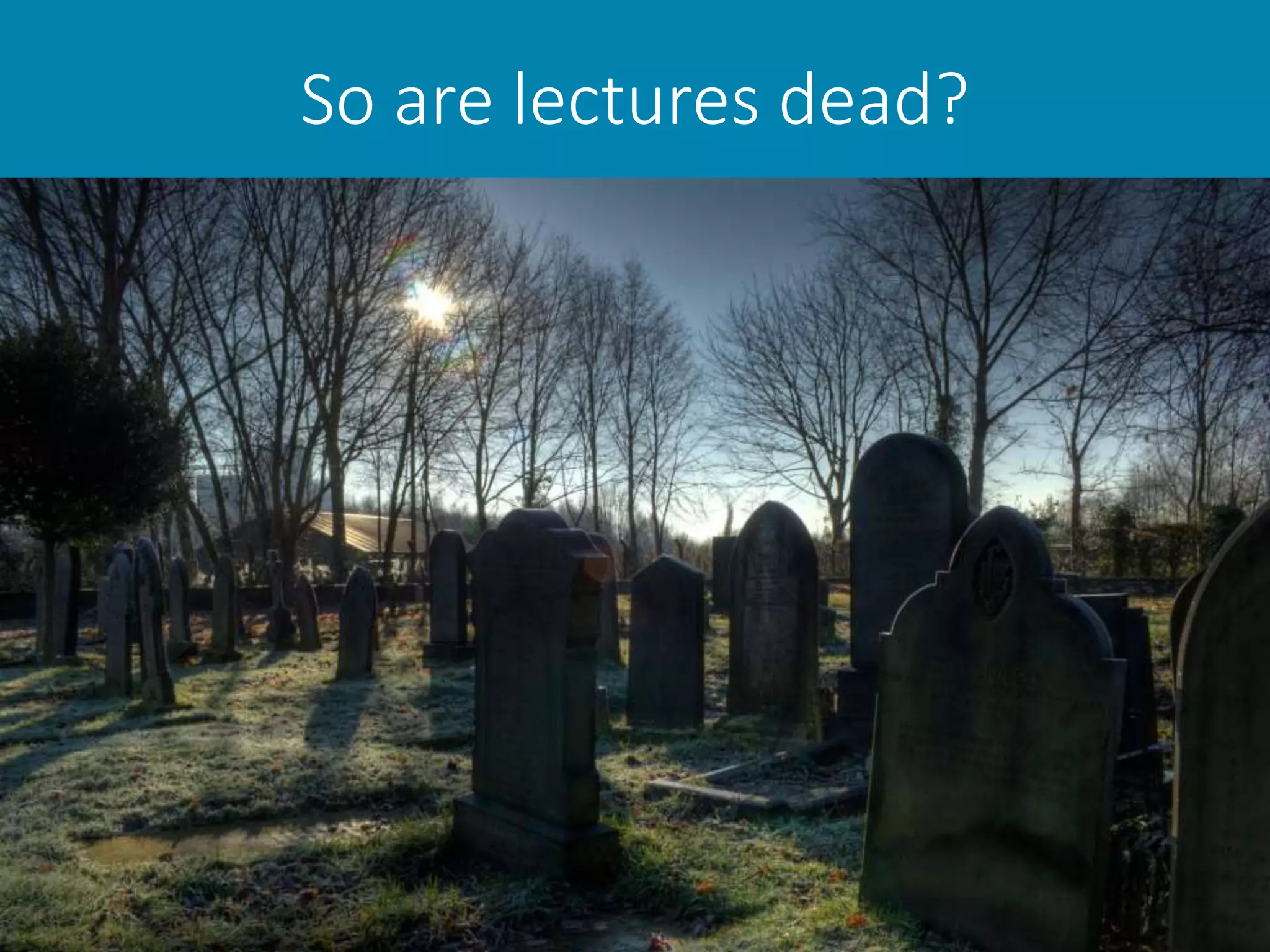
So are lectures dead?
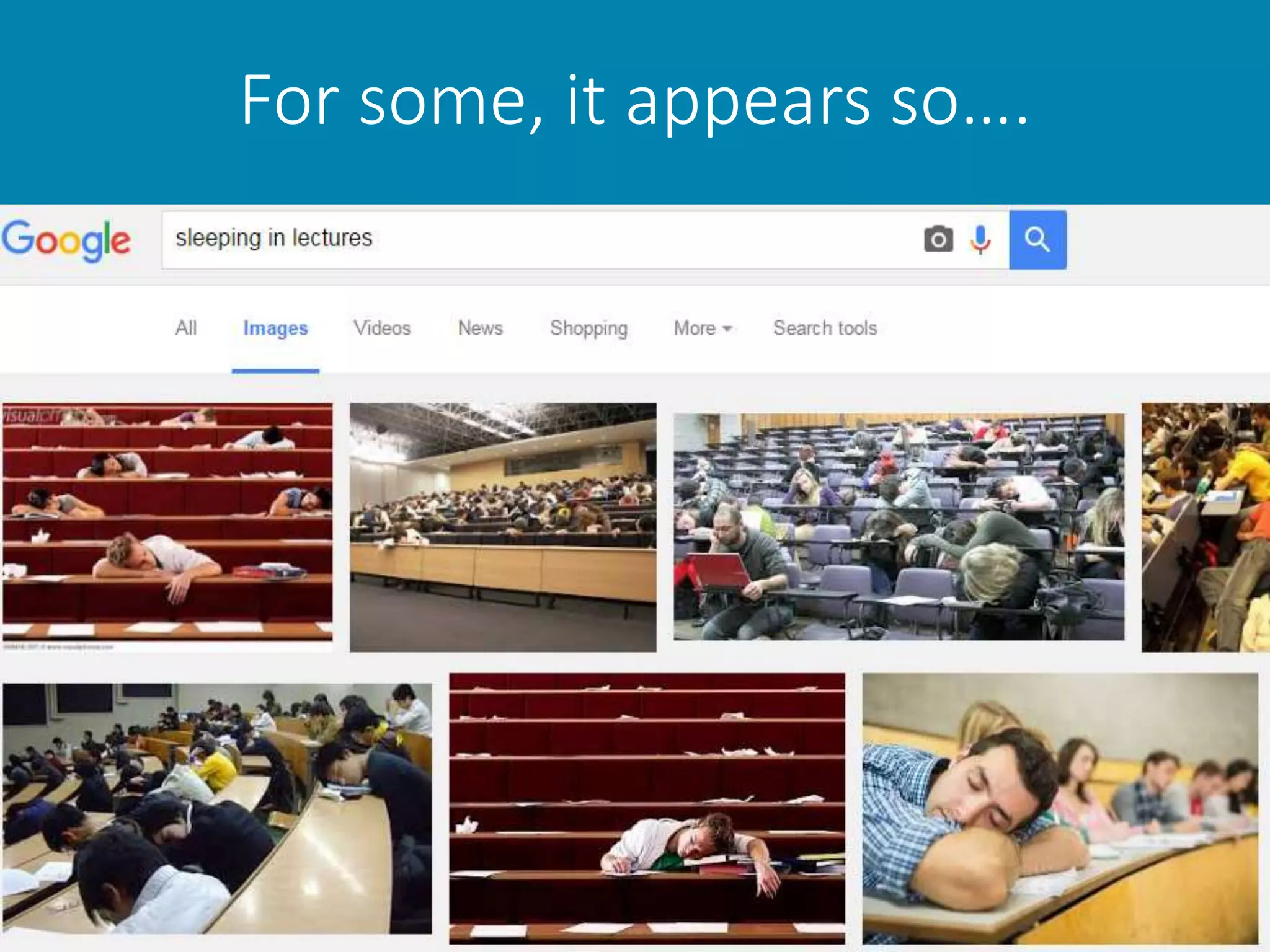
For some, it appears so….
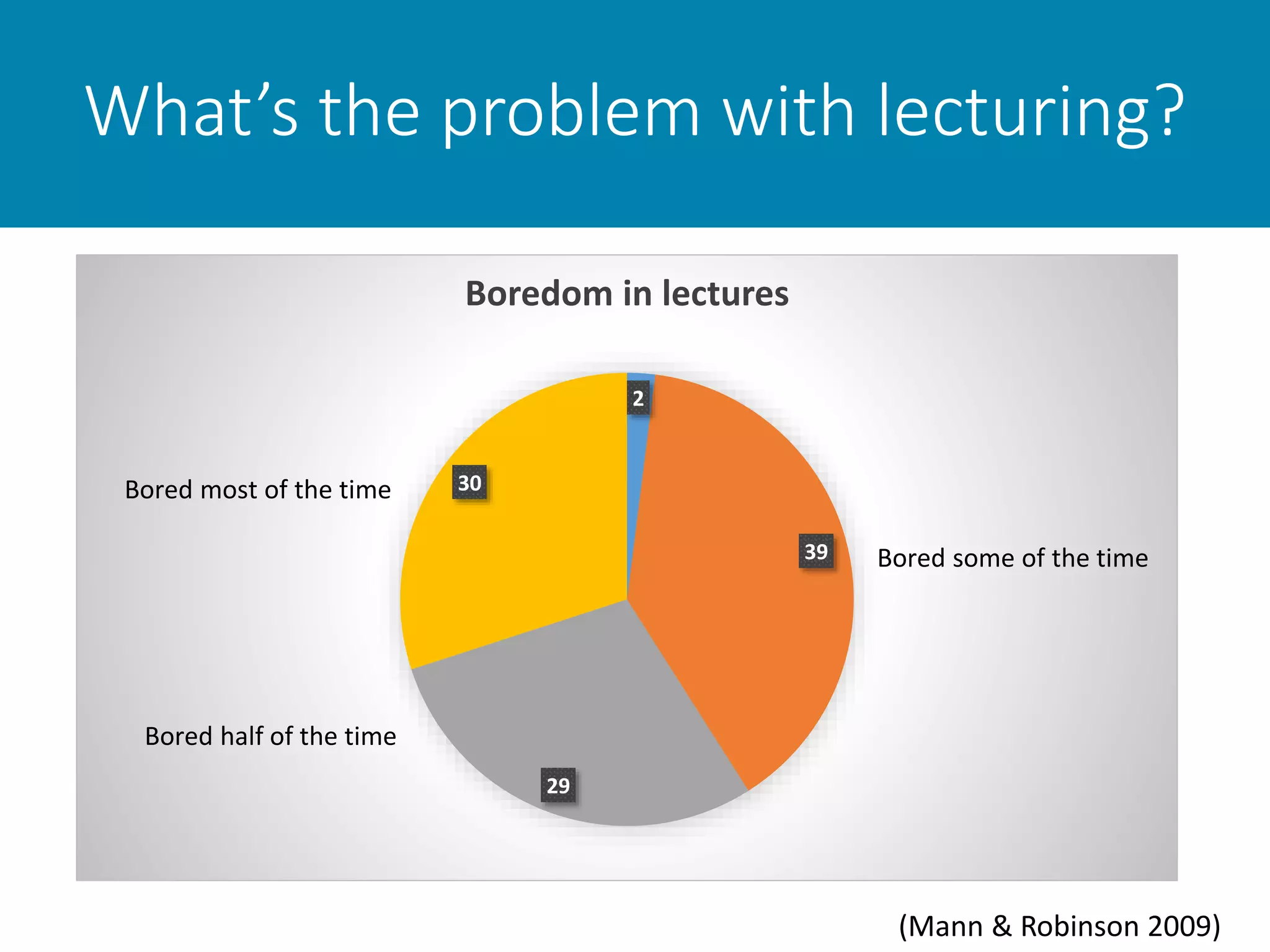
What’s the problem with lecturing?
(Mann & Robinson 2009)
2
39
29
30
Boredom in lectures
Bored most of the time
Bored half of the time
Bored some of the time
Meta-analysis 225 studies looking at the effectiveness of
traditional lectures versus active learning in undergraduate
STEM courses. Lecturing increased failure rates by 55 percent;
active learning resulted in better grades and a 36 percent drop
in class failure rates.
(Gross-Loh 2016)
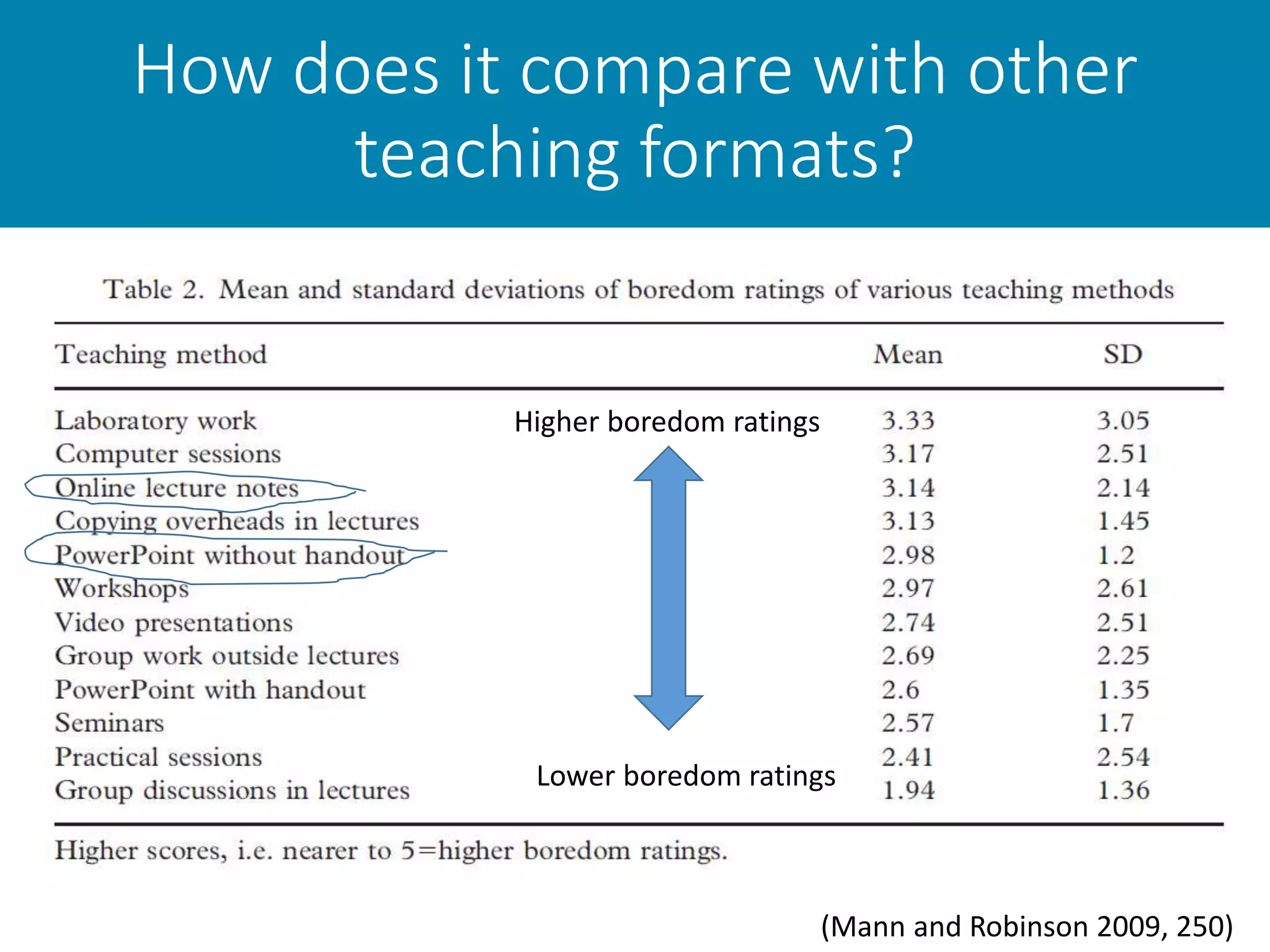
How does it compare with other
teaching formats?
(Mann and Robinson 2009, 250)
Higher boredom ratings
Lower boredom ratings
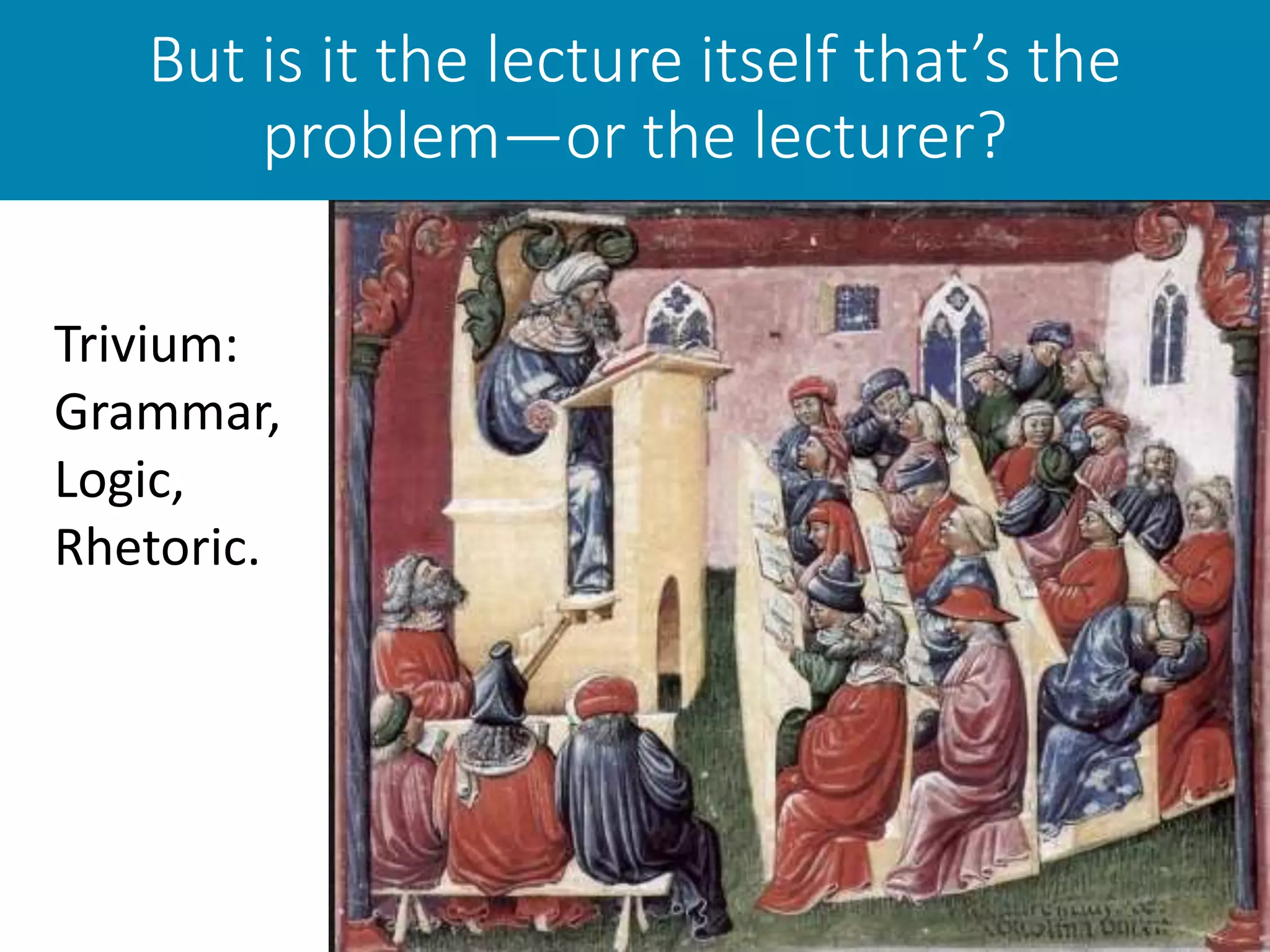
But is it the lecture itself that’s the
problem—or the lecturer?
Trivium:
Grammar,
Logic,
Rhetoric.
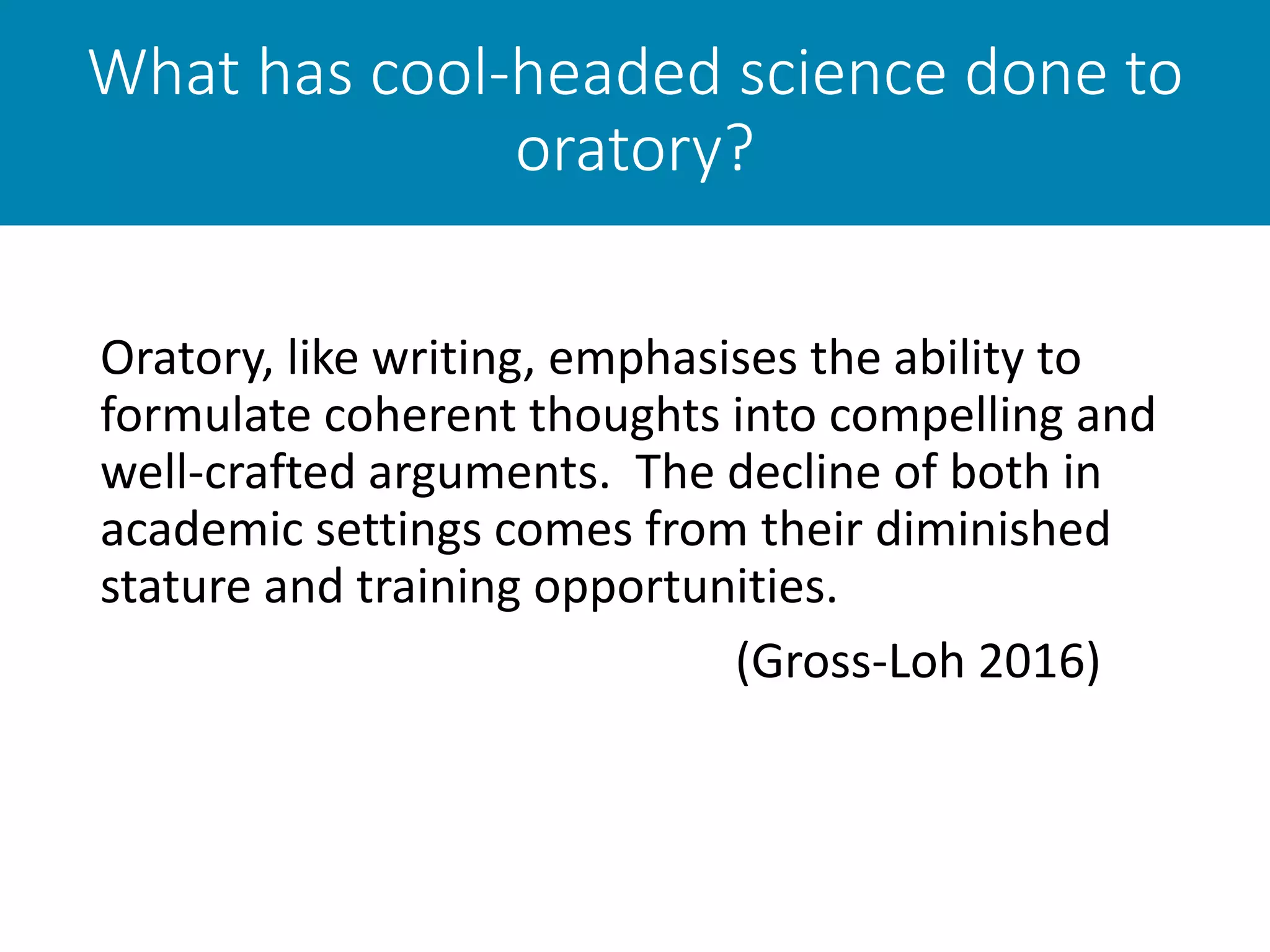
What has cool-headed science done to
oratory?
Oratory, like writing, emphasises the ability to
formulate coherent thoughts into compelling and
well-crafted arguments. The decline of both in
academic settings comes from their diminished
stature and training opportunities.
(Gross-Loh 2016)
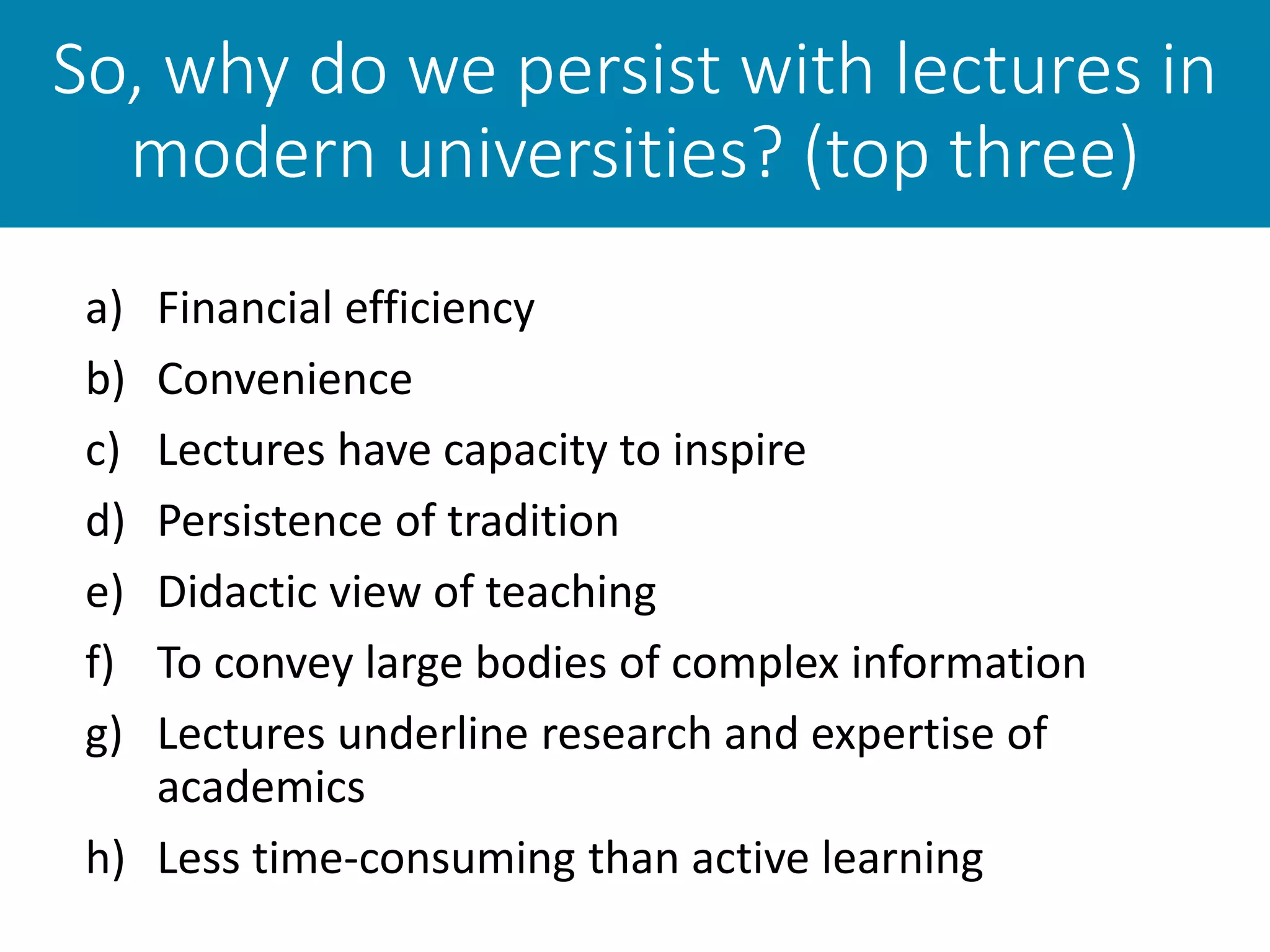
So, why do we persist with lectures in
modern universities? (top three)
a) Financial efficiency
b) Convenience
c) Lectures have capacity to inspire
d) Persistence of tradition
e) Didactic view of teaching
f) To convey large bodies of complex information
g) Lectures underline research and expertise of
academics
h) Less time-consuming than active learning
• Think of your favourite lecturer ever
• What made those lectures inspiring?
• Turn to your neighbour and tell them what inspired
you.
• Add words which capture what about your favourite
inspired you:
www.menti.com 78 78 44
Moving from boredom to brilliance
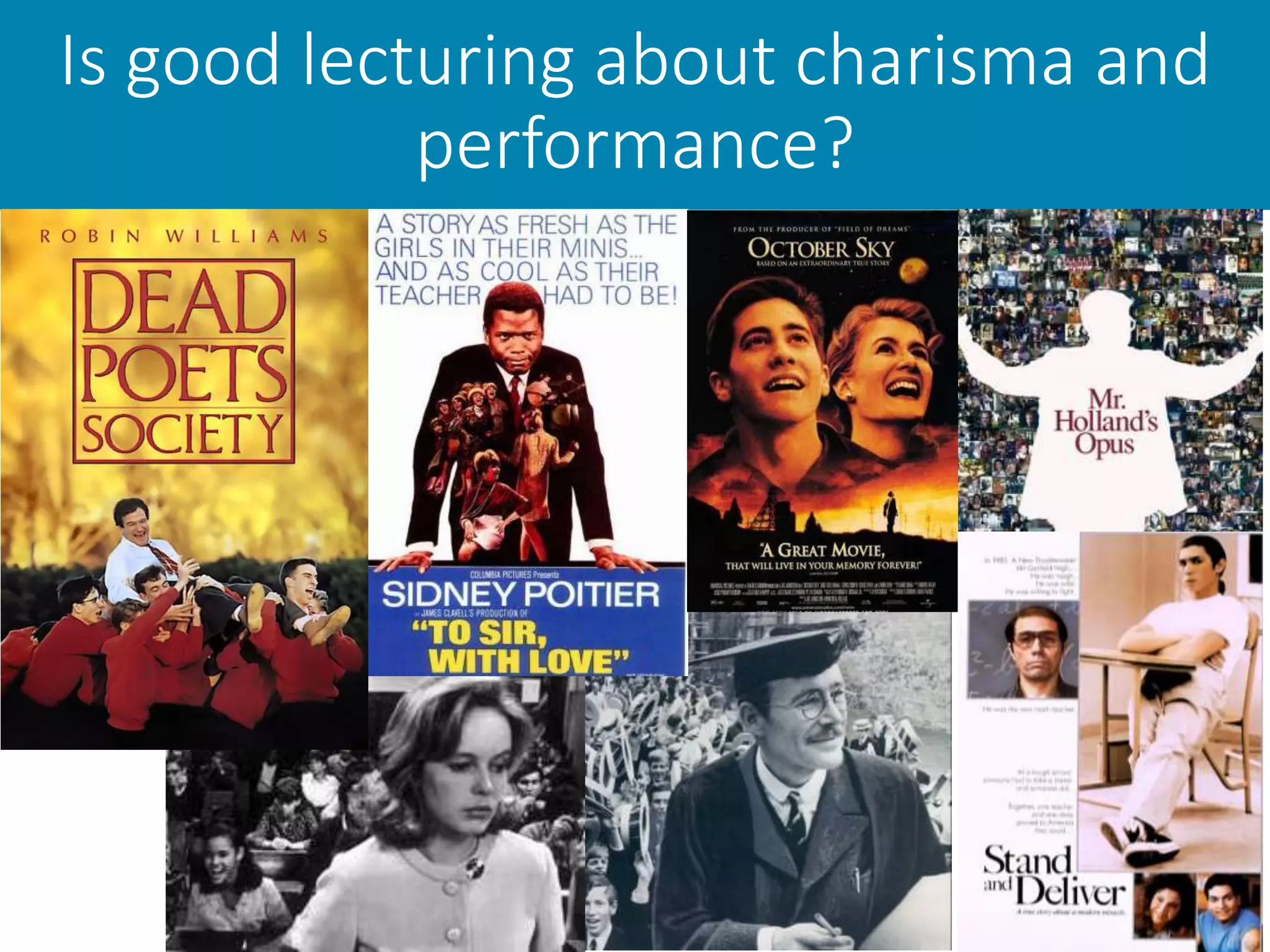
Is good lecturing about charisma and
performance?
Seven strategies to vivify lecturing
1) Start with why; reveal your genuine questions
2) Connect with students prior learning and experience
3) Break it up into a small number of parts, and break it
up into pairs and triads
4) Make your teaching presence felt: teaching is
relational
5) Learning is a sensory experience. Tell stories, pictures,
metaphors, artefacts, poems, short media clips.
6) Use lively, fresh, contemporary research material
7) Use CATS
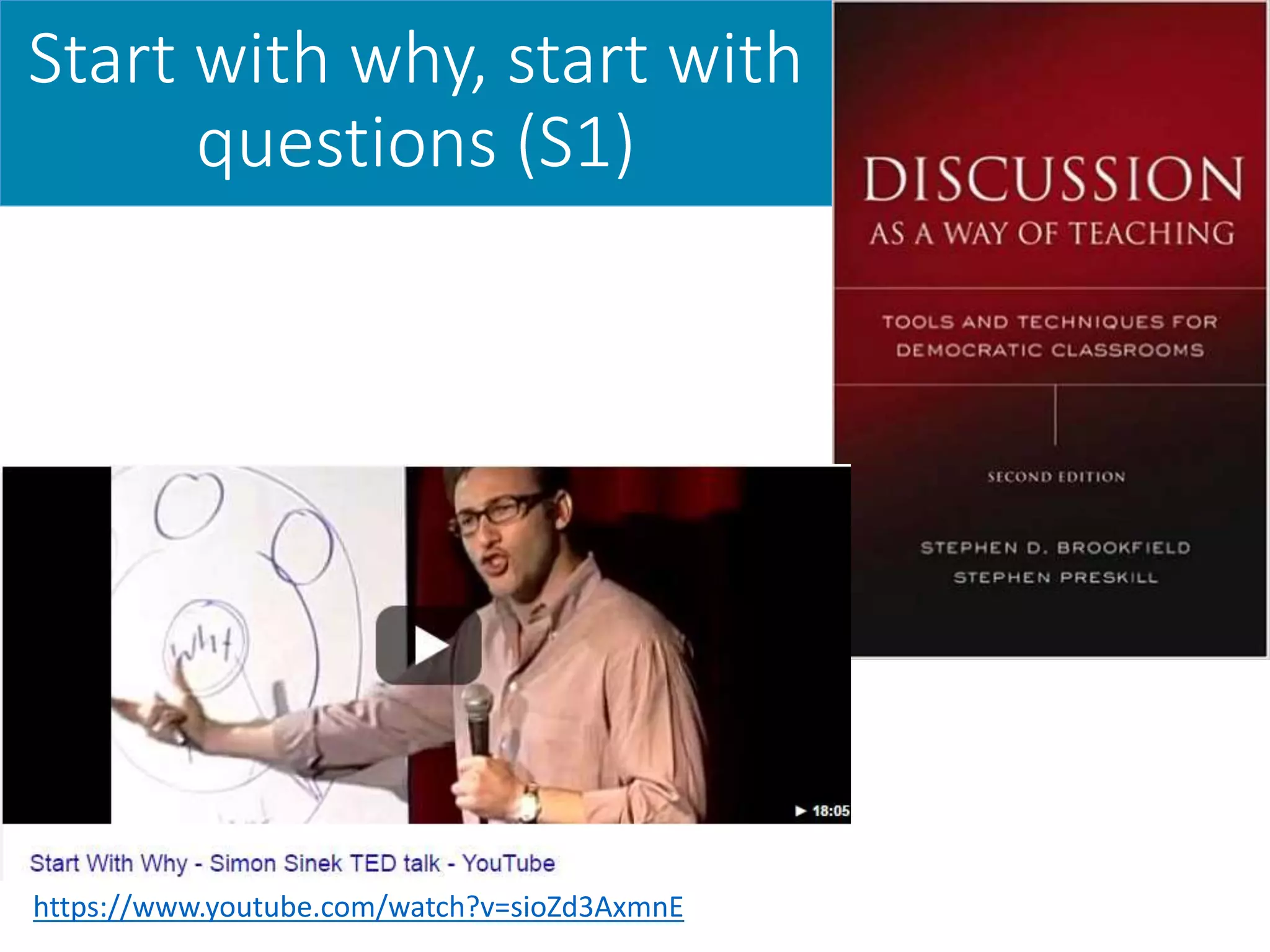
Start with why, start with
questions (S1)
https://www.youtube.com/watch?v=sioZd3AxmnE
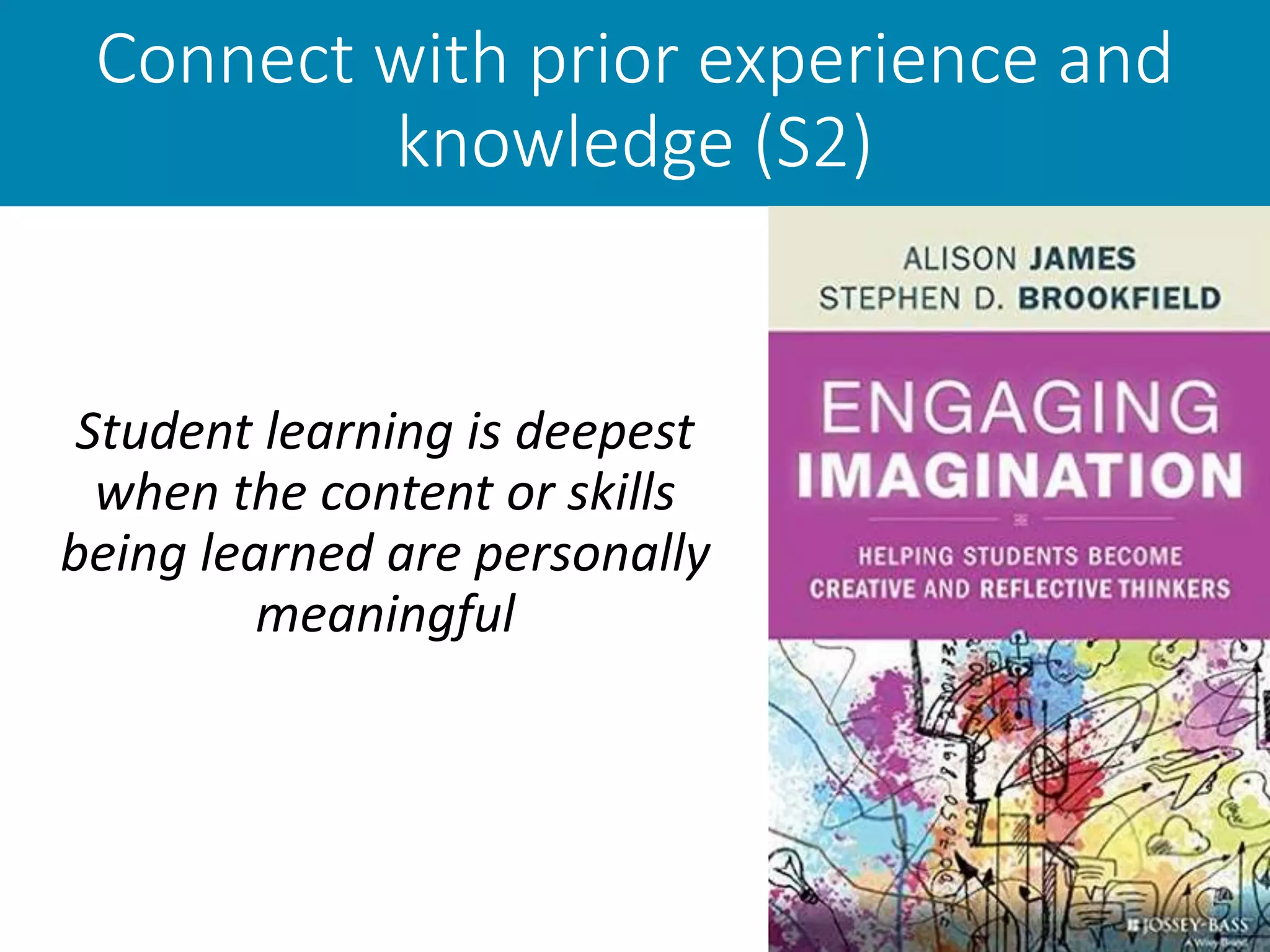
Connect with prior experience and
knowledge (S2)
Student learning is deepest
when the content or skills
being learned are personally
meaningful
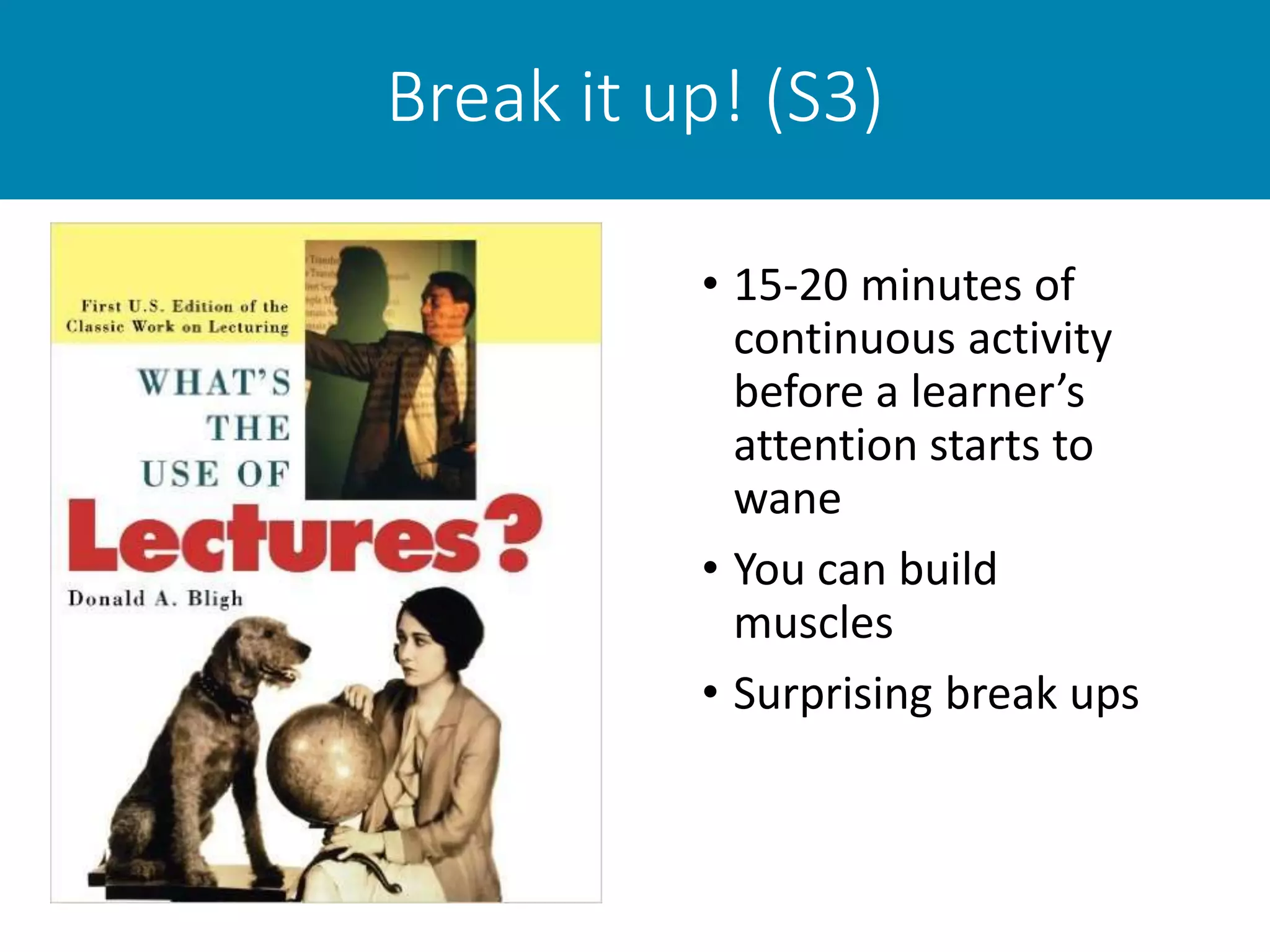
Break it up! (S3)
• 15-20 minutes of
continuous activity
before a learner’s
attention starts to
wane
• You can build
muscles
• Surprising break ups
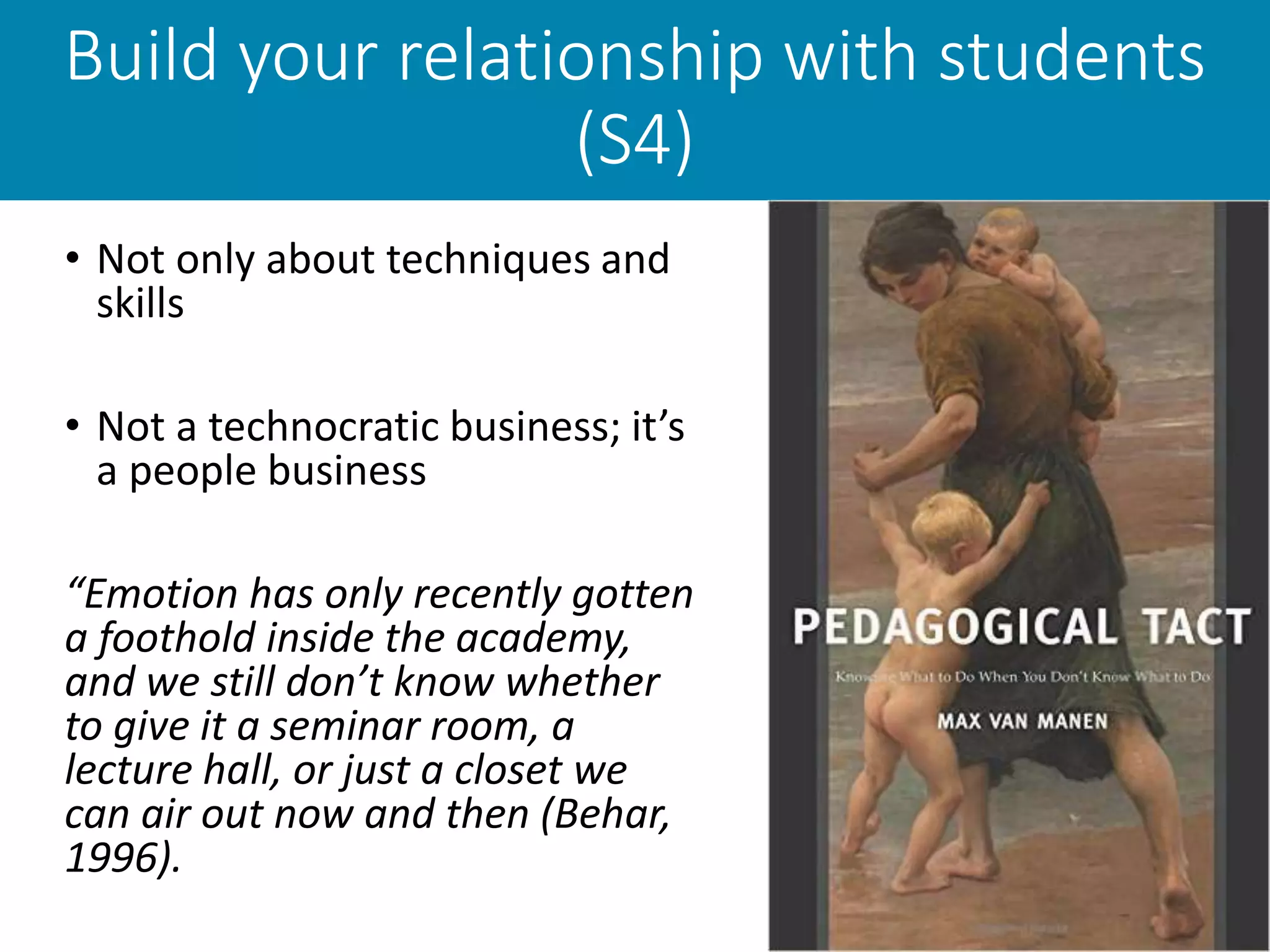
Build your relationship with students
(S4)
• Not only about techniques and
skills
• Not a technocratic business; it’s
a people business
“Emotion has only recently gotten
a foothold inside the academy,
and we still don’t know whether
to give it a seminar room, a
lecture hall, or just a closet we
can air out now and then (Behar,
1996).
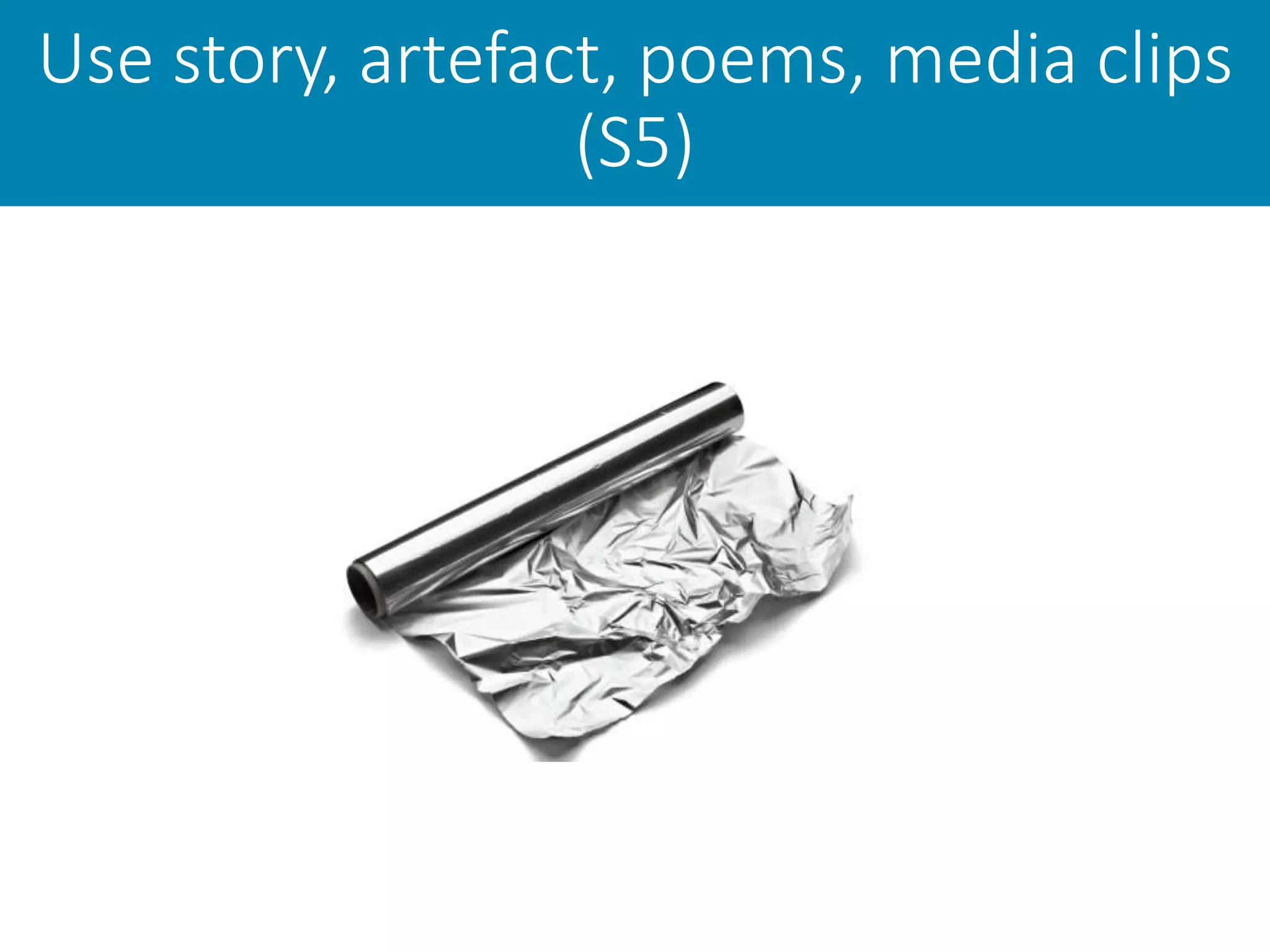
Use story, artefact, poems, media clips
(S5)
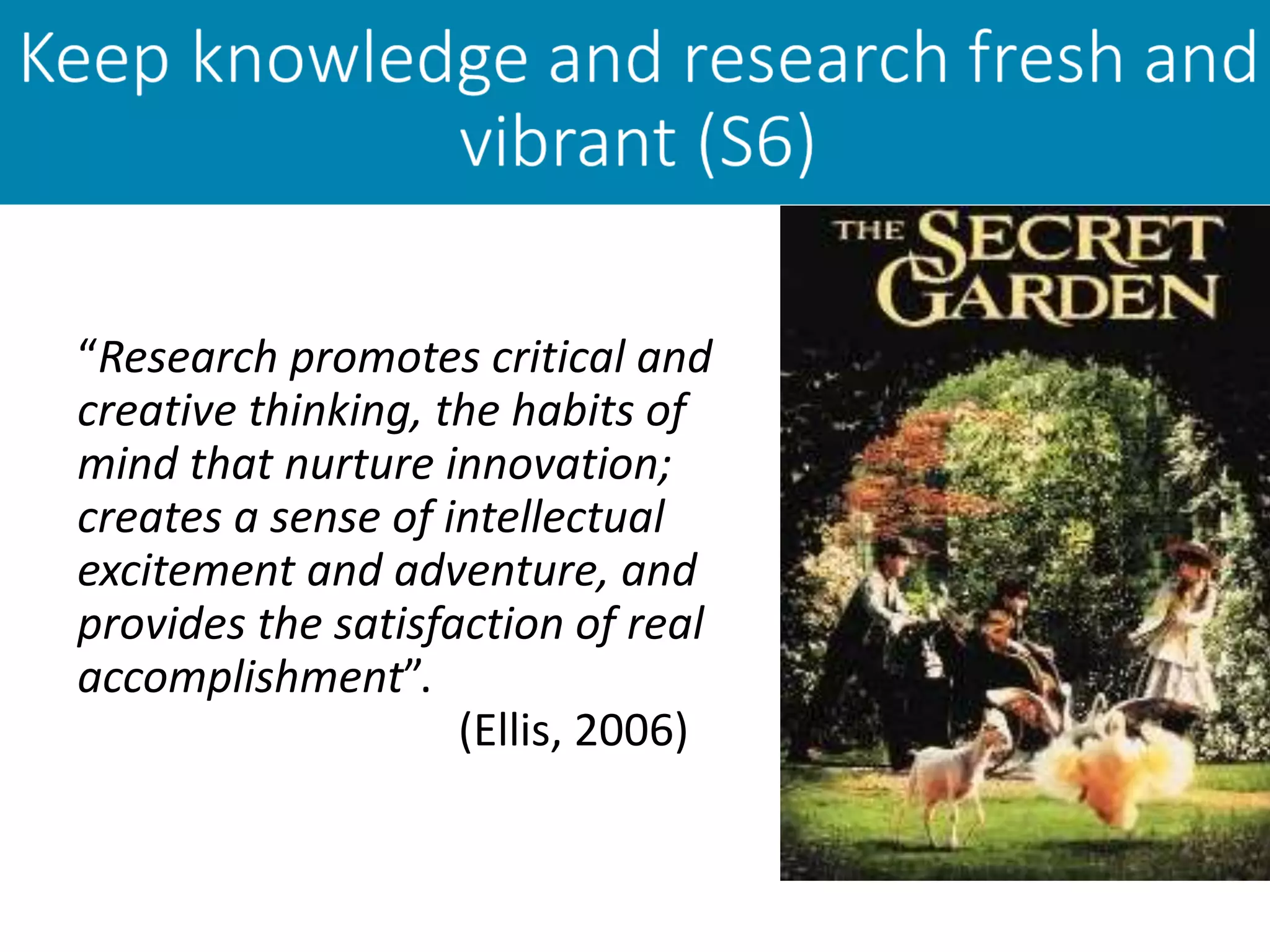
“Research promotes critical and
creative thinking, the habits of
mind that nurture innovation;
creates a sense of intellectual
excitement and adventure, and
provides the satisfaction of real
accomplishment”.
(Ellis, 2006)
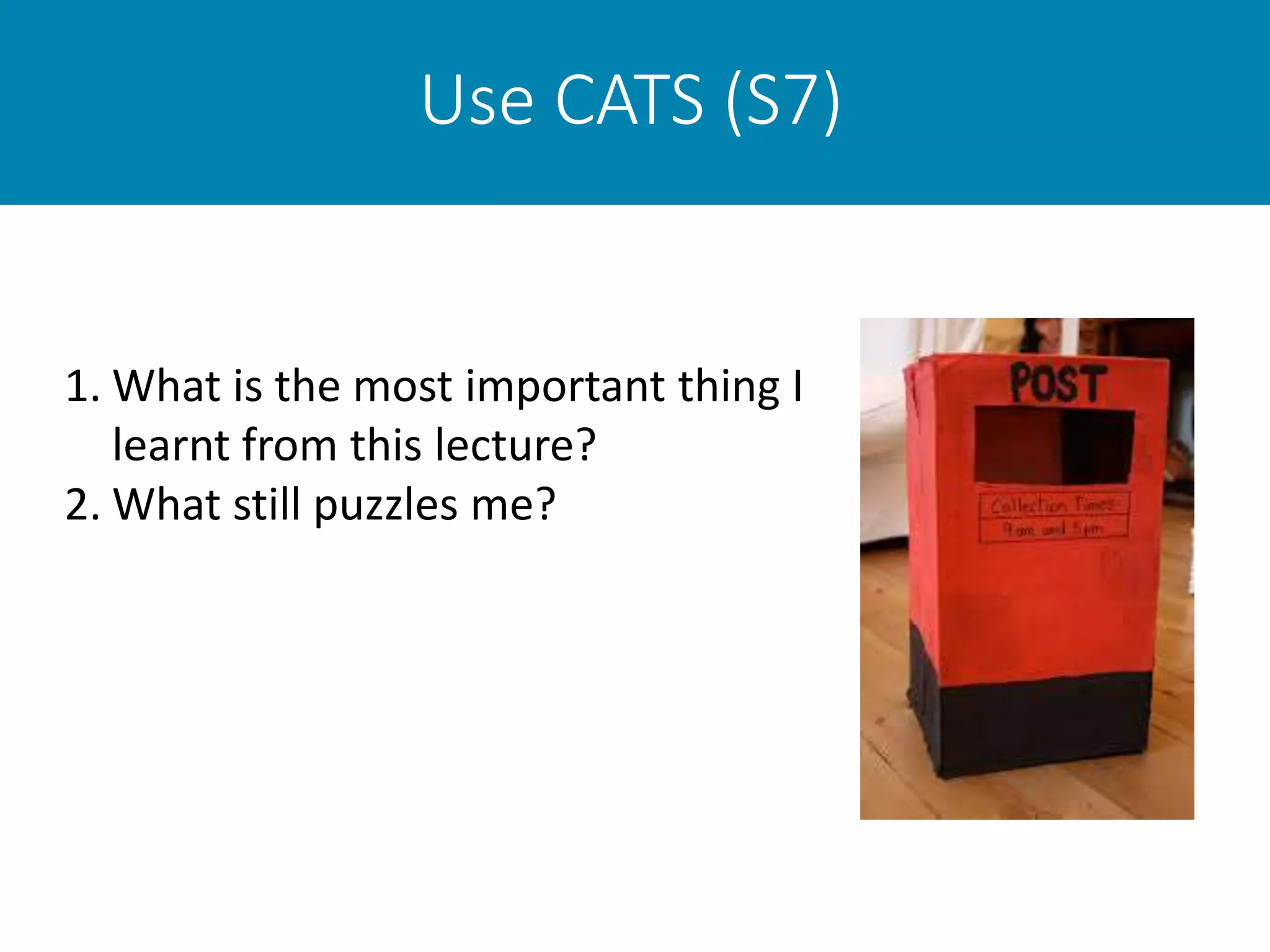
Use CATS (S7)
1. What is the most important thing I
learnt from this lecture?
2. What still puzzles me?
Using power-point well
1) Few slides or many?
2) It’s not an aide memoire
3) It’s a visual medium (snipping tool)
4) Transitions between slides
5) Remember that students can’t read & listen at the
same time
6) Let them read the words!
7) Tell a story through the headings
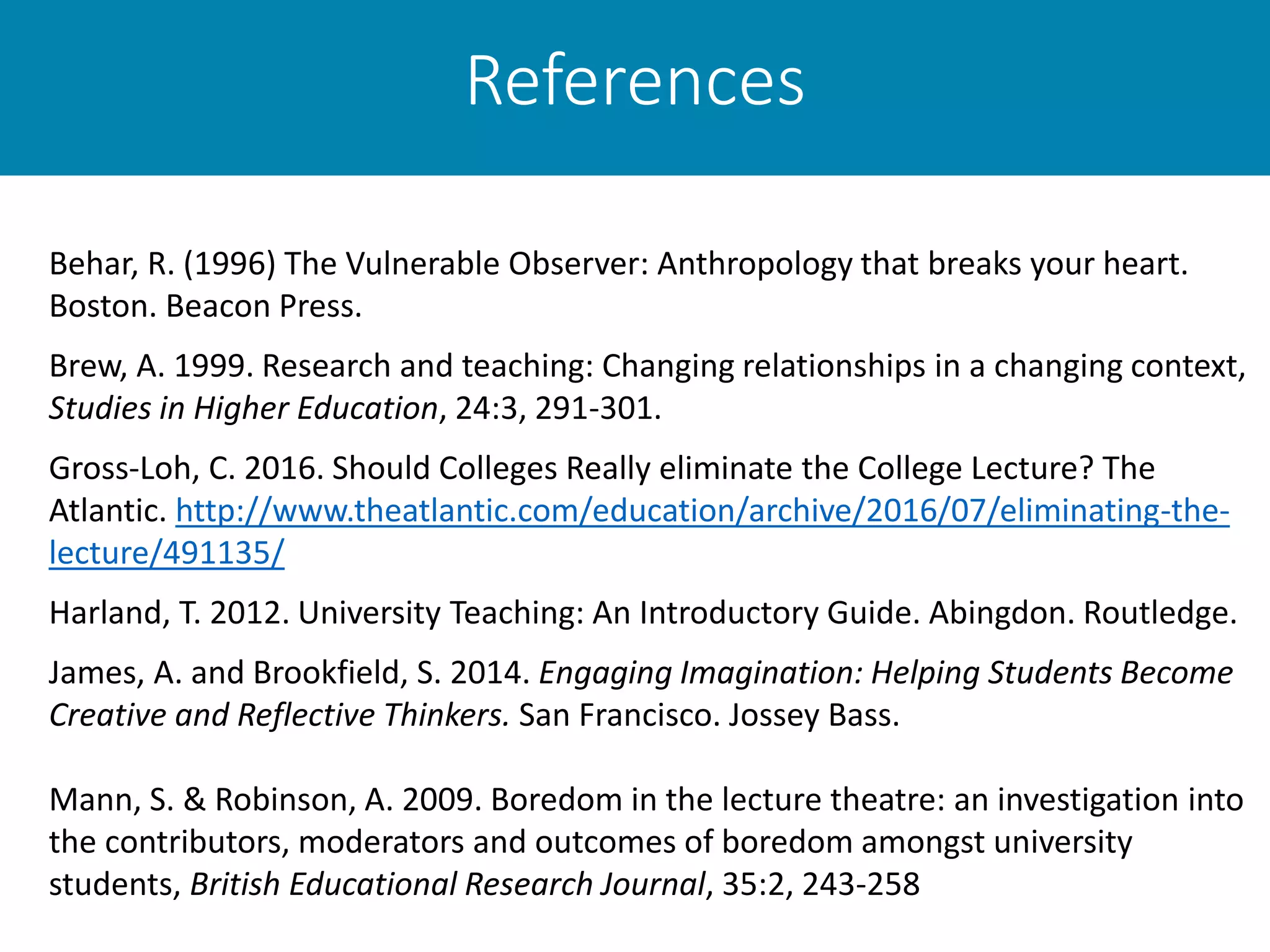
References
Behar, R. (1996) The Vulnerable Observer: Anthropology that breaks your heart.
Boston. Beacon Press.
Brew, A. 1999. Research and teaching: Changing relationships in a changing context,
Studies in Higher Education, 24:3, 291-301.
Gross-Loh, C. 2016. Should Colleges Really eliminate the College Lecture? The
Atlantic. http://www.theatlantic.com/education/archive/2016/07/eliminating-the-
lecture/491135/
Harland, T. 2012. University Teaching: An Introductory Guide. Abingdon. Routledge.
James, A. and Brookfield, S. 2014. Engaging Imagination: Helping Students Become
Creative and Reflective Thinkers. San Francisco. Jossey Bass.
Mann, S. & Robinson, A. 2009. Boredom in the lecture theatre: an investigation into
the contributors, moderators and outcomes of boredom amongst university
students, British Educational Research Journal, 35:2, 243-258

It's ok to lecture: from boredom to brilliance

  • 1.
    It’s OK tolecture: from boredom to brilliance Tansy Jessop CPD Workshops @solentlearning 9 November 2016
  • 2.
    Today’s session 1) Lectures:a fading or failed pedagogy 2) The problem with lectures 3) Why lectures still have currency 4) Strategies to vivify lectures 5) Life by Power Point: ideas and options
  • 3.
    Which one speciesis most endangered? a) The Black Rhino b) Leatherback turtle c) University lecture d) Orangutan e) Bengal Tiger f) African wild dog
  • 4.
    Despite the increasedemphasis in recent years on improving professors’ teaching skills, such training often focuses on incorporating technology or flipping the classroom, rather than on how to give a traditional college lecture. It’s also in part why the lecture—a mainstay of any introductory undergraduate course—is endangered. (Gross-Loh 2016)
  • 5.
  • 6.
    For some, itappears so….
  • 7.
    What’s the problemwith lecturing? (Mann & Robinson 2009) 2 39 29 30 Boredom in lectures Bored most of the time Bored half of the time Bored some of the time
  • 8.
    Meta-analysis 225 studieslooking at the effectiveness of traditional lectures versus active learning in undergraduate STEM courses. Lecturing increased failure rates by 55 percent; active learning resulted in better grades and a 36 percent drop in class failure rates. (Gross-Loh 2016)
  • 9.
    How does itcompare with other teaching formats? (Mann and Robinson 2009, 250) Higher boredom ratings Lower boredom ratings
  • 10.
    But is itthe lecture itself that’s the problem—or the lecturer? Trivium: Grammar, Logic, Rhetoric.
  • 11.
    What has cool-headedscience done to oratory? Oratory, like writing, emphasises the ability to formulate coherent thoughts into compelling and well-crafted arguments. The decline of both in academic settings comes from their diminished stature and training opportunities. (Gross-Loh 2016)
  • 12.
    So, why dowe persist with lectures in modern universities? (top three) a) Financial efficiency b) Convenience c) Lectures have capacity to inspire d) Persistence of tradition e) Didactic view of teaching f) To convey large bodies of complex information g) Lectures underline research and expertise of academics h) Less time-consuming than active learning
  • 13.
    • Think ofyour favourite lecturer ever • What made those lectures inspiring? • Turn to your neighbour and tell them what inspired you. • Add words which capture what about your favourite inspired you: www.menti.com 78 78 44 Moving from boredom to brilliance
  • 14.
    Is good lecturingabout charisma and performance?
  • 15.
    Seven strategies tovivify lecturing 1) Start with why; reveal your genuine questions 2) Connect with students prior learning and experience 3) Break it up into a small number of parts, and break it up into pairs and triads 4) Make your teaching presence felt: teaching is relational 5) Learning is a sensory experience. Tell stories, pictures, metaphors, artefacts, poems, short media clips. 6) Use lively, fresh, contemporary research material 7) Use CATS
  • 16.
    Start with why,start with questions (S1) https://www.youtube.com/watch?v=sioZd3AxmnE
  • 17.
    Connect with priorexperience and knowledge (S2) Student learning is deepest when the content or skills being learned are personally meaningful
  • 18.
    Break it up!(S3) • 15-20 minutes of continuous activity before a learner’s attention starts to wane • You can build muscles • Surprising break ups
  • 19.
    Build your relationshipwith students (S4) • Not only about techniques and skills • Not a technocratic business; it’s a people business “Emotion has only recently gotten a foothold inside the academy, and we still don’t know whether to give it a seminar room, a lecture hall, or just a closet we can air out now and then (Behar, 1996).
  • 20.
    Use story, artefact,poems, media clips (S5)
  • 21.
    “Research promotes criticaland creative thinking, the habits of mind that nurture innovation; creates a sense of intellectual excitement and adventure, and provides the satisfaction of real accomplishment”. (Ellis, 2006)
  • 22.
    Use CATS (S7) 1.What is the most important thing I learnt from this lecture? 2. What still puzzles me?
  • 23.
    Using power-point well 1)Few slides or many? 2) It’s not an aide memoire 3) It’s a visual medium (snipping tool) 4) Transitions between slides 5) Remember that students can’t read & listen at the same time 6) Let them read the words! 7) Tell a story through the headings
  • 25.
    References Behar, R. (1996)The Vulnerable Observer: Anthropology that breaks your heart. Boston. Beacon Press. Brew, A. 1999. Research and teaching: Changing relationships in a changing context, Studies in Higher Education, 24:3, 291-301. Gross-Loh, C. 2016. Should Colleges Really eliminate the College Lecture? The Atlantic. http://www.theatlantic.com/education/archive/2016/07/eliminating-the- lecture/491135/ Harland, T. 2012. University Teaching: An Introductory Guide. Abingdon. Routledge. James, A. and Brookfield, S. 2014. Engaging Imagination: Helping Students Become Creative and Reflective Thinkers. San Francisco. Jossey Bass. Mann, S. & Robinson, A. 2009. Boredom in the lecture theatre: an investigation into the contributors, moderators and outcomes of boredom amongst university students, British Educational Research Journal, 35:2, 243-258

Editor's Notes

  • #5 Active learning movement, Harvard – no physics lectures etc
  • #6 Boredom, active pedagogies
  • #8 Read from the article.
  • #9 Implicit theories of teaching
  • #10 Comments about worst and least worst forms?
  • #11 What has the cool-headed scientific approach done?