The 5 E Instructional Model

         A Framework for
     Inquiry-Based Instruction
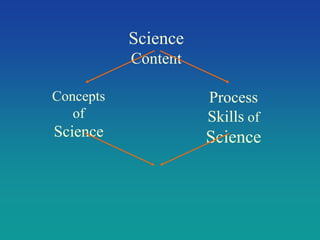
Science
           Content

Concepts             Process
   of                Skills of
Science              Science
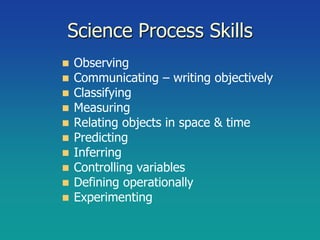
Science Process Skills
   Observing
   Communicating – writing objectively
   Classifying
   Measuring
   Relating objects in space & time
   Predicting
   Inferring
   Controlling variables
   Defining operationally
   Experimenting
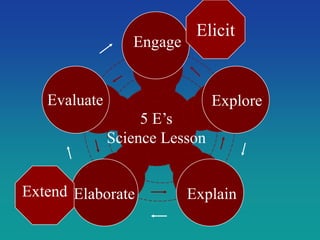
Elicit
                 Engage


   Evaluate                    Explore
                   5 E’s
              Science Lesson


Extend Elaborate          Explain
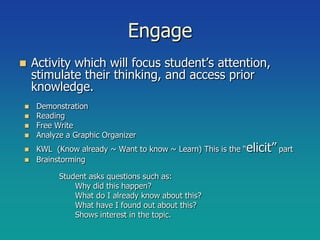
Engage
   Activity which will focus student’s attention,
    stimulate their thinking, and access prior
    knowledge.
 Demonstration
 Reading
 Free Write
 Analyze a Graphic Organizer

 KWL (Know already ~ Want to know ~ Learn) This is the “elicit” part
 Brainstorming

         Student asks questions such as:
             Why did this happen?
             What do I already know about this?
             What have I found out about this?
             Shows interest in the topic.
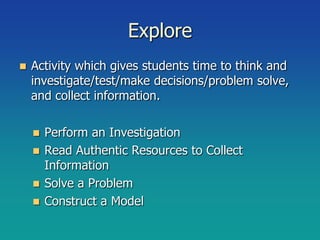
Explore
   Activity which gives students time to think and
    investigate/test/make decisions/problem solve,
    and collect information.

     Perform an Investigation
     Read Authentic Resources to Collect
      Information
     Solve a Problem
     Construct a Model
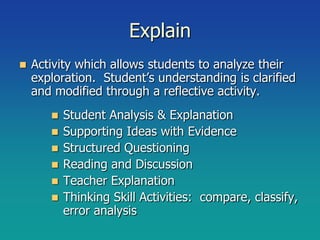
Explain
   Activity which allows students to analyze their
    exploration. Student’s understanding is clarified
    and modified through a reflective activity.
          Student Analysis & Explanation
          Supporting Ideas with Evidence
          Structured Questioning
          Reading and Discussion
          Teacher Explanation
          Thinking Skill Activities: compare, classify,
           error analysis
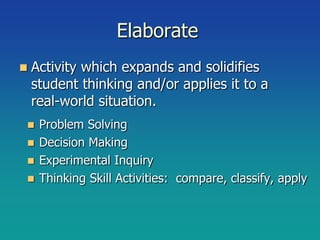
Elaborate
   Activity which expands and solidifies
    student thinking and/or applies it to a
    real-world situation.
 Problem Solving
 Decision Making
 Experimental Inquiry
 Thinking Skill Activities: compare, classify, apply
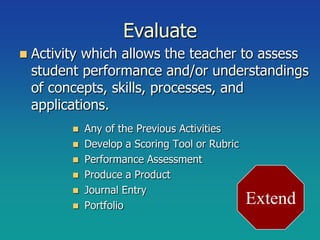
Evaluate
   Activity which allows the teacher to assess
    student performance and/or understandings
    of concepts, skills, processes, and
    applications.
             Any of the Previous Activities
             Develop a Scoring Tool or Rubric
             Performance Assessment
             Produce a Product
             Journal Entry
             Portfolio                          Extend
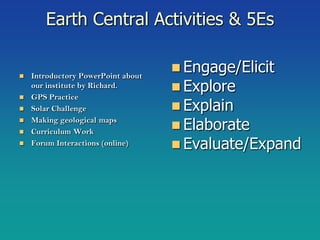
Earth Central Activities & 5Es

   Introductory PowerPoint about
                                     Engage/Elicit
    our institute by Richard.        Explore
   GPS Practice
   Solar Challenge                  Explain
                                     Elaborate
   Making geological maps
   Curriculum Work
   Forum Interactions (online)      Evaluate/Expand
References
   Montgomery Public Schools
   Eisencraft, Arther, “Expanding the 5-C Model,”
    “The Science Teacher”, Vol.70, 2003, National
    Science Teacher Association
   Harlen, W. (1985) Primary Science: Taking the
    Plunge
   Trowbridge, L. W., Bybee, R. W., & Powell, J. C.
    (2000). Teaching secondary school science:
    Strategies for developing scientific literacy
   Weiss, Tarin, Former STEM Staff Member

5 E instructional model

  • 1.
    The 5 EInstructional Model A Framework for Inquiry-Based Instruction
  • 2.
    Science Content Concepts Process of Skills of Science Science
  • 3.
    Science Process Skills  Observing  Communicating – writing objectively  Classifying  Measuring  Relating objects in space & time  Predicting  Inferring  Controlling variables  Defining operationally  Experimenting
  • 5.
    Elicit Engage Evaluate Explore 5 E’s Science Lesson Extend Elaborate Explain
  • 6.
    Engage  Activity which will focus student’s attention, stimulate their thinking, and access prior knowledge.  Demonstration  Reading  Free Write  Analyze a Graphic Organizer  KWL (Know already ~ Want to know ~ Learn) This is the “elicit” part  Brainstorming Student asks questions such as: Why did this happen? What do I already know about this? What have I found out about this? Shows interest in the topic.
  • 7.
    Explore  Activity which gives students time to think and investigate/test/make decisions/problem solve, and collect information.  Perform an Investigation  Read Authentic Resources to Collect Information  Solve a Problem  Construct a Model
  • 8.
    Explain  Activity which allows students to analyze their exploration. Student’s understanding is clarified and modified through a reflective activity.  Student Analysis & Explanation  Supporting Ideas with Evidence  Structured Questioning  Reading and Discussion  Teacher Explanation  Thinking Skill Activities: compare, classify, error analysis
  • 9.
    Elaborate  Activity which expands and solidifies student thinking and/or applies it to a real-world situation.  Problem Solving  Decision Making  Experimental Inquiry  Thinking Skill Activities: compare, classify, apply
  • 10.
    Evaluate  Activity which allows the teacher to assess student performance and/or understandings of concepts, skills, processes, and applications.  Any of the Previous Activities  Develop a Scoring Tool or Rubric  Performance Assessment  Produce a Product  Journal Entry  Portfolio Extend
  • 11.
    Earth Central Activities& 5Es  Introductory PowerPoint about  Engage/Elicit our institute by Richard.  Explore  GPS Practice  Solar Challenge  Explain  Elaborate  Making geological maps  Curriculum Work  Forum Interactions (online)  Evaluate/Expand
  • 12.
    References  Montgomery Public Schools  Eisencraft, Arther, “Expanding the 5-C Model,” “The Science Teacher”, Vol.70, 2003, National Science Teacher Association  Harlen, W. (1985) Primary Science: Taking the Plunge  Trowbridge, L. W., Bybee, R. W., & Powell, J. C. (2000). Teaching secondary school science: Strategies for developing scientific literacy  Weiss, Tarin, Former STEM Staff Member