Old & new hands at academic development:
close to the student heartbeat
@solentlearning
@tansyjtweets
@121tuition
Tansy Jessop and Claire Saunders
#ISSOTL18, Bergen, Norway
2018
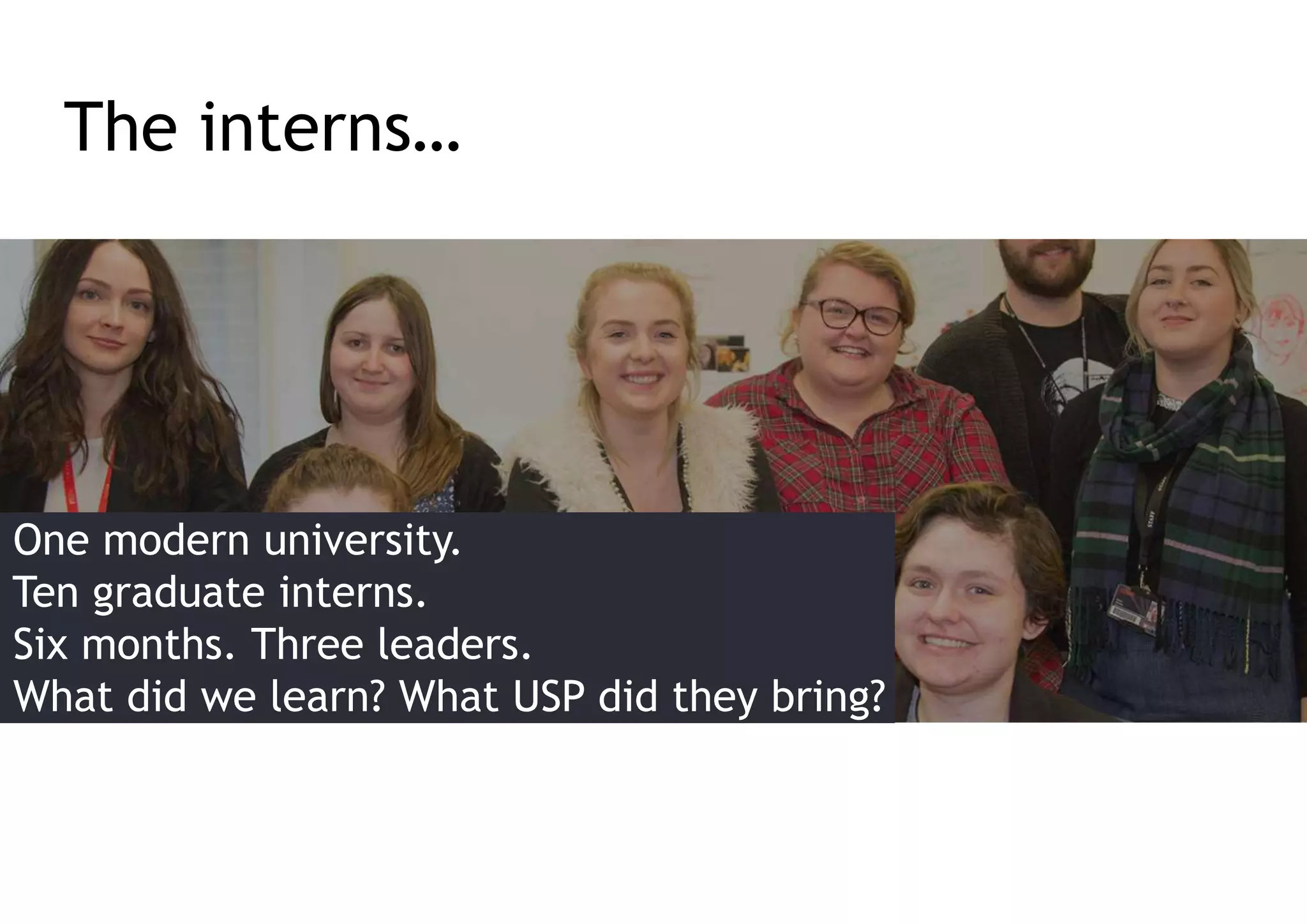
The interns…
One modern university.
Ten graduate interns.
Six months. Three leaders.
What did we learn? What USP did they bring?
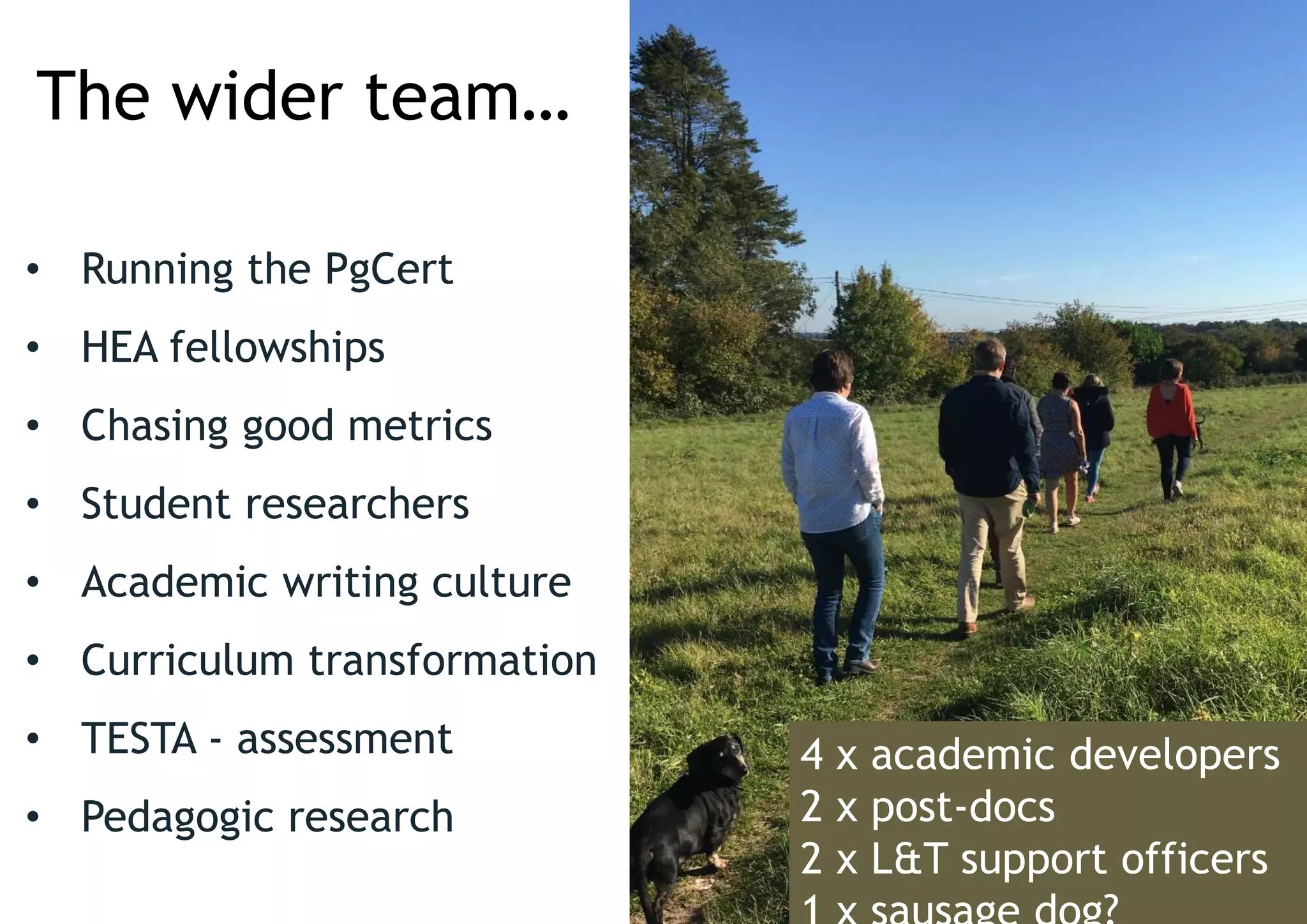
The wider team…
• Running the PgCert
• HEA fellowships
• Chasing good metrics
• Student researchers
• Academic writing culture
• Curriculum transformation
• TESTA - assessment
• Pedagogic research
4 x academic developers
2 x post-docs
2 x L&T support officers
• Improve metrics
• Climb league tables
• Respond to student
demography
• 70% first generation
• Diverse, low economic status
Why the Internship?
An Institutional Perspective
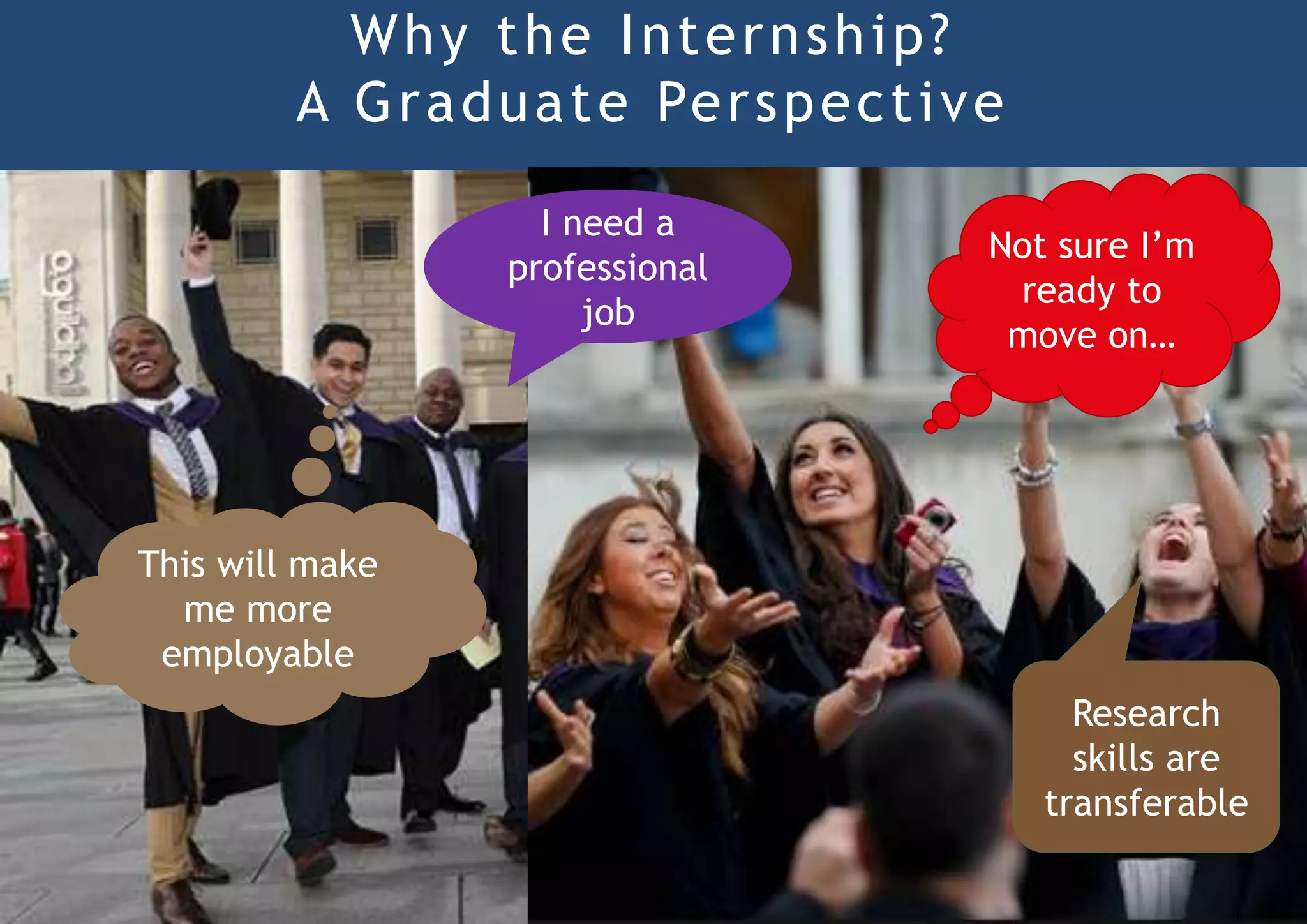
Why the Internship?
A Graduate Perspective
I need a
professional
job
This will make
me more
employable
Research
skills are
transferable
Not sure I’m
ready to
move on…
Why the Internship?
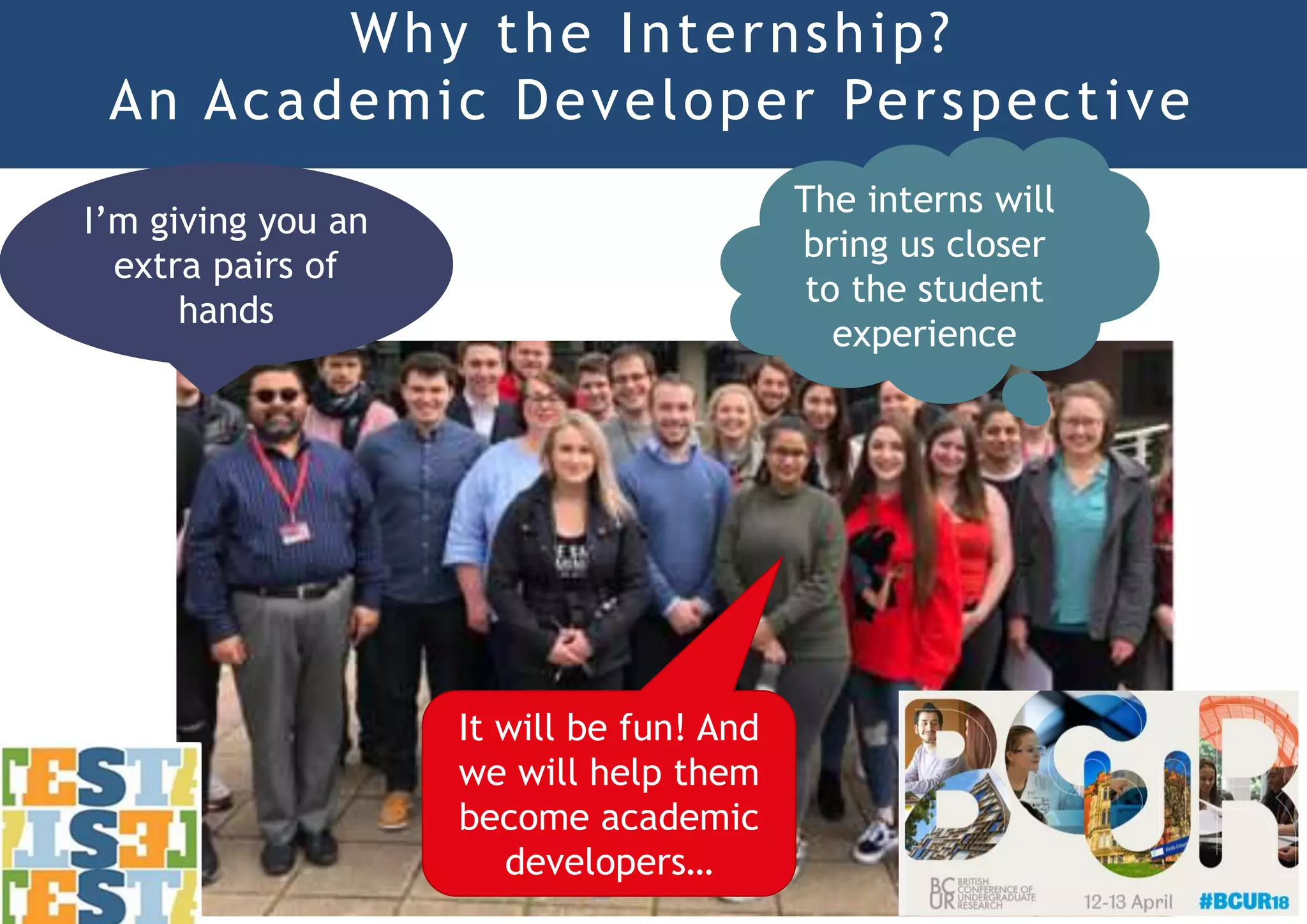
An Academic Developer Perspective
The interns will
bring us closer
to the student
experience
I’m giving you an
extra pairs of
hands
It will be fun! And
we will help them
become academic
developers…
• Instrumental, procedural, contingent (Squires 1999)
• Students might know a lot of stuff, but do they have
agency or know what to do with it?
• That’s the test…!
Becoming professional…
“We know more than we can tell” (Polanyi 1966) - what are
the tacit parts of our job?
On the surface, we do professional development, work with
academics, teach new lecturers…
What’s the underbelly of what we do?
As busy academic developers, had we given much thought to
the less visible parts of our job….?
Do we know why we do what we do as
academic developers?
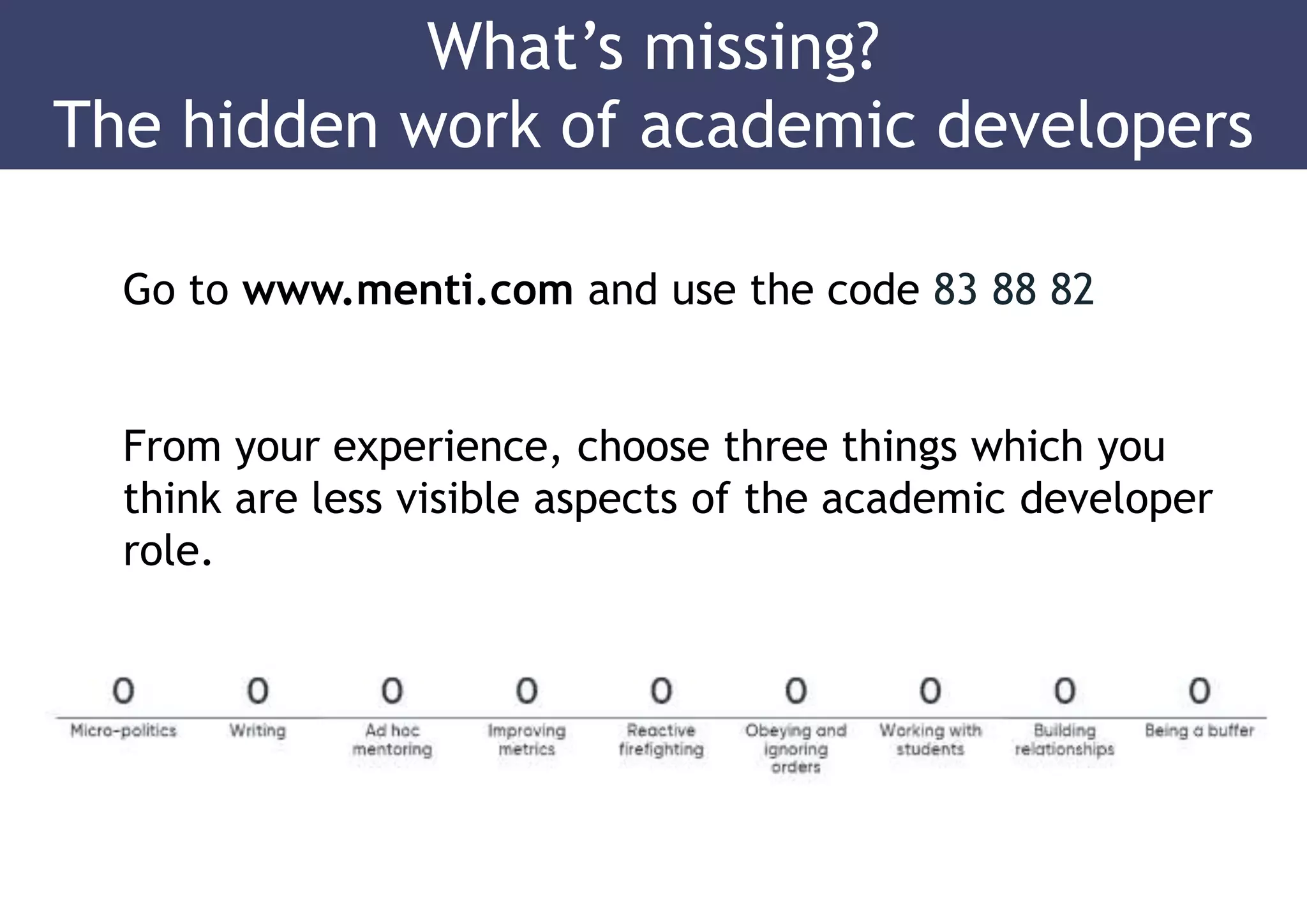
What’s missing?
The hidden work of academic developers
Go to www.menti.com and use the code 83 88 82
From your experience, choose three things which you
think are less visible aspects of the academic developer
role.
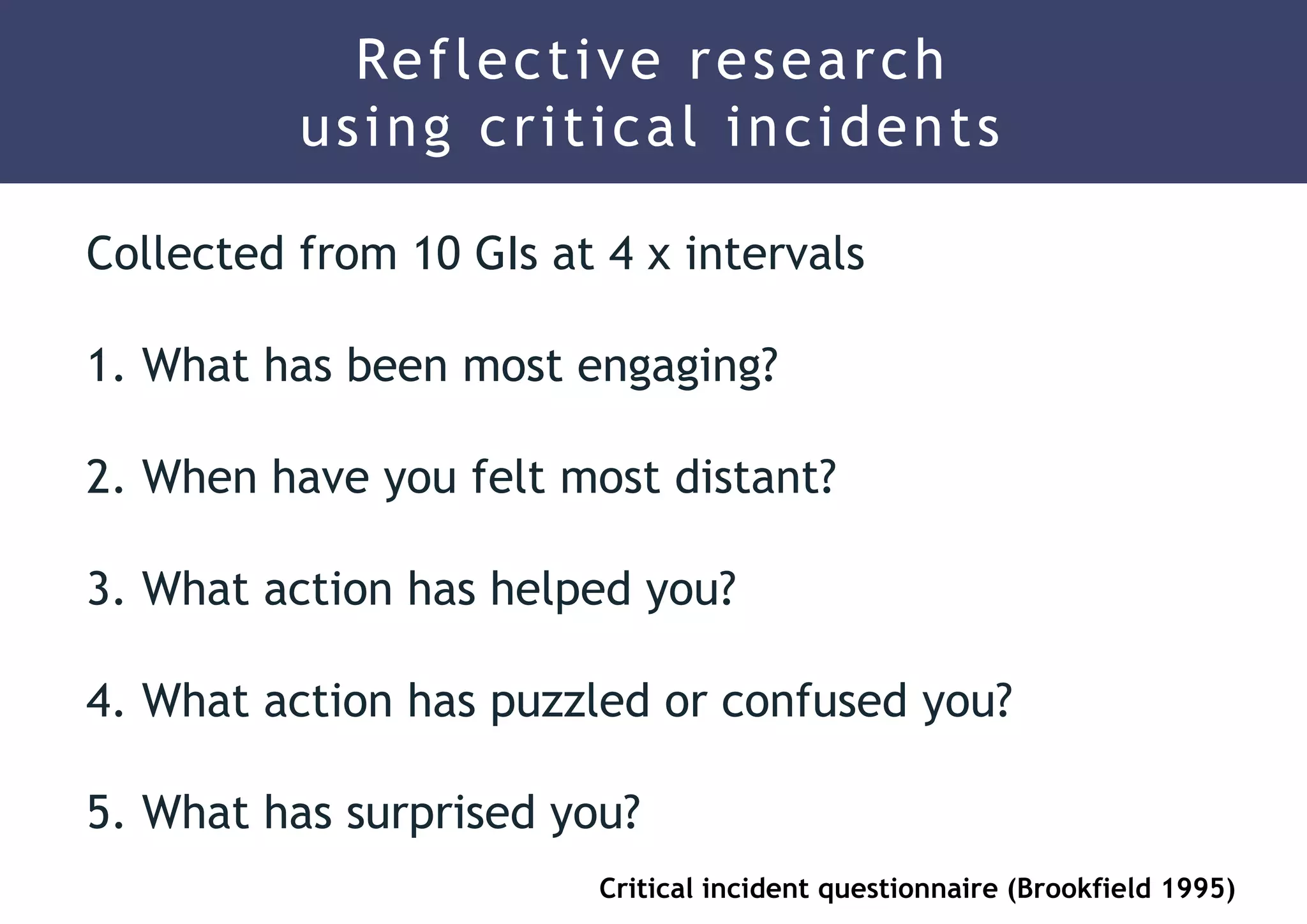
Reflective research
using critical incidents
Collected from 10 GIs at 4 x intervals
1. What has been most engaging?
2. When have you felt most distant?
3. What action has helped you?
4. What action has puzzled or confused you?
5. What has surprised you?
Critical incident questionnaire (Brookfield 1995)
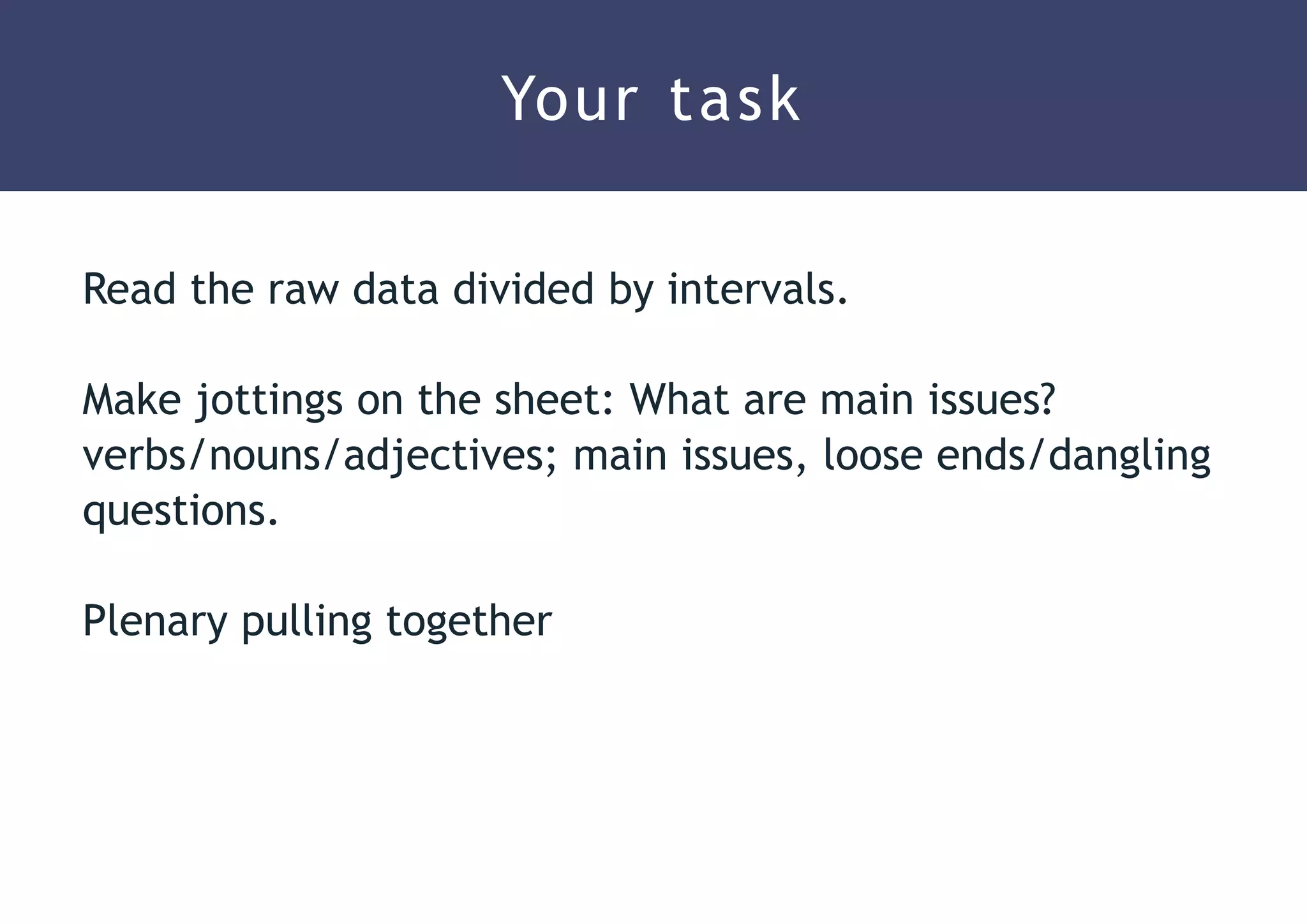
Read the raw data divided by intervals.
Make jottings on the sheet: What are main issues?
verbs/nouns/adjectives; main issues, loose ends/dangling
questions.
Plenary pulling together
Your task
This is what the full analysis showed…
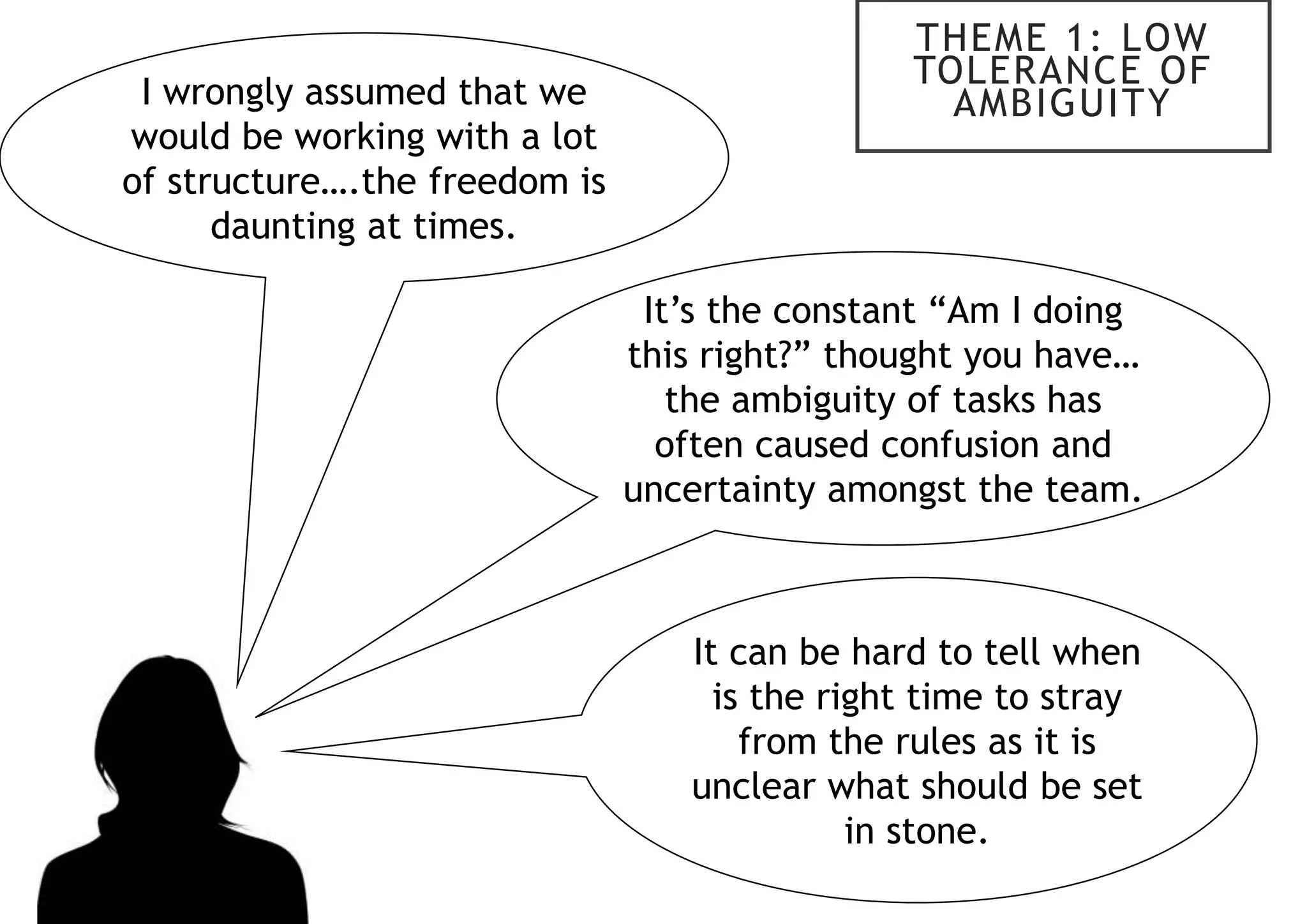
It can be hard to tell when
is the right time to stray
from the rules as it is
unclear what should be set
in stone.
THEME 1: LOW
TOLERANCE OF
AMBIGUITY
It’s the constant “Am I doing
this right?” thought you have…
the ambiguity of tasks has
often caused confusion and
uncertainty amongst the team.
I wrongly assumed that we
would be working with a lot
of structure….the freedom is
daunting at times.
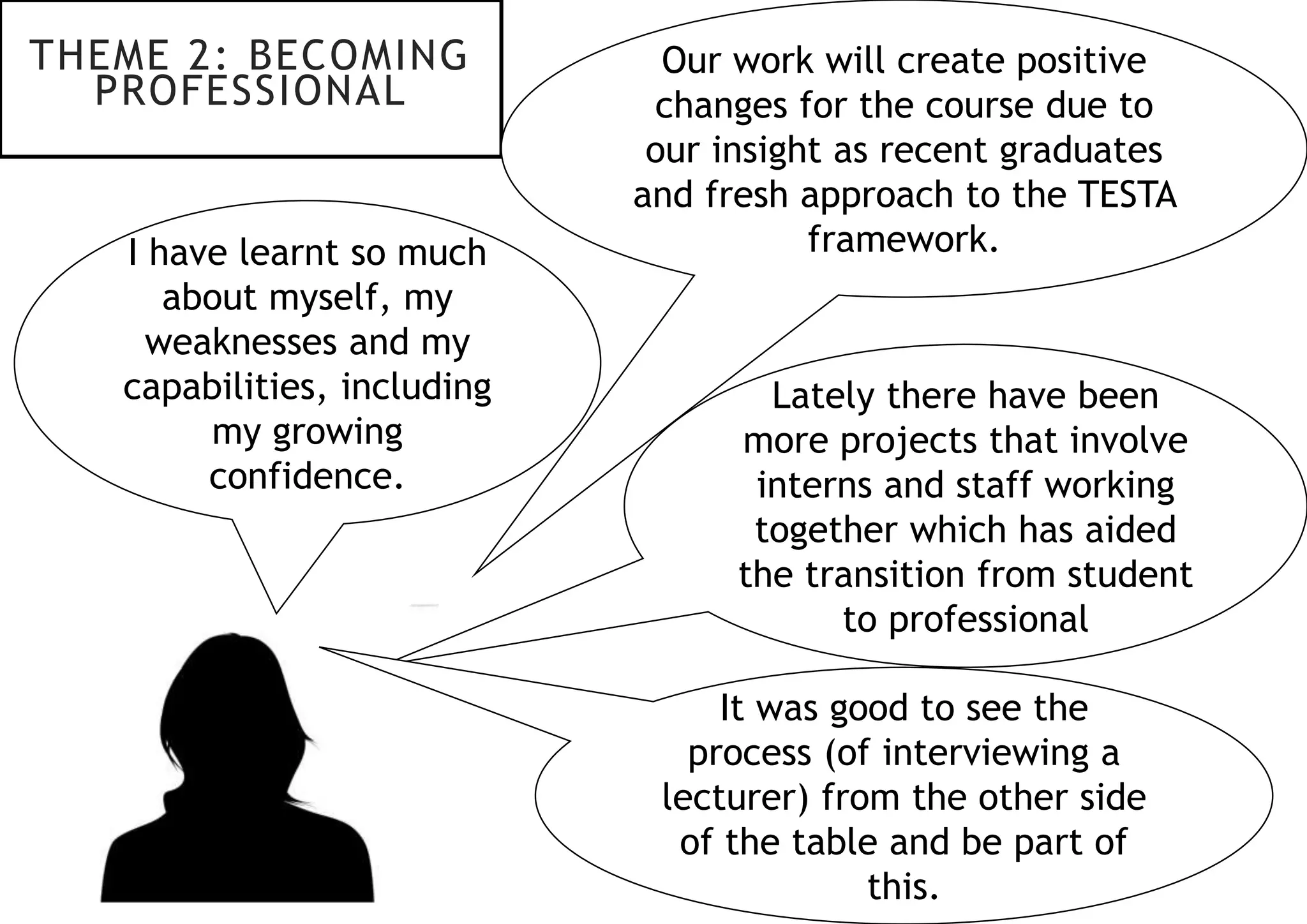
I have learnt so much
about myself, my
weaknesses and my
capabilities, including
my growing
confidence.
Lately there have been
more projects that involve
interns and staff working
together which has aided
the transition from student
to professional
THEME 2: BECOMING
PROFESSIONAL
Our work will create positive
changes for the course due to
our insight as recent graduates
and fresh approach to the TESTA
framework.
It was good to see the
process (of interviewing a
lecturer) from the other side
of the table and be part of
this.
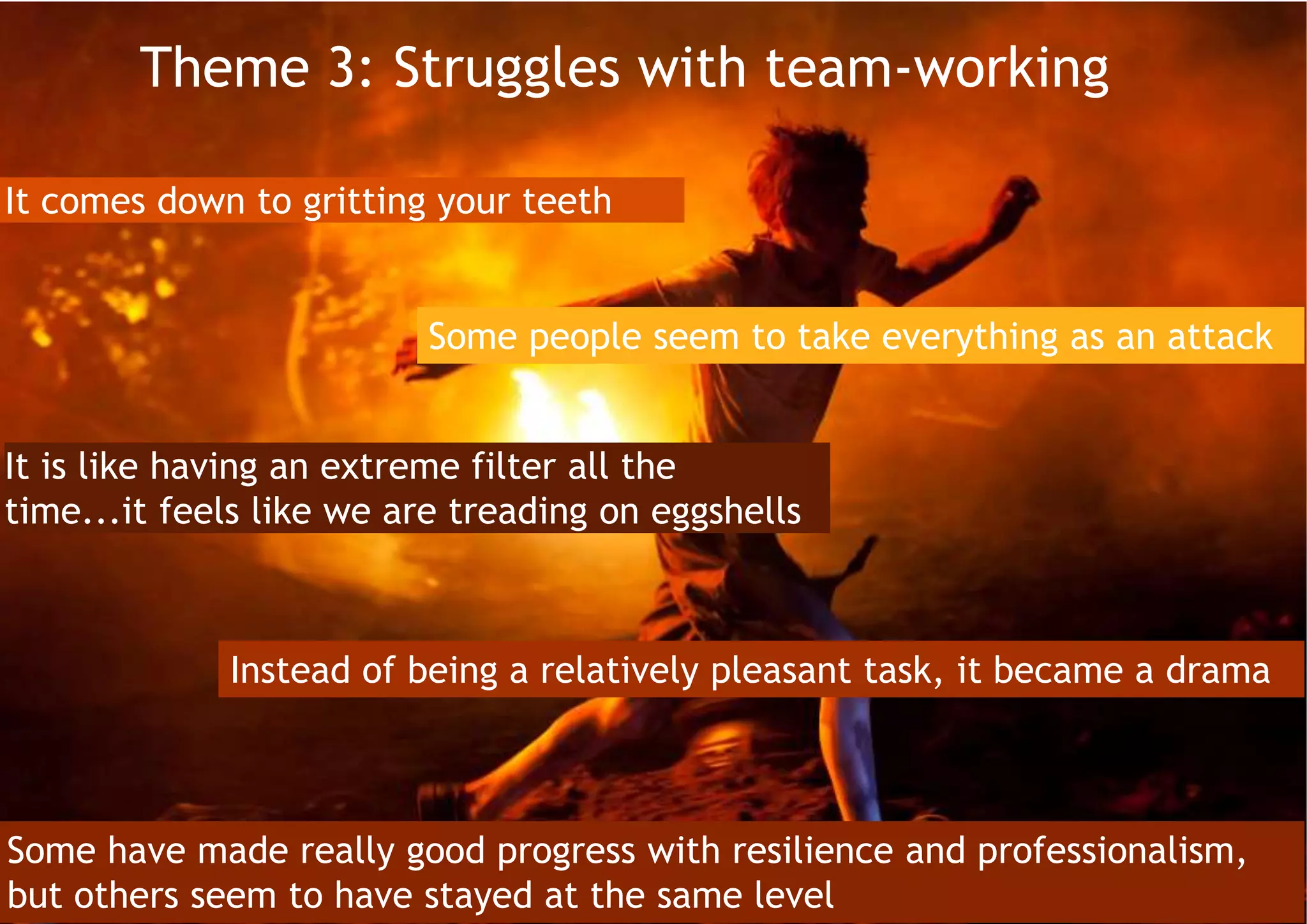
Theme 3: Struggles with team-working
It comes down to gritting your teeth
It is like having an extreme filter all the
time...it feels like we are treading on eggshells
Some people seem to take everything as an attack
Instead of being a relatively pleasant task, it became a drama
Some have made really good progress with resilience and professionalism,
but others seem to have stayed at the same level
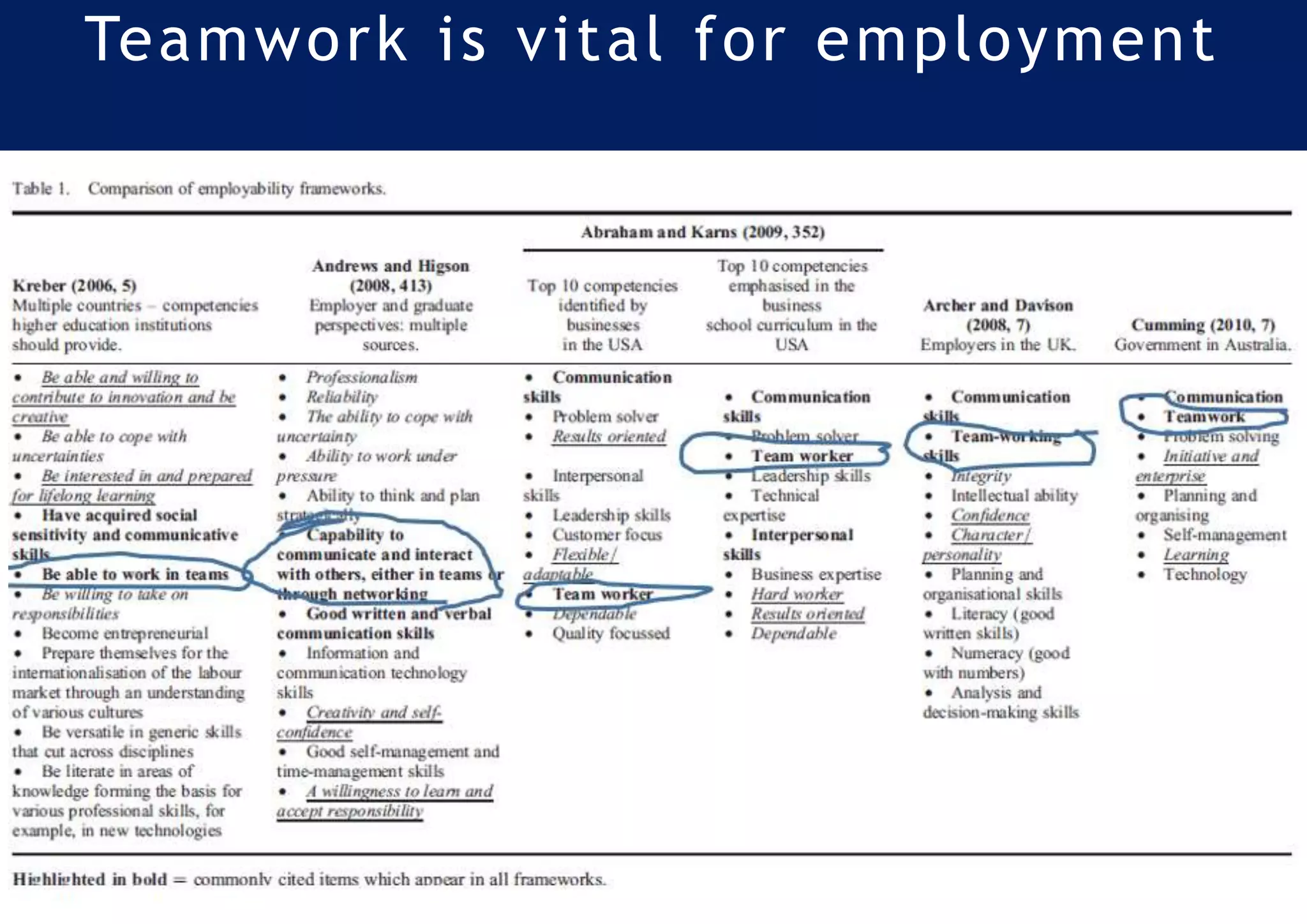
Teamwork is vital for employment
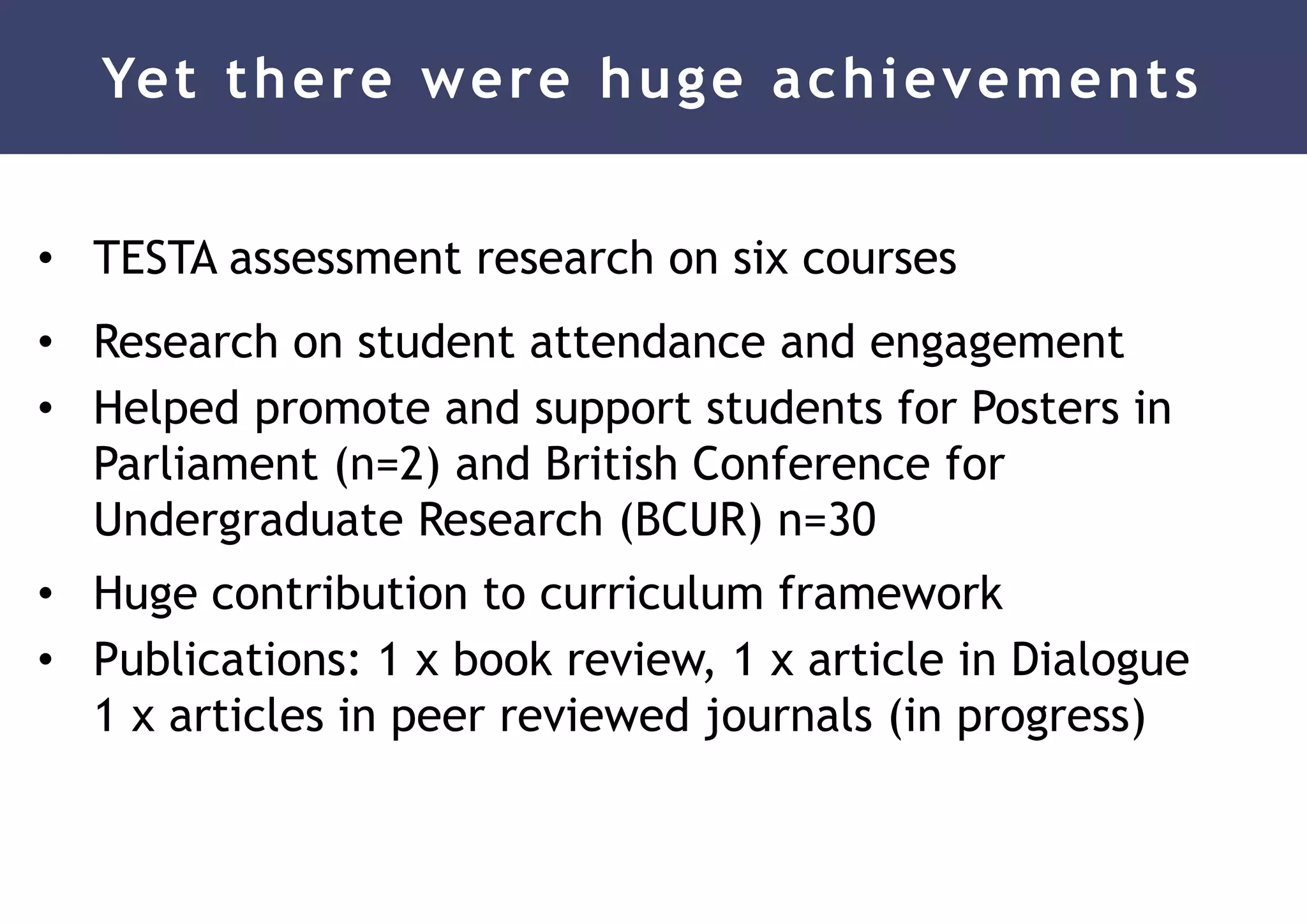
Yet there were huge achievements
• TESTA assessment research on six courses
• Research on student attendance and engagement
• Helped promote and support students for Posters in
Parliament (n=2) and British Conference for
Undergraduate Research (BCUR) n=30
• Huge contribution to curriculum framework
• Publications: 1 x book review, 1 x article in Dialogue
1 x articles in peer reviewed journals (in progress)
Why it was worth doing
• Fresh insights into the student experience
• Insider-outsider dynamic
• Academics and students trusted their judgement
• Informed the development of curriculum framework
• Helped us to reflect on & understand academic development
better
• Most have graduate jobs now
But we have battle scars
• 10 last year, 1 this year.
• Extra workload in managing new professionals
• Emotional complexity of interns being ex-students
• Learning curve for us: start slow
• Brilliant opportunity but count the cost!
REFERENCES
Barnett, R. and Coate, K. 2004. Engaging the curriculum in higher education.
Maidenhead: Society for Research into Higher Education & Open University Press.
Baxter-Magolda, M. 2001. Making their own way: Narratives for transforming Higher
Education to promote self-development
Brookfield, S. 1995. Becoming a critically reflective teacher. New Jersey: John Wiley &
Sons.
Jessop, T., Saunders, C. and Pontin, C. The challenges of academic development as a first
graduate job: ‘Am I doing it right?’ International Journal of Academic Development
(Forthcoming)
Palmer, P. 1983. To know as we are known: Education as a Spiritual Journey. HarperOne.
Perry, W. 1998. Forms of Ethical Intellectual Development in the College Years: A
Scheme.
Polanyi, M. 1966. The Tacit Dimension. Chicago. University of Chicago Press.
Squires, S. 1999. Teaching as a Professional Discipline. London: Falmer.
Tymon, A. 2013. The student perspective on employability, Studies in Higher
Education, 38:6, 841-856.

Old and new hands at academic development

  • 1.
    Old & newhands at academic development: close to the student heartbeat @solentlearning @tansyjtweets @121tuition Tansy Jessop and Claire Saunders #ISSOTL18, Bergen, Norway 2018
  • 2.
    The interns… One modernuniversity. Ten graduate interns. Six months. Three leaders. What did we learn? What USP did they bring?
  • 3.
    The wider team… •Running the PgCert • HEA fellowships • Chasing good metrics • Student researchers • Academic writing culture • Curriculum transformation • TESTA - assessment • Pedagogic research 4 x academic developers 2 x post-docs 2 x L&T support officers
  • 4.
    • Improve metrics •Climb league tables • Respond to student demography • 70% first generation • Diverse, low economic status Why the Internship? An Institutional Perspective
  • 5.
    Why the Internship? AGraduate Perspective I need a professional job This will make me more employable Research skills are transferable Not sure I’m ready to move on…
  • 6.
    Why the Internship? AnAcademic Developer Perspective The interns will bring us closer to the student experience I’m giving you an extra pairs of hands It will be fun! And we will help them become academic developers…
  • 7.
    • Instrumental, procedural,contingent (Squires 1999) • Students might know a lot of stuff, but do they have agency or know what to do with it? • That’s the test…! Becoming professional…
  • 8.
    “We know morethan we can tell” (Polanyi 1966) - what are the tacit parts of our job? On the surface, we do professional development, work with academics, teach new lecturers… What’s the underbelly of what we do? As busy academic developers, had we given much thought to the less visible parts of our job….? Do we know why we do what we do as academic developers?
  • 9.
    What’s missing? The hiddenwork of academic developers Go to www.menti.com and use the code 83 88 82 From your experience, choose three things which you think are less visible aspects of the academic developer role.
  • 10.
    Reflective research using criticalincidents Collected from 10 GIs at 4 x intervals 1. What has been most engaging? 2. When have you felt most distant? 3. What action has helped you? 4. What action has puzzled or confused you? 5. What has surprised you? Critical incident questionnaire (Brookfield 1995)
  • 11.
    Read the rawdata divided by intervals. Make jottings on the sheet: What are main issues? verbs/nouns/adjectives; main issues, loose ends/dangling questions. Plenary pulling together Your task
  • 12.
    This is whatthe full analysis showed…
  • 13.
    It can behard to tell when is the right time to stray from the rules as it is unclear what should be set in stone. THEME 1: LOW TOLERANCE OF AMBIGUITY It’s the constant “Am I doing this right?” thought you have… the ambiguity of tasks has often caused confusion and uncertainty amongst the team. I wrongly assumed that we would be working with a lot of structure….the freedom is daunting at times.
  • 14.
    I have learntso much about myself, my weaknesses and my capabilities, including my growing confidence. Lately there have been more projects that involve interns and staff working together which has aided the transition from student to professional THEME 2: BECOMING PROFESSIONAL Our work will create positive changes for the course due to our insight as recent graduates and fresh approach to the TESTA framework. It was good to see the process (of interviewing a lecturer) from the other side of the table and be part of this.
  • 15.
    Theme 3: Struggleswith team-working It comes down to gritting your teeth It is like having an extreme filter all the time...it feels like we are treading on eggshells Some people seem to take everything as an attack Instead of being a relatively pleasant task, it became a drama Some have made really good progress with resilience and professionalism, but others seem to have stayed at the same level
  • 16.
    Teamwork is vitalfor employment
  • 17.
    Yet there werehuge achievements • TESTA assessment research on six courses • Research on student attendance and engagement • Helped promote and support students for Posters in Parliament (n=2) and British Conference for Undergraduate Research (BCUR) n=30 • Huge contribution to curriculum framework • Publications: 1 x book review, 1 x article in Dialogue 1 x articles in peer reviewed journals (in progress)
  • 18.
    Why it wasworth doing • Fresh insights into the student experience • Insider-outsider dynamic • Academics and students trusted their judgement • Informed the development of curriculum framework • Helped us to reflect on & understand academic development better • Most have graduate jobs now
  • 19.
    But we havebattle scars • 10 last year, 1 this year. • Extra workload in managing new professionals • Emotional complexity of interns being ex-students • Learning curve for us: start slow • Brilliant opportunity but count the cost!
  • 20.
    REFERENCES Barnett, R. andCoate, K. 2004. Engaging the curriculum in higher education. Maidenhead: Society for Research into Higher Education & Open University Press. Baxter-Magolda, M. 2001. Making their own way: Narratives for transforming Higher Education to promote self-development Brookfield, S. 1995. Becoming a critically reflective teacher. New Jersey: John Wiley & Sons. Jessop, T., Saunders, C. and Pontin, C. The challenges of academic development as a first graduate job: ‘Am I doing it right?’ International Journal of Academic Development (Forthcoming) Palmer, P. 1983. To know as we are known: Education as a Spiritual Journey. HarperOne. Perry, W. 1998. Forms of Ethical Intellectual Development in the College Years: A Scheme. Polanyi, M. 1966. The Tacit Dimension. Chicago. University of Chicago Press. Squires, S. 1999. Teaching as a Professional Discipline. London: Falmer. Tymon, A. 2013. The student perspective on employability, Studies in Higher Education, 38:6, 841-856.

Editor's Notes

  • #2 Tansy
  • #18 Set the scene – The back story of our graduate interns (from article)