Tansy Jessop
Irish National Forum for the Enhancement of T&L
9 April 2019
Who
am I?
How do I
know
this is
true?
What is truth?
Any evidence
to back it up?
This is costing
me a fortune –
do I care about
truth claims?
2
• Our context: who we are
• Your thoughts about curriculum (and a card game)
• Developing our framework: the process (more cards!)
• The theory behind the framework
• Bringing about culture change
• Tensions and how we might overcome them
The workshop
Who we are
• Mid-sized, applied,
modern university
• Maritime, Arts, Sports
• Teaching-focused
• 12,000 students
• 70% first generation
• Diverse, low income
• Upward trajectory
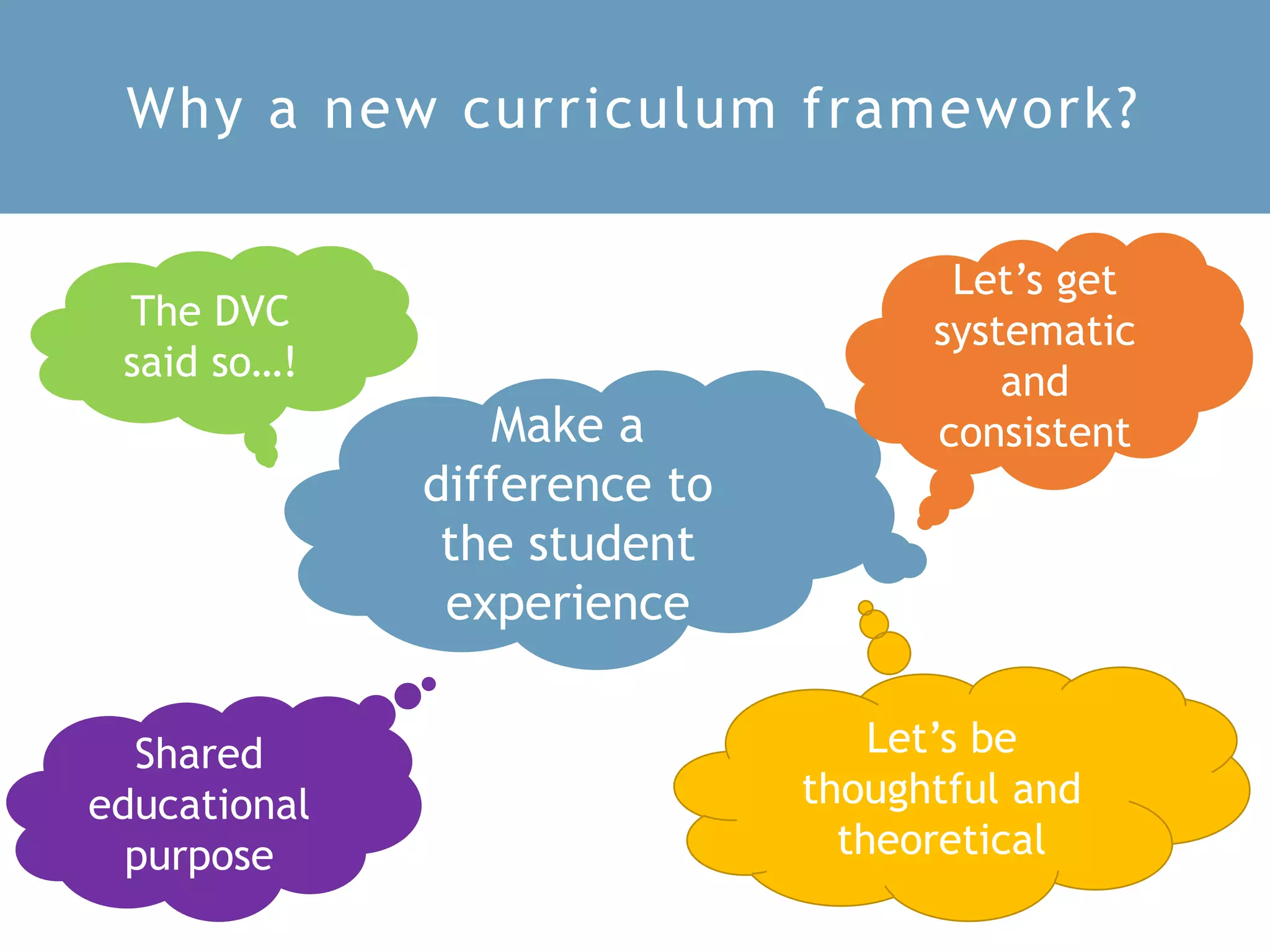
Why a new curriculum framework?
Make a
difference to
the student
experience
The DVC
said so…!
Let’s get
systematic
and
consistent
Shared
educational
purpose
Let’s be
thoughtful and
theoretical
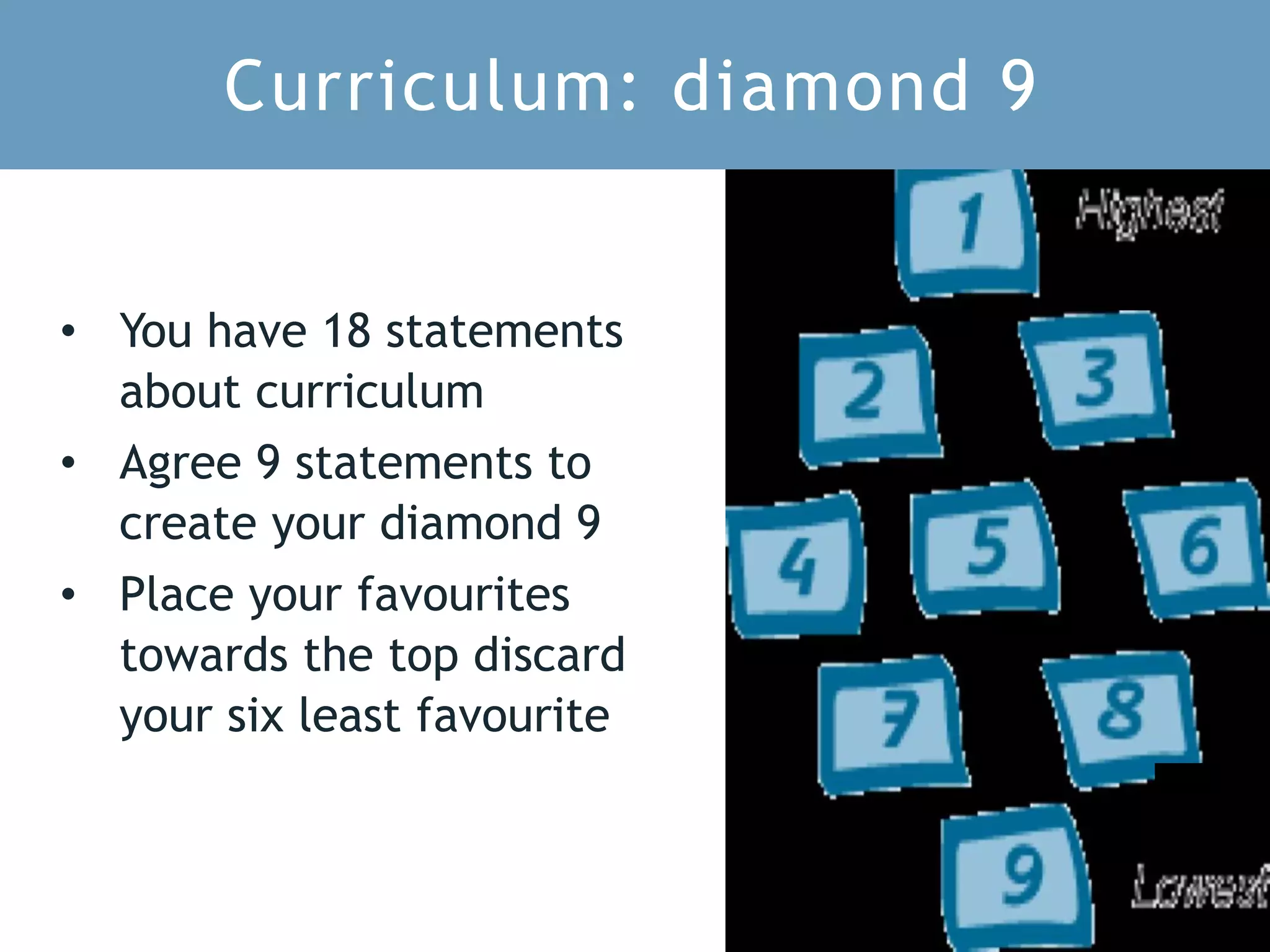
• You have 18 statements
about curriculum
• Agree 9 statements to
create your diamond 9
• Place your favourites
towards the top discard
your six least favourite
Curriculum: diamond 9
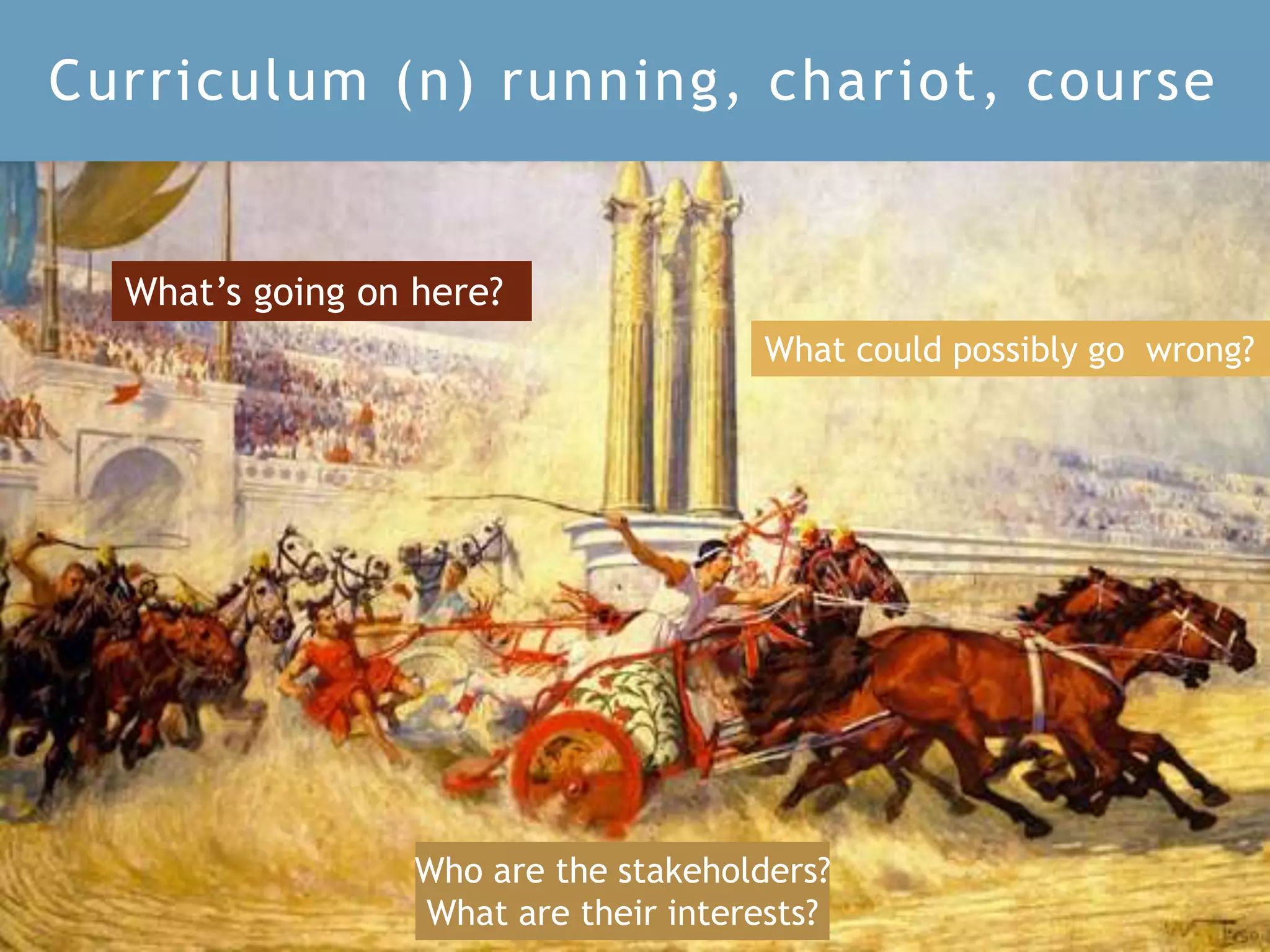
Curriculum (n) running, chariot, course
What’s going on here?
What could possibly go wrong?
Who are the stakeholders?
What are their interests?
Balancing the WHAT, HOW and WHY
PRODUCT: structuring and managing content
(WHAT)
PROCESS: the lived experience (HOW)
PRAXIS: wider purpose of HE, social justice,
equality (WHY)
Curriculum is…
…complicated
conversation
…a verb
‘currere’
rather than a
noun
…an intellectual
rather than an
institutional or
bureaucratic pursuitWilliam Pinar
Stage 1: Generating the framework
• Solent ‘distinctives’
• Aspirations
• Lived experience
• Other models
Where did we begin?
Consultation
(not just another brick in the wall)
 900
comments
 Responses to
7 dimensions
 Mainly from
students
Consultation: 9 x curriculum cafes
(n= 143/182 academic)
• 62 Kiviat charts
• 65 individual
reflections
• 373 coloured cards
• 73 typed pages of
ethnographic field-
notes
1 3
• What would you want to see in a curriculum
framework at your university?
• Write down three crucial things: one per card
• Thematically analyse responses
Card activity
Thematic analysis of n=373 cards
Thematic analysis: first cut
Theory behind the framework
• Balancing knowing, acting and being (Barnett
and Coate 2004)
• Significant learning (Fink 2003)
• Intellectual journeys (Perry 1998; Baxter-
Magolda 2001)
• Personal knowing (Polanyi 1954;1966; Palmer
1983)
How big are your circles?
(Barnett and Coate 2004)
• Knowing is about
content
• Acting is about
becoming a historian,
actor, psychologist, or
philosopher
• Being is about
understanding yourself,
orienting yourself and
relating your
knowledge and action
to the world
Knowing
Being
Acting
L.D. Fink (2003)
Creating significant
learning
experiences: an
integrated approach
to course design on
college courses
Significant Learning (Fink 2003)
Learning how to learn
Caring
Human dimension
Integration
Application
Foundational knowledge: Topics A, B, C, D, E, F, G, H, I…
Learning-centredparadigm–
multi-dimensional
Content-centred paradigm – one dimensional
Content vs learning-oriented (Fink 2003)
Intellectual development in a nutshell
Model Stage 1 Stage 2 Stage 3 Stage 4
Perry Dualism Multiplicity Relativism Commitment
Baxter
Magolda
Absolute
Knowledge
Transitional Independent
Contextual
self-
authorship
2 1
Personal knowing
2 2
Solent’s real world curriculum
P R E S E N T A T I O N T I T L E – G O T O I N S E R T > H E A D E R & F O O T E R T O E D I T T H I S T E X T 2 3
Making it happen: reviewing all courses
2 4
53 programmes in
16 departments in
six months!
Oh no, 11
departments
to go!
There have been triumphs!
And there have been casualties…
P R E S E N T A T I O N T I T L E – G O T O I N S E R T > H E A D E R & F O O T E R T O E D I T T H I S T E X T 2 5
Curriculum Framework
Workshop 2:
Vision, ideas,
philosophy
2 6
P R E S E N T A T I O N T I T L E – G O T O I N S E R T > H E A D E R & F O O T E R T O E D I T T H I S T E X T 2 7
CURRICULUM FRAMEWORK
WORKSHOP 3
Listen and write
Talk to a partner about your unit, as if they are a student. Tell
them:
• What is novel and exciting and significant about the unit
• What they will learn and become through the unit
• How they will learn and be assessed
• What knowledge and capability they will take away from it
• How it links to industry and to other units on the degree
PARTNER: Please jot down key words while they talk.
The old unit descriptor
The new unit descriptor
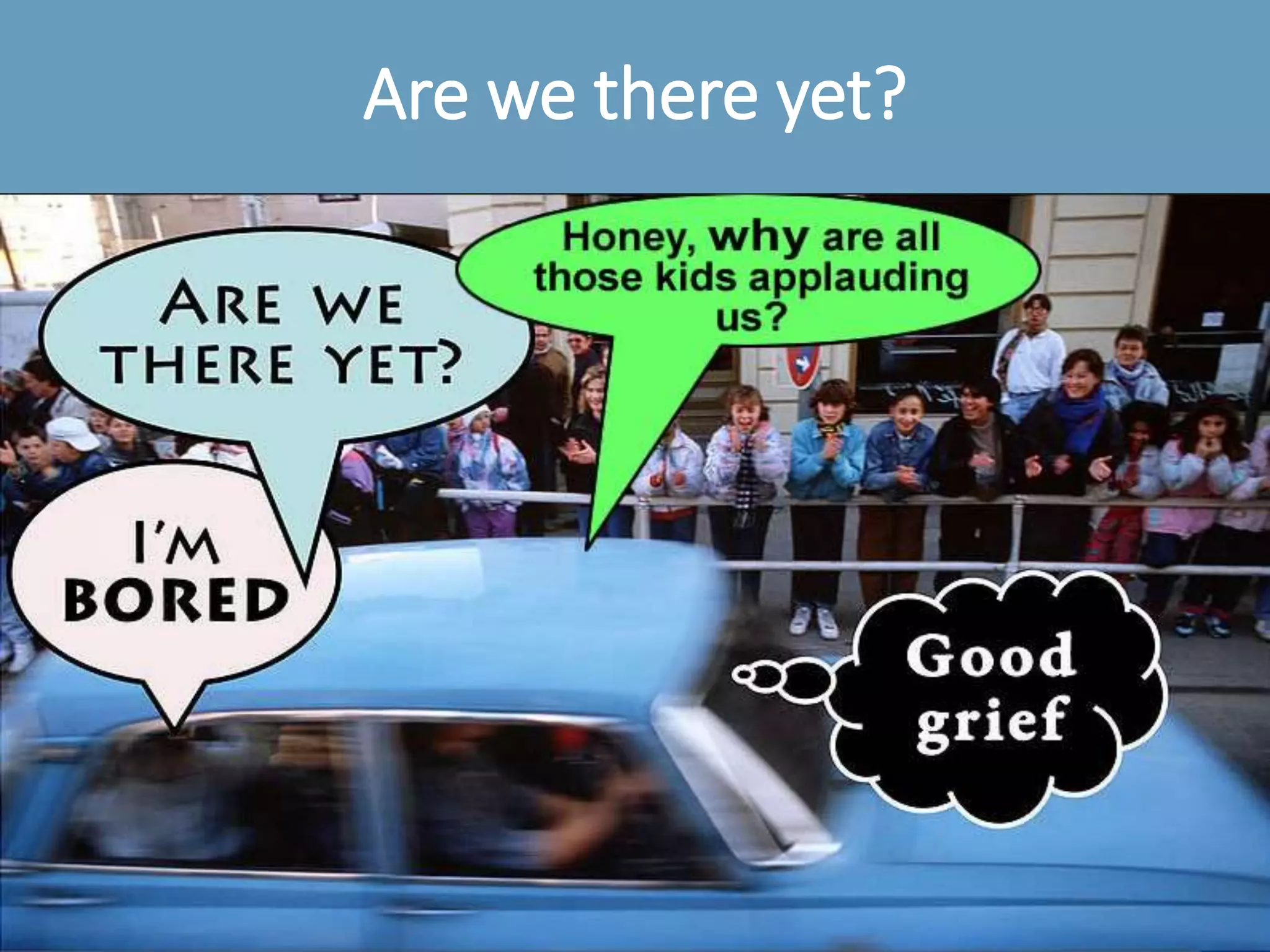
Are we there yet?
Tensions
• Quality assurance and enhancement
• Consistency or creativity
• Compliance culture or culture change?
• Cynicism or hope
• Initiative fatigue or excitement
• New wine in old wine skins…
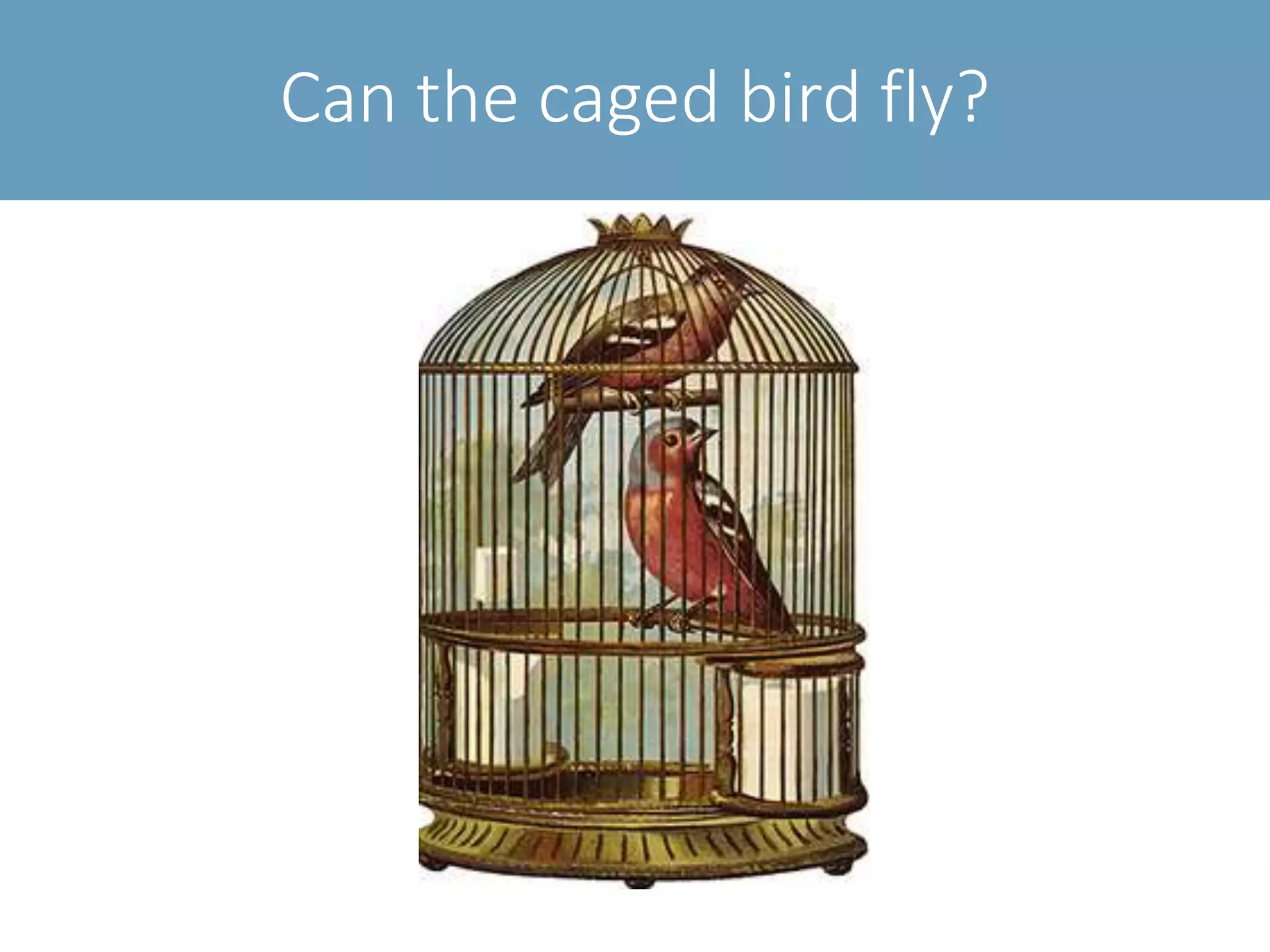
Can the caged bird fly?
References
Barnett, R. and Coate, K. 2004. Engaging the curriculum in higher education.
Maidenhead: Society for Research into Higher Education & Open University
Press.
Baxter-Magolda, M. 2001. Making their own way: Narratives for
transforming Higher Education to promote self-development.
Davies, Mark 2017. Developing 'A Personal Knowing': A Grounded Theory
Study. PhD. University of South Wales.
Fink, L. Dee 2013. Creating significant learning experiences: an integrated
approach to course design on college courses.
Palmer, P. 1983. To know as we are known: Education as a Spiritual Journey.
HarperOne.
Perry, W. 1998. Forms of Ethical Intellectual Development in the College
Years: A Scheme.
Polanyi, M. 1966. The Tacit Dimension. Chicago. University of Chicago Press.
Polanyi, M. 1958. Personal Knowledge: towards a post-critical philosophy.

A curriculum for personal knowing

  • 1.
    Tansy Jessop Irish NationalForum for the Enhancement of T&L 9 April 2019 Who am I? How do I know this is true? What is truth? Any evidence to back it up? This is costing me a fortune – do I care about truth claims?
  • 2.
    2 • Our context:who we are • Your thoughts about curriculum (and a card game) • Developing our framework: the process (more cards!) • The theory behind the framework • Bringing about culture change • Tensions and how we might overcome them The workshop
  • 3.
    Who we are •Mid-sized, applied, modern university • Maritime, Arts, Sports • Teaching-focused • 12,000 students • 70% first generation • Diverse, low income • Upward trajectory
  • 4.
    Why a newcurriculum framework? Make a difference to the student experience The DVC said so…! Let’s get systematic and consistent Shared educational purpose Let’s be thoughtful and theoretical
  • 5.
    • You have18 statements about curriculum • Agree 9 statements to create your diamond 9 • Place your favourites towards the top discard your six least favourite Curriculum: diamond 9
  • 6.
    Curriculum (n) running,chariot, course What’s going on here? What could possibly go wrong? Who are the stakeholders? What are their interests?
  • 7.
    Balancing the WHAT,HOW and WHY PRODUCT: structuring and managing content (WHAT) PROCESS: the lived experience (HOW) PRAXIS: wider purpose of HE, social justice, equality (WHY)
  • 8.
    Curriculum is… …complicated conversation …a verb ‘currere’ ratherthan a noun …an intellectual rather than an institutional or bureaucratic pursuitWilliam Pinar
  • 9.
    Stage 1: Generatingthe framework • Solent ‘distinctives’ • Aspirations • Lived experience • Other models
  • 10.
  • 11.
    Consultation (not just anotherbrick in the wall)  900 comments  Responses to 7 dimensions  Mainly from students
  • 12.
    Consultation: 9 xcurriculum cafes (n= 143/182 academic) • 62 Kiviat charts • 65 individual reflections • 373 coloured cards • 73 typed pages of ethnographic field- notes
  • 13.
    1 3 • Whatwould you want to see in a curriculum framework at your university? • Write down three crucial things: one per card • Thematically analyse responses Card activity
  • 14.
  • 15.
  • 16.
    Theory behind theframework • Balancing knowing, acting and being (Barnett and Coate 2004) • Significant learning (Fink 2003) • Intellectual journeys (Perry 1998; Baxter- Magolda 2001) • Personal knowing (Polanyi 1954;1966; Palmer 1983)
  • 17.
    How big areyour circles? (Barnett and Coate 2004) • Knowing is about content • Acting is about becoming a historian, actor, psychologist, or philosopher • Being is about understanding yourself, orienting yourself and relating your knowledge and action to the world Knowing Being Acting
  • 18.
    L.D. Fink (2003) Creatingsignificant learning experiences: an integrated approach to course design on college courses Significant Learning (Fink 2003)
  • 19.
    Learning how tolearn Caring Human dimension Integration Application Foundational knowledge: Topics A, B, C, D, E, F, G, H, I… Learning-centredparadigm– multi-dimensional Content-centred paradigm – one dimensional Content vs learning-oriented (Fink 2003)
  • 20.
    Intellectual development ina nutshell Model Stage 1 Stage 2 Stage 3 Stage 4 Perry Dualism Multiplicity Relativism Commitment Baxter Magolda Absolute Knowledge Transitional Independent Contextual self- authorship
  • 21.
  • 22.
    2 2 Solent’s realworld curriculum
  • 23.
    P R ES E N T A T I O N T I T L E – G O T O I N S E R T > H E A D E R & F O O T E R T O E D I T T H I S T E X T 2 3 Making it happen: reviewing all courses
  • 24.
    2 4 53 programmesin 16 departments in six months! Oh no, 11 departments to go! There have been triumphs! And there have been casualties…
  • 25.
    P R ES E N T A T I O N T I T L E – G O T O I N S E R T > H E A D E R & F O O T E R T O E D I T T H I S T E X T 2 5 Curriculum Framework Workshop 2: Vision, ideas, philosophy
  • 26.
  • 27.
    P R ES E N T A T I O N T I T L E – G O T O I N S E R T > H E A D E R & F O O T E R T O E D I T T H I S T E X T 2 7 CURRICULUM FRAMEWORK WORKSHOP 3
  • 28.
    Listen and write Talkto a partner about your unit, as if they are a student. Tell them: • What is novel and exciting and significant about the unit • What they will learn and become through the unit • How they will learn and be assessed • What knowledge and capability they will take away from it • How it links to industry and to other units on the degree PARTNER: Please jot down key words while they talk.
  • 29.
    The old unitdescriptor
  • 30.
    The new unitdescriptor
  • 31.
  • 32.
    Tensions • Quality assuranceand enhancement • Consistency or creativity • Compliance culture or culture change? • Cynicism or hope • Initiative fatigue or excitement • New wine in old wine skins…
  • 33.
    Can the cagedbird fly?
  • 34.
    References Barnett, R. andCoate, K. 2004. Engaging the curriculum in higher education. Maidenhead: Society for Research into Higher Education & Open University Press. Baxter-Magolda, M. 2001. Making their own way: Narratives for transforming Higher Education to promote self-development. Davies, Mark 2017. Developing 'A Personal Knowing': A Grounded Theory Study. PhD. University of South Wales. Fink, L. Dee 2013. Creating significant learning experiences: an integrated approach to course design on college courses. Palmer, P. 1983. To know as we are known: Education as a Spiritual Journey. HarperOne. Perry, W. 1998. Forms of Ethical Intellectual Development in the College Years: A Scheme. Polanyi, M. 1966. The Tacit Dimension. Chicago. University of Chicago Press. Polanyi, M. 1958. Personal Knowledge: towards a post-critical philosophy.

Editor's Notes

  • #6 Resources: a set of curriculum cards for each group.