Making sense of
curriculum in Higher
Education
Tansy Jessop
Visiting Professor BILT
24 January 2019
The Plan
• Your thoughts on curriculum
• A card game
• Theorising curriculum
• A way forward?
• Finishing with a poem.
Choose a picture that catches
your eye
Reflective jottings
• Why does the image appeal to you?
• How does the image relate to your understanding of
your own degree curriculum?
• What light does the image shed on the relationship
between teaching and the curriculum?
• You have 18 statements about curriculum
• You need to keep 9 and discard 6
• Discuss your understanding of the term
‘curriculum’
• Agree the 9 statements that best represent your
collective understanding
• Arrange your statements in a diamond, with your
favourites towards the top.
What is curriculum?
The diamond 9
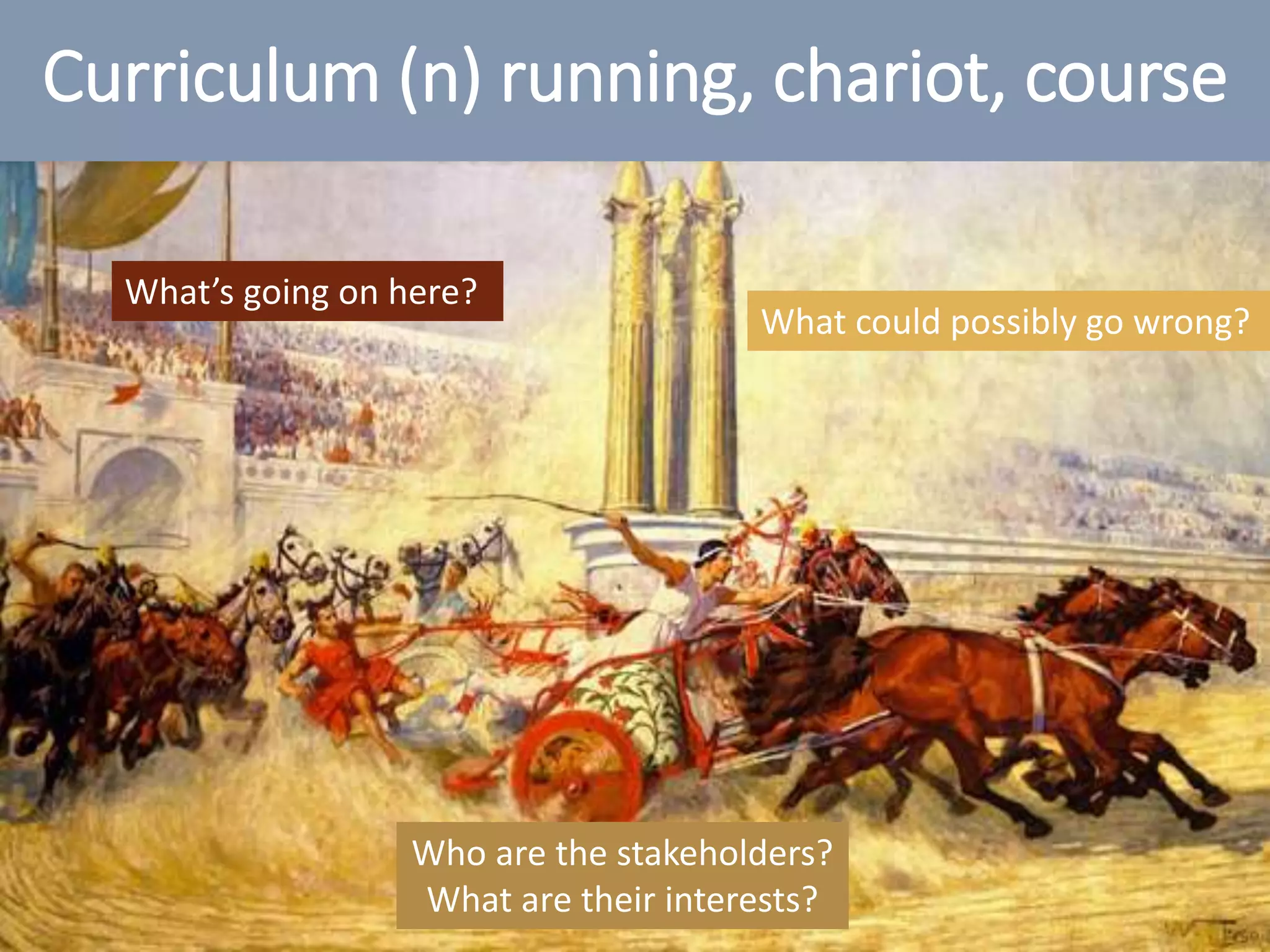
Curriculum (n) running, chariot, course
What’s going on here?
What could possibly go wrong?
Who are the stakeholders?
What are their interests?
Balancing the WHAT, HOW and WHY
PRODUCT: structuring and managing content (WHAT)
PROCESS: the lived experience (HOW)
PRAXIS: wider purpose of HE, social justice, equality
(WHY)
Curriculum is…
…complicated
conversation
…a verb ‘currere’
rather than a
noun
…an intellectual rather
than an institutional or
bureaucratic pursuit
William Pinar
L.D. Fink (2003)
Creating significant
learning experiences:
an integrated
approach to course
design on college
courses
Significant Learning (Fink 2003)
Learning how to learn
Caring
Human dimension
Integration
Application
Foundational knowledge: Topics A, B, C, D, E, F, G, H, I…
The learning-
centred
paradigm
pushes
teaching and
learning in
this direction,
into multiple
dimensions of
learning
The content-centred paradigm pushes teaching and
learning in this direction, along one dimension of learning
Content vs learning-oriented (Fink 2003)
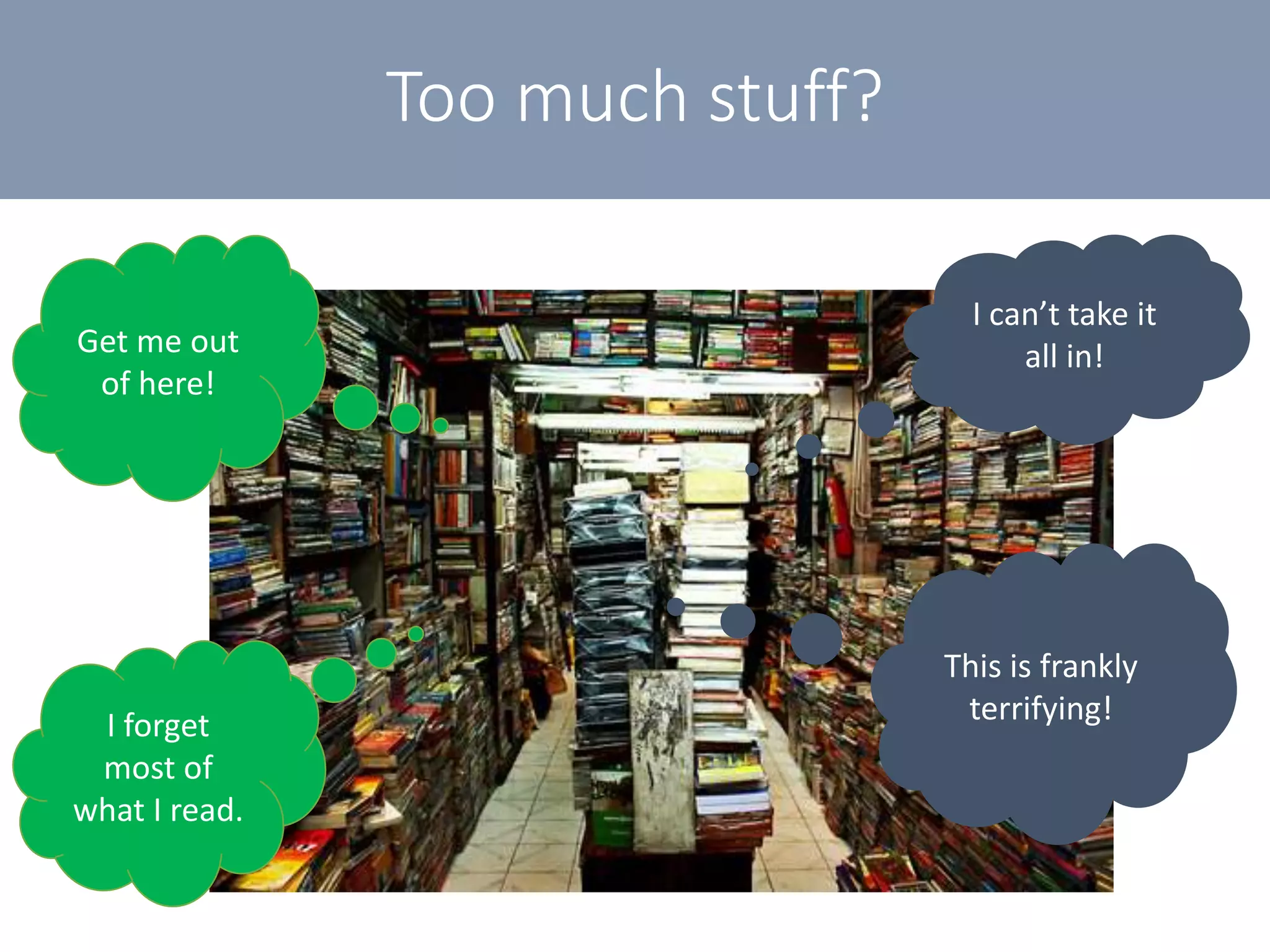
Too much stuff?
I can’t take it
all in!
This is frankly
terrifying!
Get me out
of here!
I forget
most of
what I read.
The over-stuffed curriculum
The best approach from the student’s perspective is to focus
on concepts. I’m sorry to break it to you, but your students are
not going to remember 90 per cent – possibly 99 per cent – of
what you teach them unless it’s conceptual…. when broad,
over-arching connections are made, education occurs. Most
details are only a necessary means to that end.
http://www.timeshighereducation.co.uk/features/a-students-
lecture-to-rofessors/2013238.fullarticle#.U3orx_f9xWc.twitter
A student’s lecture to her professor….
But knowledge matters (Karl Maton)A balancing act?
Curriculum is contested
Who chooses
the what counts
as knowledge?
Knowledge must
compete to be in
the curriculum
Intellectual development in a nutshell
Model Stage 1 Stage 2 Stage 3 Stage 4
Perry Dualism Multiplicity Relativism Commitment
Baxter
Magolda
Absolute
Knowledge
Transitional Independent Contextual
self-
authorship
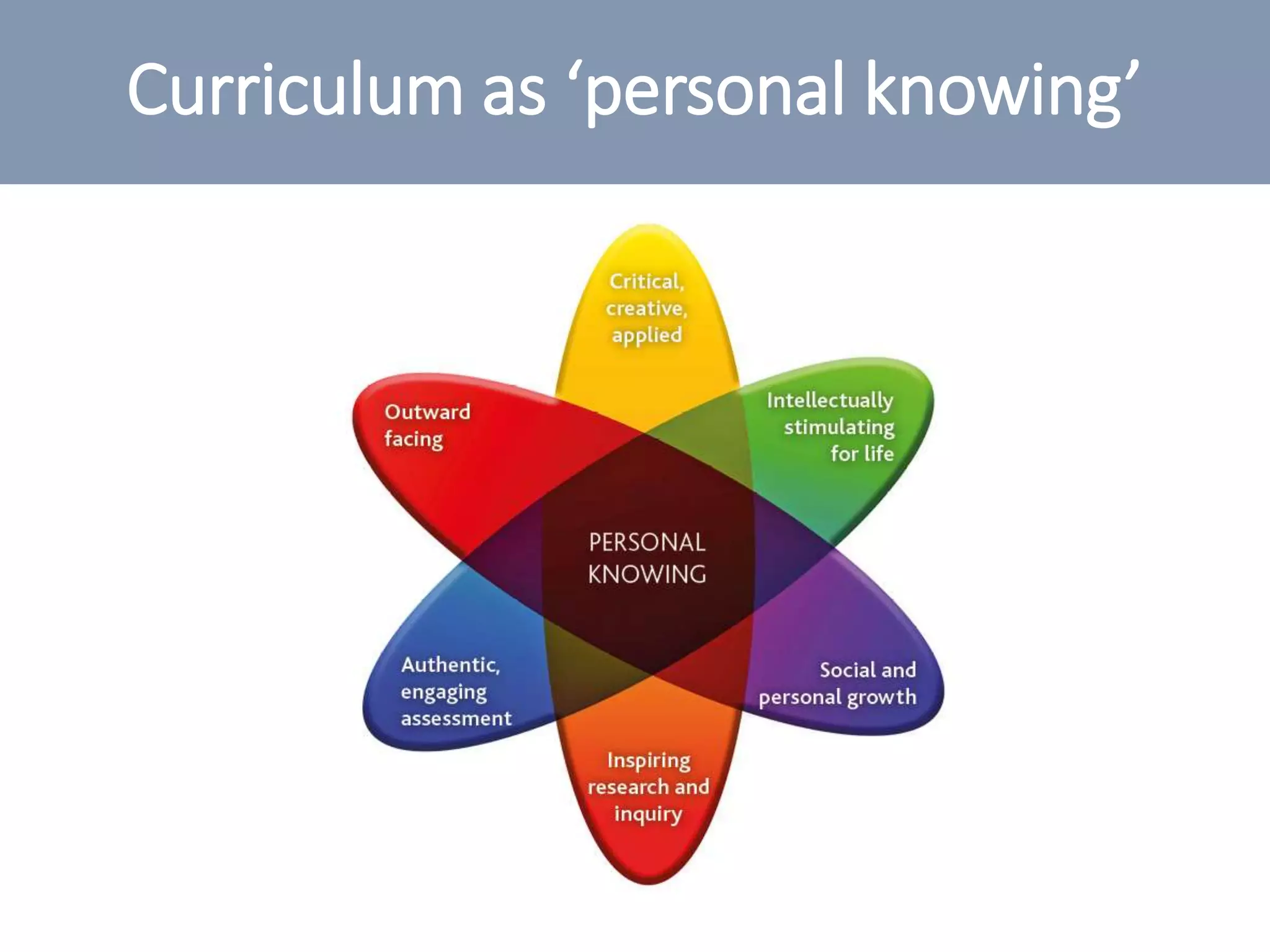
Curriculum as ‘personal knowing’
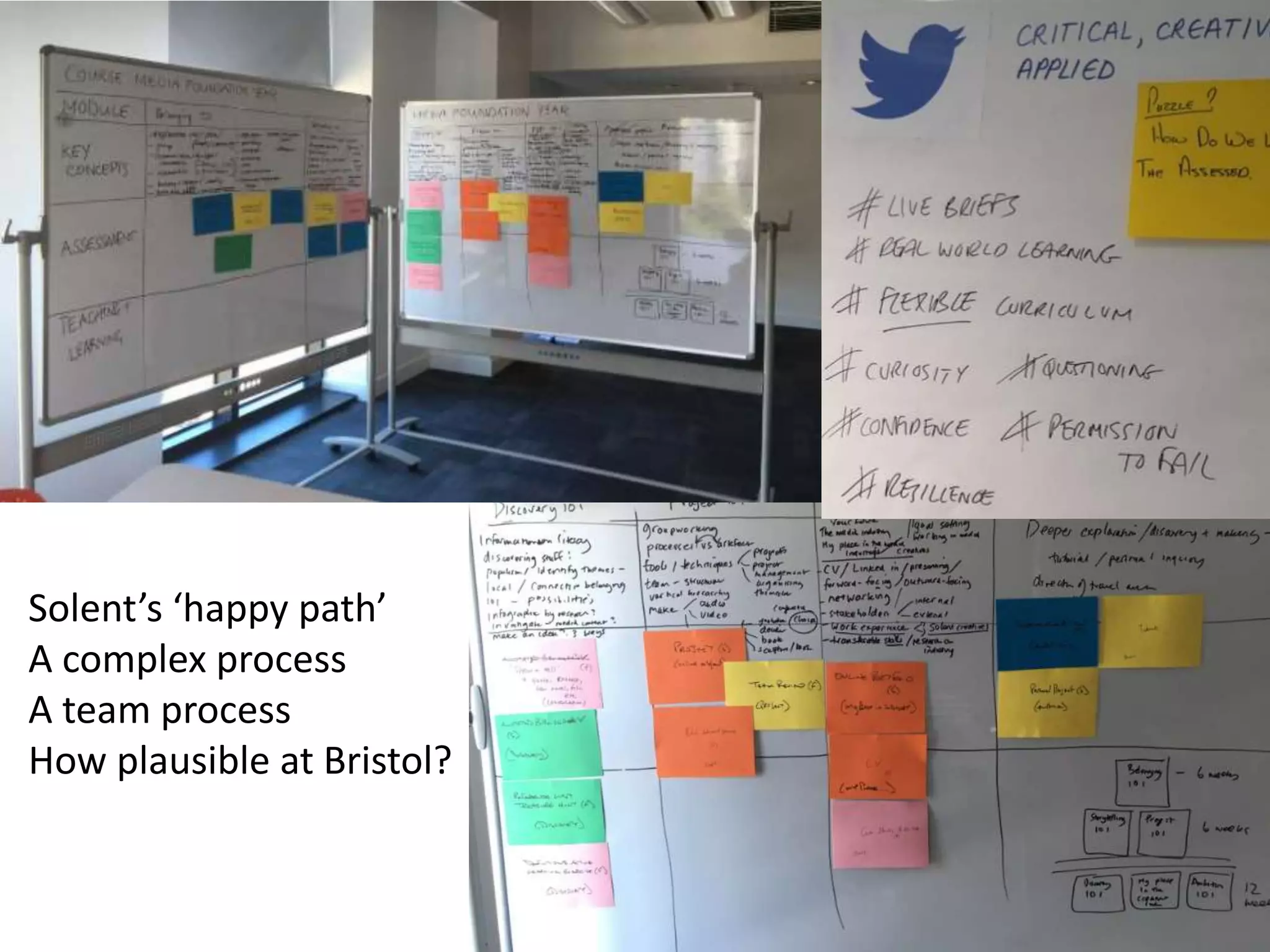
Solent’s ‘happy path’
A complex process
A team process
How plausible at Bristol?
Poetry reading

Making sense of curriculum in Higher Education

  • 1.
    Making sense of curriculumin Higher Education Tansy Jessop Visiting Professor BILT 24 January 2019
  • 2.
    The Plan • Yourthoughts on curriculum • A card game • Theorising curriculum • A way forward? • Finishing with a poem.
  • 3.
    Choose a picturethat catches your eye
  • 4.
    Reflective jottings • Whydoes the image appeal to you? • How does the image relate to your understanding of your own degree curriculum? • What light does the image shed on the relationship between teaching and the curriculum?
  • 5.
    • You have18 statements about curriculum • You need to keep 9 and discard 6 • Discuss your understanding of the term ‘curriculum’ • Agree the 9 statements that best represent your collective understanding • Arrange your statements in a diamond, with your favourites towards the top. What is curriculum? The diamond 9
  • 6.
    Curriculum (n) running,chariot, course What’s going on here? What could possibly go wrong? Who are the stakeholders? What are their interests?
  • 7.
    Balancing the WHAT,HOW and WHY PRODUCT: structuring and managing content (WHAT) PROCESS: the lived experience (HOW) PRAXIS: wider purpose of HE, social justice, equality (WHY)
  • 8.
    Curriculum is… …complicated conversation …a verb‘currere’ rather than a noun …an intellectual rather than an institutional or bureaucratic pursuit William Pinar
  • 9.
    L.D. Fink (2003) Creatingsignificant learning experiences: an integrated approach to course design on college courses Significant Learning (Fink 2003)
  • 10.
    Learning how tolearn Caring Human dimension Integration Application Foundational knowledge: Topics A, B, C, D, E, F, G, H, I… The learning- centred paradigm pushes teaching and learning in this direction, into multiple dimensions of learning The content-centred paradigm pushes teaching and learning in this direction, along one dimension of learning Content vs learning-oriented (Fink 2003)
  • 11.
    Too much stuff? Ican’t take it all in! This is frankly terrifying! Get me out of here! I forget most of what I read.
  • 12.
  • 13.
    The best approachfrom the student’s perspective is to focus on concepts. I’m sorry to break it to you, but your students are not going to remember 90 per cent – possibly 99 per cent – of what you teach them unless it’s conceptual…. when broad, over-arching connections are made, education occurs. Most details are only a necessary means to that end. http://www.timeshighereducation.co.uk/features/a-students- lecture-to-rofessors/2013238.fullarticle#.U3orx_f9xWc.twitter A student’s lecture to her professor….
  • 14.
    But knowledge matters(Karl Maton)A balancing act?
  • 16.
    Curriculum is contested Whochooses the what counts as knowledge? Knowledge must compete to be in the curriculum
  • 17.
    Intellectual development ina nutshell Model Stage 1 Stage 2 Stage 3 Stage 4 Perry Dualism Multiplicity Relativism Commitment Baxter Magolda Absolute Knowledge Transitional Independent Contextual self- authorship
  • 18.
  • 19.
    Solent’s ‘happy path’ Acomplex process A team process How plausible at Bristol?
  • 20.

Editor's Notes

  • #13 Language of ‘covering material’ Should we be surprised?