Analysis Action
Research Data
Chapter 7
Educational practices provided the data, the subject
matter, which forms the problems of inquiry.. . .
A constant flow of less formal reports on special
school affairs and results is in needed. . . It seems to
me that the contributions that might come from
classroom teachers is a comparatively neglected
field: or to change the metaphor,
an almost unworthy mine.
John Dewey (1929)
The Sources of a Science of Education
"
"
Cyclesof
Inquiry
"Now that I have the data
collectedwhat do I do next?"
• The analytic function of research is crucial
in terms of making sound inferences and
judgements which lead to improved
practice and understanding.
• Action research has been described in
terms of cyclical human activities or
cycles.
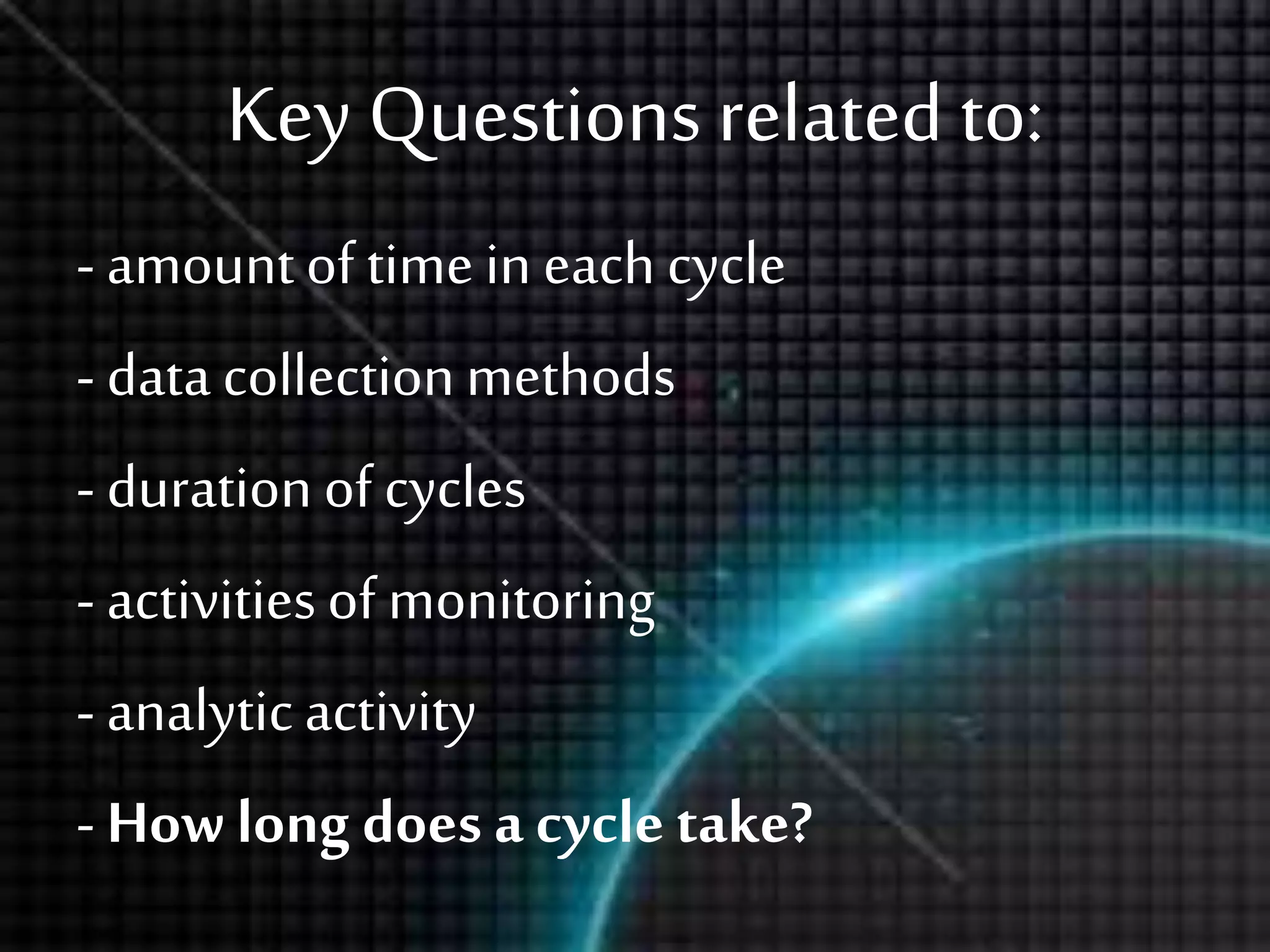
Key Questions related to:
- amountof timein eachcycle
- datacollectionmethods
- durationofcycles
- activitiesof monitoring
- analyticactivity
- Howlong does a cycle take?
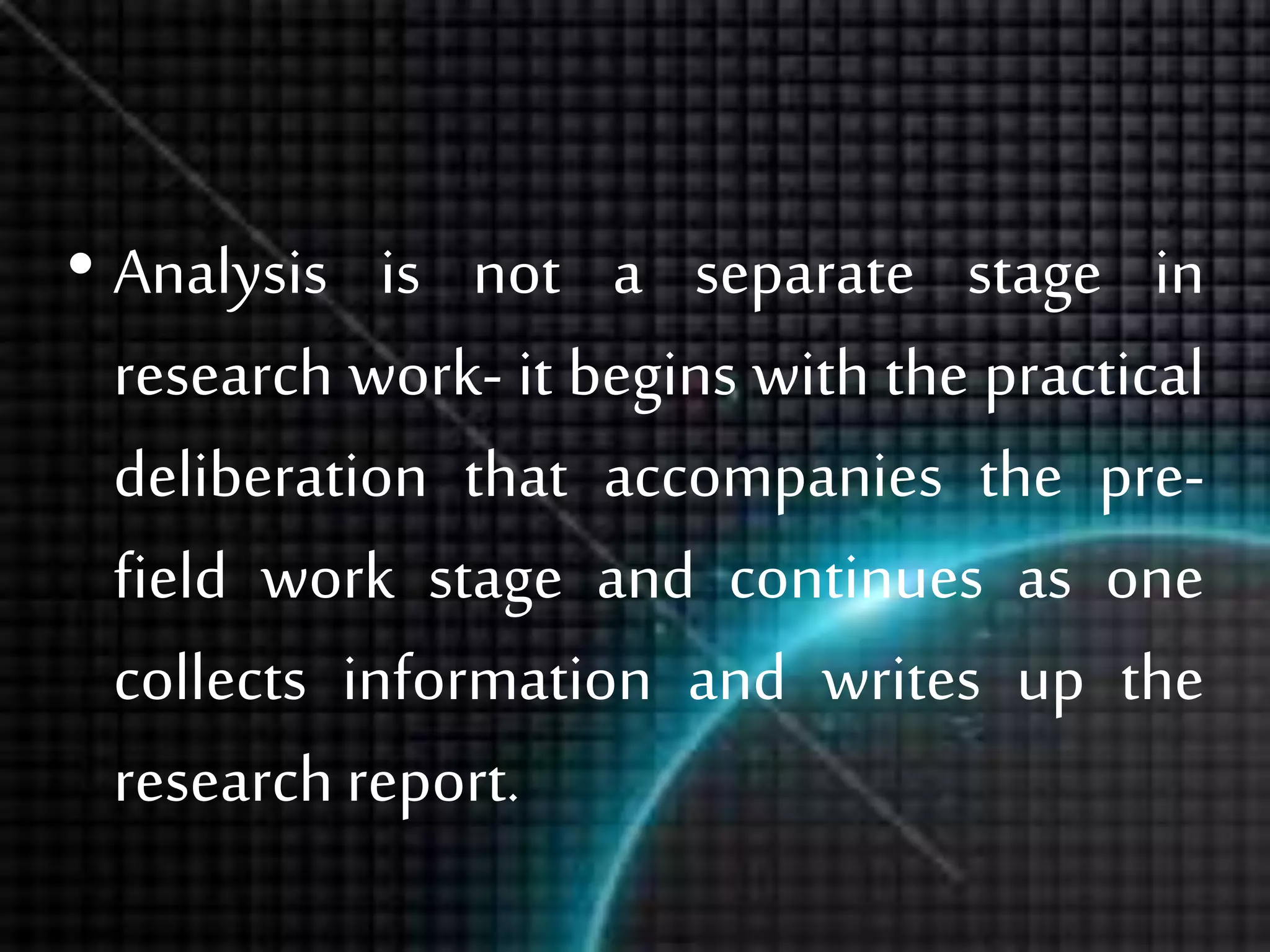
• Analysis is not a separate stage in
research work- it begins with the practical
deliberation that accompanies the pre-
field work stage and continues as one
collects information and writes up the
research report.
• Rather than doing analysis immediately
after field work and date collection, there
is a Analysis and Issues in Action
Research.
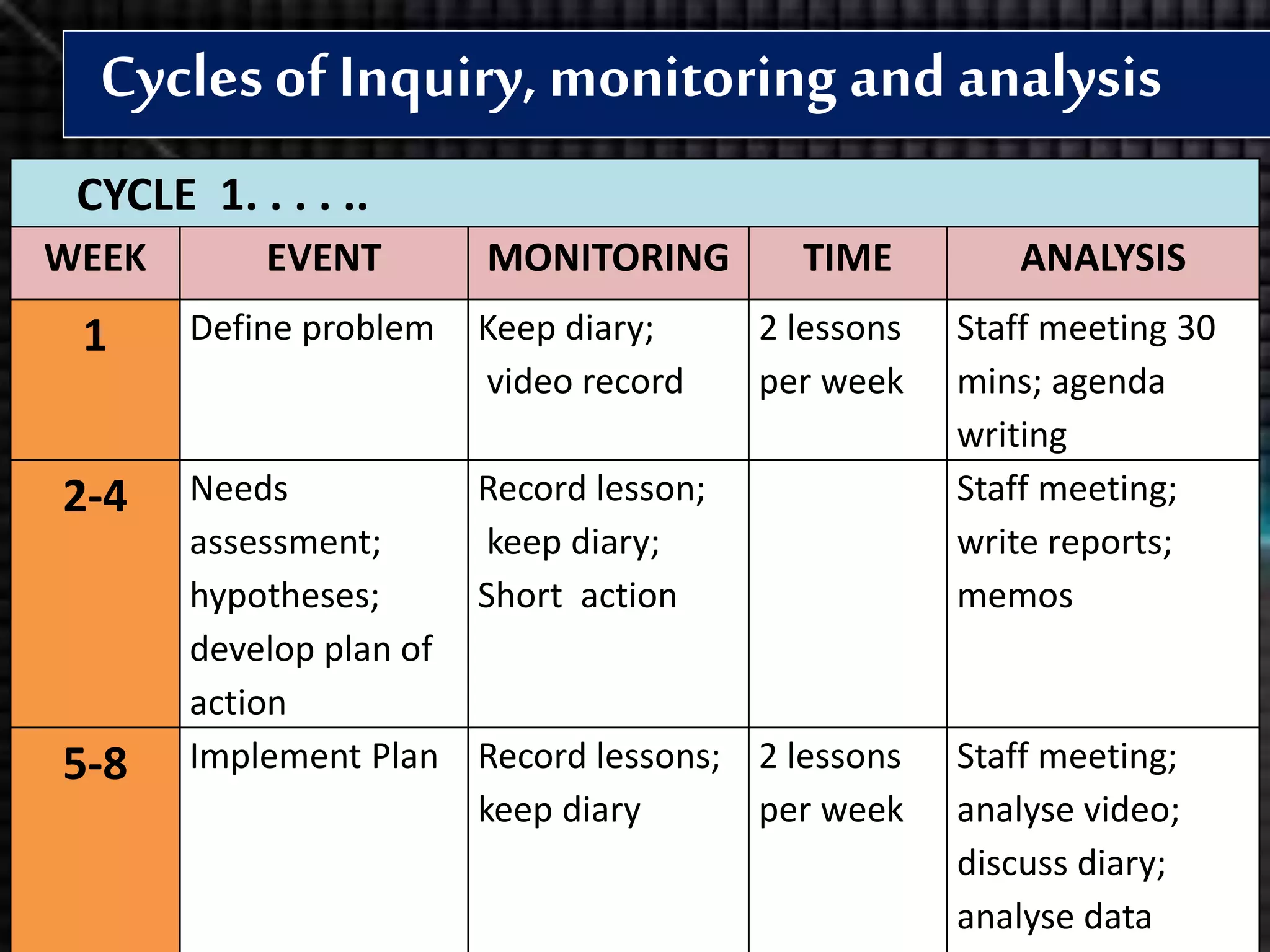
CYCLE 1. . . . ..
WEEK EVENT MONITORING TIME ANALYSIS
1 Define problem Keep diary;
video record
2 lessons
per week
Staff meeting 30
mins; agenda
writing
2-4 Needs
assessment;
hypotheses;
develop plan of
action
Record lesson;
keep diary;
Short action
Staff meeting;
write reports;
memos
5-8 Implement Plan Record lessons;
keep diary
2 lessons
per week
Staff meeting;
analyse video;
discuss diary;
analyse data
Cyclesof Inquiry, monitoring and analysis
8-9 Evaluate plan of
action
Interviews;
Video Record;
diary
2 lessons
per week
Quadrangulate
team; discuss;
reflect;
code key issues
10-
11
Decide on plan Record
lessons; diary
Reflective group
deliberation
12 Implemented
revised action
plan
Record lessons Discuss action
reports
13 Executes steps as per above in weeks 1-11
14 Write a case study based on case data, case records etc.-
maximum of 5,000 words – for team meeting next term.
CYCLE 2.. . . .
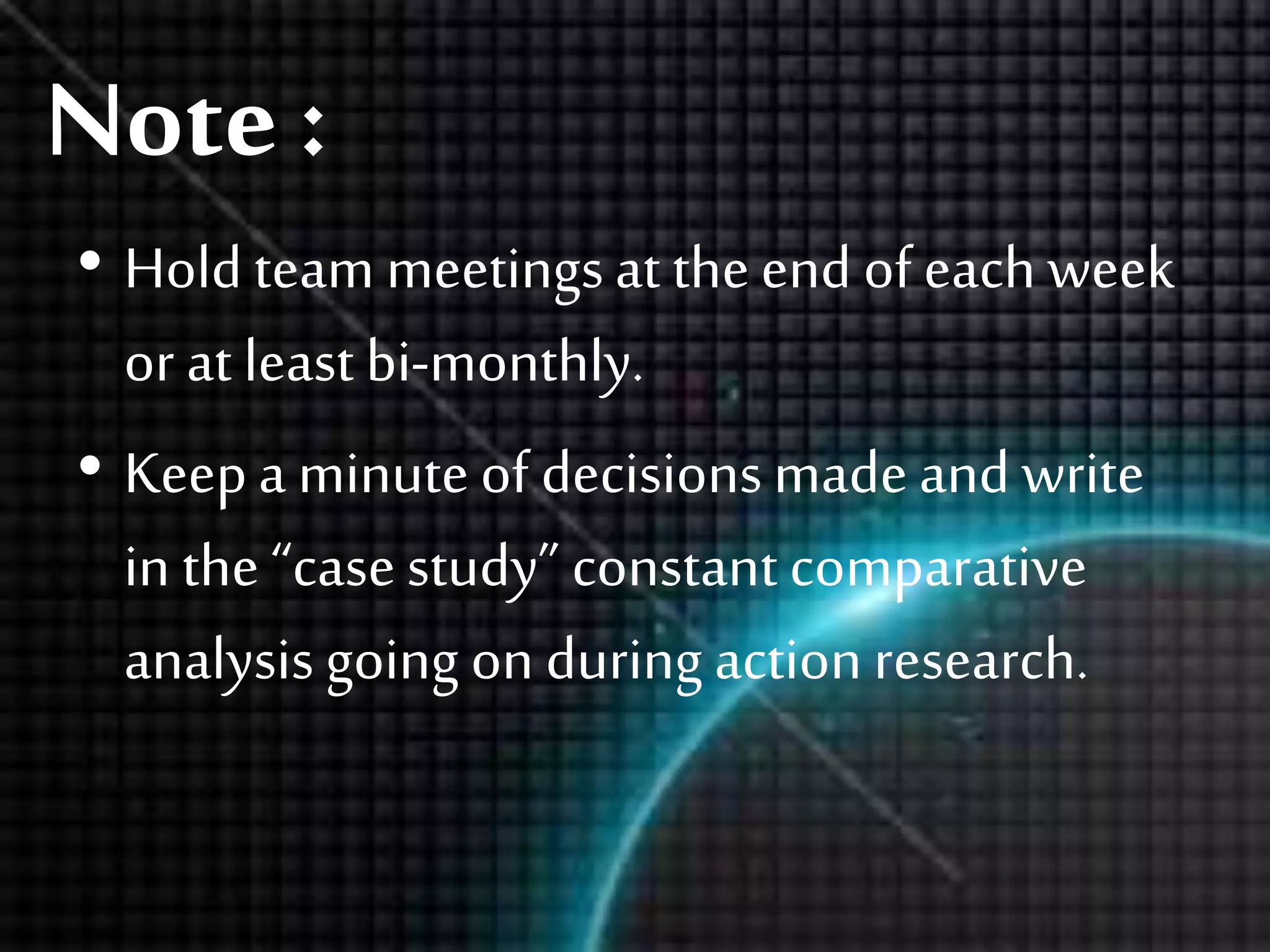
Note :
• Holdteam meetingsat theend ofeach week
or at least bi-monthly.
• Keepa minuteof decisionsmadeand write
in the “casestudy” constant comparative
analysisgoing on during actionresearch.
4 Stages of Analysis
•Processing data
•Mapping the data
• Interpreting the evidence
• Presentation of the results
• It should be fuller in mind that fuller
treatments for the analysis and
interpretation of research data
available, and analysis will differ
depending on whether the study is
quantitative or qualitative.
• There has been a major increase in the
literature concerning qualitative data
analysis in particular, yet only a few
studies focus directly on educational or
curriculum problems (Boghan and
Biklen, 1984)
• The emphasis in this treatment is on the
teacher- researcher, who ordinarily will
not have extensive training in the use of
quantitative - type statisticalstudies.
• It is crucial to be able to see what
information and data one has and how
one might proceed to interpret and
understand these from the teacher-
practitioner vantage point.
• One important point should be
underlined at the outset--- one should
not wait until one has hundreds or even
thousands of pages of field notes etc.
before beginning analysis.
End of presentation...
Thank you!

Cycles of inquiry (research)

  • 1.
  • 2.
    Educational practices providedthe data, the subject matter, which forms the problems of inquiry.. . . A constant flow of less formal reports on special school affairs and results is in needed. . . It seems to me that the contributions that might come from classroom teachers is a comparatively neglected field: or to change the metaphor, an almost unworthy mine. John Dewey (1929) The Sources of a Science of Education " "
  • 3.
  • 4.
    "Now that Ihave the data collectedwhat do I do next?" • The analytic function of research is crucial in terms of making sound inferences and judgements which lead to improved practice and understanding.
  • 5.
    • Action researchhas been described in terms of cyclical human activities or cycles.
  • 6.
    Key Questions relatedto: - amountof timein eachcycle - datacollectionmethods - durationofcycles - activitiesof monitoring - analyticactivity - Howlong does a cycle take?
  • 7.
    • Analysis isnot a separate stage in research work- it begins with the practical deliberation that accompanies the pre- field work stage and continues as one collects information and writes up the research report.
  • 8.
    • Rather thandoing analysis immediately after field work and date collection, there is a Analysis and Issues in Action Research.
  • 9.
    CYCLE 1. .. . .. WEEK EVENT MONITORING TIME ANALYSIS 1 Define problem Keep diary; video record 2 lessons per week Staff meeting 30 mins; agenda writing 2-4 Needs assessment; hypotheses; develop plan of action Record lesson; keep diary; Short action Staff meeting; write reports; memos 5-8 Implement Plan Record lessons; keep diary 2 lessons per week Staff meeting; analyse video; discuss diary; analyse data Cyclesof Inquiry, monitoring and analysis
  • 10.
    8-9 Evaluate planof action Interviews; Video Record; diary 2 lessons per week Quadrangulate team; discuss; reflect; code key issues 10- 11 Decide on plan Record lessons; diary Reflective group deliberation 12 Implemented revised action plan Record lessons Discuss action reports 13 Executes steps as per above in weeks 1-11 14 Write a case study based on case data, case records etc.- maximum of 5,000 words – for team meeting next term. CYCLE 2.. . . .
  • 11.
    Note : • Holdteammeetingsat theend ofeach week or at least bi-monthly. • Keepa minuteof decisionsmadeand write in the “casestudy” constant comparative analysisgoing on during actionresearch.
  • 12.
    4 Stages ofAnalysis •Processing data •Mapping the data • Interpreting the evidence • Presentation of the results
  • 13.
    • It shouldbe fuller in mind that fuller treatments for the analysis and interpretation of research data available, and analysis will differ depending on whether the study is quantitative or qualitative.
  • 14.
    • There hasbeen a major increase in the literature concerning qualitative data analysis in particular, yet only a few studies focus directly on educational or curriculum problems (Boghan and Biklen, 1984)
  • 15.
    • The emphasisin this treatment is on the teacher- researcher, who ordinarily will not have extensive training in the use of quantitative - type statisticalstudies.
  • 16.
    • It iscrucial to be able to see what information and data one has and how one might proceed to interpret and understand these from the teacher- practitioner vantage point.
  • 17.
    • One importantpoint should be underlined at the outset--- one should not wait until one has hundreds or even thousands of pages of field notes etc. before beginning analysis.
  • 18.