MODERN PROJECT MANAGEMENT
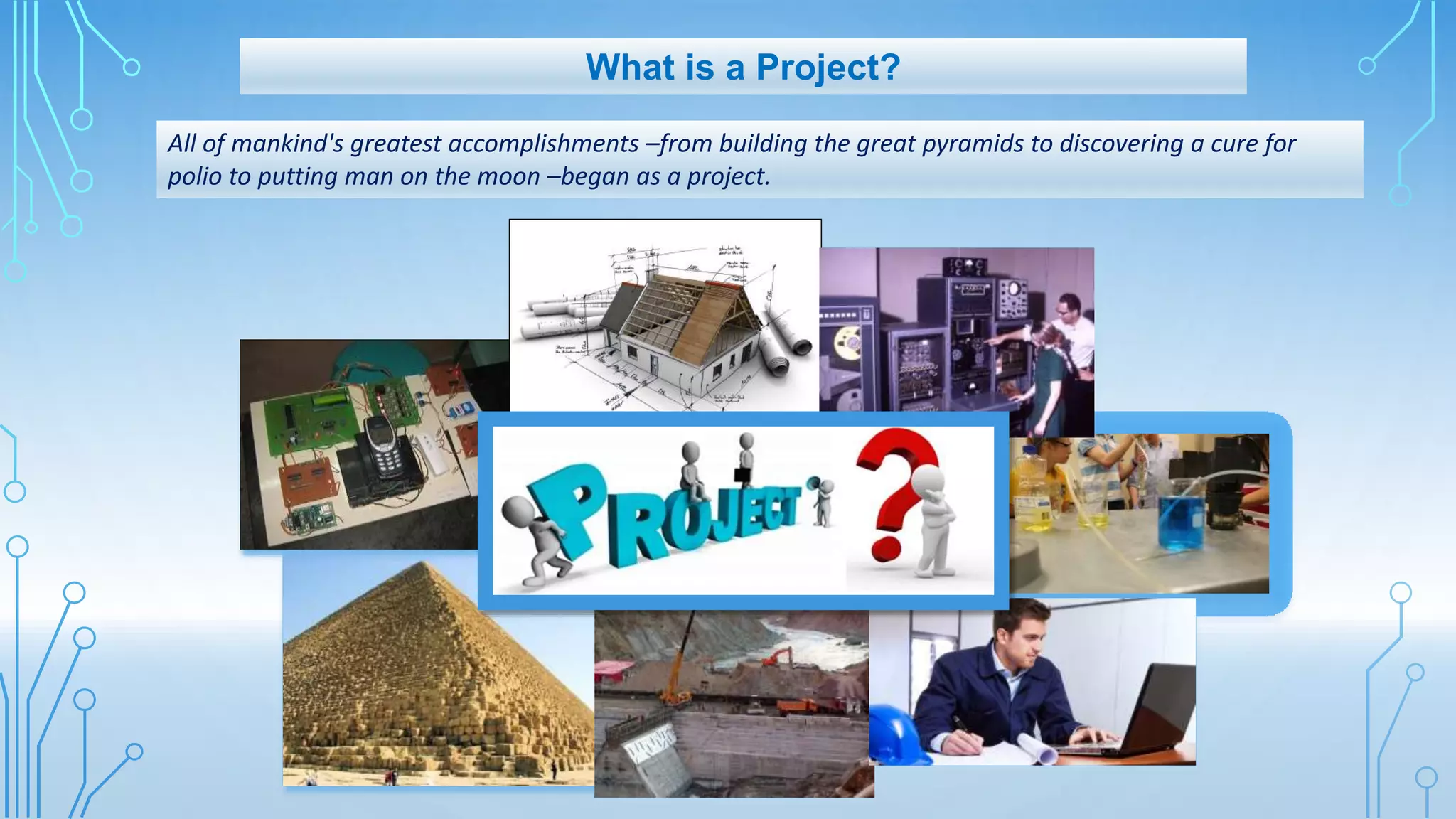
All of mankind's greatest accomplishments –from building the great pyramids to discovering a cure for
polio to putting man on the moon –began as a project.
What is a Project?
The major characteristics of a project are as follows:
1. An established objective.
2. A defined life span with a beginning and an end.
3. Usually, the involvement of several departments and professionals.
4. Typically, doing something that has never been done before.
5. Specific time, cost, and performance requirements.
What is a Project?
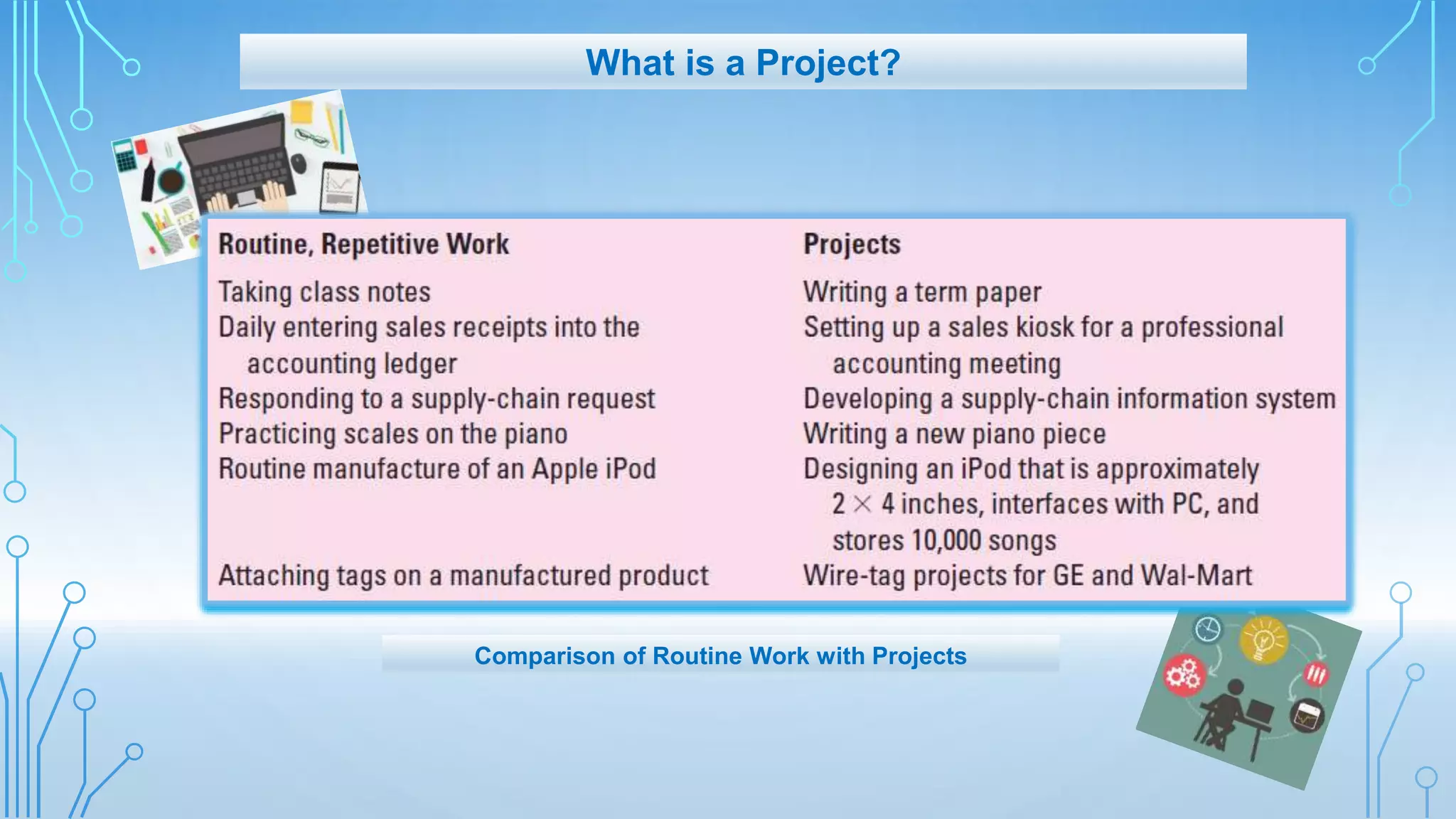
Comparison of Routine Work with Projects
What is a Project?
What is a Project?
A project, then, is a temporary endeavor undertaken to create a unique
product or service. It is specific, timely, usually multidisciplinary, always
conflict ridden.
Project are parts of overall programs and may be broken down into
tasks, subtasks, and further if desired.
According to the Project Management Institute,
A project is a temporary endeavor undertaken to create a
unique product, service or result.
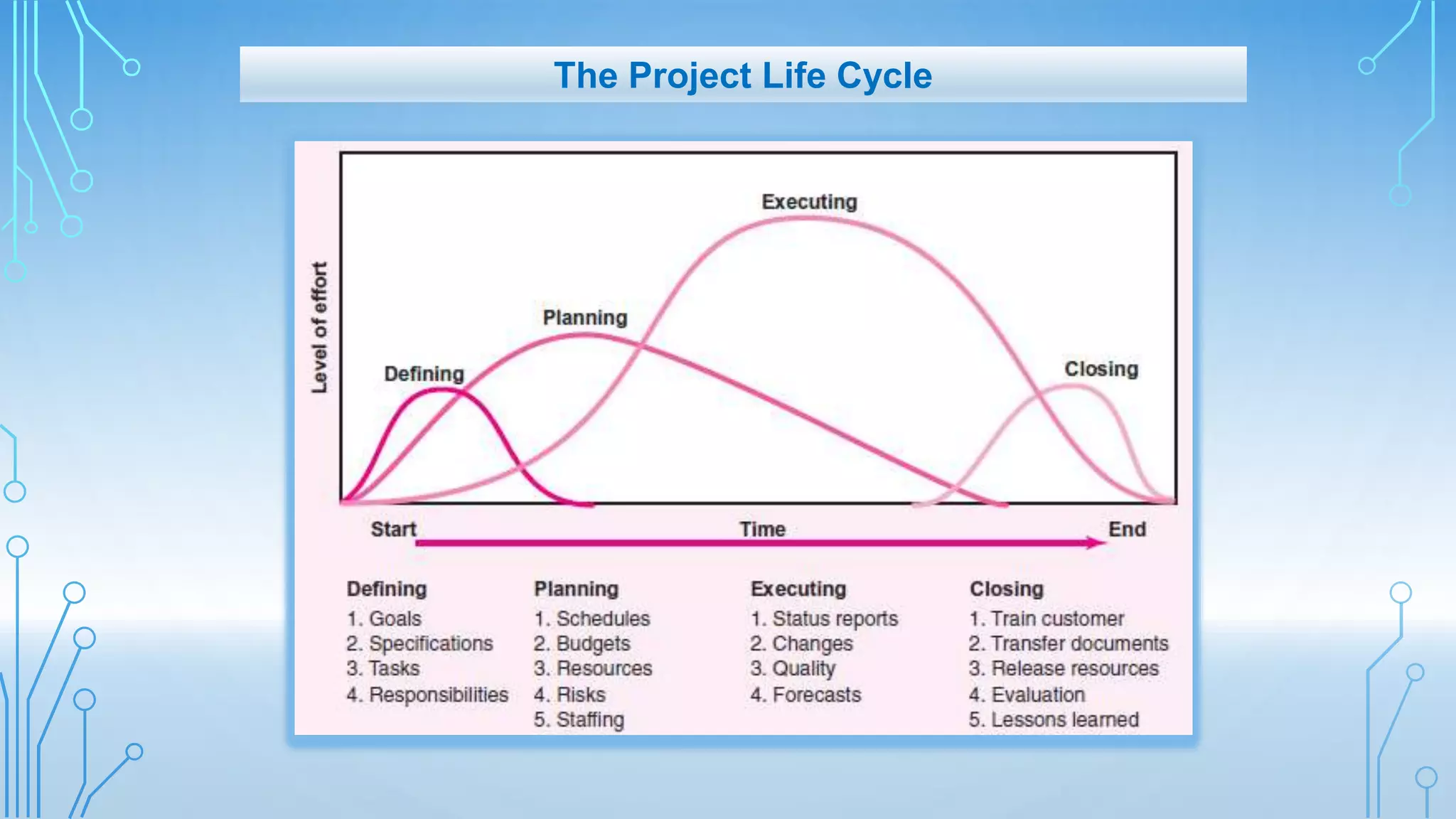
The Project Life Cycle
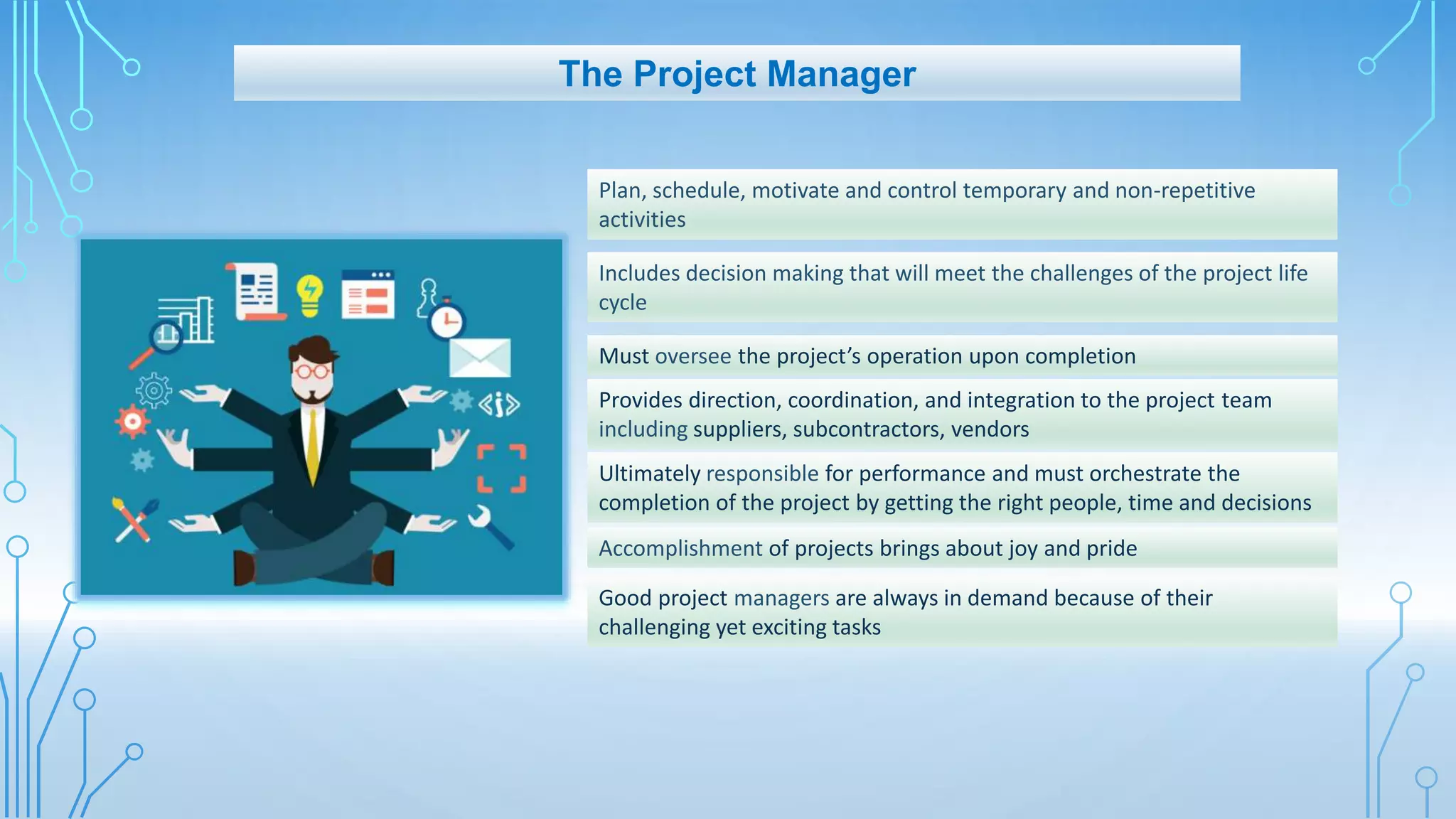
Plan, schedule, motivate and control temporary and non-repetitive
activities
The Project Manager
Includes decision making that will meet the challenges of the project life
cycle
Must oversee the project’s operation upon completion
Provides direction, coordination, and integration to the project team
including suppliers, subcontractors, vendors
Ultimately responsible for performance and must orchestrate the
completion of the project by getting the right people, time and decisions
Accomplishment of projects brings about joy and pride
Good project managers are always in demand because of their
challenging yet exciting tasks
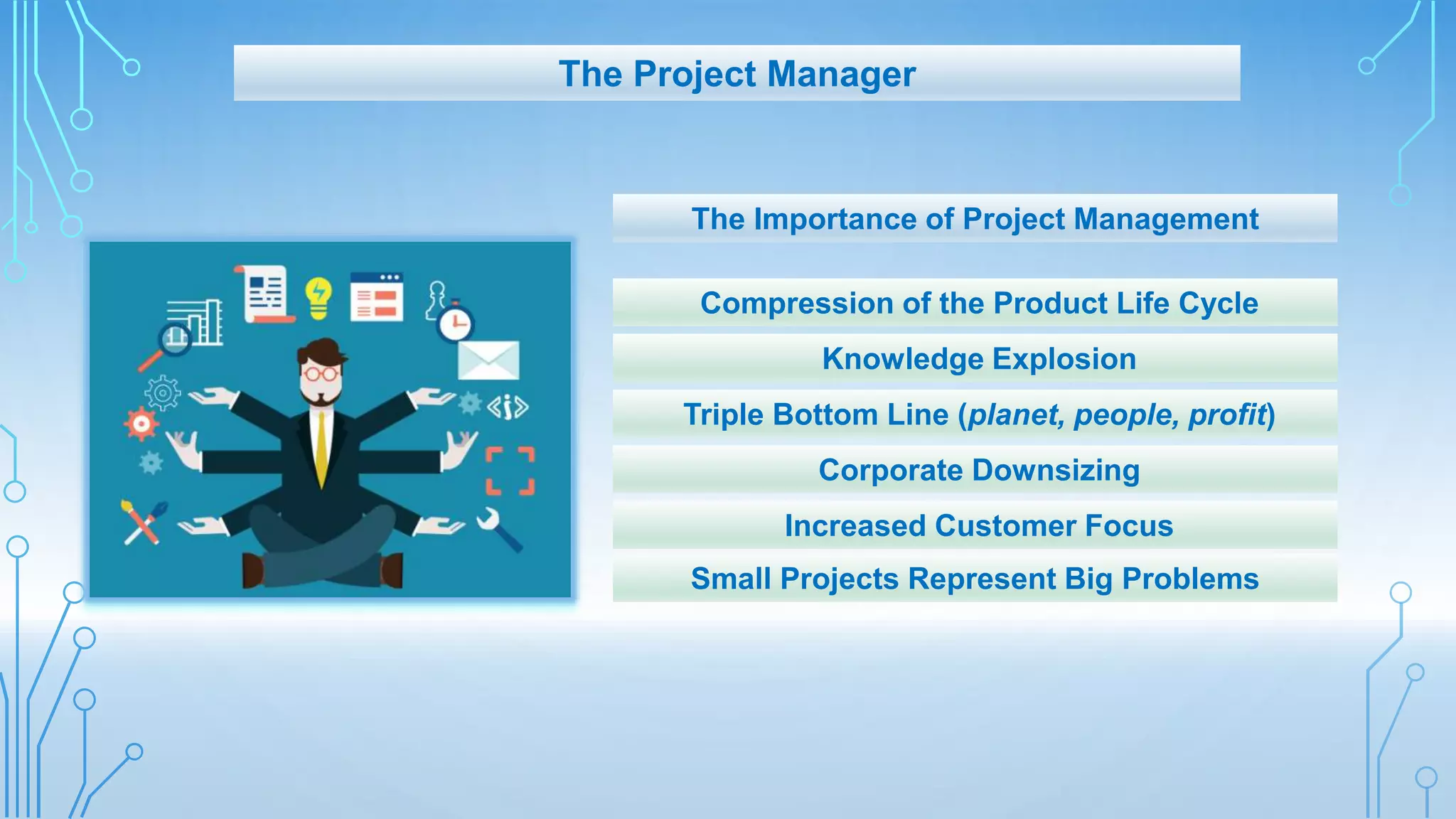
The Importance of Project Management
Compression of the Product Life Cycle
Knowledge Explosion
Triple Bottom Line (planet, people, profit)
Corporate Downsizing
Increased Customer Focus
Small Projects Represent Big Problems
The Project Manager
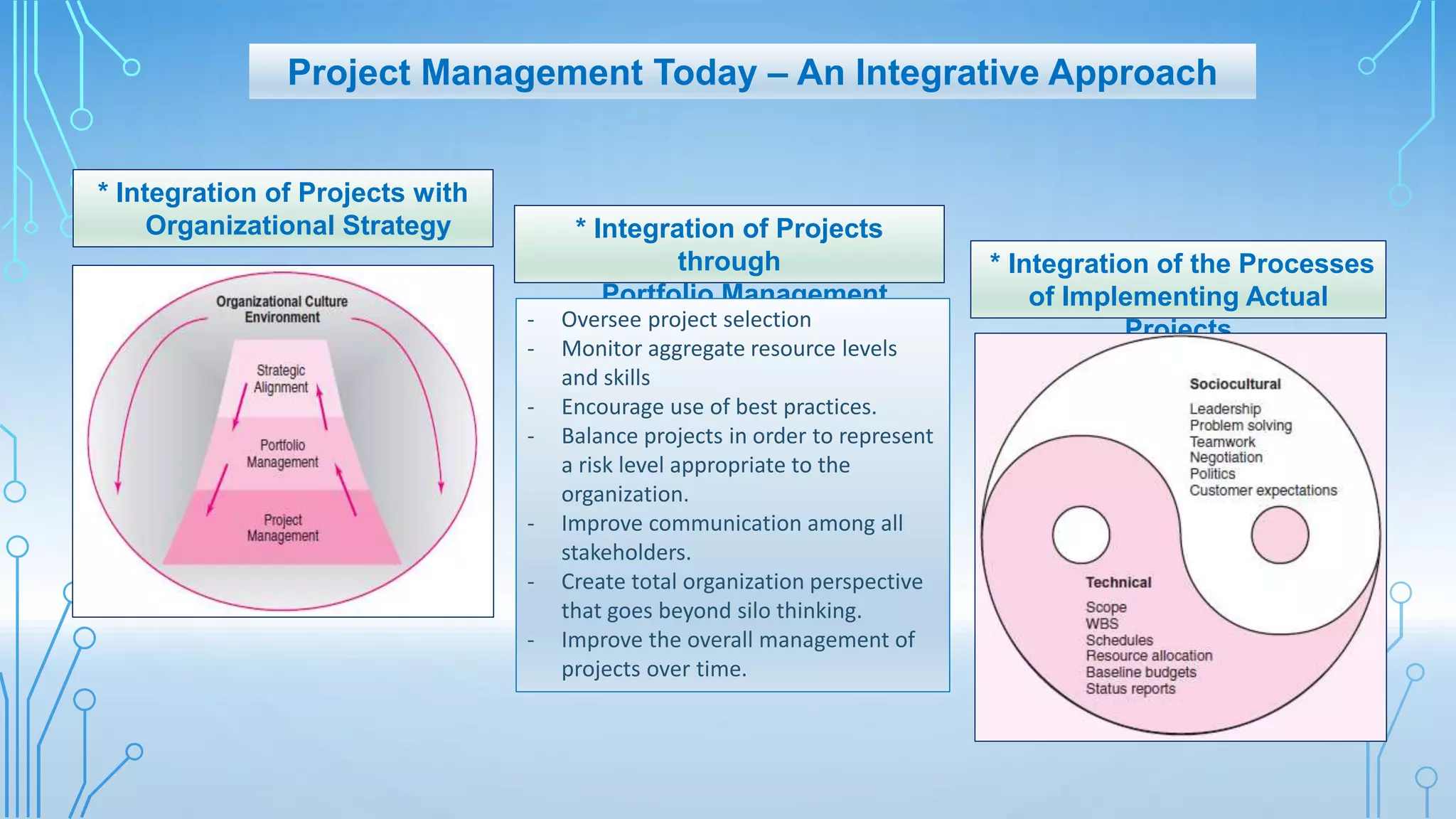
* Integration of Projects with
Organizational Strategy * Integration of Projects
through
Portfolio Management
- Oversee project selection
- Monitor aggregate resource levels
and skills
- Encourage use of best practices.
- Balance projects in order to represent
a risk level appropriate to the
organization.
- Improve communication among all
stakeholders.
- Create total organization perspective
that goes beyond silo thinking.
- Improve the overall management of
projects over time.
* Integration of the Processes
of Implementing Actual
Projects
Project Management Today – An Integrative Approach
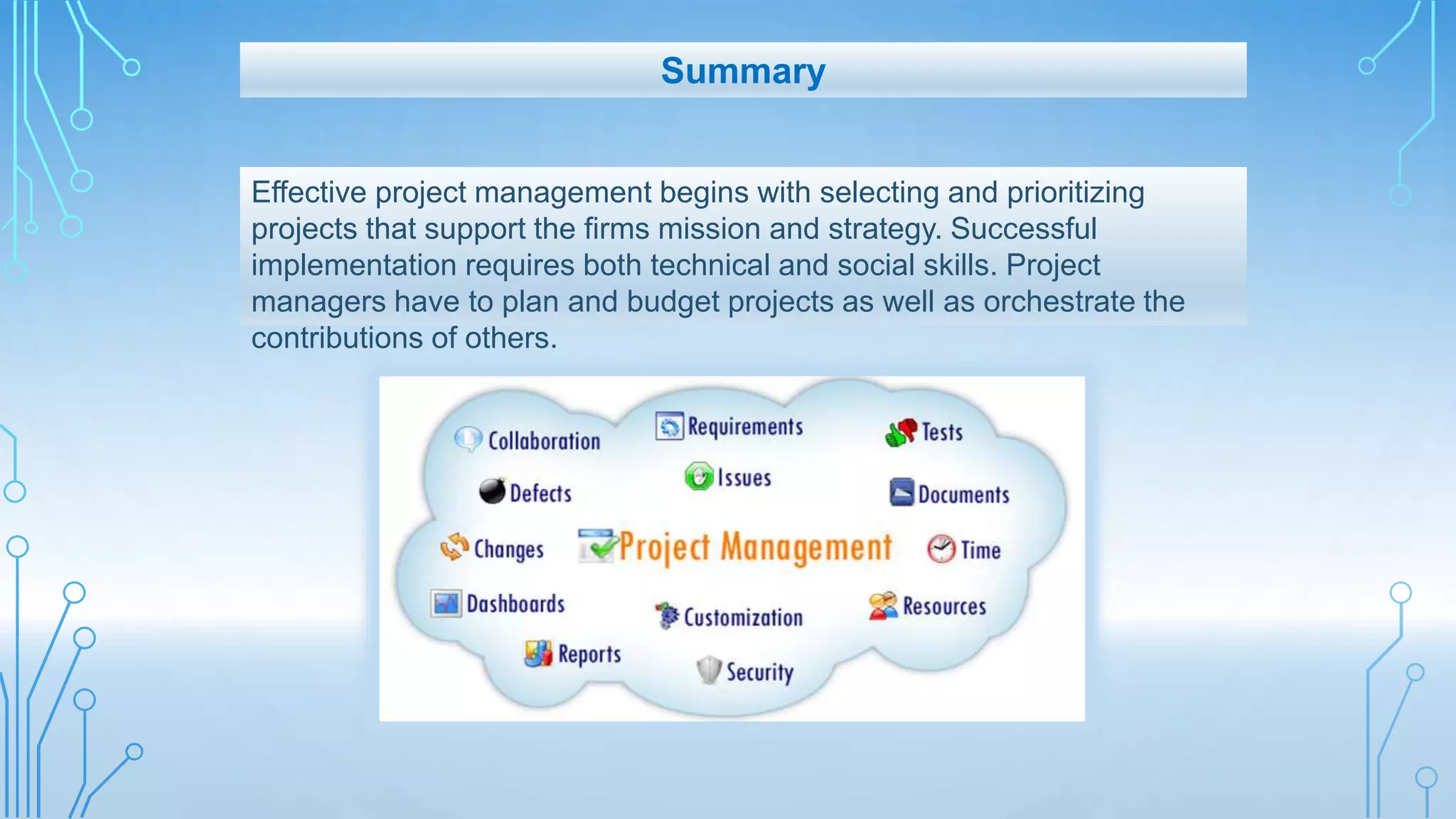
Effective project management begins with selecting and prioritizing
projects that support the firms mission and strategy. Successful
implementation requires both technical and social skills. Project
managers have to plan and budget projects as well as orchestrate the
contributions of others.
Summary
Thank you!

Chapter 1 Modern Project Management

  • 1.
  • 2.
    All of mankind'sgreatest accomplishments –from building the great pyramids to discovering a cure for polio to putting man on the moon –began as a project. What is a Project?
  • 3.
    The major characteristicsof a project are as follows: 1. An established objective. 2. A defined life span with a beginning and an end. 3. Usually, the involvement of several departments and professionals. 4. Typically, doing something that has never been done before. 5. Specific time, cost, and performance requirements. What is a Project?
  • 4.
    Comparison of RoutineWork with Projects What is a Project?
  • 5.
    What is aProject? A project, then, is a temporary endeavor undertaken to create a unique product or service. It is specific, timely, usually multidisciplinary, always conflict ridden. Project are parts of overall programs and may be broken down into tasks, subtasks, and further if desired. According to the Project Management Institute, A project is a temporary endeavor undertaken to create a unique product, service or result.
  • 6.
  • 7.
    Plan, schedule, motivateand control temporary and non-repetitive activities The Project Manager Includes decision making that will meet the challenges of the project life cycle Must oversee the project’s operation upon completion Provides direction, coordination, and integration to the project team including suppliers, subcontractors, vendors Ultimately responsible for performance and must orchestrate the completion of the project by getting the right people, time and decisions Accomplishment of projects brings about joy and pride Good project managers are always in demand because of their challenging yet exciting tasks
  • 8.
    The Importance ofProject Management Compression of the Product Life Cycle Knowledge Explosion Triple Bottom Line (planet, people, profit) Corporate Downsizing Increased Customer Focus Small Projects Represent Big Problems The Project Manager
  • 9.
    * Integration ofProjects with Organizational Strategy * Integration of Projects through Portfolio Management - Oversee project selection - Monitor aggregate resource levels and skills - Encourage use of best practices. - Balance projects in order to represent a risk level appropriate to the organization. - Improve communication among all stakeholders. - Create total organization perspective that goes beyond silo thinking. - Improve the overall management of projects over time. * Integration of the Processes of Implementing Actual Projects Project Management Today – An Integrative Approach
  • 10.
    Effective project managementbegins with selecting and prioritizing projects that support the firms mission and strategy. Successful implementation requires both technical and social skills. Project managers have to plan and budget projects as well as orchestrate the contributions of others. Summary
  • 11.