PROJECT AUDITING
By Sajna Fathima
12-12-11
12-12-22
Project Audit
A formal review of any aspect of a
project.
An audit is a systematic, independent,
documented assessment using standards
and set criteria.
12-12-33
Purpose & Goals
 Efficiency in meeting both the budget
and the schedule
 Customer impact/satisfaction
 Business/direct success
 Future potential
12-12-44
The Project Audit- Approach
The main purpose of an audit is to help
achieve the goals of the project
All facets of the project are studied
The strengths and weaknesses are
identified
Recommendations are prepared to help
current and future projects
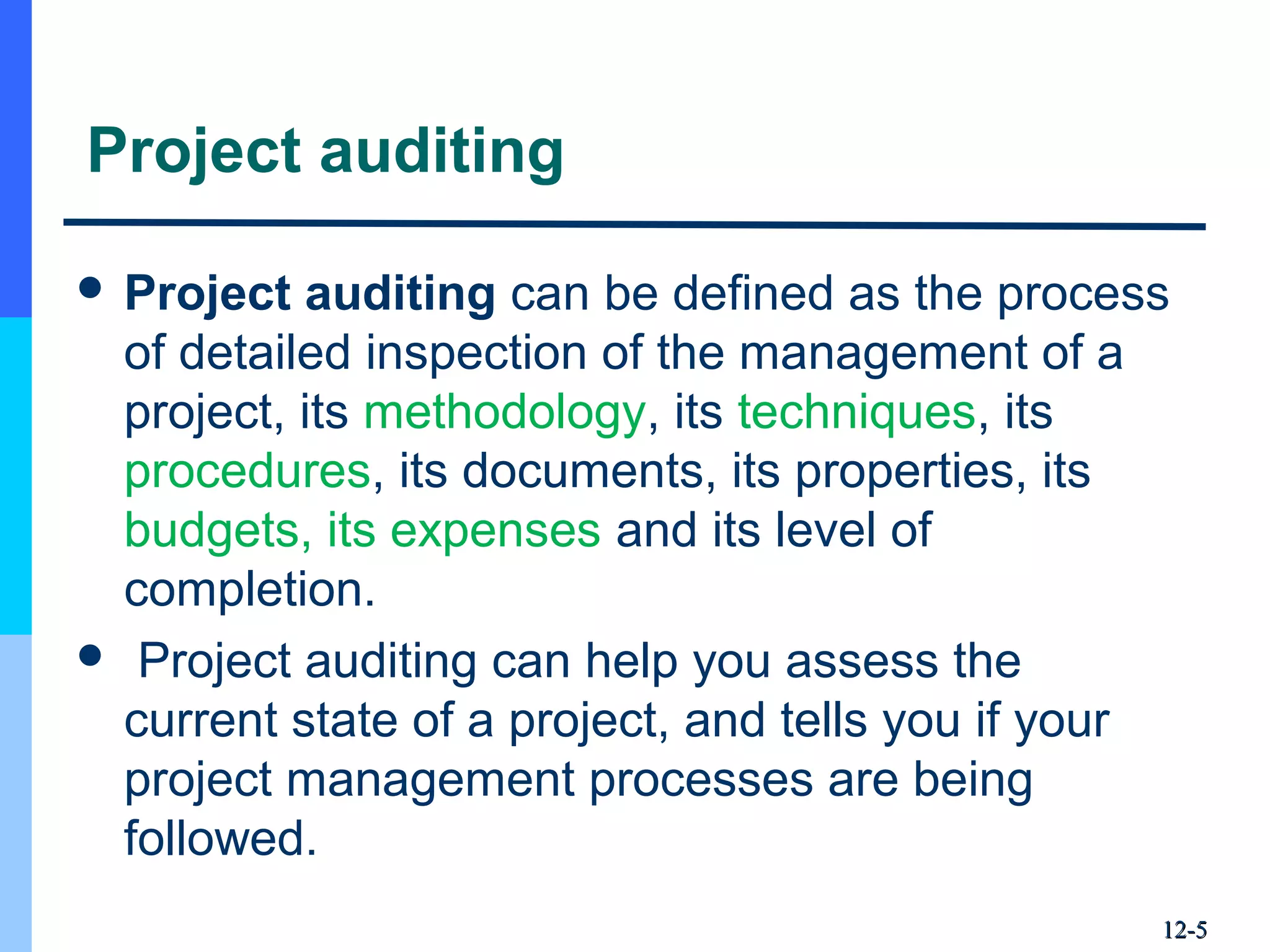
Project auditing
 Project auditing can be defined as the process
of detailed inspection of the management of a
project, its methodology, its techniques, its
procedures, its documents, its properties, its
budgets, its expenses and its level of
completion.
 Project auditing can help you assess the
current state of a project, and tells you if your
project management processes are being
followed.
12-12-55
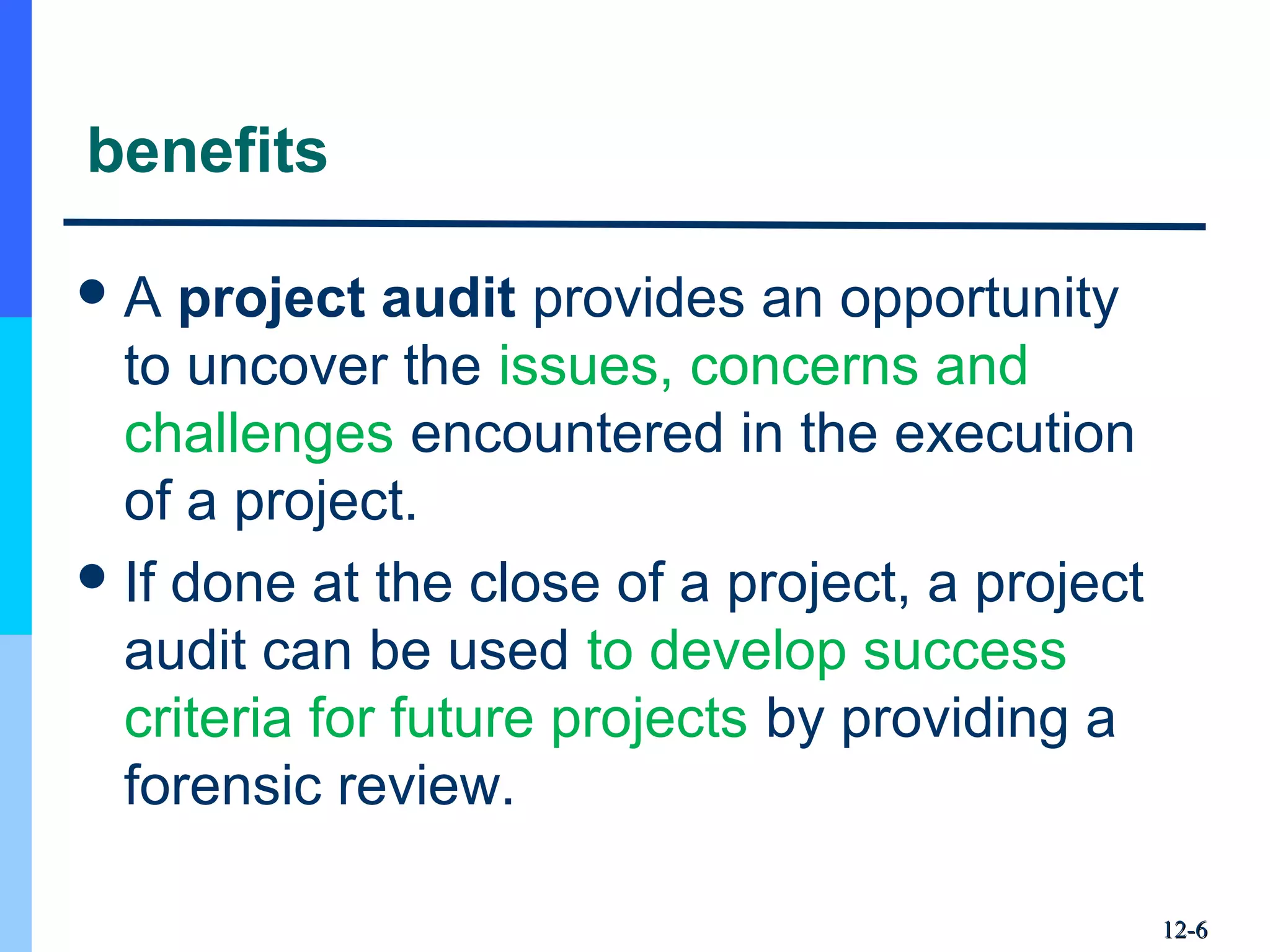
benefits
A project audit provides an opportunity 
to uncover the issues, concerns and 
challenges encountered in the execution 
of a project.
If done at the close of a project, a project 
audit can be used to develop success 
criteria for future projects by providing a 
forensic review.
12-12-66
12-12-77
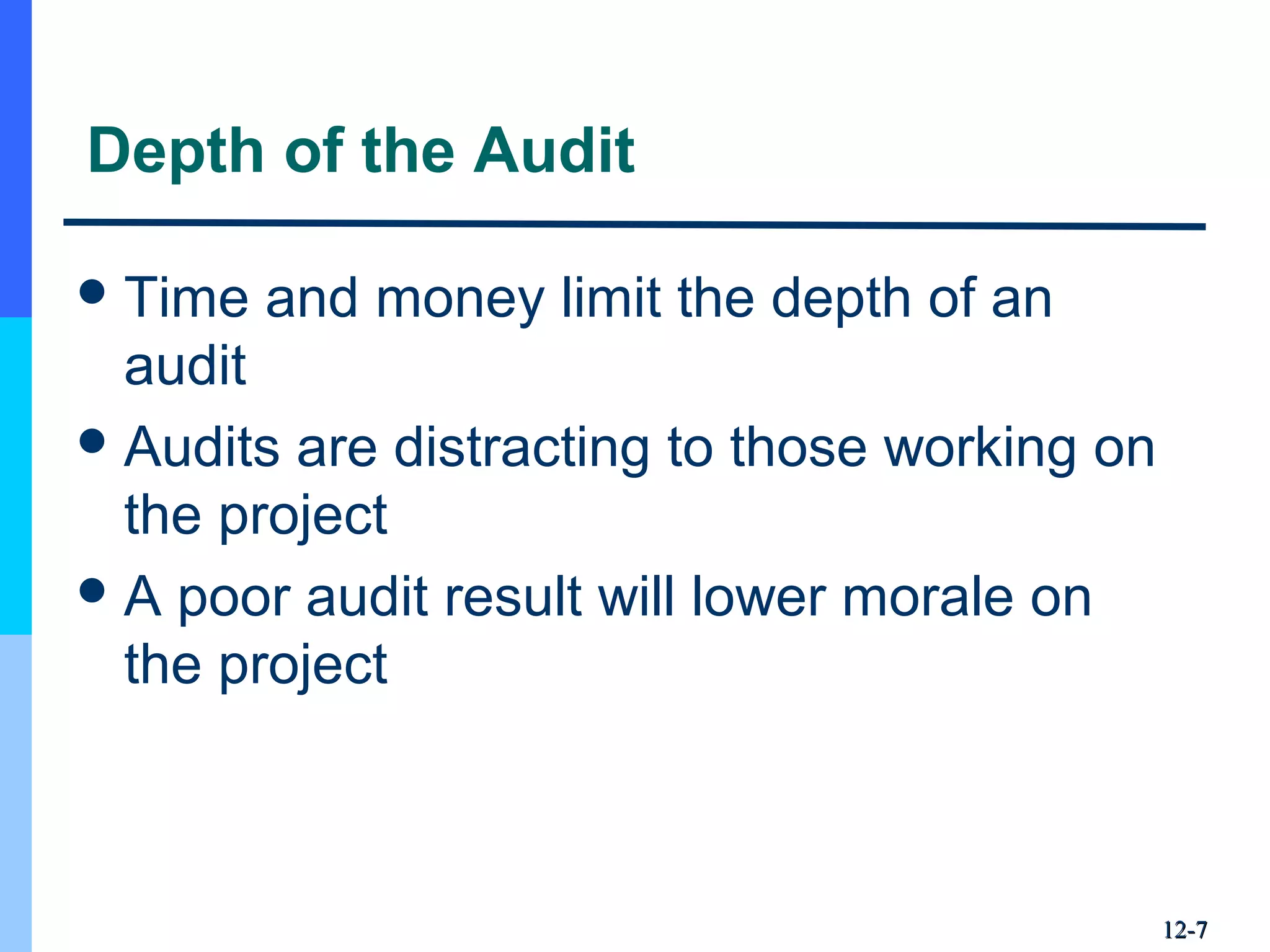
Depth of the Audit
Time and money limit the depth of an 
audit
Audits are distracting to those working on 
the project
A poor audit result will lower morale on 
the project
12-12-88
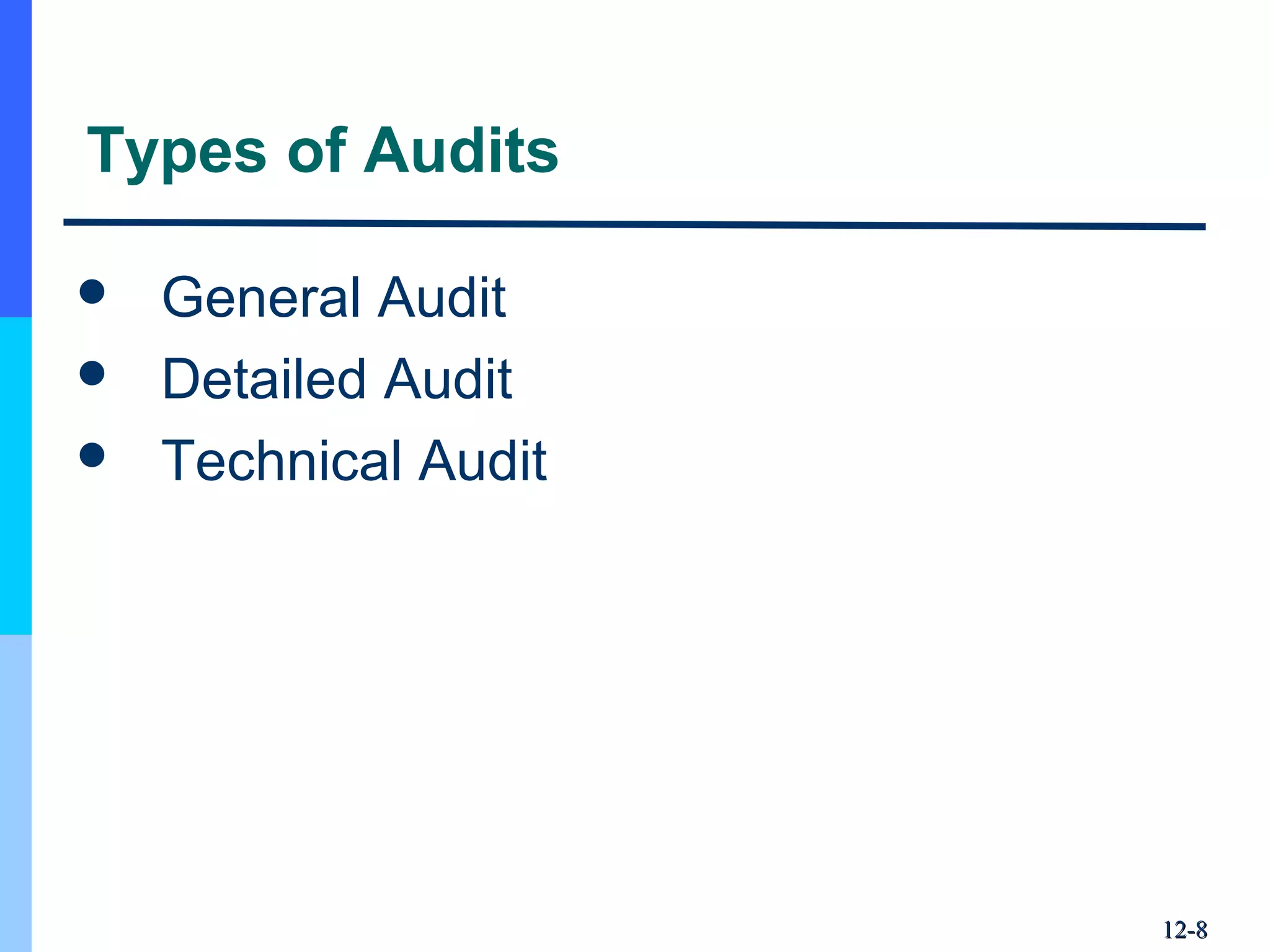
Types of Audits
 General Audit
 Detailed Audit
 Technical Audit
12-12-99
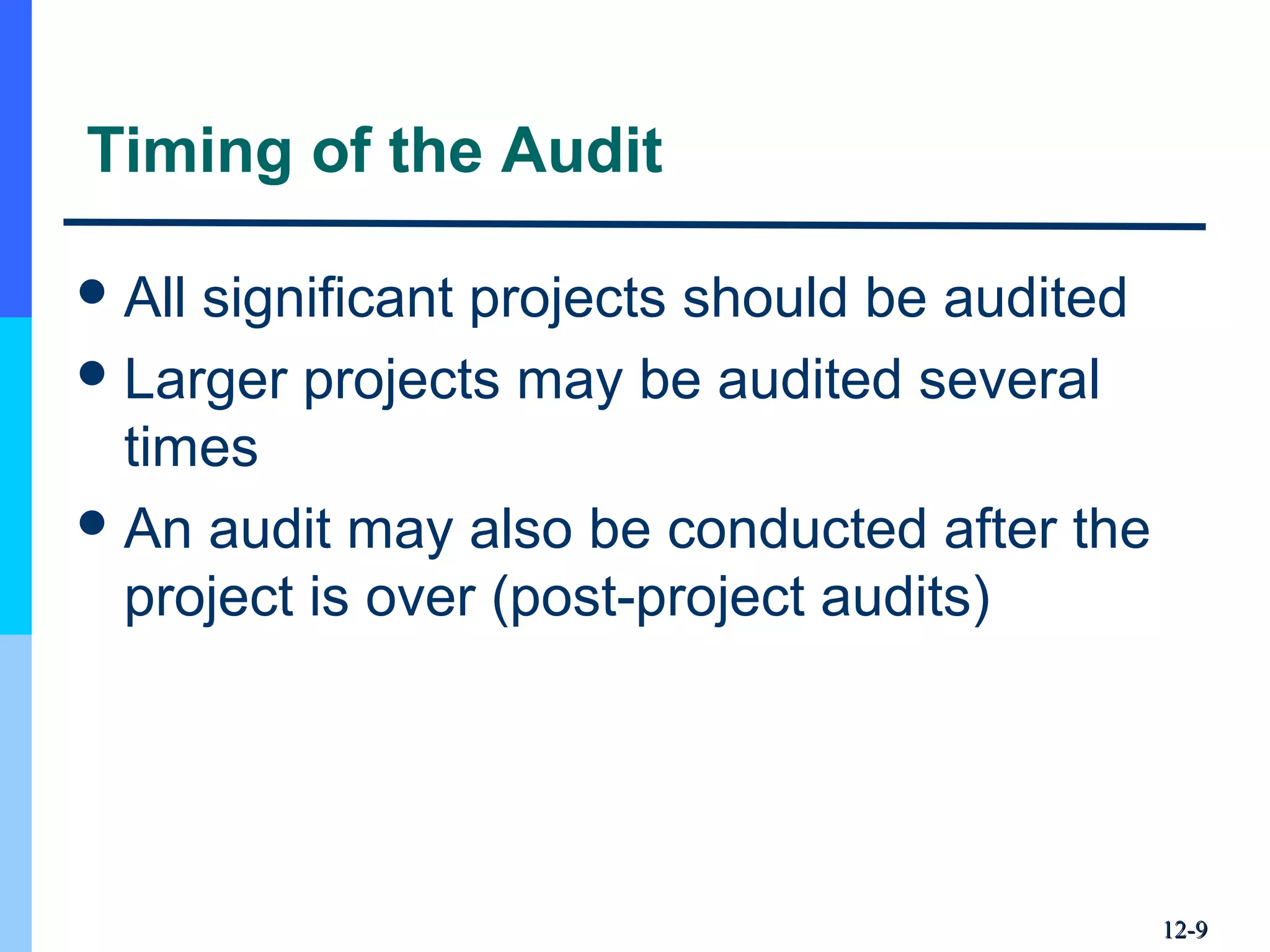
Timing of the Audit
All significant projects should be audited
Larger projects may be audited several 
times
An audit may also be conducted after the 
project is over (post-project audits)
12-12-1010
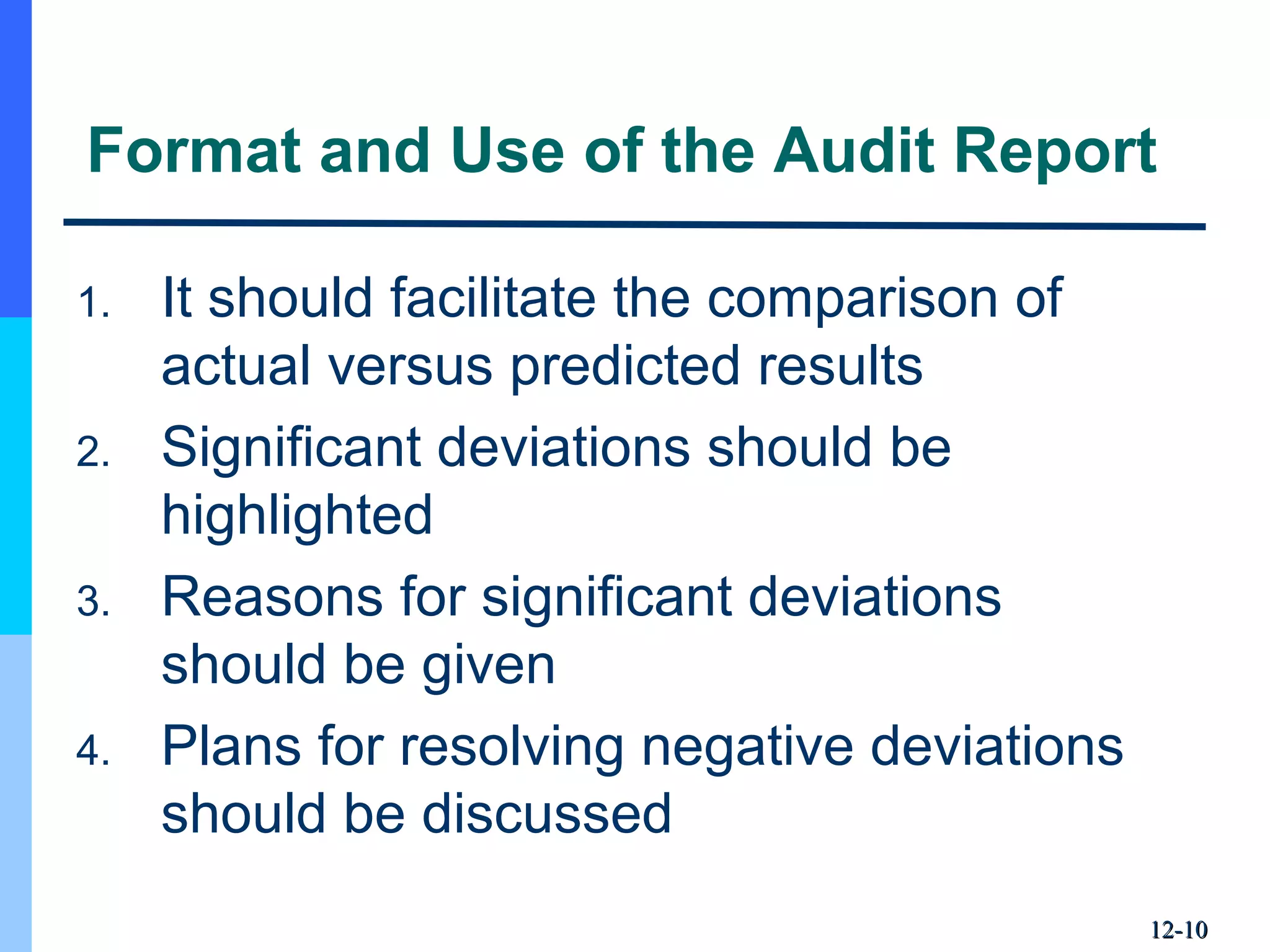
Format and Use of the Audit Report
1. It should facilitate the comparison of 
actual versus predicted results
2. Significant deviations should be 
highlighted
3. Reasons for significant deviations 
should be given
4. Plans for resolving negative deviations 
should be discussed
12-12-1111
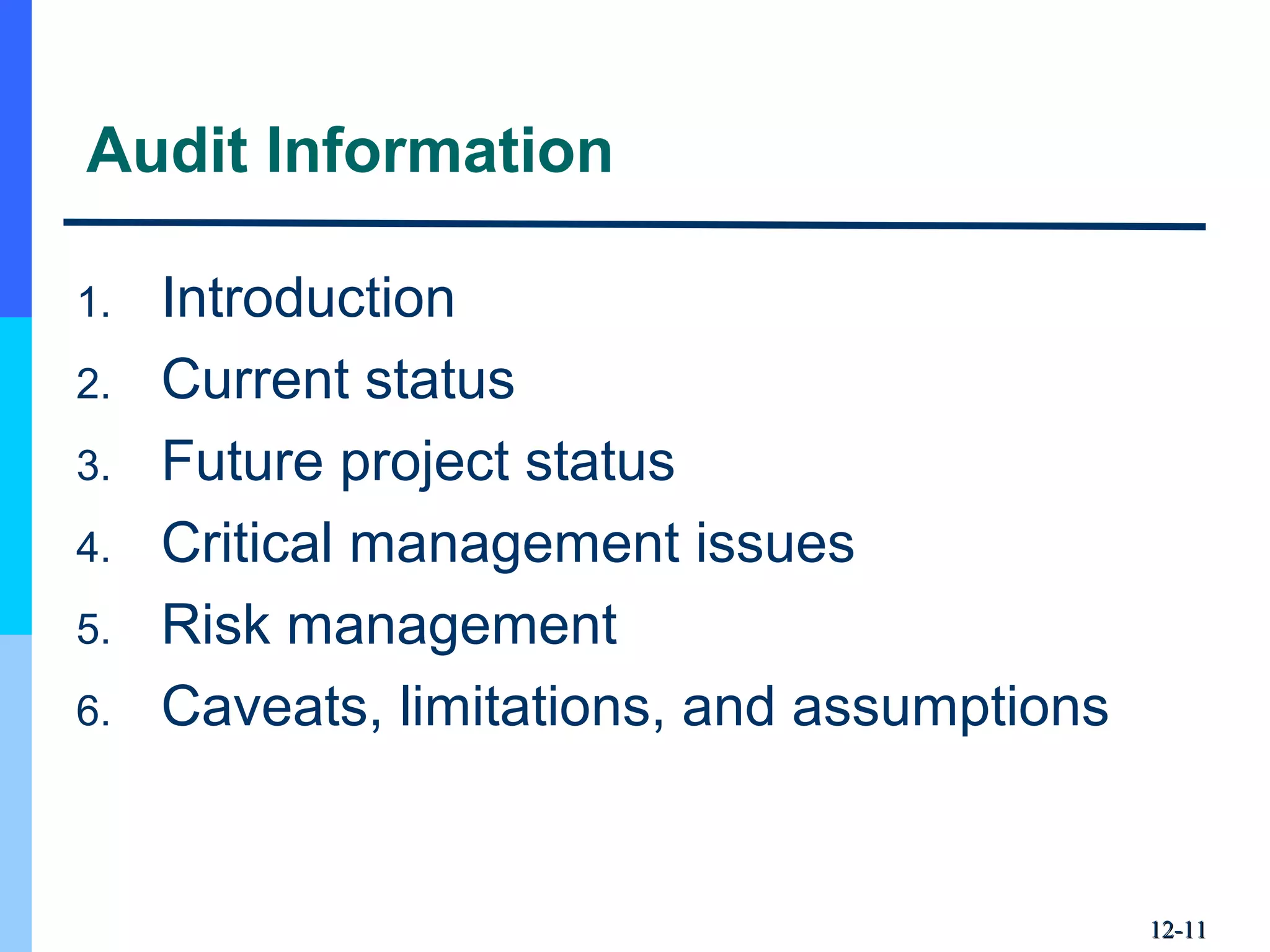
Audit Information
1. Introduction
2. Current status
3. Future project status
4. Critical management issues
5. Risk management
6. Caveats, limitations, and assumptions
12-12-1212
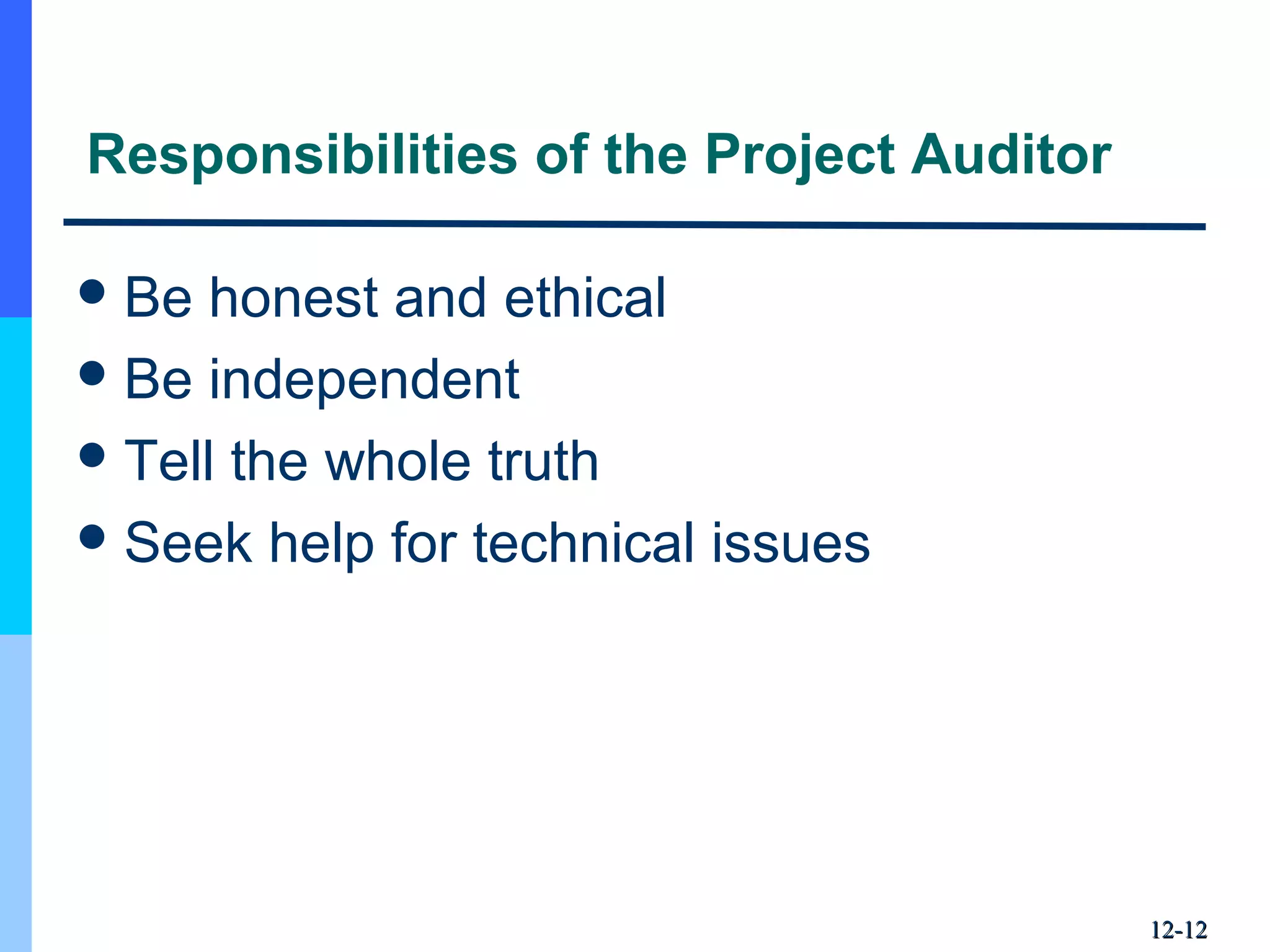
Responsibilities of the Project Auditor
Be honest and ethical
Be independent
Tell the whole truth
Seek help for technical issues
12-12-1313
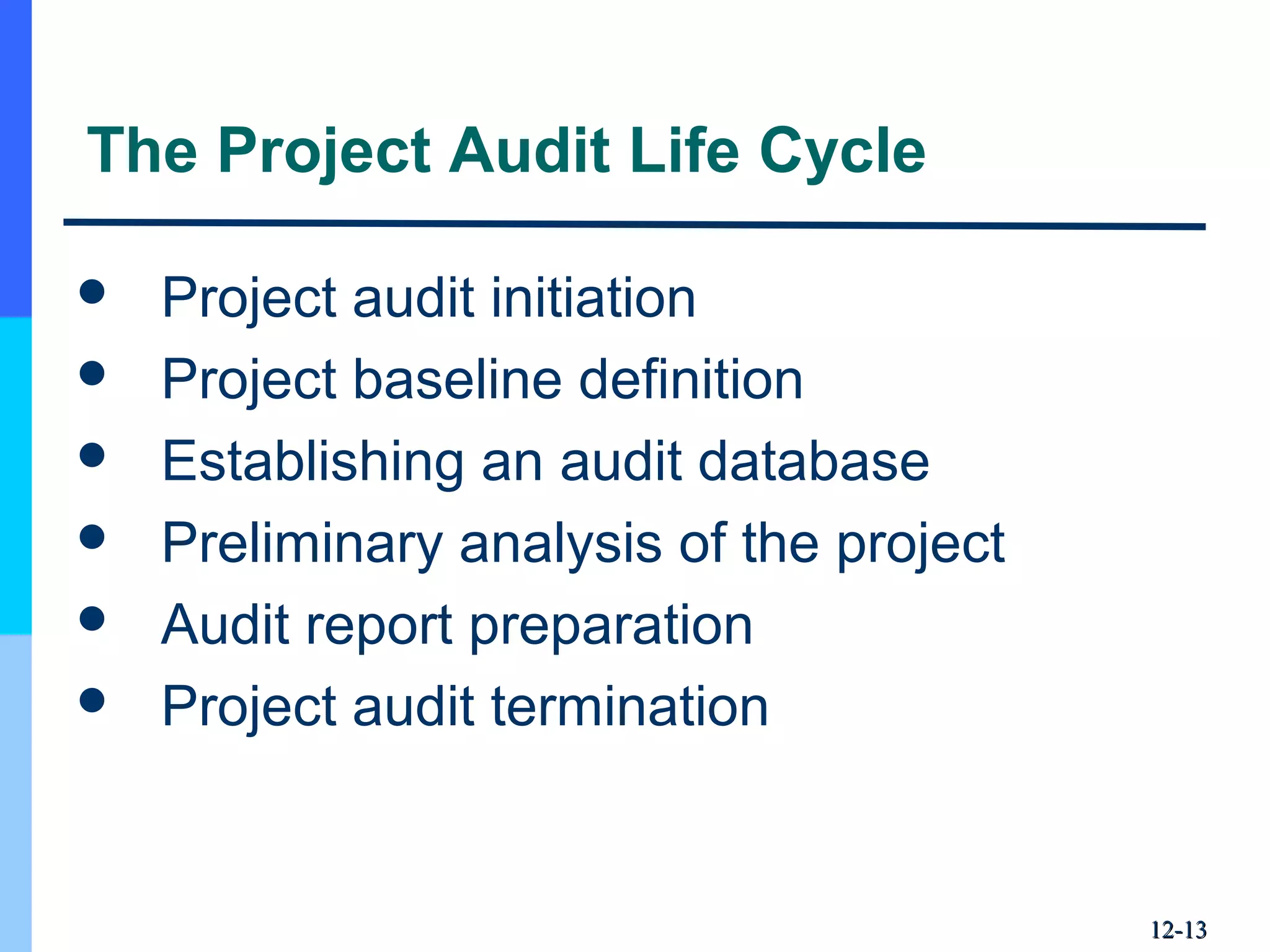
The Project Audit Life Cycle
 Project audit initiation
 Project baseline definition
 Establishing an audit database
 Preliminary analysis of the project
 Audit report preparation
 Project audit termination
12-12-1414
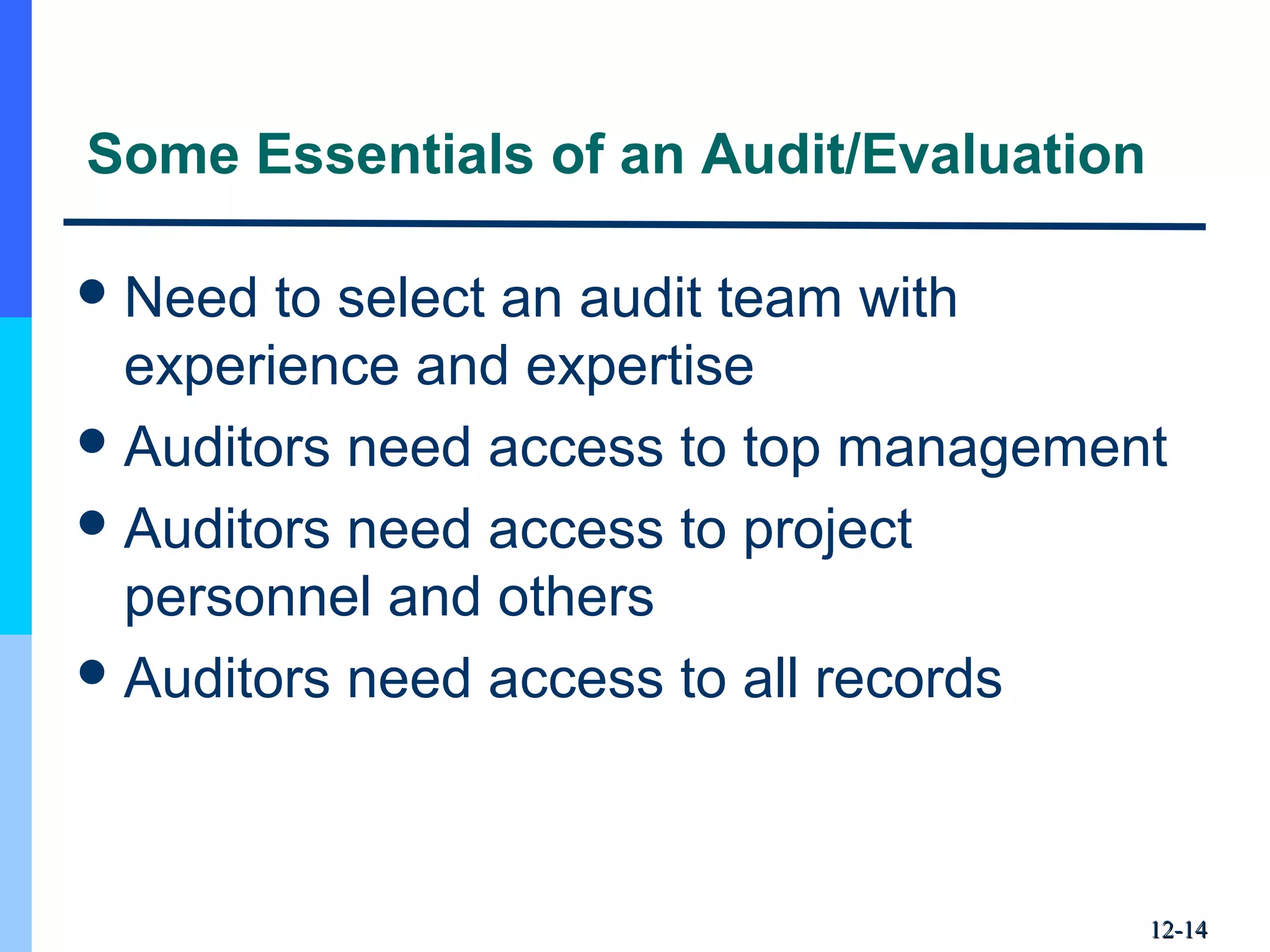
Some Essentials of an Audit/Evaluation
Need to select an audit team with
experience and expertise
Auditors need access to top management
Auditors need access to project
personnel and others
Auditors need access to all records
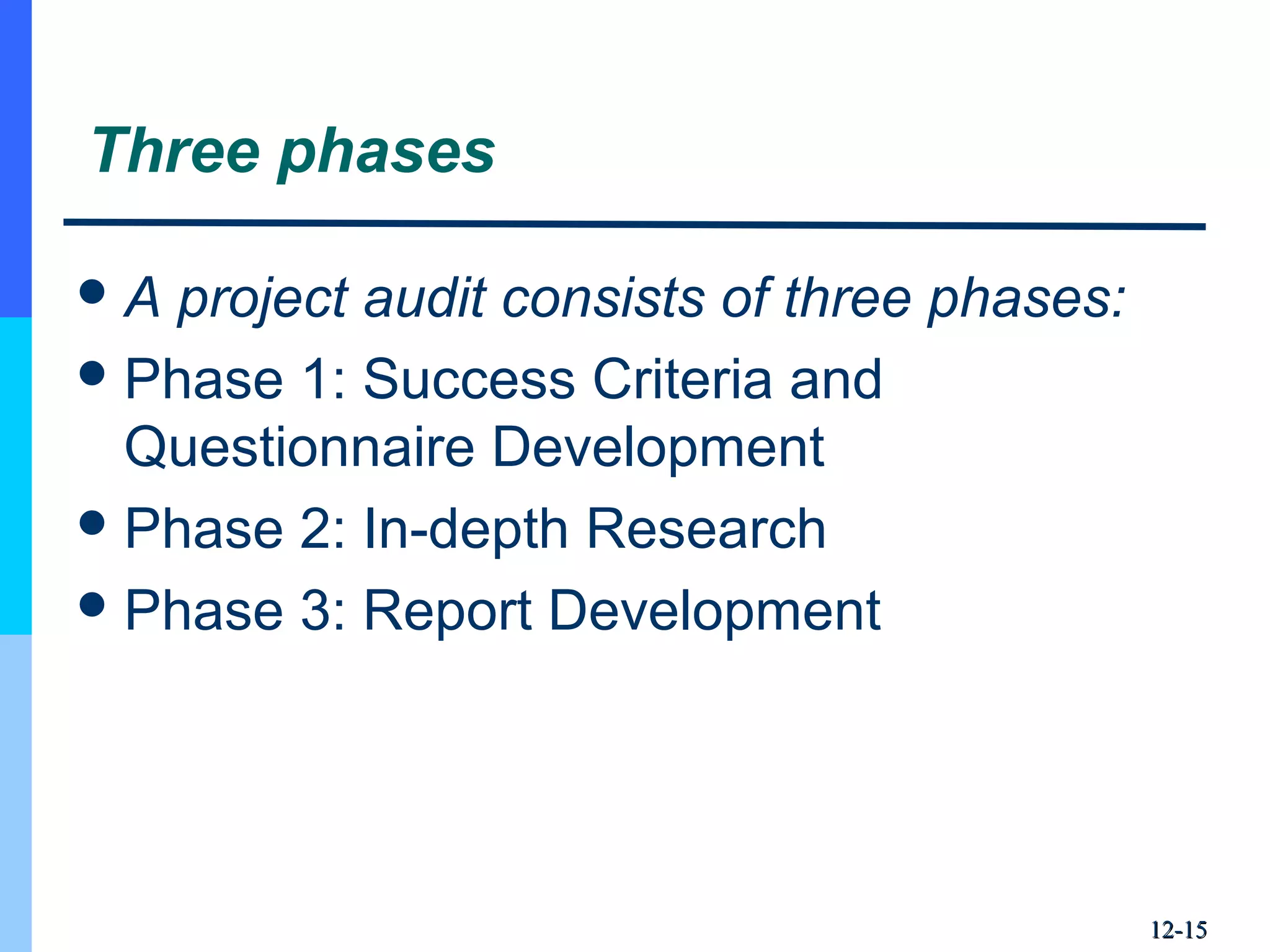
Three phases
A project audit consists of three phases:
Phase 1: Success Criteria and
Questionnaire Development
Phase 2: In-depth Research
Phase 3: Report Development
12-12-1515
12-12-1616
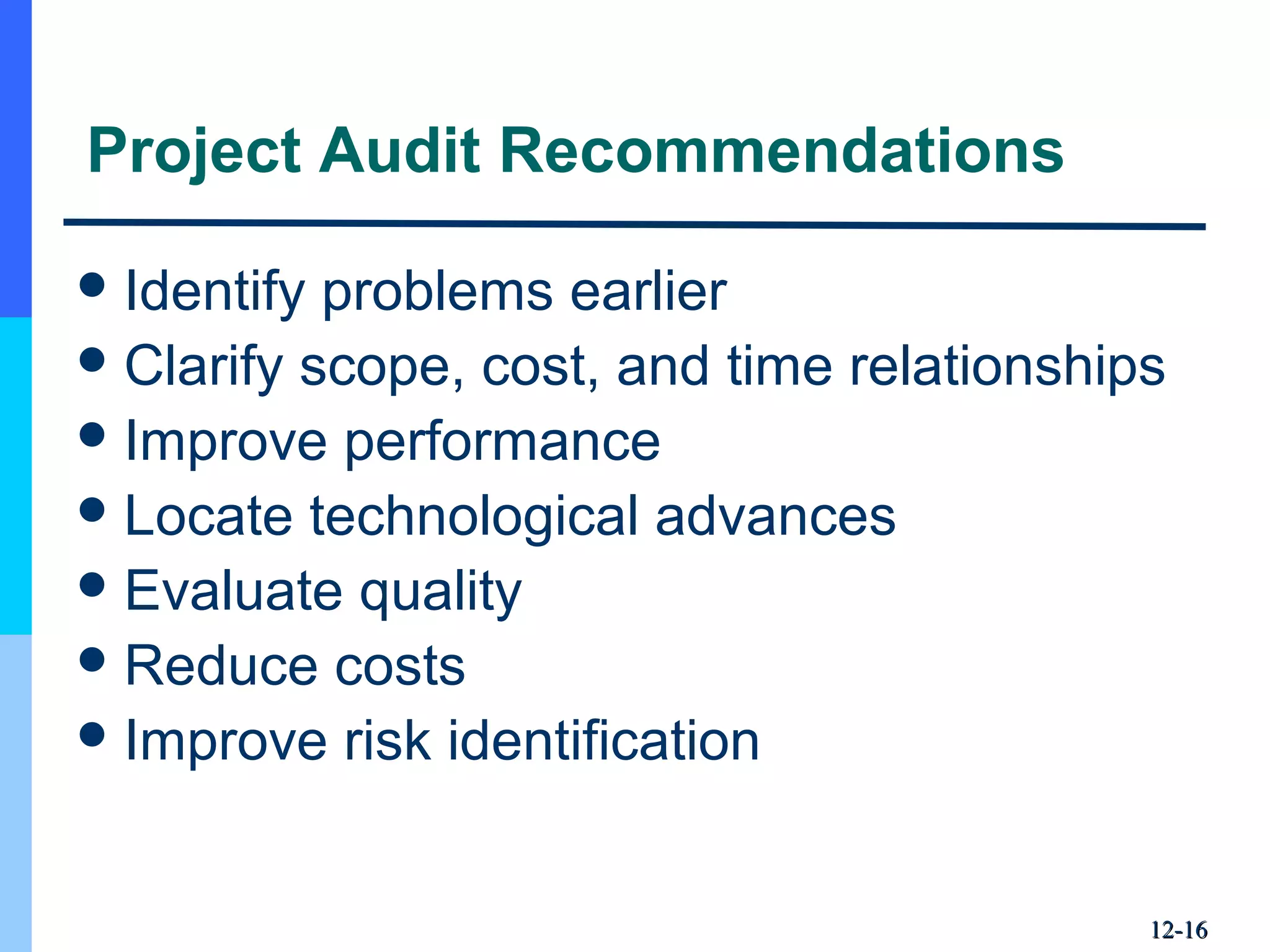
Project Audit Recommendations
Identify problems earlier
Clarify scope, cost, and time relationships
Improve performance
Locate technological advances
Evaluate quality
Reduce costs
Improve risk identification
12-12-1717
The Project Audit-outcomes
 Current status of the project
 Expected status of the project
 Status of critical tasks
 An assessment of potential risks
 What lessons can be applied to other
projects?
 What are the limitations of the audit?
Conclusion
The purpose of a project audit is to
identify “Lessons Learned” that can
help improve the performance of a project
or to improve the performance of future
projects by undertaking a forensic review
to uncover problems to be avoided.
12-12-1818

Project audit