Makerere University
Business School
Strategic Management Course
STRATEGY IMPLEMENTATION
How do we ensure arrival?
 A good strategy alone does not
guarantee success.
 Proper implementation is
necessary
 However, a good strategic plan is
a mandatory start
 Need to establish structural &
administrative mechanisms
Introduction
Strategy Implementation Definitions
 A rigorous process of transforming the
plan / strategy into action (from mere
strategic planning to strategic
management)
 This transformation involves detailed
planning
 And effective communication with
implementers (internal buy-ins),
 Plus organizing resources, providing
leadership, and controlling the process
Definitions - Cont.
 Putting our grand plan/blue print into
action to ensure that we competitively
get where we want to be (strategic
direction)
 Executing the chosen strategy (s)
through putting its tactics(actionable
steps / competitive activities) into action
Strategy Levels
 The main direction is provided by top
management, but
 Implementation filters through lower
levels
 Some situations demand lower level
strategies, as follows:
 Corporate level strategy
 Business level strategy
 Functional level strategy
Implementation stage features
1. Successful implementation is
spearheaded by top management
2. Every strategy to be implemented
has
a) its unique strategic window
b) Its own requirements / changes
3. Need for commitment from implementers /
goal contract
4. Some implementation is actually out-
sourced from those with better value-
adding core competences
5. Planning for strategy implementation is
usually ignored due to that excitement after
choosing our strategy
 What activities are to be done
 When they will be done (Timing)
 Who will do them (Persons responsible)
 What resources will be required
 What will be the performance indicators
 Objectively verifiable indicators (OVIs)
 Means of verification / evaluation
 Key Result Areas (quantitive and
qualitative indicators)
Content
 Coherent and integrated Work
Plans can then be developed from
this Implementation Plan’s
schedule of
tactics/activities/actionable steps
 A good strategic choice with wrong
tactics/work plans is likely to fail,
and vice-versa
Note
Implementation process
 Communicate / clarify of the goals,
objectives and strategies( at
different levels of hierarchy)
 Determine the key managerial &
operational tasks to be performed
 Assign tasks to the various
departments and their managers
 Delegate authority to match
responsibility
 Budget and allocate resources to the
implementing divisions / departments /
sections
 Formulate and state policies, work
plans,procedures, and the
models/manuals to guide the coherent
set of tactics (activities) to be used
Process – Cont.
 Operationalize those tactics in your
strategy
 Determine the necessary indicators for
measuring performance (participatory
styles of leadership)
 Build a management information system
(MIS) to provide the required accurate,
adequate, and timely feedback
 Establish a recognition and reward system
for motivating your staff
Process – Cont.
 Develop staff and inculcate /
reinforce the firm’s corporate values
 Establish an appropriate control
mechanism
 Evaluate performance, ascertain
gaps, provide feedback and take
corrective action where necessary
Process – Cont.
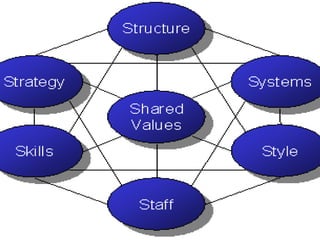
McKinsey 7-S frame work
Strategy
Structure
Systems
 Style
 Shared
values
 Staff
 Skills
For effective strategy implementation
(key success factors/pre-requisites)
Revision Questions
1. “A good strategy with poor implementation
is like a poor strategy or no strategy at
all,” Discuss
2. Explain the McKinsey’s prerequisites for
effective implementation of strategy
3. Alignment of your strategy to other KSFs
is vital for competitive assurance of
arrival to where you want to be. Discuss
 Good strategy formulation
alone will not make your
organization successful. There
are other elements that must
work and fit together with the
strategy to make an
organization realize its goals
and objectives competitively.
Discuss the above statements.
Questions – Cont.

11 strategey implementation ppt

  • 1.
    Makerere University Business School StrategicManagement Course STRATEGY IMPLEMENTATION How do we ensure arrival?
  • 2.
     A goodstrategy alone does not guarantee success.  Proper implementation is necessary  However, a good strategic plan is a mandatory start  Need to establish structural & administrative mechanisms Introduction
  • 3.
    Strategy Implementation Definitions A rigorous process of transforming the plan / strategy into action (from mere strategic planning to strategic management)  This transformation involves detailed planning  And effective communication with implementers (internal buy-ins),  Plus organizing resources, providing leadership, and controlling the process
  • 4.
    Definitions - Cont. Putting our grand plan/blue print into action to ensure that we competitively get where we want to be (strategic direction)  Executing the chosen strategy (s) through putting its tactics(actionable steps / competitive activities) into action
  • 5.
    Strategy Levels  Themain direction is provided by top management, but  Implementation filters through lower levels  Some situations demand lower level strategies, as follows:  Corporate level strategy  Business level strategy  Functional level strategy
  • 6.
    Implementation stage features 1.Successful implementation is spearheaded by top management 2. Every strategy to be implemented has a) its unique strategic window b) Its own requirements / changes 3. Need for commitment from implementers / goal contract 4. Some implementation is actually out- sourced from those with better value- adding core competences 5. Planning for strategy implementation is usually ignored due to that excitement after choosing our strategy
  • 7.
     What activitiesare to be done  When they will be done (Timing)  Who will do them (Persons responsible)  What resources will be required  What will be the performance indicators  Objectively verifiable indicators (OVIs)  Means of verification / evaluation  Key Result Areas (quantitive and qualitative indicators) Content
  • 8.
     Coherent andintegrated Work Plans can then be developed from this Implementation Plan’s schedule of tactics/activities/actionable steps  A good strategic choice with wrong tactics/work plans is likely to fail, and vice-versa Note
  • 9.
    Implementation process  Communicate/ clarify of the goals, objectives and strategies( at different levels of hierarchy)  Determine the key managerial & operational tasks to be performed  Assign tasks to the various departments and their managers
  • 10.
     Delegate authorityto match responsibility  Budget and allocate resources to the implementing divisions / departments / sections  Formulate and state policies, work plans,procedures, and the models/manuals to guide the coherent set of tactics (activities) to be used Process – Cont.
  • 11.
     Operationalize thosetactics in your strategy  Determine the necessary indicators for measuring performance (participatory styles of leadership)  Build a management information system (MIS) to provide the required accurate, adequate, and timely feedback  Establish a recognition and reward system for motivating your staff Process – Cont.
  • 12.
     Develop staffand inculcate / reinforce the firm’s corporate values  Establish an appropriate control mechanism  Evaluate performance, ascertain gaps, provide feedback and take corrective action where necessary Process – Cont.
  • 13.
    McKinsey 7-S framework Strategy Structure Systems  Style  Shared values  Staff  Skills For effective strategy implementation (key success factors/pre-requisites)
  • 15.
    Revision Questions 1. “Agood strategy with poor implementation is like a poor strategy or no strategy at all,” Discuss 2. Explain the McKinsey’s prerequisites for effective implementation of strategy 3. Alignment of your strategy to other KSFs is vital for competitive assurance of arrival to where you want to be. Discuss
  • 16.
     Good strategyformulation alone will not make your organization successful. There are other elements that must work and fit together with the strategy to make an organization realize its goals and objectives competitively. Discuss the above statements. Questions – Cont.