PREPARED BY:
SUBHNEDU DATTA
MBA CPM, B.E. Civil
RICS School of Built Environment
 WHAT IS ISO 9001 ?
It is the international standard that specifies requirements for QMS.
 PURPOSE ?
Organizations of all types and sizes find that using the ISO 9001 standard helps
them:
 Organize processes
 Improve the efficiency of processes
 Continually improve
 ISO 9001:2015 Forecast schedules
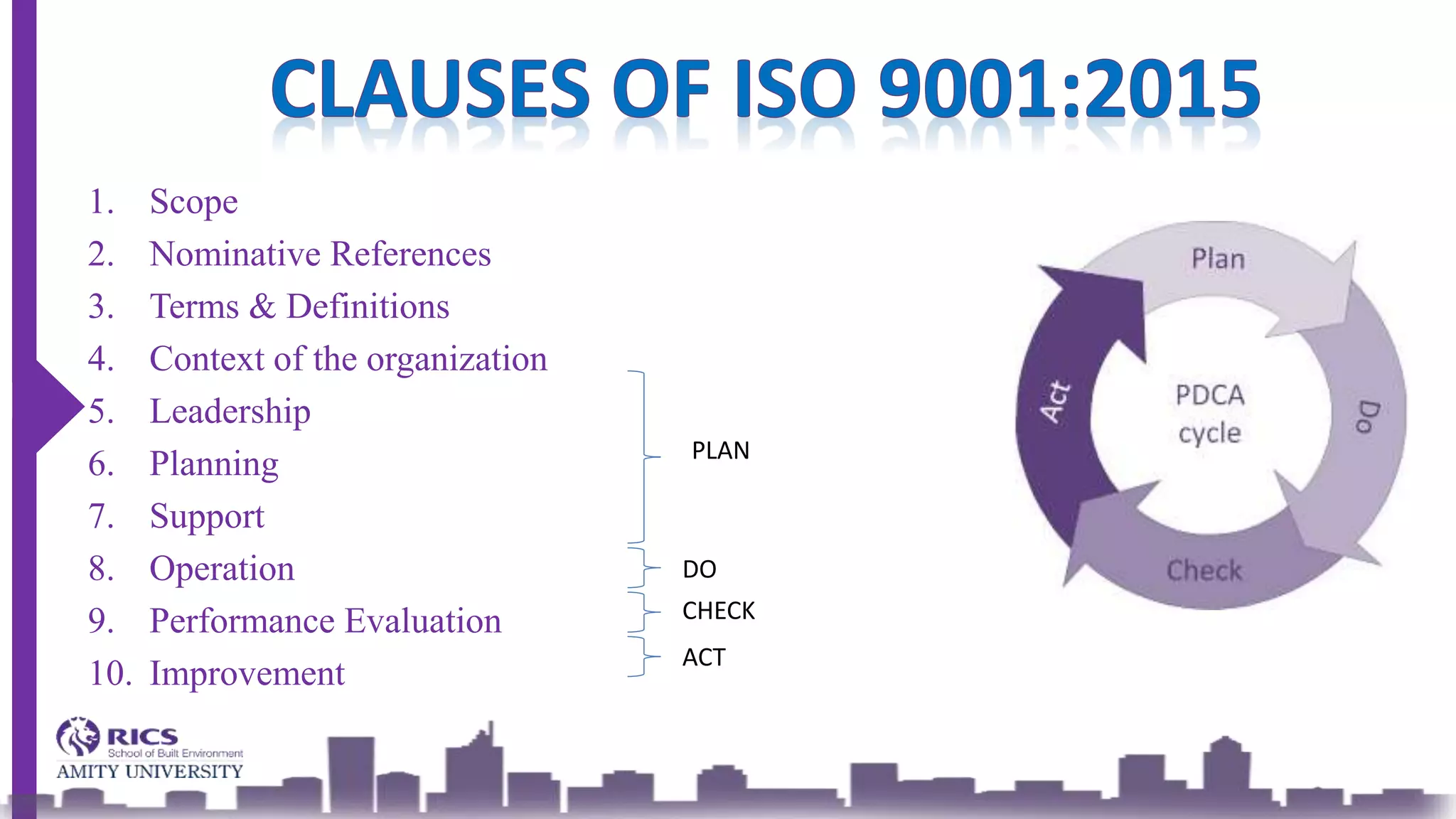
1. Scope
2. Nominative References
3. Terms & Definitions
4. Context of the organization
5. Leadership
6. Planning
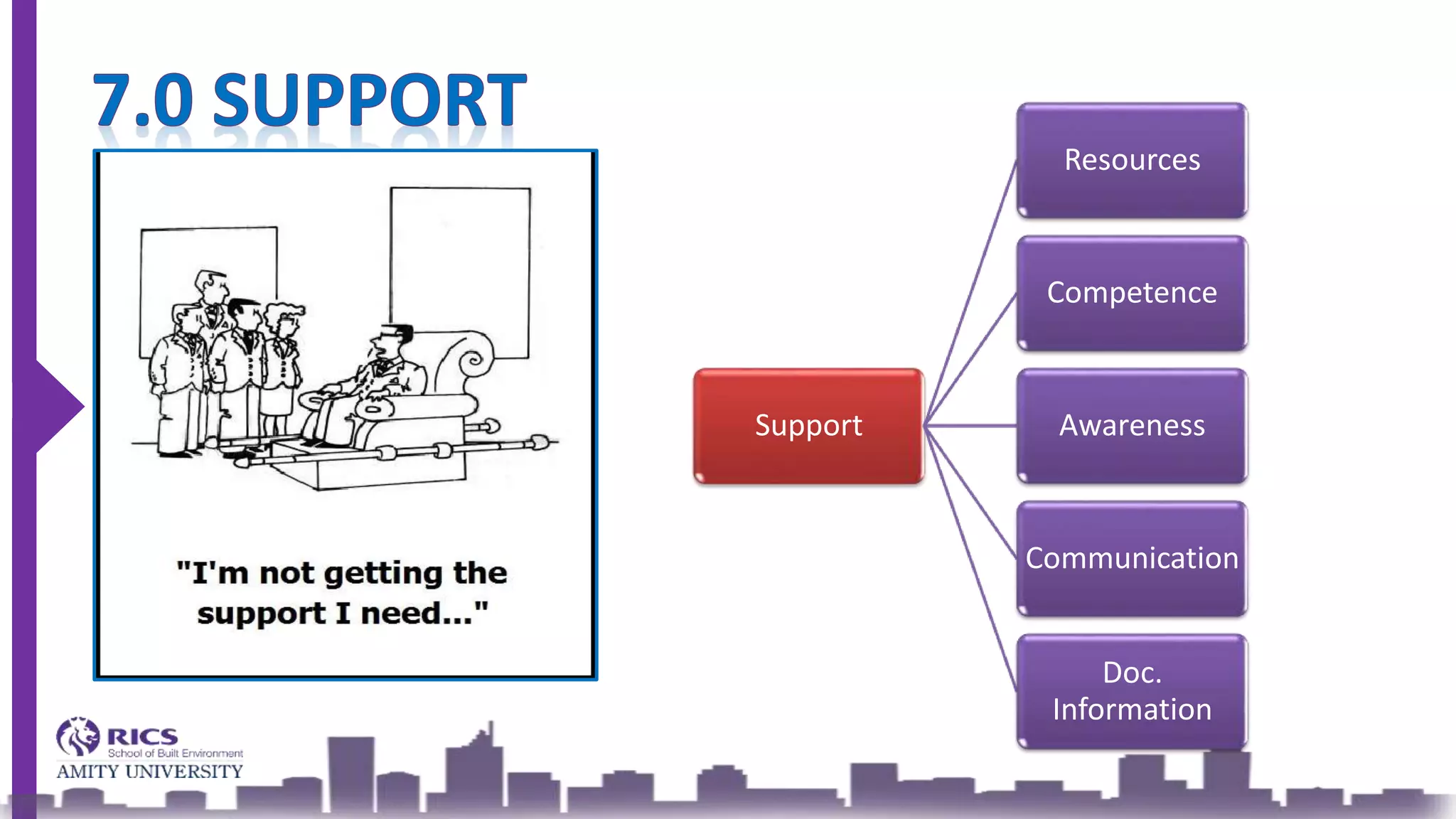
7. Support
8. Operation
9. Performance Evaluation
10. Improvement
PLAN
DO
CHECK
ACT
• Internal issues
• External issues
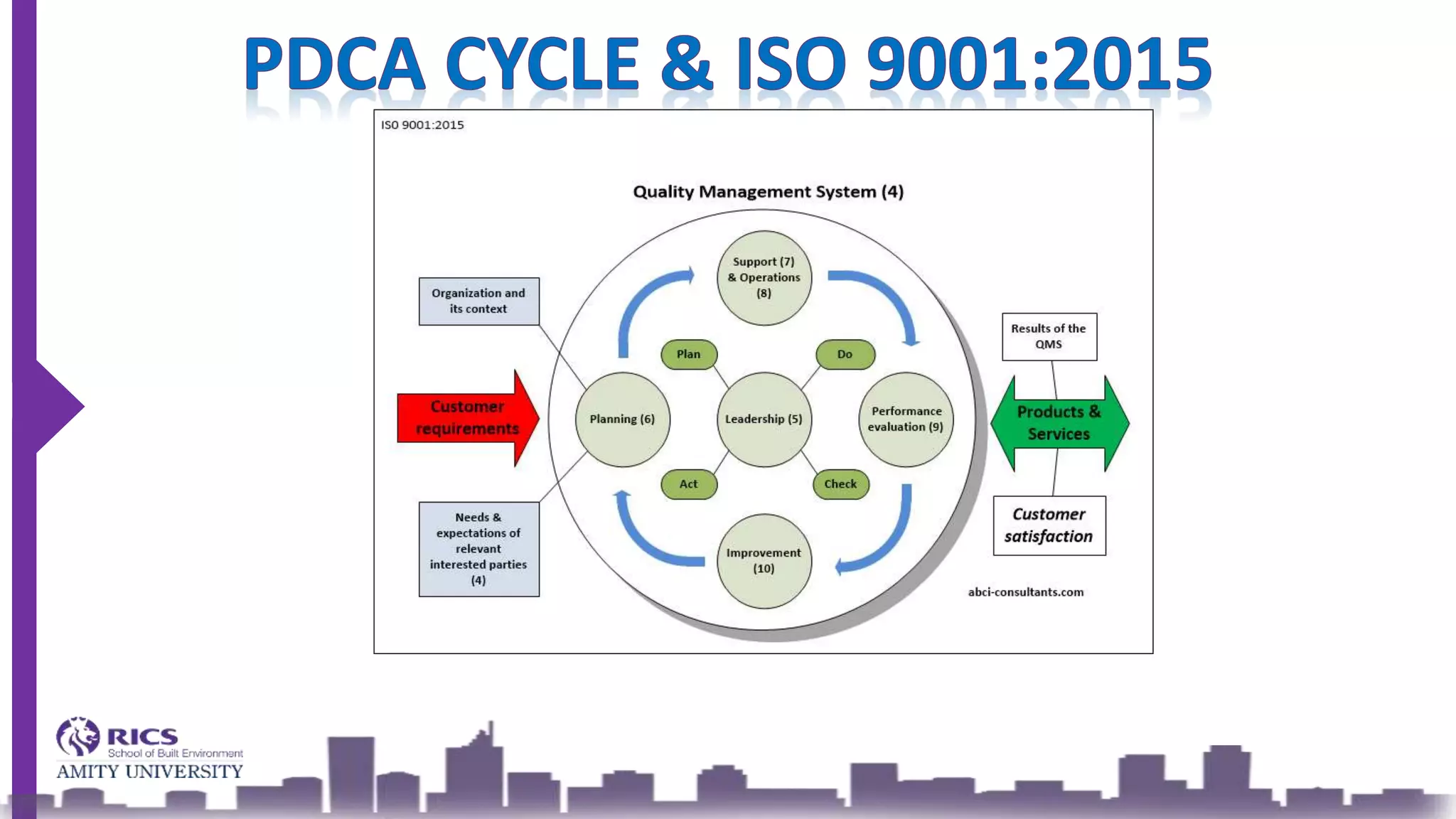
4.1 Understanding the organization and its context.
• Requirement of interested parties
4.2 Understanding the needs and expectations of the interested parties.
• Determine the Boundaries & Applicability of the QMS
4.3 Determining the scope of QMS.
• Design the target Process
4.4 Quality Management System and its processes.
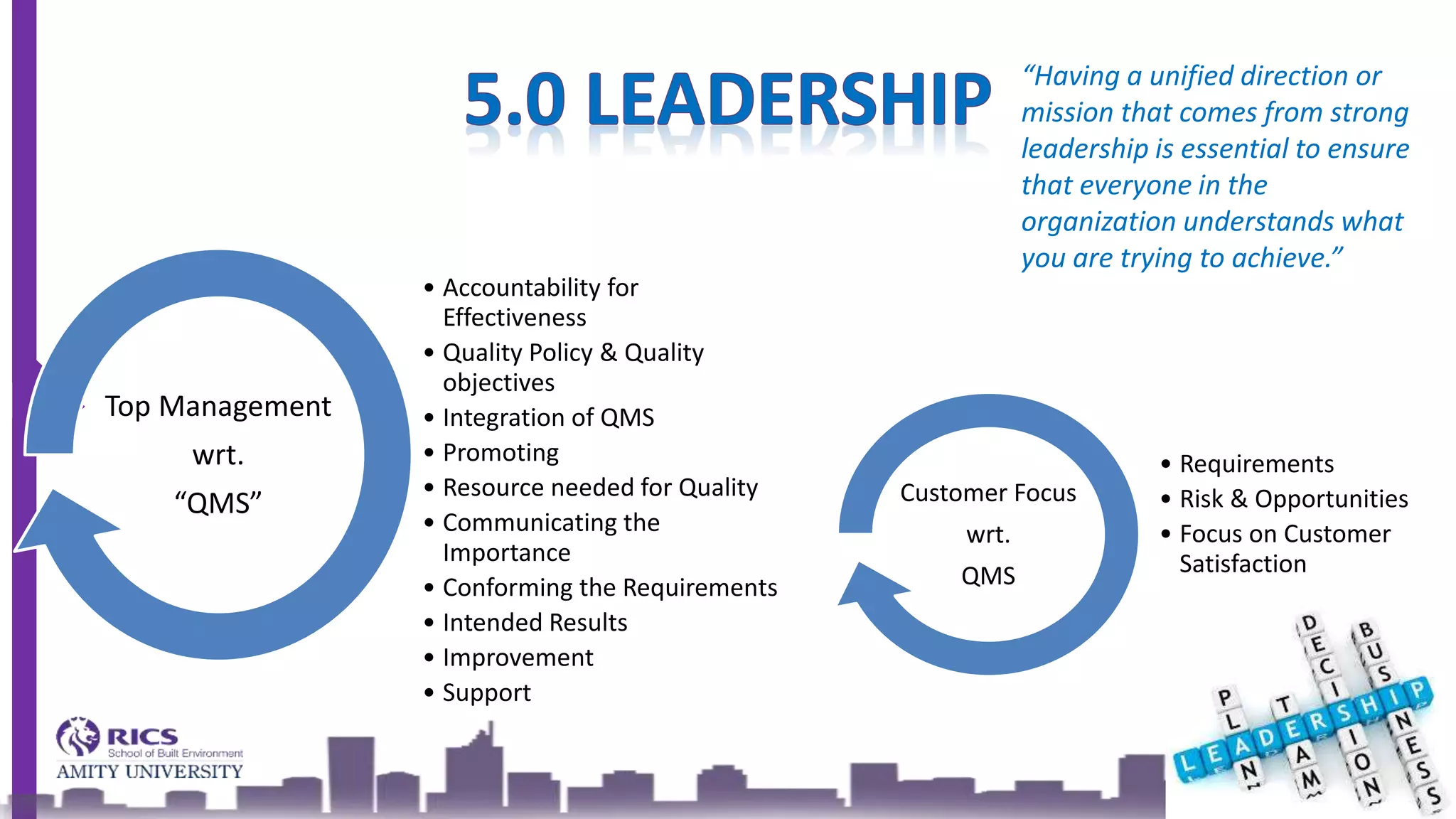
• Accountability for
Effectiveness
• Quality Policy & Quality
objectives
• Integration of QMS
• Promoting
• Resource needed for Quality
• Communicating the
Importance
• Conforming the Requirements
• Intended Results
• Improvement
• Support
Top Management
wrt.
“QMS”
“Having a unified direction or
mission that comes from strong
leadership is essential to ensure
that everyone in the
organization understands what
you are trying to achieve.”
• Requirements
• Risk & Opportunities
• Focus on Customer
Satisfaction
Customer Focus
wrt.
QMS
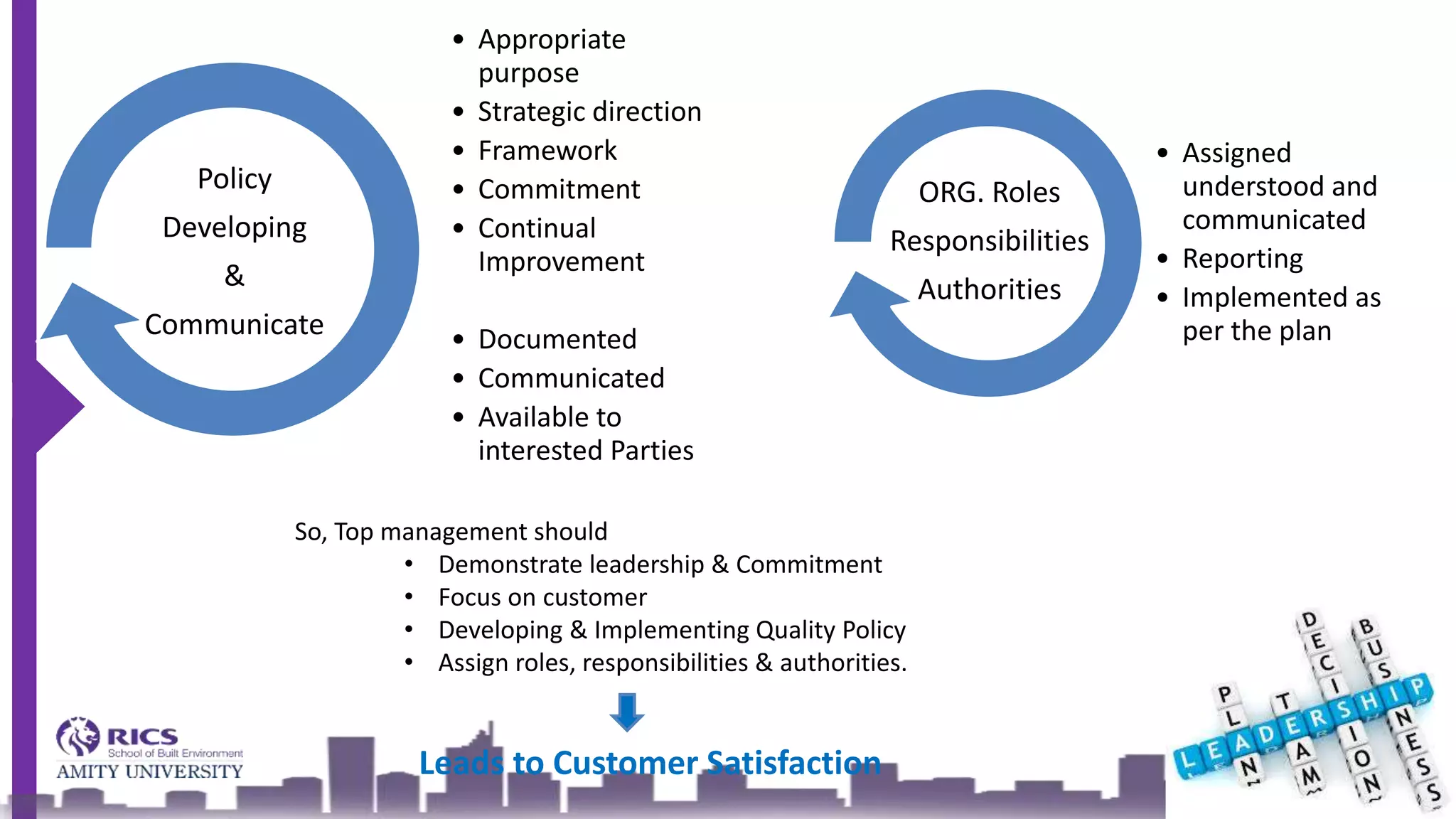
• Appropriate
purpose
• Strategic direction
• Framework
• Commitment
• Continual
Improvement
• Documented
• Communicated
• Available to
interested Parties
Policy
Developing
&
Communicate
• Assigned
understood and
communicated
• Reporting
• Implemented as
per the plan
ORG. Roles
Responsibilities
Authorities
So, Top management should
• Demonstrate leadership & Commitment
• Focus on customer
• Developing & Implementing Quality Policy
• Assign roles, responsibilities & authorities.
Leads to Customer Satisfaction
• Enlist Risks &
Opportunities
• Evaluate the effectives
• Enhance Desirable
Effects
• Prevent or Reduce
undesirable effects
• Improvements
Address Risk
&
Opportunities
• At relevant functions,
levels & processes
• Measurable
• Consistent
• Monitored
• Communicated
• Updated
• Relevant Conformity of
product
• Resources required
• Evaluated
Objectives
& Planning for
them
“Taking Decisions for future
actions in order to achieve pre-
determined objectives by
optimum utilization of available
resources in a limited time
frame.”
• Planning for Changes
• Purpose & its potential
• Integrity
• Availability of resources
• Allocation or Reallocation of
responsibilities
Support
Resources
Competence
Awareness
Communication
Doc.
Information
Operation
Planning & Control
Determination
Design &
Development of
Product/Service
Control of
Externally Provided
Product/Services
Product & Service
Provision
Release of Product
& Service
Control over Non-
Conformity
 The bulk of the
management
system requirements
lies within this
single clause.
 It has 7 sub clauses
9.0 Performance Evaluation
Performance evaluation is the critical Check step in the Plan-Do-Check-Act (PDCA) cycle that ISO 9001 is
based on.
• Analyze
(Desired
outcomes,
Statistical tools)
• Internal Audit
• Management
Review
• How & When to
measure
• Determine
Processes that
need to be
monitored
Monitor Measurement
AnalysisEvaluate
Customer Satisfaction is Critical Performance Indicator which will govern benchmark to be set in each Process.
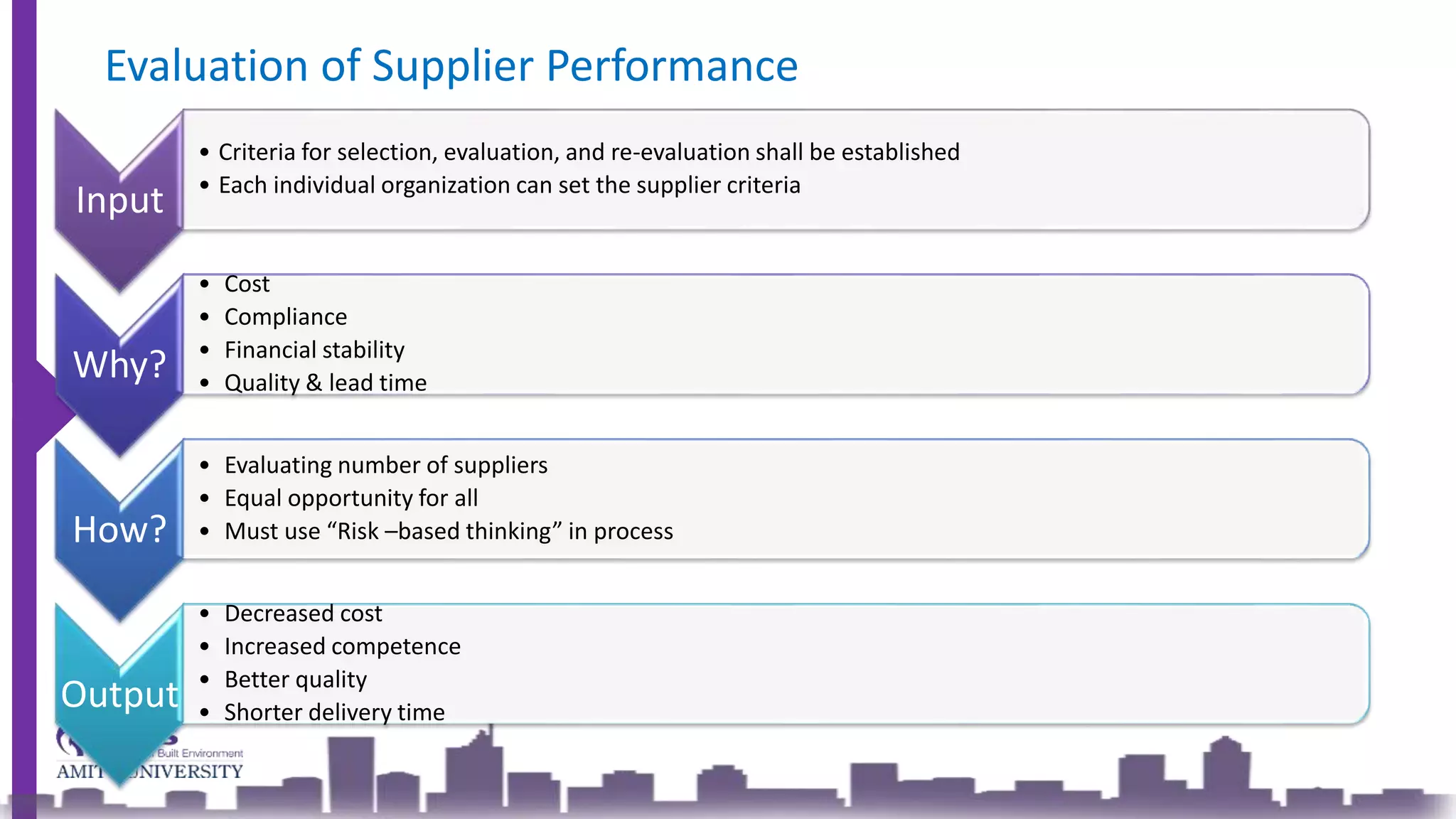
Input
• Criteria for selection, evaluation, and re-evaluation shall be established
• Each individual organization can set the supplier criteria
Why?
• Cost
• Compliance
• Financial stability
• Quality & lead time
How?
• Evaluating number of suppliers
• Equal opportunity for all
• Must use “Risk –based thinking” in process
Output
• Decreased cost
• Increased competence
• Better quality
• Shorter delivery time
Evaluation of Supplier Performance
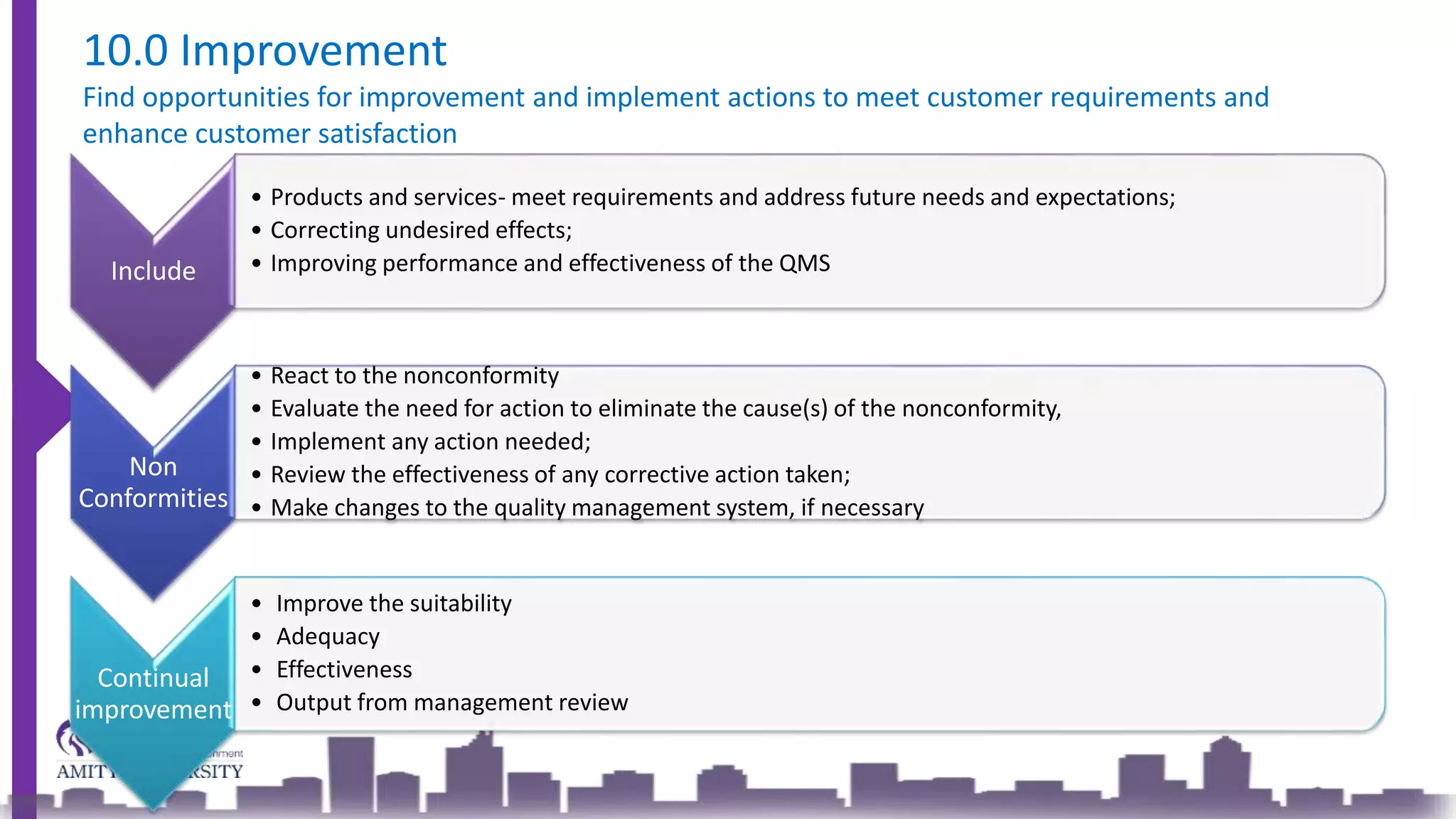
Include
• Products and services- meet requirements and address future needs and expectations;
• Correcting undesired effects;
• Improving performance and effectiveness of the QMS
Non
Conformities
• React to the nonconformity
• Evaluate the need for action to eliminate the cause(s) of the nonconformity,
• Implement any action needed;
• Review the effectiveness of any corrective action taken;
• Make changes to the quality management system, if necessary
Continual
improvement
• Improve the suitability
• Adequacy
• Effectiveness
• Output from management review
10.0 Improvement
Find opportunities for improvement and implement actions to meet customer requirements and
enhance customer satisfaction
ISO 9001: 2015 QUALITY MANAGEMENT SYSTEMS

ISO 9001: 2015 QUALITY MANAGEMENT SYSTEMS

  • 1.
    PREPARED BY: SUBHNEDU DATTA MBACPM, B.E. Civil RICS School of Built Environment
  • 2.
     WHAT ISISO 9001 ? It is the international standard that specifies requirements for QMS.  PURPOSE ? Organizations of all types and sizes find that using the ISO 9001 standard helps them:  Organize processes  Improve the efficiency of processes  Continually improve  ISO 9001:2015 Forecast schedules
  • 3.
    1. Scope 2. NominativeReferences 3. Terms & Definitions 4. Context of the organization 5. Leadership 6. Planning 7. Support 8. Operation 9. Performance Evaluation 10. Improvement PLAN DO CHECK ACT
  • 5.
    • Internal issues •External issues 4.1 Understanding the organization and its context. • Requirement of interested parties 4.2 Understanding the needs and expectations of the interested parties. • Determine the Boundaries & Applicability of the QMS 4.3 Determining the scope of QMS. • Design the target Process 4.4 Quality Management System and its processes.
  • 6.
    • Accountability for Effectiveness •Quality Policy & Quality objectives • Integration of QMS • Promoting • Resource needed for Quality • Communicating the Importance • Conforming the Requirements • Intended Results • Improvement • Support Top Management wrt. “QMS” “Having a unified direction or mission that comes from strong leadership is essential to ensure that everyone in the organization understands what you are trying to achieve.” • Requirements • Risk & Opportunities • Focus on Customer Satisfaction Customer Focus wrt. QMS
  • 7.
    • Appropriate purpose • Strategicdirection • Framework • Commitment • Continual Improvement • Documented • Communicated • Available to interested Parties Policy Developing & Communicate • Assigned understood and communicated • Reporting • Implemented as per the plan ORG. Roles Responsibilities Authorities So, Top management should • Demonstrate leadership & Commitment • Focus on customer • Developing & Implementing Quality Policy • Assign roles, responsibilities & authorities. Leads to Customer Satisfaction
  • 8.
    • Enlist Risks& Opportunities • Evaluate the effectives • Enhance Desirable Effects • Prevent or Reduce undesirable effects • Improvements Address Risk & Opportunities • At relevant functions, levels & processes • Measurable • Consistent • Monitored • Communicated • Updated • Relevant Conformity of product • Resources required • Evaluated Objectives & Planning for them “Taking Decisions for future actions in order to achieve pre- determined objectives by optimum utilization of available resources in a limited time frame.” • Planning for Changes • Purpose & its potential • Integrity • Availability of resources • Allocation or Reallocation of responsibilities
  • 9.
  • 10.
    Operation Planning & Control Determination Design& Development of Product/Service Control of Externally Provided Product/Services Product & Service Provision Release of Product & Service Control over Non- Conformity  The bulk of the management system requirements lies within this single clause.  It has 7 sub clauses
  • 11.
    9.0 Performance Evaluation Performanceevaluation is the critical Check step in the Plan-Do-Check-Act (PDCA) cycle that ISO 9001 is based on. • Analyze (Desired outcomes, Statistical tools) • Internal Audit • Management Review • How & When to measure • Determine Processes that need to be monitored Monitor Measurement AnalysisEvaluate Customer Satisfaction is Critical Performance Indicator which will govern benchmark to be set in each Process.
  • 12.
    Input • Criteria forselection, evaluation, and re-evaluation shall be established • Each individual organization can set the supplier criteria Why? • Cost • Compliance • Financial stability • Quality & lead time How? • Evaluating number of suppliers • Equal opportunity for all • Must use “Risk –based thinking” in process Output • Decreased cost • Increased competence • Better quality • Shorter delivery time Evaluation of Supplier Performance
  • 13.
    Include • Products andservices- meet requirements and address future needs and expectations; • Correcting undesired effects; • Improving performance and effectiveness of the QMS Non Conformities • React to the nonconformity • Evaluate the need for action to eliminate the cause(s) of the nonconformity, • Implement any action needed; • Review the effectiveness of any corrective action taken; • Make changes to the quality management system, if necessary Continual improvement • Improve the suitability • Adequacy • Effectiveness • Output from management review 10.0 Improvement Find opportunities for improvement and implement actions to meet customer requirements and enhance customer satisfaction