ISO 9001:2015
Quality Management System
Requirements
EDC ROMFOR LTD.
XX.02.2019
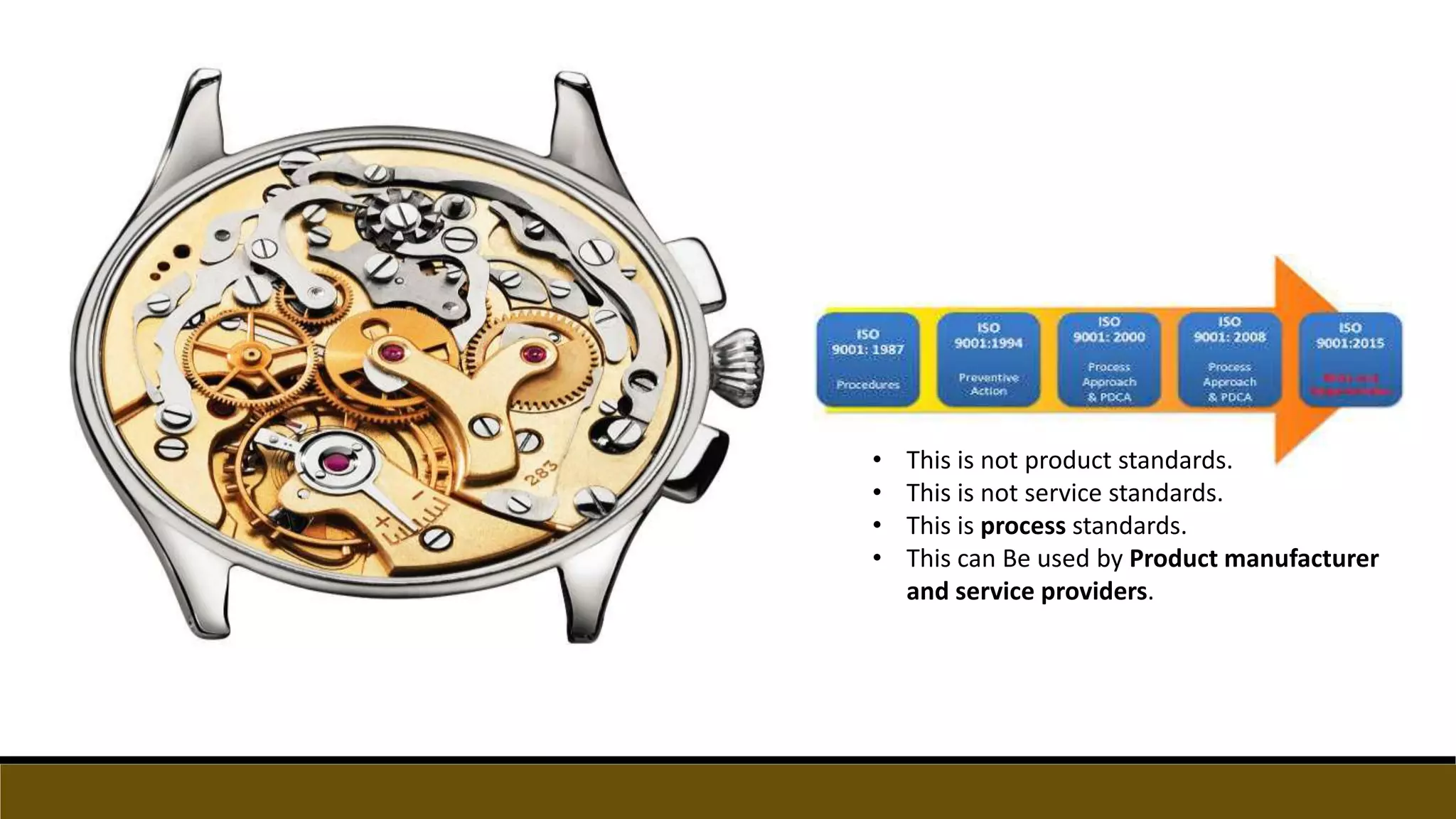
• This is not product standards.
• This is not service standards.
• This is process standards.
• This can Be used by Product manufacturer
and service providers.
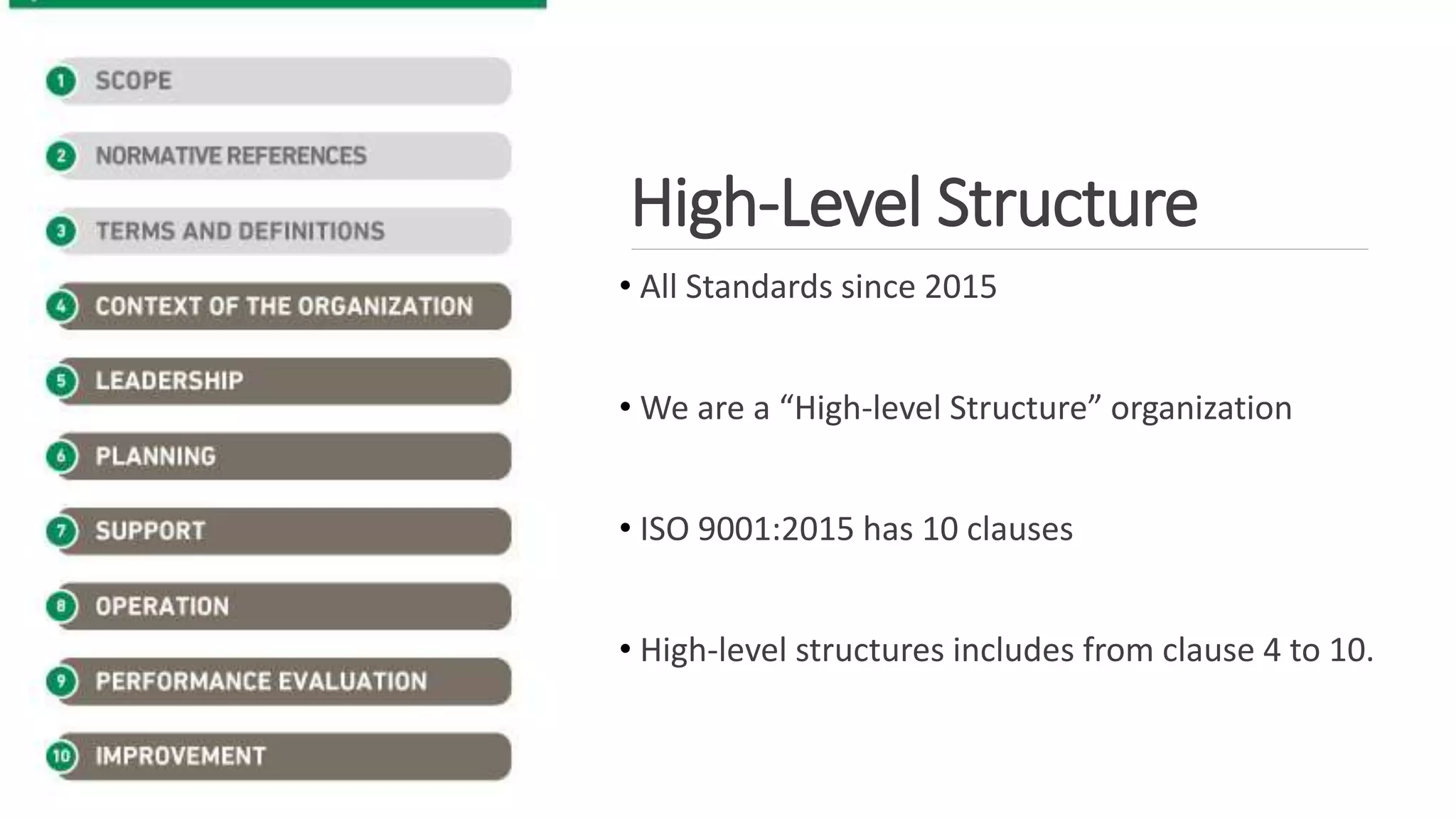
High-Level Structure
• All Standards since 2015
• We are a “High-level Structure” organization
• ISO 9001:2015 has 10 clauses
• High-level structures includes from clause 4 to 10.
Table of Content
1. Scope of standard
2. Normative references
3. Terms and definitions
4. “Contextof the organization”
4.1 Understandingthe organizationand its “context”
4.2 Understandingthe needs and expectationsof “interested parties”
4.3 Determining the scope of the quality management system….
b) the requirements of relevant “interestedparties”
4.4 Qualitymanagement systemand its processes….
4.4.1f) addressthe “risks”
“combinationof internal
and external issues that
can have an effect on an
organization’s approach
to developingand
achieving its objectives.”
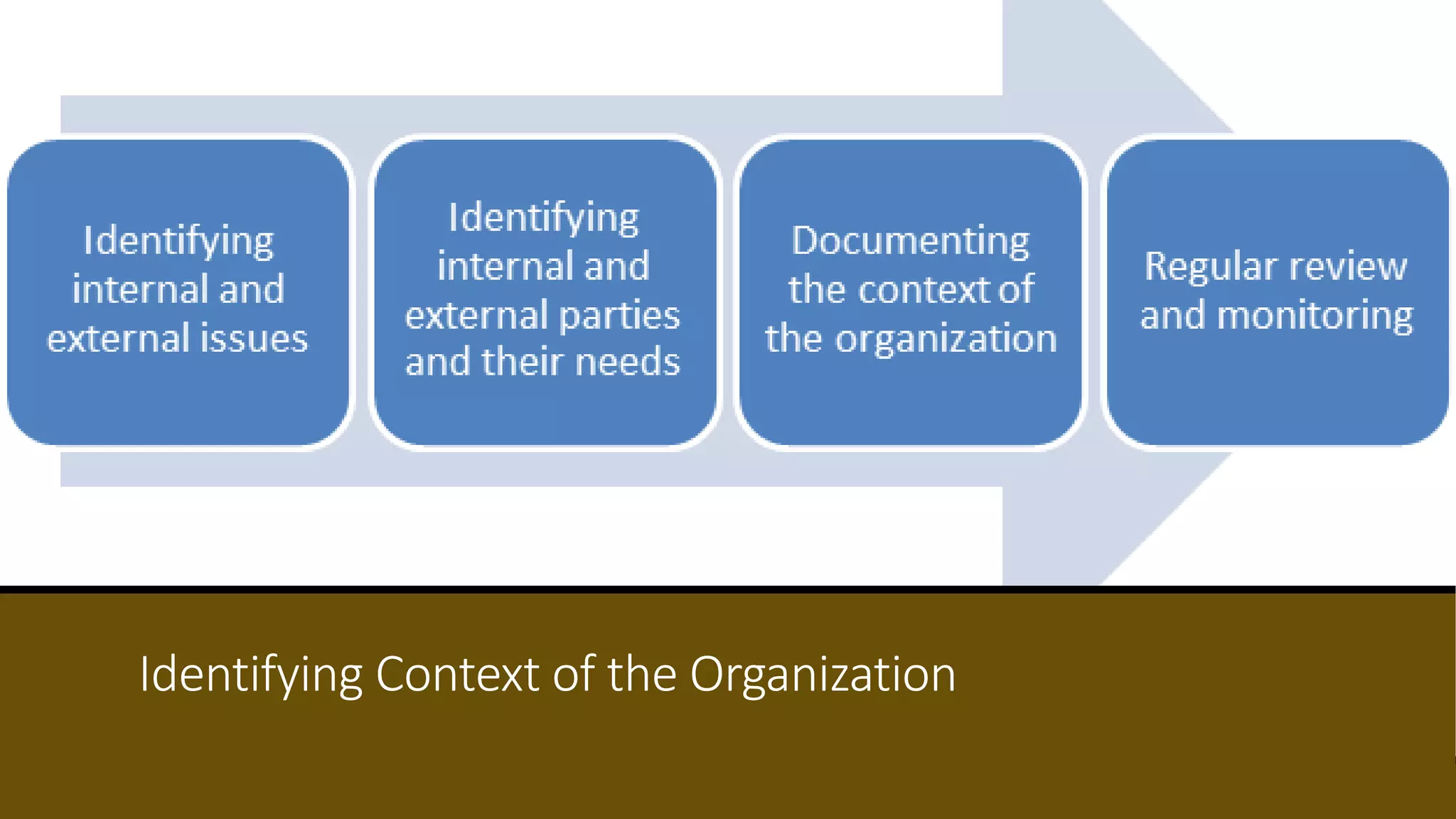
Identifying Context of the Organization
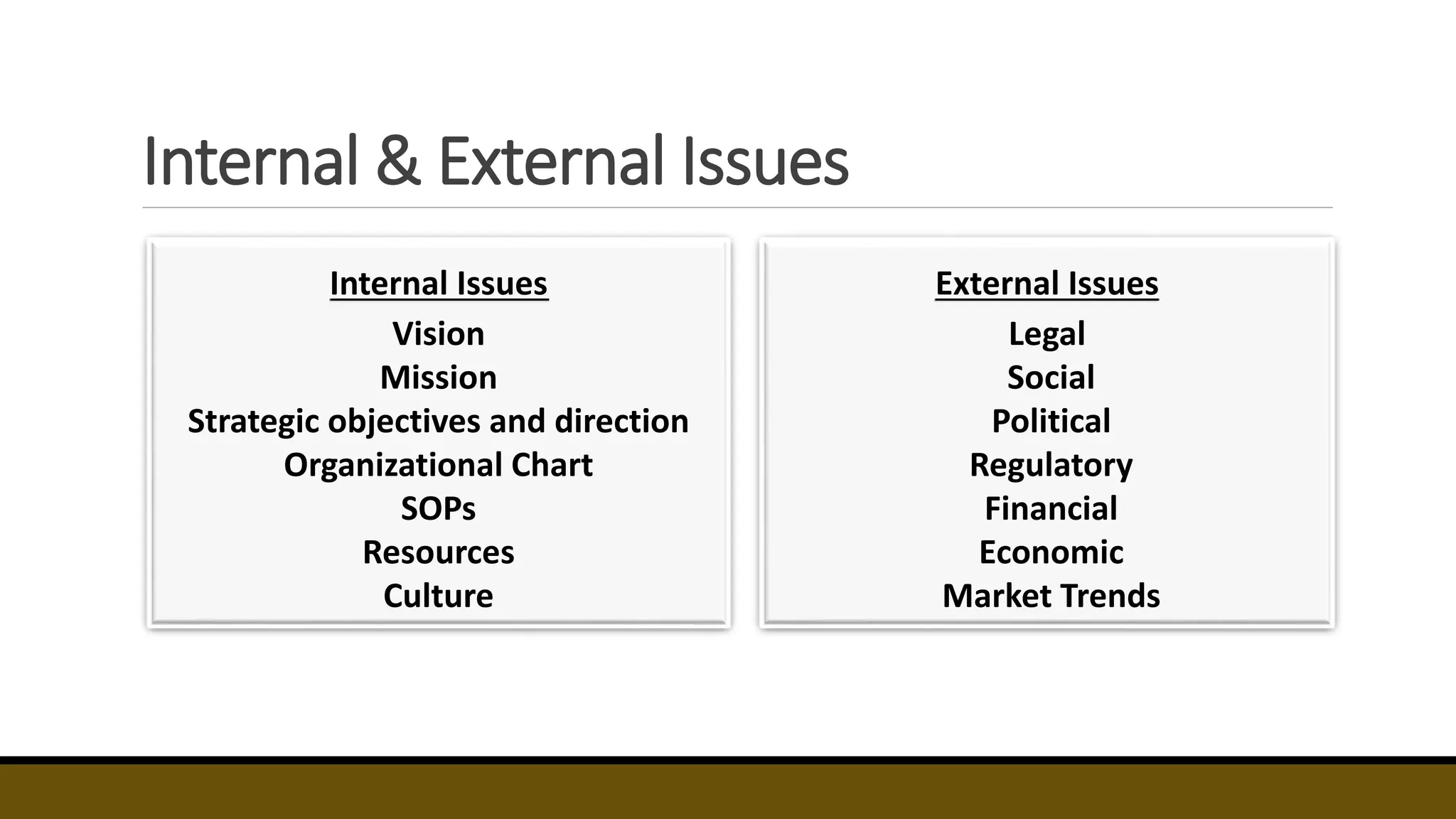
Internal & External Issues
Internal Issues
Vision
Mission
Strategic objectives and direction
Organizational Chart
SOPs
Resources
Culture
External Issues
Legal
Social
Political
Regulatory
Financial
Economic
Market Trends
Example
Customer pressures and complaints can force organizations to change policies such as product
returns and customer and technical support .
Technological changes can provide new and more effective ways to handle communications,
operations, shipping and logistics.
Governments regulatory and trade policies can play a significant role in determining how
businesses operate, especially in regard to international trade, taxation, and regulations
The media, including social media, can have a huge impact on a company’s image and public
relations. A bad news video or news report can go viral pretty fast, and if your organization
doesn’t provide an acceptable response, the negative publicity and effects can last a long time.
Sociological forces often drive what, where and how consumers buy product and services. There
is an increasing trend in the number of consumers purchasing products online and reading
reviews before making a purchase.
The multinational and multicultural trend in workforce composition can cause significant
changes in hiring and retention of competent human resources.
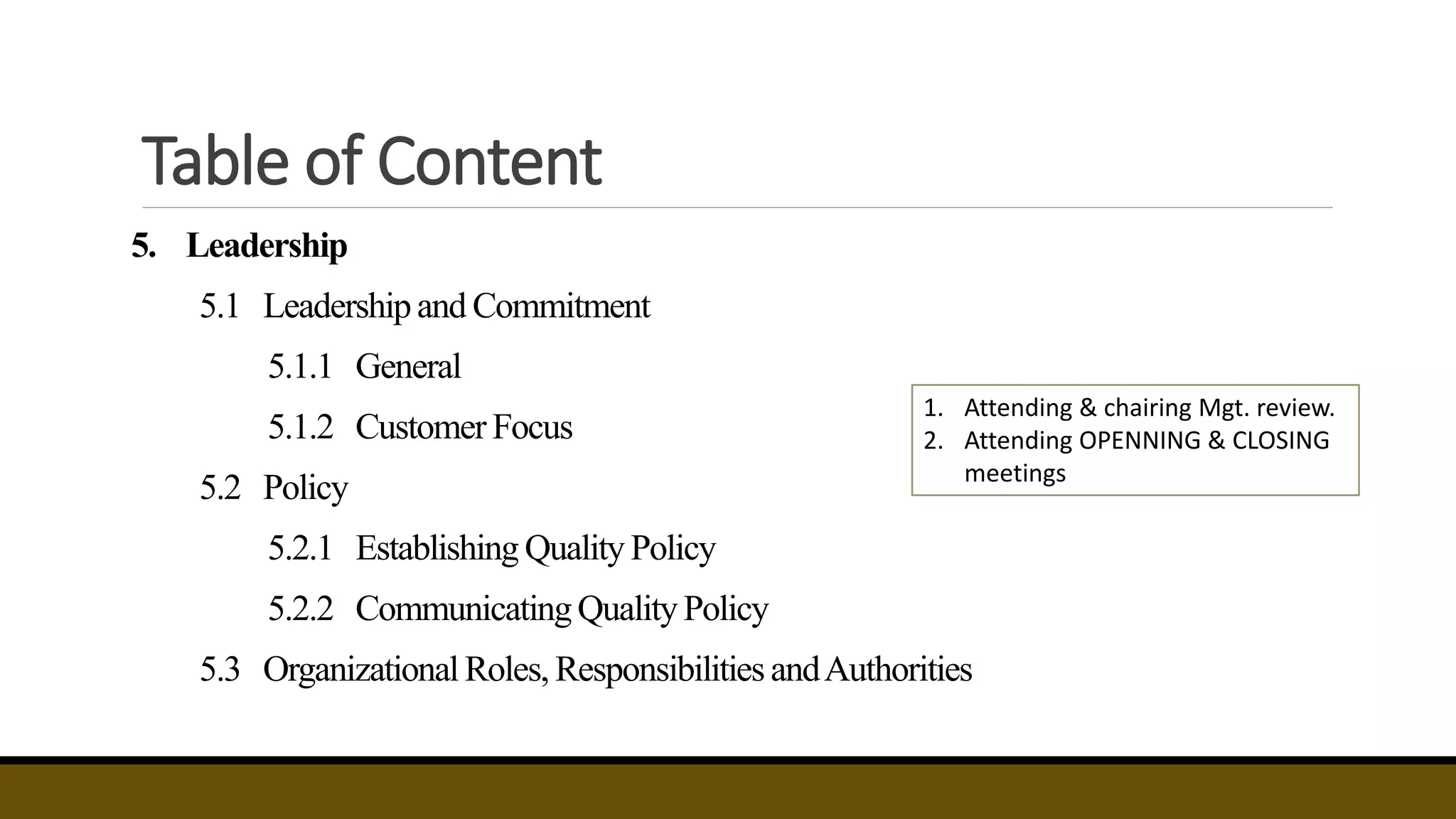
Table of Content
5. Leadership
5.1 Leadershipand Commitment
5.1.1 General
5.1.2 Customer Focus
5.2 Policy
5.2.1 Establishing Quality Policy
5.2.2 CommunicatingQualityPolicy
5.3 Organizational Roles, Responsibilities andAuthorities
1. Attending & chairing Mgt. review.
2. Attending OPENNING & CLOSING
meetings
Table of Content
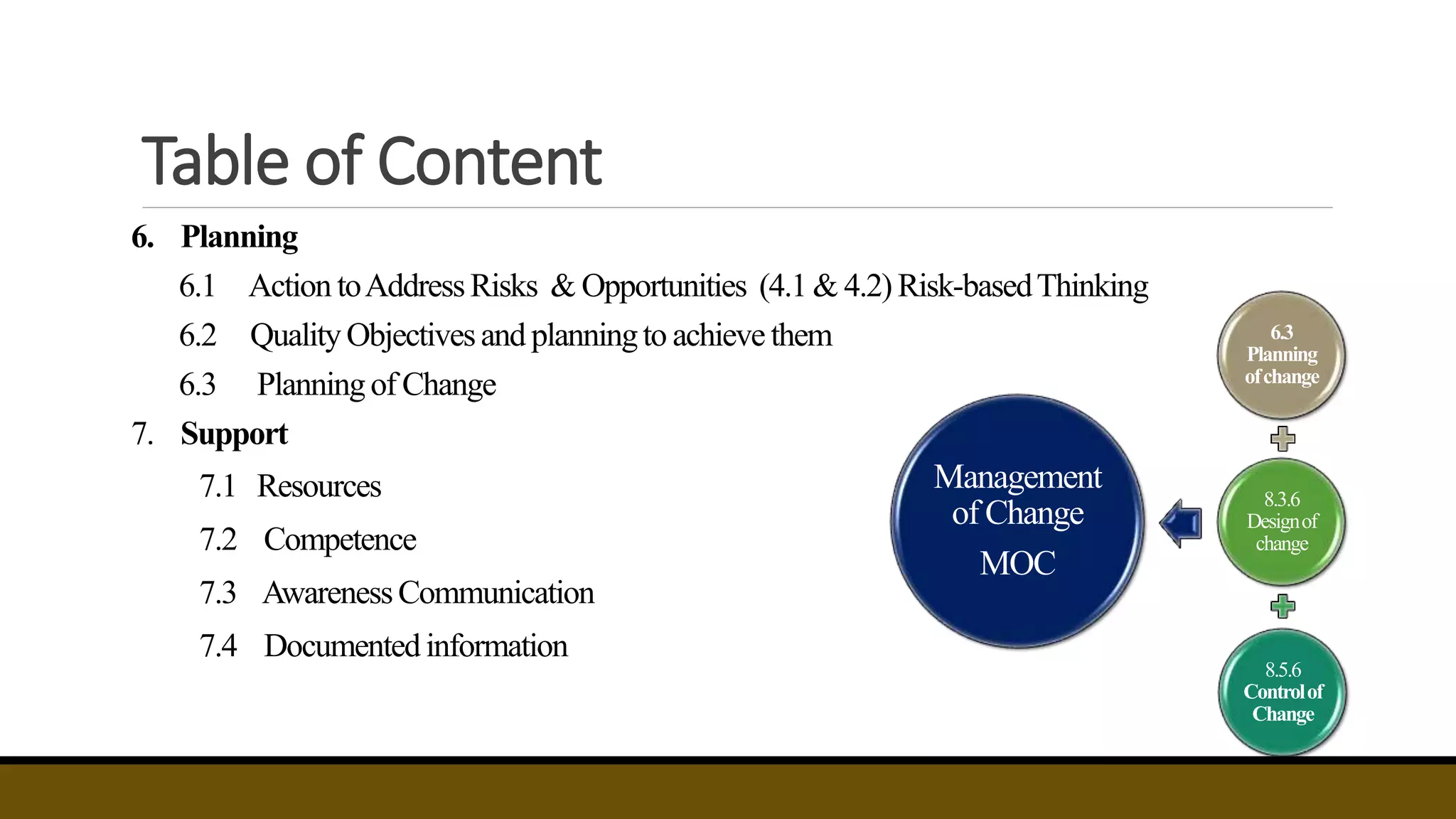
6. Planning
6.1 Action toAddressRisks & Opportunities (4.1& 4.2) Risk-basedThinking
6.2 Quality Objectivesand planningto achieve them
6.3 Planningof Change
7. Support
7.1 Resources
7.2 Competence
7.3 AwarenessCommunication
7.4 Documented information
6.3
Planning
ofchange
8.3.6
Designof
change
8.5.6
Controlof
Change
Management
of Change
MOC
Table of Content
8. Operation
8.1 Operationalplanningand control
8.2 Requirementsfor Productand Services (Contract,sales and marketing)
8.3 Designand Developmentof Productand Services
8.4 Controlof Externally providedproductand services (Purchasing)
8.5 Productionand service provisioncontrol
8.6 Release of productand services
8.7 Controlof non-conforming outputs
Table of Content
9. Performance evaluation
9.1 Monitoring,measurement, analysis & evaluation
9.2 Internal audit
9.3 Management review
10. Improvement
10.1 General
10.2 Non conformityand corrective action
10.3 Continual Improvement
ISO 9001:2015
• Certification is not a requirement of ISO 9001.
• The organization can implement and benefit from an ISO 9001 system without
having it certified.
• The organization can implement them for the internal benefits without
spending money on a certification programme.
• Certification is a Strategic Decision to be taken for business reasons:
• if it is a contractual, regulatory, or market requirement,
• If it meets customer preferences
• it is part of a risk management programme, or
• if it will motivate staff by setting a clear goal.
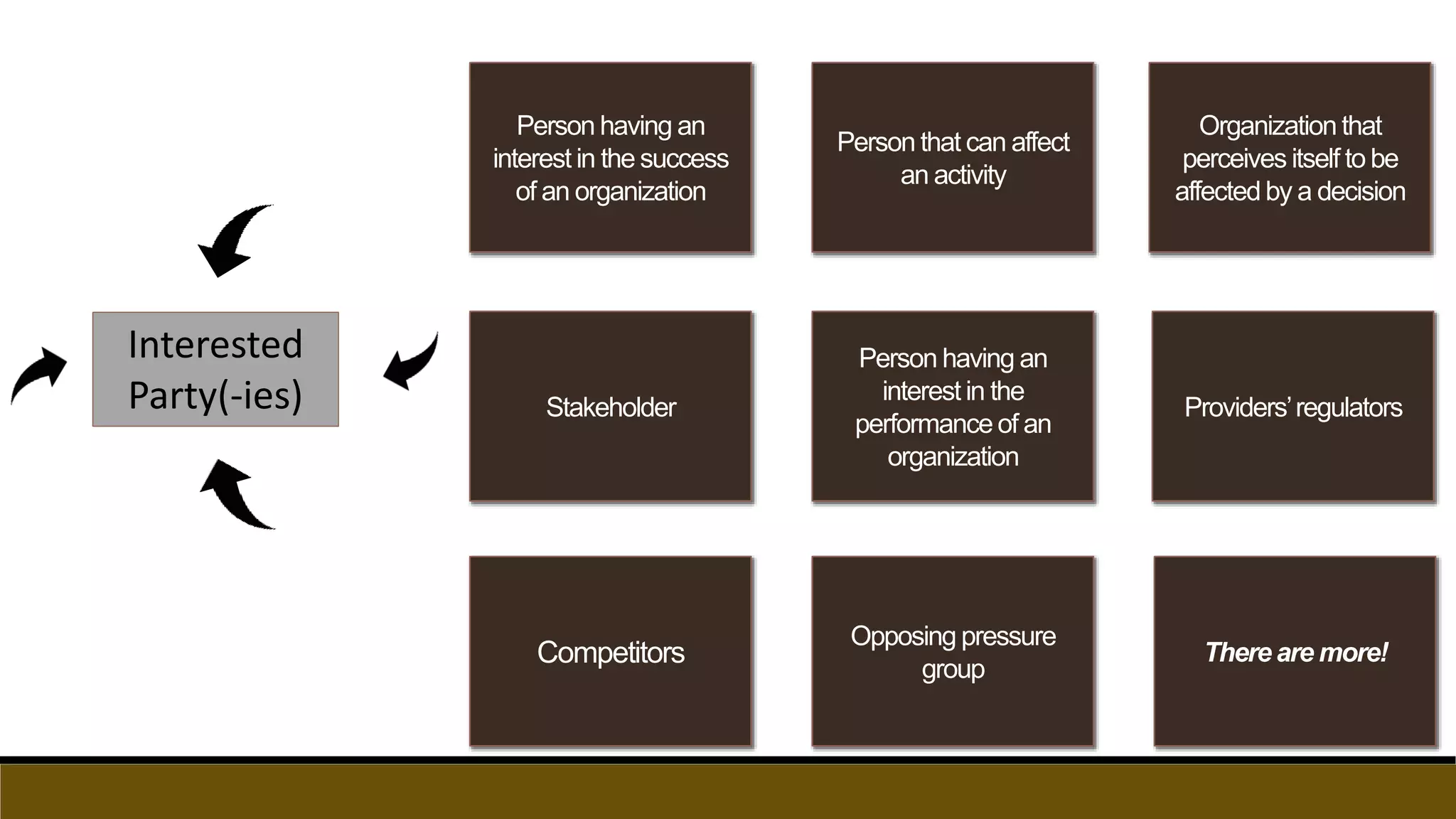
Person having an
interest in the success
of an organization
Stakeholder
Person that can affect
an activity
Organization that
perceives itself to be
affected by a decision
Person having an
interest in the
performance of an
organization
Providers’regulators
There are more!
Opposing pressure
group
Competitors
Interested
Party(-ies)
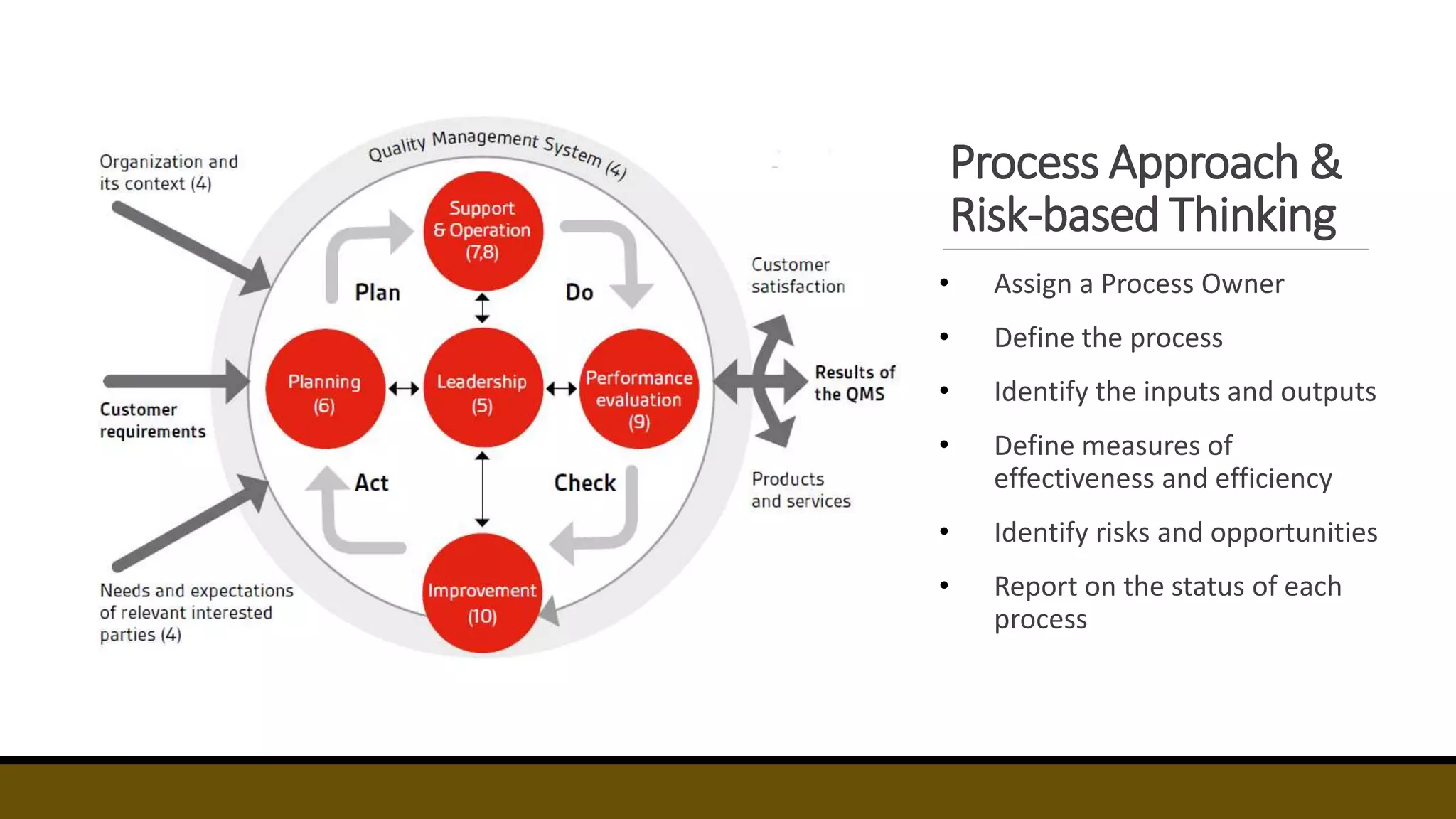
Process Approach &
Risk-based Thinking
• Assign a Process Owner
• Define the process
• Identify the inputs and outputs
• Define measures of
effectiveness and efficiency
• Identify risks and opportunities
• Report on the status of each
process
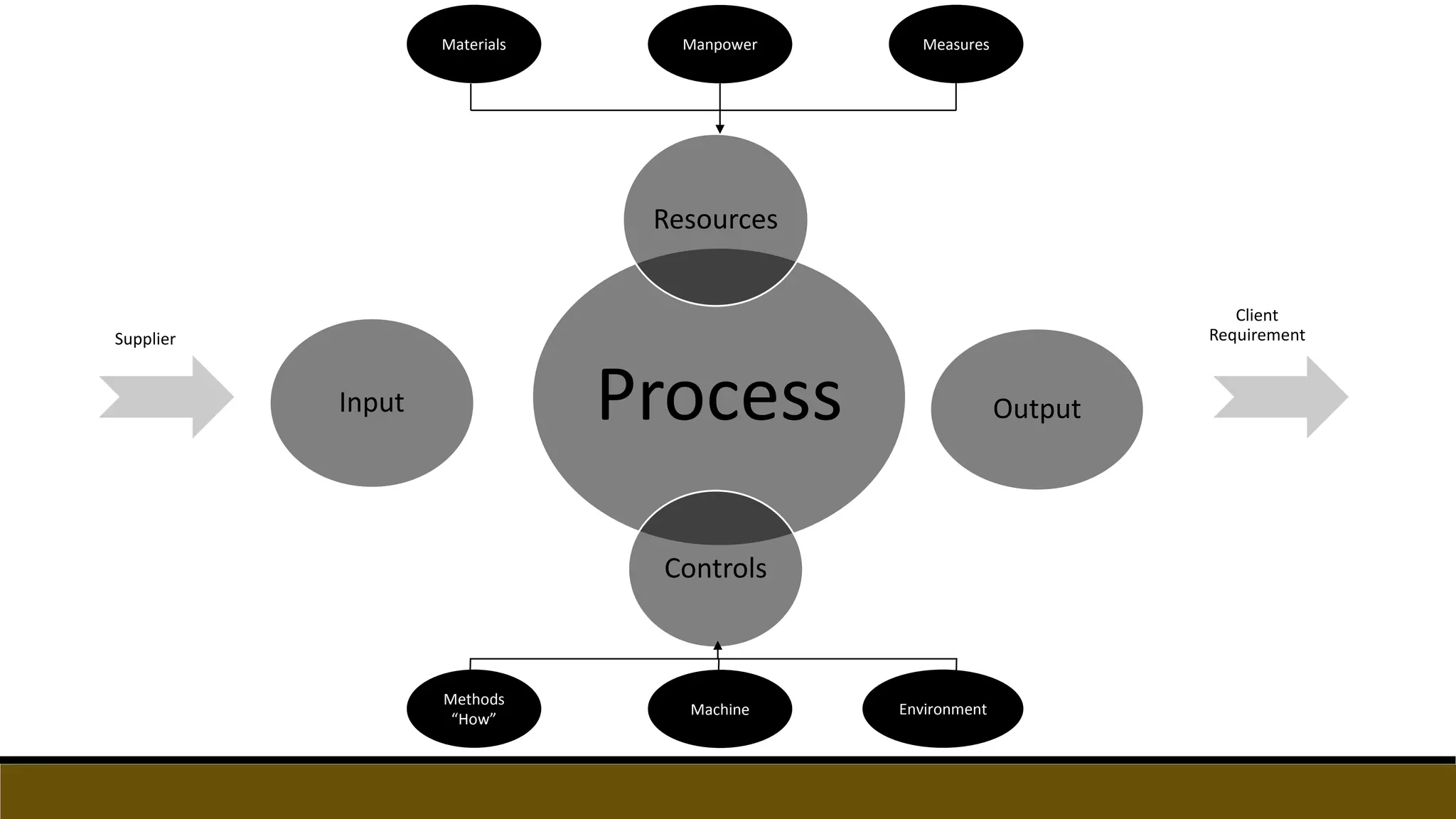
Process
Resources
Output
Controls
Input
Client
RequirementSupplier
Materials MeasuresManpower
Methods
“How”
EnvironmentMachine
What shall be done?
• Identify what the risks and opportunities are in our organization – it depends on
context-Departments (QHSE, Operation, Maintenance, HR, Finance, SC&WH)
• Analyze and prioritize the risks and opportunities in your organization
• what is acceptable?
• what is unacceptable?
• Plan actions to address the risks
• how can I avoid or eliminate the risk?
• how can I mitigate the risk?
• Implement the plan – take action
• Check the effectiveness of the actions – does it work?
• Learn from experience – continual improvement
A brief Introduction to ISO 9001 2015-Quality Management System

A brief Introduction to ISO 9001 2015-Quality Management System

  • 1.
    ISO 9001:2015 Quality ManagementSystem Requirements EDC ROMFOR LTD. XX.02.2019
  • 2.
    • This isnot product standards. • This is not service standards. • This is process standards. • This can Be used by Product manufacturer and service providers.
  • 3.
    High-Level Structure • AllStandards since 2015 • We are a “High-level Structure” organization • ISO 9001:2015 has 10 clauses • High-level structures includes from clause 4 to 10.
  • 5.
    Table of Content 1.Scope of standard 2. Normative references 3. Terms and definitions 4. “Contextof the organization” 4.1 Understandingthe organizationand its “context” 4.2 Understandingthe needs and expectationsof “interested parties” 4.3 Determining the scope of the quality management system…. b) the requirements of relevant “interestedparties” 4.4 Qualitymanagement systemand its processes…. 4.4.1f) addressthe “risks” “combinationof internal and external issues that can have an effect on an organization’s approach to developingand achieving its objectives.”
  • 6.
    Identifying Context ofthe Organization
  • 7.
    Internal & ExternalIssues Internal Issues Vision Mission Strategic objectives and direction Organizational Chart SOPs Resources Culture External Issues Legal Social Political Regulatory Financial Economic Market Trends
  • 8.
    Example Customer pressures andcomplaints can force organizations to change policies such as product returns and customer and technical support . Technological changes can provide new and more effective ways to handle communications, operations, shipping and logistics. Governments regulatory and trade policies can play a significant role in determining how businesses operate, especially in regard to international trade, taxation, and regulations The media, including social media, can have a huge impact on a company’s image and public relations. A bad news video or news report can go viral pretty fast, and if your organization doesn’t provide an acceptable response, the negative publicity and effects can last a long time. Sociological forces often drive what, where and how consumers buy product and services. There is an increasing trend in the number of consumers purchasing products online and reading reviews before making a purchase. The multinational and multicultural trend in workforce composition can cause significant changes in hiring and retention of competent human resources.
  • 9.
    Table of Content 5.Leadership 5.1 Leadershipand Commitment 5.1.1 General 5.1.2 Customer Focus 5.2 Policy 5.2.1 Establishing Quality Policy 5.2.2 CommunicatingQualityPolicy 5.3 Organizational Roles, Responsibilities andAuthorities 1. Attending & chairing Mgt. review. 2. Attending OPENNING & CLOSING meetings
  • 10.
    Table of Content 6.Planning 6.1 Action toAddressRisks & Opportunities (4.1& 4.2) Risk-basedThinking 6.2 Quality Objectivesand planningto achieve them 6.3 Planningof Change 7. Support 7.1 Resources 7.2 Competence 7.3 AwarenessCommunication 7.4 Documented information 6.3 Planning ofchange 8.3.6 Designof change 8.5.6 Controlof Change Management of Change MOC
  • 11.
    Table of Content 8.Operation 8.1 Operationalplanningand control 8.2 Requirementsfor Productand Services (Contract,sales and marketing) 8.3 Designand Developmentof Productand Services 8.4 Controlof Externally providedproductand services (Purchasing) 8.5 Productionand service provisioncontrol 8.6 Release of productand services 8.7 Controlof non-conforming outputs
  • 12.
    Table of Content 9.Performance evaluation 9.1 Monitoring,measurement, analysis & evaluation 9.2 Internal audit 9.3 Management review 10. Improvement 10.1 General 10.2 Non conformityand corrective action 10.3 Continual Improvement
  • 13.
    ISO 9001:2015 • Certificationis not a requirement of ISO 9001. • The organization can implement and benefit from an ISO 9001 system without having it certified. • The organization can implement them for the internal benefits without spending money on a certification programme. • Certification is a Strategic Decision to be taken for business reasons: • if it is a contractual, regulatory, or market requirement, • If it meets customer preferences • it is part of a risk management programme, or • if it will motivate staff by setting a clear goal.
  • 14.
    Person having an interestin the success of an organization Stakeholder Person that can affect an activity Organization that perceives itself to be affected by a decision Person having an interest in the performance of an organization Providers’regulators There are more! Opposing pressure group Competitors Interested Party(-ies)
  • 15.
    Process Approach & Risk-basedThinking • Assign a Process Owner • Define the process • Identify the inputs and outputs • Define measures of effectiveness and efficiency • Identify risks and opportunities • Report on the status of each process
  • 16.
  • 17.
    What shall bedone? • Identify what the risks and opportunities are in our organization – it depends on context-Departments (QHSE, Operation, Maintenance, HR, Finance, SC&WH) • Analyze and prioritize the risks and opportunities in your organization • what is acceptable? • what is unacceptable? • Plan actions to address the risks • how can I avoid or eliminate the risk? • how can I mitigate the risk? • Implement the plan – take action • Check the effectiveness of the actions – does it work? • Learn from experience – continual improvement

Editor's Notes

  • #11 Quality Objective--- Good to be better, situation now, situation future & timeframe