Introduction to ISO/IEC
              27000

ISO (the International Organization for Standardization) and IEC
   (the International Electrotechnical Commission) form the
       specialized system for worldwide standardization

                              by
                Sudhanwa Jogalekar
Sudhanwa Jogalekar
• Qualifications: BE, DBM, MCM, (Dip cyberlaw)
• Professional certification: ISO 27001 Lead
  Auditor
• Professional experience : 25 years
• Academic experience: Syllabus design, paper
  setting, assessments, QIP, teachers training
  programs, visiting faculty etc. for Pune, Symbiosis
  University
• FOSS evangelist. Promoting FOSS for 10 years.
  Conduct FOSS workshops, seminars, training
  programs, conferences etc.
Various Standards
• ISO 9000 (QMS)

• ISO 14000 (EMS)

• ISO 27000 (ISMS)

• ISO 20000 (IT SMS)
ISO 27000 family
•   ISO/IEC 27001 formal ISMS specification
•   ISO/IEC 27002 infosec controls guide
•   ISO/IEC 27003 implementation guide
•   ISO/IEC 27004 infosec metrics
•   ISO/IEC 27005 infosec risk management
•   ISO/IEC 27006 ISMS certification guide
•   ISO/IEC 27011 ISO27k for telecomms
•   ISO/IEC 27033-1 network security
•   ISO 27799 ISO27k for healthcare
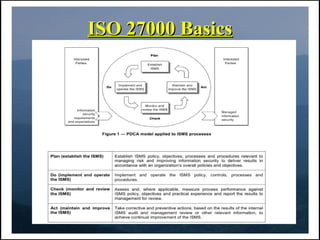
ISO 27000 Basics
Why ISO 27001?
●   ISO/IEC 27001 is an investment in the company’s future

●   A “risk based” management system to help organisations plan and
    implement an information security management system (ISMS),assists
    organisations by providing a structured and a proactive approach to
    information security, by making sure the right people, processes,
    procedures and technology are in place to protect information assets.

●   Help minimise possible harm to organisations that can be caused by
    deliberate or accidental acts.
Why ISO 27001?
●   Framework that will take account of all legal and regulatory requirements.

●   Gives the ability to demonstrate and independently assure the internal
    controls of a company (corporate governance)

●   Proves senior management commitment to the security of business and
    customer information

●   Helps provide a competitive edge to the company

●   Reduces the amount of time and effort when audited by internal compliance
    reviews or external audits

●   Easier to obtain funding and resources for information security team and
    security objectives
Why certification?
●   Provides a goal, which will help facilitate the implementation of an
    information security management system and security controls

●   Formalizes, and independently verifies, Information Security
    processes, procedures and documentation

●   Independently verifies that risks to the company are properly
    identified and managed

●   Help identify and meet contractual and regulatory requirements

●   Demonstrates to customers that security of their information is
    taken seriously
Certification
●   Standard

●   Policies

●   Regulations

●   Mandatory

●   Best practices
Certification
●   Management Support

●   Staff support

●   Technical support

●   Vendor support – SLA, NDA

●   Best practices
Information Security
                                  V/S
                         IT Security
●   User desktops
●   Manager laptops
●   Servers
●   LAN, WAN
●   Server room A/C
●   Company bus/car drivers
●   Security guard at reception
●   Routers
●   Fire extinguishers
●   Canteen
●   Software licenses
ISMS and Asset Management
ISMS is “Management assurance mechanism for security of
business information assets from potential security breach.”

It relates to all types of information, be it paper based or electronic.

Secure information is one that ensures Confidentiality, Integrity
and Availability.

Confidentiality: ensuring that information can only be
accessed by those with the proper authorization
Integrity: safeguarding the accuracy and completeness of
information and the ways in which it is processed
Availability: ensuring that authorized users have access to
information and associated assets when required
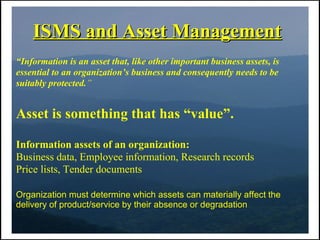
ISMS and Asset Management
“Information is an asset that, like other important business assets, is
essential to an organization’s business and consequently needs to be
suitably protected.”


Asset is something that has “value”.

Information assets of an organization:
Business data, Employee information, Research records
Price lists, Tender documents

Organization must determine which assets can materially affect the
delivery of product/service by their absence or degradation
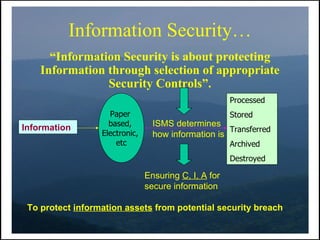
Information Security…
      “Information Security is about protecting
    Information through selection of appropriate
                Security Controls”.
                                                       Processed
                    Paper                              Stored
                    based,        ISMS determines
Information                                          Transferred
                  Electronic,     how information is
                      etc                              Archived
                                                       Destroyed

                                Ensuring C, I, A for
                                secure information

 To protect information assets from potential security breach
Assets and RA/RTP
●   Risk Assessment

●   Risk Treatment Plan

●   Continuous Improvement

●   PDCA

●   Audit process
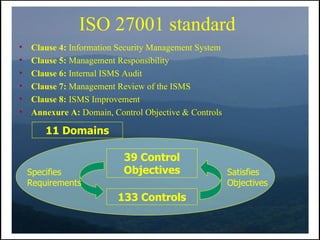
ISO 27001 standard
•   Clause 4: Information Security Management System
•   Clause 5: Management Responsibility
•   Clause 6: Internal ISMS Audit
•   Clause 7: Management Review of the ISMS
•   Clause 8: ISMS Improvement
•   Annexure A: Domain, Control Objective & Controls

        11 Domains

                           39 Control
    Specifies              Objectives                  Satisfies
    Requirements                                       Objectives
                         133 Controls
Introduction to ISO/IEC
         27000


    ??? Questions ???

            Coming up
    Part II (Implementation)

ISO 27001

  • 1.
    Introduction to ISO/IEC 27000 ISO (the International Organization for Standardization) and IEC (the International Electrotechnical Commission) form the specialized system for worldwide standardization by Sudhanwa Jogalekar
  • 2.
    Sudhanwa Jogalekar • Qualifications:BE, DBM, MCM, (Dip cyberlaw) • Professional certification: ISO 27001 Lead Auditor • Professional experience : 25 years • Academic experience: Syllabus design, paper setting, assessments, QIP, teachers training programs, visiting faculty etc. for Pune, Symbiosis University • FOSS evangelist. Promoting FOSS for 10 years. Conduct FOSS workshops, seminars, training programs, conferences etc.
  • 3.
    Various Standards • ISO9000 (QMS) • ISO 14000 (EMS) • ISO 27000 (ISMS) • ISO 20000 (IT SMS)
  • 4.
    ISO 27000 family • ISO/IEC 27001 formal ISMS specification • ISO/IEC 27002 infosec controls guide • ISO/IEC 27003 implementation guide • ISO/IEC 27004 infosec metrics • ISO/IEC 27005 infosec risk management • ISO/IEC 27006 ISMS certification guide • ISO/IEC 27011 ISO27k for telecomms • ISO/IEC 27033-1 network security • ISO 27799 ISO27k for healthcare
  • 5.
  • 6.
    Why ISO 27001? ● ISO/IEC 27001 is an investment in the company’s future ● A “risk based” management system to help organisations plan and implement an information security management system (ISMS),assists organisations by providing a structured and a proactive approach to information security, by making sure the right people, processes, procedures and technology are in place to protect information assets. ● Help minimise possible harm to organisations that can be caused by deliberate or accidental acts.
  • 7.
    Why ISO 27001? ● Framework that will take account of all legal and regulatory requirements. ● Gives the ability to demonstrate and independently assure the internal controls of a company (corporate governance) ● Proves senior management commitment to the security of business and customer information ● Helps provide a competitive edge to the company ● Reduces the amount of time and effort when audited by internal compliance reviews or external audits ● Easier to obtain funding and resources for information security team and security objectives
  • 8.
    Why certification? ● Provides a goal, which will help facilitate the implementation of an information security management system and security controls ● Formalizes, and independently verifies, Information Security processes, procedures and documentation ● Independently verifies that risks to the company are properly identified and managed ● Help identify and meet contractual and regulatory requirements ● Demonstrates to customers that security of their information is taken seriously
  • 9.
    Certification ● Standard ● Policies ● Regulations ● Mandatory ● Best practices
  • 10.
    Certification ● Management Support ● Staff support ● Technical support ● Vendor support – SLA, NDA ● Best practices
  • 11.
    Information Security V/S IT Security ● User desktops ● Manager laptops ● Servers ● LAN, WAN ● Server room A/C ● Company bus/car drivers ● Security guard at reception ● Routers ● Fire extinguishers ● Canteen ● Software licenses
  • 12.
    ISMS and AssetManagement ISMS is “Management assurance mechanism for security of business information assets from potential security breach.” It relates to all types of information, be it paper based or electronic. Secure information is one that ensures Confidentiality, Integrity and Availability. Confidentiality: ensuring that information can only be accessed by those with the proper authorization Integrity: safeguarding the accuracy and completeness of information and the ways in which it is processed Availability: ensuring that authorized users have access to information and associated assets when required
  • 13.
    ISMS and AssetManagement “Information is an asset that, like other important business assets, is essential to an organization’s business and consequently needs to be suitably protected.” Asset is something that has “value”. Information assets of an organization: Business data, Employee information, Research records Price lists, Tender documents Organization must determine which assets can materially affect the delivery of product/service by their absence or degradation
  • 14.
    Information Security… “Information Security is about protecting Information through selection of appropriate Security Controls”. Processed Paper Stored based, ISMS determines Information Transferred Electronic, how information is etc Archived Destroyed Ensuring C, I, A for secure information To protect information assets from potential security breach
  • 15.
    Assets and RA/RTP ● Risk Assessment ● Risk Treatment Plan ● Continuous Improvement ● PDCA ● Audit process
  • 16.
    ISO 27001 standard • Clause 4: Information Security Management System • Clause 5: Management Responsibility • Clause 6: Internal ISMS Audit • Clause 7: Management Review of the ISMS • Clause 8: ISMS Improvement • Annexure A: Domain, Control Objective & Controls 11 Domains 39 Control Specifies Objectives Satisfies Requirements Objectives 133 Controls
  • 17.
    Introduction to ISO/IEC 27000 ??? Questions ??? Coming up Part II (Implementation)