AHA/ASA GuidelineGuidelines for the Early Management of Adults with Ischemic StrokeThe American Academy of Neurology affirms the value of this guideline as an educational tool for neurologistsBroderick, J. et al.   Stroke. May 2007;38:1655-1711
Stroke Chain of Survival
Key Components of History
Standardized Measures for Stroke: JCAHO Primary Stroke CenterstPA consideredScreen for dysphagiaDVT prophylaxisLipid profile during hospitalizationSmoking cessationEducation about strokePlan for rehabilitation consideredAntithrombotic medications started within 48 hoursAntithrombotic medications prescribed at dischargeAnticoagulants prescribed to patients with atrial fibrillation
Immediate Diagnostic Studies: Evaluation of aPatient With Suspected Acute Ischemic StrokeAll patientsNoncontrast brain CT or MRIBlood glucoseSerum electrolytes/renal function testsECGMarkers of cardiac ischemiaCBC, including platelet count*PT/INR*aPPT*Oxygen saturationSelected patientsHepatic function testsToxicology screenBlood alcohol levelPregnancy testABG (if hypoxia is suspected)CXR  (if lung disease is suspected)Lumbar puncture 	(if SAH is suspected and CT scan is negative for blood)EEG (if seizures are suspected)
Approach to Arterial Hypertension in Acute Ischemic Stroke
Indication that patient is eligible for treatment with intravenous rtPA or other acute reperfusion interventionBP levelSBP 185 mmHg or DBP 110 mmHgLabetalol 10 to 20 mg IV over 1 to 2 minutes, may repeat 1; orNitropaste 1 to 2 inches; orNicardipine infusion, 5 mg/h, titrate up by 2.5 mg/h at 5- to 15-minute intervals, maximum dose 15 mg/h; when desired blood pressure attained, reduce to 3 mg/hIf BP does not decline and remains 185/110mmHg, do not administer rtPA
Management of BP during and after treatment with rtPA or other acute reperfusion interventionMonitor BP every 15 minutes during treatment and then for another 2 hours, then every 30 minutes for 6 hours, and then every hour for 16 hoursBP levelSBP 180 to 230 mmHg or DBP 105 to 120 mmHgLabetalol 10 mg IV over 1 to 2 minutes, may repeat every 10 to 20 minutes, maximum dose of 300 mg; orLabetalol 10 mg IV followed by an infusion at 2 to 8 mg/minSBP 230 mmHg or DBP 121 to 140 mmHgLabetalol 10 mg IV over 1 to 2 minutes, may repeat every 10 to 20 minutes, maximum dose of 300 mg; orLabetalol 10 mg IV followed by an infusion at 2 to 8 mg/min; orNicardipine infusion, 5 mg/h, titrate up to desired effect by increasing 2.5 mg/h every 5 minutes to maximum of 15 mg/hIf BP not controlled, consider sodium nitroprusside
Recommendationhas changed fromprevious statementsReasonablegoal tolower BP by 15% during the first24 hours afteronset of stroke. The level of BP that would mandatesuch treatment is not known, but consensusexists that medicationsshould be withheld unless the SBP >220mmHg or the DBP >120 mmHg (ClassI, Level of Evidence C)
Recommendationhas changed fromprevious statementsHyperglycemiashould be treatedin patients with acute ischemic stroke. Theminimum thresholddescribed in previous statements likely wastoo high, and lowerserum glucose concentrations (possibly >140to 185 mg/dL)probably should trigger administration of insulin (Class IIa, Level of Evidence C).
Characteristics of Patients with Ischemic Stroke Who Could Be Treated with rtPADiagnosis of ischemic stroke causing measurable neurological deficitThe neurological signs should not be clearing spontaneously.The neurological signs should not be minor and isolated.Caution should be exercised in treating a patient with major deficits.The symptoms of stroke should not be suggestive of SAH.Onset of symptoms 3 hours before beginning treatmentNo head trauma or prior stroke in previous 3 months
No myocardial infarction in the previous 3 monthsNo gastrointestinal or urinary tract hemorrhage in previous 21 daysNo major surgery in the previous 14 daysNo arterial puncture at a noncompressible site in the previous 7 daysNo history of previous ICHBP not elevated (185/110 mm Hg)No evidence of active bleeding or acute trauma (fracture) on examination
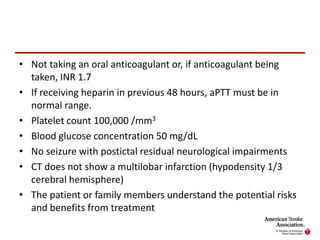
Not taking an oral anticoagulant or, if anticoagulant being taken, INR 1.7If receiving heparin in previous 48 hours, aPTT must be in normal range.Platelet count 100,000 /mm3Blood glucose concentration 50 mg/dLNo seizure with postictal residual neurological impairmentsCT does not show a multilobar infarction (hypodensity 1/3 cerebral hemisphere)The patient or family members understand the potential risks and benefits from treatment
Treatment of Acute Ischemic Stroke: Intravenous Administration of rtPAInfuse 0.9 mg/kg (maximum dose 90 mg) over 60 minutes with 10% of the dose given as a bolus over 1 minute.Admit the patient to ICU or stroke unit for monitoring.Perform neurological assessments every 15 minutes during the infusion and every 30 minutes for the next 6 hours, then hourly until 24 hours  after treatment.If the patient develops severe headache, acute hypertension, nausea, or vomiting, discontinue the infusion (if rtPA is being administered) and obtain emergency CT.Measure BP every 15 minutes for the first 2 hours and subsequently every 30 minutes for the next 6 hours, then hourly until 24 hours after treatment.Increase the frequency of BP measurements if SBP is 180 mmHg or if DBP 105 mmHg administer antihypertensive medications to maintain BP at or below these level.Delay placement of NG tubes, indwelling bladder catheters, or intra-arterial pressure catheters.Obtain a follow-up CT at 24 h before starting anticoagulants or antiplatelet agents.
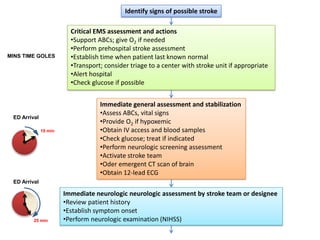
Identify signs of possible strokeCritical EMS assessment and actionsSupport ABCs; give O2 if needed
Perform prehospital stroke assessment

AHA/ASA Guidelines for Ischemic Stroke

  • 1.
    AHA/ASA GuidelineGuidelines forthe Early Management of Adults with Ischemic StrokeThe American Academy of Neurology affirms the value of this guideline as an educational tool for neurologistsBroderick, J. et al.  Stroke. May 2007;38:1655-1711
  • 3.
  • 5.
  • 8.
    Standardized Measures forStroke: JCAHO Primary Stroke CenterstPA consideredScreen for dysphagiaDVT prophylaxisLipid profile during hospitalizationSmoking cessationEducation about strokePlan for rehabilitation consideredAntithrombotic medications started within 48 hoursAntithrombotic medications prescribed at dischargeAnticoagulants prescribed to patients with atrial fibrillation
  • 11.
    Immediate Diagnostic Studies:Evaluation of aPatient With Suspected Acute Ischemic StrokeAll patientsNoncontrast brain CT or MRIBlood glucoseSerum electrolytes/renal function testsECGMarkers of cardiac ischemiaCBC, including platelet count*PT/INR*aPPT*Oxygen saturationSelected patientsHepatic function testsToxicology screenBlood alcohol levelPregnancy testABG (if hypoxia is suspected)CXR (if lung disease is suspected)Lumbar puncture (if SAH is suspected and CT scan is negative for blood)EEG (if seizures are suspected)
  • 12.
    Approach to ArterialHypertension in Acute Ischemic Stroke
  • 13.
    Indication that patientis eligible for treatment with intravenous rtPA or other acute reperfusion interventionBP levelSBP 185 mmHg or DBP 110 mmHgLabetalol 10 to 20 mg IV over 1 to 2 minutes, may repeat 1; orNitropaste 1 to 2 inches; orNicardipine infusion, 5 mg/h, titrate up by 2.5 mg/h at 5- to 15-minute intervals, maximum dose 15 mg/h; when desired blood pressure attained, reduce to 3 mg/hIf BP does not decline and remains 185/110mmHg, do not administer rtPA
  • 14.
    Management of BPduring and after treatment with rtPA or other acute reperfusion interventionMonitor BP every 15 minutes during treatment and then for another 2 hours, then every 30 minutes for 6 hours, and then every hour for 16 hoursBP levelSBP 180 to 230 mmHg or DBP 105 to 120 mmHgLabetalol 10 mg IV over 1 to 2 minutes, may repeat every 10 to 20 minutes, maximum dose of 300 mg; orLabetalol 10 mg IV followed by an infusion at 2 to 8 mg/minSBP 230 mmHg or DBP 121 to 140 mmHgLabetalol 10 mg IV over 1 to 2 minutes, may repeat every 10 to 20 minutes, maximum dose of 300 mg; orLabetalol 10 mg IV followed by an infusion at 2 to 8 mg/min; orNicardipine infusion, 5 mg/h, titrate up to desired effect by increasing 2.5 mg/h every 5 minutes to maximum of 15 mg/hIf BP not controlled, consider sodium nitroprusside
  • 15.
    Recommendationhas changed frompreviousstatementsReasonablegoal tolower BP by 15% during the first24 hours afteronset of stroke. The level of BP that would mandatesuch treatment is not known, but consensusexists that medicationsshould be withheld unless the SBP >220mmHg or the DBP >120 mmHg (ClassI, Level of Evidence C)
  • 16.
    Recommendationhas changed frompreviousstatementsHyperglycemiashould be treatedin patients with acute ischemic stroke. Theminimum thresholddescribed in previous statements likely wastoo high, and lowerserum glucose concentrations (possibly >140to 185 mg/dL)probably should trigger administration of insulin (Class IIa, Level of Evidence C).
  • 17.
    Characteristics of Patientswith Ischemic Stroke Who Could Be Treated with rtPADiagnosis of ischemic stroke causing measurable neurological deficitThe neurological signs should not be clearing spontaneously.The neurological signs should not be minor and isolated.Caution should be exercised in treating a patient with major deficits.The symptoms of stroke should not be suggestive of SAH.Onset of symptoms 3 hours before beginning treatmentNo head trauma or prior stroke in previous 3 months
  • 18.
    No myocardial infarctionin the previous 3 monthsNo gastrointestinal or urinary tract hemorrhage in previous 21 daysNo major surgery in the previous 14 daysNo arterial puncture at a noncompressible site in the previous 7 daysNo history of previous ICHBP not elevated (185/110 mm Hg)No evidence of active bleeding or acute trauma (fracture) on examination
  • 19.
    Not taking anoral anticoagulant or, if anticoagulant being taken, INR 1.7If receiving heparin in previous 48 hours, aPTT must be in normal range.Platelet count 100,000 /mm3Blood glucose concentration 50 mg/dLNo seizure with postictal residual neurological impairmentsCT does not show a multilobar infarction (hypodensity 1/3 cerebral hemisphere)The patient or family members understand the potential risks and benefits from treatment
  • 20.
    Treatment of AcuteIschemic Stroke: Intravenous Administration of rtPAInfuse 0.9 mg/kg (maximum dose 90 mg) over 60 minutes with 10% of the dose given as a bolus over 1 minute.Admit the patient to ICU or stroke unit for monitoring.Perform neurological assessments every 15 minutes during the infusion and every 30 minutes for the next 6 hours, then hourly until 24 hours after treatment.If the patient develops severe headache, acute hypertension, nausea, or vomiting, discontinue the infusion (if rtPA is being administered) and obtain emergency CT.Measure BP every 15 minutes for the first 2 hours and subsequently every 30 minutes for the next 6 hours, then hourly until 24 hours after treatment.Increase the frequency of BP measurements if SBP is 180 mmHg or if DBP 105 mmHg administer antihypertensive medications to maintain BP at or below these level.Delay placement of NG tubes, indwelling bladder catheters, or intra-arterial pressure catheters.Obtain a follow-up CT at 24 h before starting anticoagulants or antiplatelet agents.
  • 21.
    Identify signs ofpossible strokeCritical EMS assessment and actionsSupport ABCs; give O2 if needed
  • 22.