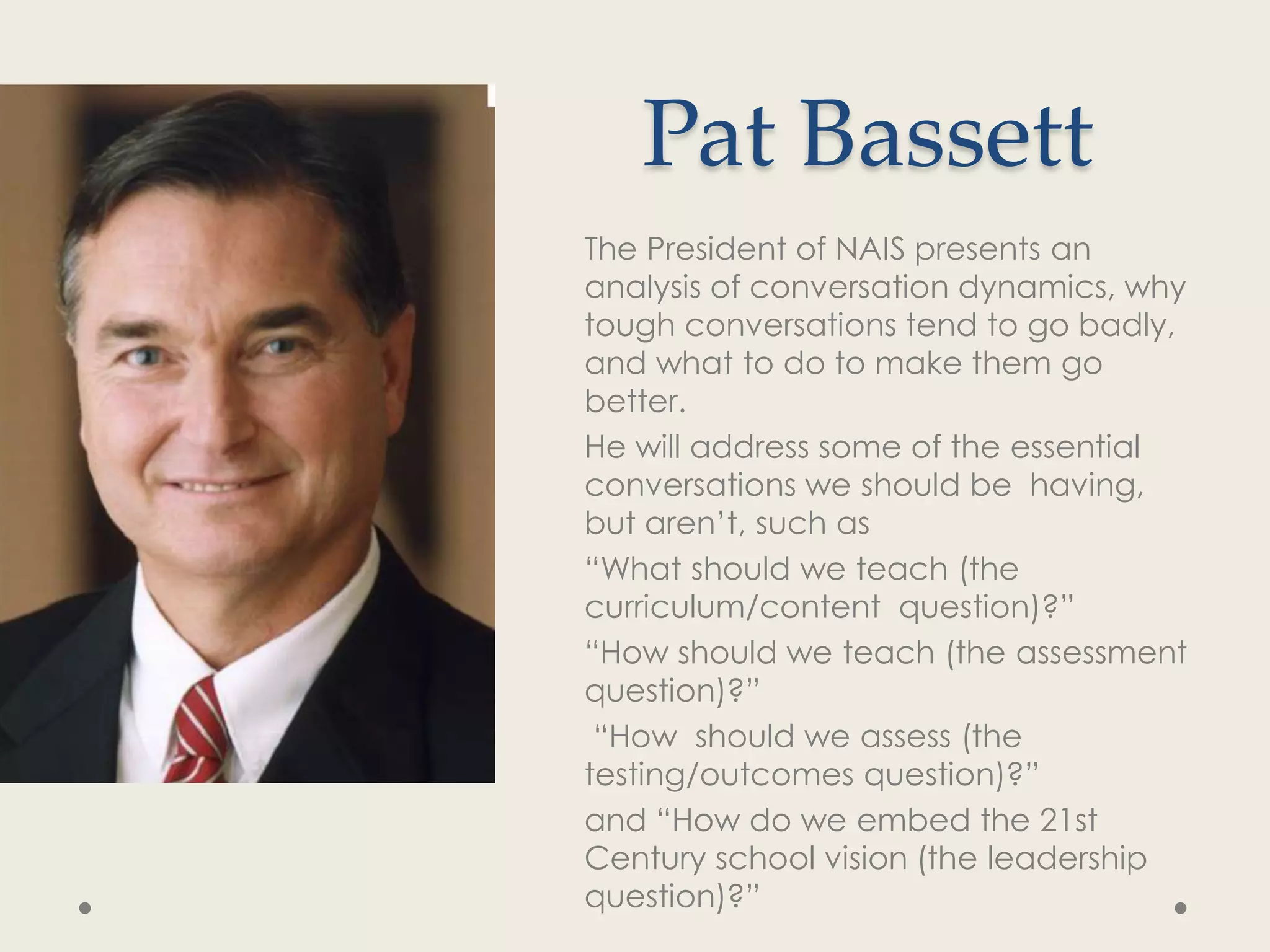
Pat Bassett
The President of NAIS presents an
analysis of conversation dynamics, why
tough conversations tend to go badly,
and what to do to make them go
better.
He will address some of the essential
conversations we should be having,
but aren’t, such as
“What should we teach (the
curriculum/content question)?”
“How should we teach (the assessment
question)?”
 “How should we assess (the
testing/outcomes question)?”
and “How do we embed the 21st
Century school vision (the leadership
question)?”
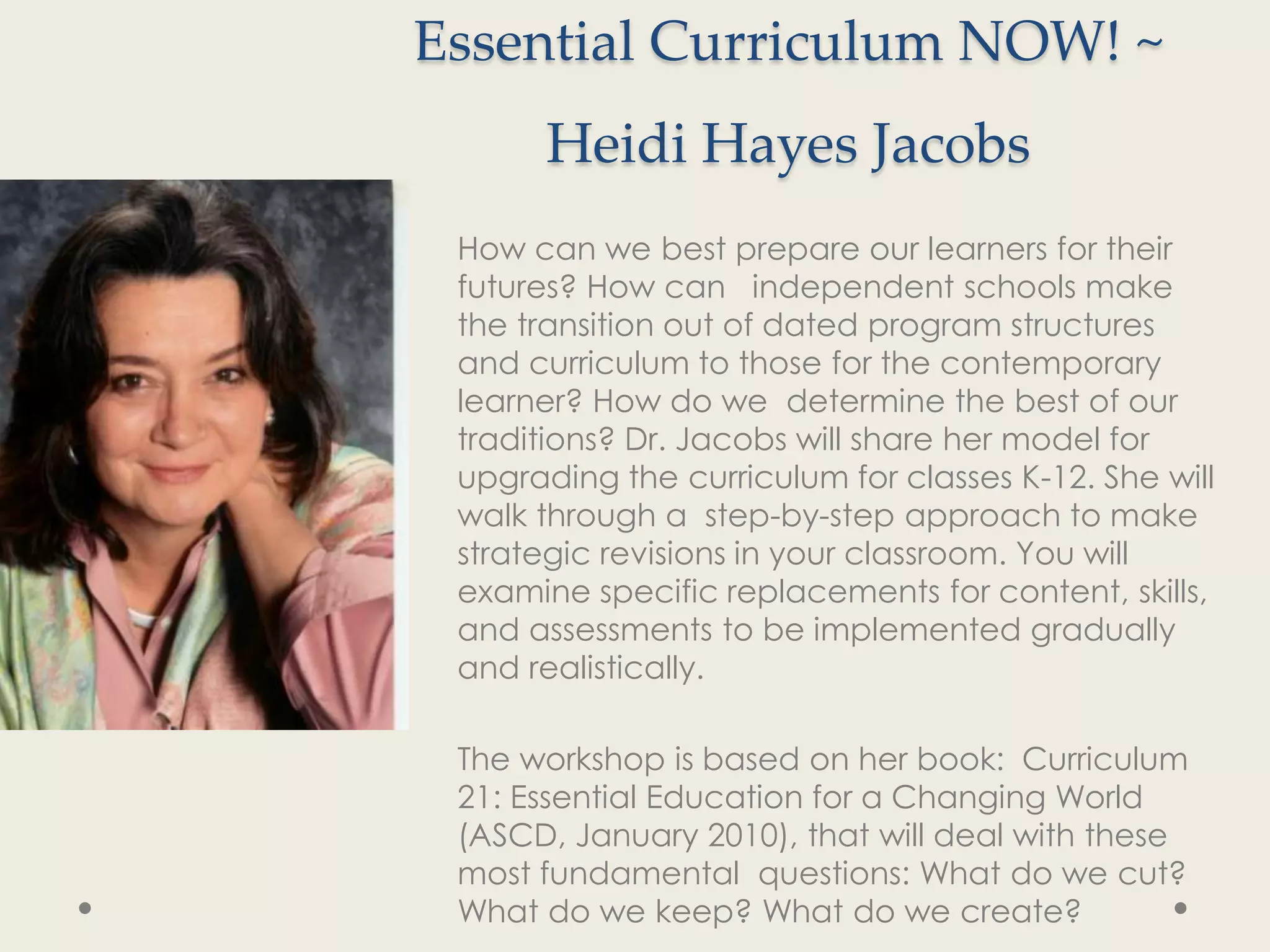
Essential Curriculum NOW! ~
      Heidi Hayes Jacobs
 How can we best prepare our learners for their
 futures? How can independent schools make
 the transition out of dated program structures
 and curriculum to those for the contemporary
 learner? How do we determine the best of our
 traditions? Dr. Jacobs will share her model for
 upgrading the curriculum for classes K-12. She will
 walk through a step-by-step approach to make
 strategic revisions in your classroom. You will
 examine specific replacements for content, skills,
 and assessments to be implemented gradually
 and realistically.

 The workshop is based on her book: Curriculum
 21: Essential Education for a Changing World
 (ASCD, January 2010), that will deal with these
 most fundamental questions: What do we cut?
 What do we keep? What do we create?
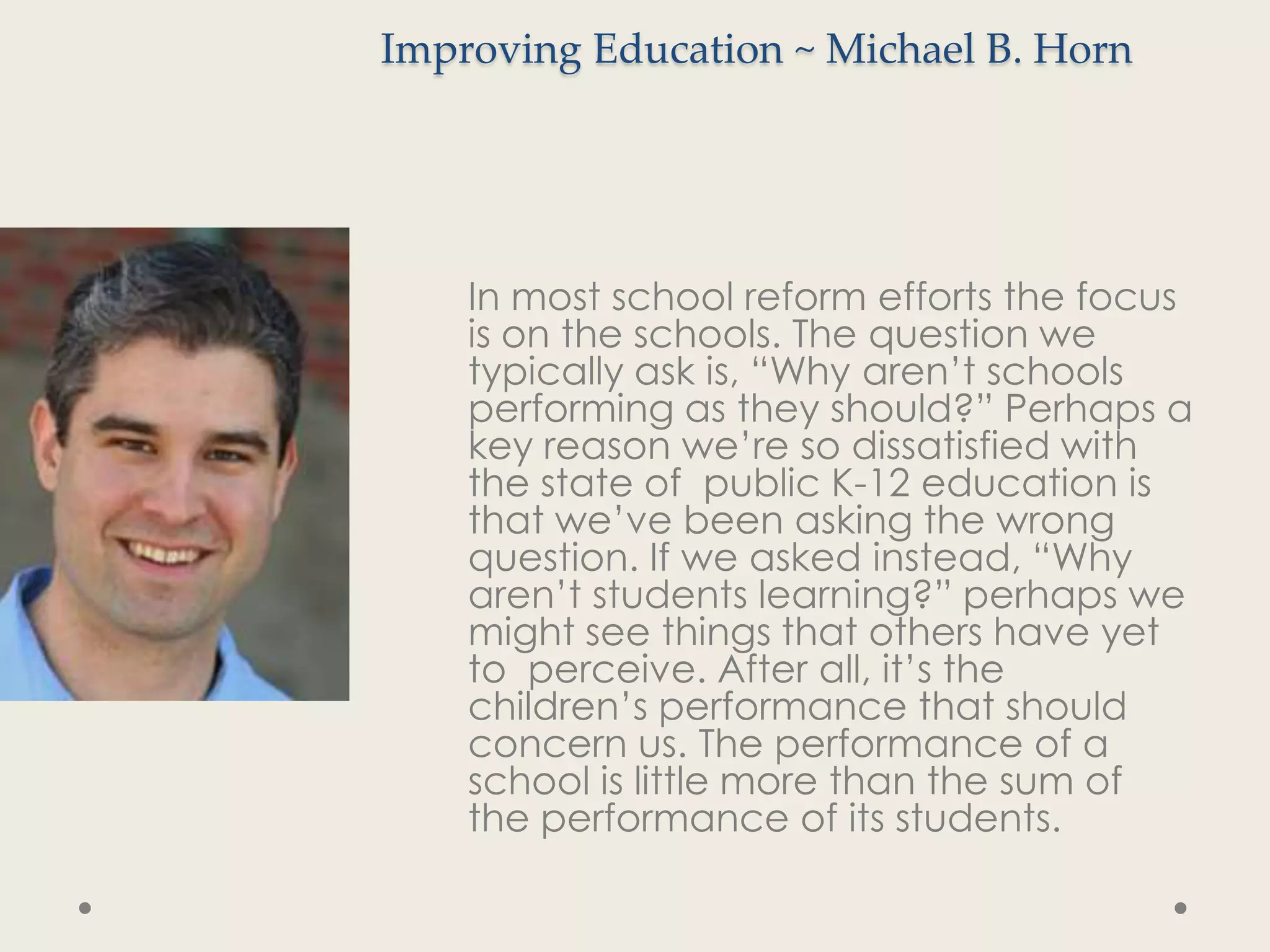
Improving Education ~ Michael B. Horn


    In most school reform efforts the focus
    is on the schools. The question we
    typically ask is, “Why aren’t schools
    performing as they should?” Perhaps a
    key reason we’re so dissatisfied with
    the state of public K-12 education is
    that we’ve been asking the wrong
    question. If we asked instead, “Why
    aren’t students learning?” perhaps we
    might see things that others have yet
    to perceive. After all, it’s the
    children’s performance that should
    concern us. The performance of a
    school is little more than the sum of
    the performance of its students.
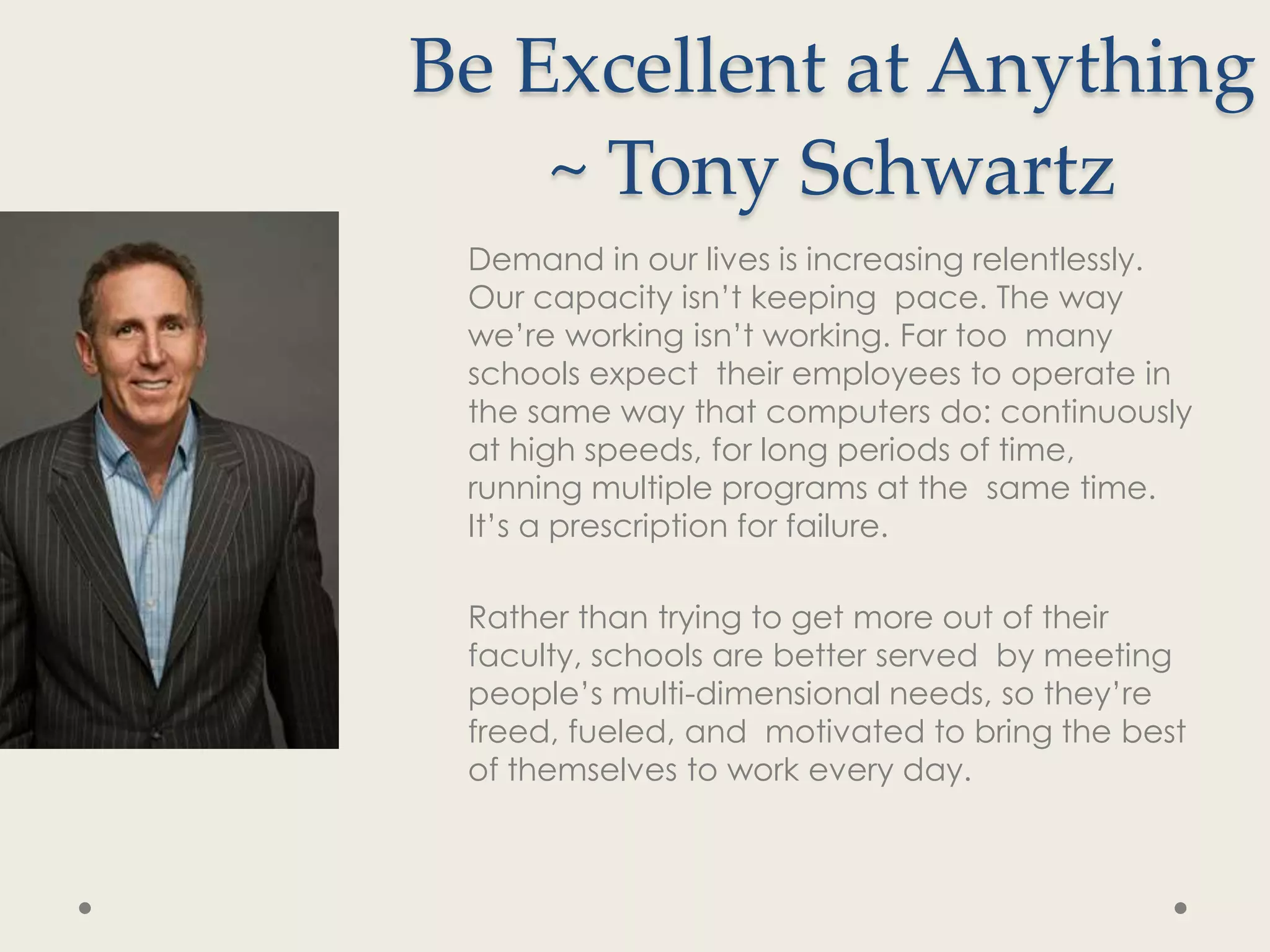
Be Excellent at Anything
    ~ Tony Schwartz
 Demand in our lives is increasing relentlessly.
 Our capacity isn’t keeping pace. The way
 we’re working isn’t working. Far too many
 schools expect their employees to operate in
 the same way that computers do: continuously
 at high speeds, for long periods of time,
 running multiple programs at the same time.
 It’s a prescription for failure.

 Rather than trying to get more out of their
 faculty, schools are better served by meeting
 people’s multi-dimensional needs, so they’re
 freed, fueled, and motivated to bring the best
 of themselves to work every day.
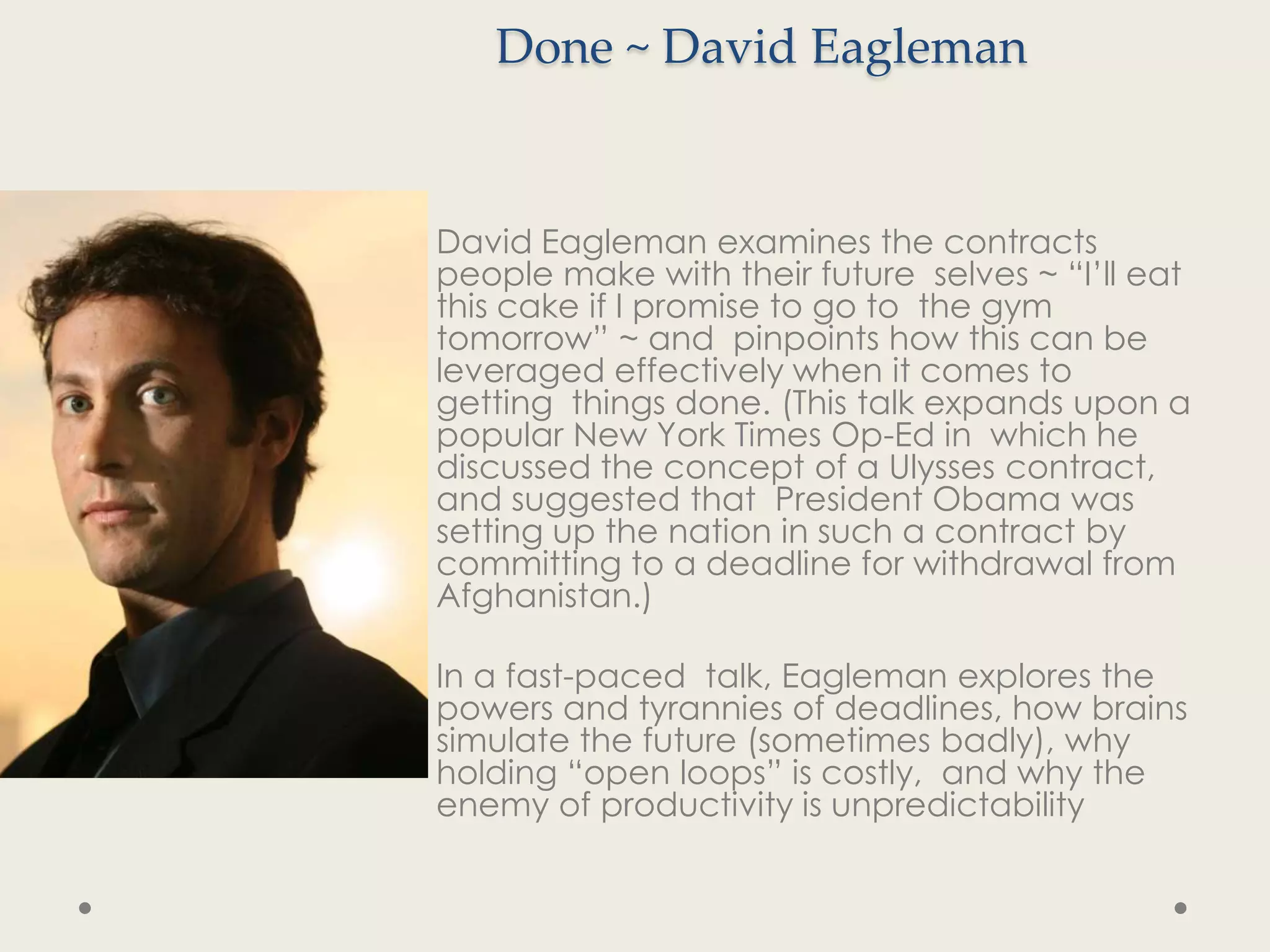
Done ~ David Eagleman


David Eagleman examines the contracts
people make with their future selves ~ “I’ll eat
this cake if I promise to go to the gym
tomorrow” ~ and pinpoints how this can be
leveraged effectively when it comes to
getting things done. (This talk expands upon a
popular New York Times Op-Ed in which he
discussed the concept of a Ulysses contract,
and suggested that President Obama was
setting up the nation in such a contract by
committing to a deadline for withdrawal from
Afghanistan.)

In a fast-paced talk, Eagleman explores the
powers and tyrannies of deadlines, how brains
simulate the future (sometimes badly), why
holding “open loops” is costly, and why the
enemy of productivity is unpredictability
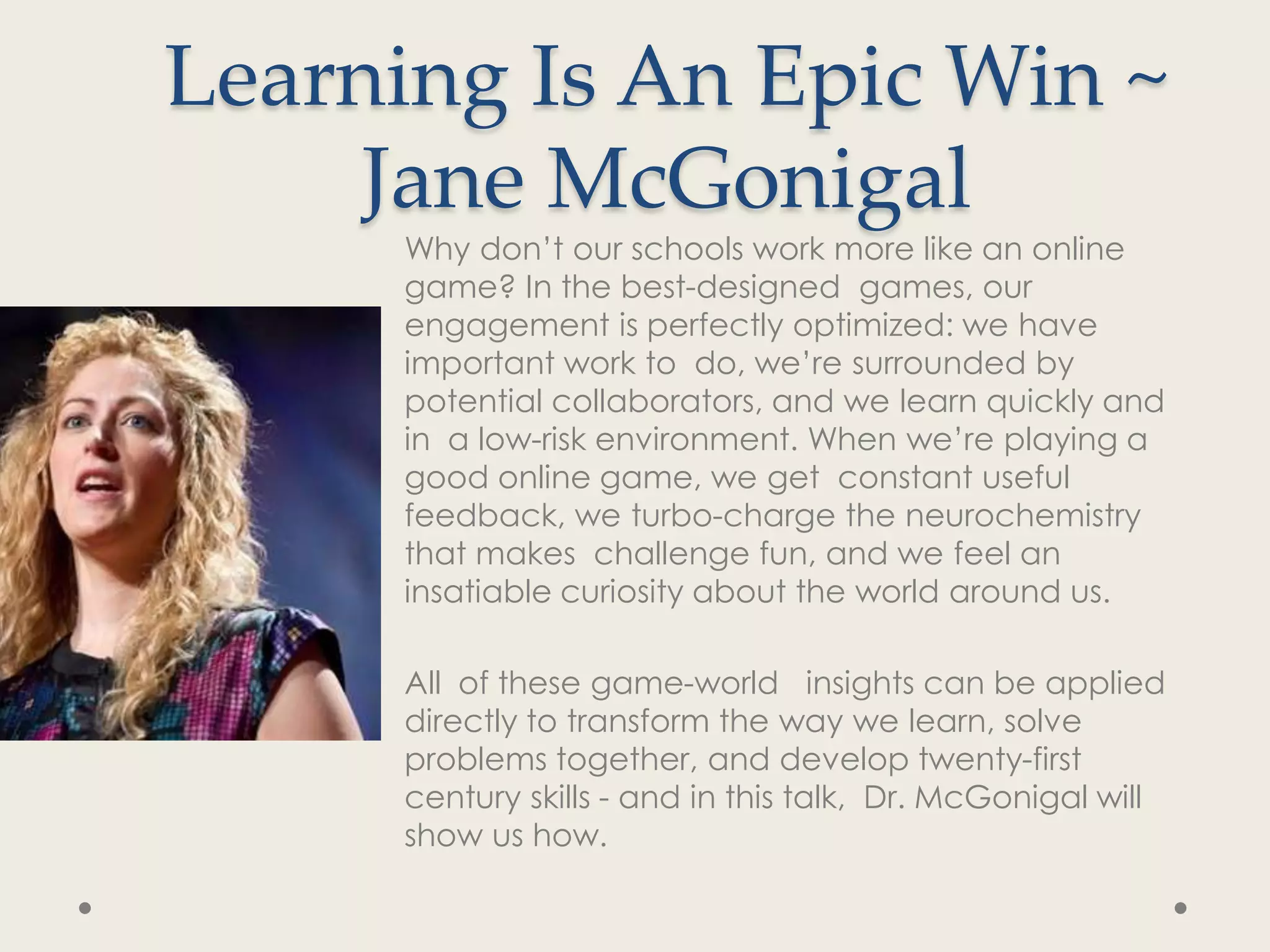
Learning Is An Epic Win ~
     Jane McGonigal
     Why don’t our schools work more like an online
     game? In the best-designed games, our
     engagement is perfectly optimized: we have
     important work to do, we’re surrounded by
     potential collaborators, and we learn quickly and
     in a low-risk environment. When we’re playing a
     good online game, we get constant useful
     feedback, we turbo-charge the neurochemistry
     that makes challenge fun, and we feel an
     insatiable curiosity about the world around us.

     All of these game-world insights can be applied
     directly to transform the way we learn, solve
     problems together, and develop twenty-first
     century skills - and in this talk, Dr. McGonigal will
     show us how.

Isas tc

  • 2.
    Pat Bassett The Presidentof NAIS presents an analysis of conversation dynamics, why tough conversations tend to go badly, and what to do to make them go better. He will address some of the essential conversations we should be having, but aren’t, such as “What should we teach (the curriculum/content question)?” “How should we teach (the assessment question)?” “How should we assess (the testing/outcomes question)?” and “How do we embed the 21st Century school vision (the leadership question)?”
  • 3.
    Essential Curriculum NOW!~ Heidi Hayes Jacobs How can we best prepare our learners for their futures? How can independent schools make the transition out of dated program structures and curriculum to those for the contemporary learner? How do we determine the best of our traditions? Dr. Jacobs will share her model for upgrading the curriculum for classes K-12. She will walk through a step-by-step approach to make strategic revisions in your classroom. You will examine specific replacements for content, skills, and assessments to be implemented gradually and realistically. The workshop is based on her book: Curriculum 21: Essential Education for a Changing World (ASCD, January 2010), that will deal with these most fundamental questions: What do we cut? What do we keep? What do we create?
  • 4.
    Improving Education ~Michael B. Horn In most school reform efforts the focus is on the schools. The question we typically ask is, “Why aren’t schools performing as they should?” Perhaps a key reason we’re so dissatisfied with the state of public K-12 education is that we’ve been asking the wrong question. If we asked instead, “Why aren’t students learning?” perhaps we might see things that others have yet to perceive. After all, it’s the children’s performance that should concern us. The performance of a school is little more than the sum of the performance of its students.
  • 5.
    Be Excellent atAnything ~ Tony Schwartz Demand in our lives is increasing relentlessly. Our capacity isn’t keeping pace. The way we’re working isn’t working. Far too many schools expect their employees to operate in the same way that computers do: continuously at high speeds, for long periods of time, running multiple programs at the same time. It’s a prescription for failure. Rather than trying to get more out of their faculty, schools are better served by meeting people’s multi-dimensional needs, so they’re freed, fueled, and motivated to bring the best of themselves to work every day.
  • 6.
    Done ~ DavidEagleman David Eagleman examines the contracts people make with their future selves ~ “I’ll eat this cake if I promise to go to the gym tomorrow” ~ and pinpoints how this can be leveraged effectively when it comes to getting things done. (This talk expands upon a popular New York Times Op-Ed in which he discussed the concept of a Ulysses contract, and suggested that President Obama was setting up the nation in such a contract by committing to a deadline for withdrawal from Afghanistan.) In a fast-paced talk, Eagleman explores the powers and tyrannies of deadlines, how brains simulate the future (sometimes badly), why holding “open loops” is costly, and why the enemy of productivity is unpredictability
  • 7.
    Learning Is AnEpic Win ~ Jane McGonigal Why don’t our schools work more like an online game? In the best-designed games, our engagement is perfectly optimized: we have important work to do, we’re surrounded by potential collaborators, and we learn quickly and in a low-risk environment. When we’re playing a good online game, we get constant useful feedback, we turbo-charge the neurochemistry that makes challenge fun, and we feel an insatiable curiosity about the world around us. All of these game-world insights can be applied directly to transform the way we learn, solve problems together, and develop twenty-first century skills - and in this talk, Dr. McGonigal will show us how.