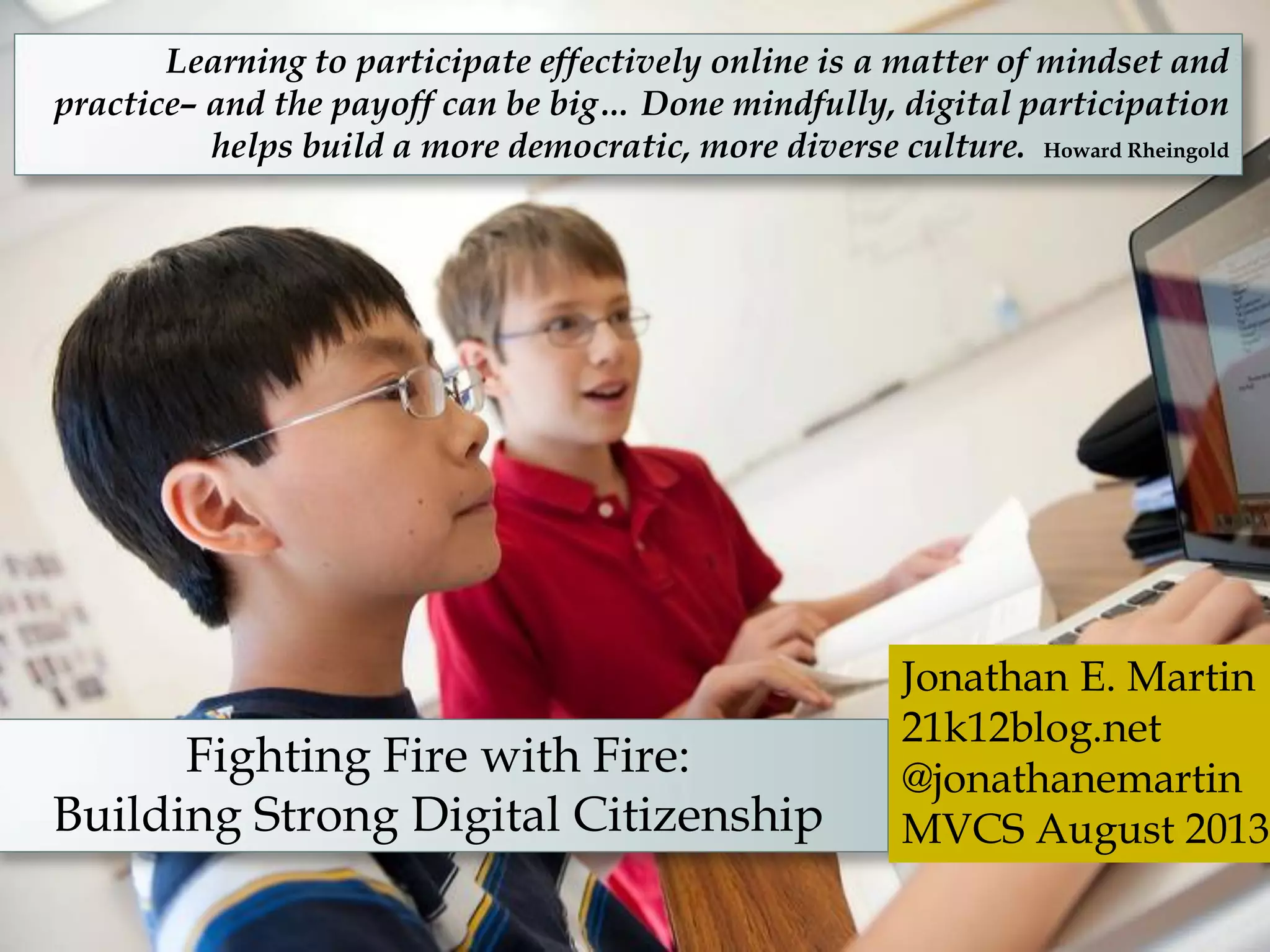
Learning to participate effectively online is a matter of mindset and
practice– and the payoff can be big… Done mindfully, digital participation
helps build a more democratic, more diverse culture. Howard Rheingold
Fighting Fire with Fire:
Building Strong Digital Citizenship
Jonathan E. Martin
21k12blog.net
@jonathanemartin
MVCS August 2013
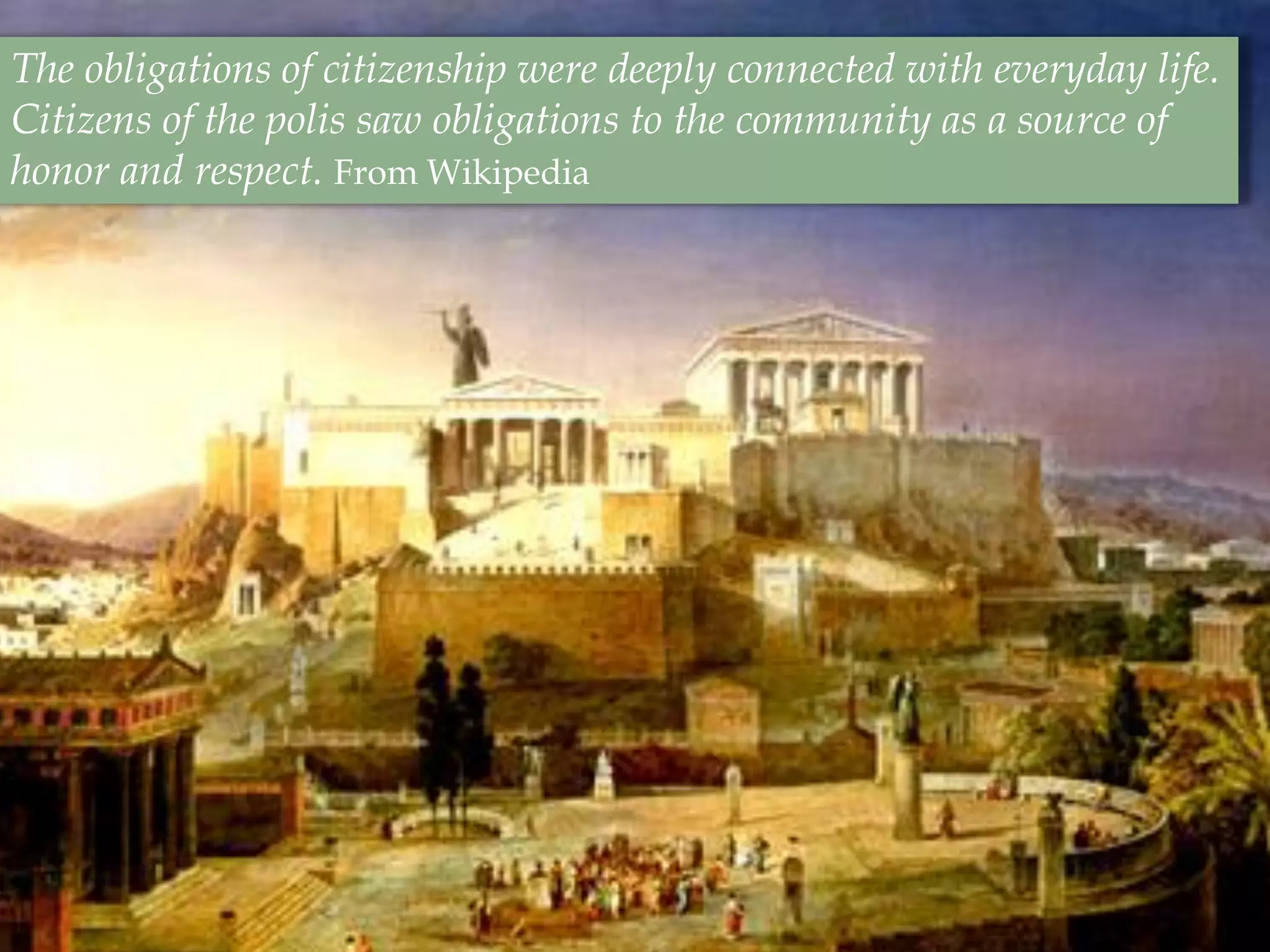
The obligations of citizenship were deeply connected with everyday life.
Citizens of the polis saw obligations to the community as a source of
honor and respect. From Wikipedia
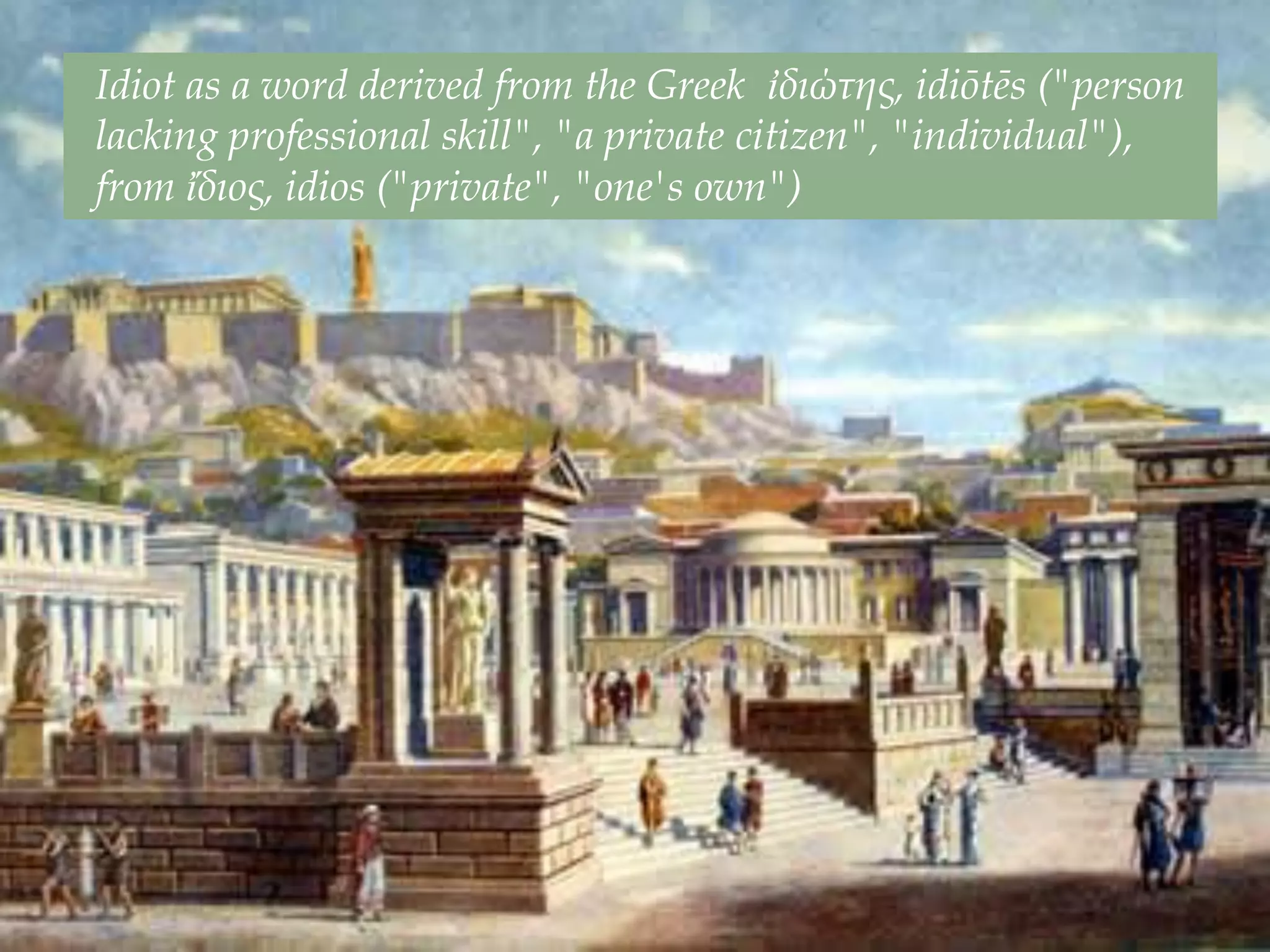
Idiot as a word derived from the Greek ἰδιώτης, idiōtēs ("person
lacking professional skill", "a private citizen", "individual"),
from ἴδιος, idios ("private", "one's own")
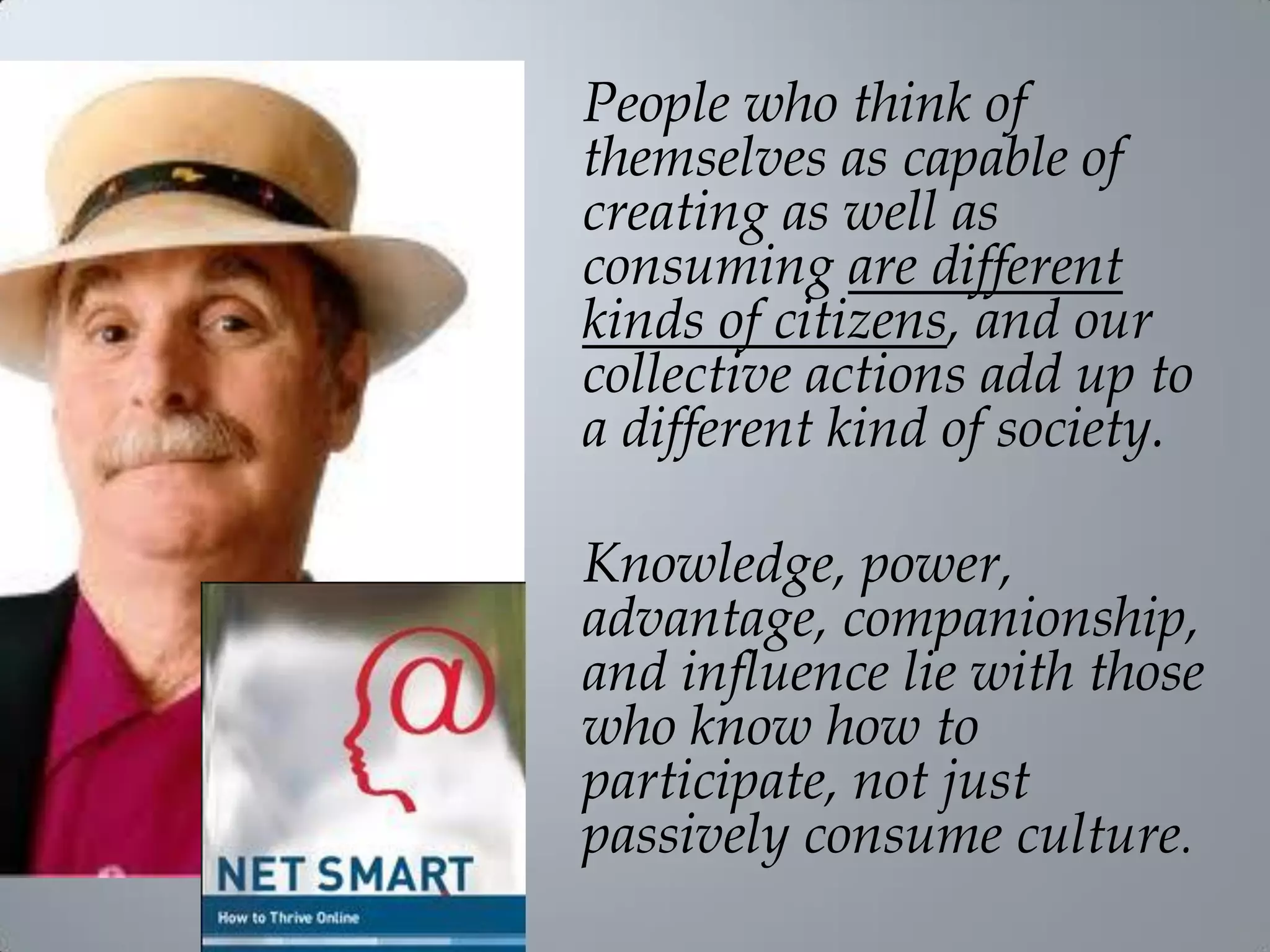
People who think of
themselves as capable of
creating as well as
consuming are different
kinds of citizens, and our
collective actions add up to
a different kind of society.
Knowledge, power,
advantage, companionship,
and influence lie with those
who know how to
participate, not just
passively consume culture.
The Best Opposition to Poor Citizenship is Good
Citizenship
The Best Way to Develop Good Citizenship is by
Practicing Good Citizenship
Digital Natives will Respond to our Lead Far
Better when we Model And Advocate Positive
Citizenship than when we Frown at their Digital
Lives.
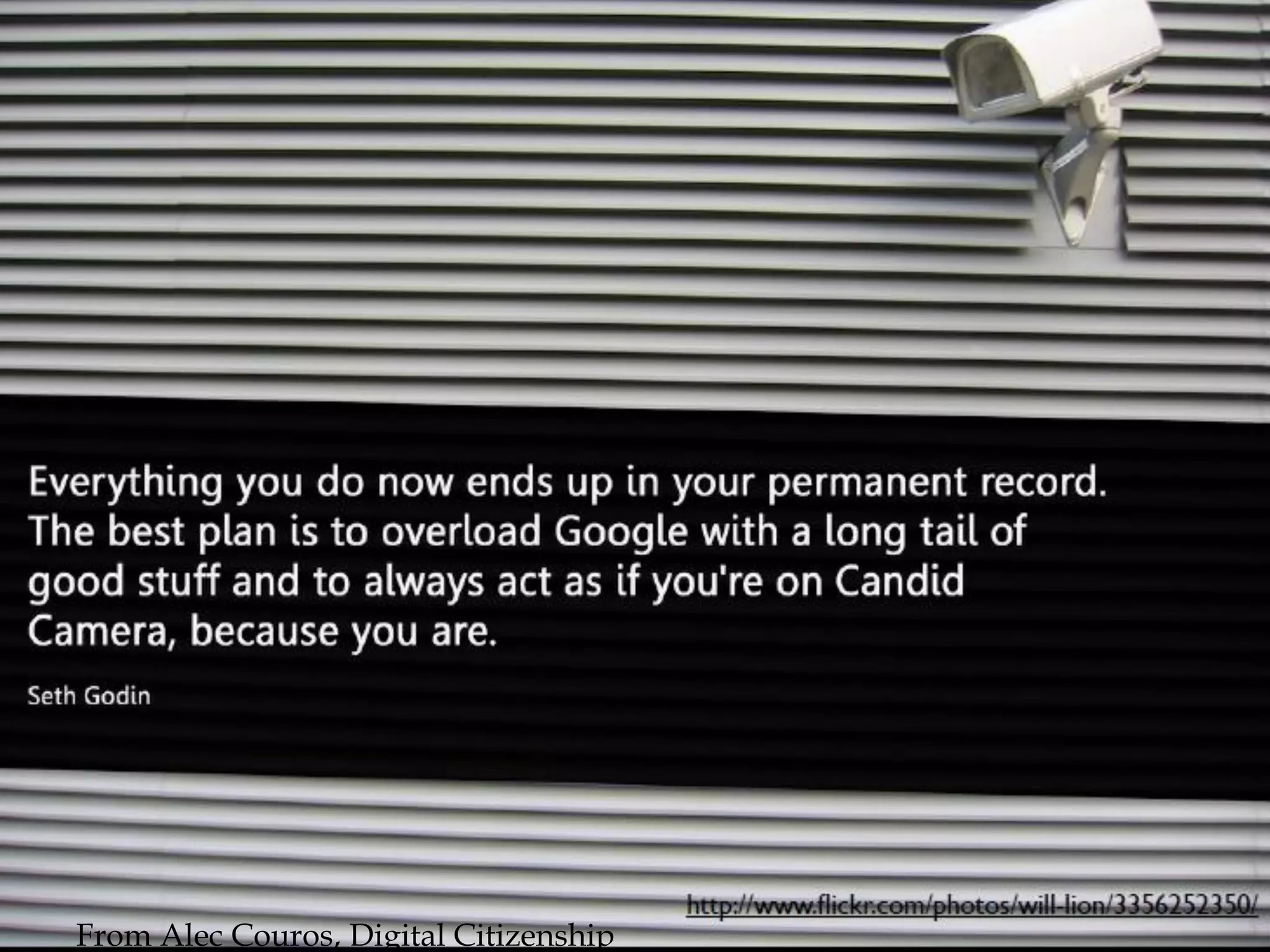
From Alec Couros, Digital Citizenship
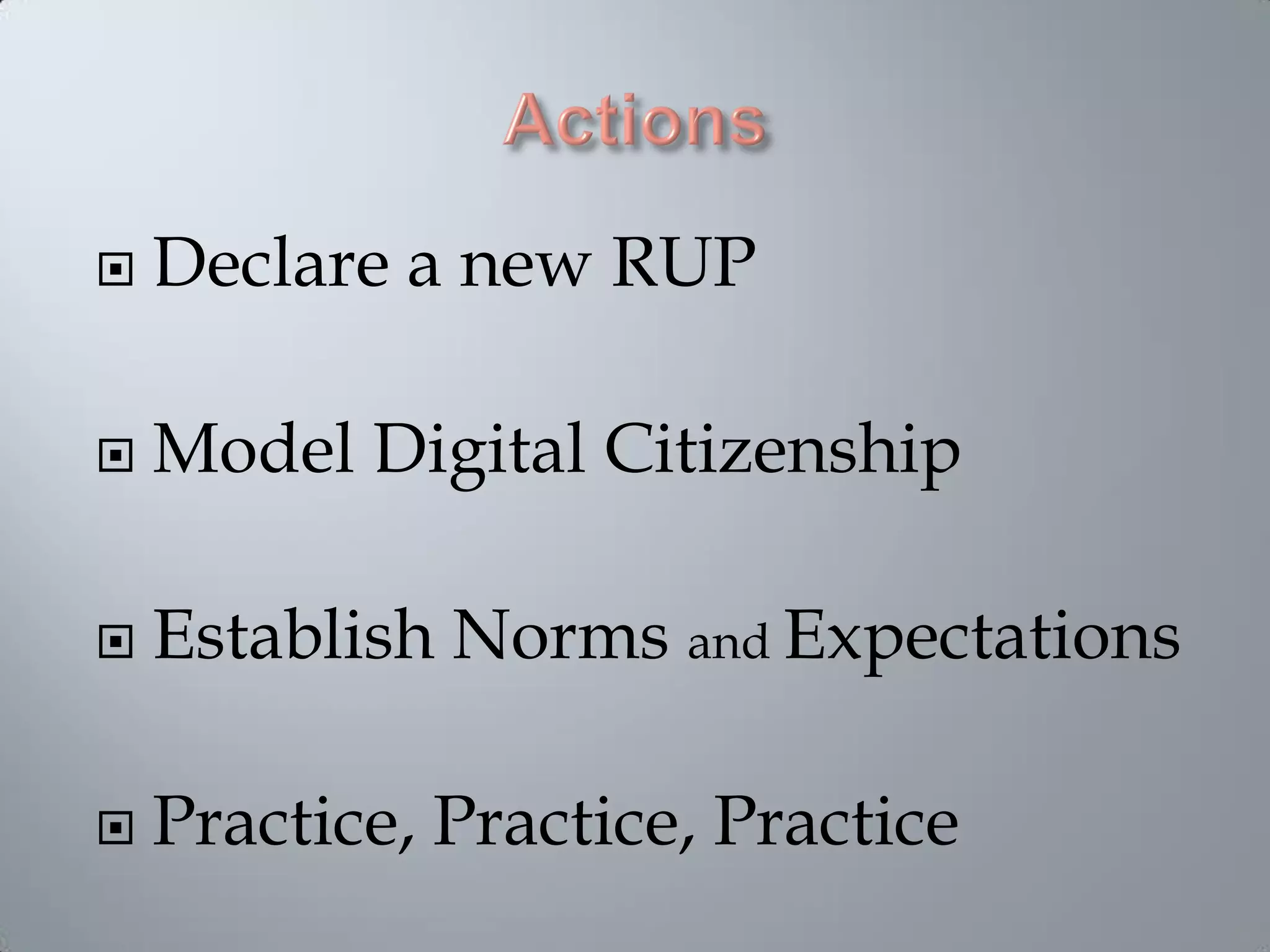
 Declare a new RUP
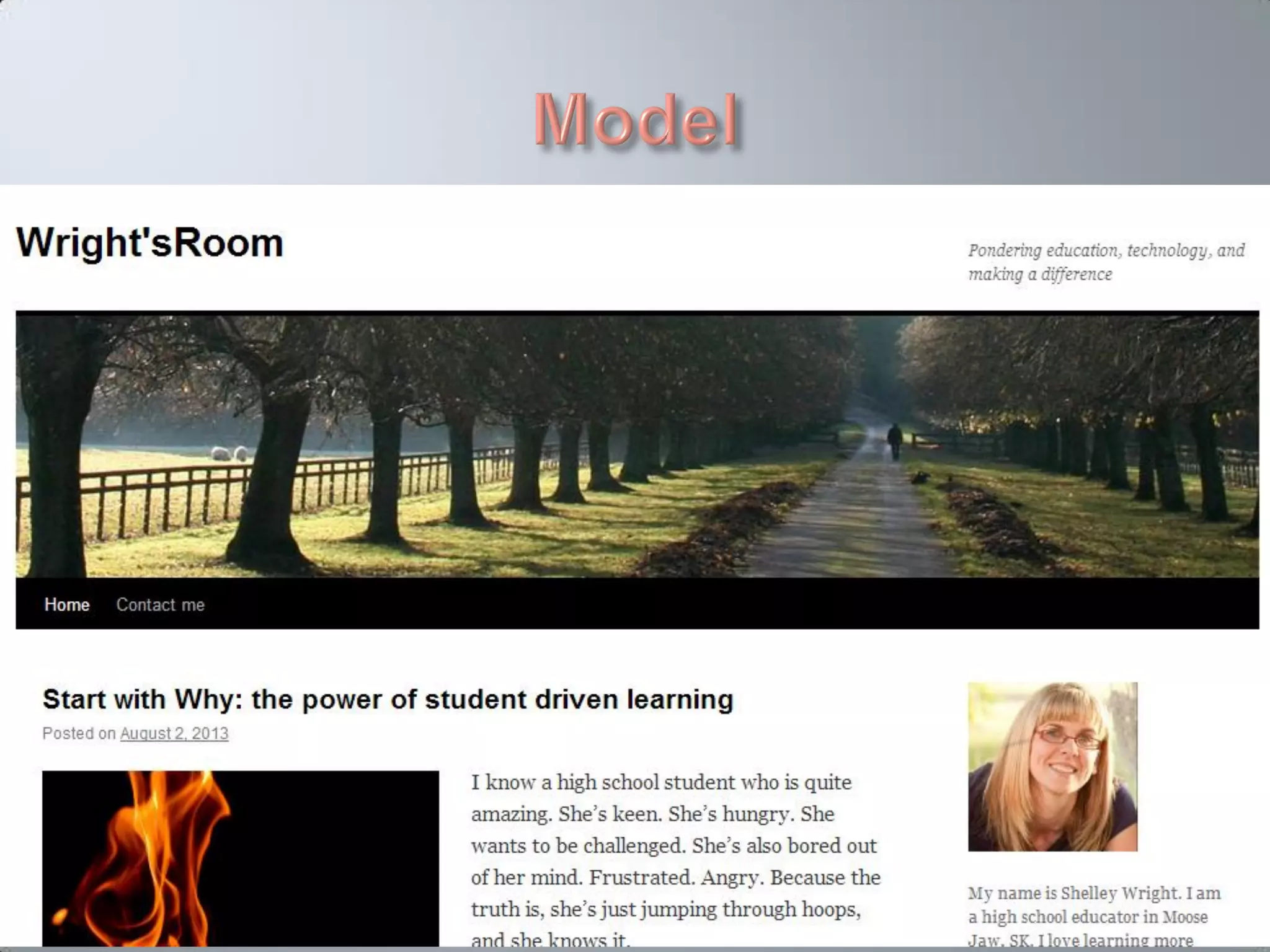
 Model Digital Citizenship
 Establish Norms and Expectations
 Practice, Practice, Practice
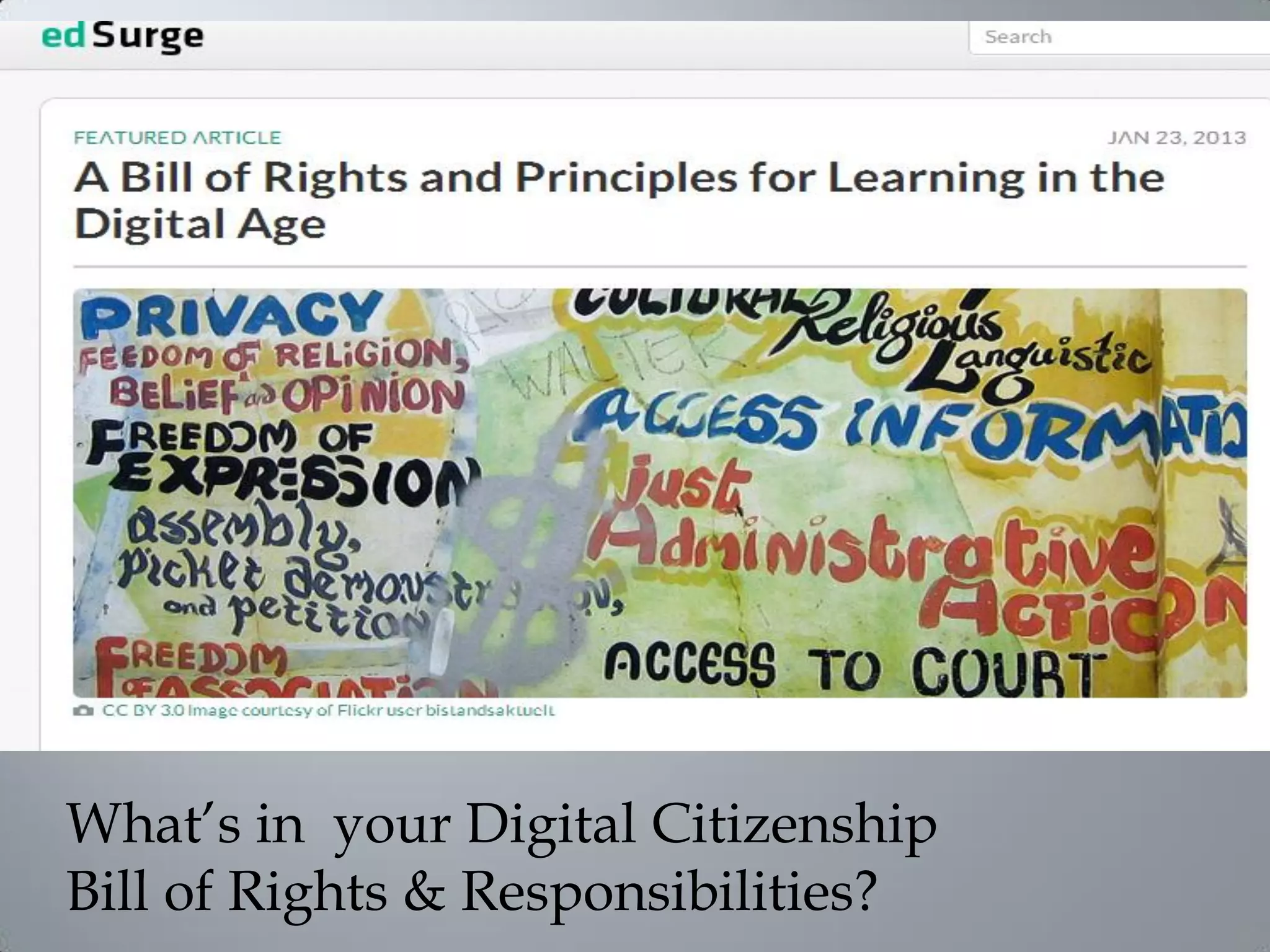
What’s in your Digital Citizenship
Bill of Rights & Responsibilities?
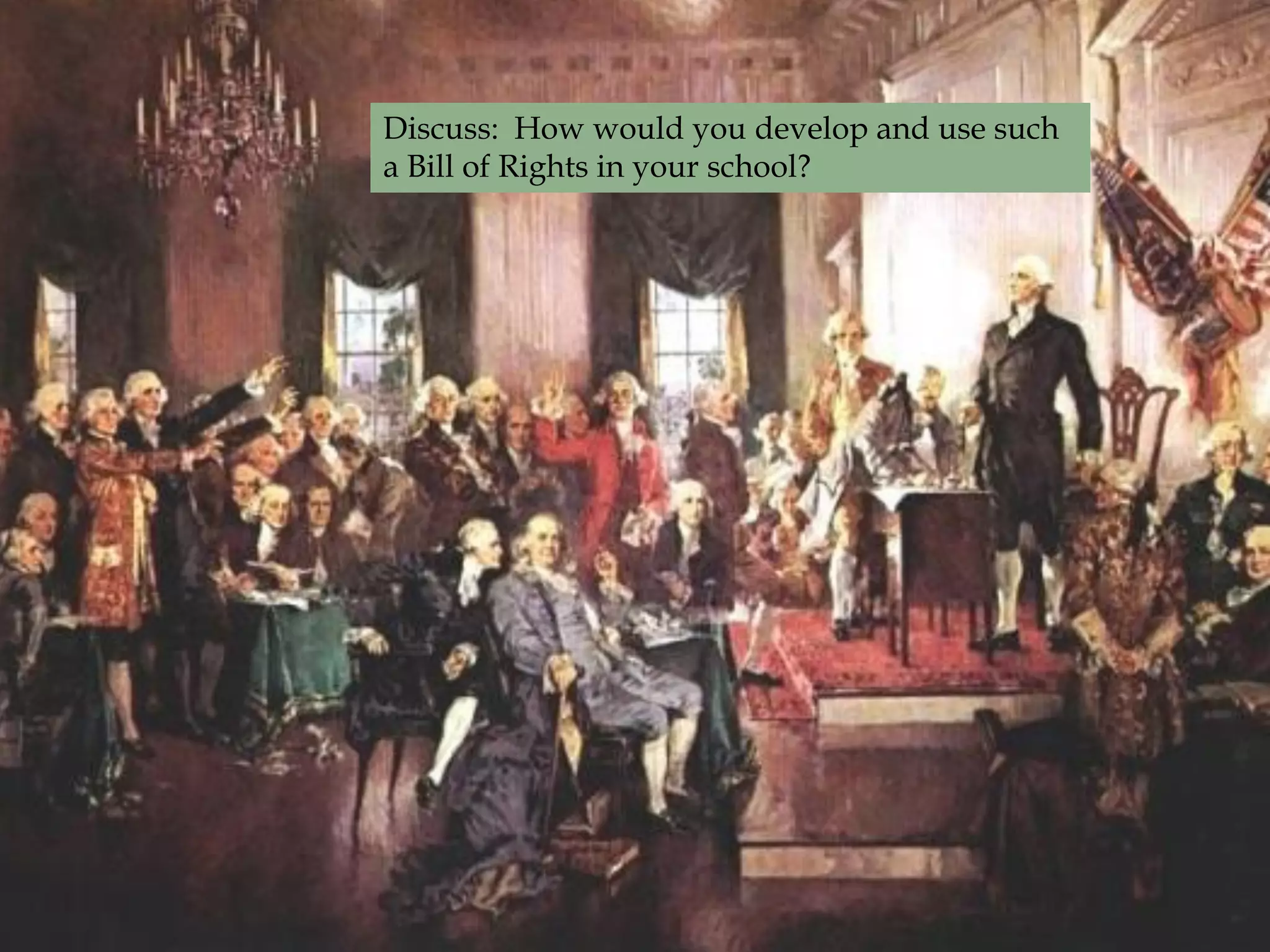
Discuss: How would you develop and use such
a Bill of Rights in your school?
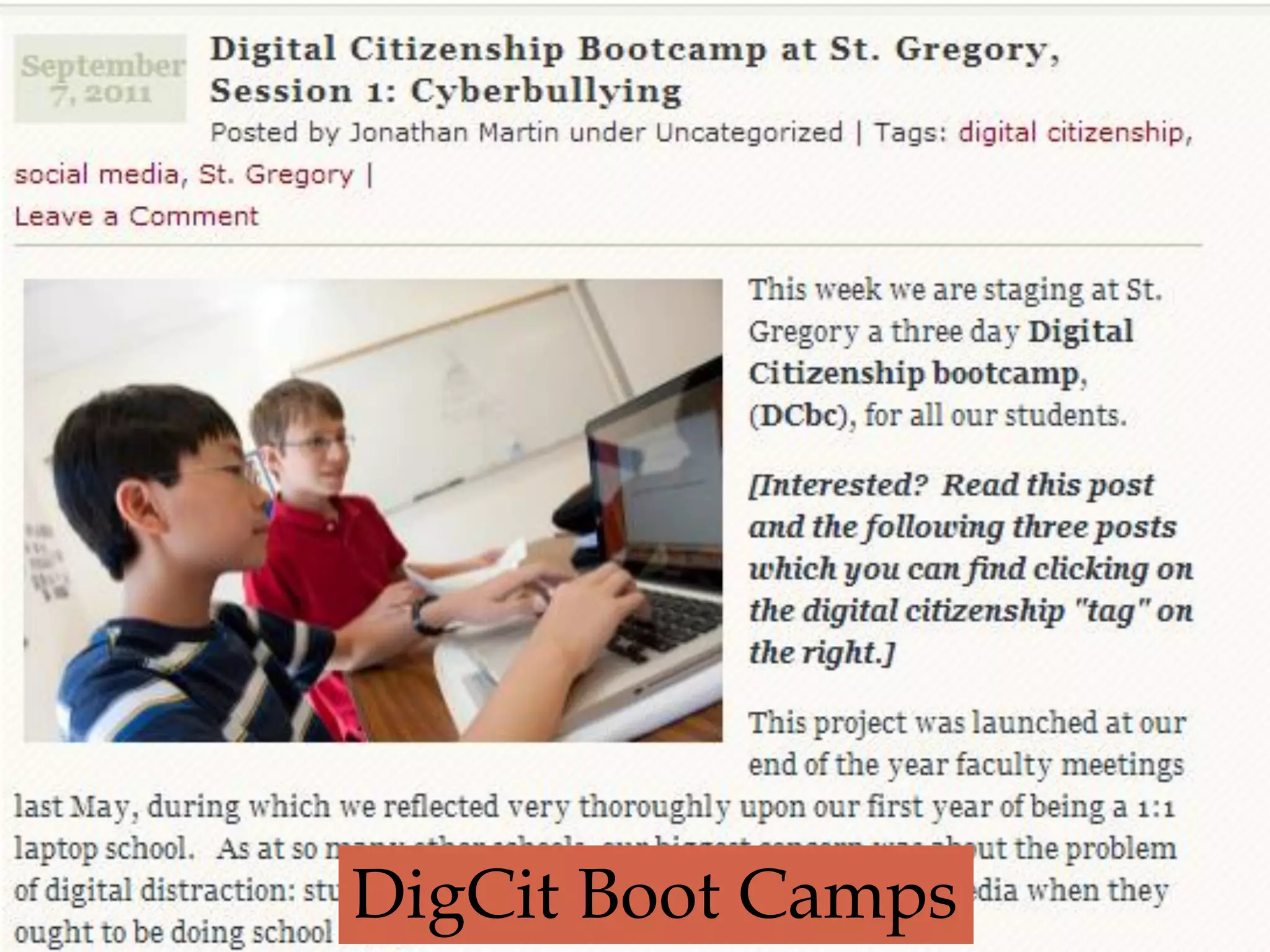
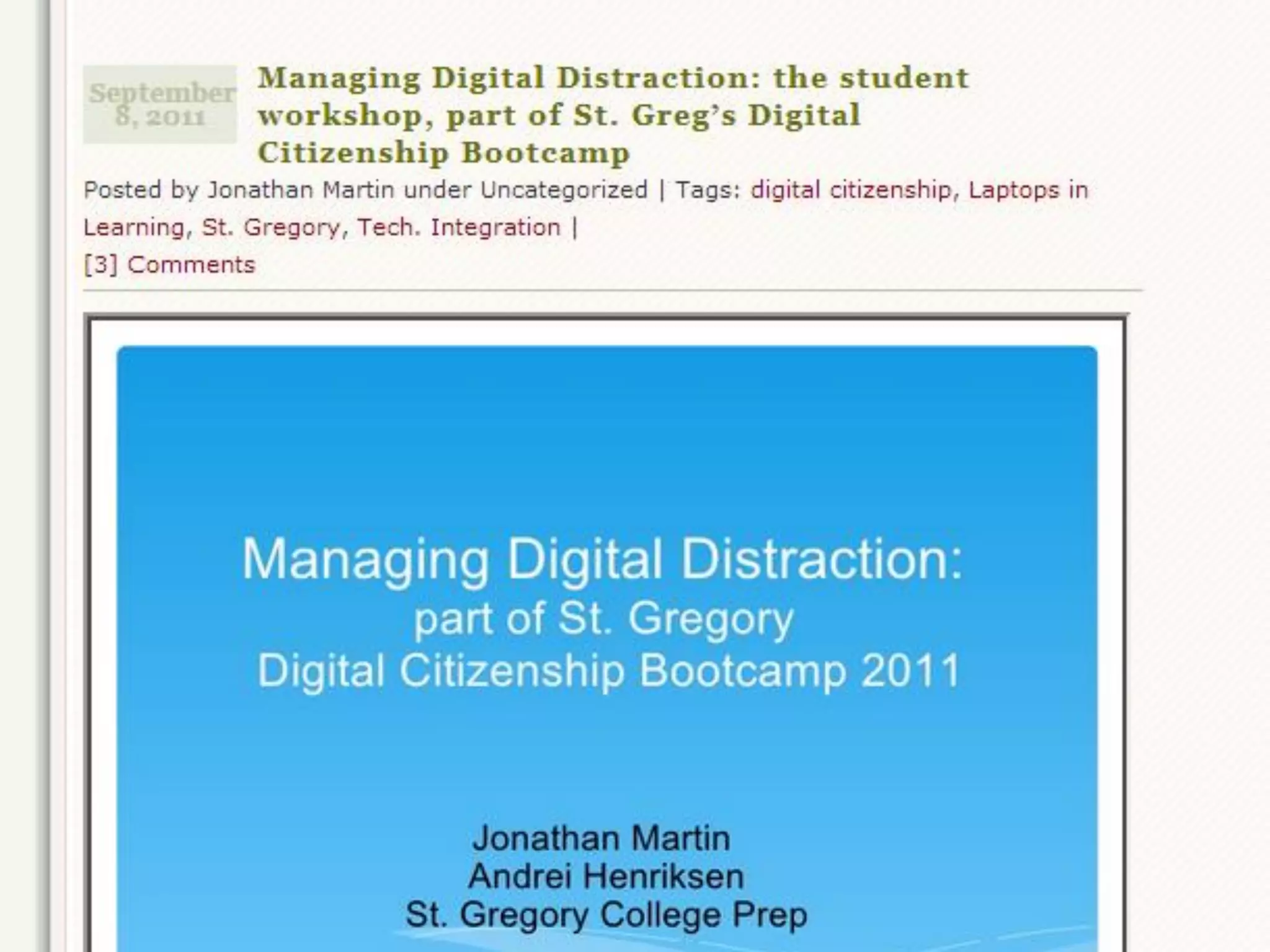
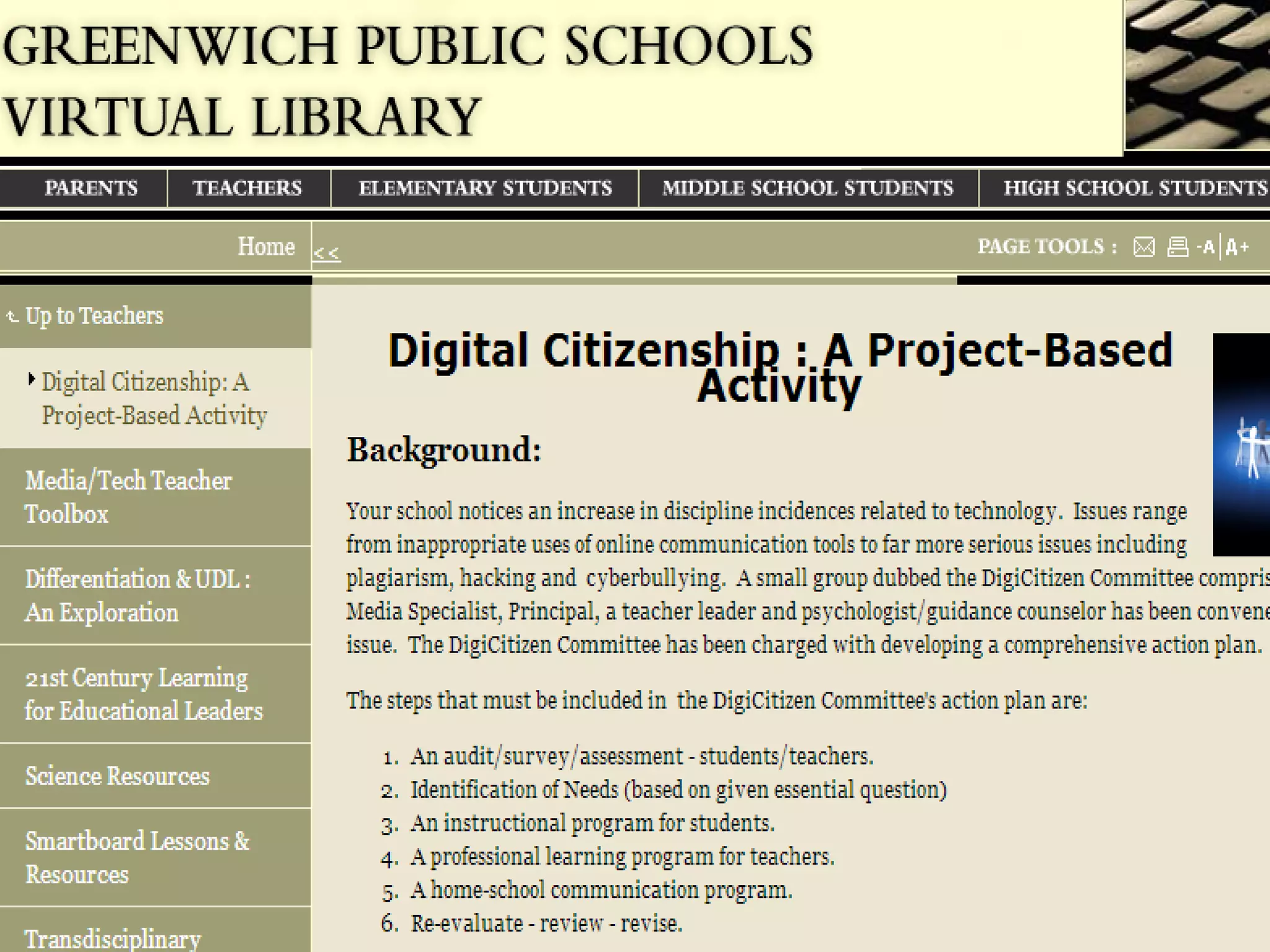
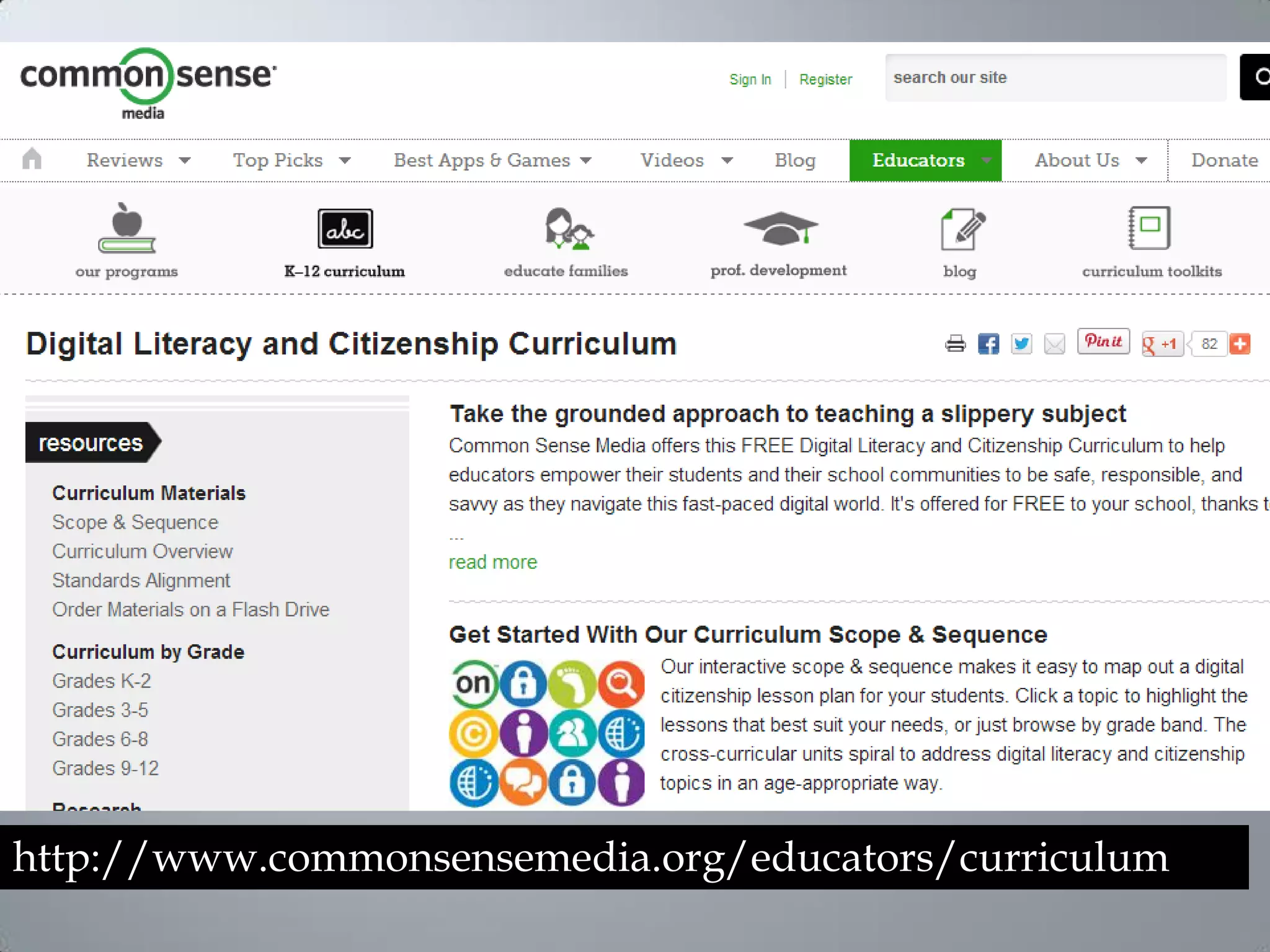
DigCit Boot Camps
 http://www.commonsensemedia.org/educato
rs/curriculum
http://www.commonsensemedia.org/educators/curriculum
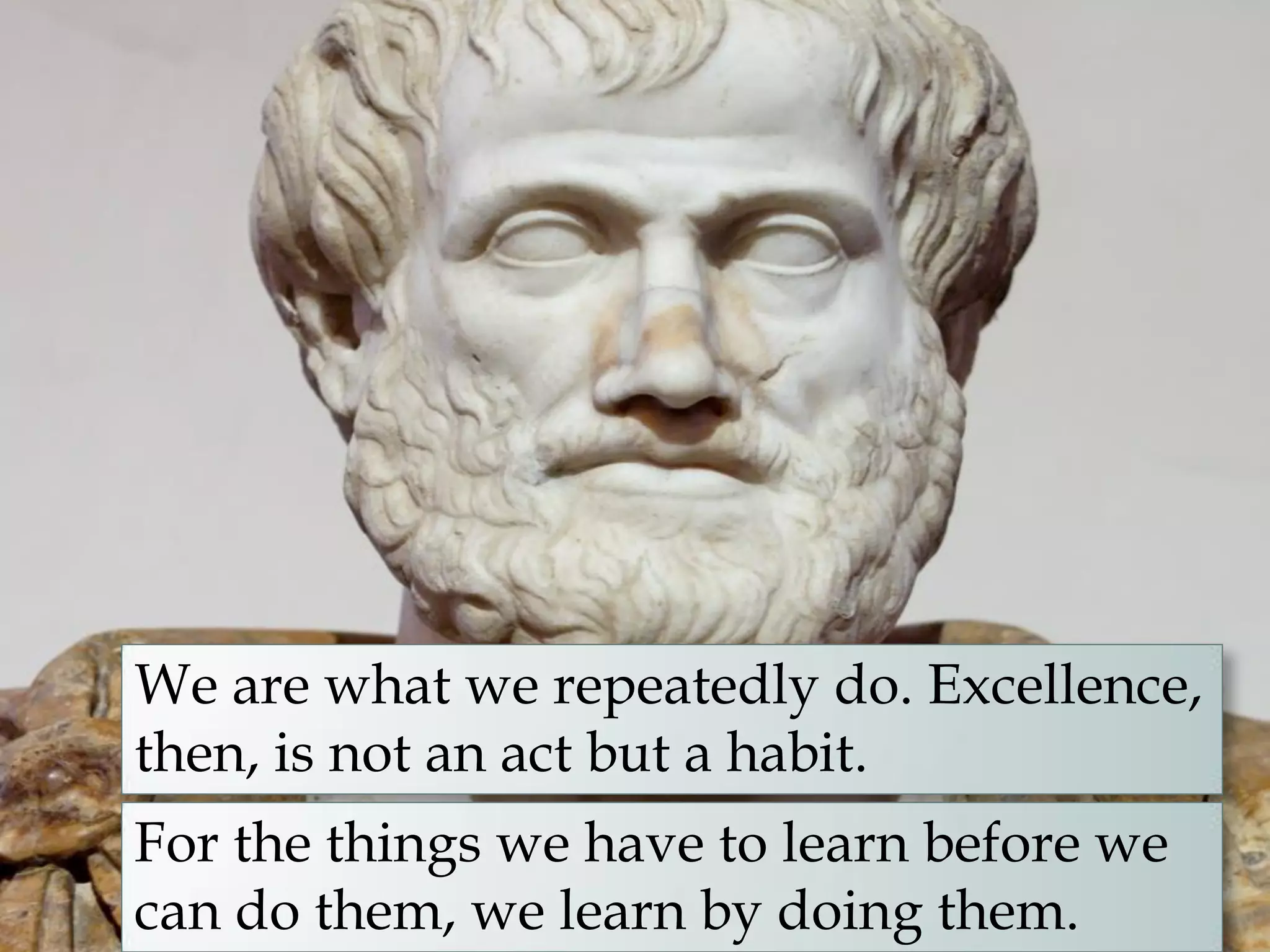
We are what we repeatedly do. Excellence,
then, is not an act but a habit.
For the things we have to learn before we
can do them, we learn by doing them.
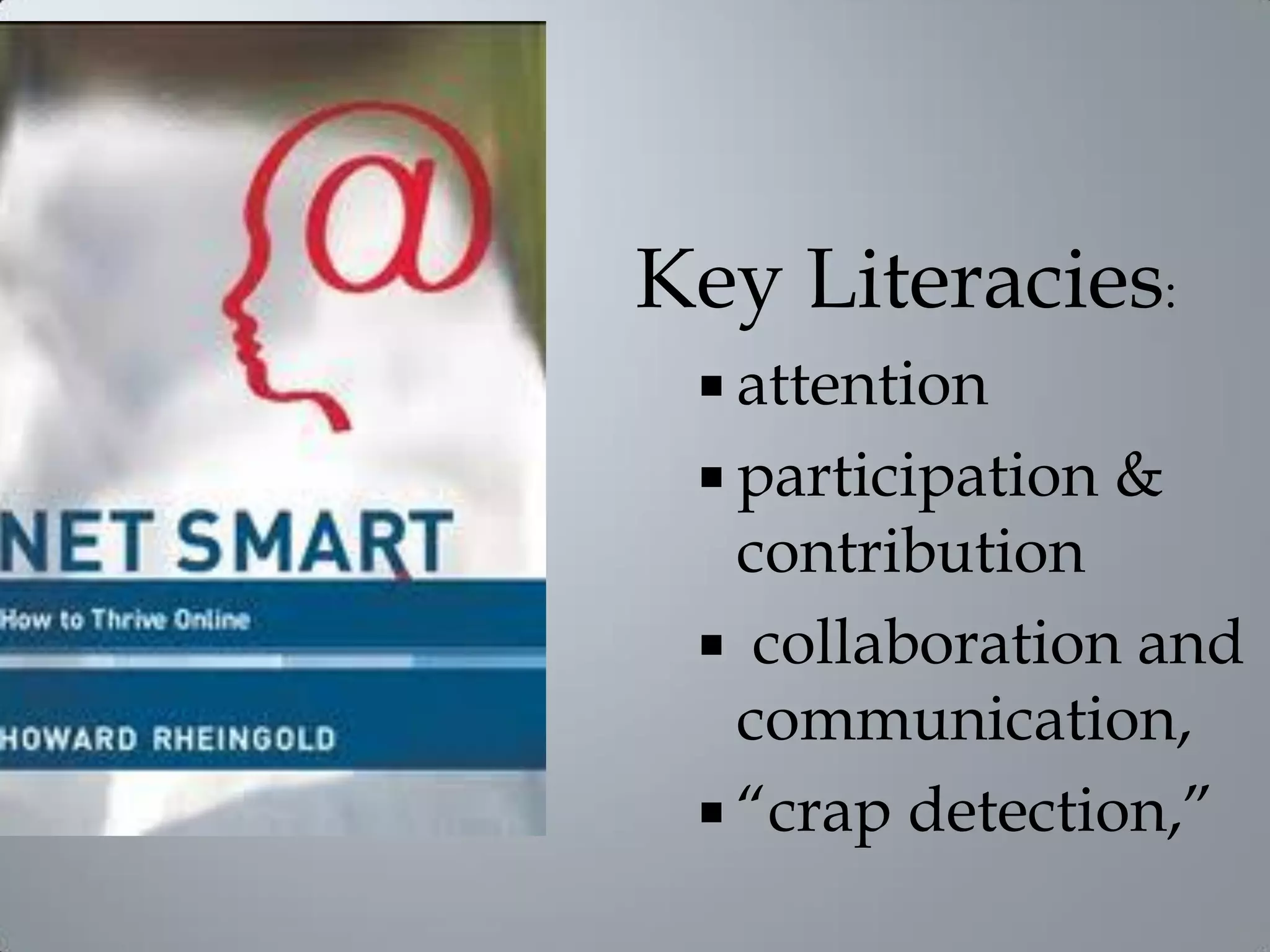
Key Literacies:
 attention
 participation &
contribution
 collaboration and
communication,
 “crap detection,”
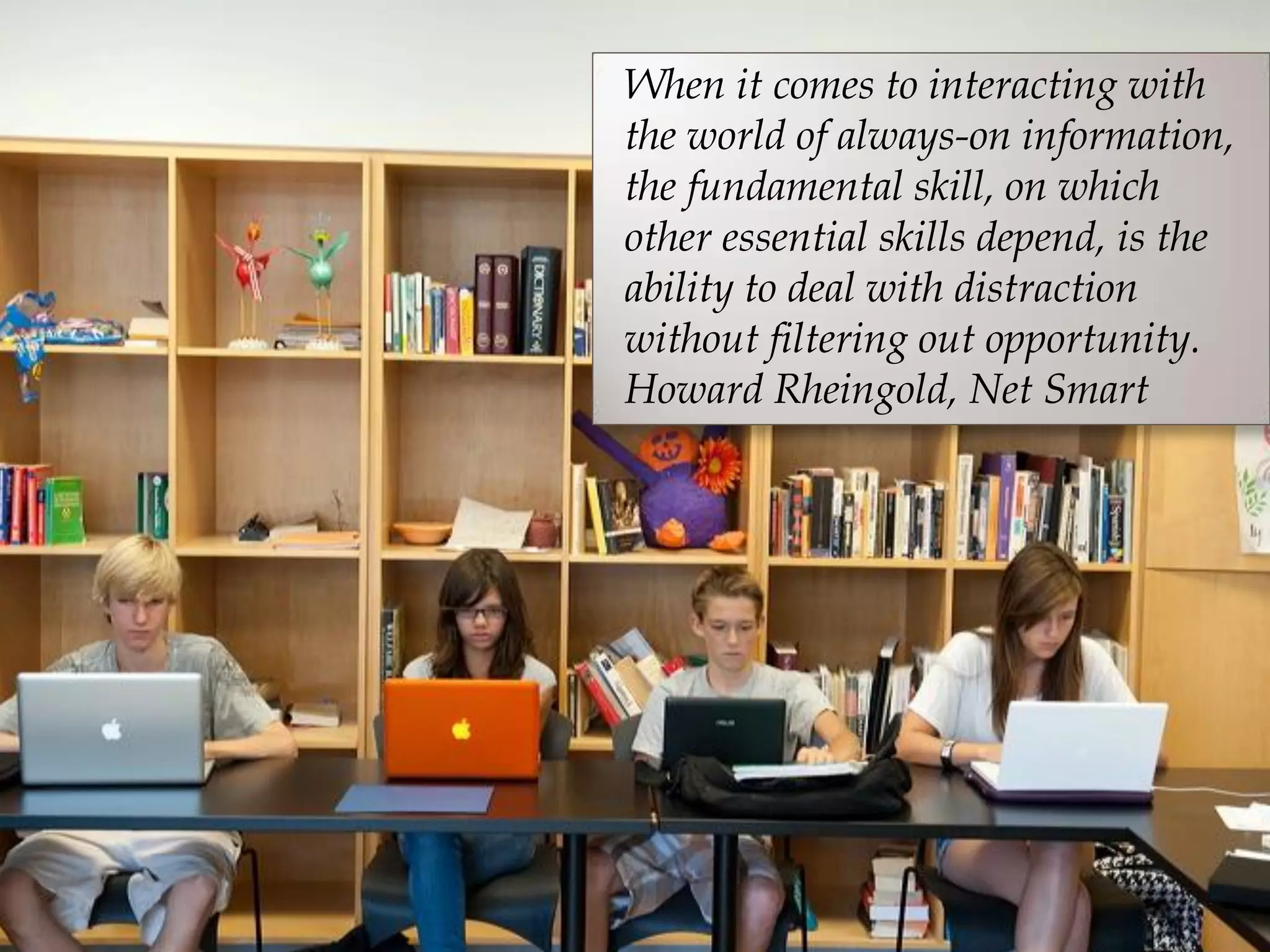
When it comes to interacting with
the world of always-on information,
the fundamental skill, on which
other essential skills depend, is the
ability to deal with distraction
without filtering out opportunity.
Howard Rheingold, Net Smart
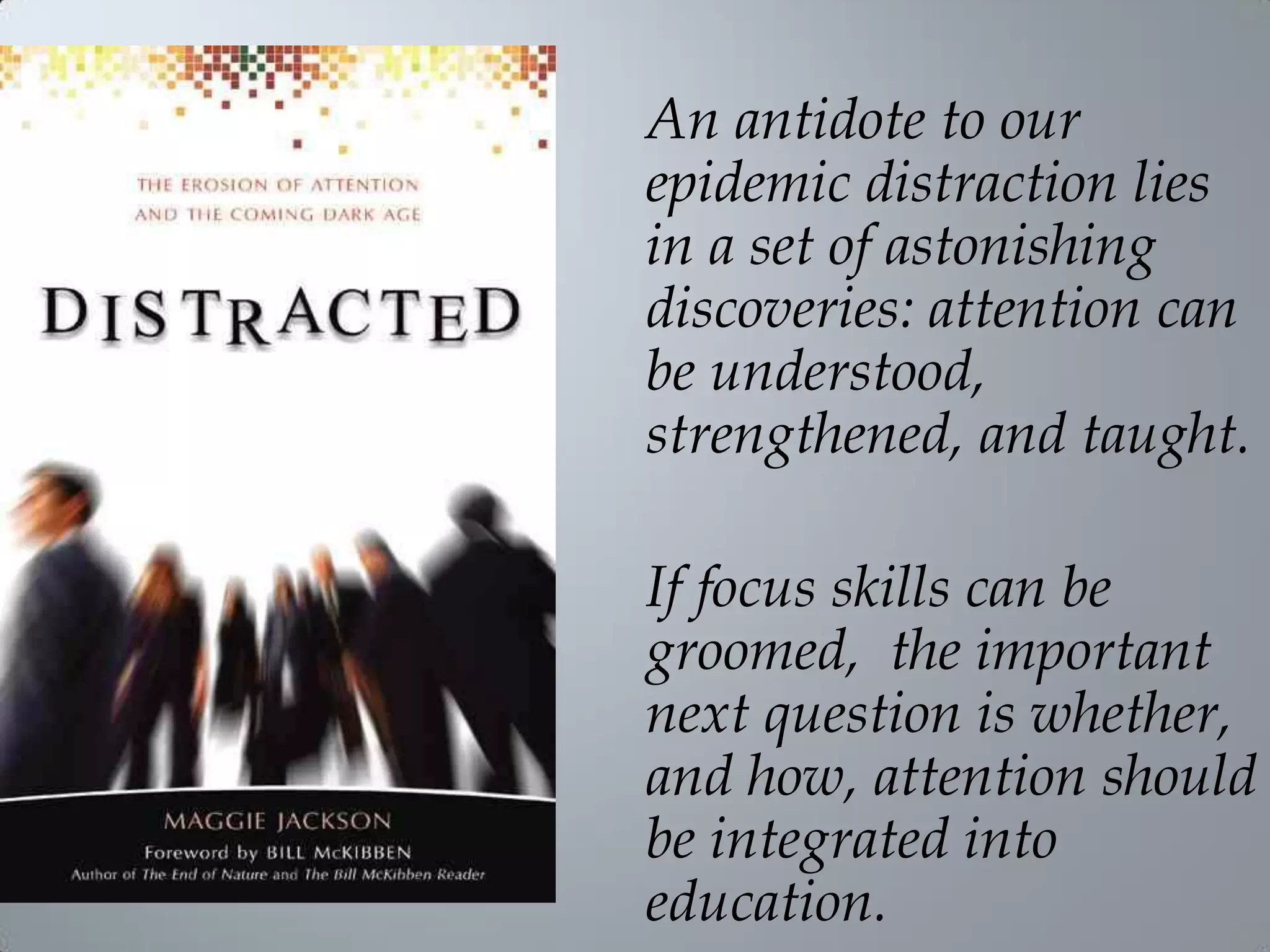
An antidote to our
epidemic distraction lies
in a set of astonishing
discoveries: attention can
be understood,
strengthened, and taught.
If focus skills can be
groomed, the important
next question is whether,
and how, attention should
be integrated into
education.
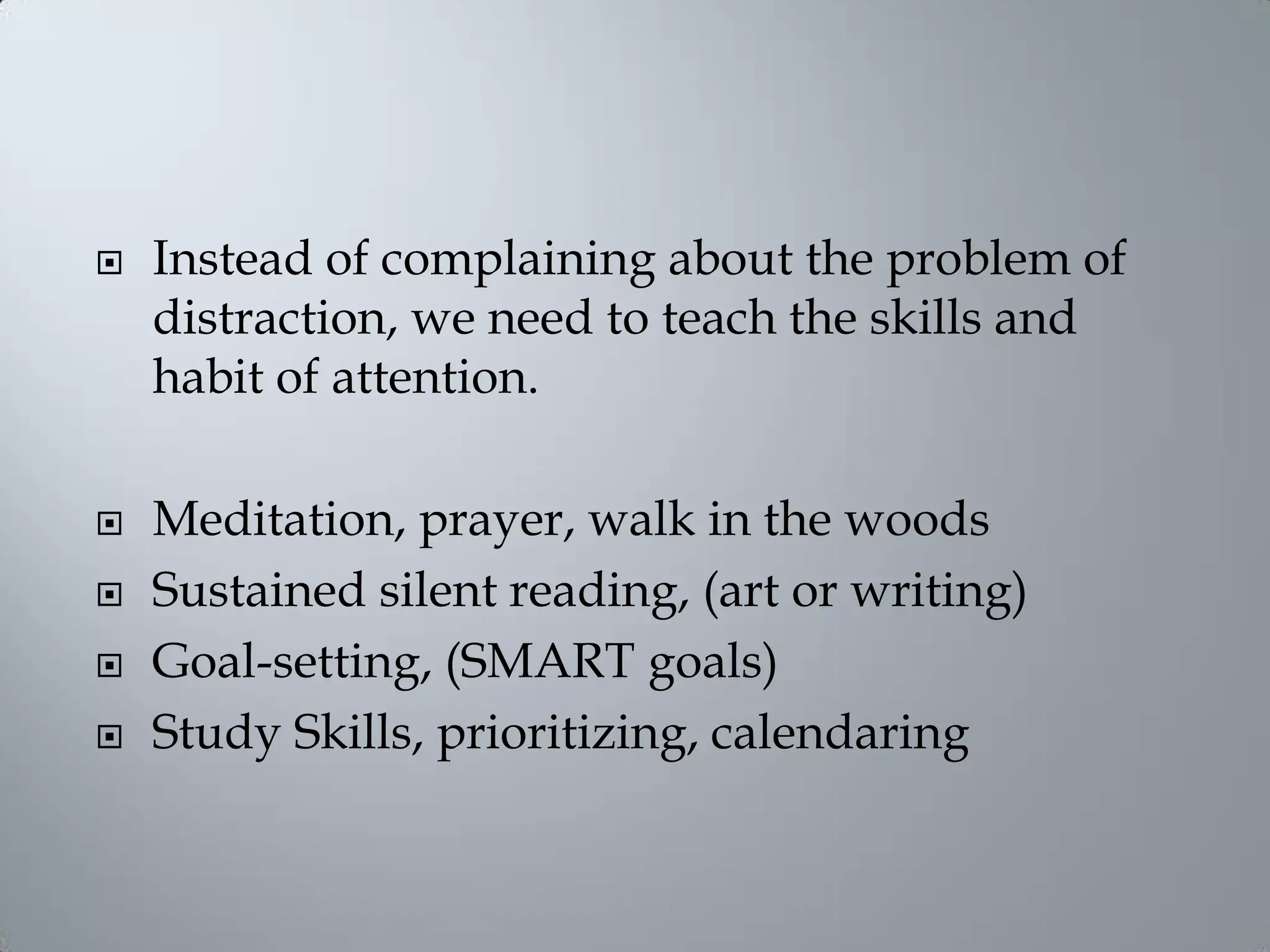
 Instead of complaining about the problem of
distraction, we need to teach the skills and
habit of attention.
 Meditation, prayer, walk in the woods
 Sustained silent reading, (art or writing)
 Goal-setting, (SMART goals)
 Study Skills, prioritizing, calendaring
Bolstering confident, skillful, positive citizenship:
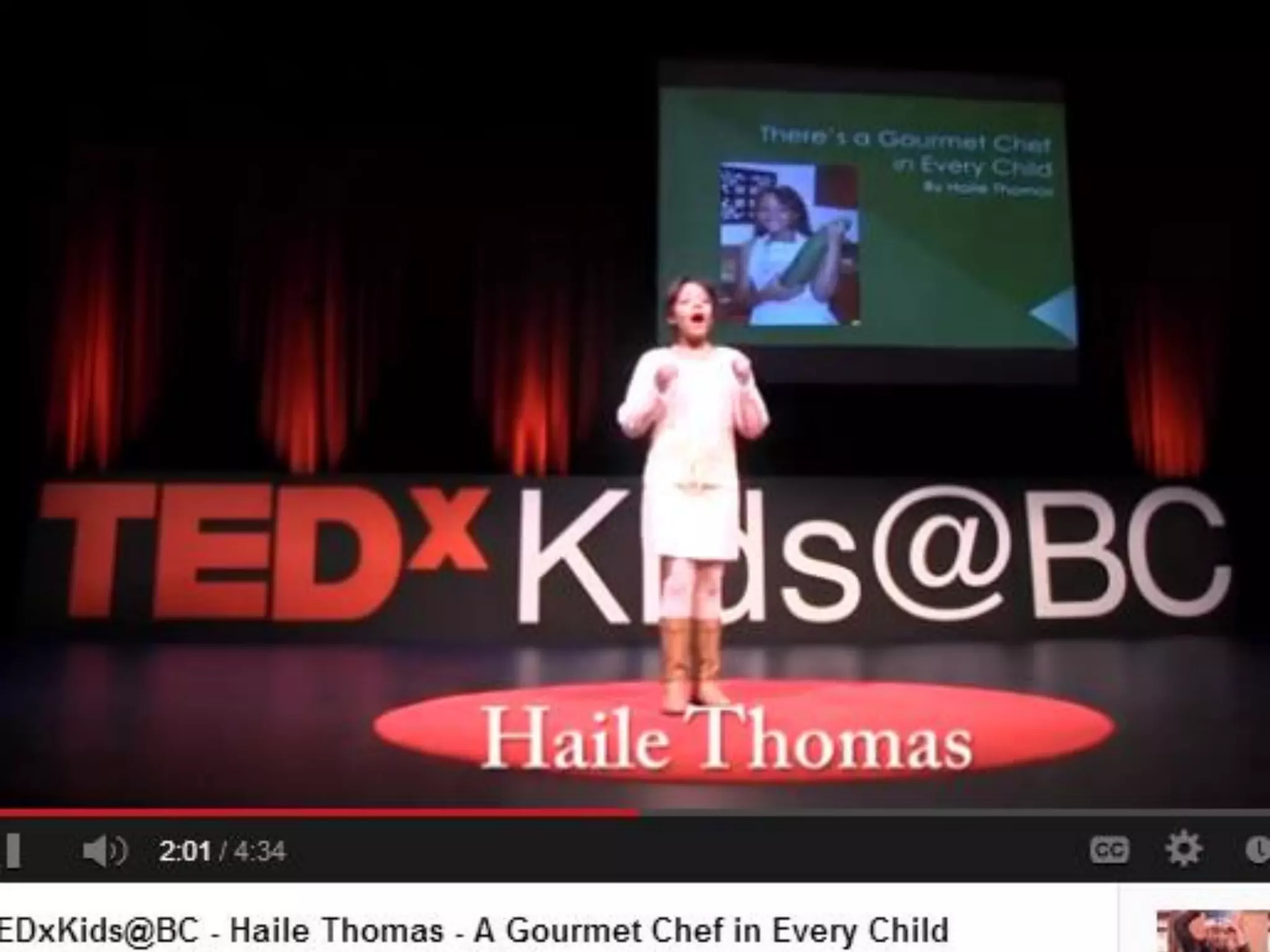
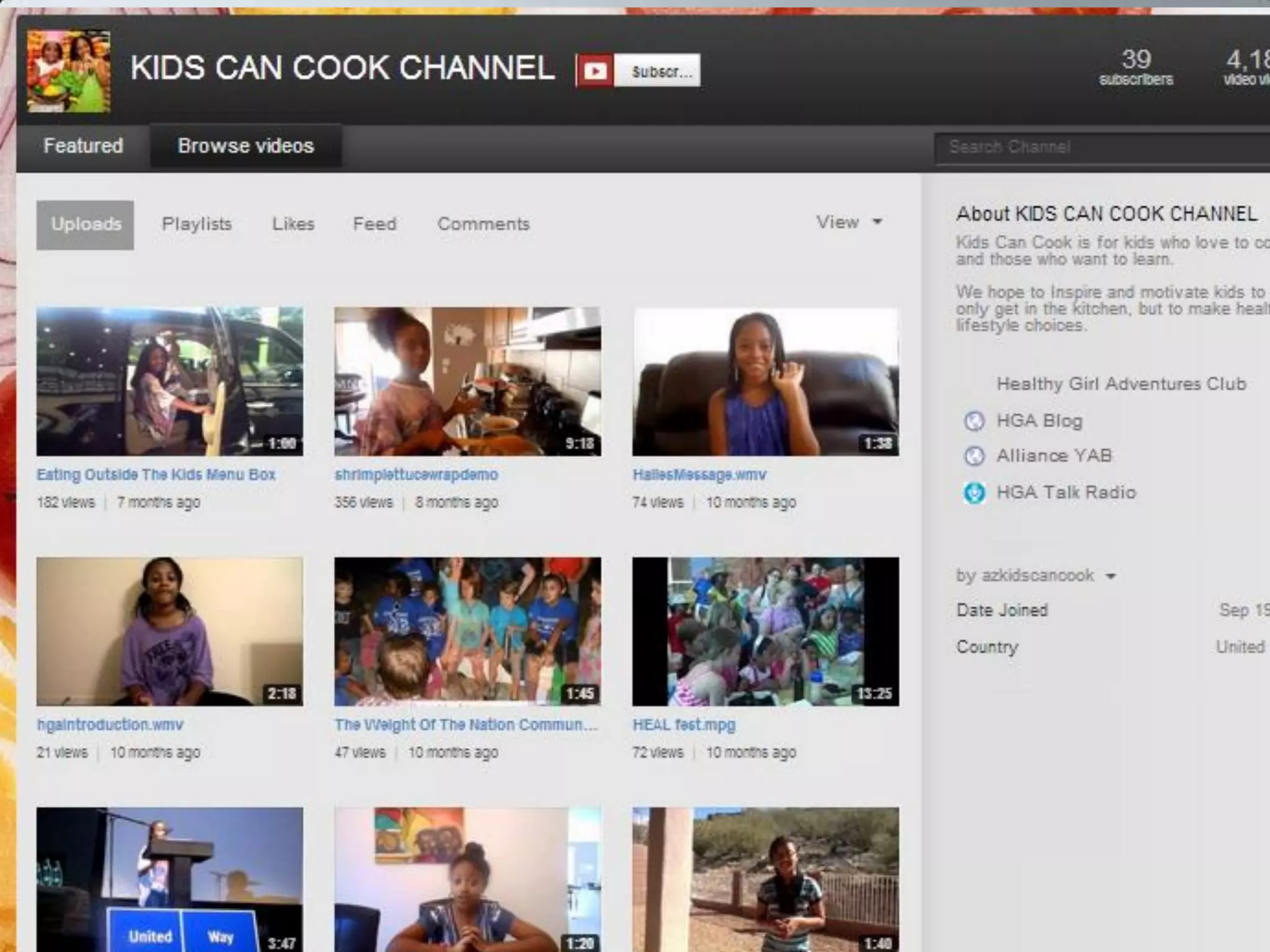
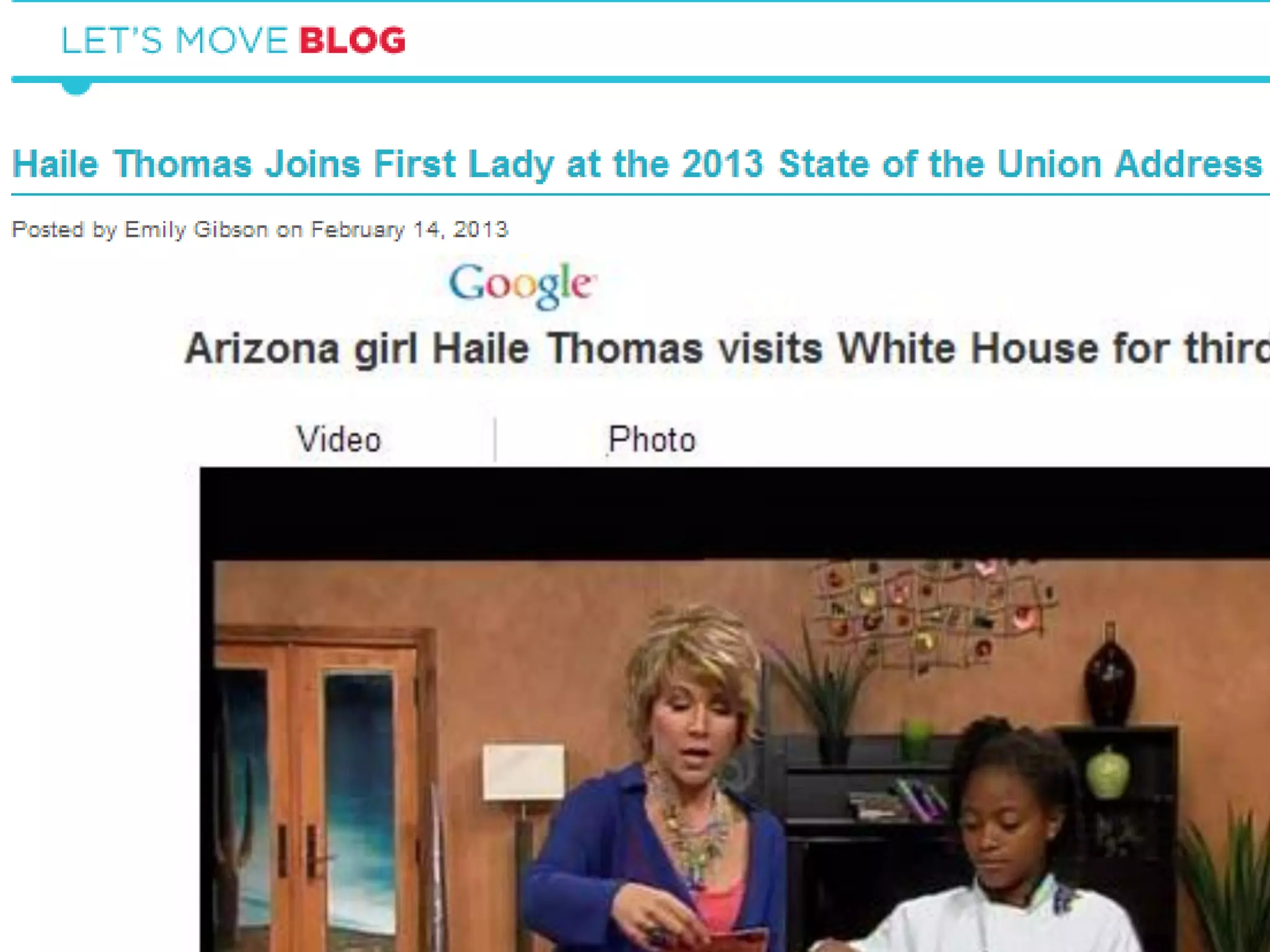
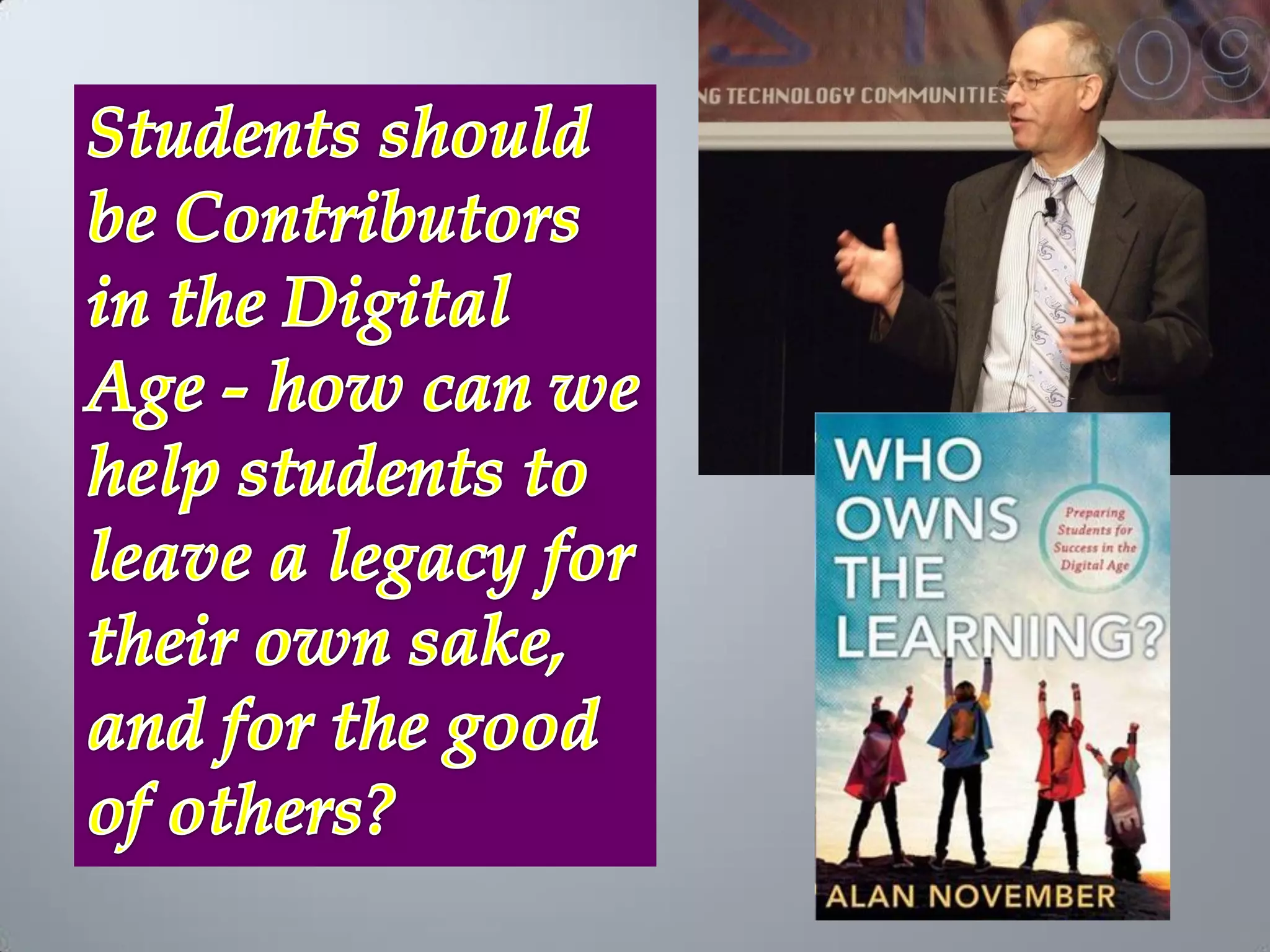
Participation and Contribution
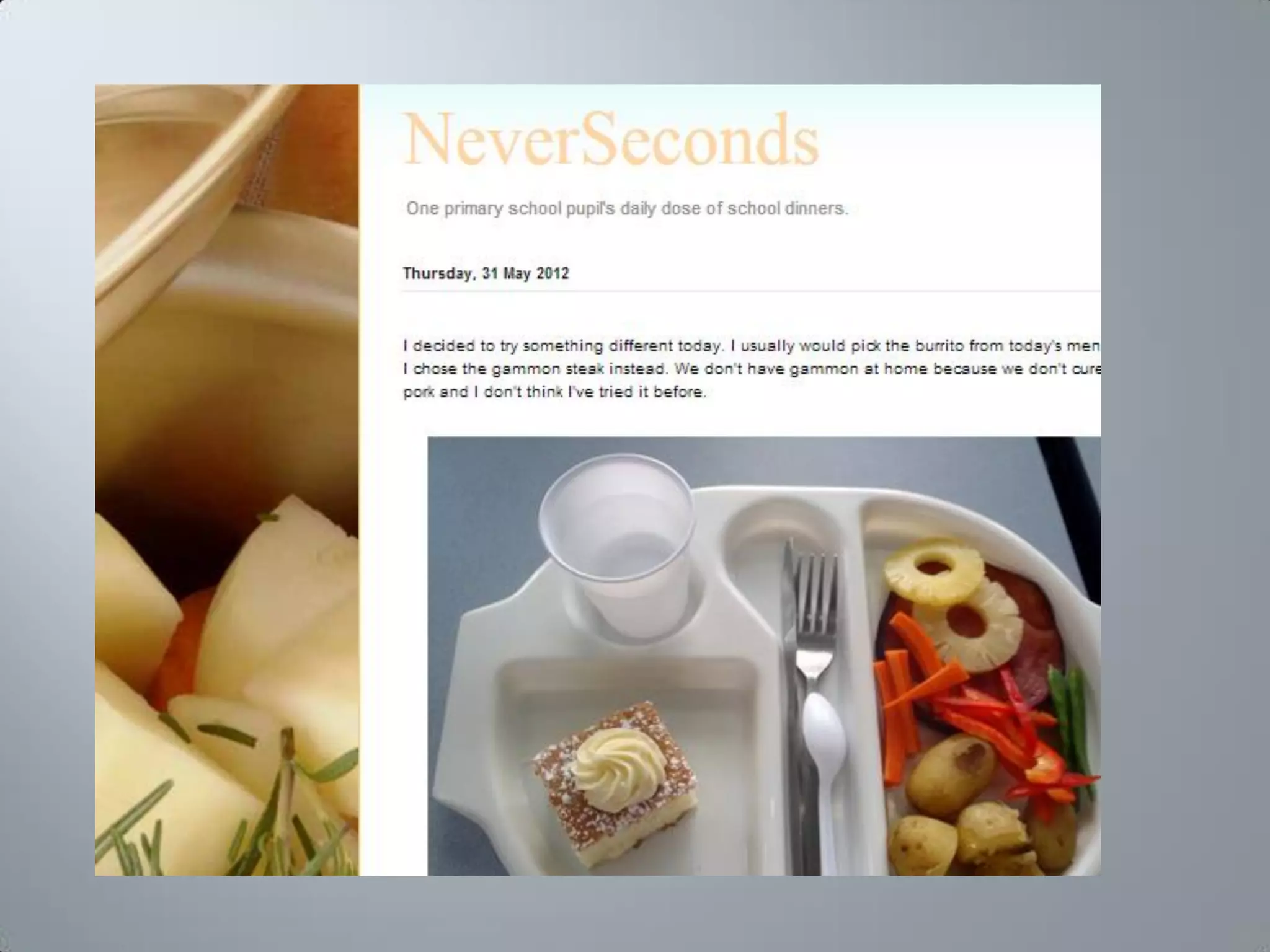
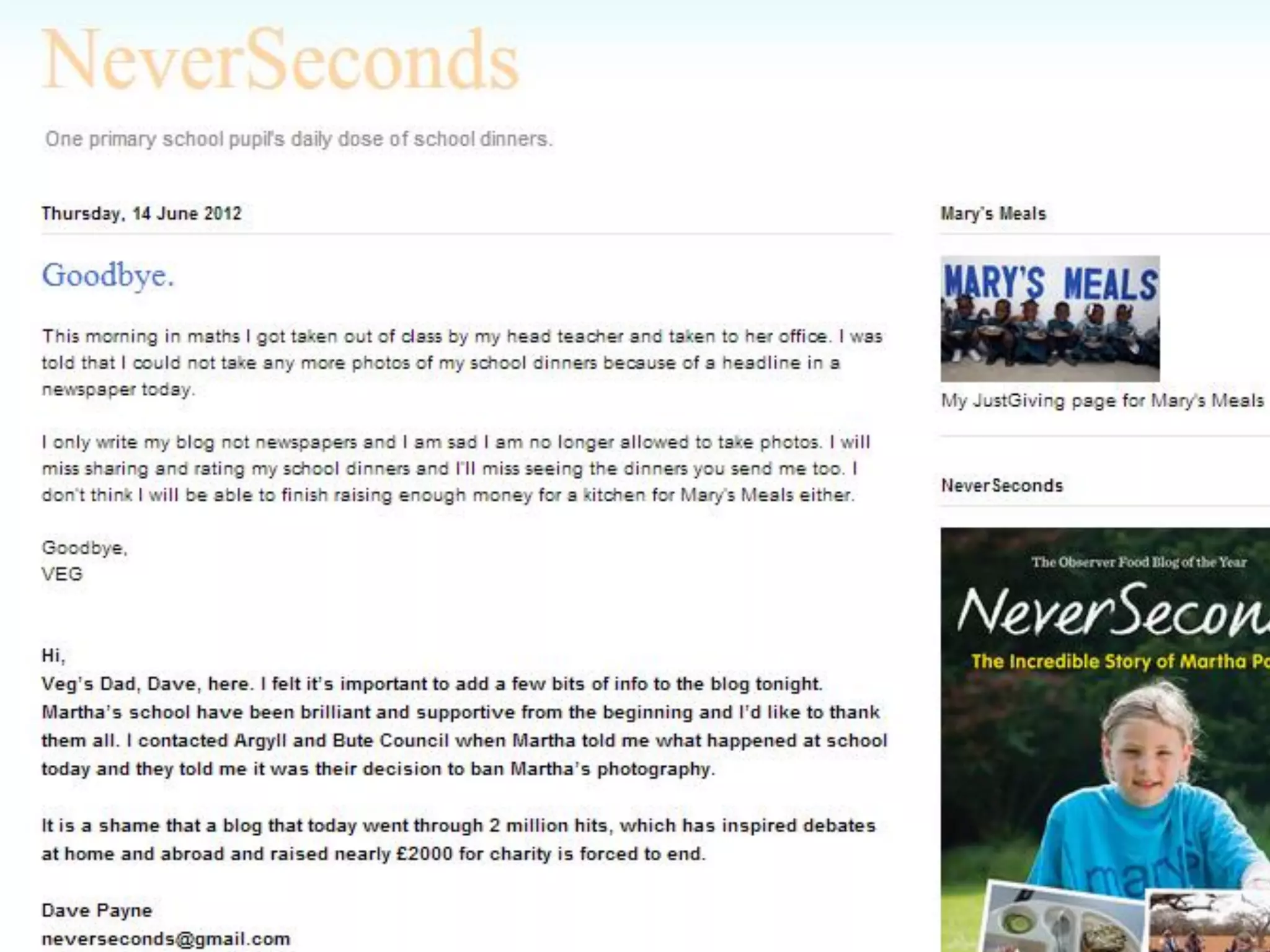
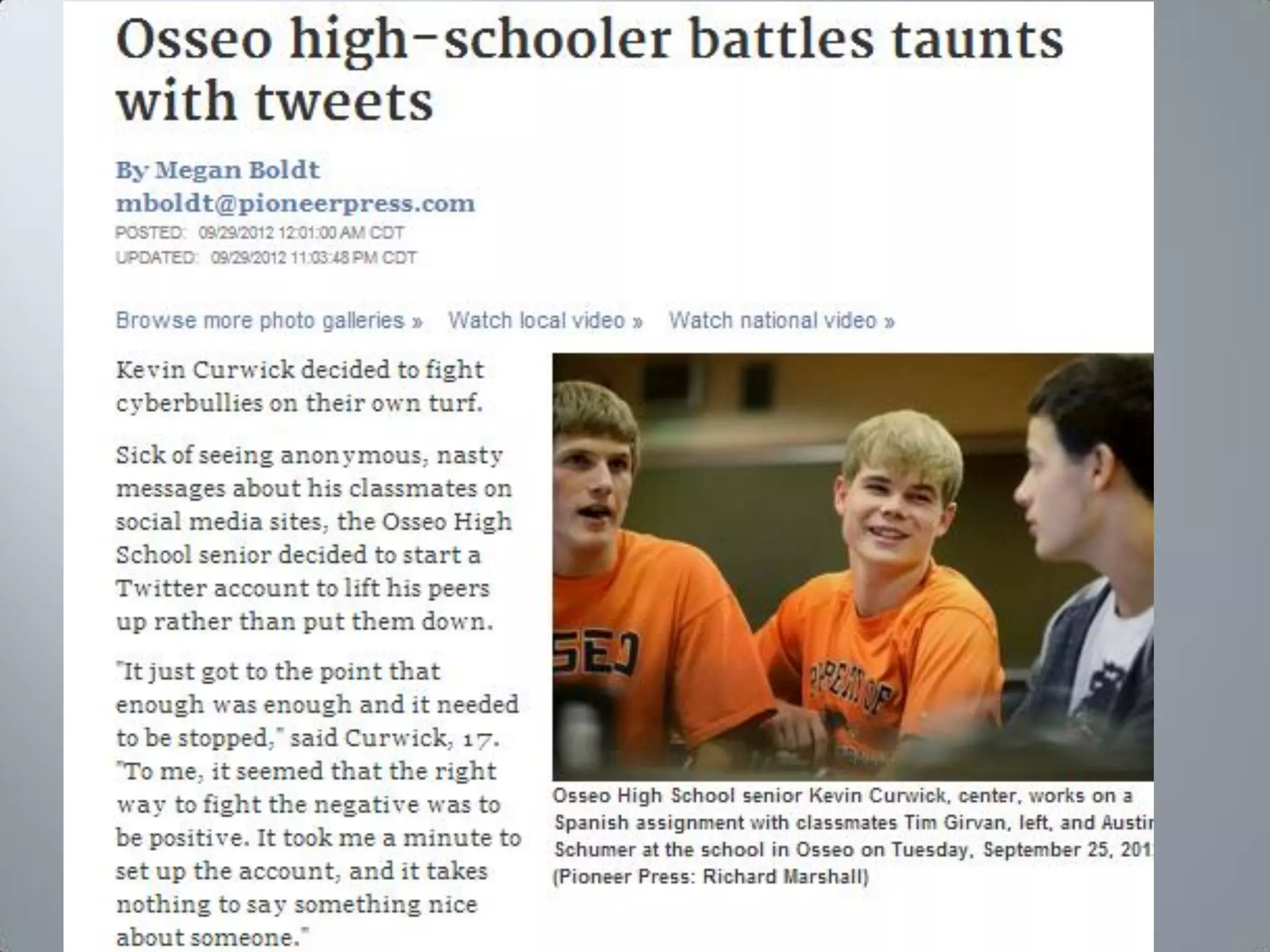
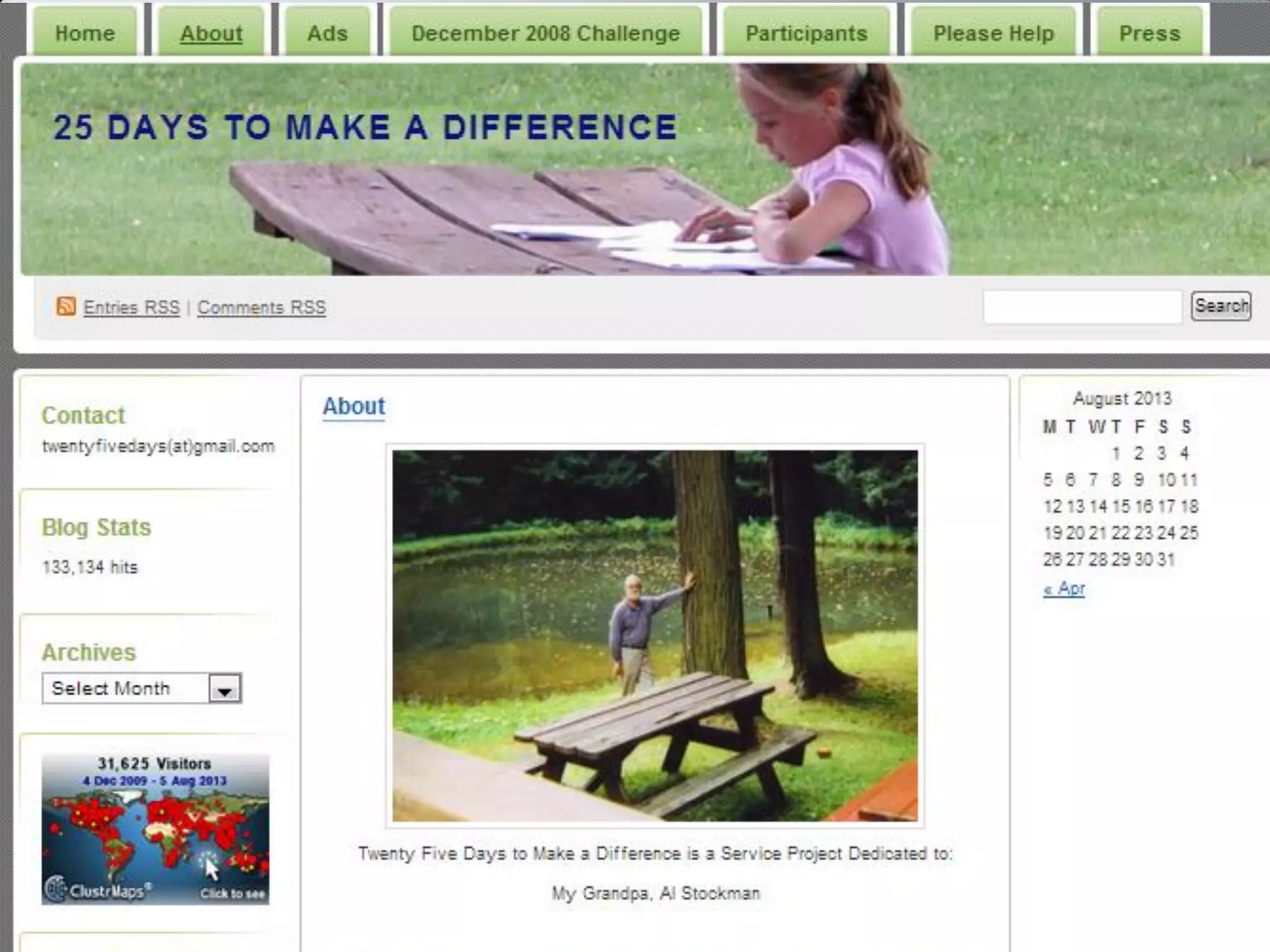
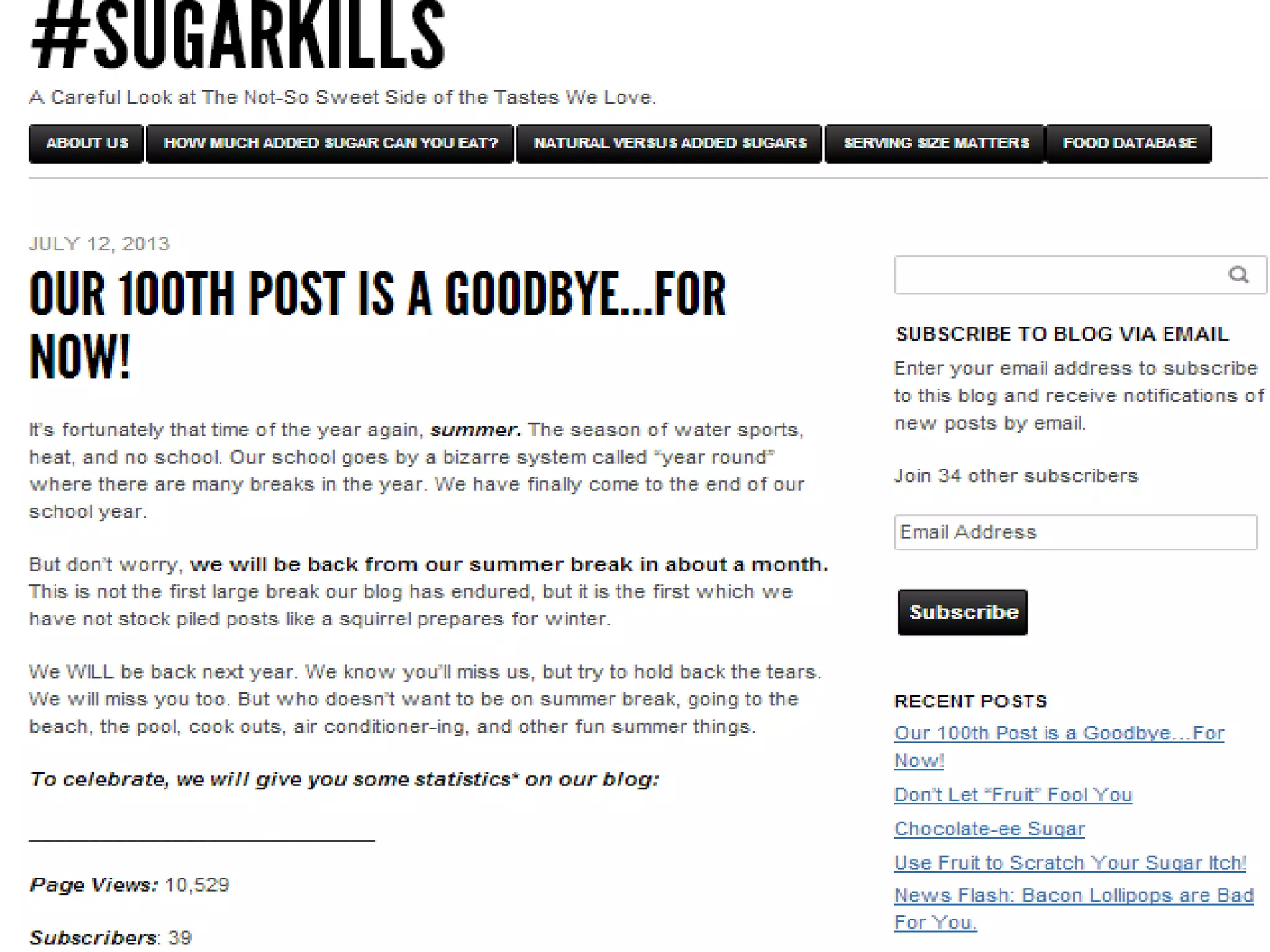
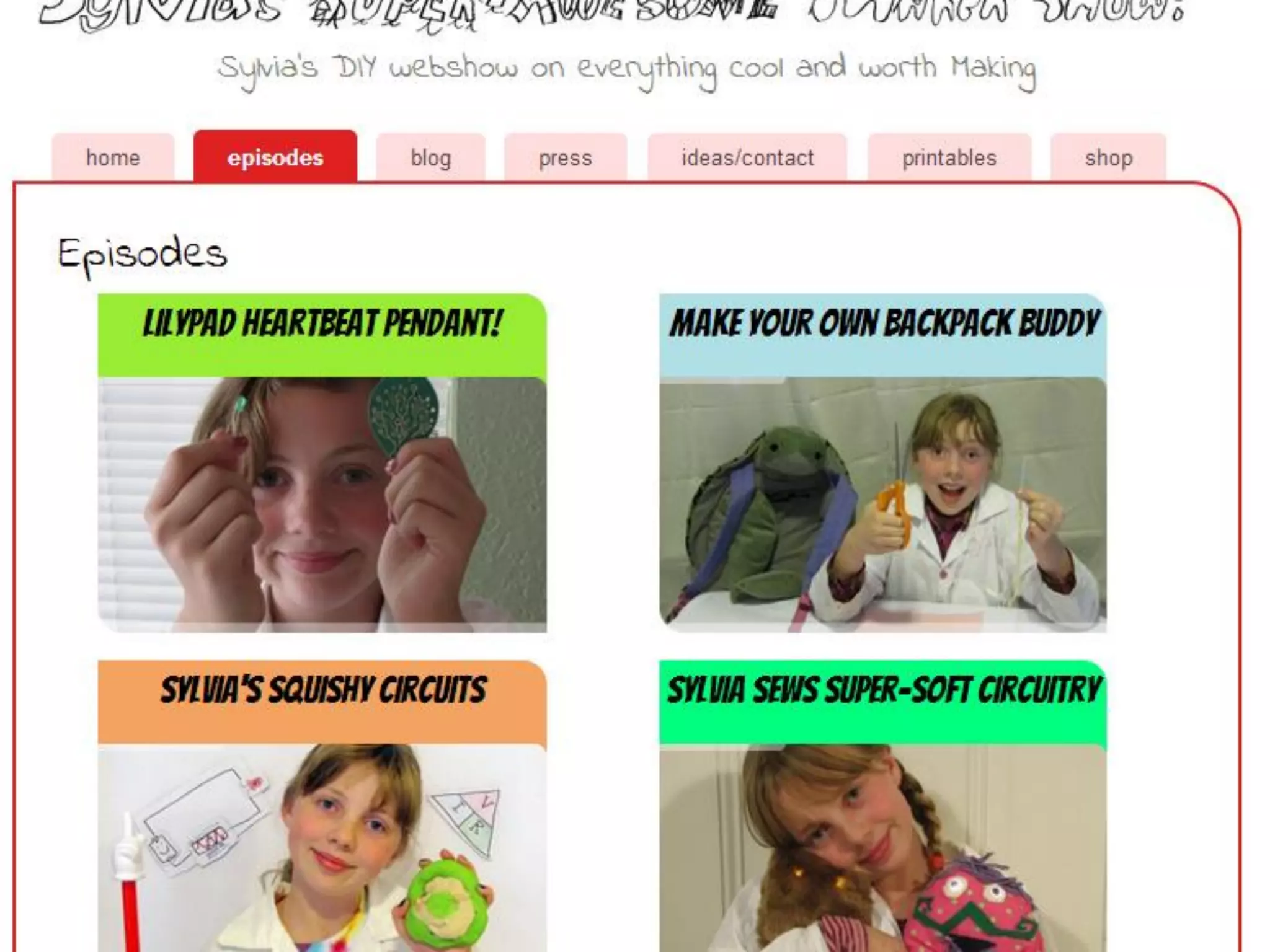
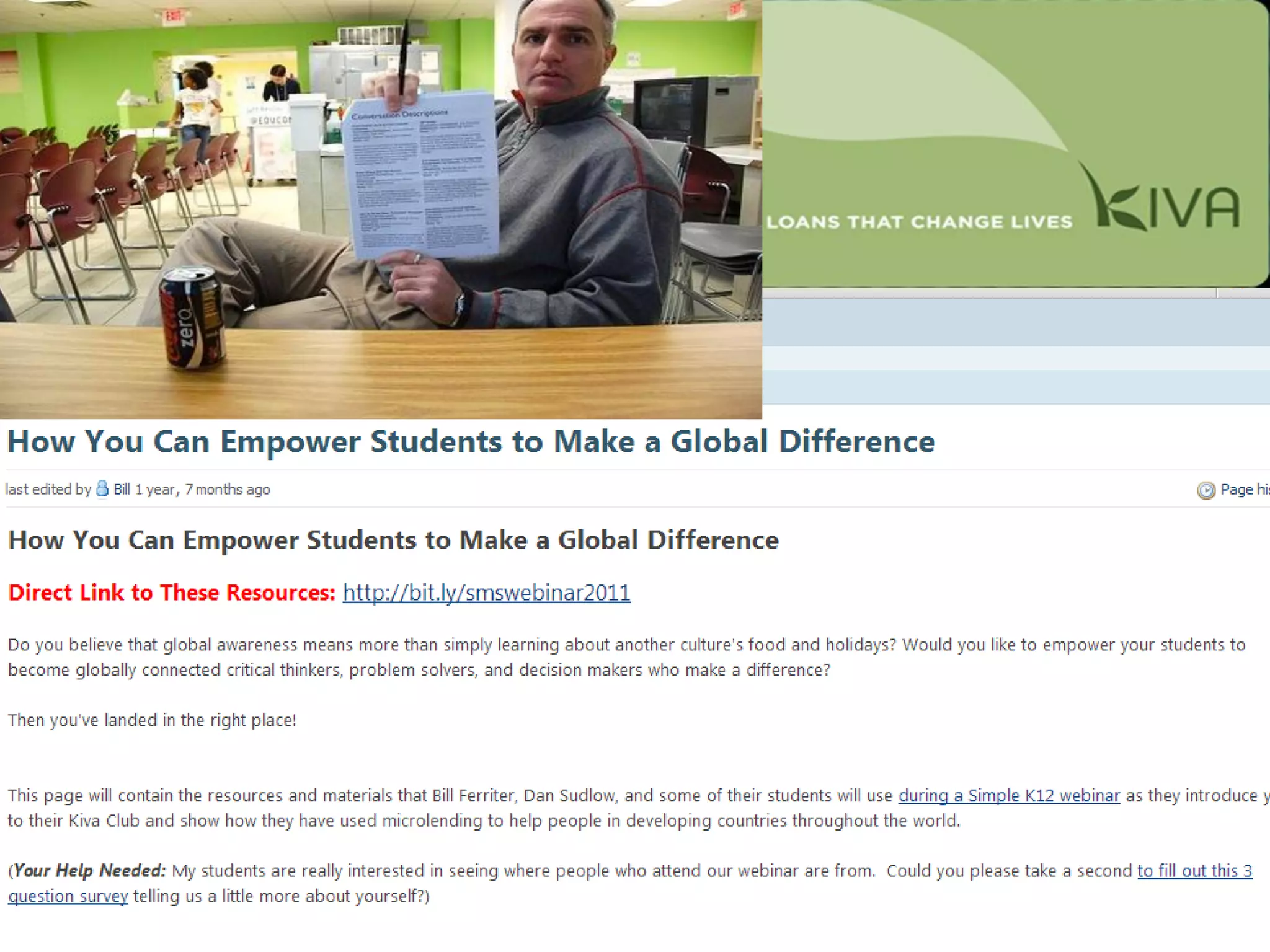
 Ferriter Kiva Project
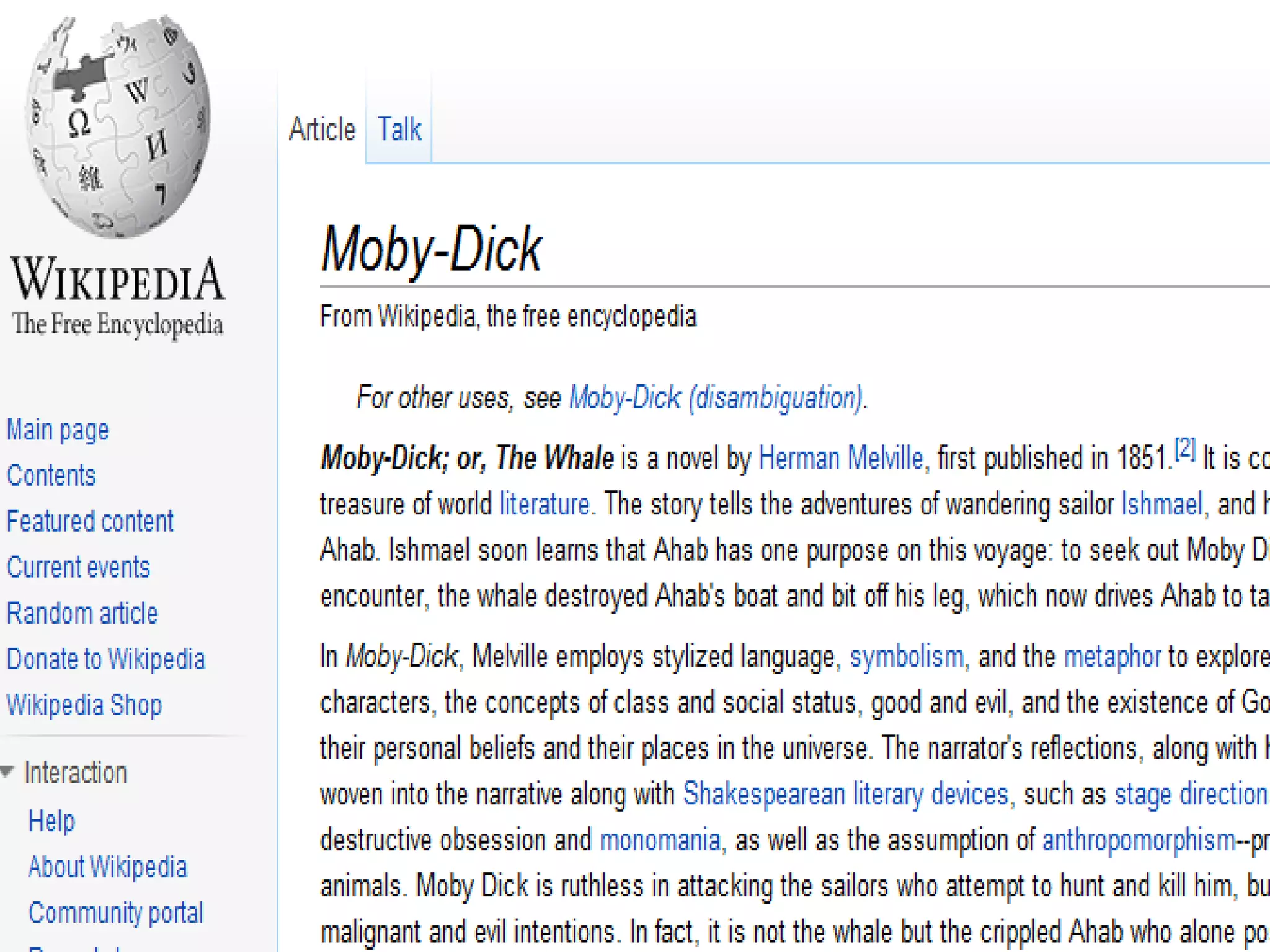
 Moby Dick on Wikipedia example
 Images
Communication and collaboration
Critical reading and skepticism
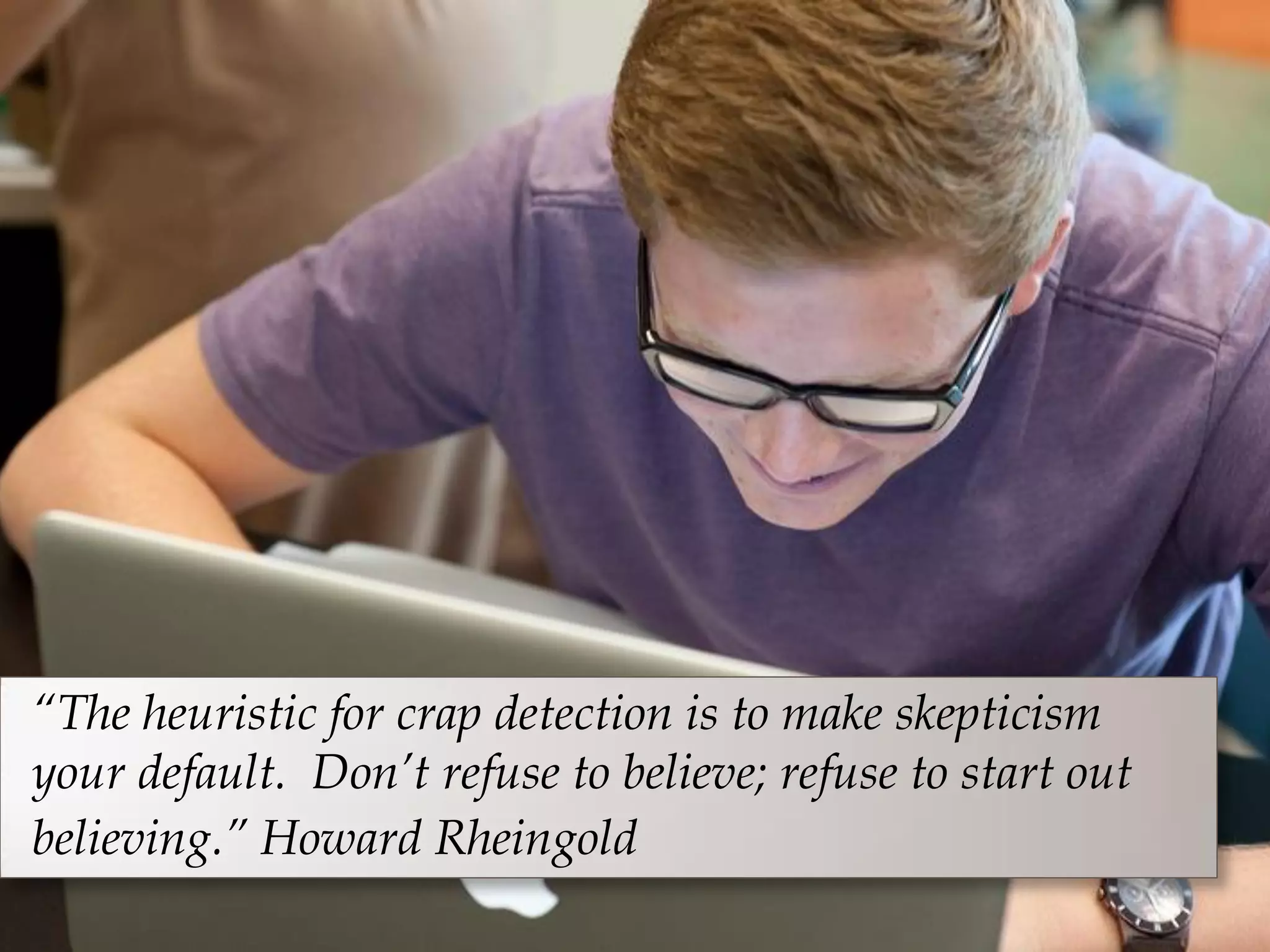
“The heuristic for crap detection is to make skepticism
your default. Don’t refuse to believe; refuse to start out
believing.” Howard Rheingold
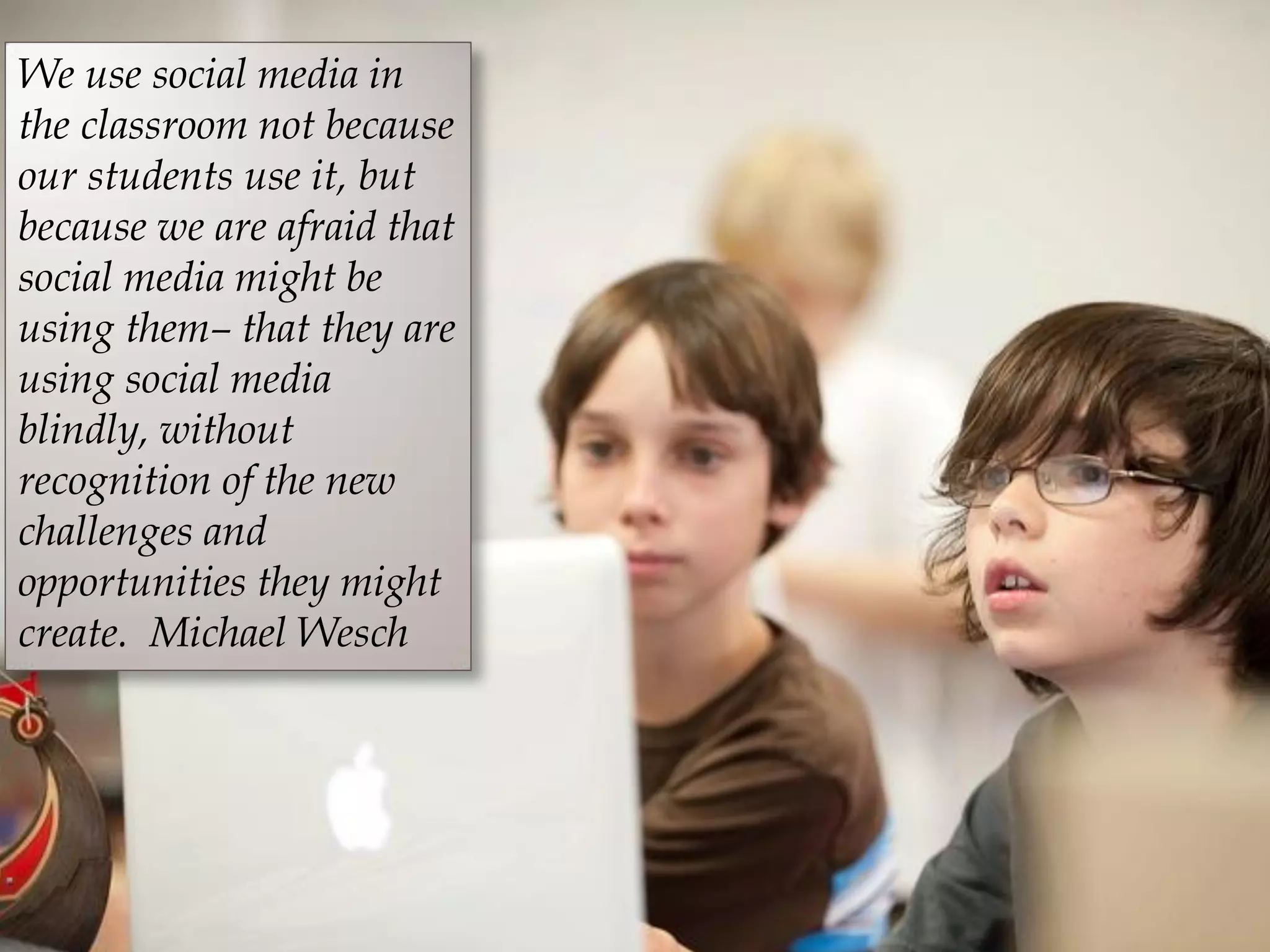
We use social media in
the classroom not because
our students use it, but
because we are afraid that
social media might be
using them– that they are
using social media
blindly, without
recognition of the new
challenges and
opportunities they might
create. Michael Wesch
One of the side effects
or what we call
collateral learning for
kids who do engage in
geeked out, interest
driven activities is that
when start engaging in
knowledge or media
production, you tend to
develop a much more
sophisticated
understanding of how
knowledge and media is
produced more
generally.
Mimi Ito quoted in
Rheingold
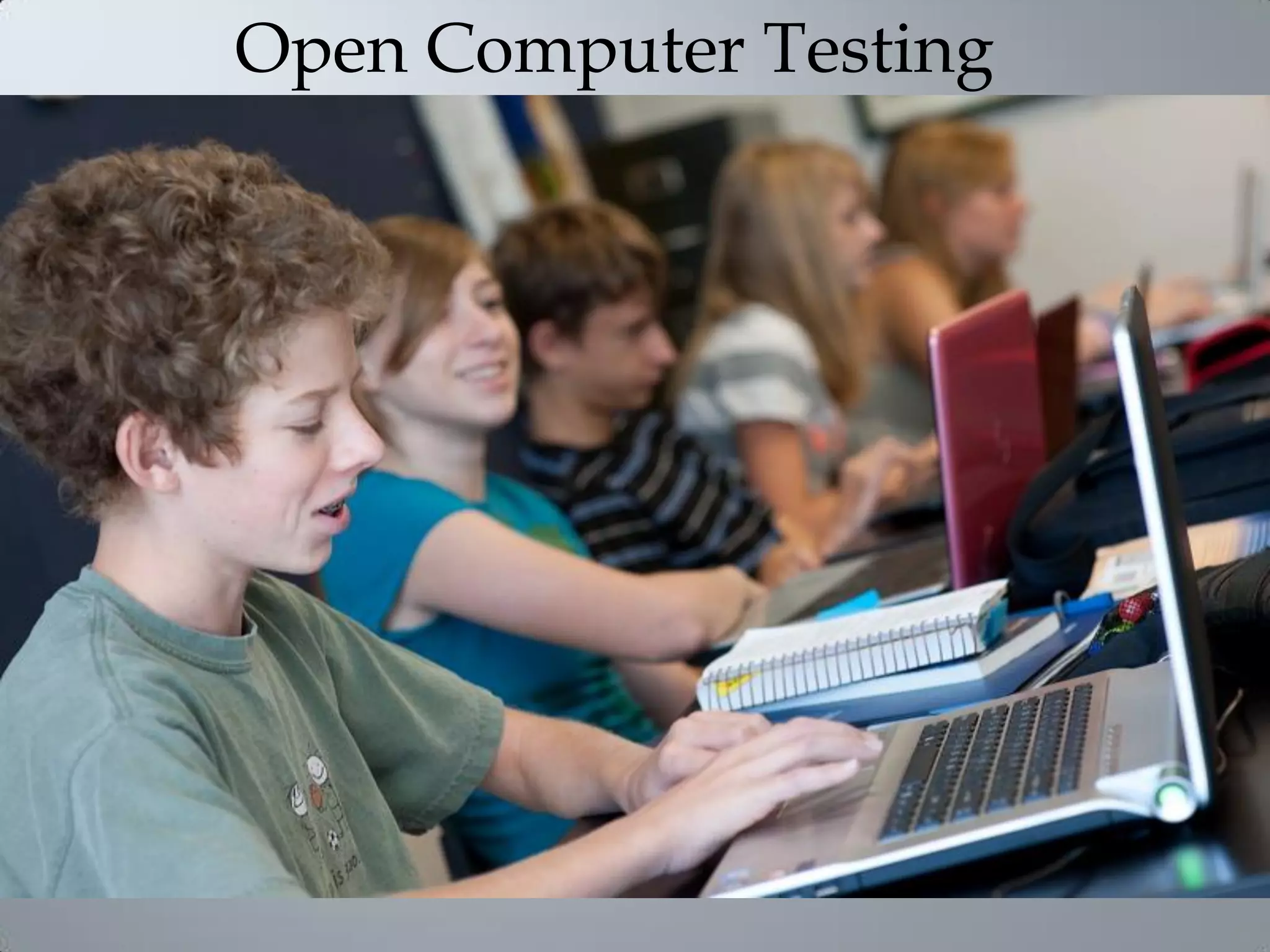
Open Computer Testing
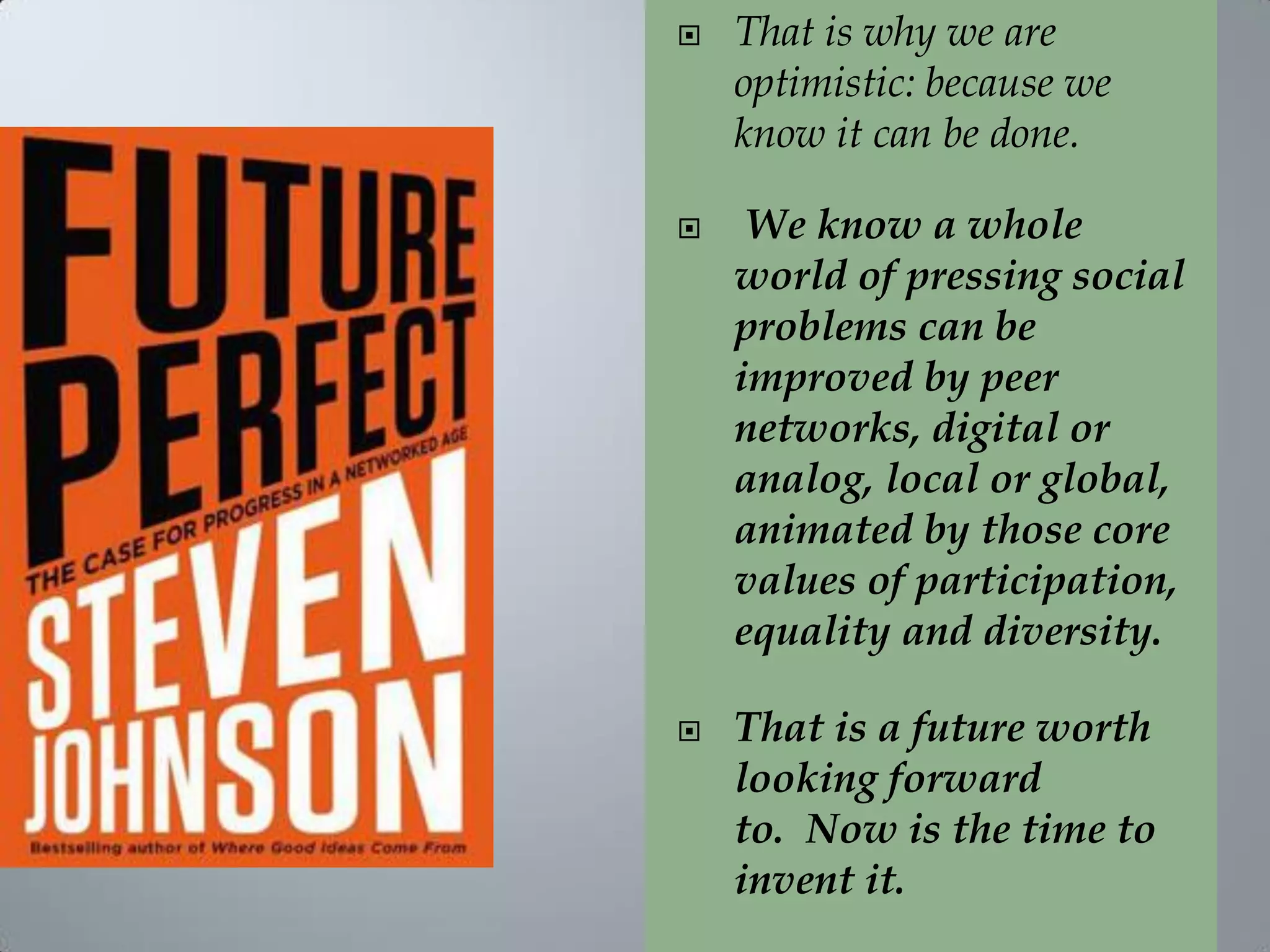
 That is why we are
optimistic: because we
know it can be done.
 We know a whole
world of pressing social
problems can be
improved by peer
networks, digital or
analog, local or global,
animated by those core
values of participation,
equality and diversity.
 That is a future worth
looking forward
to. Now is the time to
invent it.

Digital citizenship for mvcs

  • 1.
    Learning to participateeffectively online is a matter of mindset and practice– and the payoff can be big… Done mindfully, digital participation helps build a more democratic, more diverse culture. Howard Rheingold Fighting Fire with Fire: Building Strong Digital Citizenship Jonathan E. Martin 21k12blog.net @jonathanemartin MVCS August 2013
  • 2.
    The obligations ofcitizenship were deeply connected with everyday life. Citizens of the polis saw obligations to the community as a source of honor and respect. From Wikipedia
  • 15.
    Idiot as aword derived from the Greek ἰδιώτης, idiōtēs ("person lacking professional skill", "a private citizen", "individual"), from ἴδιος, idios ("private", "one's own")
  • 16.
    People who thinkof themselves as capable of creating as well as consuming are different kinds of citizens, and our collective actions add up to a different kind of society. Knowledge, power, advantage, companionship, and influence lie with those who know how to participate, not just passively consume culture.
  • 17.
    The Best Oppositionto Poor Citizenship is Good Citizenship The Best Way to Develop Good Citizenship is by Practicing Good Citizenship Digital Natives will Respond to our Lead Far Better when we Model And Advocate Positive Citizenship than when we Frown at their Digital Lives.
  • 23.
    From Alec Couros,Digital Citizenship
  • 24.
     Declare anew RUP  Model Digital Citizenship  Establish Norms and Expectations  Practice, Practice, Practice
  • 25.
    What’s in yourDigital Citizenship Bill of Rights & Responsibilities?
  • 26.
    Discuss: How wouldyou develop and use such a Bill of Rights in your school?
  • 28.
  • 31.
  • 32.
    We are whatwe repeatedly do. Excellence, then, is not an act but a habit. For the things we have to learn before we can do them, we learn by doing them.
  • 33.
    Key Literacies:  attention participation & contribution  collaboration and communication,  “crap detection,”
  • 34.
    When it comesto interacting with the world of always-on information, the fundamental skill, on which other essential skills depend, is the ability to deal with distraction without filtering out opportunity. Howard Rheingold, Net Smart
  • 35.
    An antidote toour epidemic distraction lies in a set of astonishing discoveries: attention can be understood, strengthened, and taught. If focus skills can be groomed, the important next question is whether, and how, attention should be integrated into education.
  • 36.
     Instead ofcomplaining about the problem of distraction, we need to teach the skills and habit of attention.  Meditation, prayer, walk in the woods  Sustained silent reading, (art or writing)  Goal-setting, (SMART goals)  Study Skills, prioritizing, calendaring
  • 37.
    Bolstering confident, skillful,positive citizenship: Participation and Contribution
  • 39.
  • 41.
     Moby Dickon Wikipedia example  Images
  • 42.
  • 46.
  • 47.
    “The heuristic forcrap detection is to make skepticism your default. Don’t refuse to believe; refuse to start out believing.” Howard Rheingold
  • 48.
    We use socialmedia in the classroom not because our students use it, but because we are afraid that social media might be using them– that they are using social media blindly, without recognition of the new challenges and opportunities they might create. Michael Wesch
  • 49.
    One of theside effects or what we call collateral learning for kids who do engage in geeked out, interest driven activities is that when start engaging in knowledge or media production, you tend to develop a much more sophisticated understanding of how knowledge and media is produced more generally. Mimi Ito quoted in Rheingold
  • 50.
  • 51.
     That iswhy we are optimistic: because we know it can be done.  We know a whole world of pressing social problems can be improved by peer networks, digital or analog, local or global, animated by those core values of participation, equality and diversity.  That is a future worth looking forward to. Now is the time to invent it.