7 Steps to Better Educate Future
Innovative Engineers & Designers

           Jonathan E. Martin
              March, 2012
          Simple K12 Webinar
Jonathan E. Martin

•    10 years experience teaching High School History
• 15 years experience principal, PK-12.
• Currently educational writer and consultant


                       • www.21k12blog.net
                • Twitter: @JonathanEMartin
              • jonathanemartin@gmail.com
“We need to out-innovate, out-
educate, and out-build the rest
of the world…That’s how we’ll
win the future.”
       ~President Obama
       2011 State of the Union
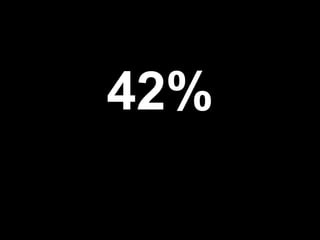
42%
1.   Striking the Chord
2.   Putting Problems First
3.   Doing the Learning with Project-Based Learning
4.   Enabling Connections
5.   Providing the Time, Space & Tools
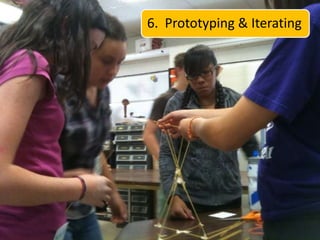
6.   Prototyping and Iterating
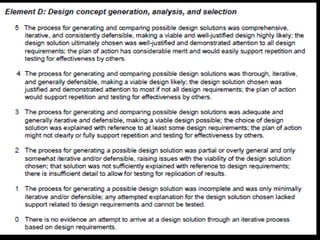
7.   Assessing with Quality Rubrics
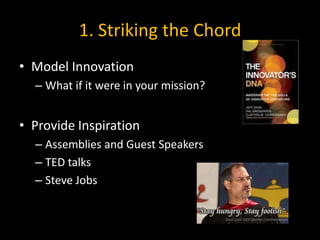
1. Striking the Chord
• Model Innovation
  – What if it were in your mission?


• Provide Inspiration
  – Assemblies and Guest Speakers
  – TED talks
  – Steve Jobs
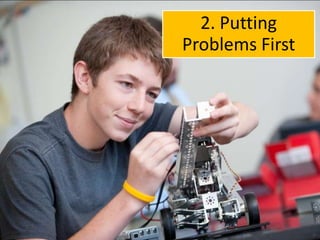
2. Putting
Problems First
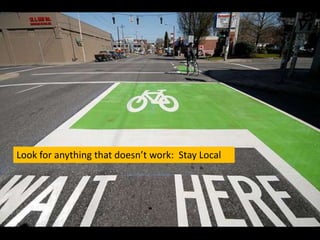
Look for anything that doesn’t work: Stay Local
Look to the
news of the
day:

What needs
fixing?
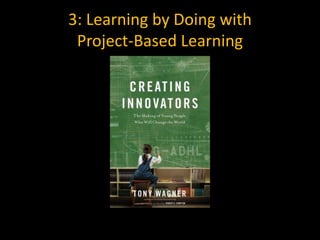
3: Learning by Doing with
 Project-Based Learning
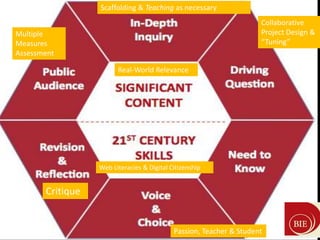
Scaffolding & Teaching as necessary
                                                                     Collaborative
Multiple                                                             Project Design &
Measures                                                             “Tuning”
Assessment

                        Real-World Relevance


                  Web Literacies & Digital Citizenship


       Critique


                                            Passion, Teacher & Student
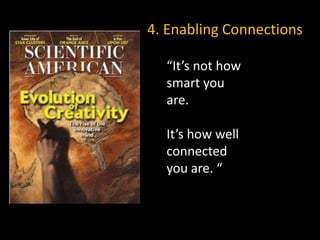
4. Enabling Connections

  “It’s not how
  smart you
  are.

  It’s how well
  connected
  you are. “
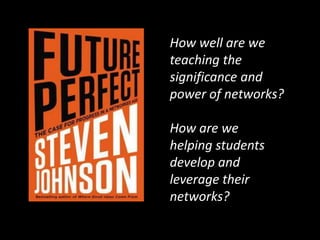
How well are we
teaching the
significance and
power of networks?

How are we
helping students
develop and
leverage their
networks?
• Get online and open the net widely, (still safely).

• Leverage web 2.0 tools, including Skype.

• Use resources like Flat Classroom, iEarn, &
  Quadblogging.

• Require online collaboration in some assignments.
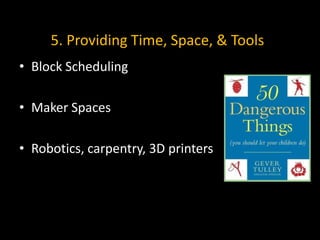
5. Providing Time, Space, & Tools
• Block Scheduling

• Maker Spaces

• Robotics, carpentry, 3D printers
6. Prototyping & Iterating
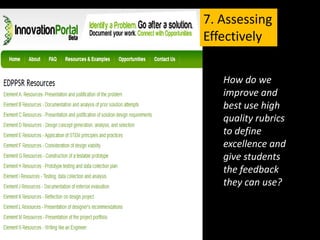
7. Assessing
Effectively

   How do we
   improve and
   best use high
   quality rubrics
   to define
   excellence and
   give students
   the feedback
   they can use?
Jonathan E. Martin
    www.21k12blog.net
 Twitter: @JonathanEMartin
jonathanemartin@gmail.com

7 steps to better educate future innovative engineers & designers

  • 1.
    7 Steps toBetter Educate Future Innovative Engineers & Designers Jonathan E. Martin March, 2012 Simple K12 Webinar
  • 2.
    Jonathan E. Martin • 10 years experience teaching High School History • 15 years experience principal, PK-12. • Currently educational writer and consultant • www.21k12blog.net • Twitter: @JonathanEMartin • jonathanemartin@gmail.com
  • 3.
    “We need toout-innovate, out- educate, and out-build the rest of the world…That’s how we’ll win the future.” ~President Obama 2011 State of the Union
  • 4.
  • 5.
    1. Striking the Chord 2. Putting Problems First 3. Doing the Learning with Project-Based Learning 4. Enabling Connections 5. Providing the Time, Space & Tools 6. Prototyping and Iterating 7. Assessing with Quality Rubrics
  • 6.
    1. Striking theChord • Model Innovation – What if it were in your mission? • Provide Inspiration – Assemblies and Guest Speakers – TED talks – Steve Jobs
  • 7.
  • 8.
    Look for anythingthat doesn’t work: Stay Local
  • 9.
    Look to the newsof the day: What needs fixing?
  • 10.
    3: Learning byDoing with Project-Based Learning
  • 11.
    Scaffolding & Teachingas necessary Collaborative Multiple Project Design & Measures “Tuning” Assessment Real-World Relevance Web Literacies & Digital Citizenship Critique Passion, Teacher & Student
  • 12.
    4. Enabling Connections “It’s not how smart you are. It’s how well connected you are. “
  • 13.
    How well arewe teaching the significance and power of networks? How are we helping students develop and leverage their networks?
  • 14.
    • Get onlineand open the net widely, (still safely). • Leverage web 2.0 tools, including Skype. • Use resources like Flat Classroom, iEarn, & Quadblogging. • Require online collaboration in some assignments.
  • 15.
    5. Providing Time,Space, & Tools • Block Scheduling • Maker Spaces • Robotics, carpentry, 3D printers
  • 16.
  • 17.
    7. Assessing Effectively How do we improve and best use high quality rubrics to define excellence and give students the feedback they can use?
  • 19.
    Jonathan E. Martin www.21k12blog.net Twitter: @JonathanEMartin jonathanemartin@gmail.com

Editor's Notes

  • #4 Urgency to innovate
  • #5 Per Gallup-HOPE Survey, this is % of students ingr 5-12 who aspire to invent something that improves the world
  • #8 I am only going to offer a few specific suggestions, but I am going to ask you to consider for yourself applications, and then on my blog I am posting a set of slides of the implications.
  • #9 Finding authentic problems to solve—close to home
  • #17 How many people have done the marshmallow challenge? It so fascinating.