Sam Sproul Lauren YoiaIrish Immigrants
Irish peasants becoming impoverished because of potato rot People were living in single room mud and straw cabins with a single straw bed that the entire family slept on (mother, father, five to six children, sometimes grandparents)Could not pay land lords (they rented their farmland from the English)Religious prejudice to the catholic Irish from the protestant mastersPolitical subordinationReasons for coming to America
The Irish people saw life here as “the land of promise”They thought that there was employment and room for everybody Before they came over they attended an “American wake” where they said bye to everyone that was leavingComing to America
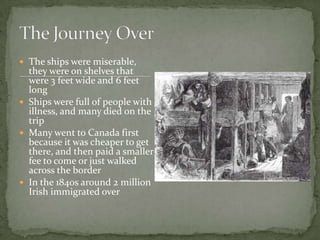
The ships were miserable, they were on shelves that were 3 feet wide and 6 feet longShips were full of people with illness, and many died on the tripMany went to Canada first because it was cheaper to get there, and then paid a smaller fee to come or just walked across the borderIn the 1840s around 2 million Irish immigrated overThe Journey Over
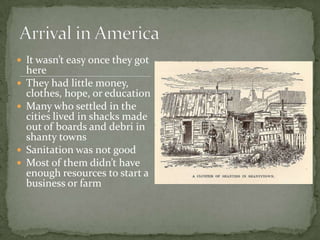
It wasn’t easy once they got here They had little money, clothes, hope, or educationMany who settled in the cities lived in shacks made out of boards and debri in shanty townsSanitation was not goodMost of them didn’t have enough resources to start a business or farmArrival in America
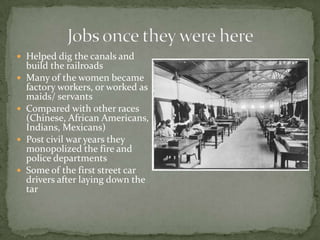
Jobs once they were hereHelped dig the canals and build the railroadsMany of the women became factory workers, or worked as maids/ servants Compared with other races (Chinese, African Americans, Indians, Mexicans)Post civil war years they monopolized the fire and police departmentsSome of the first street car drivers after laying down the tar
English colonizers wanted the new world to be English over Irish, they made it so that laws prevented marriages between the Irish and other colonizers, they could not buy land or be in officeEnglish colonizers burned down their villages and cropsThey were seen as uncivilized people or savagesBanished from jobs due to laziness, gambling, and drinking as well as for having humor and nerve to say rude things How the English viewed them
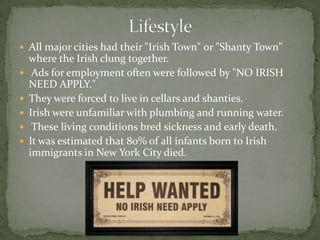
LifestyleAll major cities had their "Irish Town" or "Shanty Town" where the Irish clung together. Ads for employment often were followed by "NO IRISH NEED APPLY." They were forced to live in cellars and shanties.Irish were unfamiliar with plumbing and running water. These living conditions bred sickness and early death. It was estimated that 80% of all infants born to Irish immigrants in New York City died.
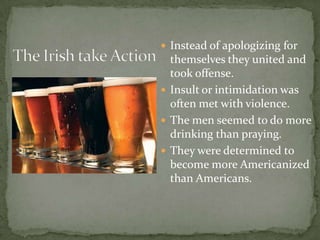
The Irish take ActionInstead of apologizing for themselves they united and took offense. Insult or intimidation was often met with violence. The men seemed to do more drinking than praying.They were determined to become more Americanized than Americans.
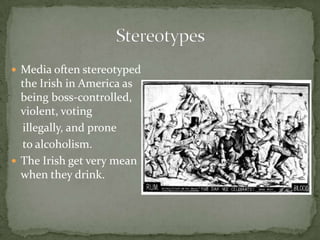
Media often stereotyped the Irish in America as being boss-controlled, violent, voting     illegally, and prone    to alcoholism.The Irish get very mean when they drink.Stereotypes
The Church played an integral part in Irish lives. It was a militant Church--a Church who fought not only for their souls but also for their human rights. Irish began religious riots in Philadelphia where many Catholic churches were burned.They did not burn any churches in New York.The Church
The Irish loved America and gladly fought in the wars. During the Civil War they were fierce warriors, forming among other groups, the famous "Irish Brigade". Soon after, the Irish were being accepted in America and there was less discrimination against them.Peace through War
Irish women married out of their culture to benefit their lives, that’s why there are so many mixed nationality people with Irish as a heritage After 1860 Irish immigration continued, but it wasn’t as noticed because there were large amounts of people coming from other countries as well  Those who continued immigrating settled into the already established Irish communities where churches were built and they settled togetherIrish cultural events like St. Patrick’s day were adapted by Americans and still celebratedBy the late 1800s majority of the hardships were ending, the new generations that were born and educated in the U.S. were replacing the immigrants but kept the heritage aliveAfter some time
Although the Irish Catholics started very low on the social status scale, by 1900, they had jobs and earnings about equal on average to their neighbors.  After 1945, the Catholic Irish consistently ranked toward the top of the social hierarchy, thanks especially to their high rate of college attendance.Growing in Society
The Puck was the first successful humor magazine of colorful cartoons, caricatures and political satire of the issues of the day. It was published from 1871 until 1918.It favored German Americans and victimized Irish Americans.Media- The Puck
Their biggest beneficiary to becoming “mainstreamed” eventually was that they were white so therefore they were granted citizenship The term biddies comes from the name Bridget since it was a common Irish girls nameRandom Facts

Irish immigration

  • 1.
    Sam Sproul LaurenYoiaIrish Immigrants
  • 2.
    Irish peasants becomingimpoverished because of potato rot People were living in single room mud and straw cabins with a single straw bed that the entire family slept on (mother, father, five to six children, sometimes grandparents)Could not pay land lords (they rented their farmland from the English)Religious prejudice to the catholic Irish from the protestant mastersPolitical subordinationReasons for coming to America
  • 3.
    The Irish peoplesaw life here as “the land of promise”They thought that there was employment and room for everybody Before they came over they attended an “American wake” where they said bye to everyone that was leavingComing to America
  • 4.
    The ships weremiserable, they were on shelves that were 3 feet wide and 6 feet longShips were full of people with illness, and many died on the tripMany went to Canada first because it was cheaper to get there, and then paid a smaller fee to come or just walked across the borderIn the 1840s around 2 million Irish immigrated overThe Journey Over
  • 5.
    It wasn’t easyonce they got here They had little money, clothes, hope, or educationMany who settled in the cities lived in shacks made out of boards and debri in shanty townsSanitation was not goodMost of them didn’t have enough resources to start a business or farmArrival in America
  • 6.
    Jobs once theywere hereHelped dig the canals and build the railroadsMany of the women became factory workers, or worked as maids/ servants Compared with other races (Chinese, African Americans, Indians, Mexicans)Post civil war years they monopolized the fire and police departmentsSome of the first street car drivers after laying down the tar
  • 7.
    English colonizers wantedthe new world to be English over Irish, they made it so that laws prevented marriages between the Irish and other colonizers, they could not buy land or be in officeEnglish colonizers burned down their villages and cropsThey were seen as uncivilized people or savagesBanished from jobs due to laziness, gambling, and drinking as well as for having humor and nerve to say rude things How the English viewed them
  • 8.
    LifestyleAll major citieshad their "Irish Town" or "Shanty Town" where the Irish clung together. Ads for employment often were followed by "NO IRISH NEED APPLY." They were forced to live in cellars and shanties.Irish were unfamiliar with plumbing and running water. These living conditions bred sickness and early death. It was estimated that 80% of all infants born to Irish immigrants in New York City died.
  • 9.
    The Irish takeActionInstead of apologizing for themselves they united and took offense. Insult or intimidation was often met with violence. The men seemed to do more drinking than praying.They were determined to become more Americanized than Americans.
  • 10.
    Media often stereotypedthe Irish in America as being boss-controlled, violent, voting illegally, and prone to alcoholism.The Irish get very mean when they drink.Stereotypes
  • 11.
    The Church playedan integral part in Irish lives. It was a militant Church--a Church who fought not only for their souls but also for their human rights. Irish began religious riots in Philadelphia where many Catholic churches were burned.They did not burn any churches in New York.The Church
  • 12.
    The Irish lovedAmerica and gladly fought in the wars. During the Civil War they were fierce warriors, forming among other groups, the famous "Irish Brigade". Soon after, the Irish were being accepted in America and there was less discrimination against them.Peace through War
  • 13.
    Irish women marriedout of their culture to benefit their lives, that’s why there are so many mixed nationality people with Irish as a heritage After 1860 Irish immigration continued, but it wasn’t as noticed because there were large amounts of people coming from other countries as well Those who continued immigrating settled into the already established Irish communities where churches were built and they settled togetherIrish cultural events like St. Patrick’s day were adapted by Americans and still celebratedBy the late 1800s majority of the hardships were ending, the new generations that were born and educated in the U.S. were replacing the immigrants but kept the heritage aliveAfter some time
  • 14.
    Although the IrishCatholics started very low on the social status scale, by 1900, they had jobs and earnings about equal on average to their neighbors. After 1945, the Catholic Irish consistently ranked toward the top of the social hierarchy, thanks especially to their high rate of college attendance.Growing in Society
  • 15.
    The Puck wasthe first successful humor magazine of colorful cartoons, caricatures and political satire of the issues of the day. It was published from 1871 until 1918.It favored German Americans and victimized Irish Americans.Media- The Puck
  • 16.
    Their biggest beneficiaryto becoming “mainstreamed” eventually was that they were white so therefore they were granted citizenship The term biddies comes from the name Bridget since it was a common Irish girls nameRandom Facts