THE IRISH AND OTHER
EUROPEAN IMMIGRANTS
Important Roles in Westward Expansion
CULTURAL HERITAGE
   Irish and some German Roman
    Catholics; others from various
    protestant faiths
   Many immigrants were very poor
   Most of the Irish came during the
    Great Potato Famine in Ireland
   Many initially lived in cities
    where they came into the U.S.
       Couldn’t afford to move West
   Usually lived in very crowded,
    dirty conditions
   Took jobs no one else wanted
       Dangerous and/or tedious
WHERE THEY LIVED
   The largest group of immigrants to the U.S.
    before the Civil War were the Irish
       more than 1.5 million total
       1820-1860 they were more than 1/3 of all immigrants
       1840s they were more than ½ of all immigrants
       High percent of the population in Montana, Wyoming,
        Nevada and other states in the West


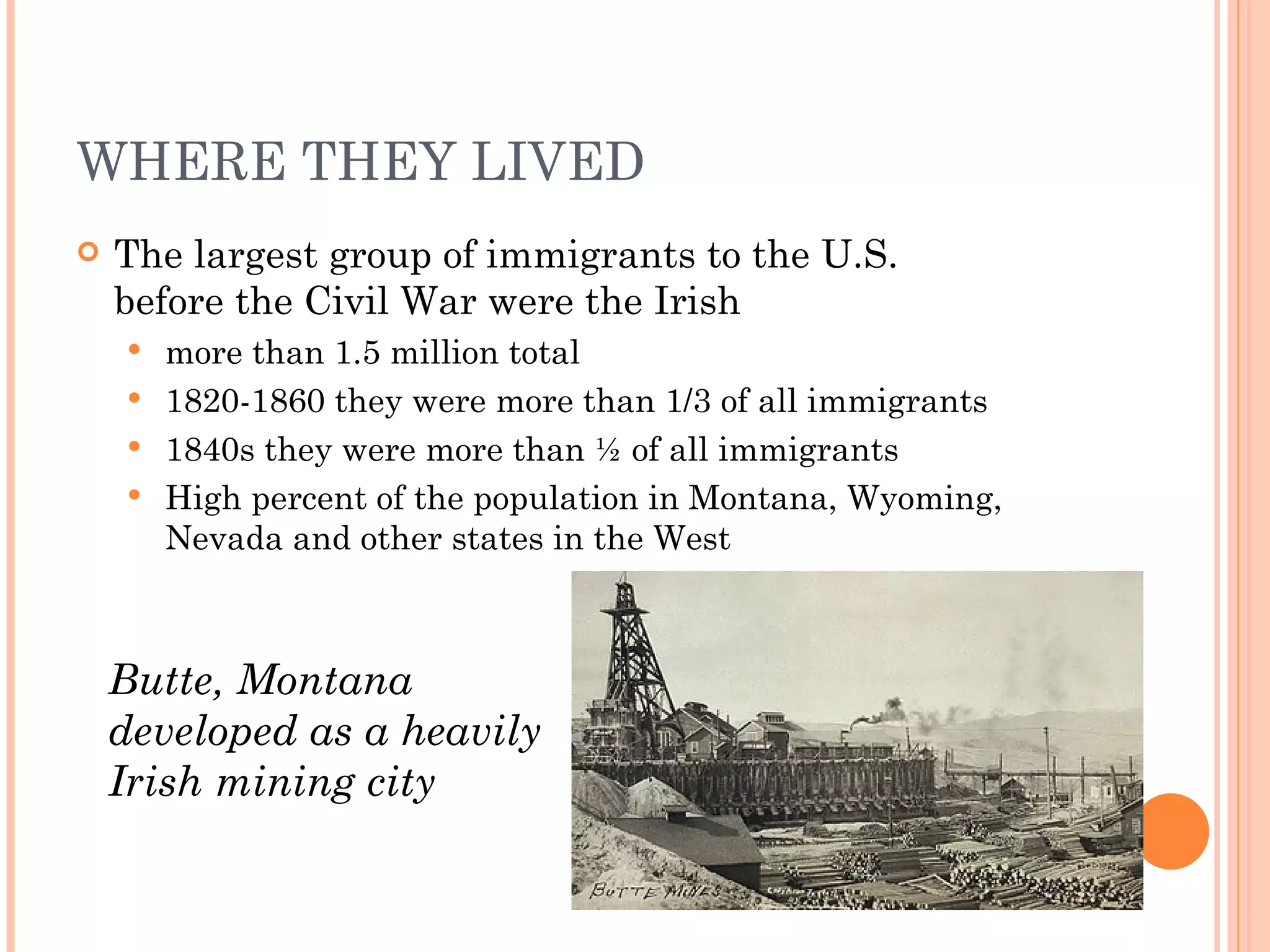
    Butte, Montana
    developed as a heavily
    Irish mining city
HOMESTEADING ON THE PLAINS
 Homesteading openly advertised to immigrants
  in the cities of the eastern United States and
  throughout Europe.
 Many Scandinavians settled in the Upper Mid-
  West (Dakotas, Minnesota).
 Today a large portion of white Americans in the
  West are of Irish and/or German ancestry.
THEIR ROLE IN WESTWARD
EXPANSION
   The Irish and other
    Immigrants:
     Helped build the railroads
      (especially the Union
      Pacific)
     Mined throughout the West
      (i.e. California gold mines,
      Nevada silver mines,
      Montana Copper mines)
     Other manual labor
THE AFFECT OF MANIFEST
DESTINY
   Settled in communities throughout the West
       Came by wagon or by train
       In Butte, for example, the Irish helped develop the city and
        make a place for themselves in the West
   Exploitation and Discrimination:
       Many men lost their lives working dangerous jobs like
        mining and railroad construction, and often for less pay
       Looked down on because they were mostly from the working
        and/or poor classes
       Religious persecution (i.e. Catholics)
       Language and other cultural barriers

Irish and Other Europeans in the West

  • 1.
    THE IRISH ANDOTHER EUROPEAN IMMIGRANTS Important Roles in Westward Expansion
  • 2.
    CULTURAL HERITAGE  Irish and some German Roman Catholics; others from various protestant faiths  Many immigrants were very poor  Most of the Irish came during the Great Potato Famine in Ireland  Many initially lived in cities where they came into the U.S.  Couldn’t afford to move West  Usually lived in very crowded, dirty conditions  Took jobs no one else wanted  Dangerous and/or tedious
  • 3.
    WHERE THEY LIVED  The largest group of immigrants to the U.S. before the Civil War were the Irish  more than 1.5 million total  1820-1860 they were more than 1/3 of all immigrants  1840s they were more than ½ of all immigrants  High percent of the population in Montana, Wyoming, Nevada and other states in the West Butte, Montana developed as a heavily Irish mining city
  • 4.
    HOMESTEADING ON THEPLAINS  Homesteading openly advertised to immigrants in the cities of the eastern United States and throughout Europe.  Many Scandinavians settled in the Upper Mid- West (Dakotas, Minnesota).  Today a large portion of white Americans in the West are of Irish and/or German ancestry.
  • 5.
    THEIR ROLE INWESTWARD EXPANSION  The Irish and other Immigrants:  Helped build the railroads (especially the Union Pacific)  Mined throughout the West (i.e. California gold mines, Nevada silver mines, Montana Copper mines)  Other manual labor
  • 6.
    THE AFFECT OFMANIFEST DESTINY  Settled in communities throughout the West  Came by wagon or by train  In Butte, for example, the Irish helped develop the city and make a place for themselves in the West  Exploitation and Discrimination:  Many men lost their lives working dangerous jobs like mining and railroad construction, and often for less pay  Looked down on because they were mostly from the working and/or poor classes  Religious persecution (i.e. Catholics)  Language and other cultural barriers

Editor's Notes

  • #3 How might the living conditions of the Irish have influenced their acceptance in the United States? How do living patterns of new immigrant groups affect their acceptance in the United States today? Who determines these patterns or conditions?
  • #7 Railroad construction was so dangerous that it was said, "[there was] an Irishman buried under every tie."