English Settlement in the South 
• 1606: James I granted a charter creating 2 branches of the 
Virginia Company of London: 
– The Plymouth Company 
– London Company 
• Motives for settlement: 
– Gold 
– Passage to Asia 
– Converting Indians to Christianity 
• April 1607: London Company settles Jamestown 
– 100 settlers led by Capt. Christopher Newport 
– Selected the peninsula on the James River out of the concern 
for effective defense 
– Area was ridden with malaria
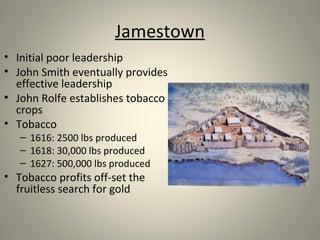
Jamestown 
• Initial poor leadership 
• John Smith eventually provides 
effective leadership 
• John Rolfe establishes tobacco 
crops 
• Tobacco 
– 1616: 2500 lbs produced 
– 1618: 30,000 lbs produced 
– 1627: 500,000 lbs produced 
• Tobacco profits off-set the 
fruitless search for gold
Jamestown 
• The charter is an important document in that 
it guaranteed the overseas settlers the same 
rights of Englishmen who were still in the 
homeland. 
• Relationship of John Smith and Pocahontas 
• http://www.youtube.com/watch?v=IHBl-EuFoLY
Virginia 
• The first slaves came in the late 1600s 
• Initially, the headright system provided labor force 
– Settlers arranged their own transportation and that of 
dependents in return for 50 acres per “head” transported 
– Initially preferred indentured servants 
• 1622: massive Indian attack reduces population by 
250 
• 1624: James I sees Virginia as a bad investment and 
revokes the charter 
• Creation of the House of Burgesses 
• By 1670, there were 30,000 inhabitants
Maryland 
• Lord Baltimore (Sir George Calvert) wanted 
his own colony for the personal advantage of 
his family and for the benefit of Roman 
Catholics (who were encouraged to settle 
there) 
• Selected St. Mary’s as the first settlement 
• Representative gov’t (like Virginia) 
• Didn’t turn out to be Catholic refuge it was 
hoped to be
Carolinas 
• Chartered in 1663 
• Representative assembly 
• Largely Protestant 
• Settled by some French Huguenots 
• Also settled by some West Indian planters 
(who brought slavery to the South Carolina 
region) 
– Wanted pine trees for ship building 
– Rice became a major crop in Carolina
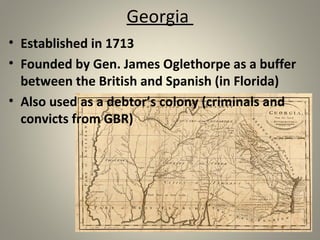
Georgia 
• Established in 1713 
• Founded by Gen. James Oglethorpe as a buffer 
between the British and Spanish (in Florida) 
• Also used as a debtor’s colony (criminals and 
convicts from GBR)
Life in the Chesapeake 
• Ridden with malaria, dysentery, typhoid, and 
other diseases 
• High death rate 
• Difficult to start families and create solid 
settlements 
• Tobacco Economy 
– The climate/soil was hospitable to tobacco 
cultivation 
– More tobacco means more labor, but where will this 
labor source come from?
Life in the Chesapeake 
• Headright System 
– To encourage the importation of servant workers 
– Whoever paid the passage of a laborer received the right 
to acquire 50 acres of land 
– Masters (not the servants) reaped the benefits of 
landownership from the headright system 
•  the beginning of the rich planter class with extensive land 
holdings 
– As land became more scarce, masters became more 
reluctant to have land allowances in the “freedom dues” 
• More harsh treatment of servants 
• You would be free after 7 years, but then you’d be a poor farmer 
with little choice but to sell yourself back into servitude
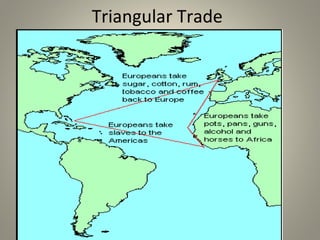
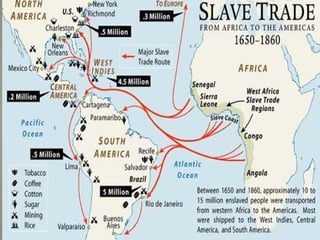
Triangular Trade
Bacon’s Rebellion 
• There were an increasing number of poor 
freemen in the Chesapeake region 
– Frustrated by their broken hopes of acquiring 
land and getting rich 
– This growing class of “freemen” made the rich 
planter class nervous 
• Gov. Berkeley- governor of VA colony 
– Was growing increasingly agitated with the large 
number of rowdy poor throughout the colony
Bacon’s Rebellion 
• The freemen were moving westward towards the 
Indian settlements and were fighting w/ them on a 
regular basis 
– Resented Berkeley’s friendly Indian policies 
• Berkeley had refused to avenge several brutal Indian 
attacks on the frontiersmen 
• So Bacon and his men disobeyed Berkeley and 
attack/murder the Indians 
– 1676: Nathaniel Bacon leads about 1,000 men on a raid 
of Jamestown (the colonial capital of VA) 
– Torches the town; Berkeley flees and returns w/ English 
troops
Bacon’s Rebellion 
• Bacon suddenly dies (illness) 
• Berkeley brutally crushes all Bacon supporters 
• Results of the Rebellion 
– Awakened the latent unhappiness of the landless 
former servants 
– Pitted the backcountry frontiersmen against the 
gentry plantation owners 
– The lordly planters now looked for a different source 
for plantation labor
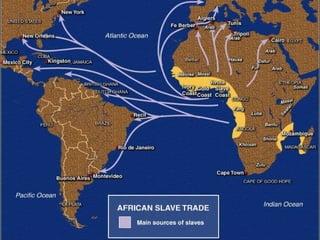
Slave Trade 
• The Royal African Company lost its charter in 
1698 
– enterprising colonists rushed to cash in on the 
lucrative slave trade (especially Rhode Islanders) 
• By 1750, the slave trade had ground to a halt 
• By the 1660s, specific “slave codes” had been 
drawn up by the colonial gov’ts to delineate 
between servants’ and slaves’ rights
Colonial Slavery 
• About 10 million Africans were carried over 
the course of 3 centuries 
• First Africans came to Jamestown in 1619 (about 
2,000) 
• Slaves were too expensive for struggling colonists 
• But in the 1680s, rising wages in England shrank the 
pool of servants coming over 
– Bacon’s Rebellion had brought a distrust of current and 
former servants, as gentry feared future rebellions

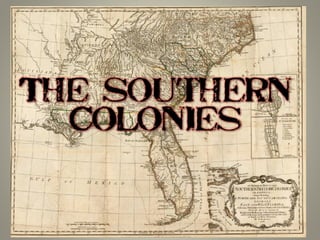
the southern colonies

  • 2.
    English Settlement inthe South • 1606: James I granted a charter creating 2 branches of the Virginia Company of London: – The Plymouth Company – London Company • Motives for settlement: – Gold – Passage to Asia – Converting Indians to Christianity • April 1607: London Company settles Jamestown – 100 settlers led by Capt. Christopher Newport – Selected the peninsula on the James River out of the concern for effective defense – Area was ridden with malaria
  • 3.
    Jamestown • Initialpoor leadership • John Smith eventually provides effective leadership • John Rolfe establishes tobacco crops • Tobacco – 1616: 2500 lbs produced – 1618: 30,000 lbs produced – 1627: 500,000 lbs produced • Tobacco profits off-set the fruitless search for gold
  • 4.
    Jamestown • Thecharter is an important document in that it guaranteed the overseas settlers the same rights of Englishmen who were still in the homeland. • Relationship of John Smith and Pocahontas • http://www.youtube.com/watch?v=IHBl-EuFoLY
  • 5.
    Virginia • Thefirst slaves came in the late 1600s • Initially, the headright system provided labor force – Settlers arranged their own transportation and that of dependents in return for 50 acres per “head” transported – Initially preferred indentured servants • 1622: massive Indian attack reduces population by 250 • 1624: James I sees Virginia as a bad investment and revokes the charter • Creation of the House of Burgesses • By 1670, there were 30,000 inhabitants
  • 6.
    Maryland • LordBaltimore (Sir George Calvert) wanted his own colony for the personal advantage of his family and for the benefit of Roman Catholics (who were encouraged to settle there) • Selected St. Mary’s as the first settlement • Representative gov’t (like Virginia) • Didn’t turn out to be Catholic refuge it was hoped to be
  • 7.
    Carolinas • Charteredin 1663 • Representative assembly • Largely Protestant • Settled by some French Huguenots • Also settled by some West Indian planters (who brought slavery to the South Carolina region) – Wanted pine trees for ship building – Rice became a major crop in Carolina
  • 8.
    Georgia • Establishedin 1713 • Founded by Gen. James Oglethorpe as a buffer between the British and Spanish (in Florida) • Also used as a debtor’s colony (criminals and convicts from GBR)
  • 9.
    Life in theChesapeake • Ridden with malaria, dysentery, typhoid, and other diseases • High death rate • Difficult to start families and create solid settlements • Tobacco Economy – The climate/soil was hospitable to tobacco cultivation – More tobacco means more labor, but where will this labor source come from?
  • 10.
    Life in theChesapeake • Headright System – To encourage the importation of servant workers – Whoever paid the passage of a laborer received the right to acquire 50 acres of land – Masters (not the servants) reaped the benefits of landownership from the headright system •  the beginning of the rich planter class with extensive land holdings – As land became more scarce, masters became more reluctant to have land allowances in the “freedom dues” • More harsh treatment of servants • You would be free after 7 years, but then you’d be a poor farmer with little choice but to sell yourself back into servitude
  • 11.
  • 12.
    Bacon’s Rebellion •There were an increasing number of poor freemen in the Chesapeake region – Frustrated by their broken hopes of acquiring land and getting rich – This growing class of “freemen” made the rich planter class nervous • Gov. Berkeley- governor of VA colony – Was growing increasingly agitated with the large number of rowdy poor throughout the colony
  • 13.
    Bacon’s Rebellion •The freemen were moving westward towards the Indian settlements and were fighting w/ them on a regular basis – Resented Berkeley’s friendly Indian policies • Berkeley had refused to avenge several brutal Indian attacks on the frontiersmen • So Bacon and his men disobeyed Berkeley and attack/murder the Indians – 1676: Nathaniel Bacon leads about 1,000 men on a raid of Jamestown (the colonial capital of VA) – Torches the town; Berkeley flees and returns w/ English troops
  • 14.
    Bacon’s Rebellion •Bacon suddenly dies (illness) • Berkeley brutally crushes all Bacon supporters • Results of the Rebellion – Awakened the latent unhappiness of the landless former servants – Pitted the backcountry frontiersmen against the gentry plantation owners – The lordly planters now looked for a different source for plantation labor
  • 17.
    Slave Trade •The Royal African Company lost its charter in 1698 – enterprising colonists rushed to cash in on the lucrative slave trade (especially Rhode Islanders) • By 1750, the slave trade had ground to a halt • By the 1660s, specific “slave codes” had been drawn up by the colonial gov’ts to delineate between servants’ and slaves’ rights
  • 18.
    Colonial Slavery •About 10 million Africans were carried over the course of 3 centuries • First Africans came to Jamestown in 1619 (about 2,000) • Slaves were too expensive for struggling colonists • But in the 1680s, rising wages in England shrank the pool of servants coming over – Bacon’s Rebellion had brought a distrust of current and former servants, as gentry feared future rebellions