Mike Slater Diamond Environmental Ltd
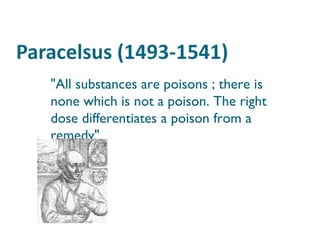
"All substances are poisons ; there is none which is not a poison. The right dose differentiates a poison from a remedy"
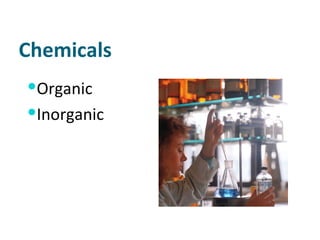
Chemicals Organic Inorganic
Homeostasis Chemical reactions which maintain very stable body chemistry against a background of constant environmental change
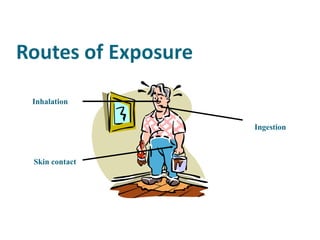
Inhalation Skin contact Ingestion
Ā 
Ā 
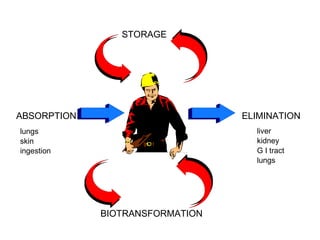
Absorption Absorbed dose is generally a fraction of exposure dose Toxicant must be able to cross cell membranes
Factors Affecting Absorption Degree of exposure Routes of entry Properties of chemical
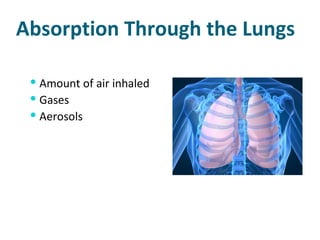
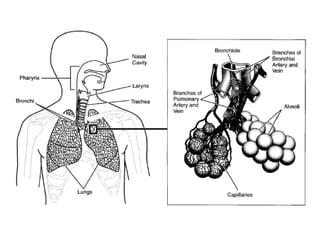
Absorption Through the Lungs Amount of air inhaled Gases Aerosols
Ā 
Particle Deposition Interception Impaction Sedimentation Diffusion
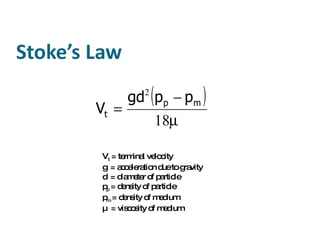
V t  = terminal velocity g  = acceleration due to gravity d  = diameter of particle p p  = density of particle p m  = density of medium µ  = viscosity of medium
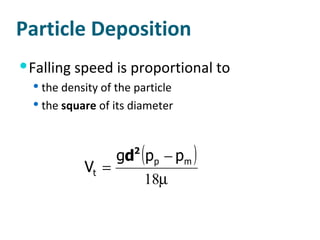
Particle Deposition Falling speed is proportional to  the density of the particle the  square  of its diameter
Aerodynamic Diameter The diameter of a sphere of unit density (i.e. a water droplet) that has the same falling speed as the real particle
Ā 
Ā 
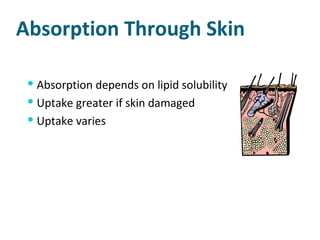
Absorption Through Skin Absorption depends on lipid solubility Uptake greater if skin damaged Uptake varies
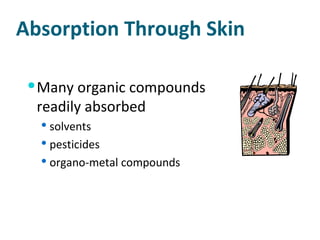
Absorption Through Skin Many organic compounds readily absorbed solvents pesticides organo-metal compounds
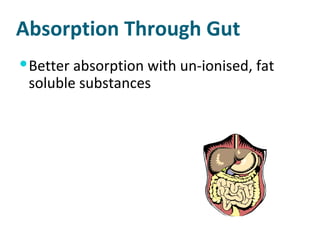
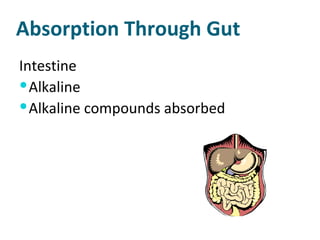
Absorption Through Gut Better absorption with un-ionised, fat soluble substances
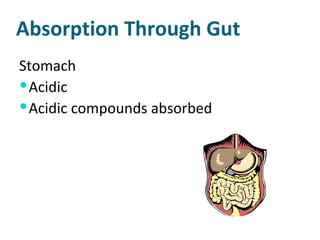
Absorption Through Gut Stomach  Acidic Acidic compounds absorbed
Absorption Through Gut Intestine Alkaline Alkaline compounds absorbed
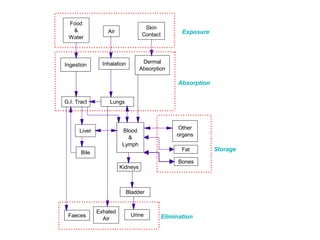
Distribution Transport by blood Rate Substances released from storage
Storage Fat lipophilic compounds e.g. some pesticides (DDT), dioxins, PCBs Bones chemicals similar to calcium fluorine, lead, strontium Blood Liver and kidney Other organs / tissues
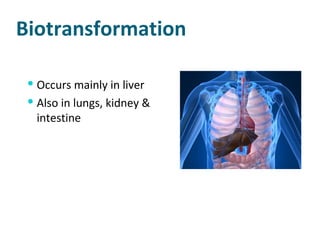
Biotransformation Occurs mainly in liver Also in lungs, kidney & intestine
Biotransformation Catalysed by enzymes including Cytochrome P450
Biotransformation Increases water solubility for excretion via kidney
Biotransformation Metabolites or intermediaries can be toxic
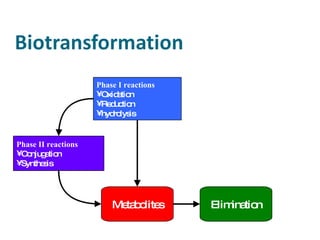
Phase I reactions Oxidation Reduction hydrolysis Phase II reactions Conjugation Synthesis Metabolites Elimination
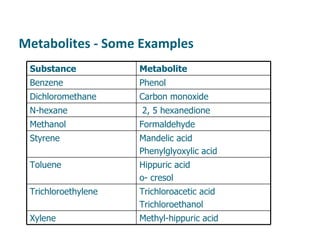
Metabolites - Some Examples Substance Metabolite Benzene Phenol Dichloromethane Carbon monoxide N-hexane 2, 5 hexanedione Methanol Formaldehyde Styrene Mandelic acid Phenylglyoxylic acid Toluene Hippuric acid o- cresol Trichloroethylene Trichloroacetic acid Trichloroethanol Xylene Methyl-hippuric acid
Biotransformation Sometimes biotransformation  increases  toxicity
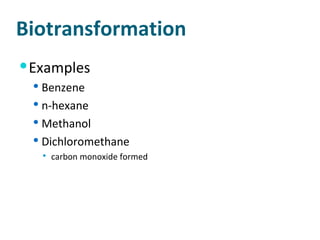
Biotransformation Examples Benzene n-hexane Methanol Dichloromethane  carbon monoxide formed
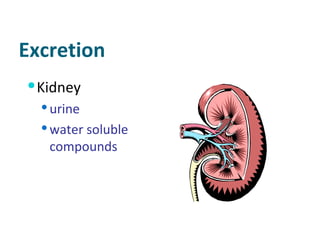
Excretion Kidney urine water soluble compounds
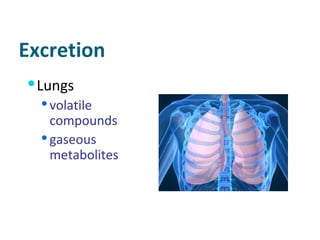
Excretion Lungs volatile compounds gaseous metabolites
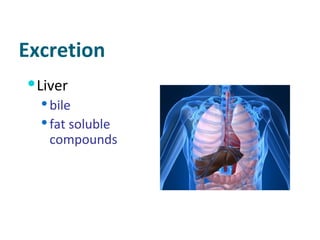
Excretion Liver bile fat soluble compounds
Excretion Other routes Hair Nails Skin Sweat Milk
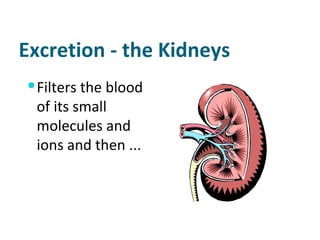
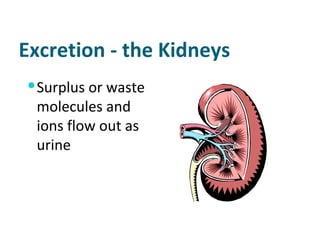
Excretion - the Kidneys Filters the blood of its small molecules and ions and then ...
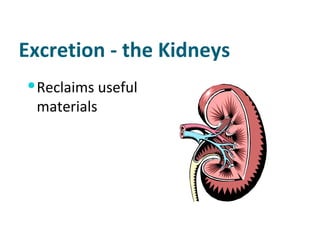
Excretion - the Kidneys Reclaims useful materials
Excretion - the Kidneys Surplus or waste molecules and ions flow out as urine
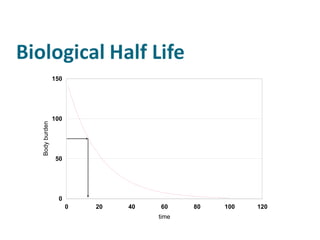
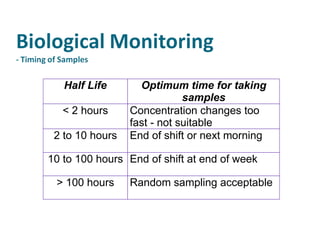
Biological Half Life Time taken for half the amount of the substance absorbed to be excreted
Ā 
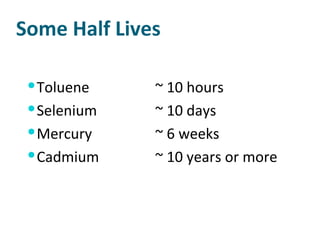
Some Half Lives Toluene ~ 10 hours Selenium ~ 10 days  Mercury ~ 6 weeks Cadmium ~ 10 years or more
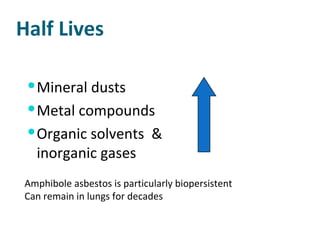
Half Lives Mineral dusts Metal compounds Organic solvents  & inorganic gases Amphibole asbestos is particularly biopersistent Can remain in lungs for decades
Ā 
Ā 
Ā 
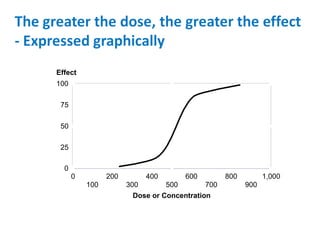
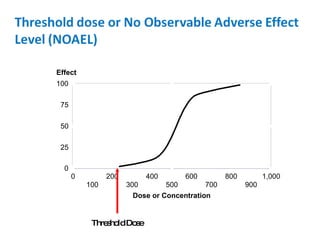
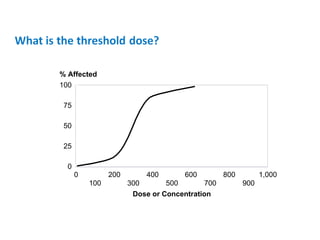
Threshold Dose
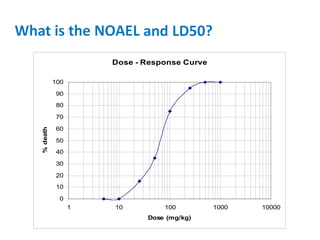
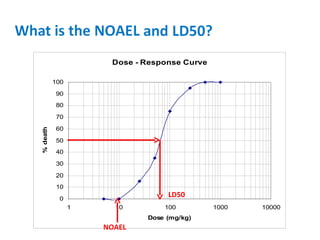
Threshold Dose The point at which toxicity first appears NOAEL "no observed adverse effect level"
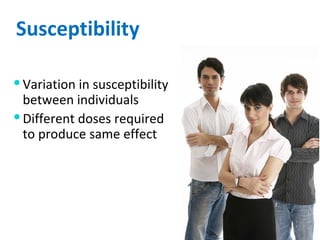
Susceptibility Variation in susceptibility  between individuals Different doses required to produce same effect
Susceptibility Most susceptible groups include Elderly,  Children,  People with pre-existing disease Inter-species variation
Ā 
Ā 
Ā 
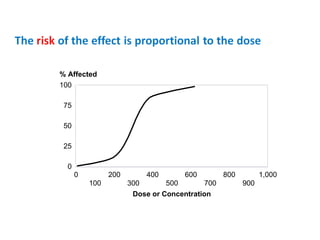
Stochastic Effects Probabilistic Increasing probability of effect with increasing dose e.g. carcinogens
Ā 
Ā 
Ā 
Types of Effect Local at point of contact with the body Systemic following distribution
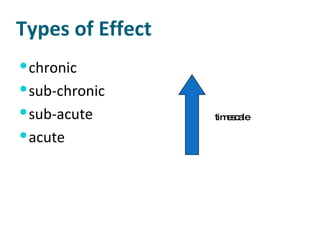
Types of Effect chronic sub-chronic sub-acute acute timescale
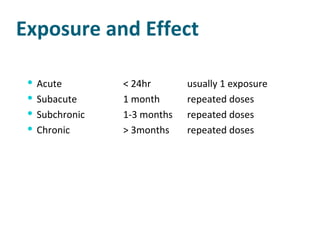
Exposure and Effect Acute   < 24hr  usually 1 exposure Subacute   1 month repeated doses Subchronic 1-3 months repeated doses Chronic > 3months repeated doses
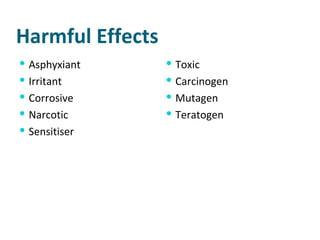
Harmful Effects Asphyxiant Irritant Corrosive Narcotic Sensitiser Toxic Carcinogen Mutagen Teratogen
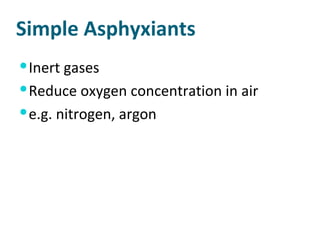
Simple Asphyxiants Inert gases Reduce oxygen concentration in air e.g. nitrogen, argon
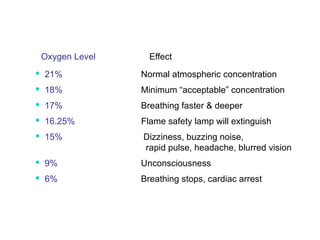
Oxygen Level   Effect 21%   Normal atmospheric concentration 18%   Minimum ā€œacceptableā€ concentration 17%   Breathing faster & deeper 16.25%  Flame safety lamp will extinguish 15%    Dizziness, buzzing noise,    rapid pulse, headache, blurred vision 9%   Unconsciousness 6%   Breathing stops, cardiac arrest
Chemical Asphyxiants Interference with  oxygen transport, or utilisation of oxygen
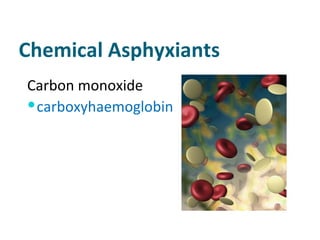
Chemical Asphyxiants Carbon monoxide carboxyhaemoglobin
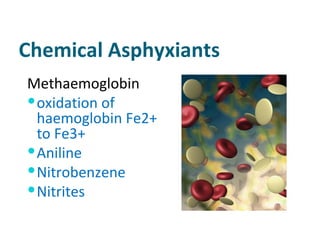
Chemical Asphyxiants Methaemoglobin  oxidation of haemoglobin Fe2+ to Fe3+ Aniline Nitrobenzene Nitrites
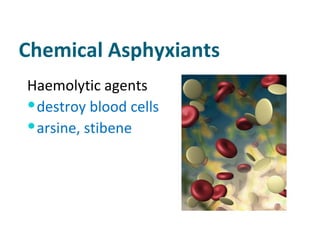
Chemical Asphyxiants Haemolytic agents destroy blood cells arsine, stibene
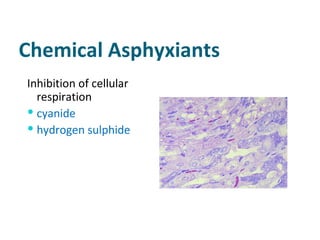
Chemical Asphyxiants Inhibition of cellular respiration cyanide  hydrogen sulphide
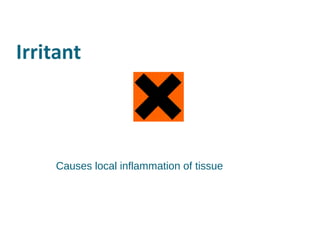
Causes local inflammation of tissue
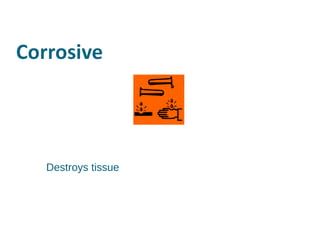
Destroys tissue
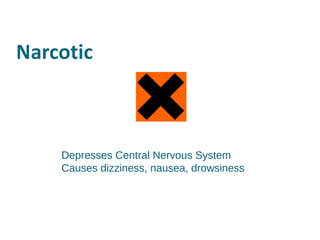
Depresses Central Nervous System Causes dizziness, nausea, drowsiness
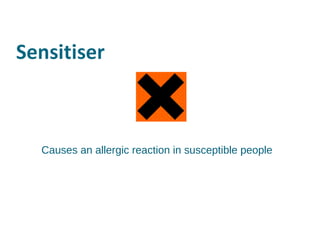
Causes an allergic reaction in susceptible people
Sensitisers Cause allergic reaction in susceptible individuals Cannot identify susceptible individuals! Usually develops gradually Not always easy to identify causative agent
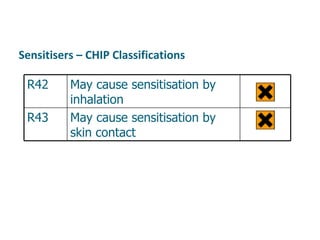
Sensitisers – CHIP Classifications R42 May cause sensitisation by inhalation R43 May cause sensitisation by skin contact
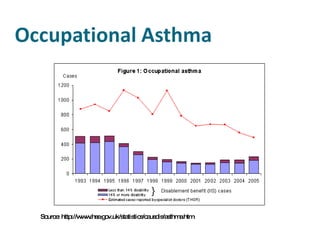
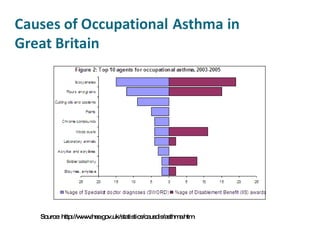
Sensitisers Respiratory Rhinitis Asthma Allergic alveolitis
Source: http://www.hse.gov.uk/statistics/causdis/asthma.htm
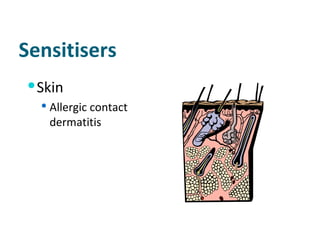
Sensitisers Skin Allergic contact dermatitis
Skin Allergens Nickel salts Chromium VI compounds Epoxy resins Latex
Stops body functioning normally
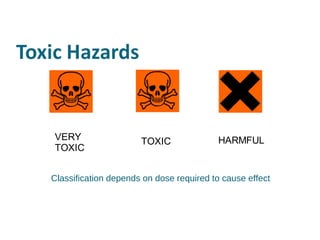
Classification depends on dose required to cause effect
Toxic hazards Carcinogens cause cancer Mutagens cause genetic damage Reproductive Hazards Teratogens harm the unborn child
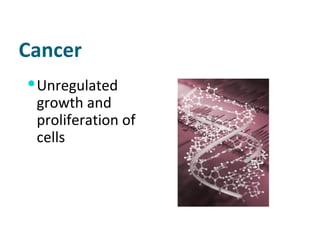
Cancer Unregulated growth and proliferation of cells
Cancer Benign tumours  Malignant tumours
Carcinogens Direct acting or metabolites
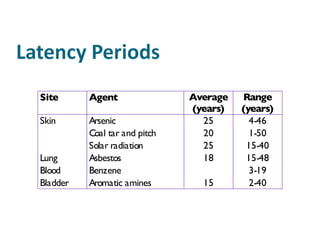
Carcinogens Long latency period
Ā 
Carcinogens Metastasis
Occupational Cancer HSE estimates 4% of all cancers 6,000 deaths every year
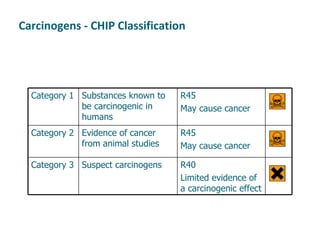
Carcinogens - CHIP Classification Category 1 Substances known to be carcinogenic in humans R45 May cause cancer Category 2 Evidence of cancer from animal studies R45 May cause cancer Category 3 Suspect carcinogens R40 Limited evidence of a carcinogenic effect
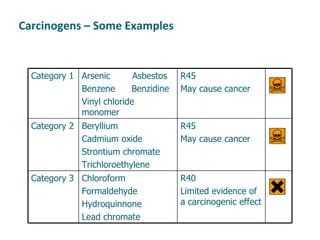
Carcinogens – Some Examples Category 1 Arsenic  Asbestos Benzene  Benzidine Vinyl chloride monomer R45 May cause cancer Category 2 Beryllium Cadmium oxide Strontium chromate Trichloroethylene R45 May cause cancer Category 3 Chloroform Formaldehyde Hydroquinnone Lead chromate R40 Limited evidence of a carcinogenic effect
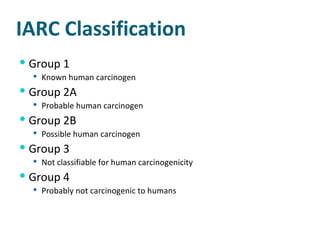
IARC Classification Group 1  Known human carcinogen Group 2A  Probable human carcinogen Group 2B  Possible human carcinogen Group 3  Not classifiable for human carcinogenicity Group 4  Probably not carcinogenic to humans
COSHH Schedule 1 Examples of other substances and processes to which definition of ā€œcarcinogenā€ applies
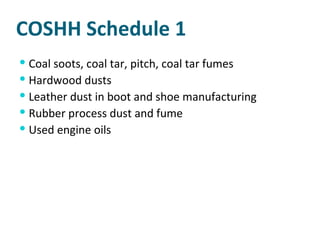
COSHH Schedule 1 Coal soots, coal tar, pitch, coal tar fumes Hardwood dusts Leather dust in boot and shoe manufacturing Rubber process dust and fume Used engine oils
Mutagens Most mutagens also carcinogens Not always the case e.g. Vanadium pentoxide (not carcinogenic)
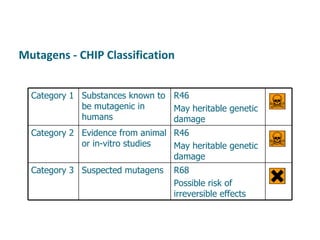
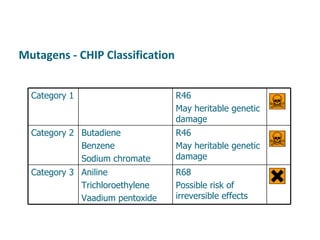
Mutagens - CHIP Classification Category 1 Substances known to be mutagenic in humans R46 May heritable genetic damage Category 2 Evidence from animal or in-vitro studies R46 May heritable genetic damage Category 3 Suspected mutagens R68 Possible risk of irreversible effects
Mutagens - CHIP Classification Category 1 R46 May heritable genetic damage Category 2 Butadiene Benzene Sodium chromate R46 May heritable genetic damage Category 3 Aniline Trichloroethylene Vaadium pentoxide R68 Possible risk of irreversible effects
Mixed Exposures Independent effects Interactions
Interactions Additive Antagonistic Synergistic Potentiation
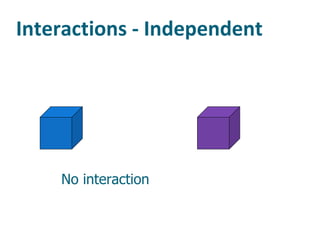
Interactions - Independent No interaction
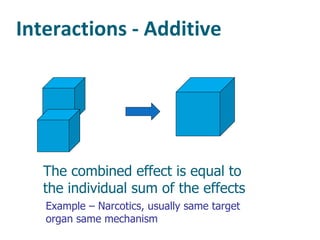
Interactions - Additive The combined effect is equal to  the individual sum of the effects Example – Narcotics, usually same target organ same mechanism
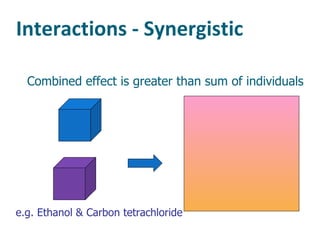
Interactions - Synergistic Combined effect is greater than sum of individuals e.g. Ethanol & Carbon tetrachloride
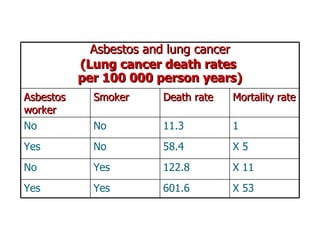
Asbestos and lung cancer (Lung cancer death rates  per 100 000 person years) Asbestos worker Smoker Death rate Mortality rate No No 11.3 1 Yes No 58.4 X 5 No Yes 122.8 X 11 Yes Yes 601.6 X 53
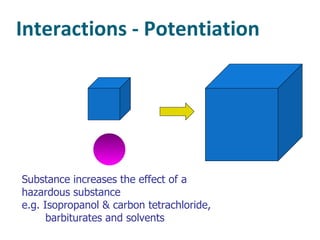
Interactions - Potentiation Substance increases the effect of a hazardous substance e.g. Isopropanol & carbon tetrachloride, barbiturates and solvents
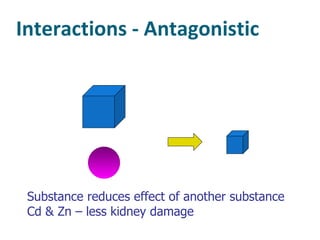
Interactions - Antagonistic Substance reduces effect of another substance Cd & Zn – less kidney damage
Ā 
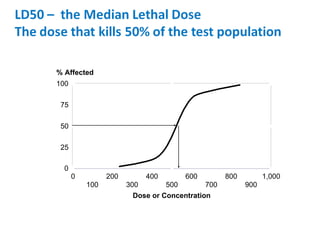
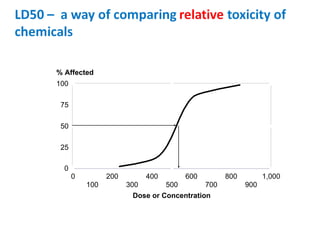
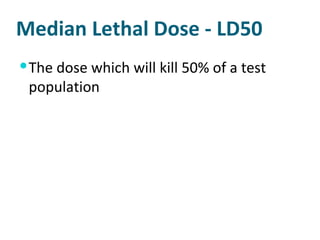
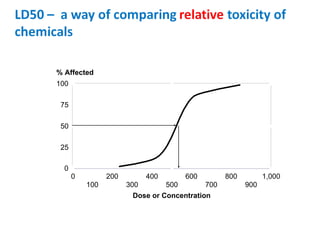
Median Lethal Dose - LD50 The dose which will kill 50% of a test population
Ā 
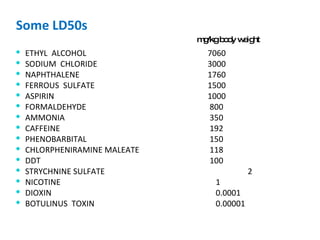
Some LD50s ETHYL  ALCOHOL 7060 SODIUM  CHLORIDE 3000 NAPHTHALENE 1760 FERROUS  SULFATE 1500 ASPIRIN 1000 FORMALDEHYDE    800 AMMONIA  350 CAFFEINE  192 PHENOBARBITAL    150 CHLORPHENIRAMINE MALEATE    118 DDT  100 STRYCHNINE SULFATE    2 NICOTINE   1 DIOXIN   0.0001 BOTULINUS  TOXIN   0.00001 mg/kg body weight
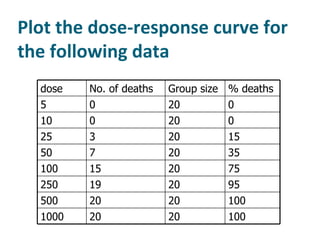
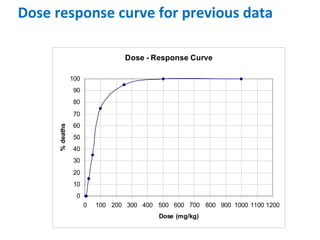
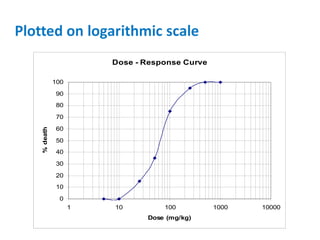
Plot the dose-response curve for the following data dose No. of deaths Group size % deaths 5 0 20 0 10 0 20 0 25 3 20 15 50 7 20 35 100 15 20 75 250 19 20 95 500 20 20 100 1000 20 20 100
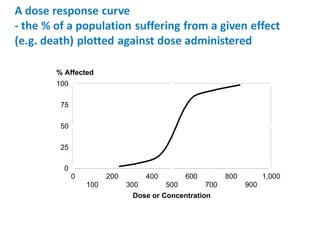
Dose response curve for previous data
Ā 
Ā 
NOAEL LD50
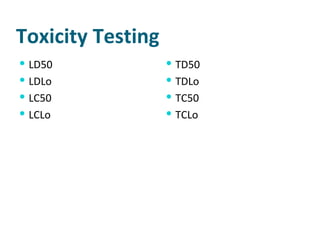
Toxicity Testing LD50 LDLo LC50 LCLo TD50 TDLo TC50 TCLo
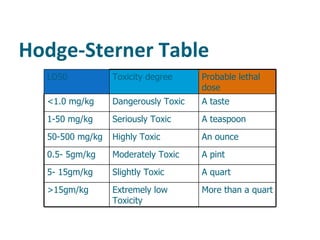
Hodge-Sterner Table LD50  Toxicity degree Probable lethal dose <1.0 mg/kg Dangerously Toxic A taste 1-50 mg/kg Seriously Toxic A teaspoon 50-500 mg/kg Highly Toxic An ounce 0.5- 5gm/kg Moderately Toxic A pint 5- 15gm/kg Slightly Toxic A quart >15gm/kg Extremely low Toxicity More than a quart
Ā 
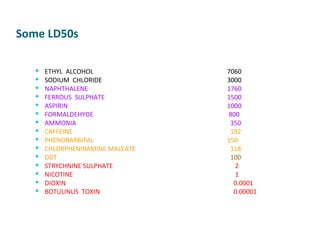
Some LD50s ETHYL  ALCOHOL 7060 SODIUM  CHLORIDE 3000 NAPHTHALENE 1760 FERROUS  SULPHATE 1500 ASPIRIN 1000 FORMALDEHYDE    800 AMMONIA   350 CAFFEINE   192 PHENOBARBITAL   150 CHLORPHENIRAMINE MALEATE     118 DDT   100 STRYCHNINE SULPHATE    2 NICOTINE   1 DIOXIN     0.0001 BOTULINUS  TOXIN   0.00001
Ā 
Ā 
Toxicological studies are normally carried out over a short timescale.
What are the implications of this?
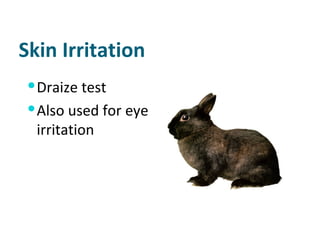
Skin Irritation Draize test Also used for eye irritation
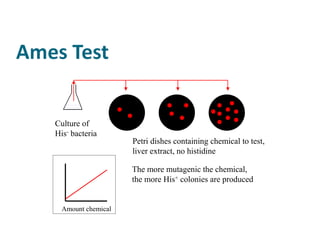
Ames Test Reverse mutagen test
Ames Test 90% of known carcinogens are mutagenic in the Ames test
Ames Test Reverse mutation
Ames Test Mutant strain of bacterium Salmonella typhimurium
Ames Test Reverse mutation caused by mutagen results in  bacteria which can make histidine growth of colonies on test plate
Ames Test Some compounds are not mutagenic until metabolised Ames test can include liver enzymes
Ā 
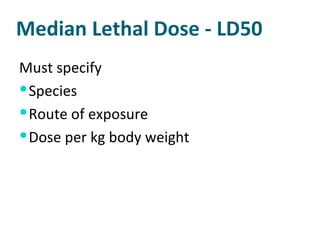
Median Lethal Dose - LD50 Must specify Species Route of exposure Dose per kg body weight

Introduction To Toxicology