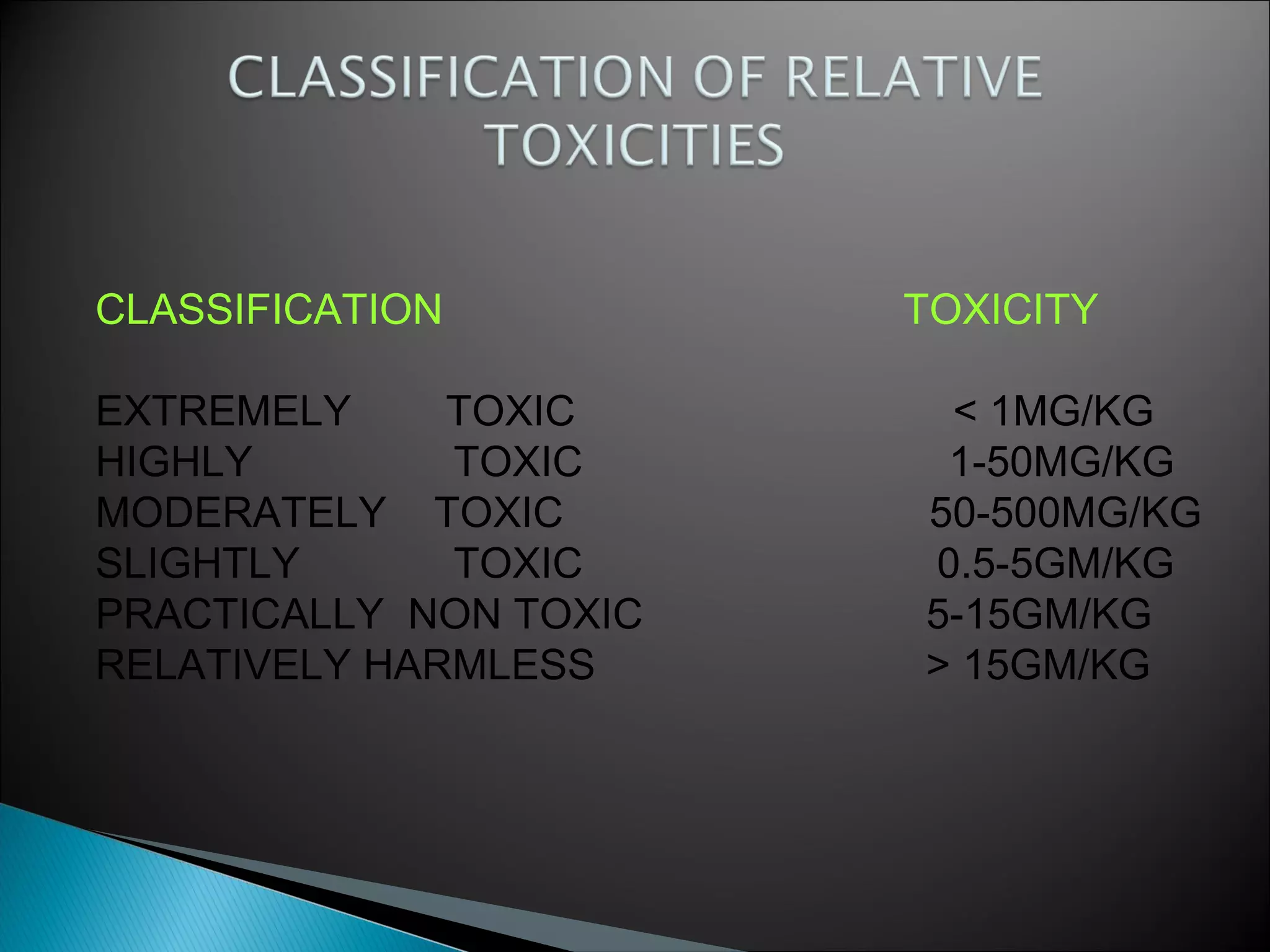
CLASSIFICATION TOXICITY
EXTREMELY TOXIC < 1MG/KG
HIGHLY TOXIC 1-50MG/KG
MODERATELY TOXIC 50-500MG/KG
SLIGHTLY TOXIC 0.5-5GM/KG
PRACTICALLY NON TOXIC 5-15GM/KG
RELATIVELY HARMLESS > 15GM/KG
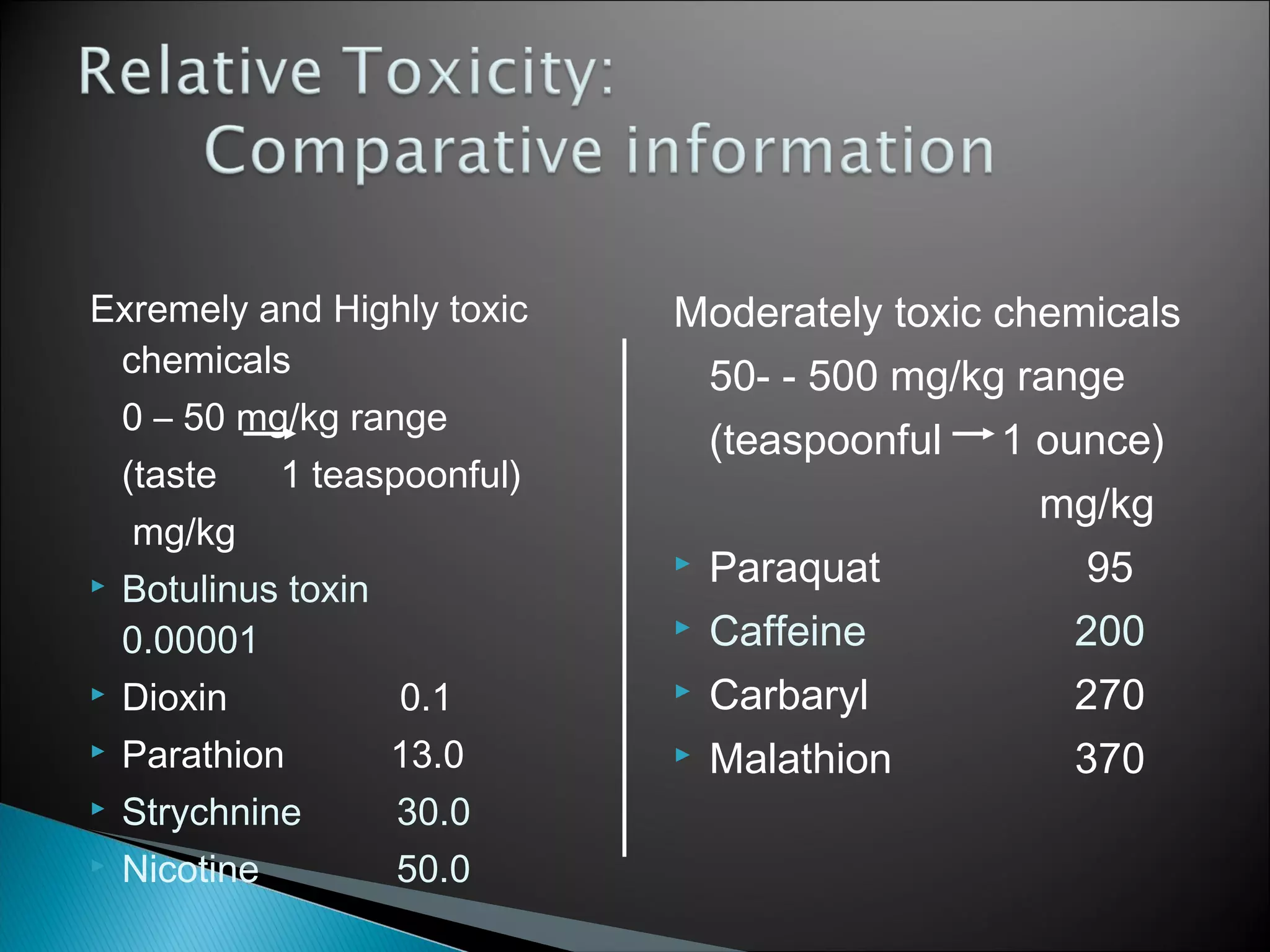
Exremely and Highly toxic
chemicals
0 – 50 mg/kg range
(taste 1 teaspoonful)
mg/kg
 Botulinus toxin
0.00001
 Dioxin 0.1
 Parathion 13.0
 Strychnine 30.0
 Nicotine 50.0
Moderately toxic chemicals
50- - 500 mg/kg range
(teaspoonful 1 ounce)
mg/kg
 Paraquat 95
 Caffeine 200
 Carbaryl 270
 Malathion 370
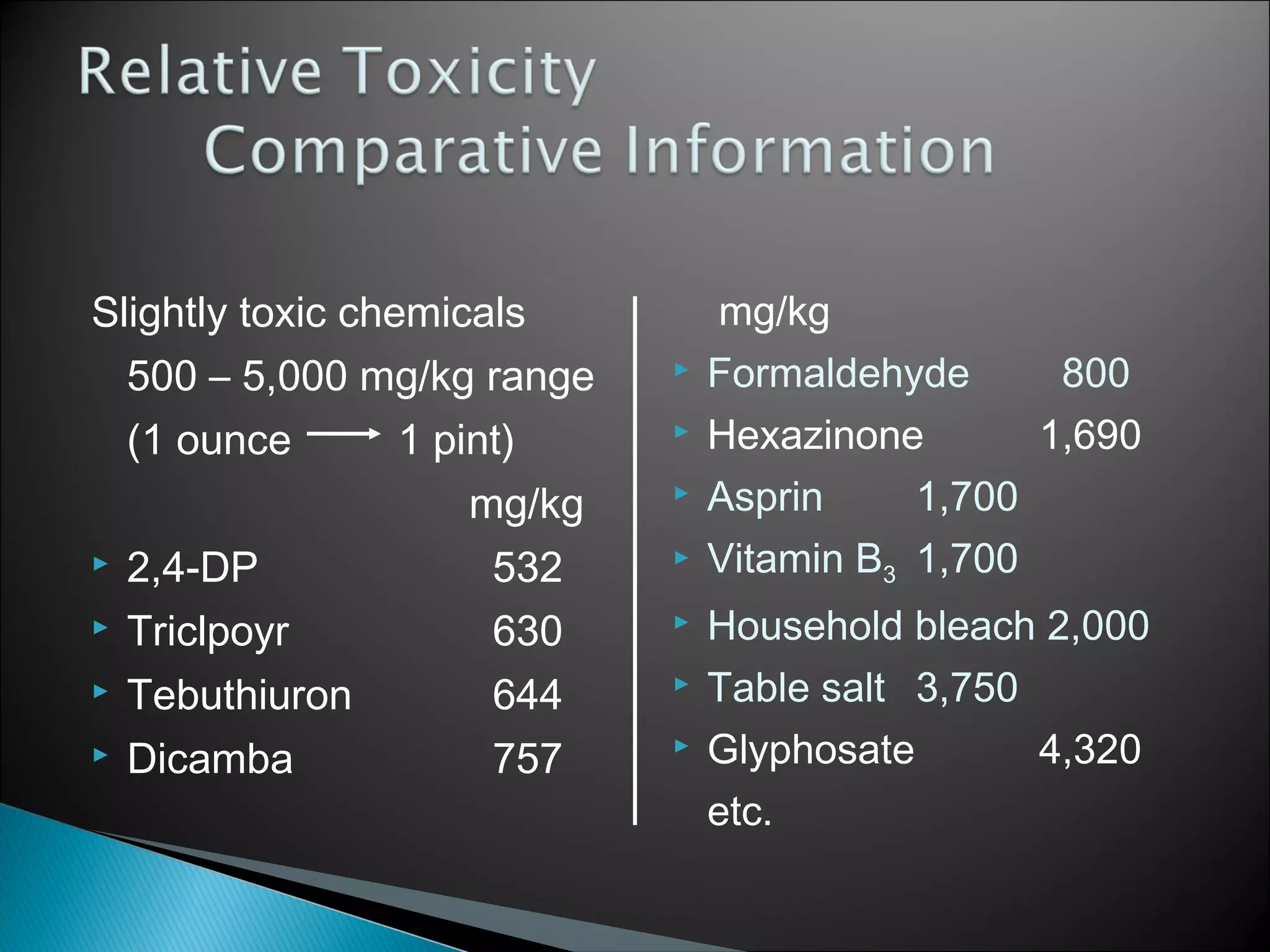
Slightly toxic chemicals
500 – 5,000 mg/kg range
(1 ounce 1 pint)
mg/kg
 2,4-DP 532
 Triclpoyr 630
 Tebuthiuron 644
 Dicamba 757
mg/kg
 Formaldehyde 800
 Hexazinone 1,690
 Asprin 1,700
 Vitamin B3 1,700
 Household bleach 2,000
 Table salt 3,750
 Glyphosate 4,320
etc.
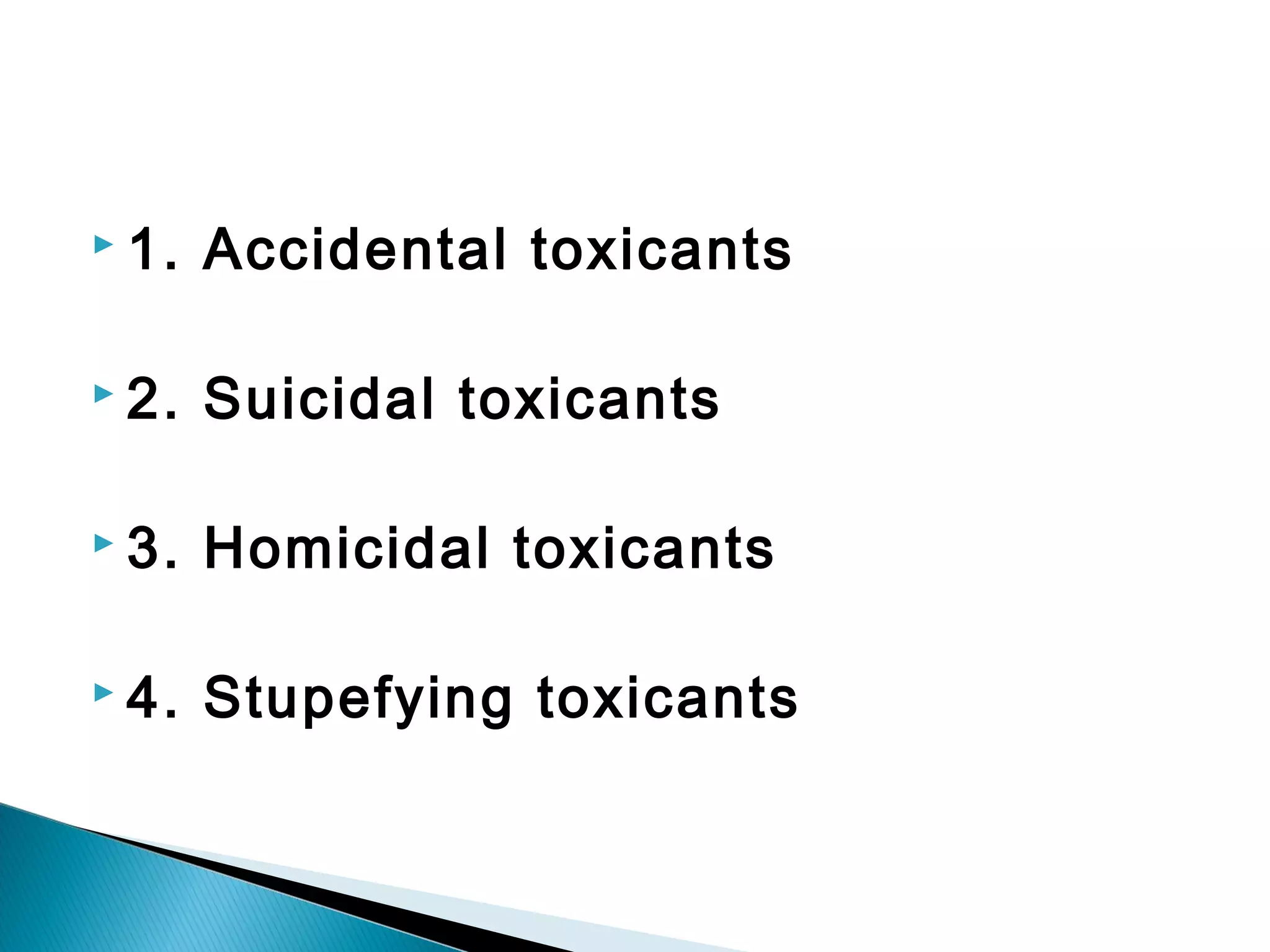
 1. Accidental toxicants
 2. Suicidal toxicants
 3. Homicidal toxicants
 4. Stupefying toxicants
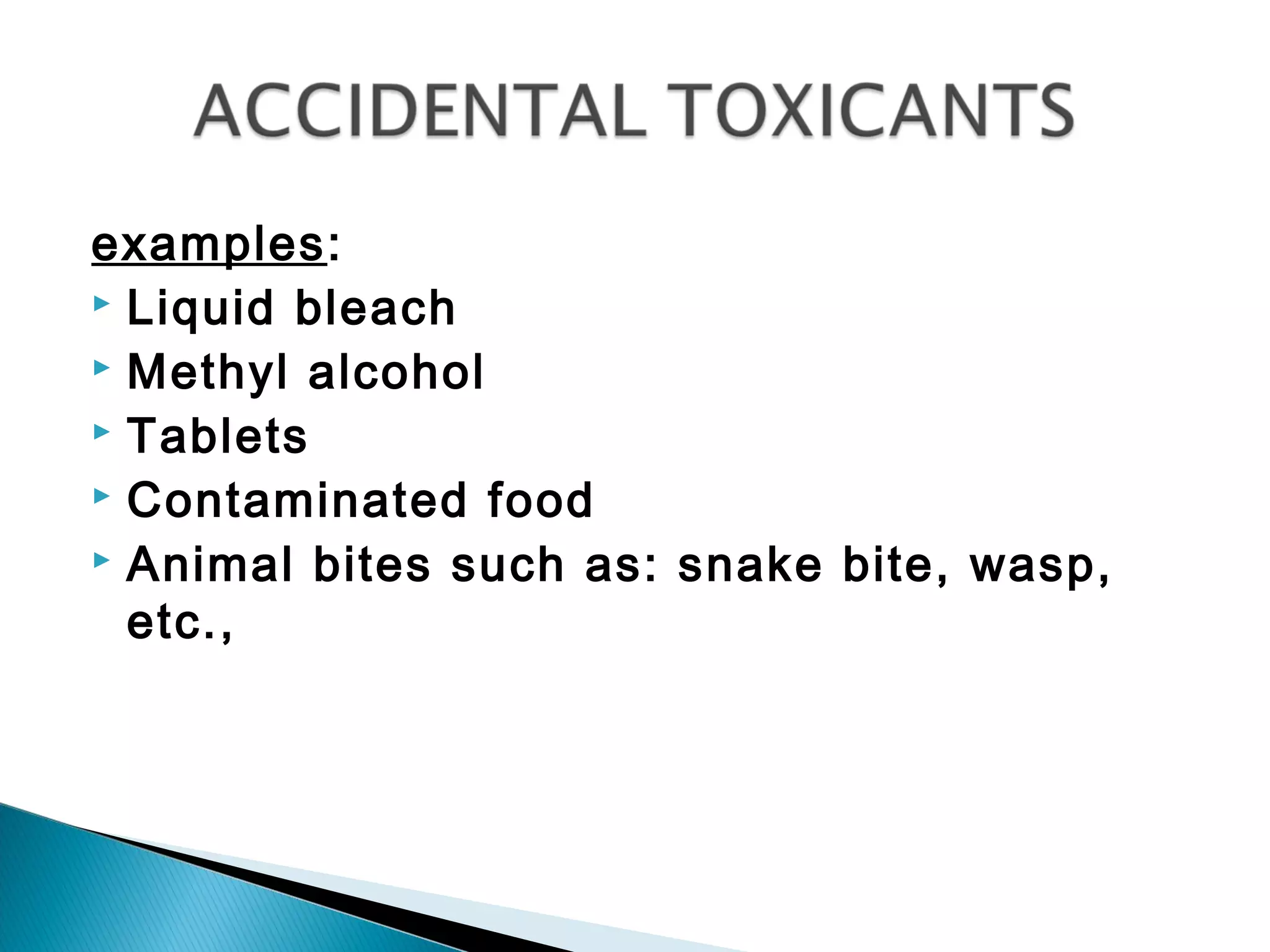
examples:
 Liquid bleach
 Methyl alcohol
 Tablets
 Contaminated food
 Animal bites such as: snake bite, wasp,
etc.,
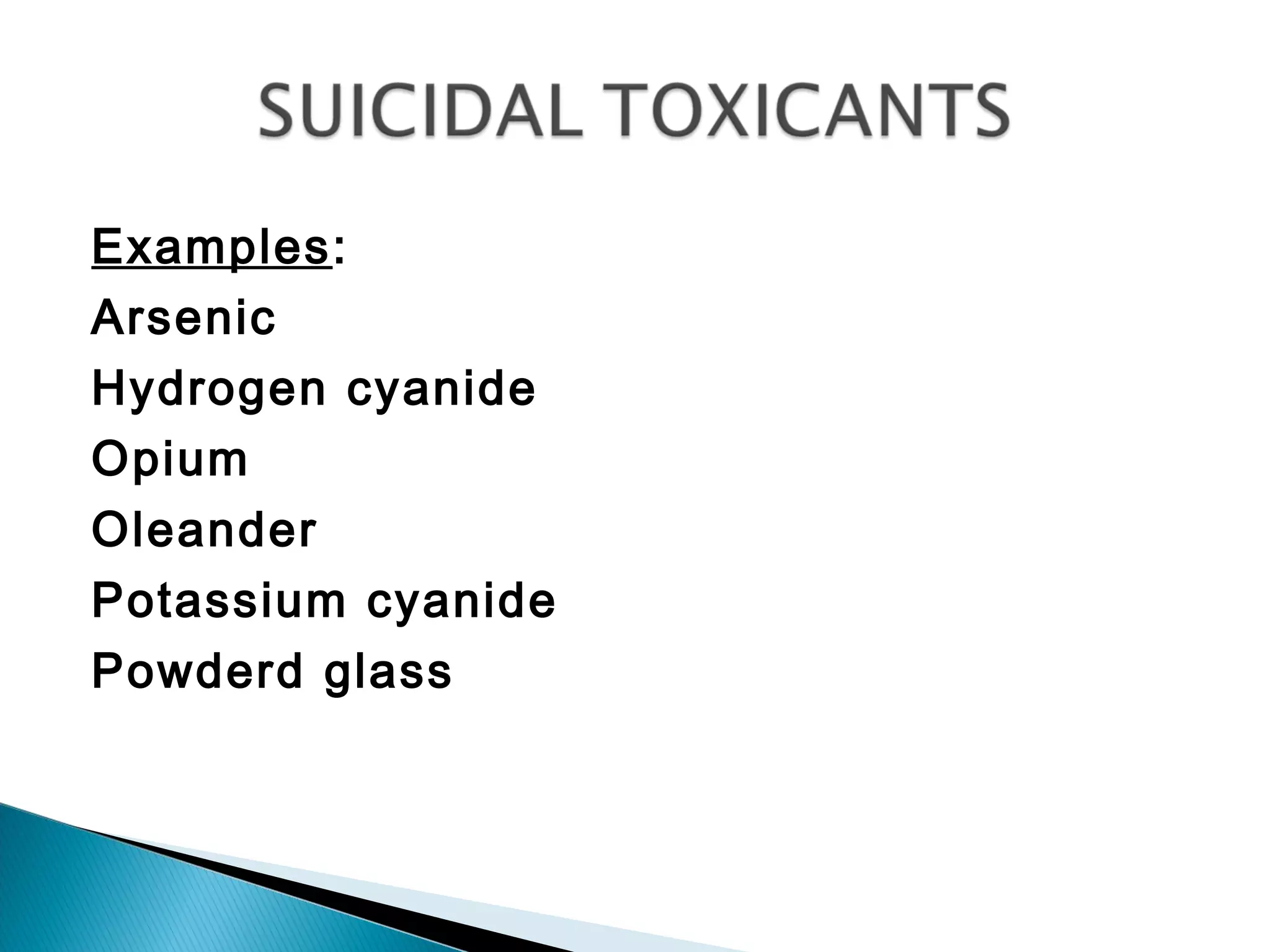
Examples:
Arsenic
Hydrogen cyanide
Opium
Oleander
Potassium cyanide
Powderd glass
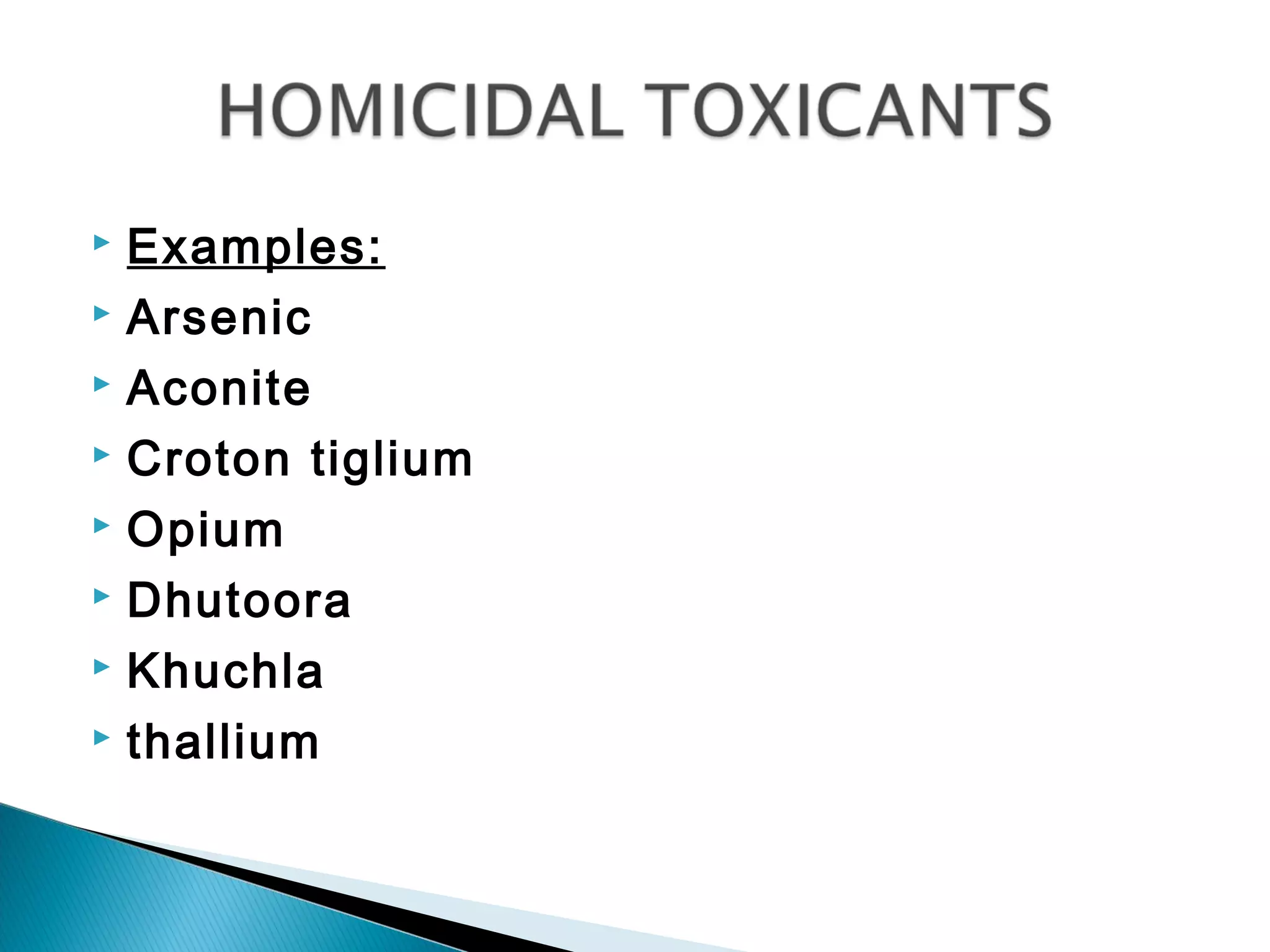
 Examples:
 Arsenic
 Aconite
 Croton tiglium
 Opium
 Dhutoora
 Khuchla
 thallium
Examples:
 Chloroform
 Sulphuric acid
 Chloral hydrate
 Olax(fish stupefying)
 Dhatura
 Cannabis
 Ergot
 Chloral hydrate
 1. Corrosive poisons or toxicants
 2. Irritant poisons or toxicants
PROPERTIES:
 Highly active
 Highly irritant
 Produce inflammation
 Ulceration
 Tissue and organ damage
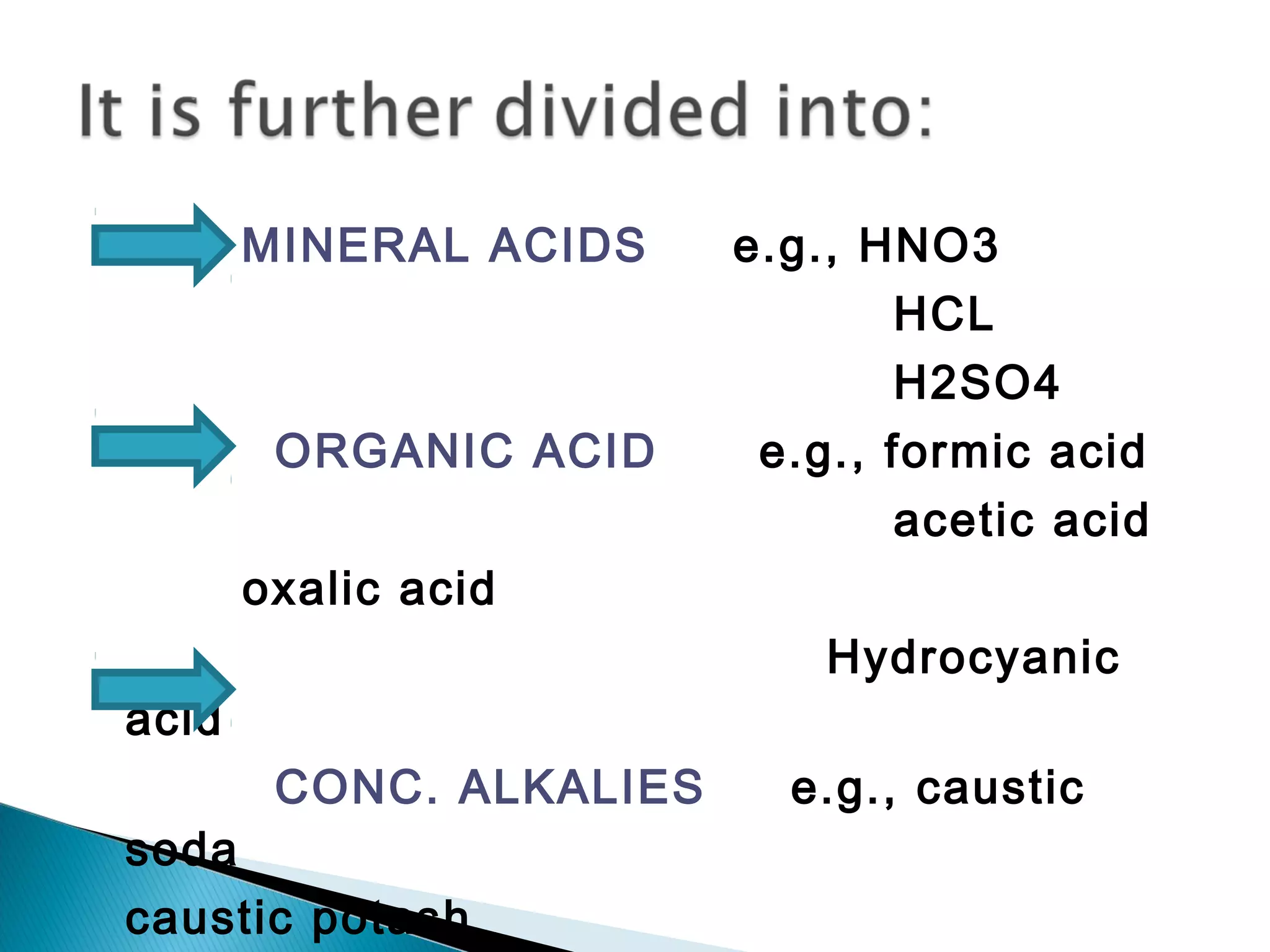
 MINERAL ACIDS e.g., HNO3
HCL
H2SO4
ORGANIC ACID e.g., formic acid
acetic acid
oxalic acid
Hydrocyanic
acid
CONC. ALKALIES e.g., caustic
soda
caustic potash
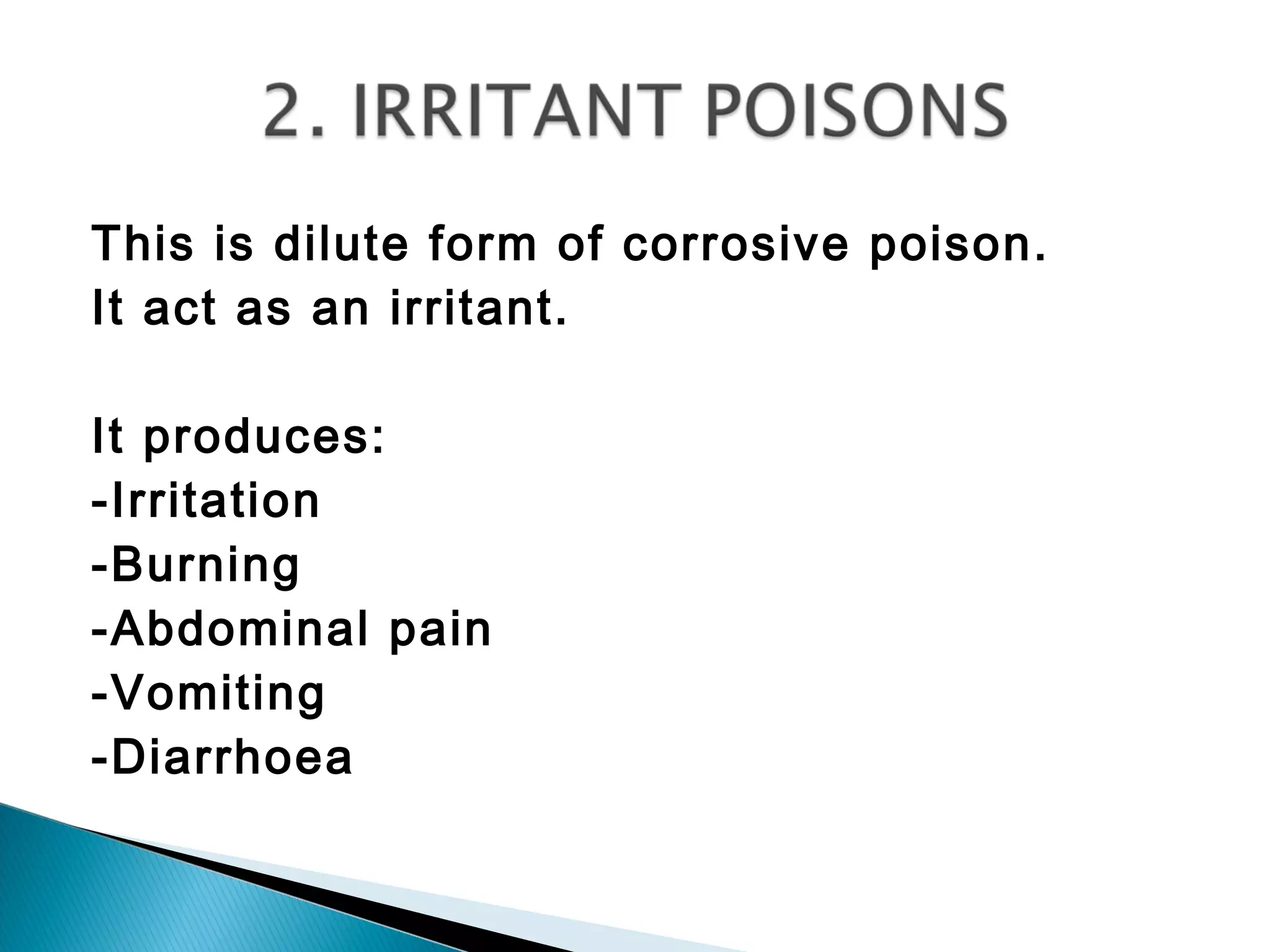
This is dilute form of corrosive poison.
It act as an irritant.
It produces:
-Irritation
-Burning
-Abdominal pain
-Vomiting
-Diarrhoea
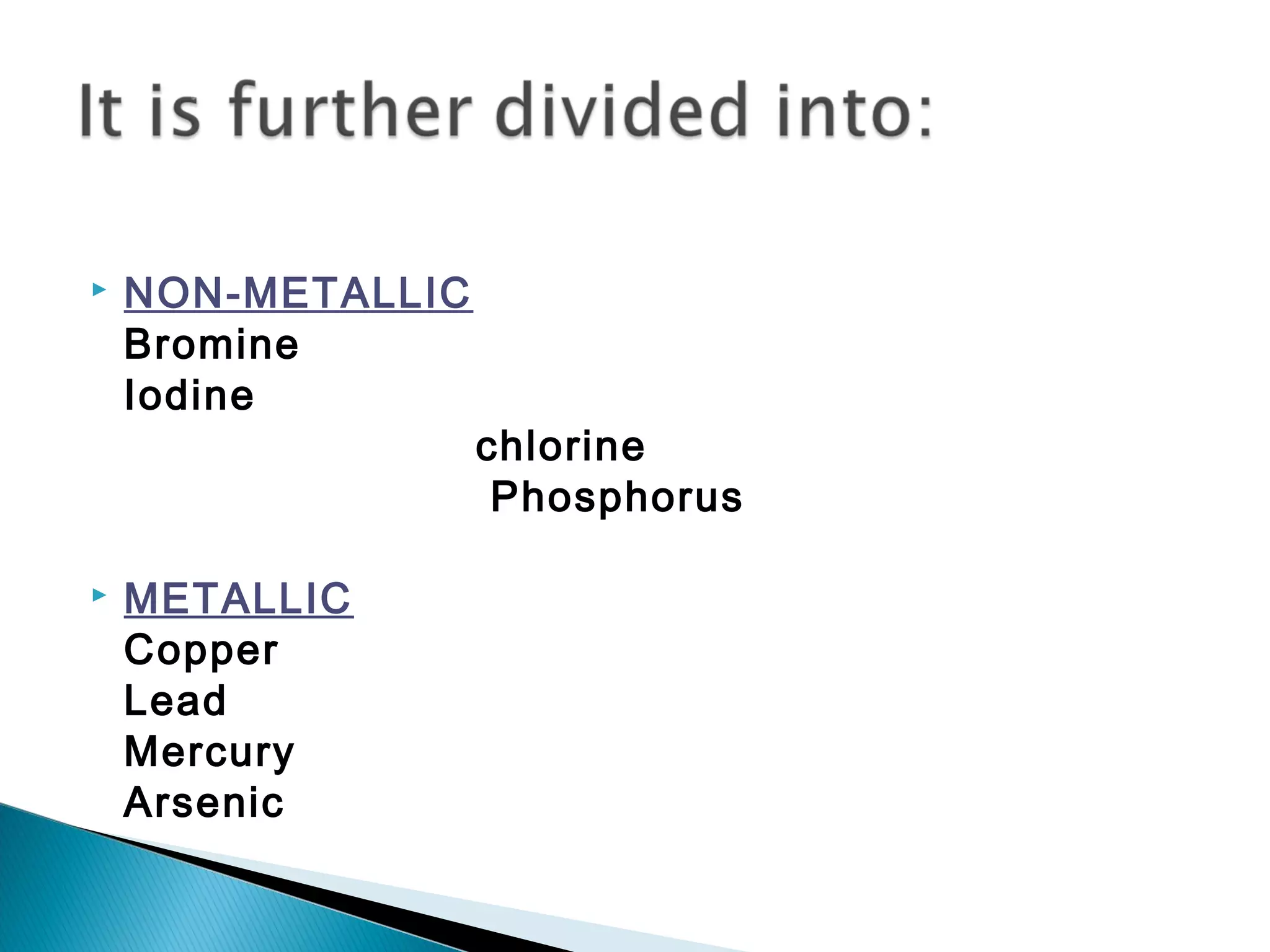
 NON-METALLIC
Bromine
Iodine
chlorine
Phosphorus
 METALLIC
Copper
Lead
Mercury
Arsenic
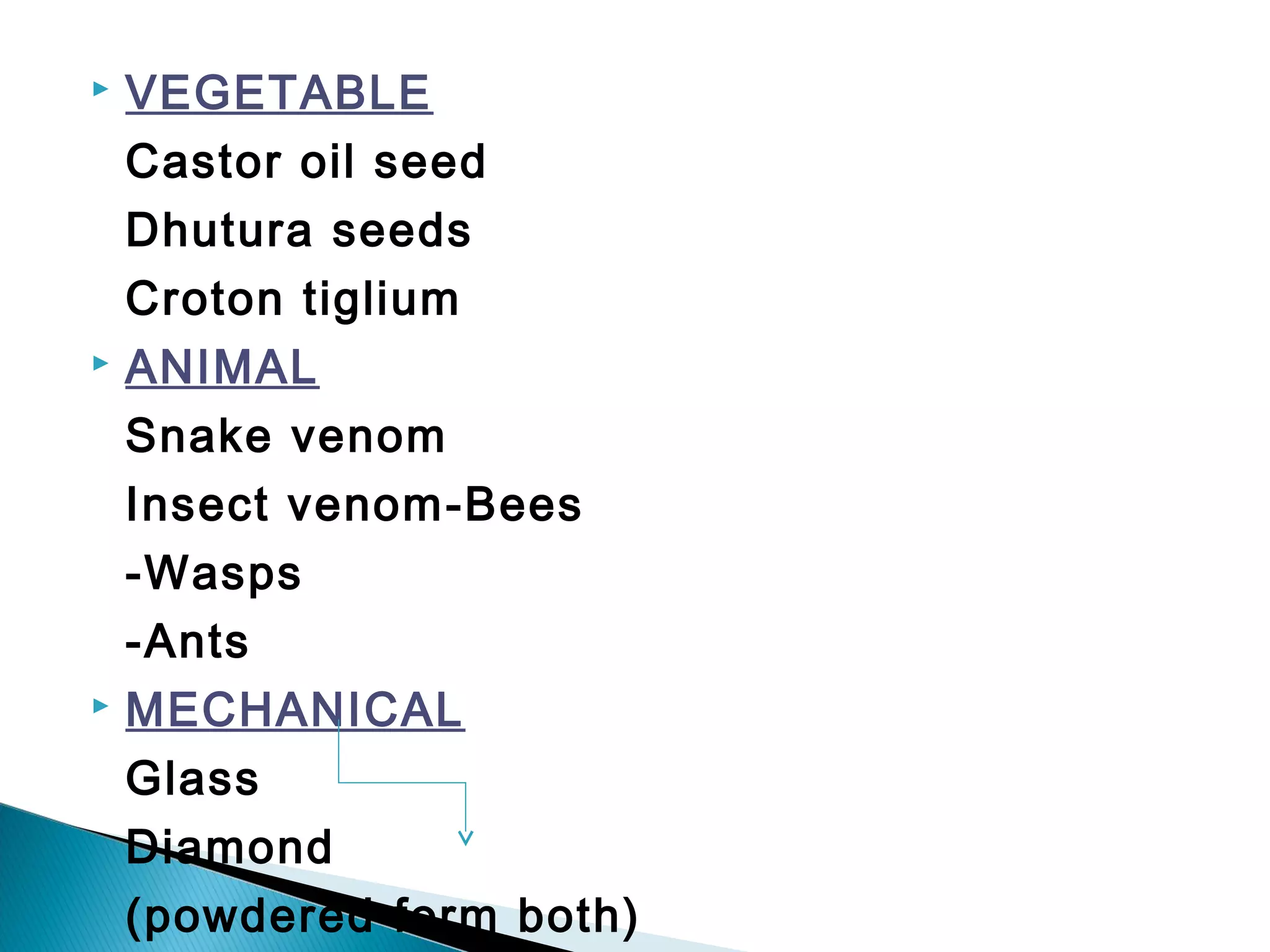
 VEGETABLE
Castor oil seed
Dhutura seeds
Croton tiglium
 ANIMAL
Snake venom
Insect venom-Bees
-Wasps
-Ants
 MECHANICAL
Glass
Diamond
(powdered form both)
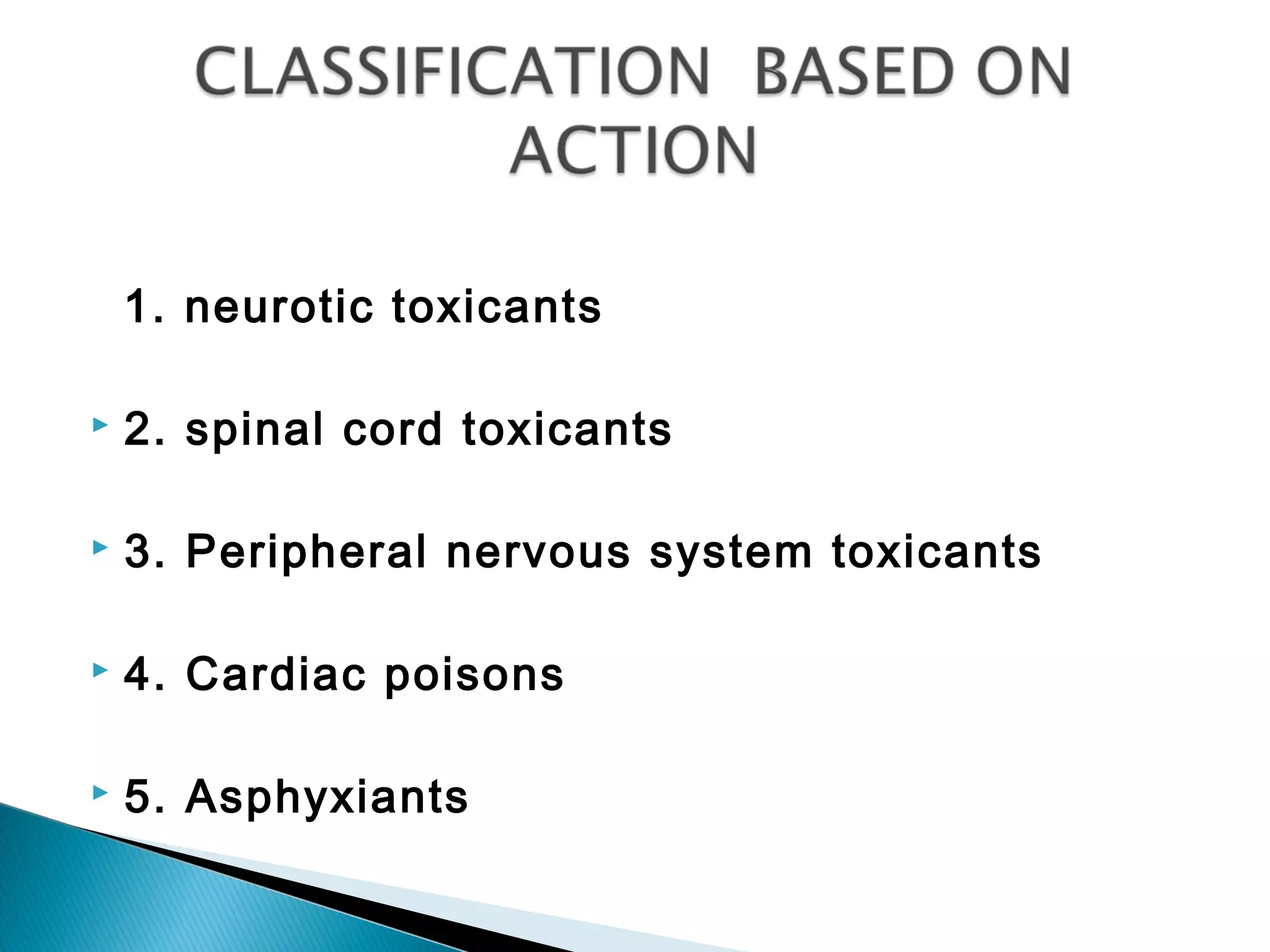
1. neurotic toxicants
 2. spinal cord toxicants
 3. Peripheral nervous system toxicants
 4. Cardiac poisons
 5. Asphyxiants
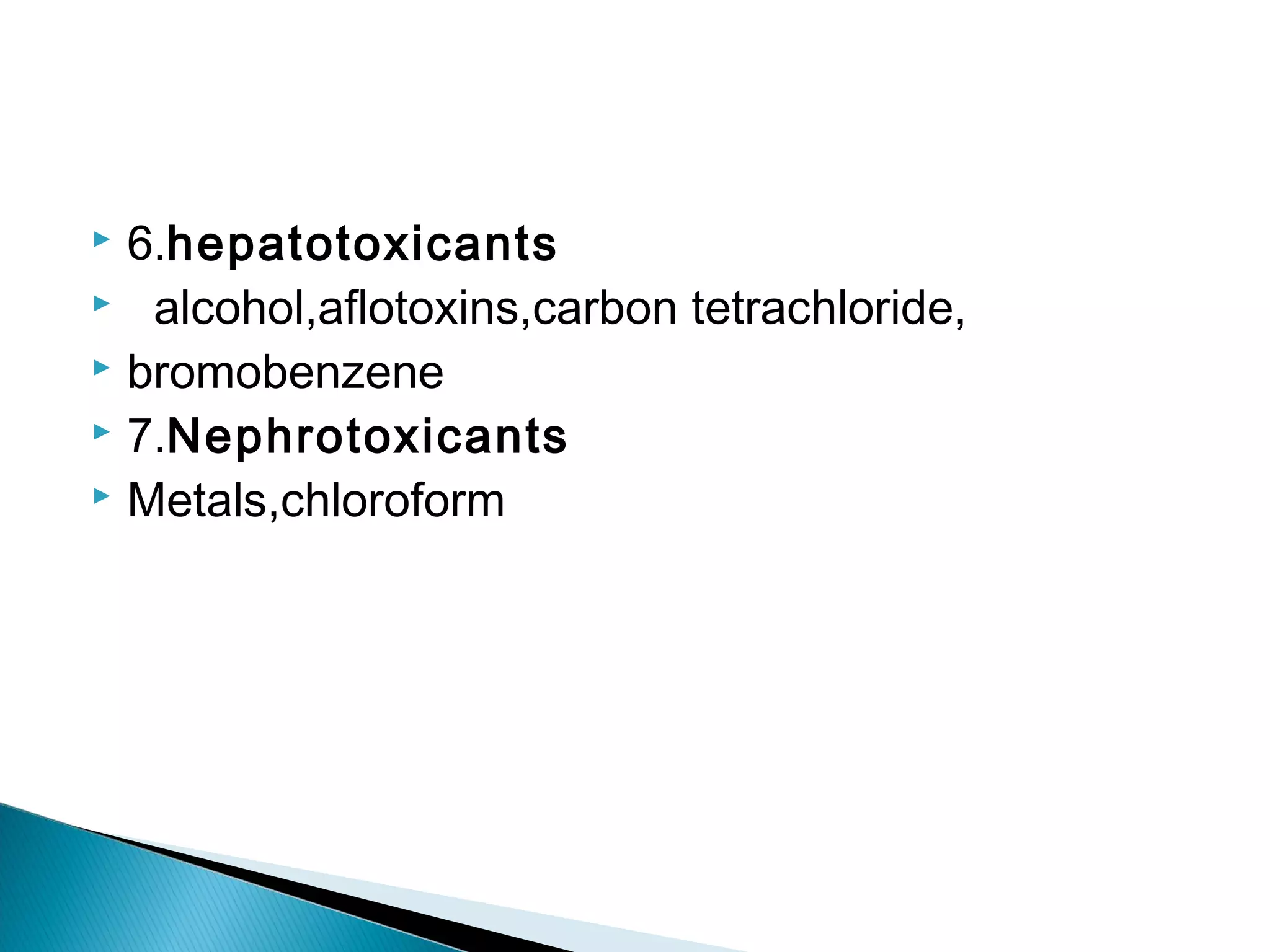
 6.hepatotoxicants
 alcohol,aflotoxins,carbon tetrachloride,
 bromobenzene
 7.Nephrotoxicants
 Metals,chloroform
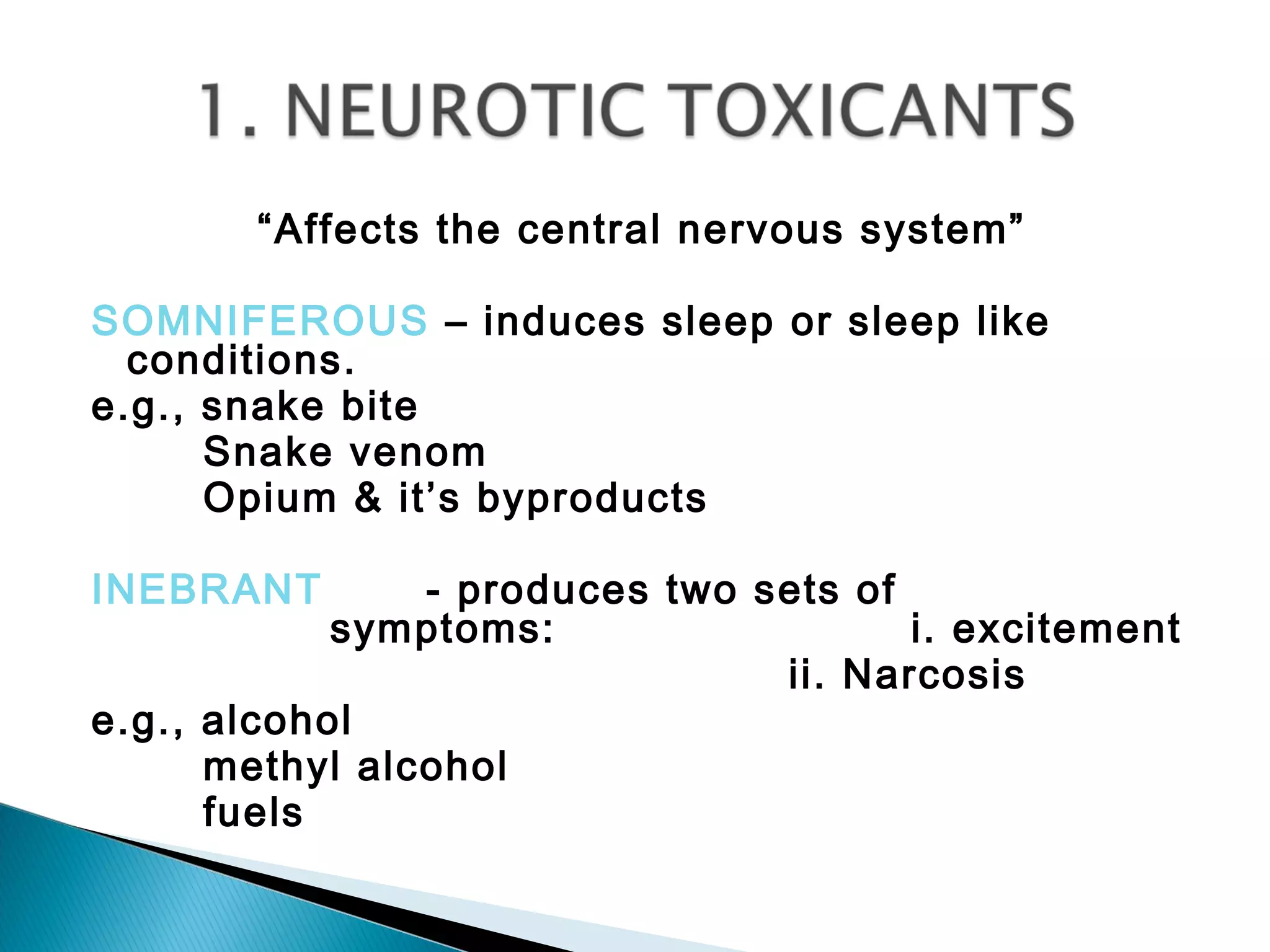
“Affects the central nervous system”
SOMNIFEROUS – induces sleep or sleep like
conditions.
e.g., snake bite
Snake venom
Opium & it’s byproducts
INEBRANT - produces two sets of
symptoms: i. excitement
ii. Narcosis
e.g., alcohol
methyl alcohol
fuels
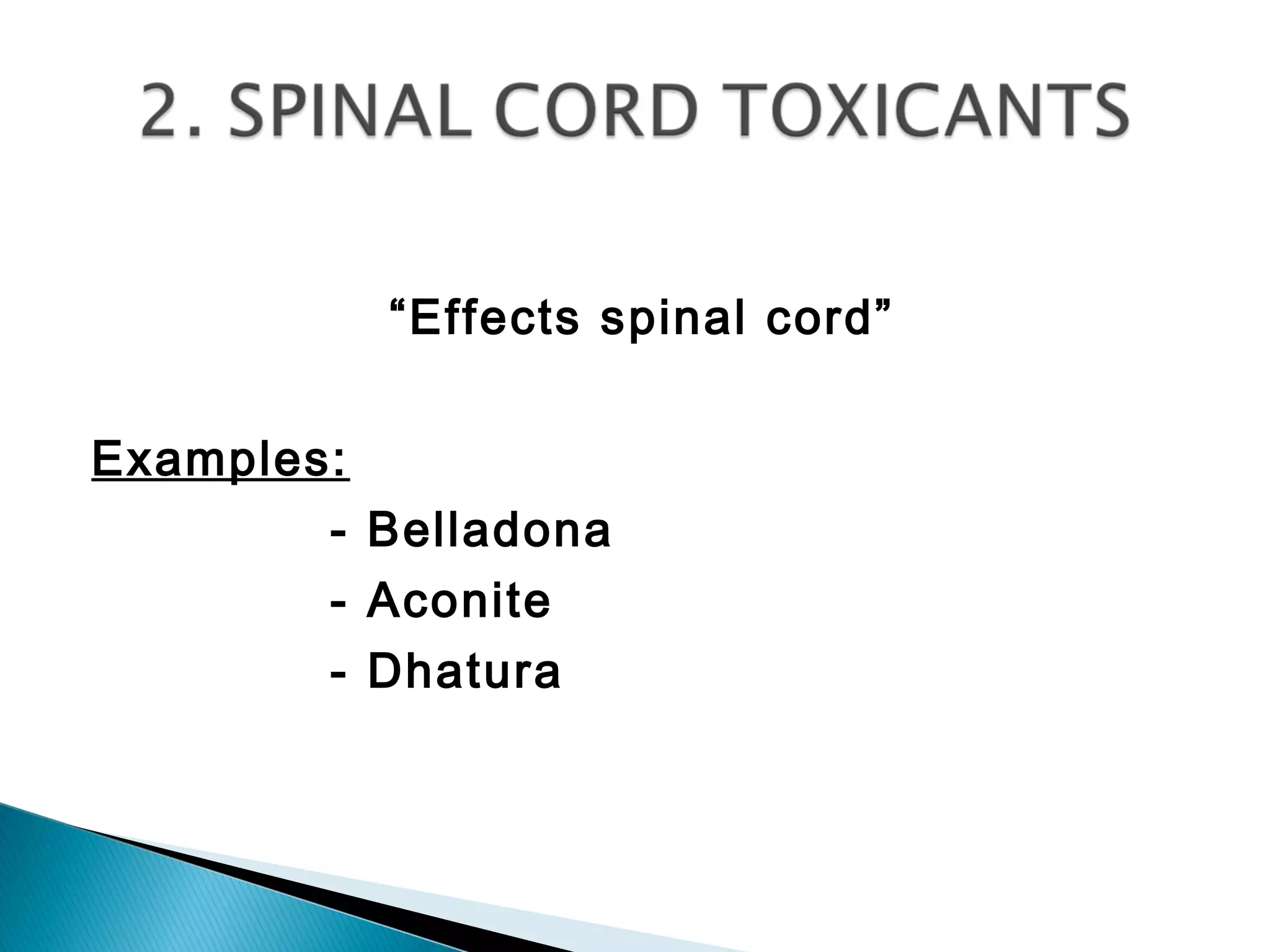
“Effects spinal cord”
Examples:
- Belladona
- Aconite
- Dhatura
 Examples:
Conium and Curare
From conium Alkaloides are produced
i.e.,
Concline
Methyl Concline
Examples:
 Snake venom
 Bee venom
 Scorpion venom
 Oleander seeds
 Castor oil seeds
 Nicotine from tobacco
 Cocaine
 Aconite
 Cannabis sativa
 Produce respiratory problems such as
suffocation, lung problems, etc.,
 CO2
 CO
 Nitrous oxide
 WAR Gases
i. TEAR GASES or LACRIMOTOR
 CAP (chloroacetophenone)
 BBC (bromobenzylcyanide)
ii. LUNG IRRITANTS
 Chlorine gas
 Phosgene
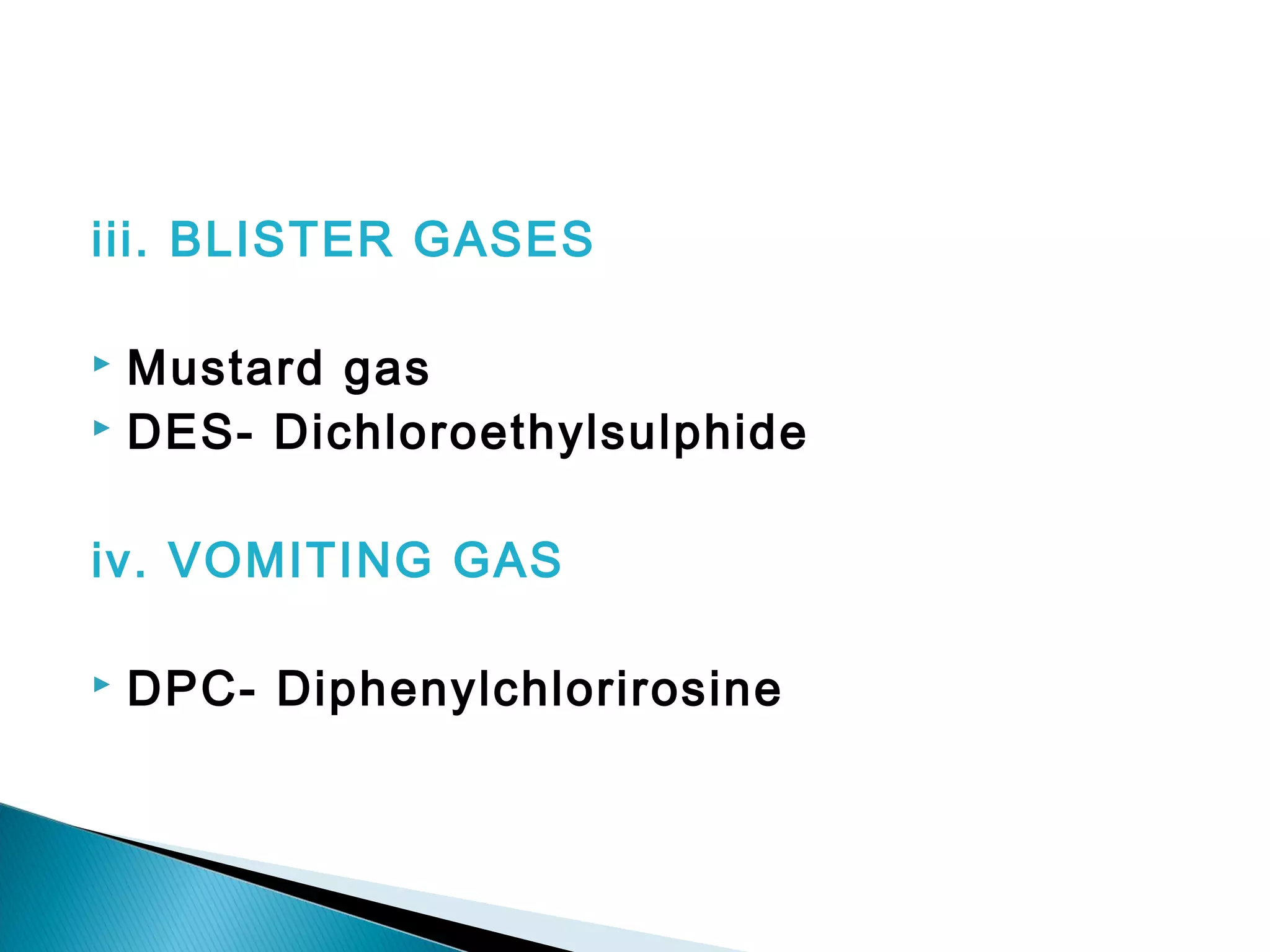
iii. BLISTER GASES
 Mustard gas
 DES- Dichloroethylsulphide
iv. VOMITING GAS
 DPC- Diphenylchlorirosine
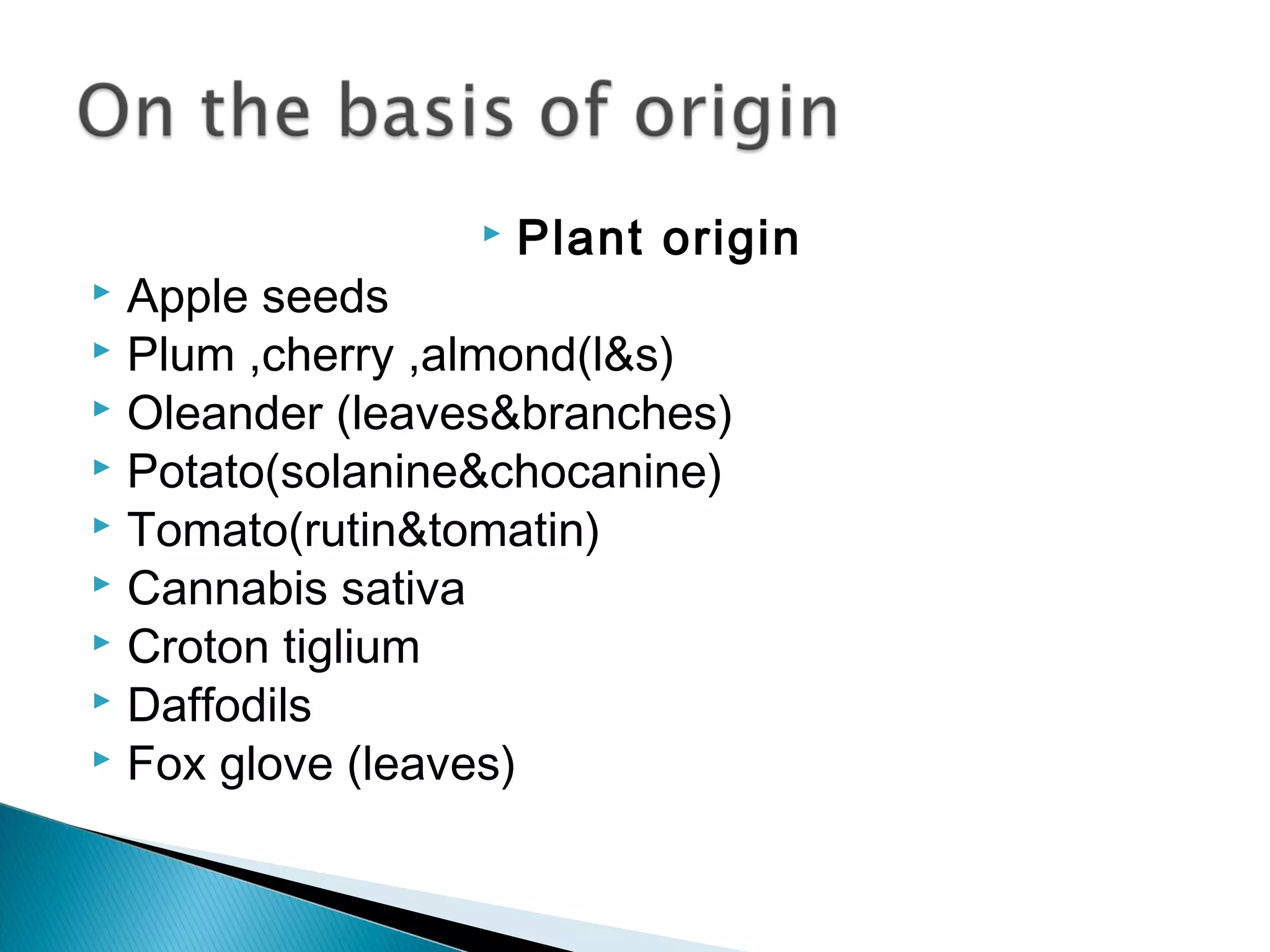
 Plant origin
 Apple seeds
 Plum ,cherry ,almond(l&s)
 Oleander (leaves&branches)
 Potato(solanine&chocanine)
 Tomato(rutin&tomatin)
 Cannabis sativa
 Croton tiglium
 Daffodils
 Fox glove (leaves)
 Oral
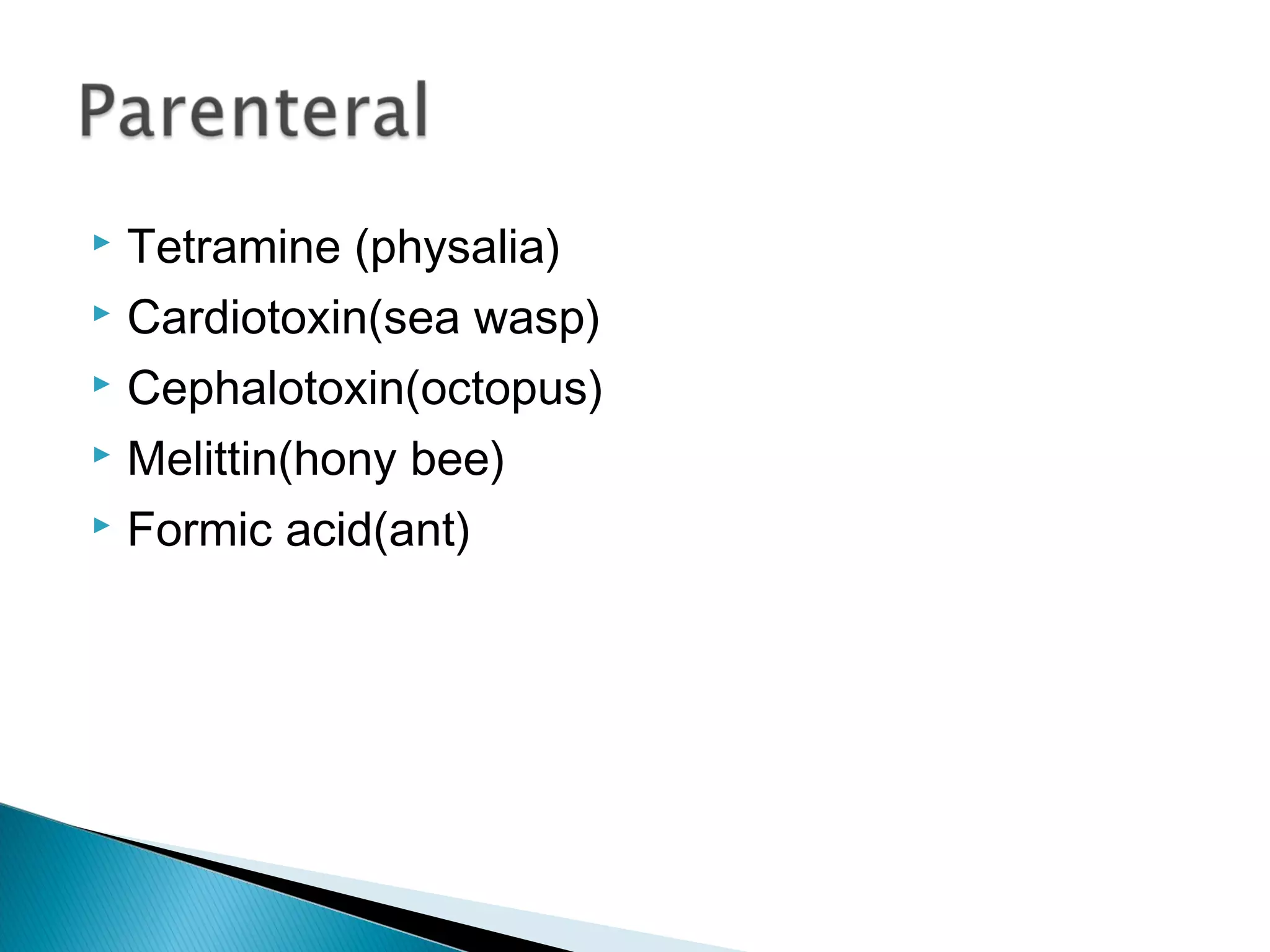
 Parenteral
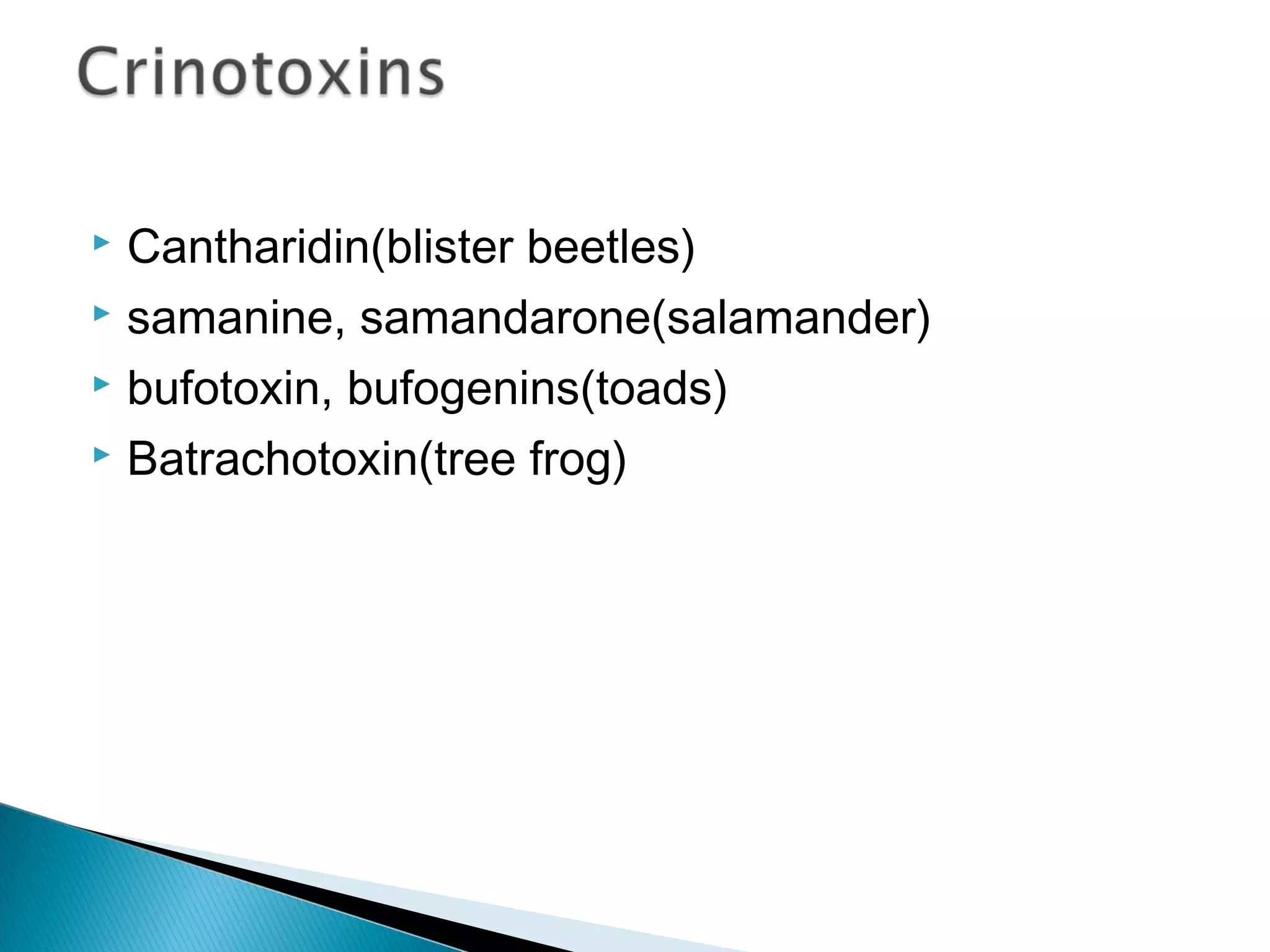
 Crinotoxins
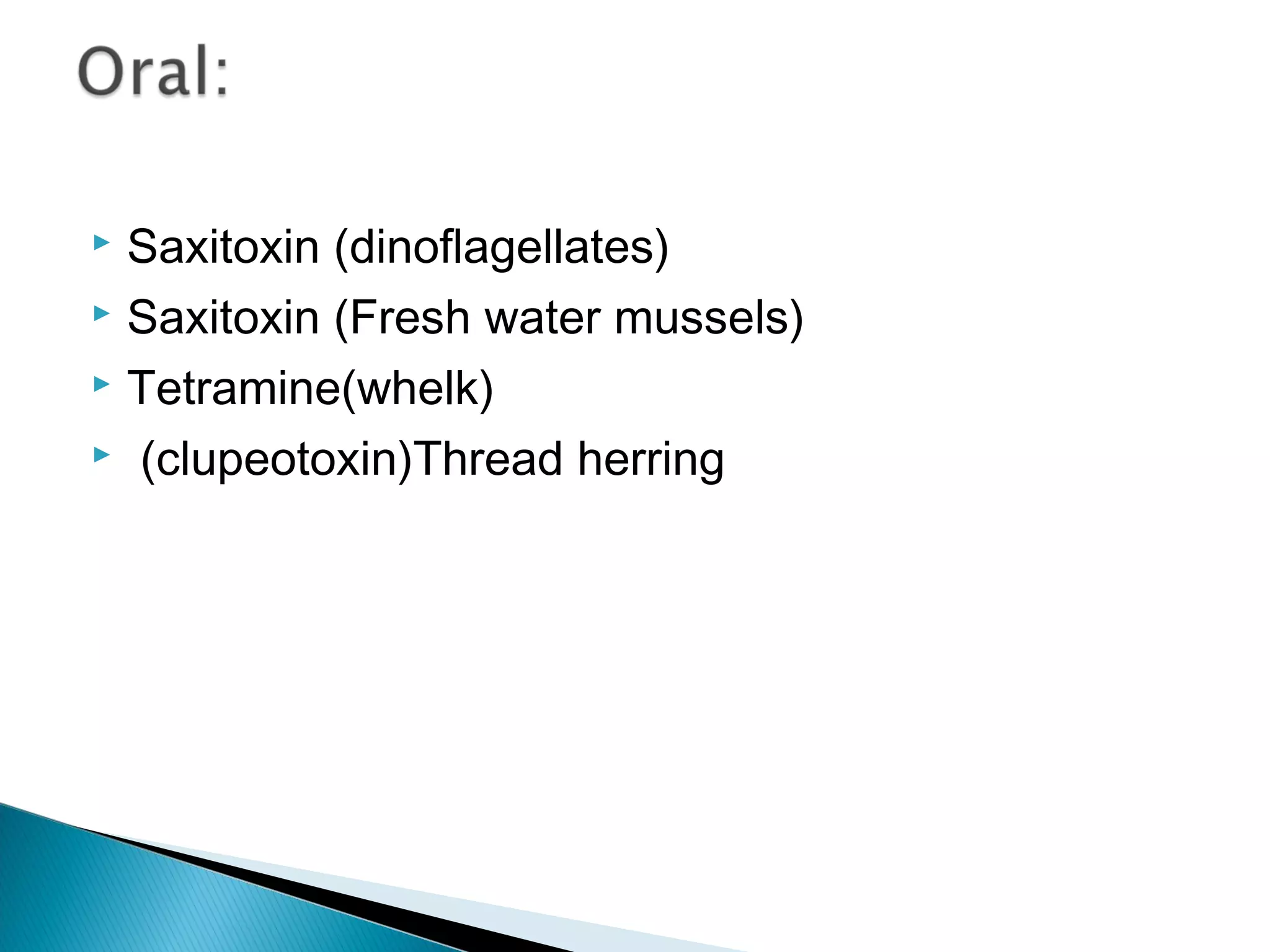
 Saxitoxin (dinoflagellates)
 Saxitoxin (Fresh water mussels)
 Tetramine(whelk)
 (clupeotoxin)Thread herring
 Tetramine (physalia)
 Cardiotoxin(sea wasp)
 Cephalotoxin(octopus)
 Melittin(hony bee)
 Formic acid(ant)
 Cantharidin(blister beetles)
 samanine, samandarone(salamander)
 bufotoxin, bufogenins(toads)
 Batrachotoxin(tree frog)
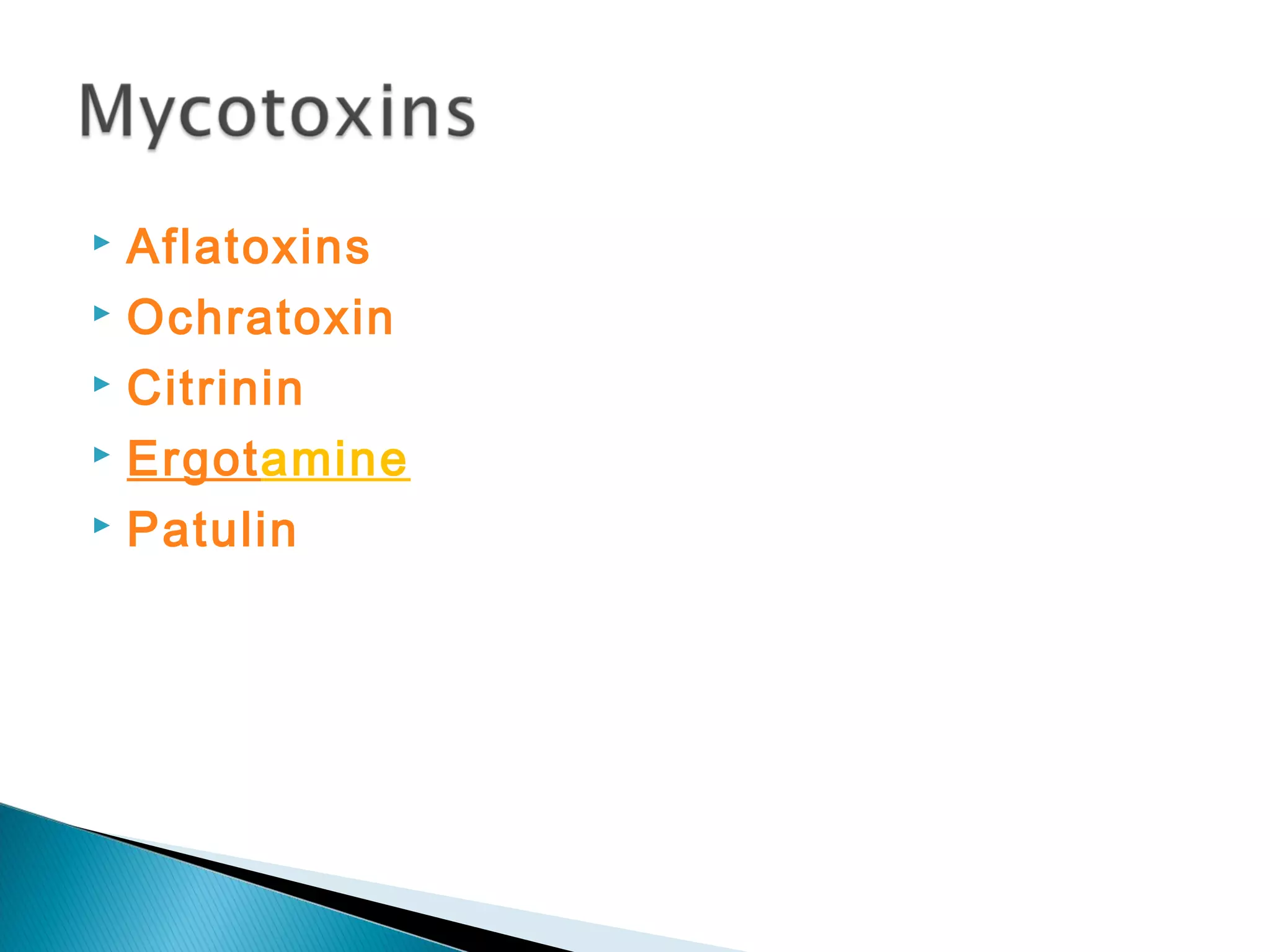
 Aflatoxins
 Ochratoxin
 Citrinin
 Ergotamine
 Patulin

Types of classification(1)

Editor's Notes

  • #31  crinotoxins—those that are produced by a specialized poison gland but are released into the environment, usually by means of a pore