A
PRESENTATION
ON
LEAD ACID BATTERY
DEPARTMENT OF ELECTRICAL &
ELECTRONICS ENGINEERING
B.K. BIRLA INSTITUTE OF ENGINEERING & TECHNOLOGY
PREPARED BY:
SHEIKH AVES
10EBKEX049
 BATTERY
 TYPES OF CELLS
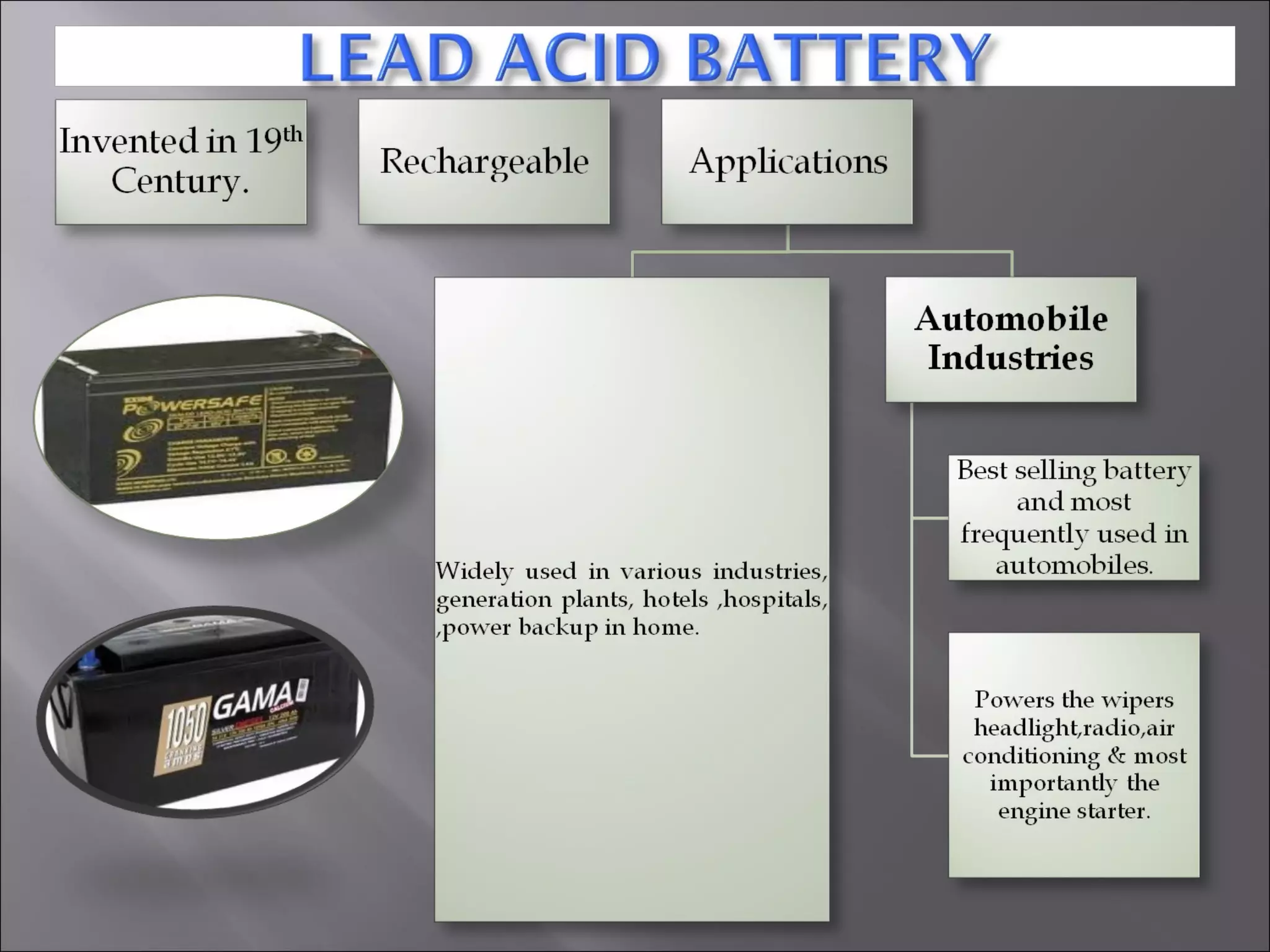
 LEAD ACID BATTERY AND ITS
APPLICATIONS
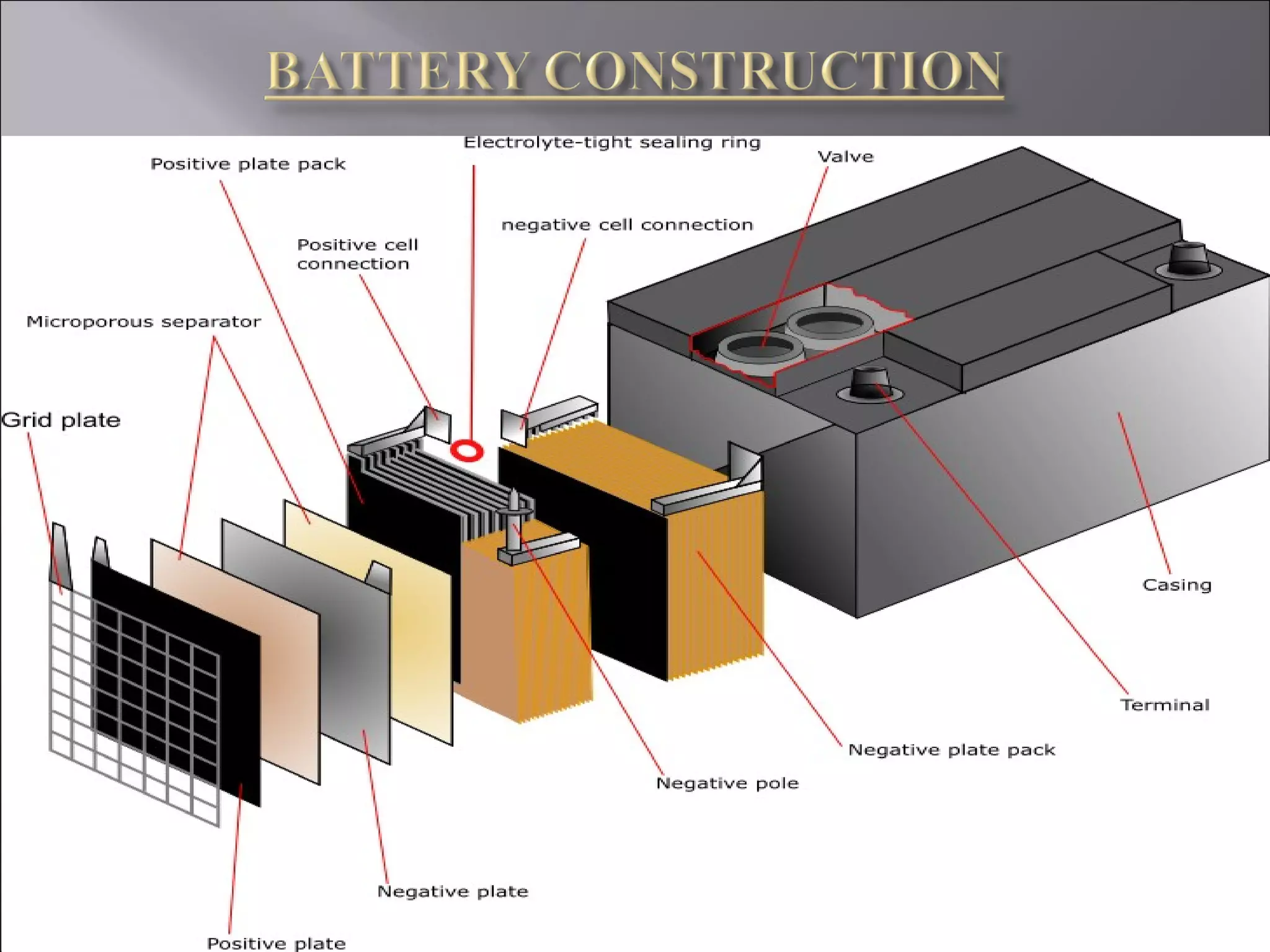
 CONSTRUCTION OF LEAD ACID BATTERY
 WORKING OF LEAD ACID BATTERY
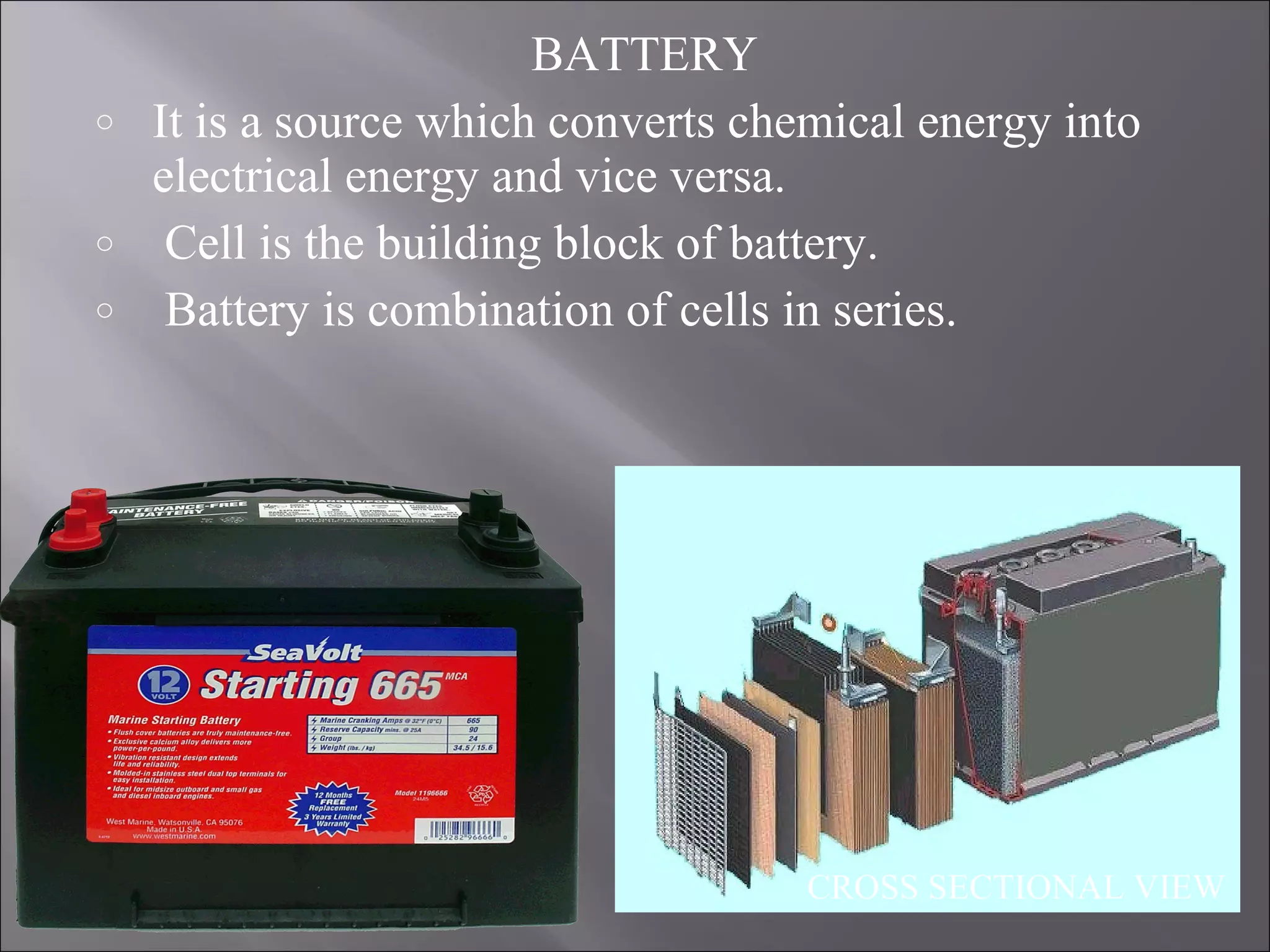
BATTERY
o It is a source which converts chemical energy into
electrical energy and vice versa.
o Cell is the building block of battery.
o Battery is combination of cells in series.
CROSS SECTIONAL VIEW
TYPES OF CELLS :
1. PRIMARY CELL:
CAN NOT BE RECHARGED
 CHEMICAL PROCESS NOT REVERSABLE
 CHEMICAL REACTION TOTALLY DESTROY ONE OF THE METAL AFTER
A PERIOD OF TIME
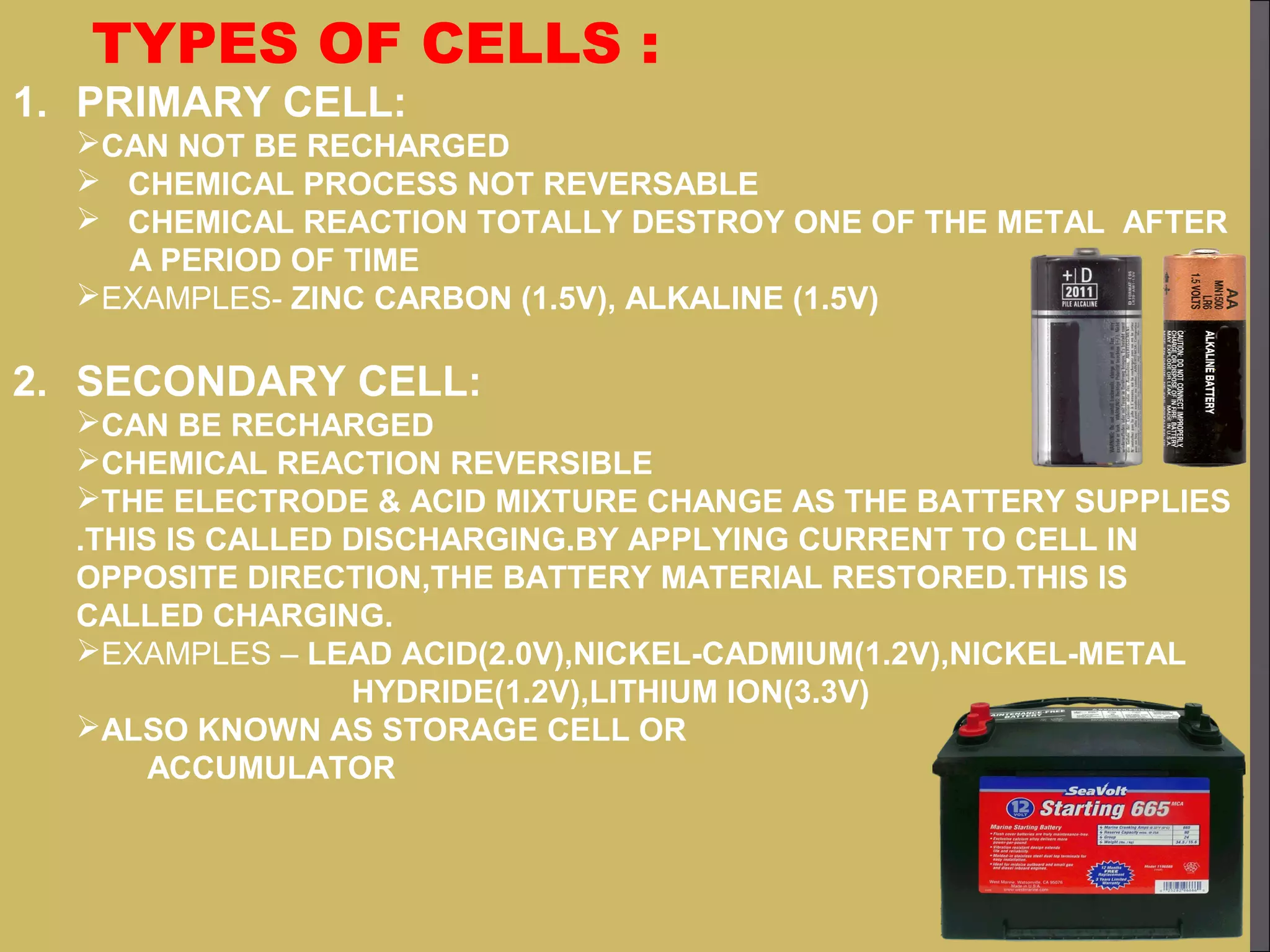
EXAMPLES- ZINC CARBON (1.5V), ALKALINE (1.5V)
2. SECONDARY CELL:
CAN BE RECHARGED
CHEMICAL REACTION REVERSIBLE
THE ELECTRODE & ACID MIXTURE CHANGE AS THE BATTERY SUPPLIES
.THIS IS CALLED DISCHARGING.BY APPLYING CURRENT TO CELL IN
OPPOSITE DIRECTION,THE BATTERY MATERIAL RESTORED.THIS IS
CALLED CHARGING.
EXAMPLES – LEAD ACID(2.0V),NICKEL-CADMIUM(1.2V),NICKEL-METAL
HYDRIDE(1.2V),LITHIUM ION(3.3V)
ALSO KNOWN AS STORAGE CELL OR
ACCUMULATOR
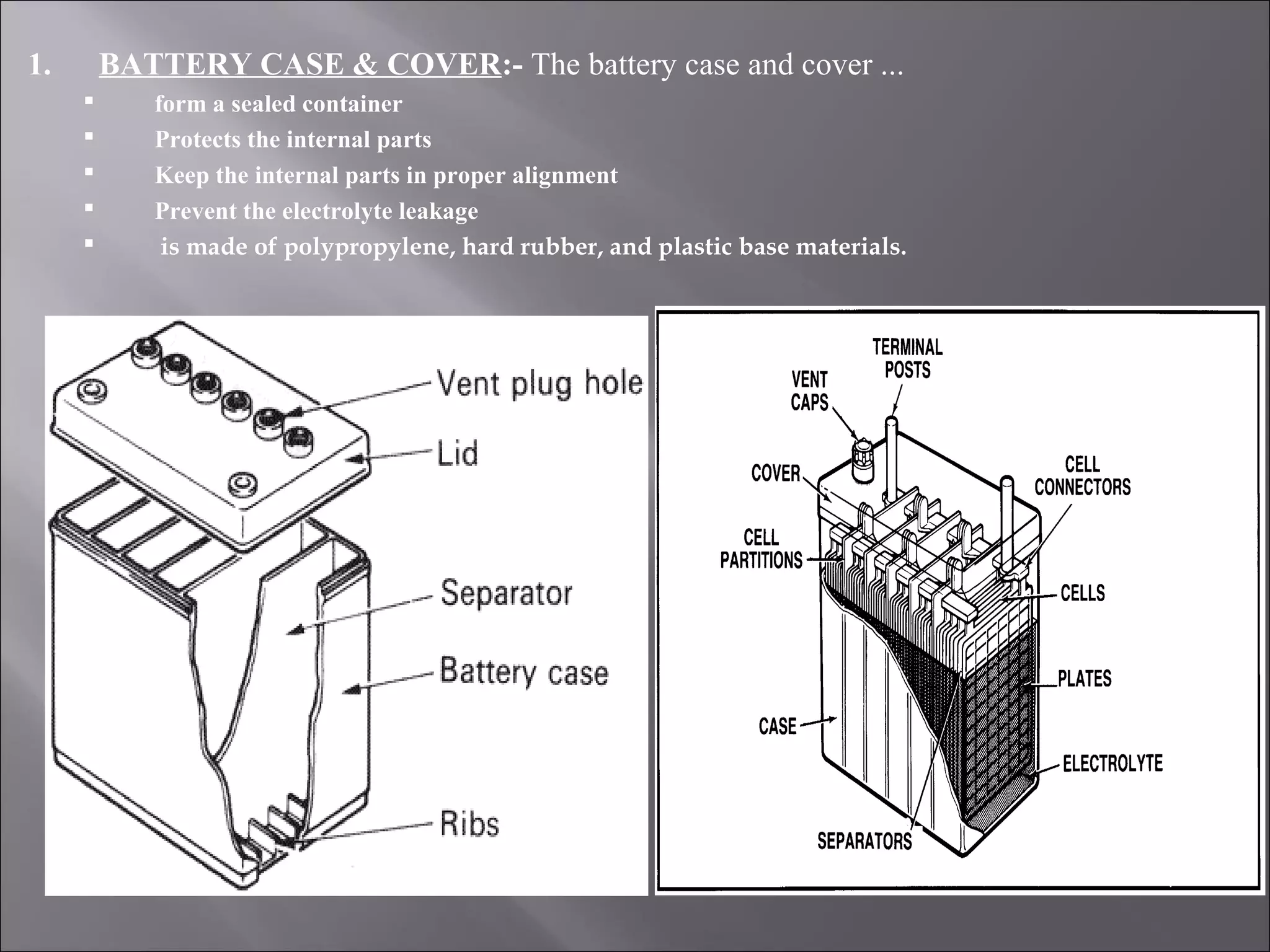
1. BATTERY CASE & COVER:- The battery case and cover ...
 form a sealed container
 Protects the internal parts
 Keep the internal parts in proper alignment
 Prevent the electrolyte leakage
 is made of polypropylene, hard rubber, and plastic base materials.
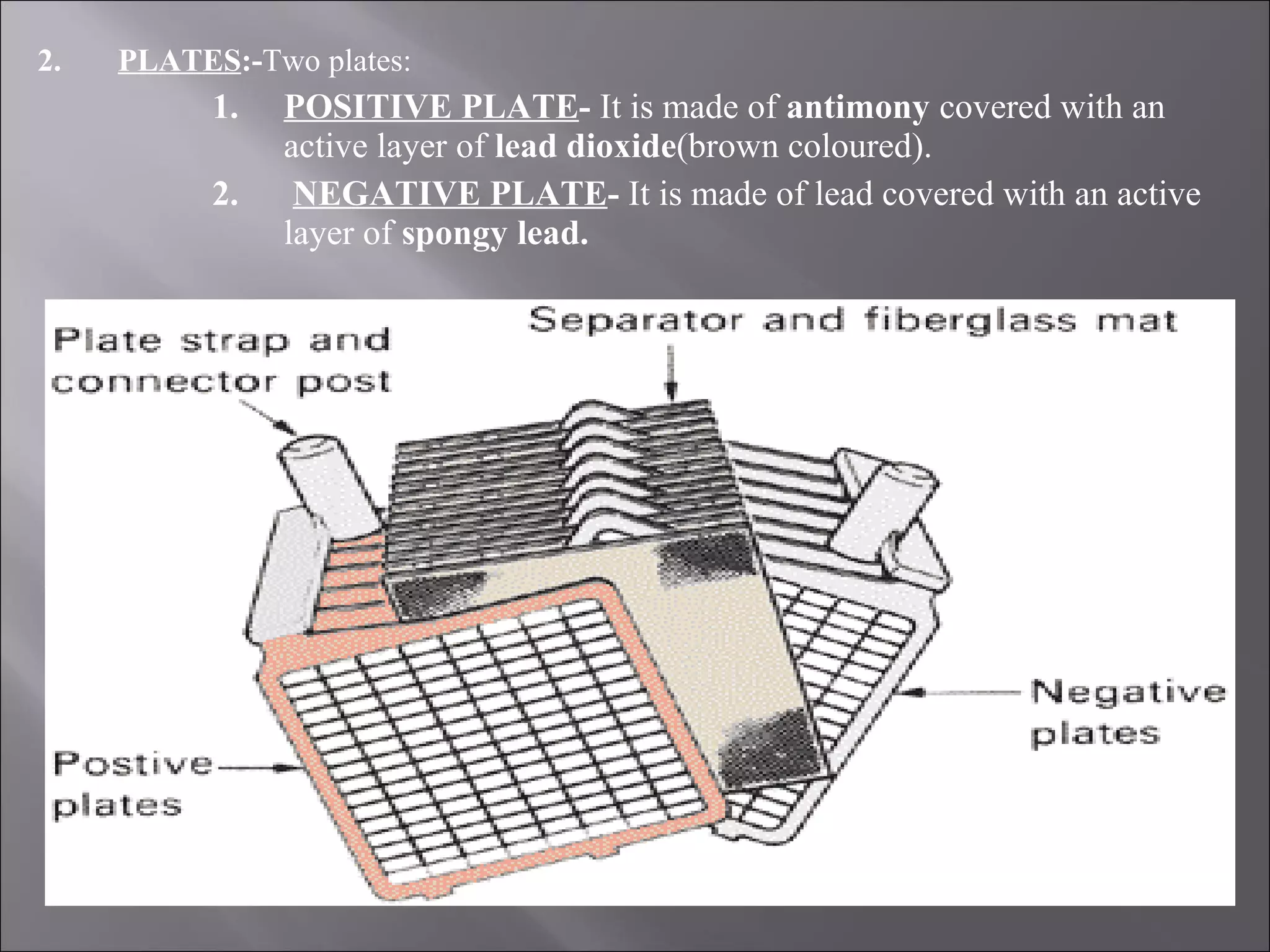
2. PLATES:-Two plates:
1. POSITIVE PLATE- It is made of antimony covered with an
active layer of lead dioxide(brown coloured).
2. NEGATIVE PLATE- It is made of lead covered with an active
layer of spongy lead.
3. SEPERATOR:- Plates are separated by thin porous separator (woven glass or
plastic envelope).They allow electrolyte to pass freely between
the plates but prevent the plates from touching each other.
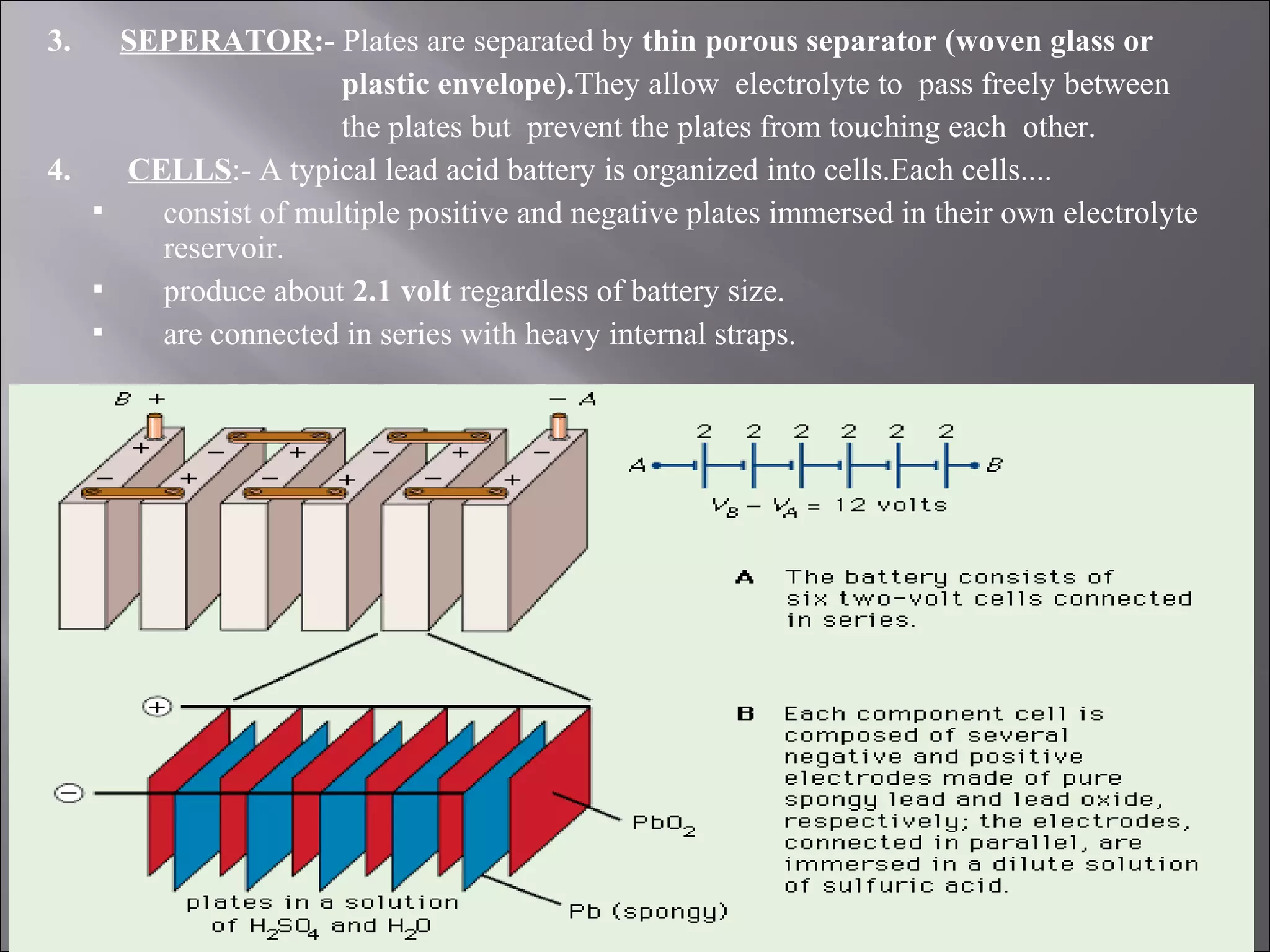
4. CELLS:- A typical lead acid battery is organized into cells.Each cells....
 consist of multiple positive and negative plates immersed in their own electrolyte
reservoir.
 produce about 2.1 volt regardless of battery size.
 are connected in series with heavy internal straps.
5. VENTING SYSTEM:- They allow controlled release of hydrogen gas which forms
normally during battery recharging. If removed ,they permit
checking electrolyte and if necessary adding water.
6. ELECTROLYTE:
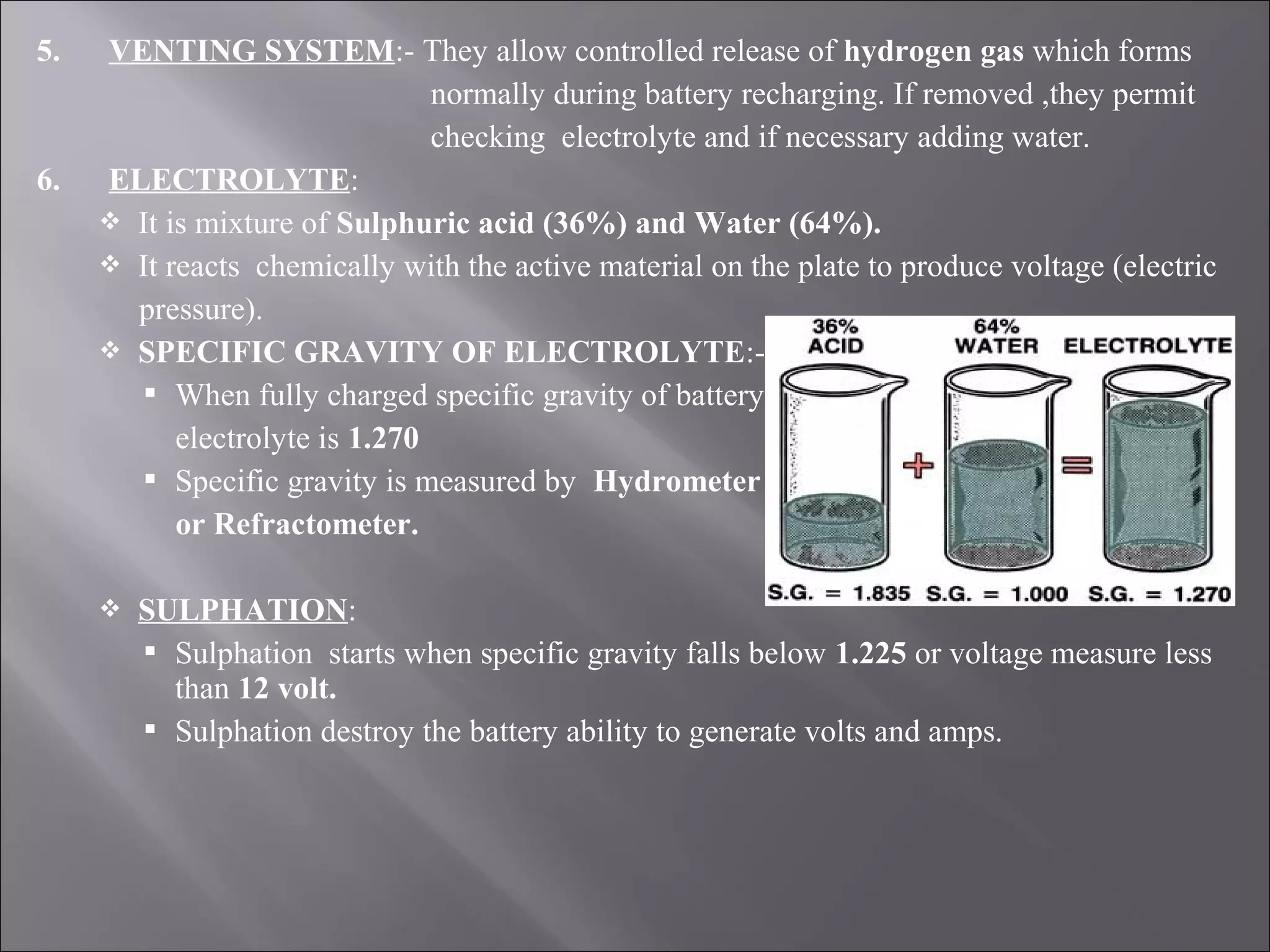
 It is mixture of Sulphuric acid (36%) and Water (64%).
 It reacts chemically with the active material on the plate to produce voltage (electric
pressure).
 SPECIFIC GRAVITY OF ELECTROLYTE:-
 When fully charged specific gravity of battery
electrolyte is 1.270
 Specific gravity is measured by Hydrometer
or Refractometer.
 SULPHATION:
 Sulphation starts when specific gravity falls below 1.225 or voltage measure less
than 12 volt.
 Sulphation destroy the battery ability to generate volts and amps.
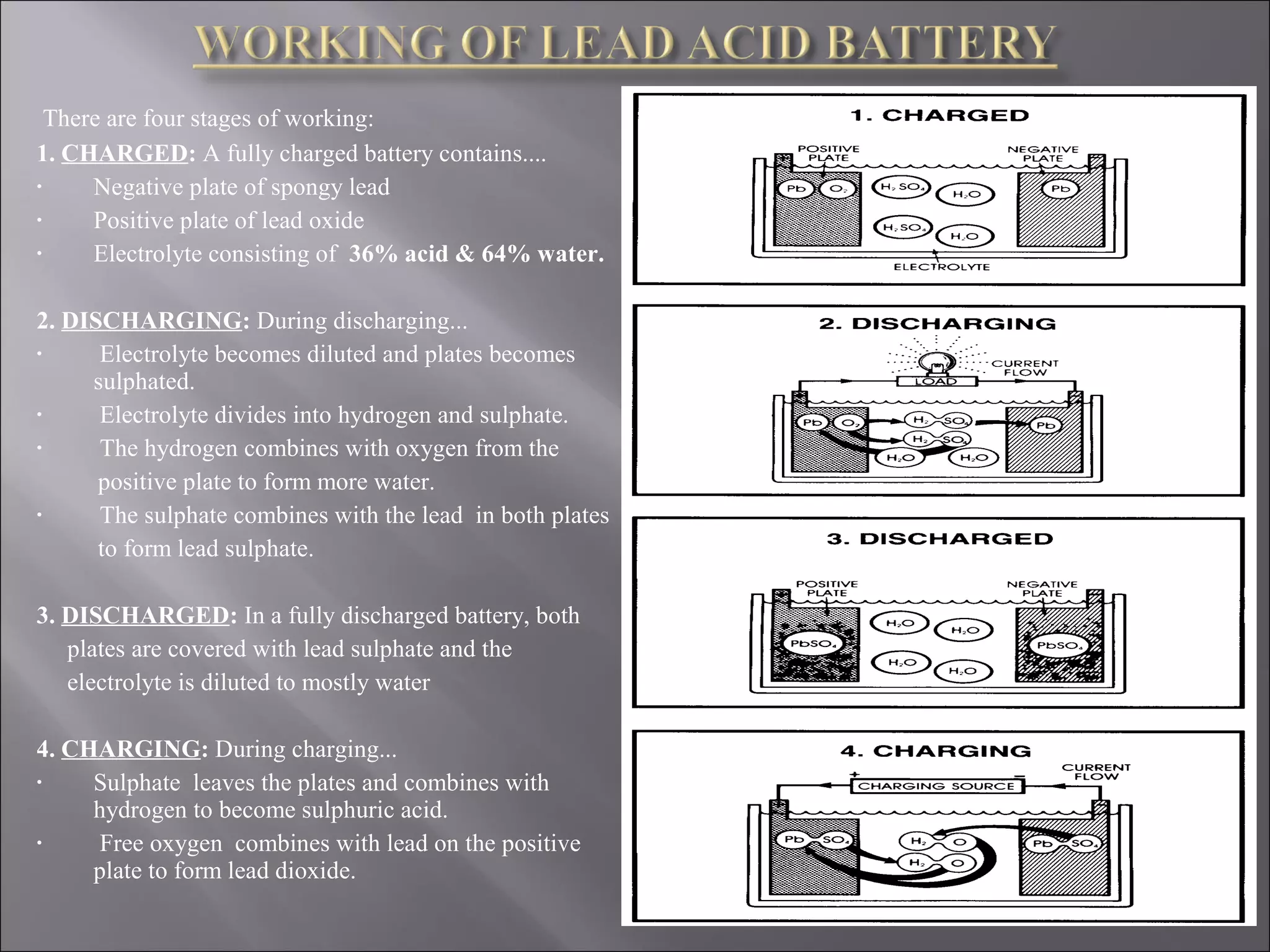
There are four stages of working:
1. CHARGED: A fully charged battery contains....
• Negative plate of spongy lead
• Positive plate of lead oxide
• Electrolyte consisting of 36% acid & 64% water.
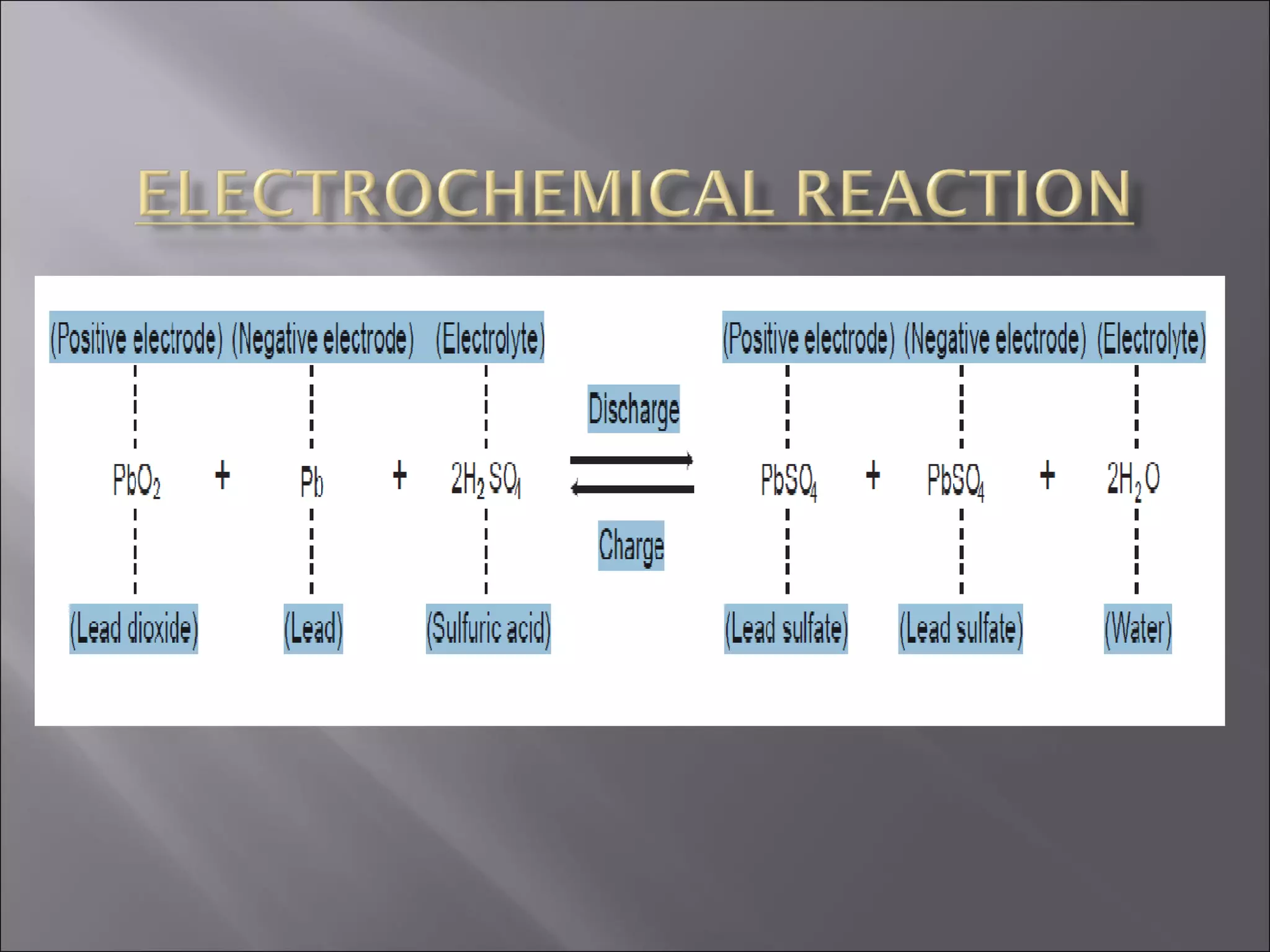
2. DISCHARGING: During discharging...
• Electrolyte becomes diluted and plates becomes
sulphated.
• Electrolyte divides into hydrogen and sulphate.
• The hydrogen combines with oxygen from the
positive plate to form more water.
• The sulphate combines with the lead in both plates
to form lead sulphate.
3. DISCHARGED: In a fully discharged battery, both
plates are covered with lead sulphate and the
electrolyte is diluted to mostly water
4. CHARGING: During charging...
• Sulphate leaves the plates and combines with
hydrogen to become sulphuric acid.
• Free oxygen combines with lead on the positive
plate to form lead dioxide.
Presentation on battery

Presentation on battery

  • 1.
    A PRESENTATION ON LEAD ACID BATTERY DEPARTMENTOF ELECTRICAL & ELECTRONICS ENGINEERING B.K. BIRLA INSTITUTE OF ENGINEERING & TECHNOLOGY PREPARED BY: SHEIKH AVES 10EBKEX049
  • 2.
     BATTERY  TYPESOF CELLS  LEAD ACID BATTERY AND ITS APPLICATIONS  CONSTRUCTION OF LEAD ACID BATTERY  WORKING OF LEAD ACID BATTERY
  • 3.
    BATTERY o It isa source which converts chemical energy into electrical energy and vice versa. o Cell is the building block of battery. o Battery is combination of cells in series. CROSS SECTIONAL VIEW
  • 4.
    TYPES OF CELLS: 1. PRIMARY CELL: CAN NOT BE RECHARGED  CHEMICAL PROCESS NOT REVERSABLE  CHEMICAL REACTION TOTALLY DESTROY ONE OF THE METAL AFTER A PERIOD OF TIME EXAMPLES- ZINC CARBON (1.5V), ALKALINE (1.5V) 2. SECONDARY CELL: CAN BE RECHARGED CHEMICAL REACTION REVERSIBLE THE ELECTRODE & ACID MIXTURE CHANGE AS THE BATTERY SUPPLIES .THIS IS CALLED DISCHARGING.BY APPLYING CURRENT TO CELL IN OPPOSITE DIRECTION,THE BATTERY MATERIAL RESTORED.THIS IS CALLED CHARGING. EXAMPLES – LEAD ACID(2.0V),NICKEL-CADMIUM(1.2V),NICKEL-METAL HYDRIDE(1.2V),LITHIUM ION(3.3V) ALSO KNOWN AS STORAGE CELL OR ACCUMULATOR
  • 7.
    1. BATTERY CASE& COVER:- The battery case and cover ...  form a sealed container  Protects the internal parts  Keep the internal parts in proper alignment  Prevent the electrolyte leakage  is made of polypropylene, hard rubber, and plastic base materials.
  • 8.
    2. PLATES:-Two plates: 1.POSITIVE PLATE- It is made of antimony covered with an active layer of lead dioxide(brown coloured). 2. NEGATIVE PLATE- It is made of lead covered with an active layer of spongy lead.
  • 9.
    3. SEPERATOR:- Platesare separated by thin porous separator (woven glass or plastic envelope).They allow electrolyte to pass freely between the plates but prevent the plates from touching each other. 4. CELLS:- A typical lead acid battery is organized into cells.Each cells....  consist of multiple positive and negative plates immersed in their own electrolyte reservoir.  produce about 2.1 volt regardless of battery size.  are connected in series with heavy internal straps.
  • 10.
    5. VENTING SYSTEM:-They allow controlled release of hydrogen gas which forms normally during battery recharging. If removed ,they permit checking electrolyte and if necessary adding water. 6. ELECTROLYTE:  It is mixture of Sulphuric acid (36%) and Water (64%).  It reacts chemically with the active material on the plate to produce voltage (electric pressure).  SPECIFIC GRAVITY OF ELECTROLYTE:-  When fully charged specific gravity of battery electrolyte is 1.270  Specific gravity is measured by Hydrometer or Refractometer.  SULPHATION:  Sulphation starts when specific gravity falls below 1.225 or voltage measure less than 12 volt.  Sulphation destroy the battery ability to generate volts and amps.
  • 11.
    There are fourstages of working: 1. CHARGED: A fully charged battery contains.... • Negative plate of spongy lead • Positive plate of lead oxide • Electrolyte consisting of 36% acid & 64% water. 2. DISCHARGING: During discharging... • Electrolyte becomes diluted and plates becomes sulphated. • Electrolyte divides into hydrogen and sulphate. • The hydrogen combines with oxygen from the positive plate to form more water. • The sulphate combines with the lead in both plates to form lead sulphate. 3. DISCHARGED: In a fully discharged battery, both plates are covered with lead sulphate and the electrolyte is diluted to mostly water 4. CHARGING: During charging... • Sulphate leaves the plates and combines with hydrogen to become sulphuric acid. • Free oxygen combines with lead on the positive plate to form lead dioxide.