VCE Environmental ScienceUnit 4: Area of Study 1Introduction to Pollution
Welcome to:Alex McLean and students from Camberwell Girls GrammarLeanne Caira and students from	Wantirna College
Rules for using Elluminate:Greet people with an appropriate introduction, showing respect at all times. Always use full English ie no IM or txt language. This is a professional site and translators cannot translate IM. Logon with an appropriate username that does not reveal your identity. Keep that user name for the entire session. No spamming egzzzzzzzzzzzzzzzzzzzzzzzzzzzzzzzzzzzzzzzzzzzzzzzzzzzzUse appropriate language at all times – no swearing, slang, words of dubious nature or double meanings. No cyberbullying or put-downs etc Be sensitive to people from other cultures who may be present. Never reveal any personal information eg phone numbers, addressess etc Avoid using CAPS, as it means you are shouting! Don’t scribble or black out the whiteboard – respect everyone else’s work there If in doubt, just don’t do it!
Copy and paste your definition of pollution here:
What is Pollution?“Pollution is the introduction of contaminants into a natural environment that causes instability, disorder, harm or discomfort to the ecosystem i.e. physical systems or living organisms”“Pollution is contamination of the natural environment with harmful substances often as a consequence of human activities.”“ A Pollutant is something that when released into the environment causes some harm or alters the environment in a negative way.”
List some examples of pollution that you already know here:
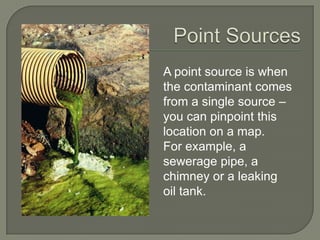
Point SourcesA point source is when the contaminant comes from a single source – you can pinpoint this location on a map. For example, a sewerage pipe, a chimney or a leaking oil tank.
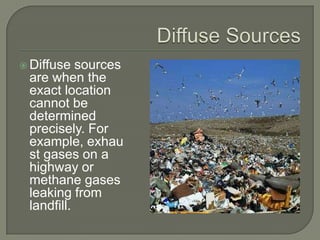
Diffuse SourcesDiffuse sources are when the exact location cannot be determined precisely. For example, exhaust gases on a highway or methane gases leaking from landfill.
Mobile EmissionsFrom moving sourcesList five examples.1.2.3.4.5.
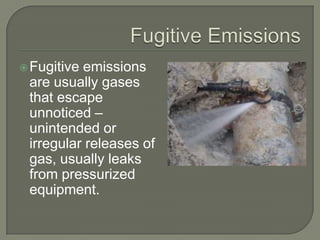
Fugitive EmissionsFugitive emissions are usually gases that escape unnoticed – unintended or irregular releases of gas, usually leaks from pressurized equipment.
Pollution SinksA place or process that removes, stores or absorbs the pollutant.  Wetlands are a pollutant sink for heavy metals and other materials. Atmospheric carbon dioxide dissolves in sea and is stored in organic matter such as plants and vegetation.
50% Lethal Dose = LD50Is the term used to describe the dose of a substance that is sufficient to kill a percentage (50%) of the specified test animal within a specified period. The smaller the LD50 dose the more toxic a substance is.  The lethal dose figures refer to acute toxicity and do not give an indicator of cumulative effects over time.
ToxicityThe measure of harm (death or illness) a substance can cause in humans and other living things.  Toxicity is defined as acute and chronic respectively this refers to single and repetitive exposure.
PersistenceThe time that the pollutant takes to break down. Substances that are not easily broken down are said to be persistent. A pollutant is degradable if it breaks down with sunlight, soil, water or in chemical reactions.
DispersalThe way that a pollutant is spread or moves around the environment. Dispersal can be airborne, water borne or in soils.
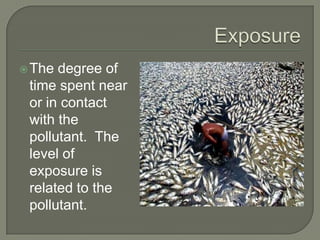
ExposureThe degree of time spent near or in contact with the pollutant.  The level of exposure is related to the pollutant.
Inhalation, Ingestion and Absorption. The contact that occurs with a pollutant.  The contact may be inhaled, ingested or absorbed via the skin.
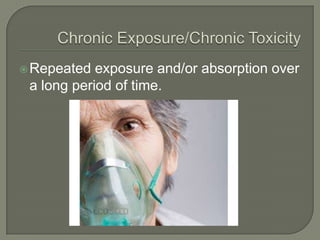
Chronic Exposure/Chronic ToxicityRepeated exposure and/or absorption over a long period of time.
Acute Exposure/Acute ToxicityA single, severe case of exposure, absorption and harm caused.
Volatile Organic Compounds (VOC’s)Volatile organic compounds are emitted as gases from certain solids or liquids. They are usually the gaseous vapours (fumes) from paints and fuels, such as petrol or other hydrocarbons. They can be naturally occurring or man-made. VOCs are typically not acutely toxic but have chronic effects. Because the concentrations are usually low and the symptoms slow to develop, analysis of VOCs and their effects is a demanding area. There is concern about VOC’s released indoors from plastics (‘new car smell’).
Synergistic ReactionsAn interaction between two or more individual compounds that produces an effect upon the body (or an organism) GREATER than either of the substances alone would have produced.When the combined result is greater than the sum of it’s parts.Example: Smog – combinations of pollutants.
BioaccumulationWhen a persistent pollutant builds up in an individual organism, due to multiple exposures and absorptions over time. Usually they are fat-soluble substances that are stored by the body.
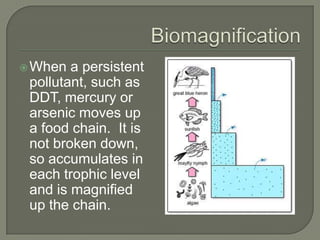
BiomagnificationWhen a persistent pollutant, such as DDT, mercury or arsenic moves up a food chain.  It is not broken down, so accumulates in each trophic level and is magnified up the chain.
2005 Exam
2005 Exam
2005 Exam
ReferencesEnvironmental Protection Authority, Victoria at http://www.epa.vic.gov.au/National Pollutant Inventory at http://www.npi.gov.au/index.htmlPollution and Waste Management at http://australia.gov.au/topics/environment-and-natural-resources/pollution-and-waste-management

Introduction to Pollution

  • 1.
    VCE Environmental ScienceUnit4: Area of Study 1Introduction to Pollution
  • 2.
    Welcome to:Alex McLeanand students from Camberwell Girls GrammarLeanne Caira and students from Wantirna College
  • 3.
    Rules for usingElluminate:Greet people with an appropriate introduction, showing respect at all times. Always use full English ie no IM or txt language. This is a professional site and translators cannot translate IM. Logon with an appropriate username that does not reveal your identity. Keep that user name for the entire session. No spamming egzzzzzzzzzzzzzzzzzzzzzzzzzzzzzzzzzzzzzzzzzzzzzzzzzzzzUse appropriate language at all times – no swearing, slang, words of dubious nature or double meanings. No cyberbullying or put-downs etc Be sensitive to people from other cultures who may be present. Never reveal any personal information eg phone numbers, addressess etc Avoid using CAPS, as it means you are shouting! Don’t scribble or black out the whiteboard – respect everyone else’s work there If in doubt, just don’t do it!
  • 4.
    Copy and pasteyour definition of pollution here:
  • 5.
    What is Pollution?“Pollutionis the introduction of contaminants into a natural environment that causes instability, disorder, harm or discomfort to the ecosystem i.e. physical systems or living organisms”“Pollution is contamination of the natural environment with harmful substances often as a consequence of human activities.”“ A Pollutant is something that when released into the environment causes some harm or alters the environment in a negative way.”
  • 6.
    List some examplesof pollution that you already know here:
  • 7.
    Point SourcesA pointsource is when the contaminant comes from a single source – you can pinpoint this location on a map. For example, a sewerage pipe, a chimney or a leaking oil tank.
  • 8.
    Diffuse SourcesDiffuse sourcesare when the exact location cannot be determined precisely. For example, exhaust gases on a highway or methane gases leaking from landfill.
  • 9.
    Mobile EmissionsFrom movingsourcesList five examples.1.2.3.4.5.
  • 10.
    Fugitive EmissionsFugitive emissionsare usually gases that escape unnoticed – unintended or irregular releases of gas, usually leaks from pressurized equipment.
  • 11.
    Pollution SinksA placeor process that removes, stores or absorbs the pollutant. Wetlands are a pollutant sink for heavy metals and other materials. Atmospheric carbon dioxide dissolves in sea and is stored in organic matter such as plants and vegetation.
  • 12.
    50% Lethal Dose= LD50Is the term used to describe the dose of a substance that is sufficient to kill a percentage (50%) of the specified test animal within a specified period. The smaller the LD50 dose the more toxic a substance is. The lethal dose figures refer to acute toxicity and do not give an indicator of cumulative effects over time.
  • 13.
    ToxicityThe measure ofharm (death or illness) a substance can cause in humans and other living things. Toxicity is defined as acute and chronic respectively this refers to single and repetitive exposure.
  • 14.
    PersistenceThe time thatthe pollutant takes to break down. Substances that are not easily broken down are said to be persistent. A pollutant is degradable if it breaks down with sunlight, soil, water or in chemical reactions.
  • 15.
    DispersalThe way thata pollutant is spread or moves around the environment. Dispersal can be airborne, water borne or in soils.
  • 16.
    ExposureThe degree oftime spent near or in contact with the pollutant. The level of exposure is related to the pollutant.
  • 17.
    Inhalation, Ingestion andAbsorption. The contact that occurs with a pollutant. The contact may be inhaled, ingested or absorbed via the skin.
  • 18.
    Chronic Exposure/Chronic ToxicityRepeatedexposure and/or absorption over a long period of time.
  • 19.
    Acute Exposure/Acute ToxicityAsingle, severe case of exposure, absorption and harm caused.
  • 20.
    Volatile Organic Compounds(VOC’s)Volatile organic compounds are emitted as gases from certain solids or liquids. They are usually the gaseous vapours (fumes) from paints and fuels, such as petrol or other hydrocarbons. They can be naturally occurring or man-made. VOCs are typically not acutely toxic but have chronic effects. Because the concentrations are usually low and the symptoms slow to develop, analysis of VOCs and their effects is a demanding area. There is concern about VOC’s released indoors from plastics (‘new car smell’).
  • 21.
    Synergistic ReactionsAn interactionbetween two or more individual compounds that produces an effect upon the body (or an organism) GREATER than either of the substances alone would have produced.When the combined result is greater than the sum of it’s parts.Example: Smog – combinations of pollutants.
  • 22.
    BioaccumulationWhen a persistentpollutant builds up in an individual organism, due to multiple exposures and absorptions over time. Usually they are fat-soluble substances that are stored by the body.
  • 23.
    BiomagnificationWhen a persistentpollutant, such as DDT, mercury or arsenic moves up a food chain. It is not broken down, so accumulates in each trophic level and is magnified up the chain.
  • 24.
  • 25.
  • 26.
  • 27.
    ReferencesEnvironmental Protection Authority,Victoria at http://www.epa.vic.gov.au/National Pollutant Inventory at http://www.npi.gov.au/index.htmlPollution and Waste Management at http://australia.gov.au/topics/environment-and-natural-resources/pollution-and-waste-management