• An oil spill is the release of a liquid petroleum
hydrocarbon into the environment especially
marine areas, due to human activity and is the
form of pollution. Oil spills maybe due to release
of crude oil, off shore platforms, drilling rigs,
and wells as well as spills of refined petroleum
products. Cleanup of oil spill is difficult and
depends upon many factors. It may take weeks,
months or even years.
• Local industries
• Human health
• Marine ecosystem including animal and
plant life
• Vegetation & mangroves
• Effect on marine life
• Damage Beaches, Marshlands and Fragile
Marine Ecosystems
• Tourist as
fishing,
swimming or
sailing
• Industries that
rely on fresh sea
water
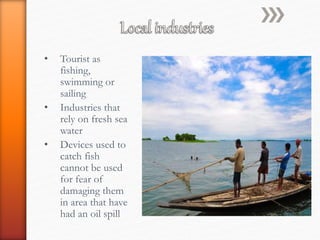
• Devices used to
catch fish
cannot be used
for fear of
damaging them
in area that have
had an oil spill
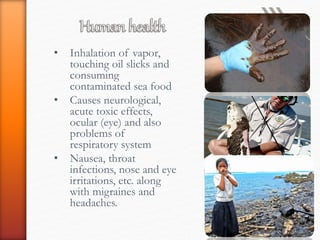
• Inhalation of vapor,
touching oil slicks and
consuming
contaminated sea food
• Causes neurological,
acute toxic effects,
ocular (eye) and also
problems of
respiratory system
• Nausea, throat
infections, nose and eye
irritations, etc. along
with migraines and
headaches.
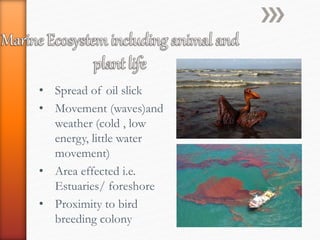
• Spread of oil slick
• Movement (waves)and
weather (cold , low
energy, little water
movement)
• Area effected i.e.
Estuaries/ foreshore
• Proximity to bird
breeding colony
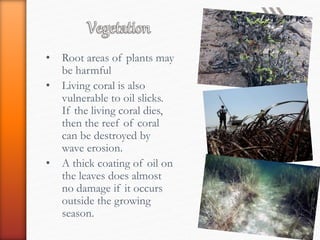
• Root areas of plants may
be harmful
• Living coral is also
vulnerable to oil slicks.
If the living coral dies,
then the reef of coral
can be destroyed by
wave erosion.
• A thick coating of oil on
the leaves does almost
no damage if it occurs
outside the growing
season.
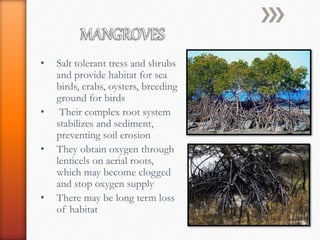
• Salt tolerant tress and shrubs
and provide habitat for sea
birds, crabs, oysters, breeding
ground for birds
• Their complex root system
stabilizes and sediment,
preventing soil erosion
• They obtain oxygen through
lenticels on aerial roots,
which may become clogged
and stop oxygen supply
• There may be long term loss
of habitat
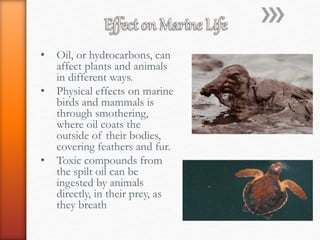
• Oil, or hydrocarbons, can
affect plants and animals
in different ways.
• Physical effects on marine
birds and mammals is
through smothering,
where oil coats the
outside of their bodies,
covering feathers and fur.
• Toxic compounds from
the spilt oil can be
ingested by animals
directly, in their prey, as
they breath
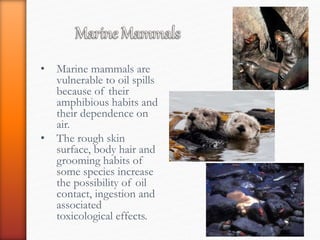
• Marine mammals are
vulnerable to oil spills
because of their
amphibious habits and
their dependence on
air.
• The rough skin
surface, body hair and
grooming habits of
some species increase
the possibility of oil
contact, ingestion and
associated
toxicological effects.
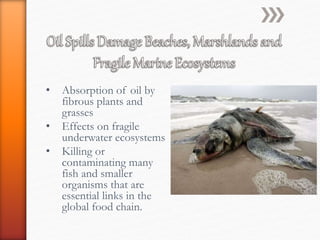
• Absorption of oil by
fibrous plants and
grasses
• Effects on fragile
underwater ecosystems
• Killing or
contaminating many
fish and smaller
organisms that are
essential links in the
global food chain.
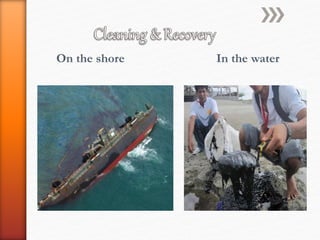
On the shore In the water
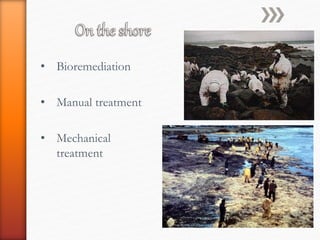
• Bioremediation
• Manual treatment
• Mechanical
treatment
• Boom
• Burning
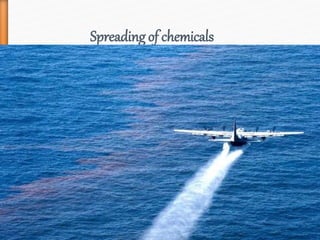
• Spreading of chemicals
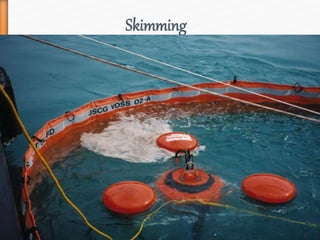
• Skimming
• Sorbents
 Natural organic sorbents
 Natural inorganic sorbents
 Synthetic sorbents
• Shovels
Boom
Burning
Spreading of chemicals
Skimming
Sorbents
Shovels
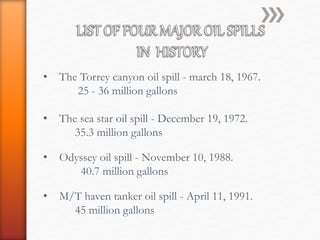
• The Torrey canyon oil spill - march 18, 1967.
25 - 36 million gallons
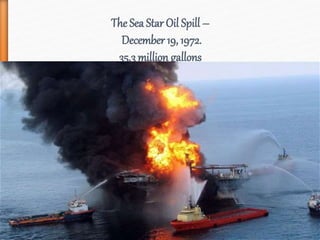
• The sea star oil spill - December 19, 1972.
35.3 million gallons
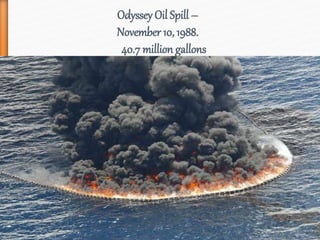
• Odyssey oil spill - November 10, 1988.
40.7 million gallons
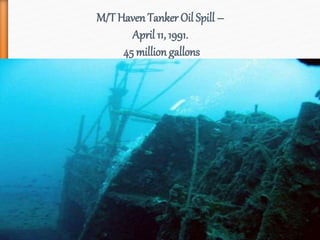
• M/T haven tanker oil spill - April 11, 1991.
45 million gallons
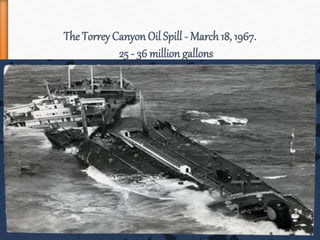
The Torrey Canyon Oil Spill - March 18, 1967.
25 - 36 million gallons
The Sea Star Oil Spill –
December 19, 1972.
35.3 million gallons
Odyssey Oil Spill –
November 10, 1988.
40.7 million gallons
M/T Haven Tanker Oil Spill –
April 11, 1991.
45 million gallons
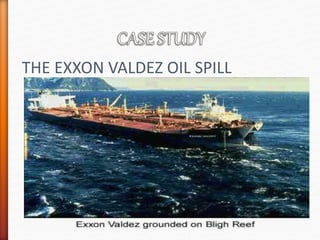
THE EXXON VALDEZ OIL SPILL
• Leakage of massive crude oil in PRINCE
WILLIAM SOUND
• Polluted the environment around Alaska
• Negative impact on sea life
• People had a fear to travel to Alaska
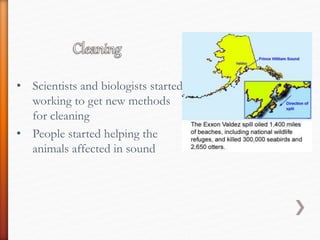
• Scientists and biologists started
working to get new methods
for cleaning
• People started helping the
animals affected in sound
Ppt oil spill

Ppt oil spill

  • 2.
    • An oilspill is the release of a liquid petroleum hydrocarbon into the environment especially marine areas, due to human activity and is the form of pollution. Oil spills maybe due to release of crude oil, off shore platforms, drilling rigs, and wells as well as spills of refined petroleum products. Cleanup of oil spill is difficult and depends upon many factors. It may take weeks, months or even years.
  • 4.
    • Local industries •Human health • Marine ecosystem including animal and plant life • Vegetation & mangroves • Effect on marine life • Damage Beaches, Marshlands and Fragile Marine Ecosystems
  • 5.
    • Tourist as fishing, swimmingor sailing • Industries that rely on fresh sea water • Devices used to catch fish cannot be used for fear of damaging them in area that have had an oil spill
  • 6.
    • Inhalation ofvapor, touching oil slicks and consuming contaminated sea food • Causes neurological, acute toxic effects, ocular (eye) and also problems of respiratory system • Nausea, throat infections, nose and eye irritations, etc. along with migraines and headaches.
  • 7.
    • Spread ofoil slick • Movement (waves)and weather (cold , low energy, little water movement) • Area effected i.e. Estuaries/ foreshore • Proximity to bird breeding colony
  • 8.
    • Root areasof plants may be harmful • Living coral is also vulnerable to oil slicks. If the living coral dies, then the reef of coral can be destroyed by wave erosion. • A thick coating of oil on the leaves does almost no damage if it occurs outside the growing season.
  • 9.
    • Salt toleranttress and shrubs and provide habitat for sea birds, crabs, oysters, breeding ground for birds • Their complex root system stabilizes and sediment, preventing soil erosion • They obtain oxygen through lenticels on aerial roots, which may become clogged and stop oxygen supply • There may be long term loss of habitat
  • 10.
    • Oil, orhydrocarbons, can affect plants and animals in different ways. • Physical effects on marine birds and mammals is through smothering, where oil coats the outside of their bodies, covering feathers and fur. • Toxic compounds from the spilt oil can be ingested by animals directly, in their prey, as they breath
  • 13.
    • Marine mammalsare vulnerable to oil spills because of their amphibious habits and their dependence on air. • The rough skin surface, body hair and grooming habits of some species increase the possibility of oil contact, ingestion and associated toxicological effects.
  • 14.
    • Absorption ofoil by fibrous plants and grasses • Effects on fragile underwater ecosystems • Killing or contaminating many fish and smaller organisms that are essential links in the global food chain.
  • 15.
    On the shoreIn the water
  • 16.
    • Bioremediation • Manualtreatment • Mechanical treatment
  • 17.
    • Boom • Burning •Spreading of chemicals • Skimming • Sorbents  Natural organic sorbents  Natural inorganic sorbents  Synthetic sorbents • Shovels
  • 18.
  • 19.
  • 20.
  • 21.
  • 22.
  • 23.
  • 24.
    • The Torreycanyon oil spill - march 18, 1967. 25 - 36 million gallons • The sea star oil spill - December 19, 1972. 35.3 million gallons • Odyssey oil spill - November 10, 1988. 40.7 million gallons • M/T haven tanker oil spill - April 11, 1991. 45 million gallons
  • 25.
    The Torrey CanyonOil Spill - March 18, 1967. 25 - 36 million gallons
  • 26.
    The Sea StarOil Spill – December 19, 1972. 35.3 million gallons
  • 27.
    Odyssey Oil Spill– November 10, 1988. 40.7 million gallons
  • 28.
    M/T Haven TankerOil Spill – April 11, 1991. 45 million gallons
  • 29.
  • 30.
    • Leakage ofmassive crude oil in PRINCE WILLIAM SOUND • Polluted the environment around Alaska • Negative impact on sea life • People had a fear to travel to Alaska
  • 31.
    • Scientists andbiologists started working to get new methods for cleaning • People started helping the animals affected in sound