INTRODUCTIONA. THE STUDY OF POLITICAL SCIENCE
Meaning of Political ScienceThe term political science is the systematic study of the state and the governmentPolitical Science is a social science regarding the practice and theory of politics, the analysis of political systems, and the study of political behavior.
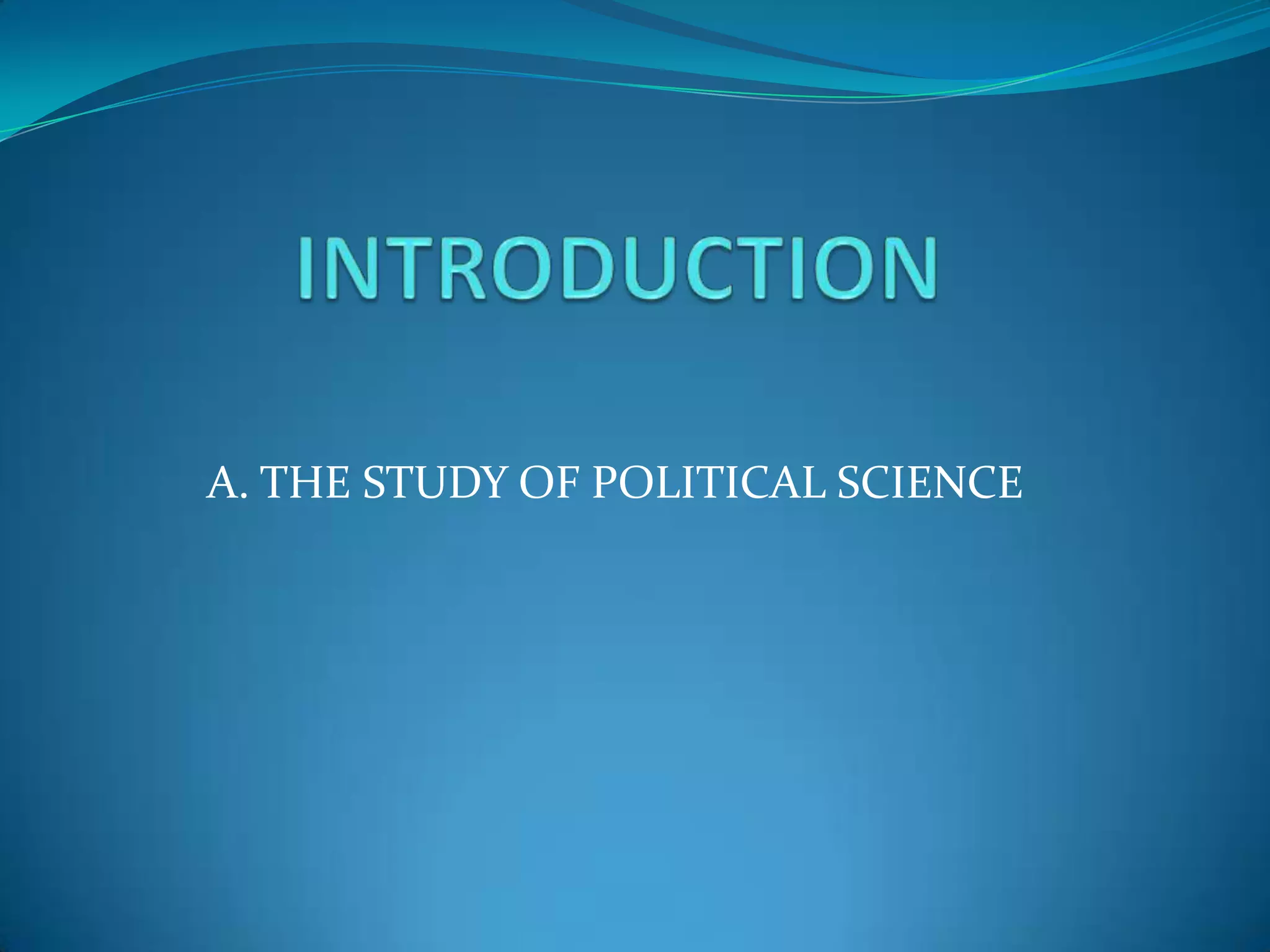
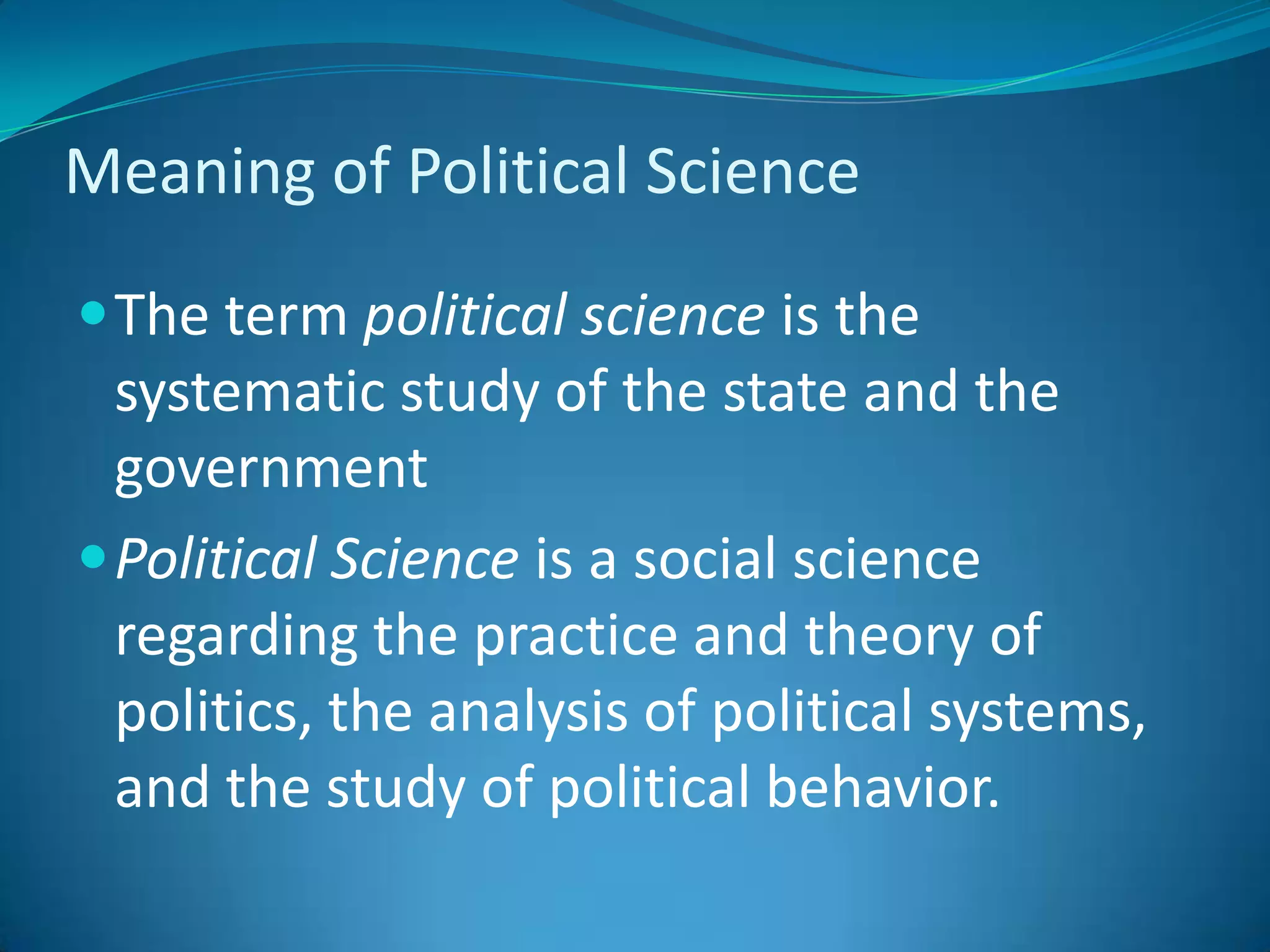
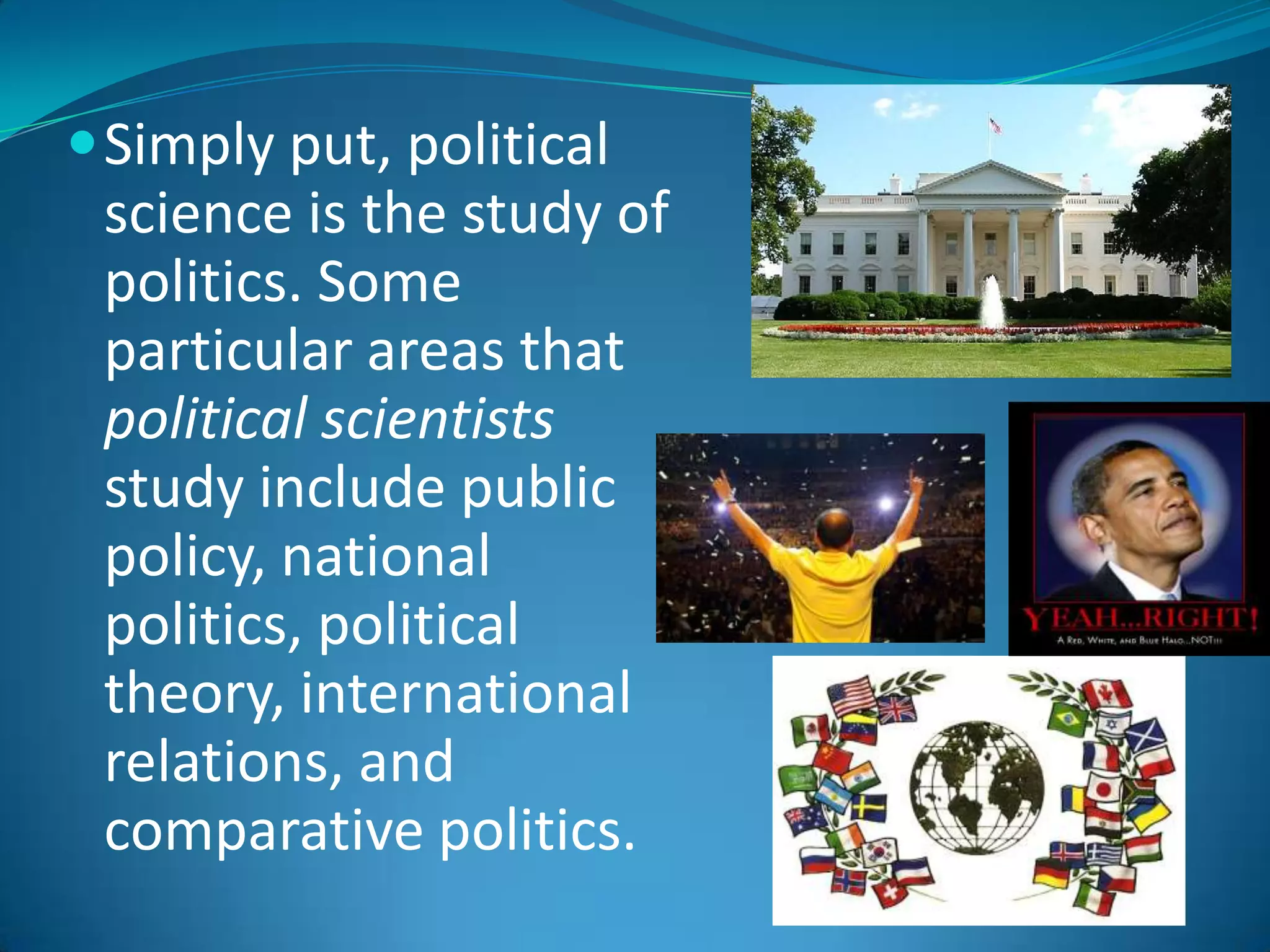
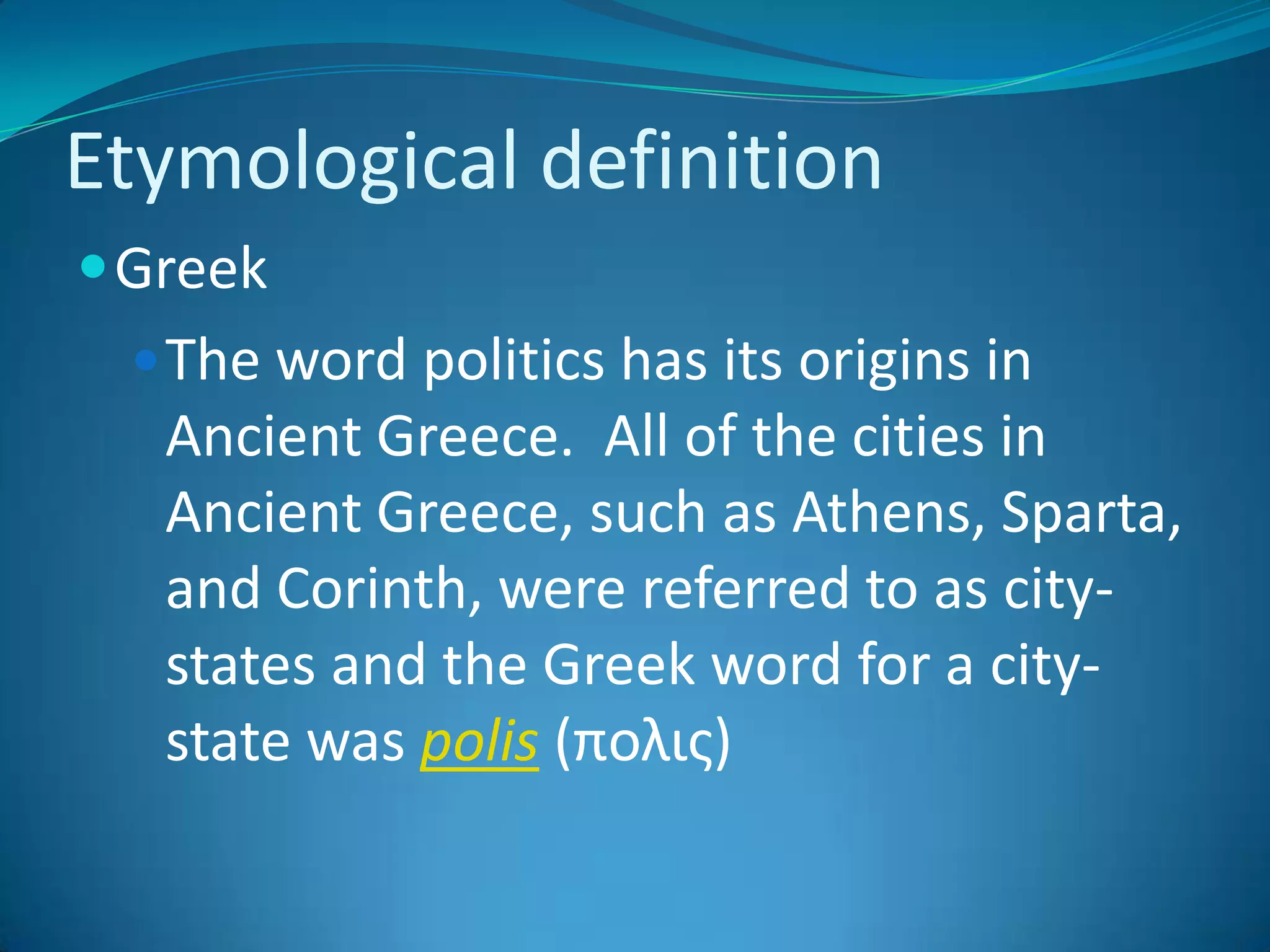
Simply put, political science is the study of politics. Some particular areas that political scientists study include public policy, national politics, political theory, international relations, and comparative politics.
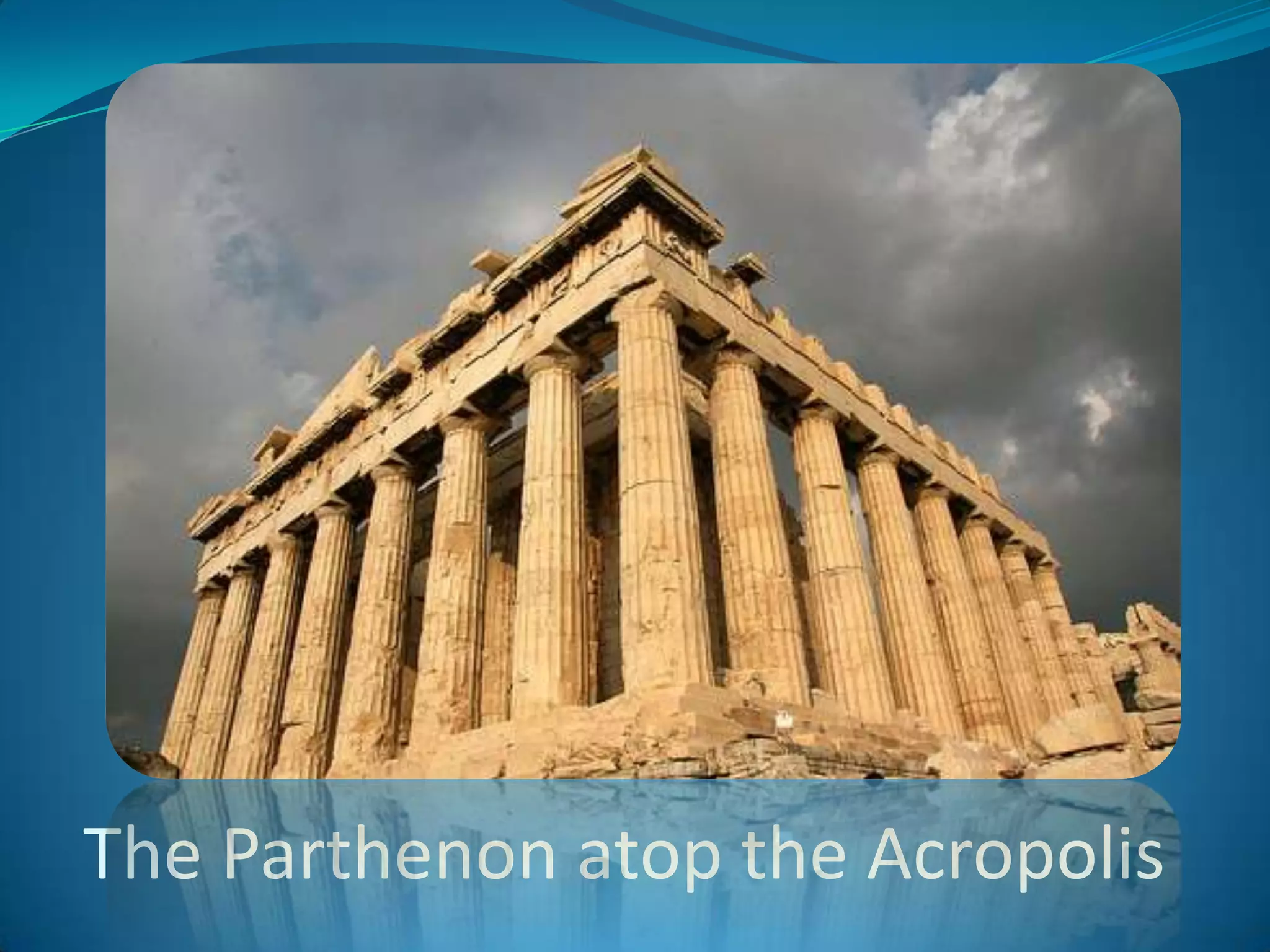
Etymological definitionGreekThe word politics has its origins in Ancient Greece.  All of the cities in Ancient Greece, such as Athens, Sparta, and Corinth, were referred to as city-states and the Greek word for a city-state was polis (πολις)
The Parthenon atop the Acropolis
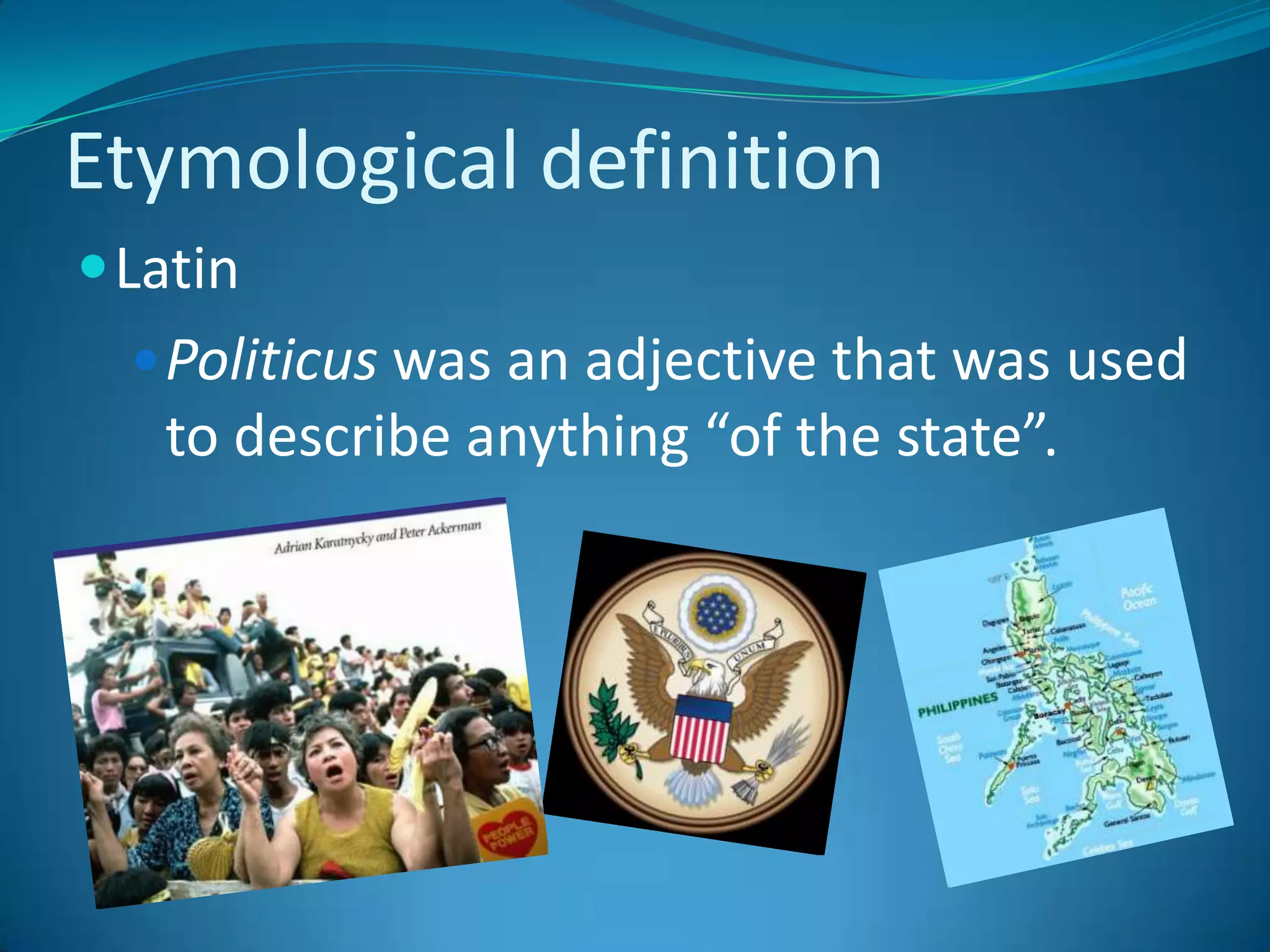
Etymological definitionLatinPoliticus was an adjective that was used to describe anything “of the state”. 
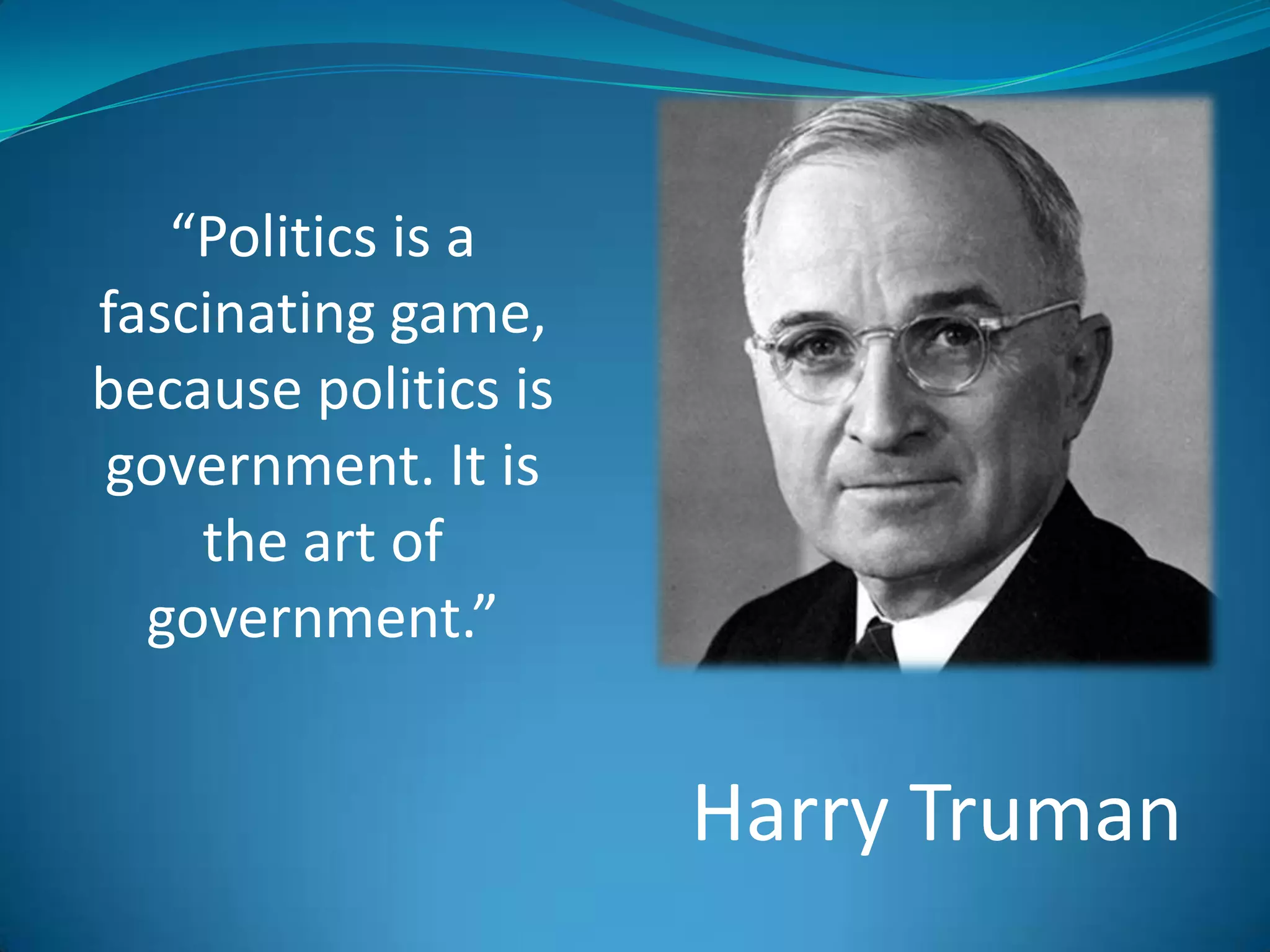
“Politics is a fascinating game, because politics is government. It is the art of government.”Harry Truman
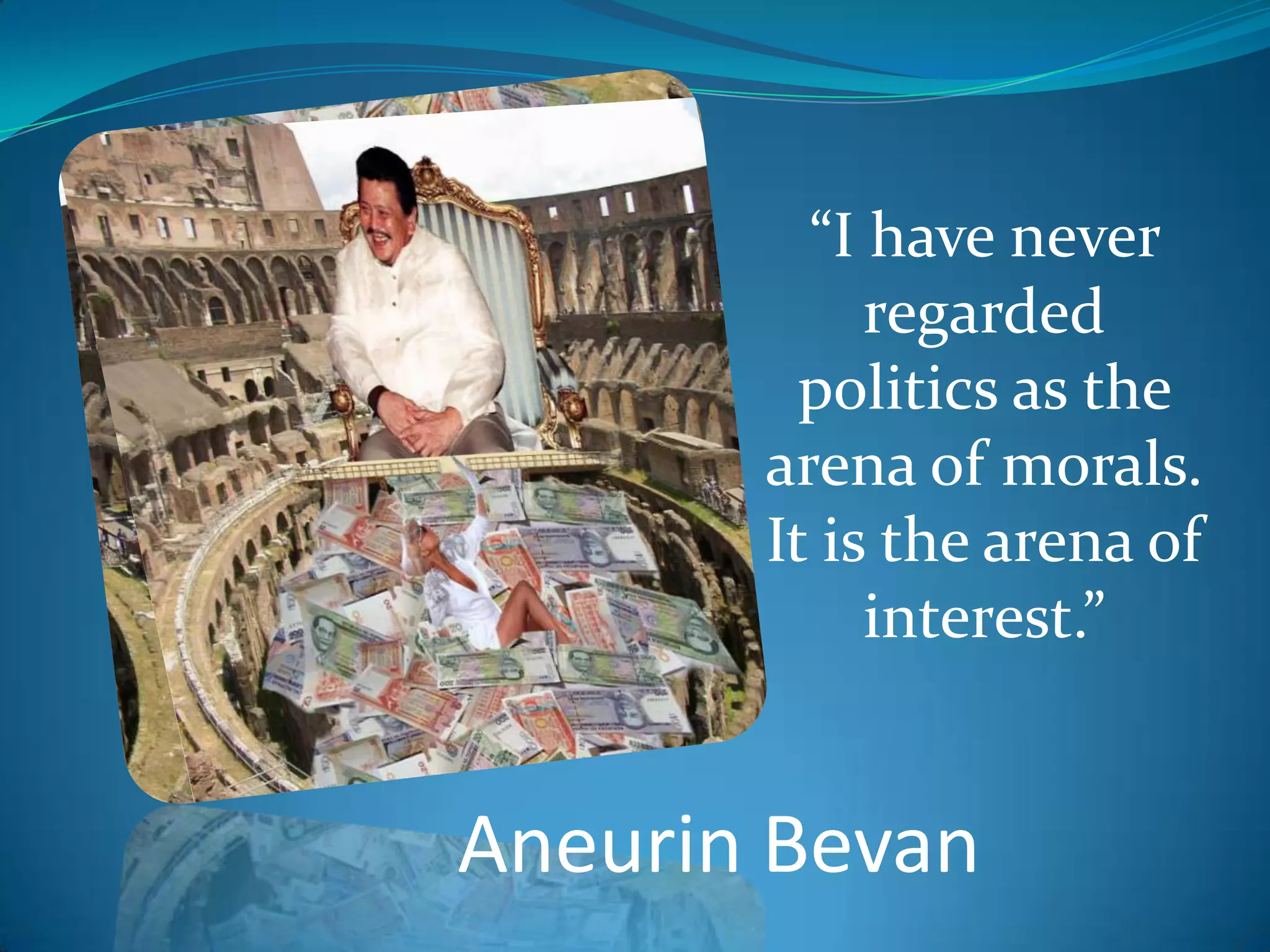
“I have never regarded politics as the arena of morals. It is the arena of interest.”Aneurin Bevan
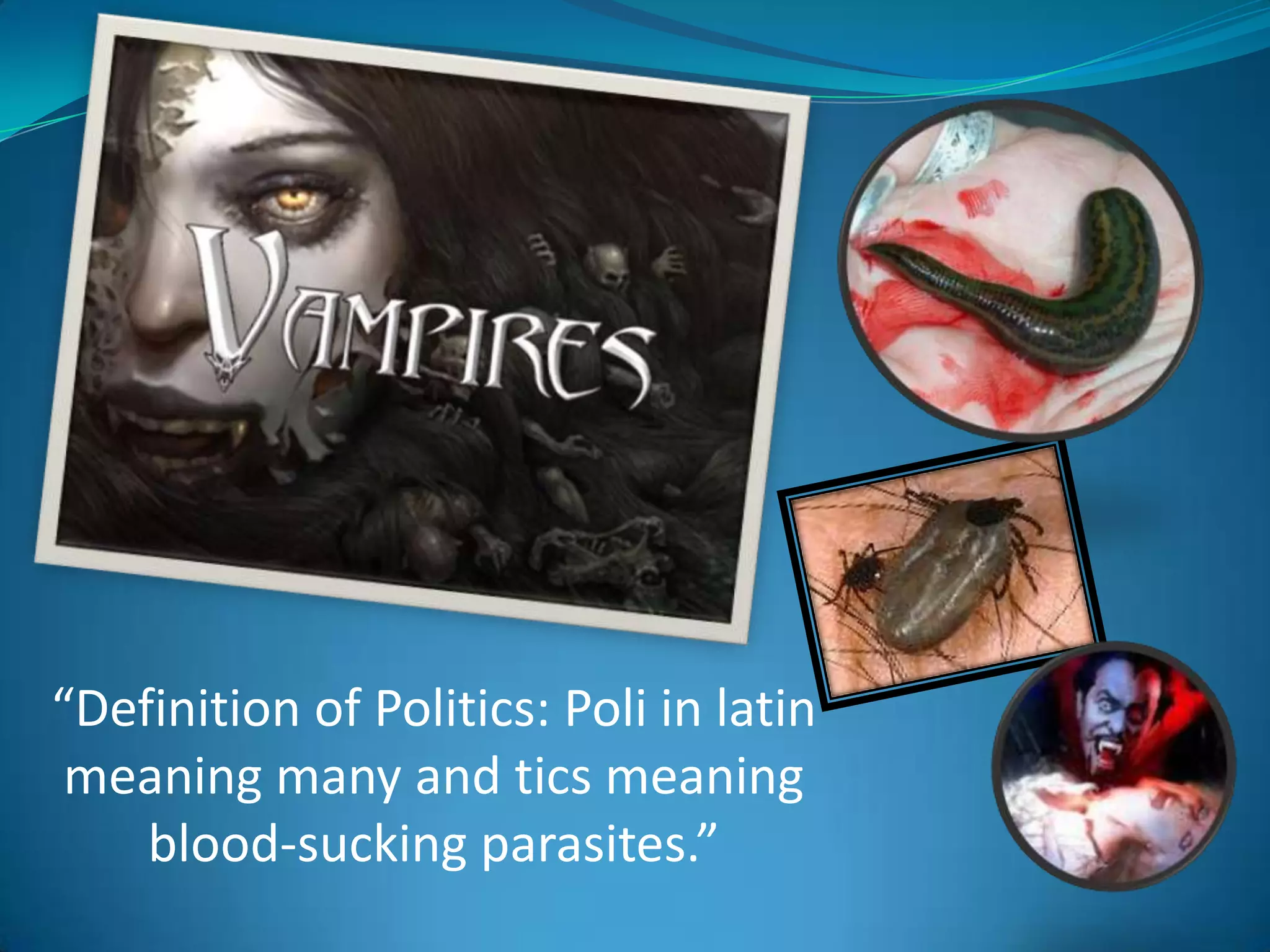
“Definition of Politics: Poli in latin meaning many and tics meaning blood-sucking parasites.”
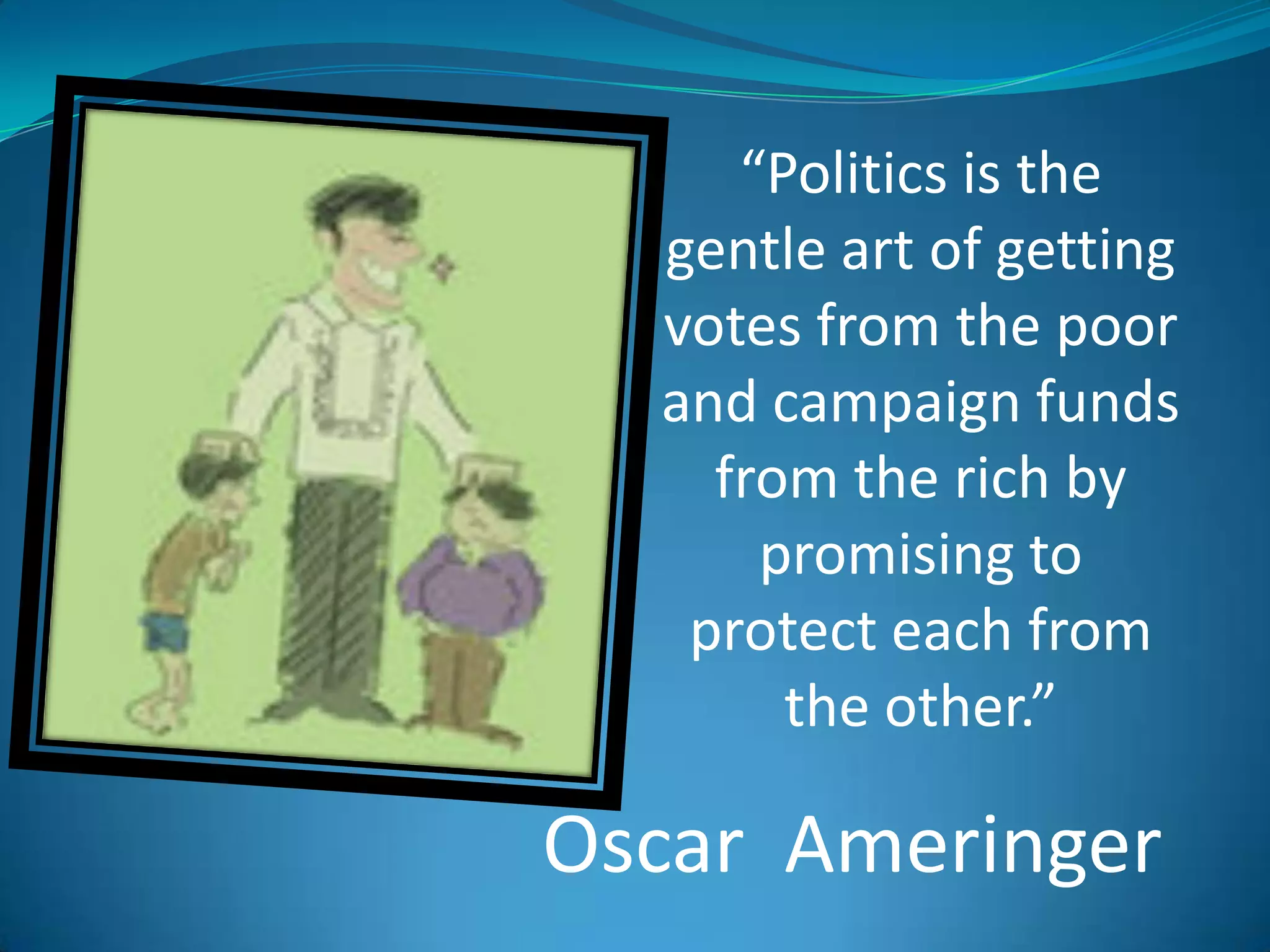
“Politics is the gentle art of getting votes from the poor and campaign funds from the rich by promising to protect each from the other.”Oscar  Ameringer
Scope of Political SciencePolitical TheoryPublic LawPublic Administration
Interrelationship with other branched of learningHistoryEconomicsGeographySociology and AnthropologyPsychologyPhilosophyStatistics and LogicJurisprudence
Function and importance of Political Science“The function of political science is to discover the principles that should be adhered to in public affairs that eventually would serve as a model that can be applied to matters of urgent concern to public officials and to private citizens.”
Goal in the study of political scienceEducation for citizenship	- the primary objective of the political science curriculum is to equip students to discharge the obligations of democratic citizenship
Goal in the study of political scienceEssential parts of liberal education	- Intelligent, responsible citizenship can save democracy; ignorance and negligence can lose it
Essential parts of liberal educationKnowledge and understanding of government	- the “good” citizen knows how his government operates, what his rights and obligations are, who his elected representatives are, and what they stand for
B. Concepts of State and Government
Meaning of StateA state is a community  of persons more or less numerous, permanently occupying a definite portion of territory, having a government of their own to which the great body of inhabitants render obedience, and enjoying freedom from external control. The Philippines is a state.
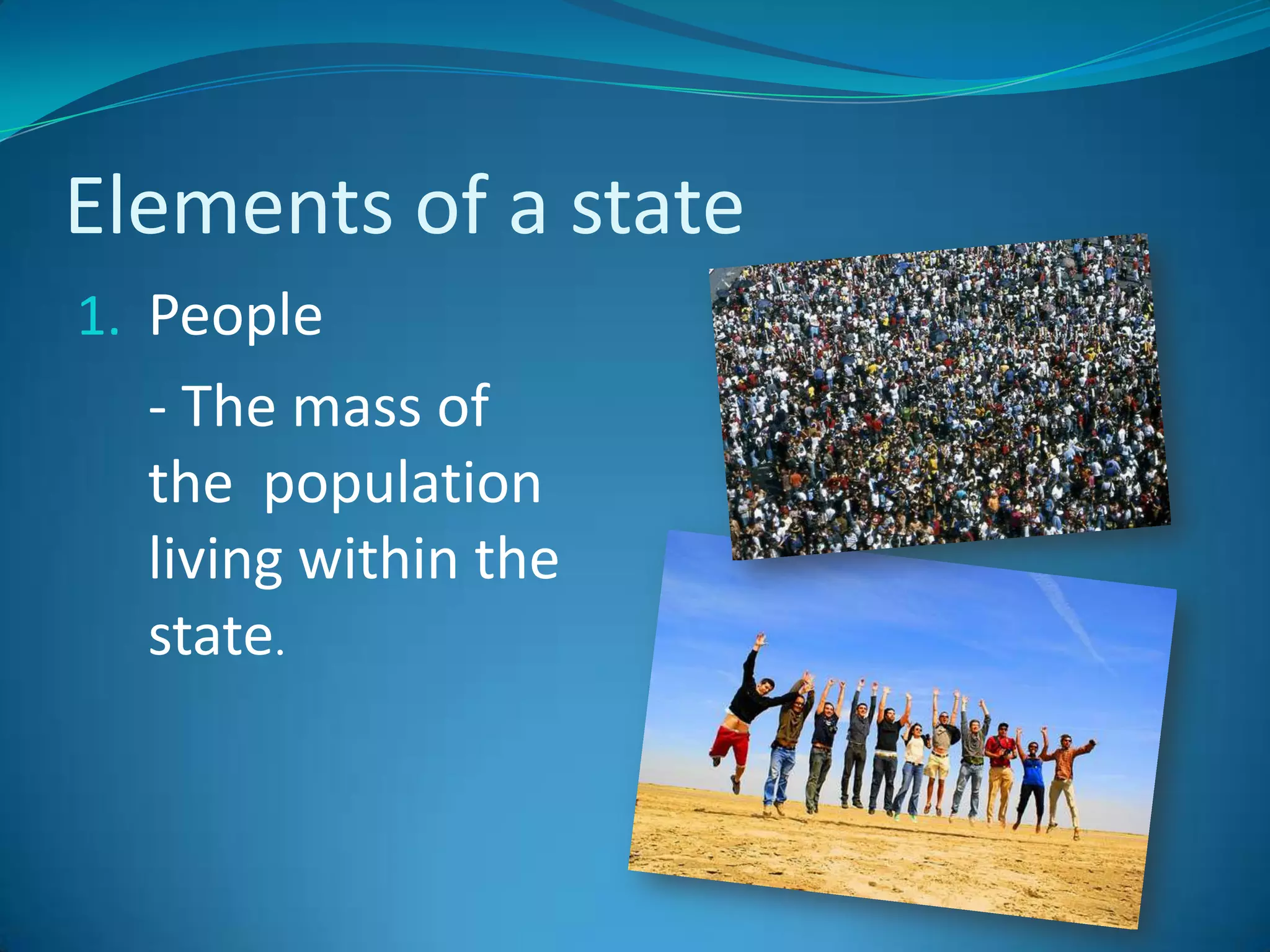
Elements of a statePeople   	- The mass of the  population living within the state.
“people”answers the question, “who governs whom?”no specific number requirement“…the state shall neither be too small nor yet one that seems great but has no unity.” (Plato)
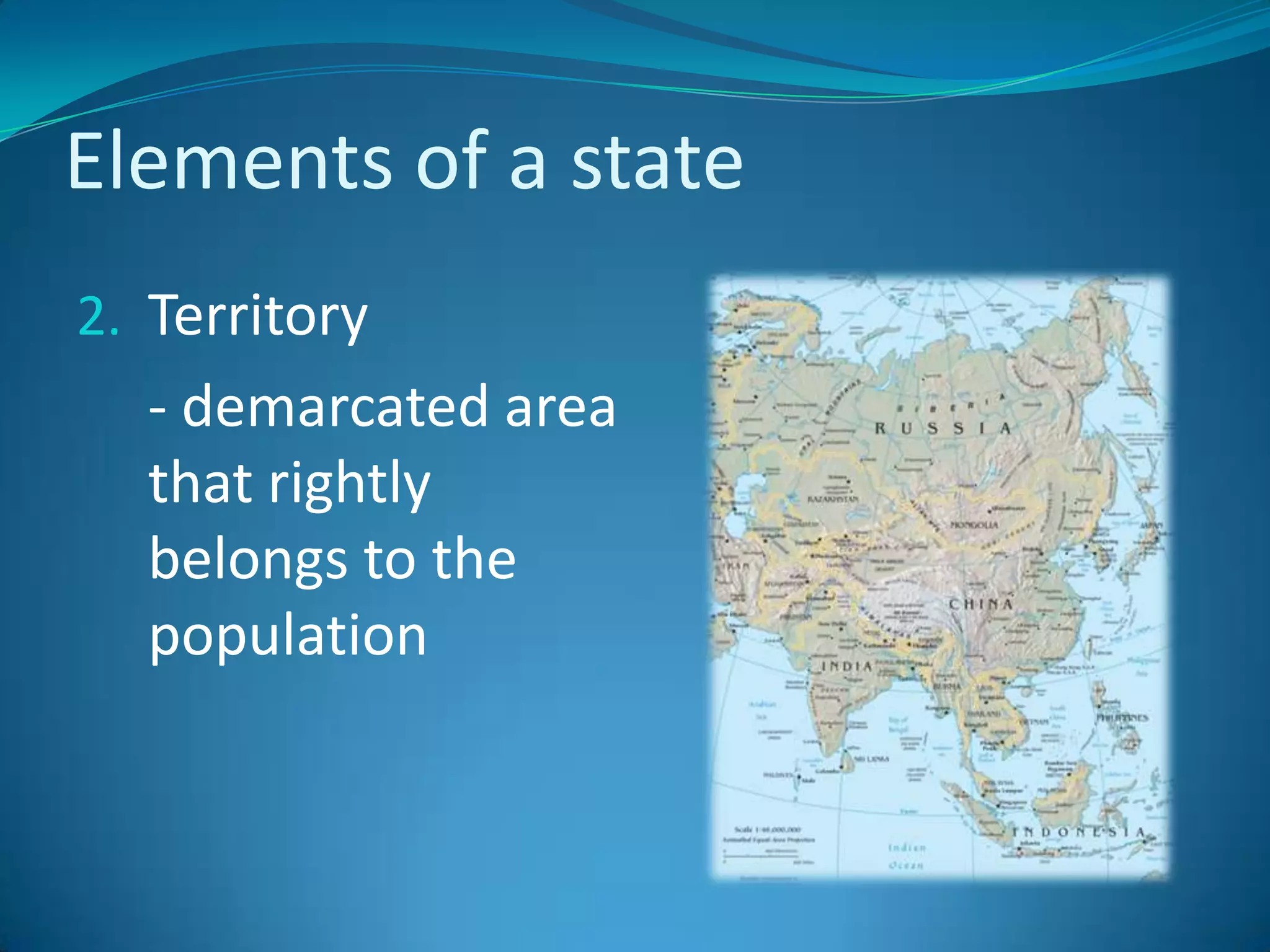
Elements of a stateTerritory	- demarcated area that rightly belongs to the population
“territory”answers the question, “where?”terrestrial, fluvial, maritime and aerialshould be permanent and large enough to be self-sufficing
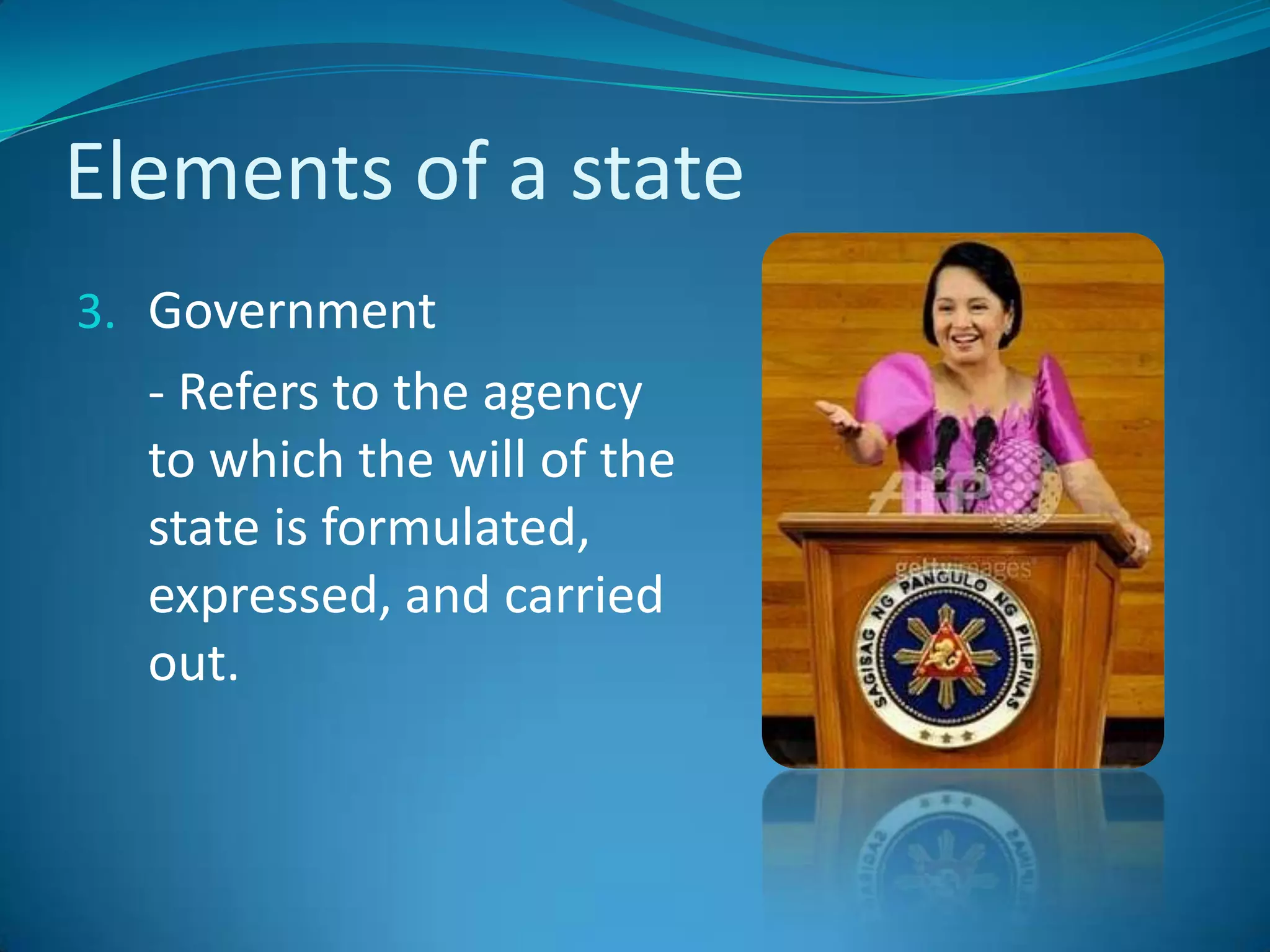
Elements of a state	Government	- Refers to the agency to which the will of the state is formulated, expressed, and carried out.
Elements of a stateSovereignty- 	May be defined as the supreme power of the state to command and enforce obedience to its will from the people within its jurisdiction and corollarily to have freedom from foreign control.
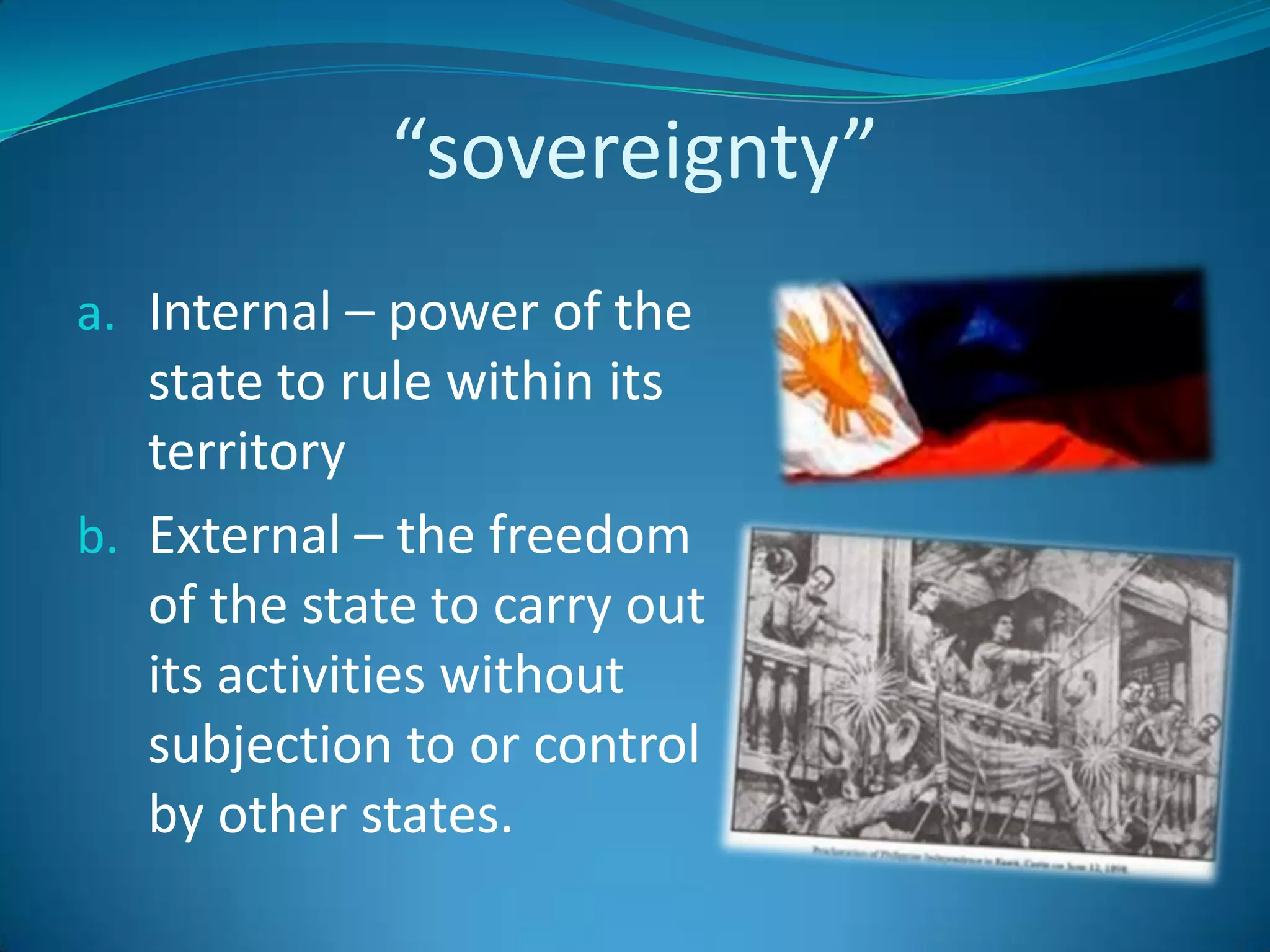
“sovereignty”Internal – power of the state to rule within its territoryExternal – the freedom of the state to carry out its activities without subjection to or control by other states.
Origin of statesDivine right theoryNecessity or force theoryPaternalistic theorySocial contract theory
State distinguished from nation		“The state is a political concept while	a nation is an ethnic concept.”
State distinguished from nation	“ A state is not subject to external control while a nation may or may not be independent of external control.”
State distinguished from nation	“ A single state may consist of one or more nations or people and conversely, a single nation may be made up of several states.”
State distinguished from government“…they are usually regarded as identical. As ordinarily, the acts of the government are the acts of the state.”
State distinguished from government“A state cannot exist without a government, but it is possible to have a government without a state.”
State distinguished from government“A government may change, its form may change, but the state, as long as its essential elements are present, remains the same.”
to be continued…

Introduction to political science

  • 1.
    INTRODUCTIONA. THE STUDYOF POLITICAL SCIENCE
  • 2.
    Meaning of PoliticalScienceThe term political science is the systematic study of the state and the governmentPolitical Science is a social science regarding the practice and theory of politics, the analysis of political systems, and the study of political behavior.
  • 3.
    Simply put, politicalscience is the study of politics. Some particular areas that political scientists study include public policy, national politics, political theory, international relations, and comparative politics.
  • 4.
    Etymological definitionGreekThe wordpolitics has its origins in Ancient Greece.  All of the cities in Ancient Greece, such as Athens, Sparta, and Corinth, were referred to as city-states and the Greek word for a city-state was polis (πολις)
  • 5.
    The Parthenon atopthe Acropolis
  • 6.
    Etymological definitionLatinPoliticus wasan adjective that was used to describe anything “of the state”. 
  • 7.
    “Politics is afascinating game, because politics is government. It is the art of government.”Harry Truman
  • 8.
    “I have neverregarded politics as the arena of morals. It is the arena of interest.”Aneurin Bevan
  • 9.
    “Definition of Politics:Poli in latin meaning many and tics meaning blood-sucking parasites.”
  • 10.
    “Politics is thegentle art of getting votes from the poor and campaign funds from the rich by promising to protect each from the other.”Oscar Ameringer
  • 11.
    Scope of PoliticalSciencePolitical TheoryPublic LawPublic Administration
  • 12.
    Interrelationship with otherbranched of learningHistoryEconomicsGeographySociology and AnthropologyPsychologyPhilosophyStatistics and LogicJurisprudence
  • 13.
    Function and importanceof Political Science“The function of political science is to discover the principles that should be adhered to in public affairs that eventually would serve as a model that can be applied to matters of urgent concern to public officials and to private citizens.”
  • 14.
    Goal in thestudy of political scienceEducation for citizenship - the primary objective of the political science curriculum is to equip students to discharge the obligations of democratic citizenship
  • 15.
    Goal in thestudy of political scienceEssential parts of liberal education - Intelligent, responsible citizenship can save democracy; ignorance and negligence can lose it
  • 16.
    Essential parts ofliberal educationKnowledge and understanding of government - the “good” citizen knows how his government operates, what his rights and obligations are, who his elected representatives are, and what they stand for
  • 17.
    B. Concepts ofState and Government
  • 18.
    Meaning of StateAstate is a community of persons more or less numerous, permanently occupying a definite portion of territory, having a government of their own to which the great body of inhabitants render obedience, and enjoying freedom from external control. The Philippines is a state.
  • 19.
    Elements of astatePeople - The mass of the population living within the state.
  • 20.
    “people”answers the question,“who governs whom?”no specific number requirement“…the state shall neither be too small nor yet one that seems great but has no unity.” (Plato)
  • 21.
    Elements of astateTerritory - demarcated area that rightly belongs to the population
  • 22.
    “territory”answers the question,“where?”terrestrial, fluvial, maritime and aerialshould be permanent and large enough to be self-sufficing
  • 23.
    Elements of astate Government - Refers to the agency to which the will of the state is formulated, expressed, and carried out.
  • 24.
    Elements of astateSovereignty- May be defined as the supreme power of the state to command and enforce obedience to its will from the people within its jurisdiction and corollarily to have freedom from foreign control.
  • 25.
    “sovereignty”Internal – powerof the state to rule within its territoryExternal – the freedom of the state to carry out its activities without subjection to or control by other states.
  • 26.
    Origin of statesDivineright theoryNecessity or force theoryPaternalistic theorySocial contract theory
  • 27.
    State distinguished fromnation “The state is a political concept while a nation is an ethnic concept.”
  • 28.
    State distinguished fromnation “ A state is not subject to external control while a nation may or may not be independent of external control.”
  • 29.
    State distinguished fromnation “ A single state may consist of one or more nations or people and conversely, a single nation may be made up of several states.”
  • 30.
    State distinguished fromgovernment“…they are usually regarded as identical. As ordinarily, the acts of the government are the acts of the state.”
  • 31.
    State distinguished fromgovernment“A state cannot exist without a government, but it is possible to have a government without a state.”
  • 32.
    State distinguished fromgovernment“A government may change, its form may change, but the state, as long as its essential elements are present, remains the same.”
  • 33.