Nature and Scope of Political Science
Sub-fields of political science
Presented by:
 Zaheen Butt
 Adeel Taswar
Attroba Adan
Saira Ayub
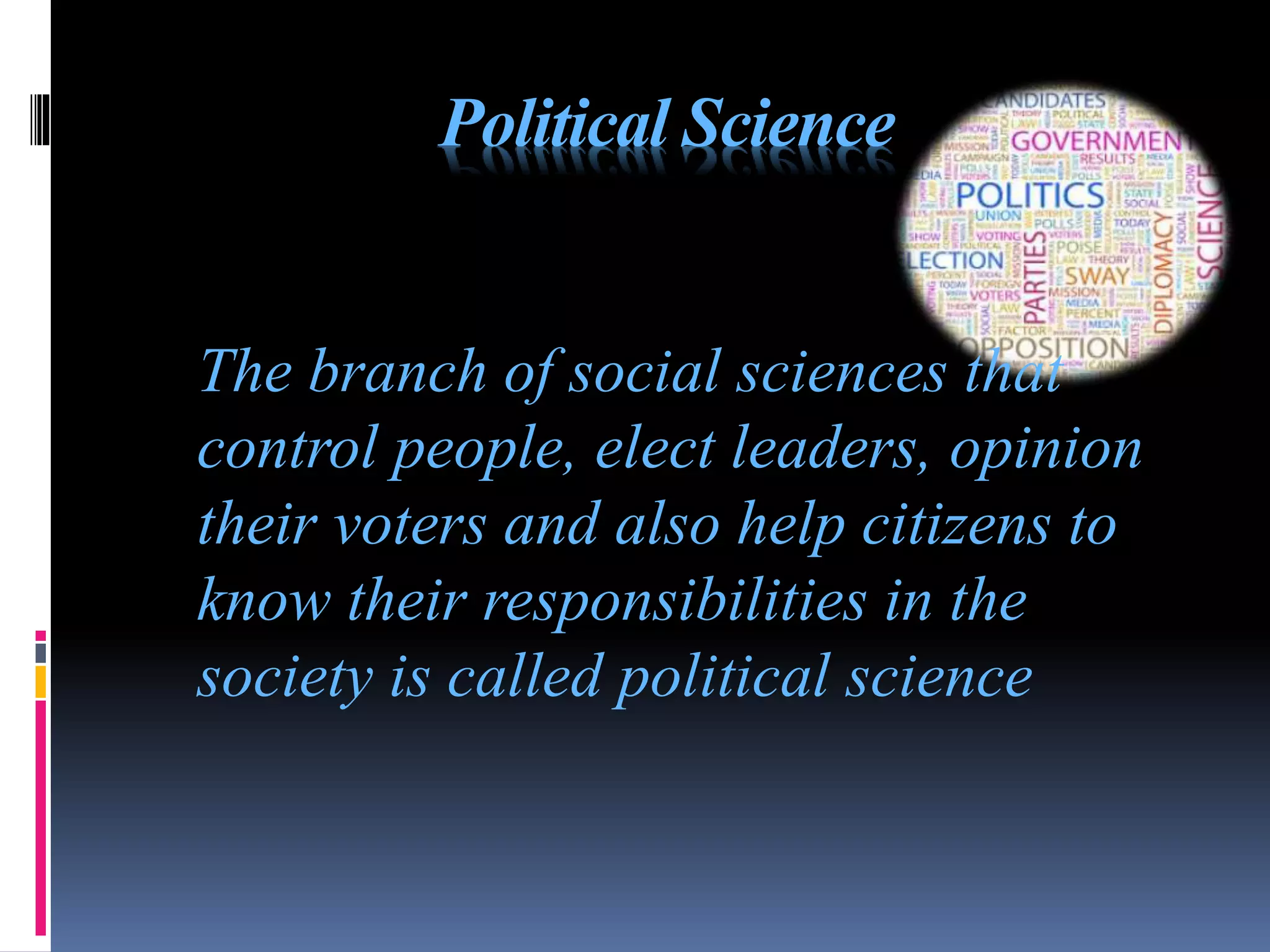
Political Science
The branch of social sciences that
control people, elect leaders, opinion
their voters and also help citizens to
know their responsibilities in the
society is called political science
Introduction
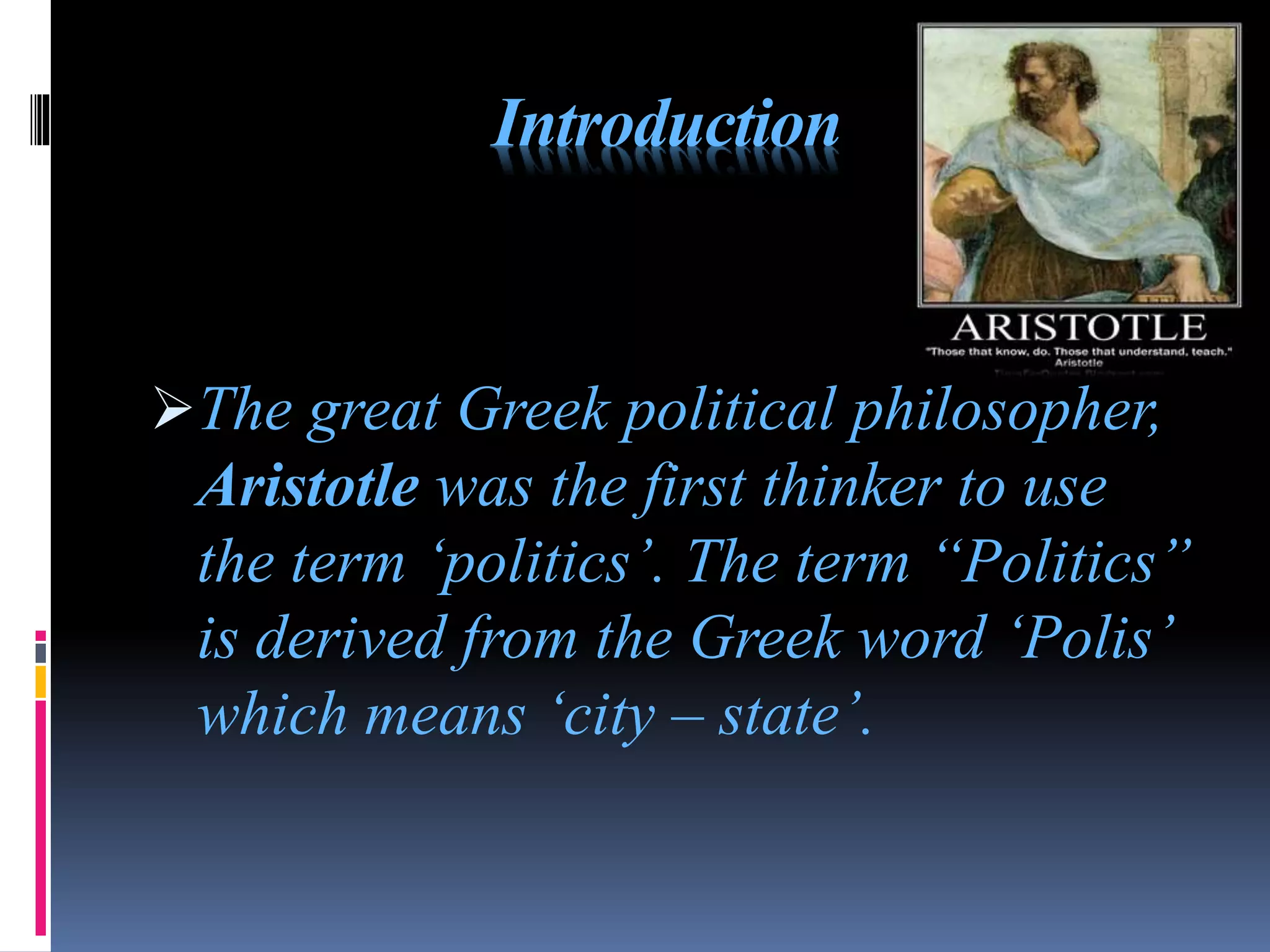
The great Greek political philosopher,
Aristotle was the first thinker to use
the term ‘politics’. The term “Politics”
is derived from the Greek word ‘Polis’
which means ‘city – state’.
Introduction
 It begins from the time of Aristotle
and Plato, in ancient Greek.
 It was introduced almost 2500 years
ago.
Definitions
 Political science is a branch of social
science.
 It is the study of the state.
 Political science begins and ends with
the state.
 It may be defined as the study of man
in the process of governing himself.
 Political science deals with general
problems of the state and government.
Nature of Political Science
There are different views on the nature
of politics:
 Political Science has Scientific nature.
 Politics can be studied in a systematic
manner.
Nature of Political Science
 Political Science, like other Sciences,
has absolute and universal laws.
 It is possible to make predictions in
politics.
 It is said that experimentation is
possible in politics.
Scope of Political Science
 Scope of political science is to study
the past things that happened and use
it correctly in the present and
determine what the future will say
about.
Scope of Political Science
Normally, a lay man associate politics
with the party politics. But we should
know that politics is much larger than
that.
 The scope of political science implies
its area of study.
Scope of Political Science
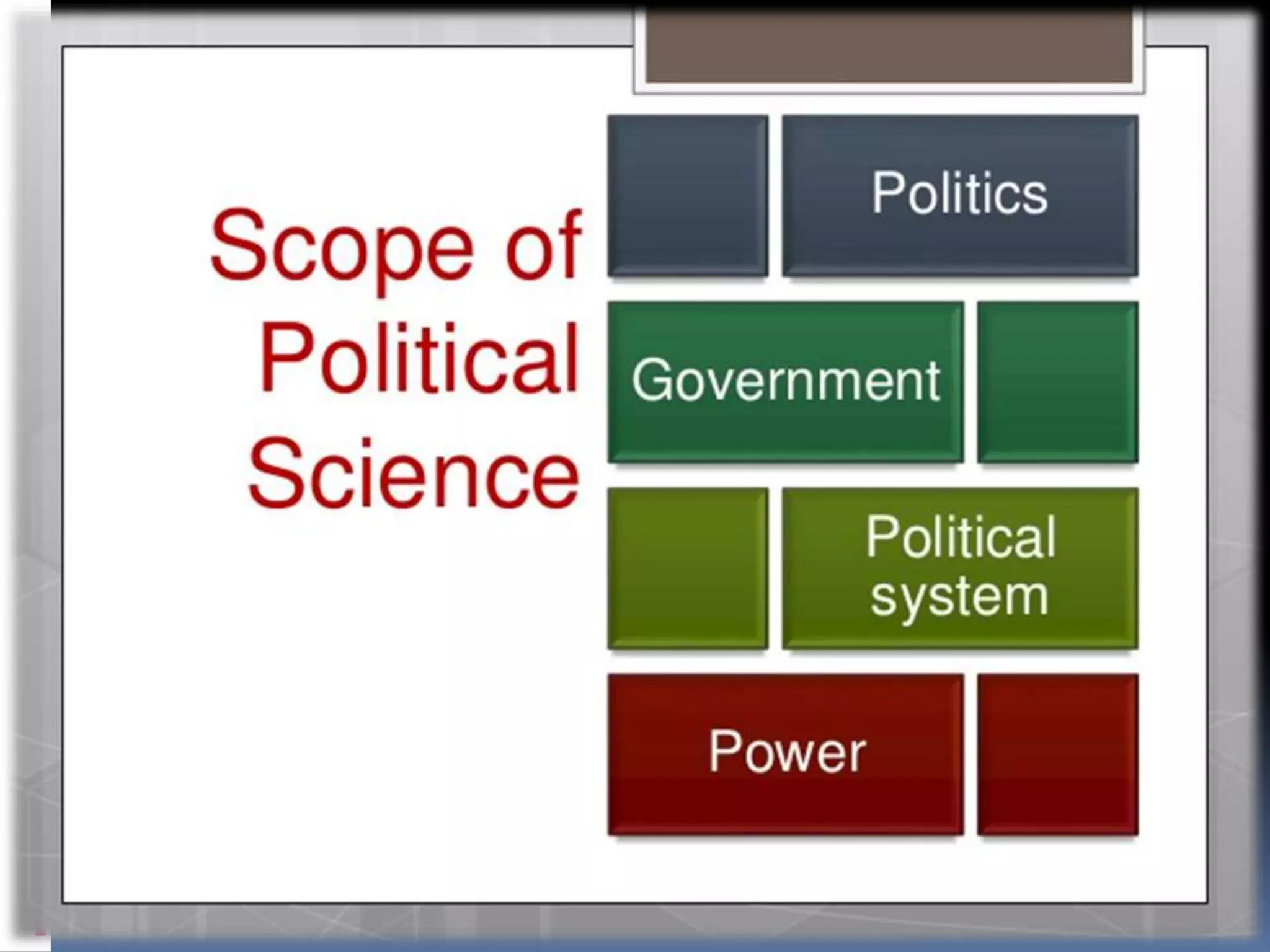
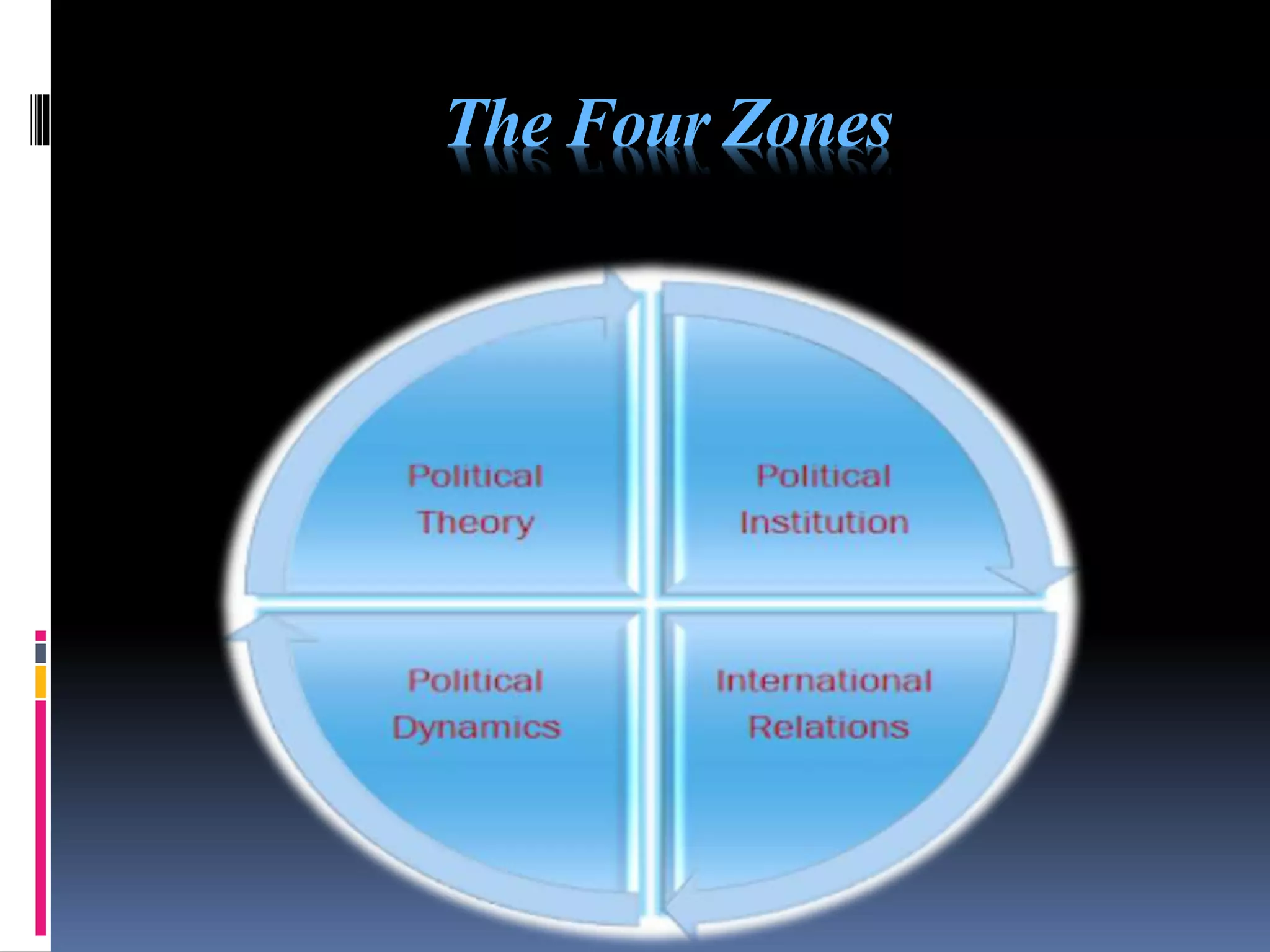
It is classified into four zones:
Political theory
Political institution
Scope of Political Science
Political dynamics
International relation
The Four Zones
Political theory
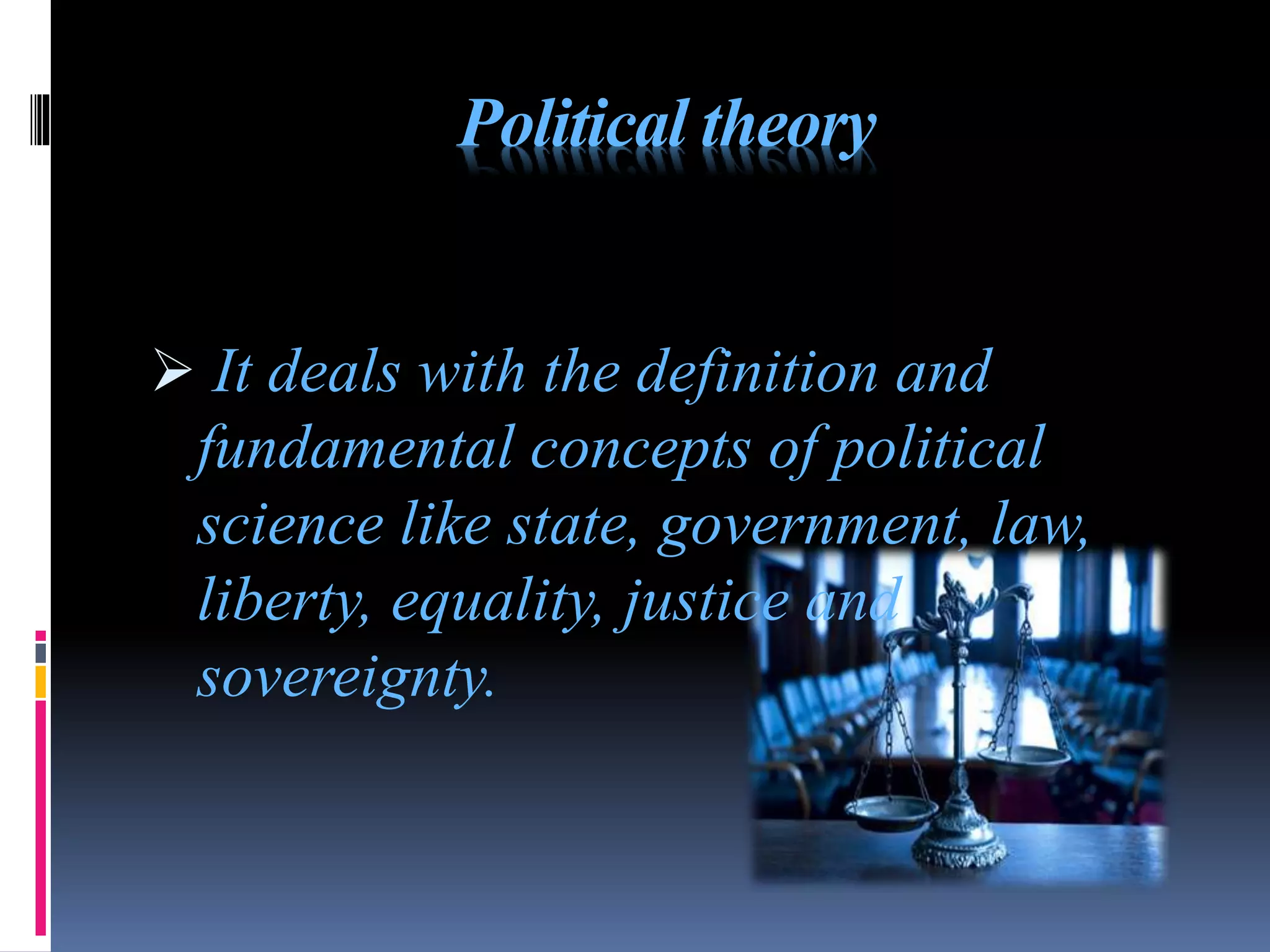
 It deals with the definition and
fundamental concepts of political
science like state, government, law,
liberty, equality, justice and
sovereignty.
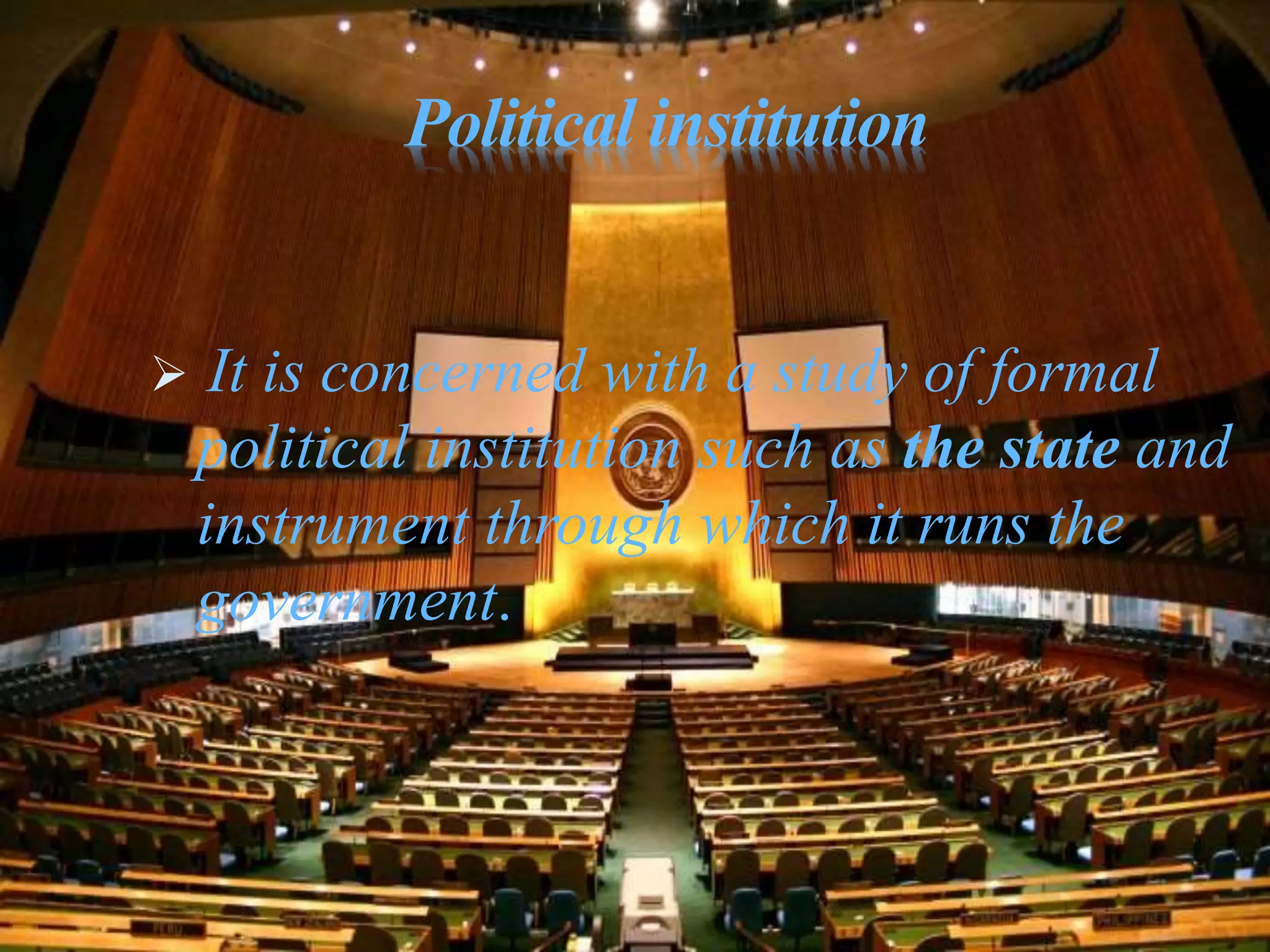
Political institution
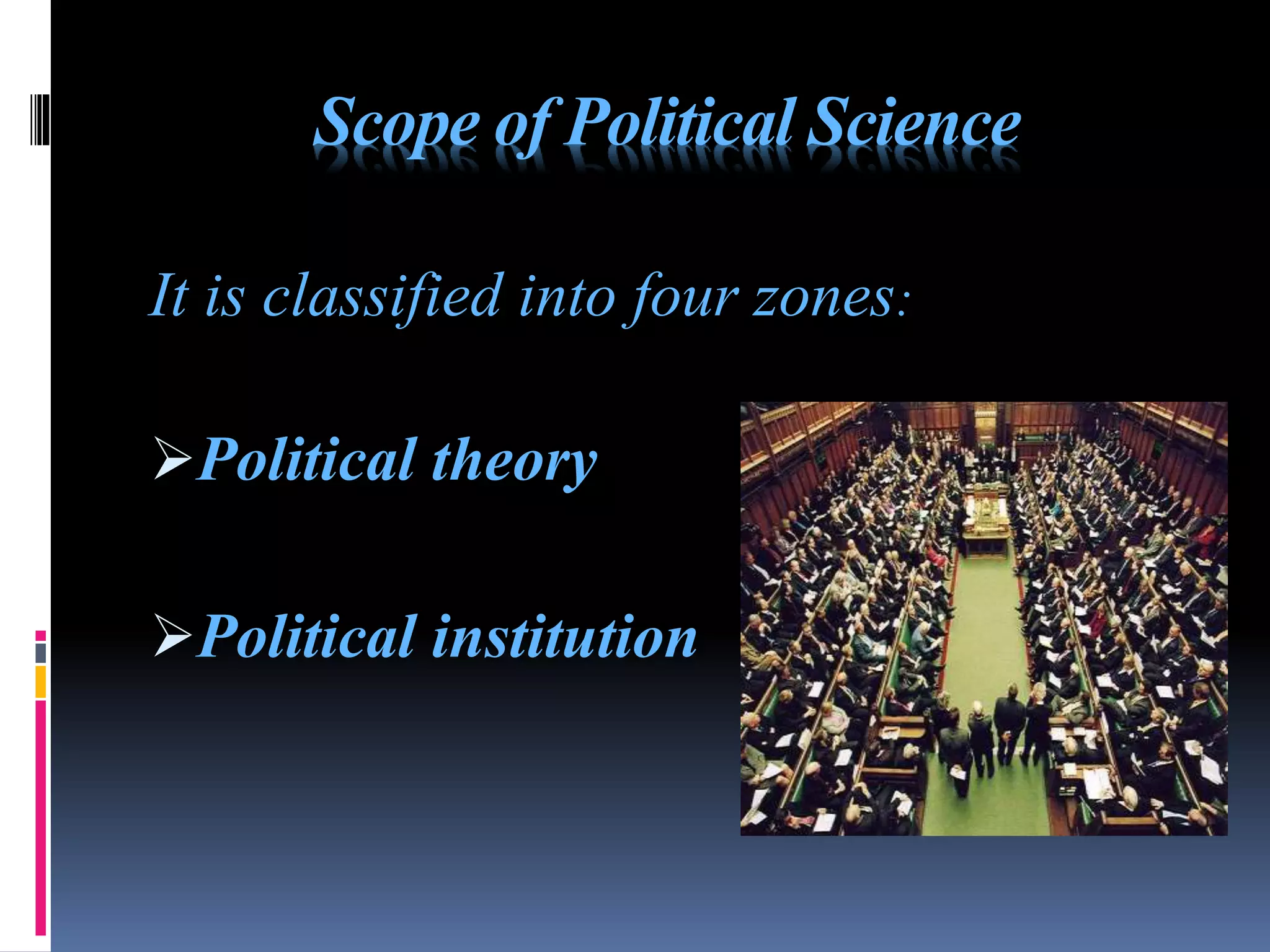
 It is concerned with a study of formal
political institution such as the state and
instrument through which it runs the
government.
Political Dynamics
The term refers to the forces and
process at work in government and
politics. They influence and explain
political action. They include the study
of political parties.
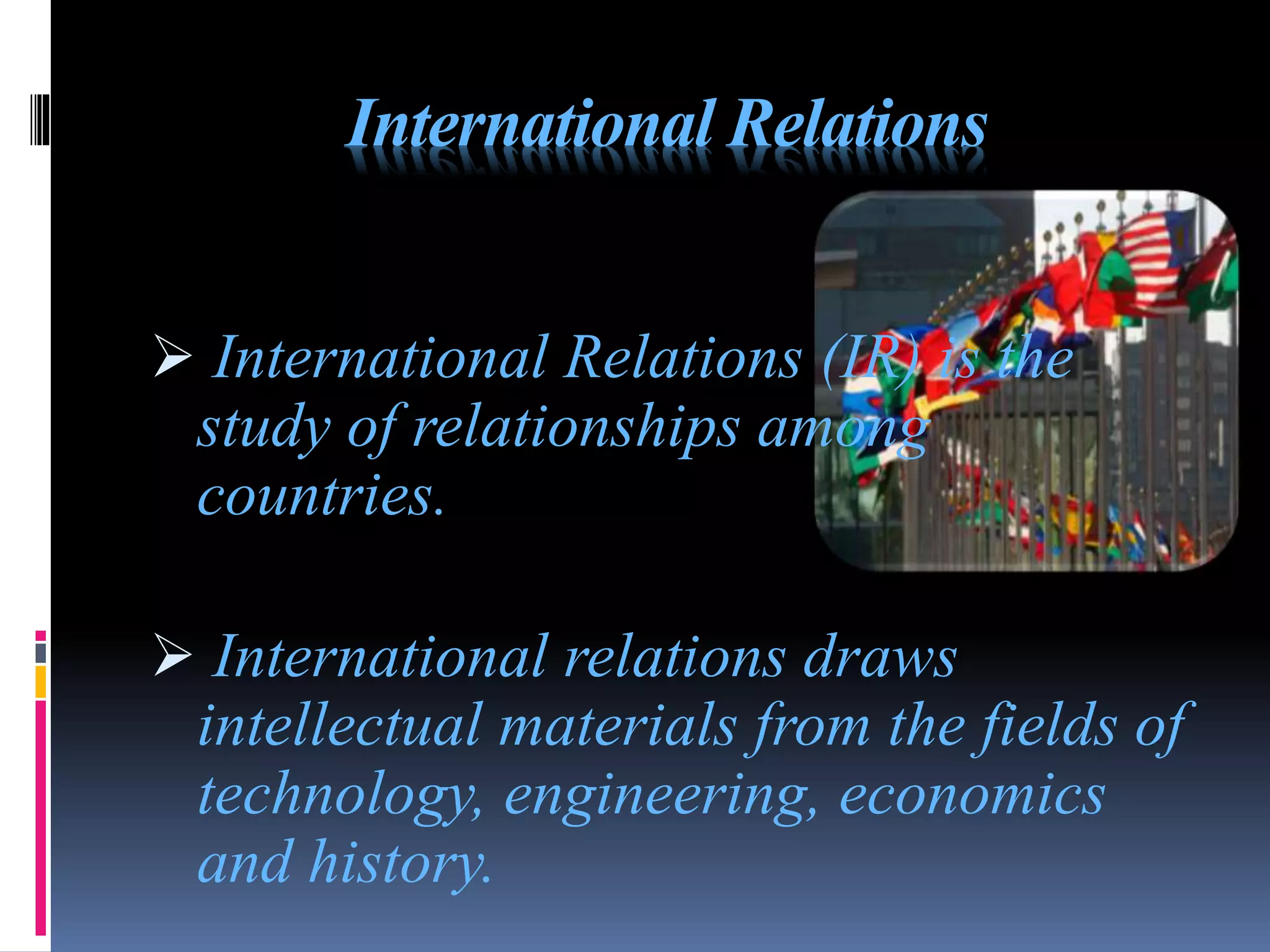
International Relations
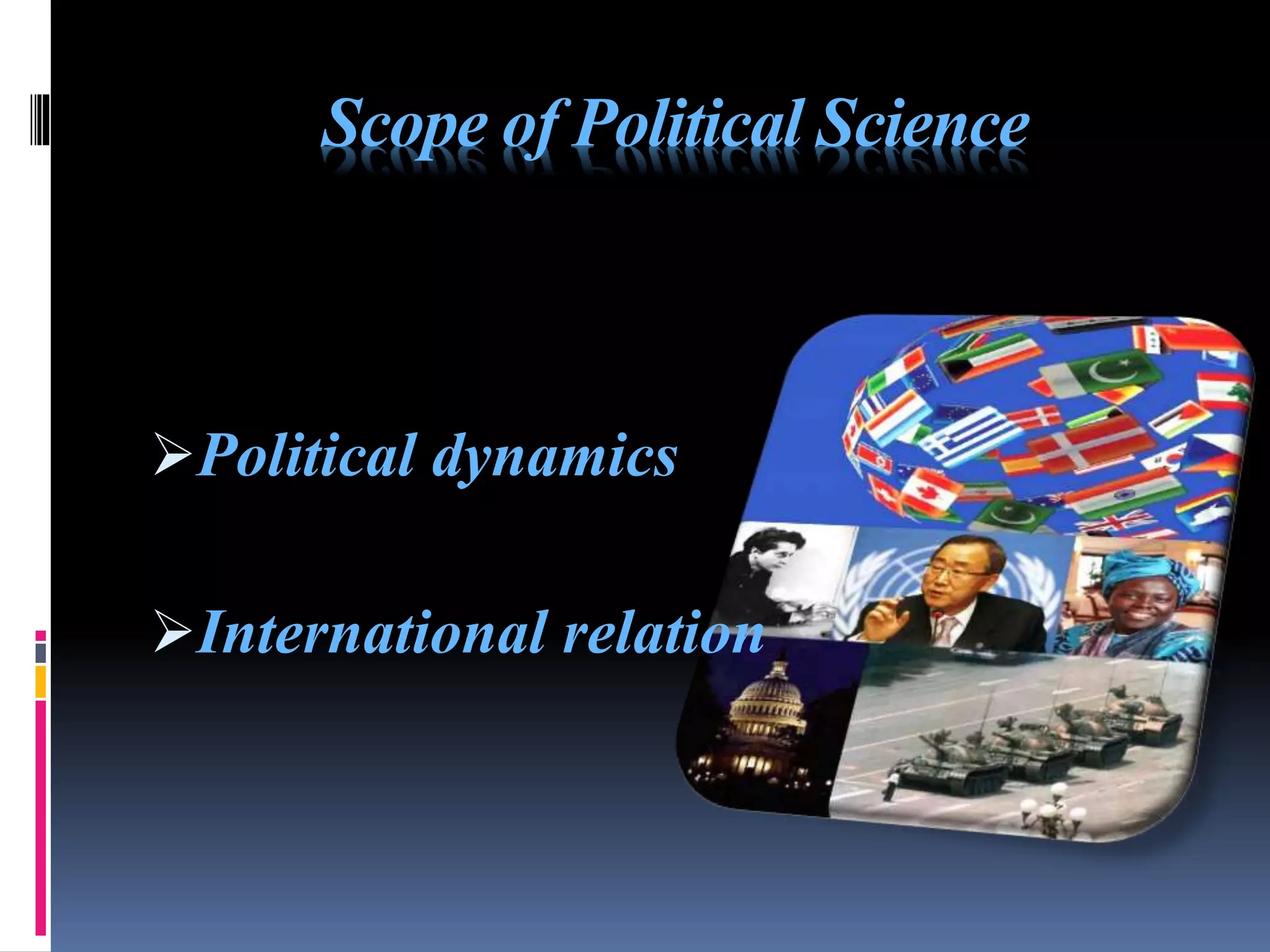
 International Relations (IR) is the
study of relationships among
countries.
 International relations draws
intellectual materials from the fields of
technology, engineering, economics
and history.
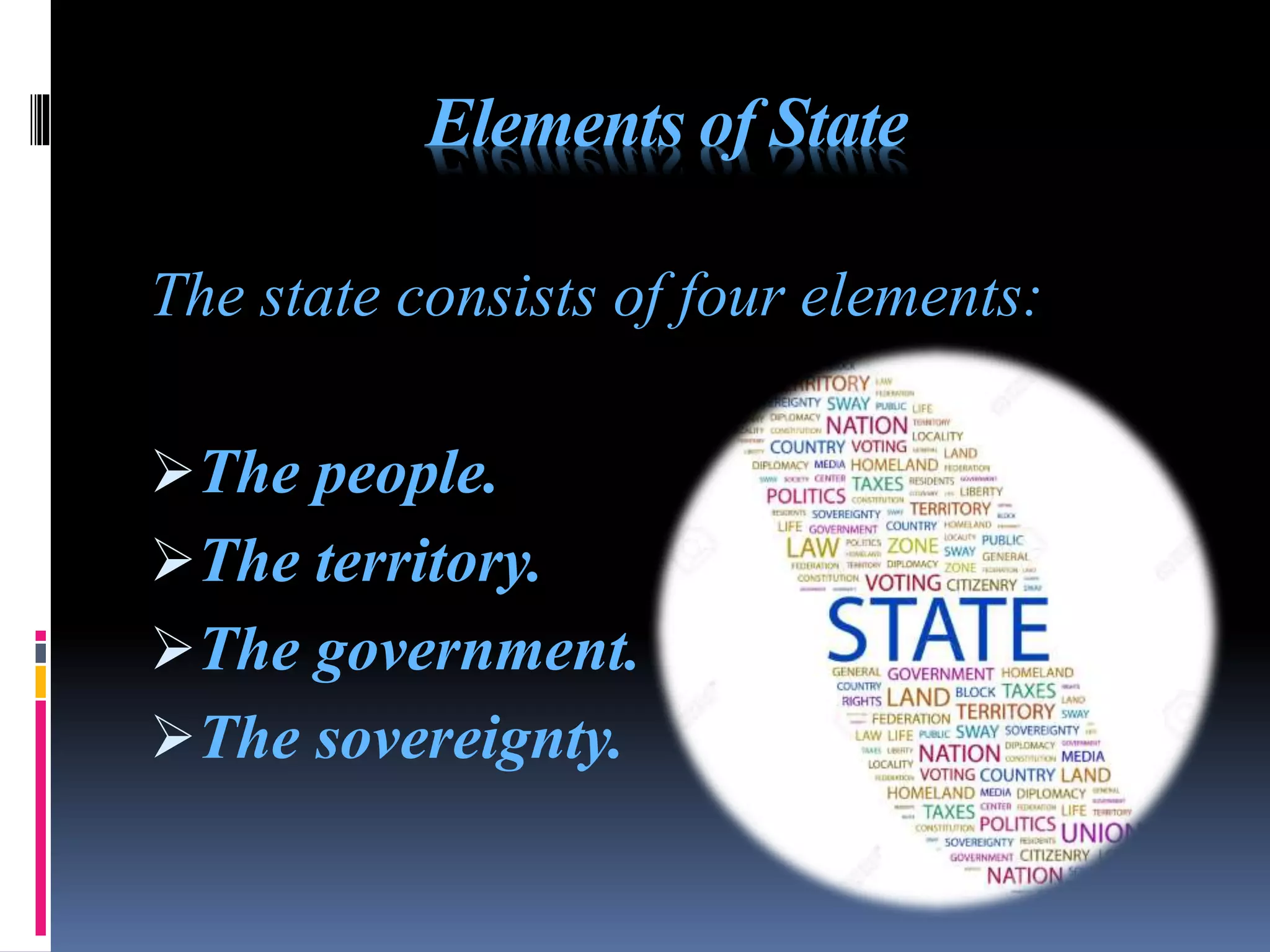
Elements of State
The state consists of four elements:
The people.
The territory.
The government.
The sovereignty.
People
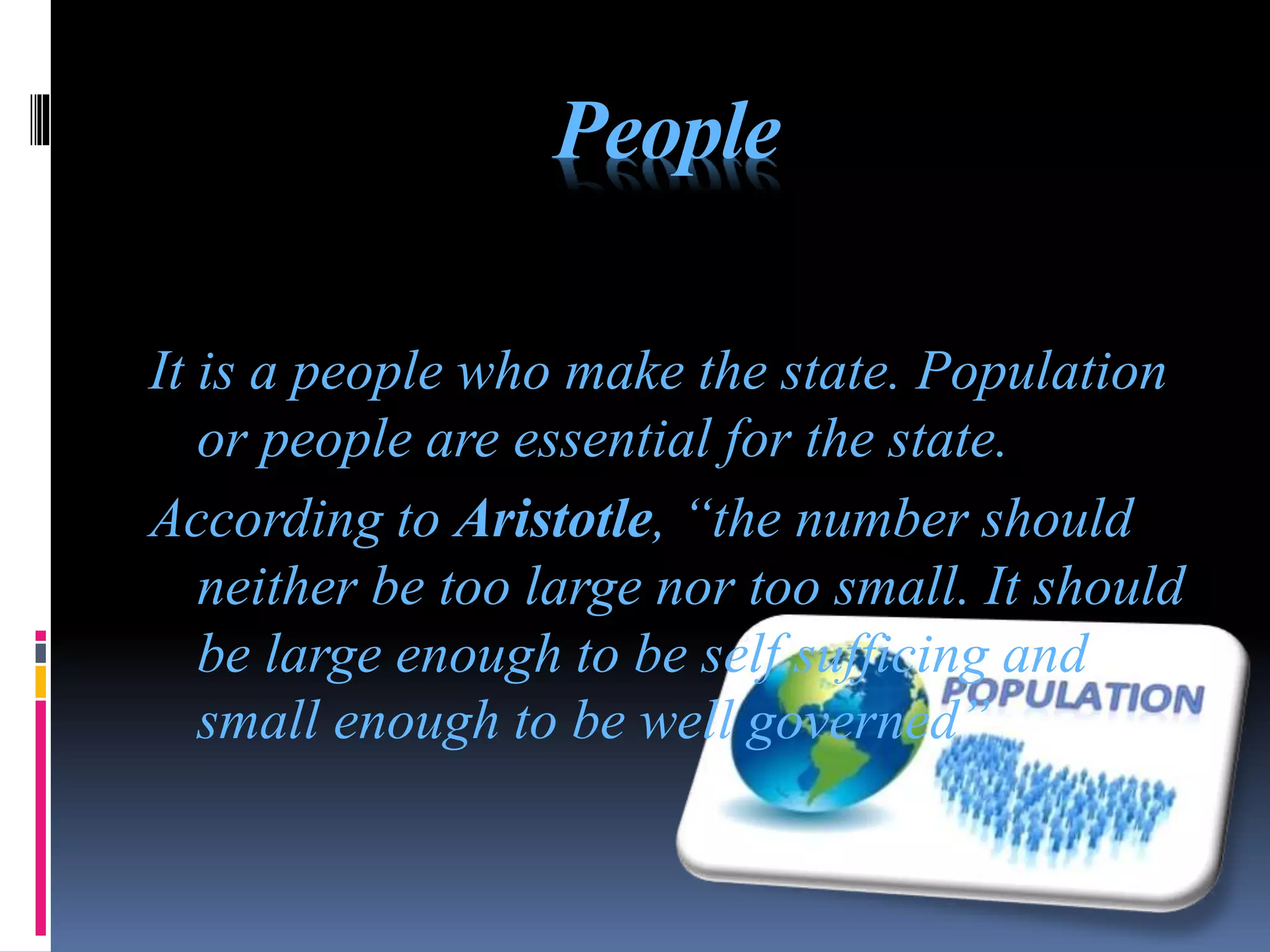
It is a people who make the state. Population
or people are essential for the state.
According to Aristotle, “the number should
neither be too large nor too small. It should
be large enough to be self sufficing and
small enough to be well governed”
Territory
It is a fixed area that rightly belongs to the
population. There can be no state without
fixed territory.
It may be remembered that the territory of
state includes land, water and air-space.
It should be permanent and large enough to
be self-sufficing.
Government
It is the third element of the state.
Government is the agency through with the
force of the state is formulated, expressed
and realized.
Sovereignty
The fourth essential element of the state is
sovereignty. The word ‘Sovereignty’means
supreme and final legal authority above
and beyond which no legal power exists.
 Sovereignty has two aspects:
• Internal Sovereignty
Means that the state is supreme over all its
citizens and associations.
• External Sovereignty
Means that the state is independent and free from
foreign or outside control.
Scope concerning with State
Scope of political science concerns
with the state as :
 Present Form of the state.
 Historical Form.
 Ideal Form of the state.
Ideal form of a State
The state should act as ‘trustee’of the
people means that it should hold
people power as a trust for welfare of
people. It should not consider people
as helpless subject, but as co-rulers in
its governance.
Sub-fields of Political Science
 Following are the sub-fields of
Political Science :
• Sociology
• Economics
• Anthropology
• Psychology
• History
Sociology
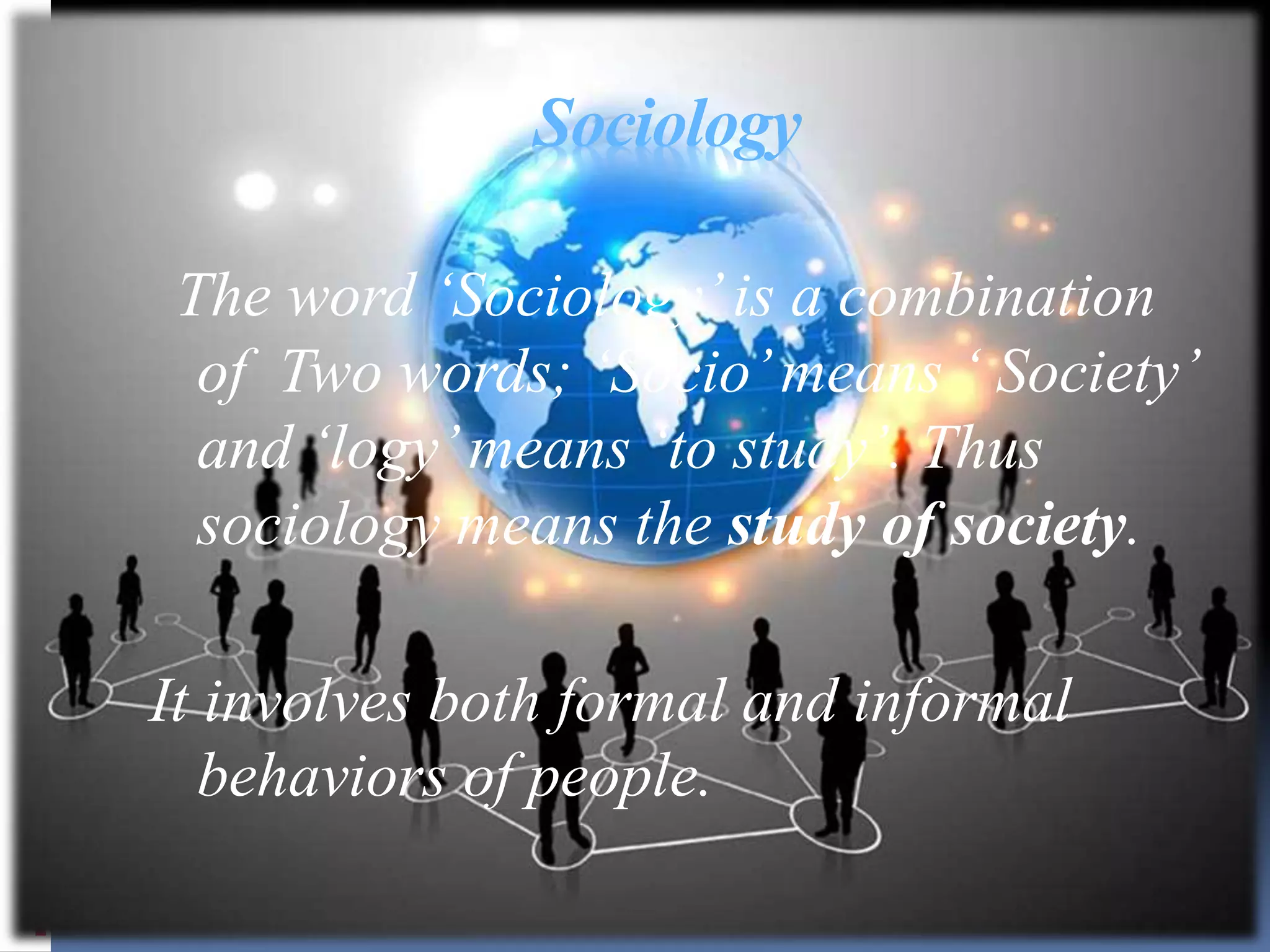
The word ‘Sociology’is a combination
of Two words; ‘Socio’means ‘ Society’
and ‘logy’means ‘to study’. Thus
sociology means the study of society.
It involves both formal and informal
behaviors of people.
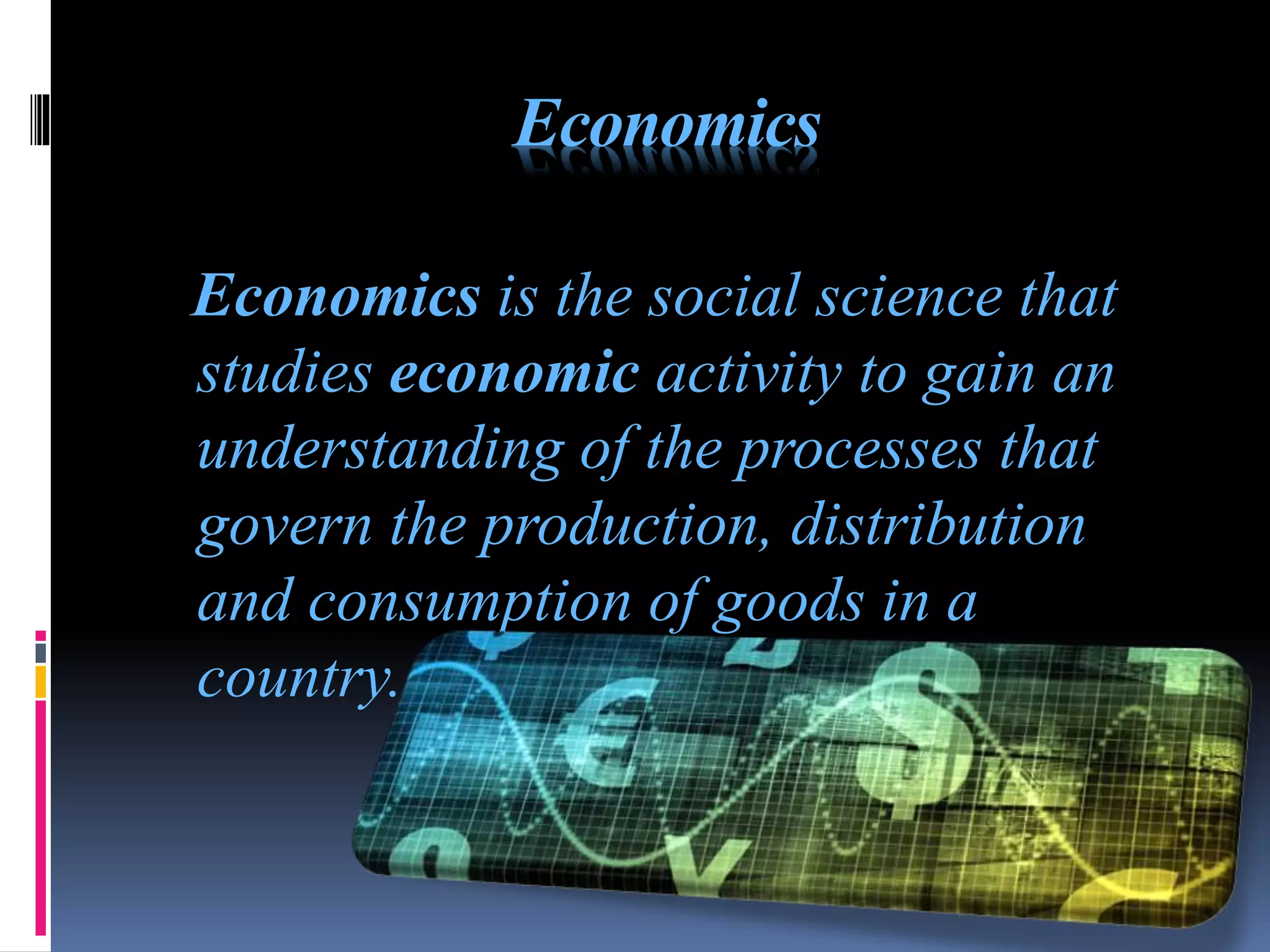
Economics
Economics is the social science that
studies economic activity to gain an
understanding of the processes that
govern the production, distribution
and consumption of goods in a
country.
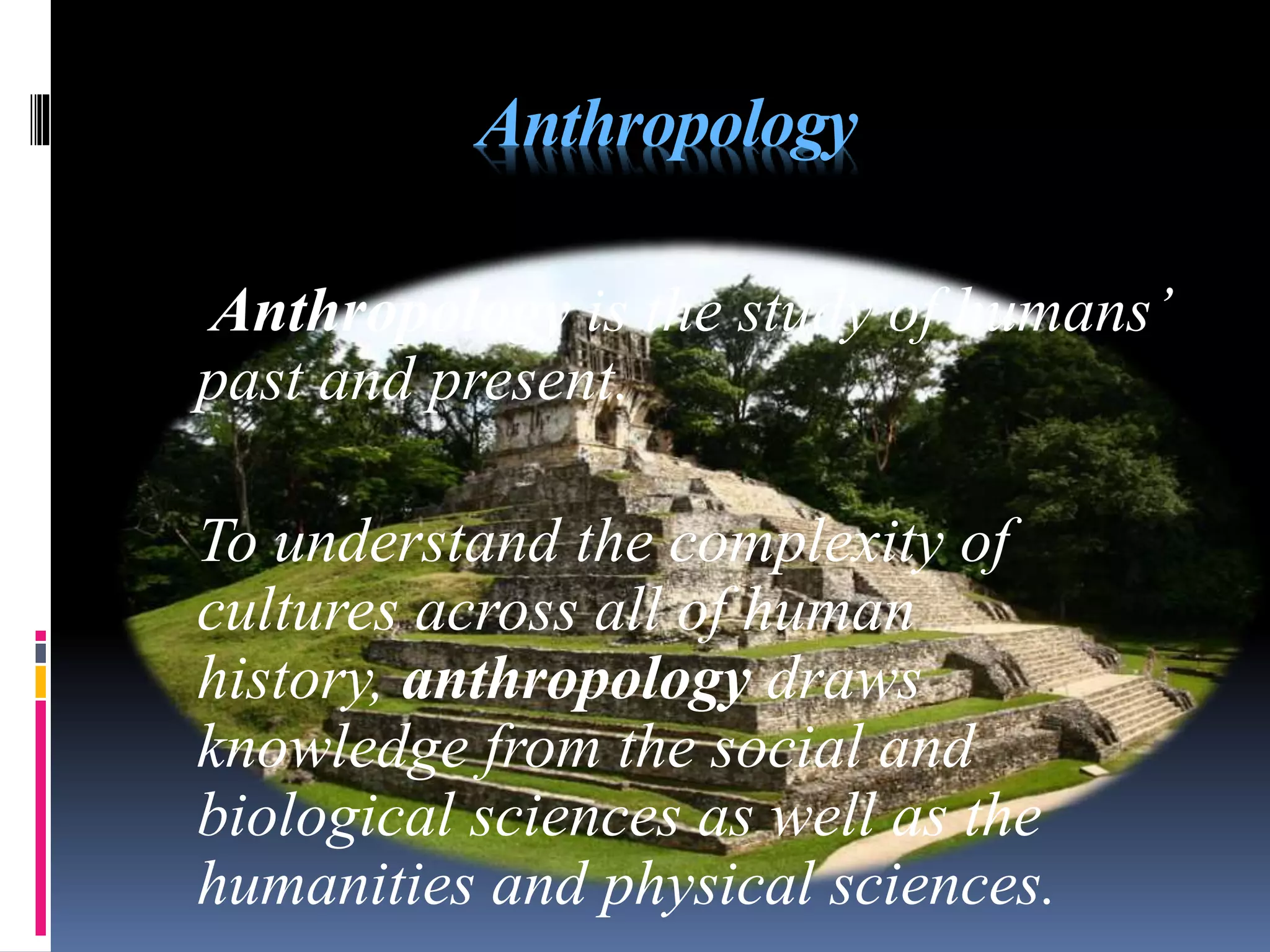
Anthropology
Anthropology is the study of humans’
past and present.
To understand the complexity of
cultures across all of human
history, anthropology draws
knowledge from the social and
biological sciences as well as the
humanities and physical sciences.
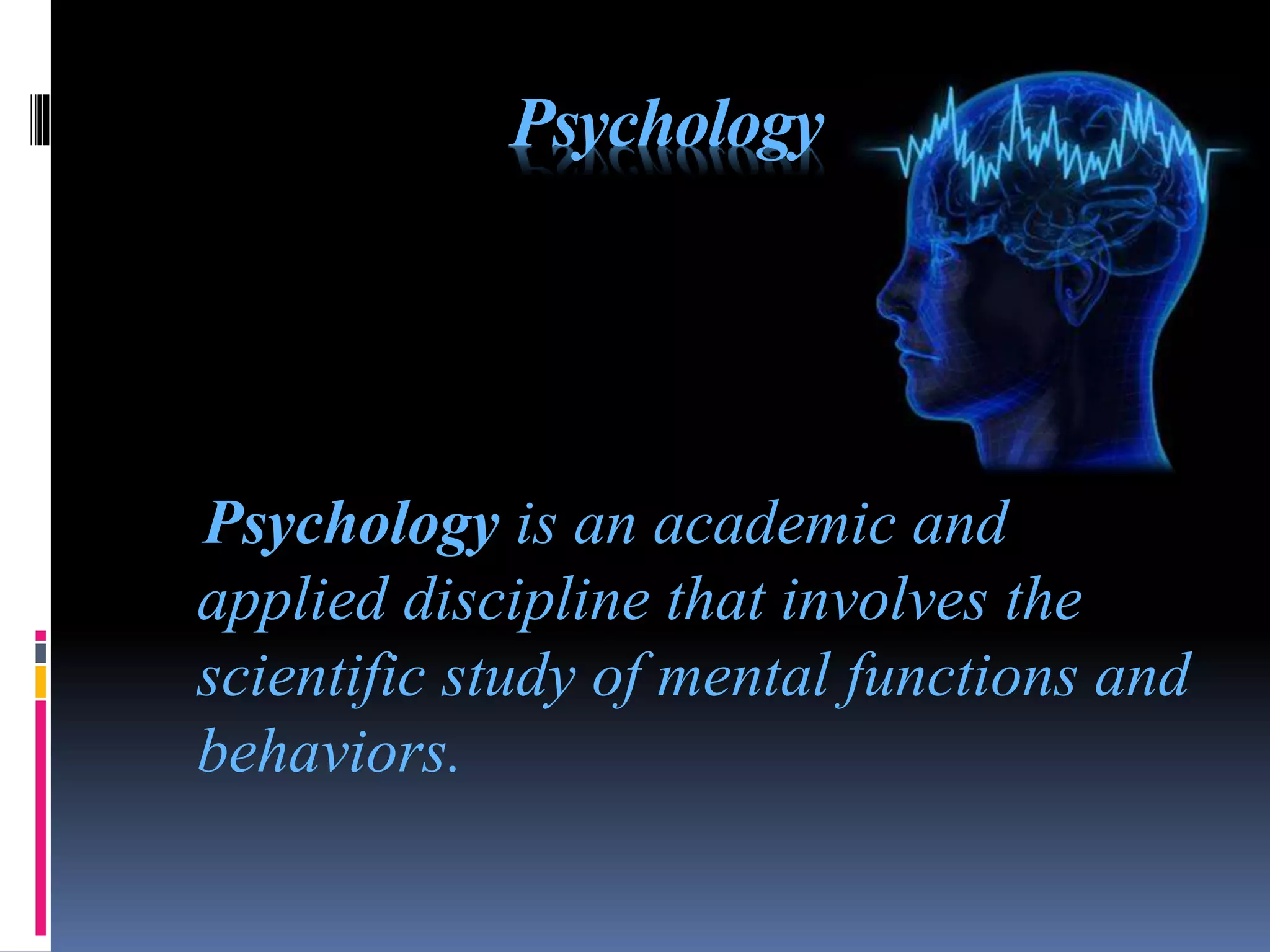
Psychology
Psychology is an academic and
applied discipline that involves the
scientific study of mental functions and
behaviors.
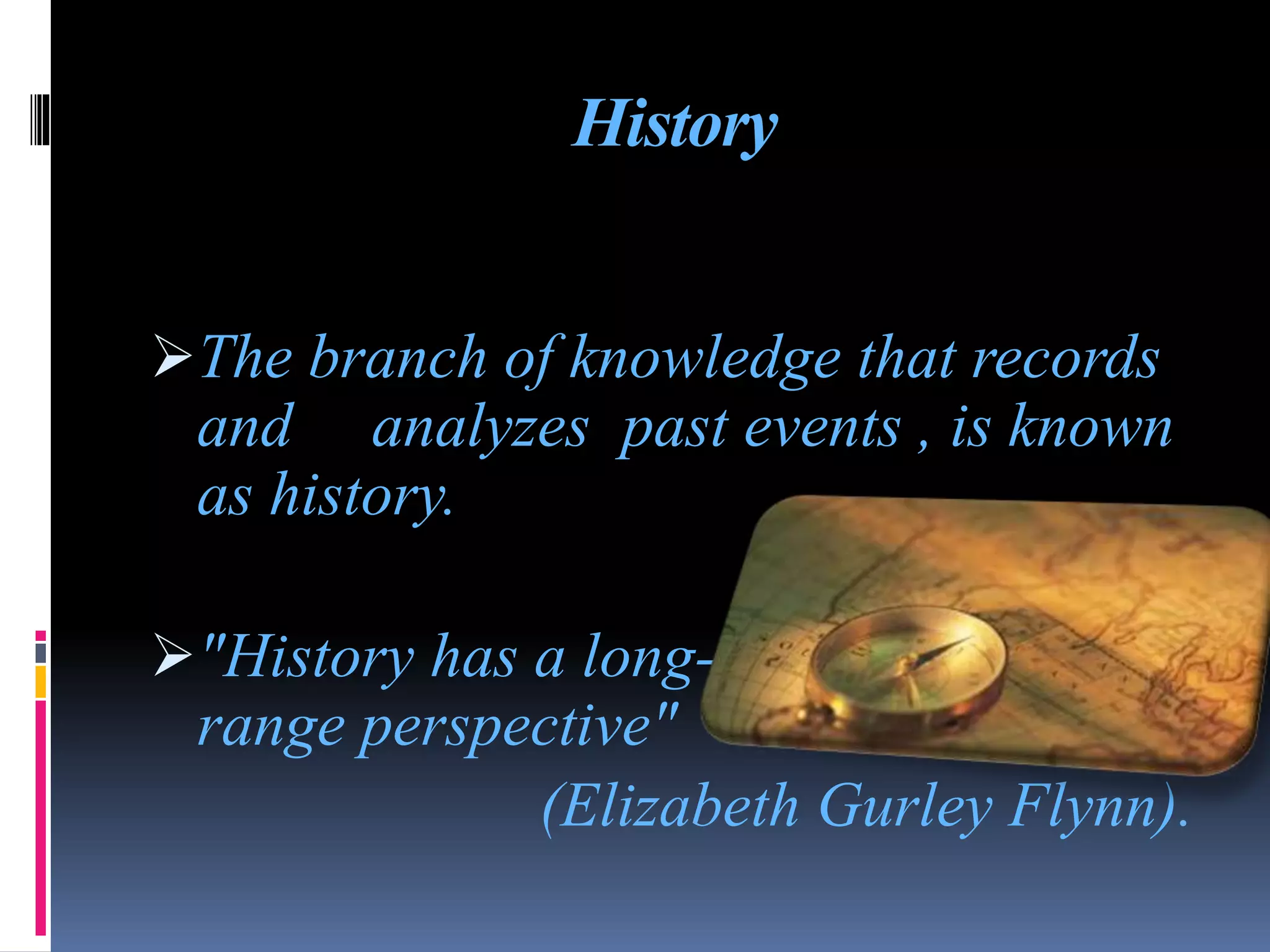
History
The branch of knowledge that records
and analyzes past events , is known
as history.
"History has a long-
range perspective"
(Elizabeth Gurley Flynn).
Conclusion
In conclusion, we will say that the
scope of political science comprehends
globalization, state sovereignty,
international security, and ecological
sustainability of a state.
Nature, Scope and Sub-fields of Political Science

Nature, Scope and Sub-fields of Political Science

  • 1.
    Nature and Scopeof Political Science Sub-fields of political science
  • 2.
    Presented by:  ZaheenButt  Adeel Taswar Attroba Adan Saira Ayub
  • 4.
    Political Science The branchof social sciences that control people, elect leaders, opinion their voters and also help citizens to know their responsibilities in the society is called political science
  • 5.
    Introduction The great Greekpolitical philosopher, Aristotle was the first thinker to use the term ‘politics’. The term “Politics” is derived from the Greek word ‘Polis’ which means ‘city – state’.
  • 6.
    Introduction  It beginsfrom the time of Aristotle and Plato, in ancient Greek.  It was introduced almost 2500 years ago.
  • 7.
    Definitions  Political scienceis a branch of social science.  It is the study of the state.  Political science begins and ends with the state.
  • 8.
     It maybe defined as the study of man in the process of governing himself.  Political science deals with general problems of the state and government.
  • 9.
    Nature of PoliticalScience There are different views on the nature of politics:  Political Science has Scientific nature.  Politics can be studied in a systematic manner.
  • 10.
    Nature of PoliticalScience  Political Science, like other Sciences, has absolute and universal laws.  It is possible to make predictions in politics.  It is said that experimentation is possible in politics.
  • 12.
    Scope of PoliticalScience  Scope of political science is to study the past things that happened and use it correctly in the present and determine what the future will say about.
  • 13.
    Scope of PoliticalScience Normally, a lay man associate politics with the party politics. But we should know that politics is much larger than that.  The scope of political science implies its area of study.
  • 14.
    Scope of PoliticalScience It is classified into four zones: Political theory Political institution
  • 15.
    Scope of PoliticalScience Political dynamics International relation
  • 16.
  • 17.
    Political theory  Itdeals with the definition and fundamental concepts of political science like state, government, law, liberty, equality, justice and sovereignty.
  • 18.
    Political institution  Itis concerned with a study of formal political institution such as the state and instrument through which it runs the government.
  • 19.
    Political Dynamics The termrefers to the forces and process at work in government and politics. They influence and explain political action. They include the study of political parties.
  • 20.
    International Relations  InternationalRelations (IR) is the study of relationships among countries.  International relations draws intellectual materials from the fields of technology, engineering, economics and history.
  • 21.
    Elements of State Thestate consists of four elements: The people. The territory. The government. The sovereignty.
  • 22.
    People It is apeople who make the state. Population or people are essential for the state. According to Aristotle, “the number should neither be too large nor too small. It should be large enough to be self sufficing and small enough to be well governed”
  • 23.
    Territory It is afixed area that rightly belongs to the population. There can be no state without fixed territory. It may be remembered that the territory of state includes land, water and air-space. It should be permanent and large enough to be self-sufficing.
  • 24.
    Government It is thethird element of the state. Government is the agency through with the force of the state is formulated, expressed and realized.
  • 25.
    Sovereignty The fourth essentialelement of the state is sovereignty. The word ‘Sovereignty’means supreme and final legal authority above and beyond which no legal power exists.
  • 26.
     Sovereignty hastwo aspects: • Internal Sovereignty Means that the state is supreme over all its citizens and associations. • External Sovereignty Means that the state is independent and free from foreign or outside control.
  • 27.
    Scope concerning withState Scope of political science concerns with the state as :  Present Form of the state.  Historical Form.  Ideal Form of the state.
  • 28.
    Ideal form ofa State The state should act as ‘trustee’of the people means that it should hold people power as a trust for welfare of people. It should not consider people as helpless subject, but as co-rulers in its governance.
  • 29.
    Sub-fields of PoliticalScience  Following are the sub-fields of Political Science : • Sociology • Economics • Anthropology • Psychology • History
  • 30.
    Sociology The word ‘Sociology’isa combination of Two words; ‘Socio’means ‘ Society’ and ‘logy’means ‘to study’. Thus sociology means the study of society. It involves both formal and informal behaviors of people.
  • 31.
    Economics Economics is thesocial science that studies economic activity to gain an understanding of the processes that govern the production, distribution and consumption of goods in a country.
  • 32.
    Anthropology Anthropology is thestudy of humans’ past and present. To understand the complexity of cultures across all of human history, anthropology draws knowledge from the social and biological sciences as well as the humanities and physical sciences.
  • 33.
    Psychology Psychology is anacademic and applied discipline that involves the scientific study of mental functions and behaviors.
  • 34.
    History The branch ofknowledge that records and analyzes past events , is known as history. "History has a long- range perspective" (Elizabeth Gurley Flynn).
  • 35.
    Conclusion In conclusion, wewill say that the scope of political science comprehends globalization, state sovereignty, international security, and ecological sustainability of a state.