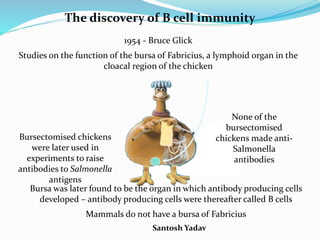
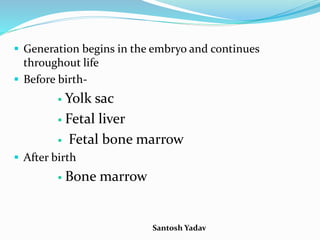
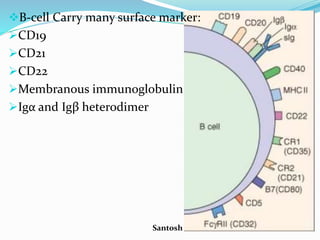
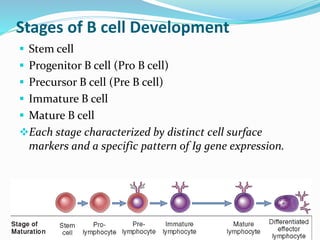
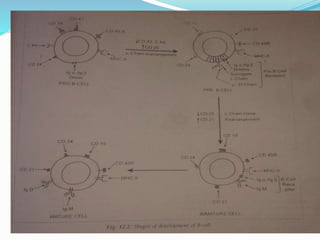
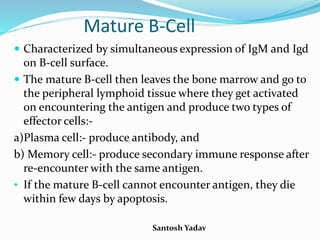
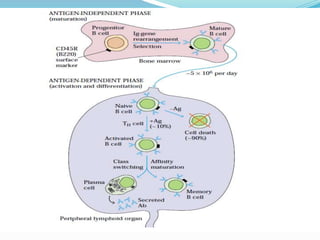
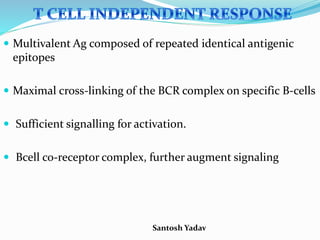
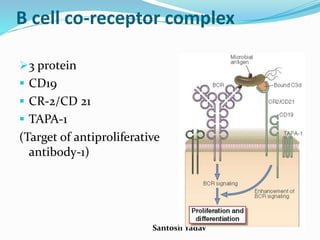
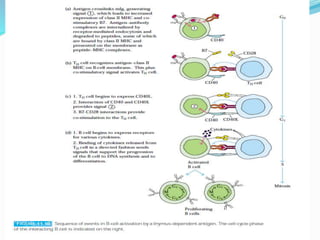
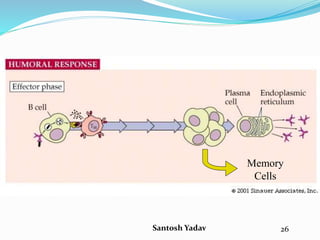
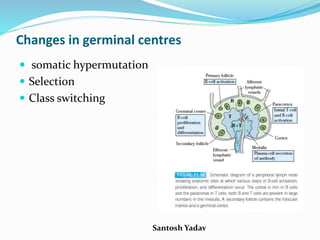
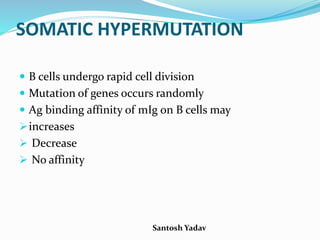
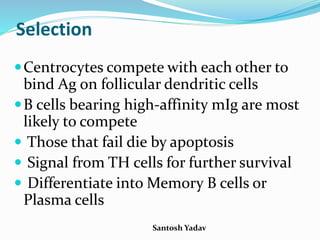
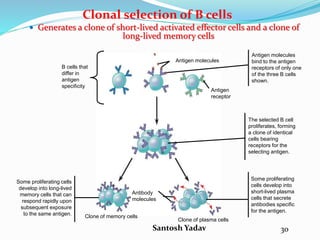
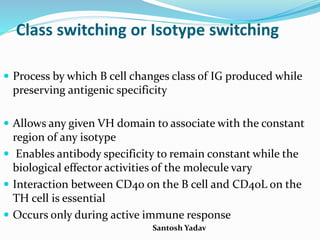
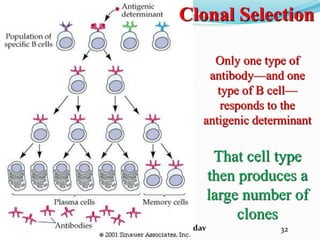
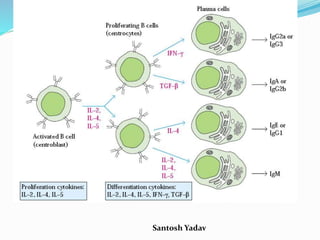
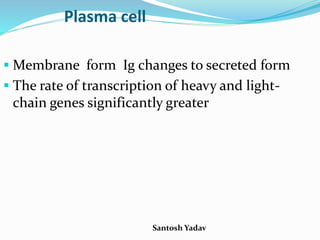
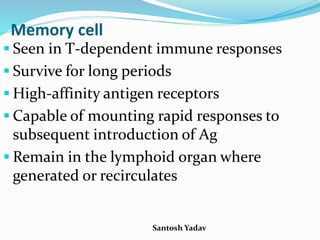
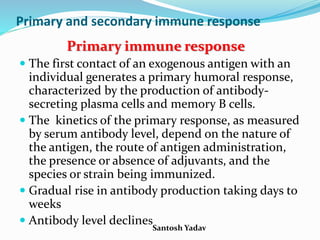
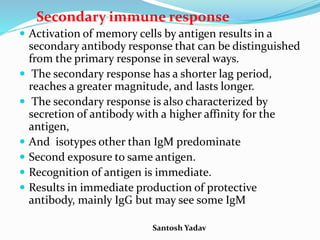
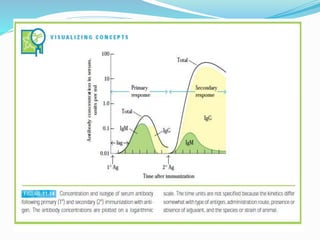
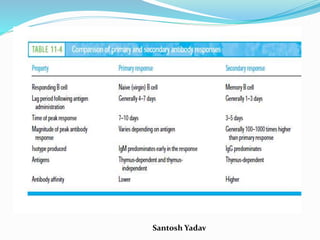
B-cells develop and mature in the bone marrow from stem cells through distinct stages marked by specific cell surface markers and patterns of immunoglobulin gene expression. Mature B-cells leave the bone marrow and travel to peripheral lymphoid tissues where they are activated upon encountering antigen to produce plasma cells that secrete antibodies and memory B-cells. B-cell activation involves proliferation, somatic hypermutation, selection, and potential class switching in germinal centers to produce high affinity antibodies and long-lasting immunological memory. This allows for a rapid secondary immune response upon re-exposure to the same antigen.






![CASE_PRESENTATION_ON_subdural_hematoma(SDH)[1 FINAL PPT]-1.pptx](https://cdn.slidesharecdn.com/ss_thumbnails/casepresentationonsubduralhematomasdh1finalppt-1-260129172522-d405d375-thumbnail.jpg?width=640&height=640&fit=bounds)


