Hydraulics Engineering
Introduction
By Dr. M. Mubashir Qureshi
Hydraulics Engineering
The term "hydraulics‟ is related to the application of the Fluid
Mechanics principles to water engineering structures, civil and
environmental engineering facilities, especially hydraulic structures
(e.g. canal, river, dam, reservoir and water treatment plant) [1].
◼Definition
 Branch of Civil Engineering concerned with the flow and
conveyance of the fluid, especially water. [Wikipedia]
Highly related to design of bridges, dams, canals, levees, water
supply system, sanitation, irrigation system
◼Difference between Hydraulics and Hydrology
◼History of Hydraulics
[1.] The Hydraulics of Open Channel Flow: An Introduction, Second Edition,
by Hubert Chanson. 2004. Elsevier Butterworth-Heinemann.
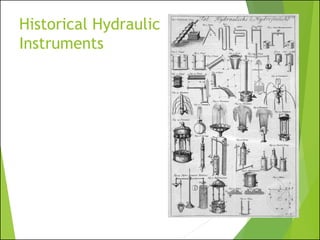
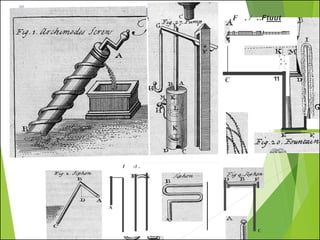
Historical Hydraulic
Instruments
I -3 .
.F . / ..Ftuut
am11m1111111111111m1111Mmmmmmm1111111
i •
.;
• 1
..I I
I I
C 11
A
A
C
History
◼ Egyptian:
 Signs of use of canals for
water supply and irrigation by
Egyptian
 One of major contribution by
Pharohs was construction of
canals
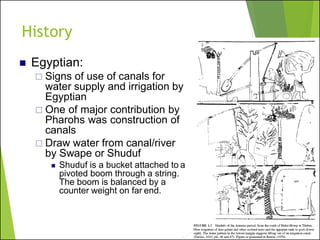
 Draw water from canal/river
by Swape or Shuduf
◼ Shuduf is a bucket attached to a
pivoted boom through a string.
The boom is balanced by a
counter weight on far end.
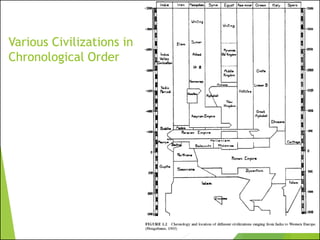
Various Civilizations in
Chronological Order
◼ Mesopotamia
 Mesopotamia is Greek Word meaning “Land between two rivers” i.e.
Tigris and Euphrates
 Sumerian (~ 2500 BC) built walled cities and for that dug canals, which
are considered as first engineering works
 They fought over water rights
 They had written rules about maintenance of canals. e.g. rule below is
6th c. BC rule:
 Mesopotamian agriculture declined because of salty soils.
 Tigris & Euphtates carried silt 6 times more than Nile, and such posed
bigger problems of flooding and course changes than that in Egypt (Nile
valley)
 Mangols destroyed their irrigation system in 1258 AD
History
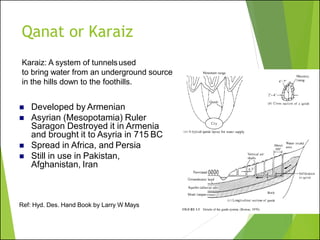
Qanat or Karaiz
Ref: Hyd. Des. Hand Book by Larry W Mays
Karaiz: A system of tunnelsused
to bring water from an underground source
in the hills down to the foothills.
◼ Developed by Armenian
◼ Asyrian (Mesopotamia) Ruler
Saragon Destroyed it in Armenia
and brought it to Asyria in 715 BC
◼ Spread in Africa, and Persia
◼ Still in use in Pakistan,
Afghanistan, Iran
Dams
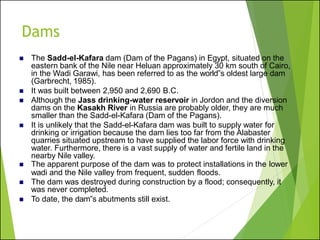
◼ The Sadd-el-Kafara dam (Dam of the Pagans) in Egypt, situated on the
eastern bank of the Nile near Heluan approximately 30 km south of Cairo,
in the Wadi Garawi, has been referred to as the world‟s oldest large dam
(Garbrecht, 1985).
◼ It was built between 2,950 and 2,690 B.C.
◼ Although the Jass drinking-water reservoir in Jordon and the diversion
dams on the Kasakh River in Russia are probably older, they are much
smaller than the Sadd-el-Kafara (Dam of the Pagans).
◼ It is unlikely that the Sadd-el-Kafara dam was built to supply water for
drinking or irrigation because the dam lies too far from the Alabaster
quarries situated upstream to have supplied the labor force with drinking
water. Furthermore, there is a vast supply of water and fertile land in the
nearby Nile valley.
◼ The apparent purpose of the dam was to protect installations in the lower
wadi and the Nile valley from frequent, sudden floods.
◼ The dam was destroyed during construction by a flood; consequently, it
was never completed.
◼ To date, the dam‟s abutments still exist.
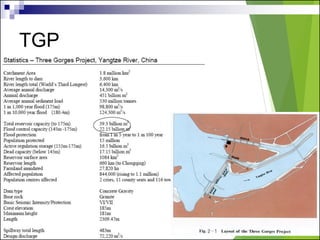
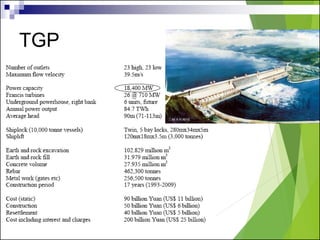
TGP
TGP
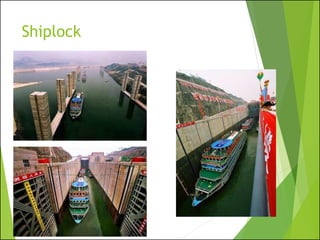
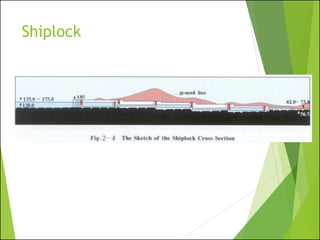
Shiplock
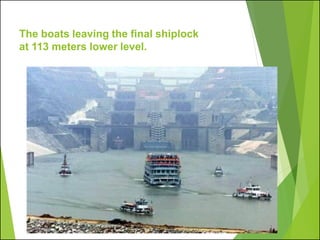
The boats leaving the final shiplock
at 113 meters lower level.
Shiplock
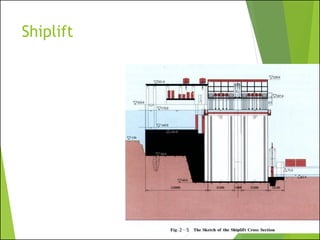
Shiplift
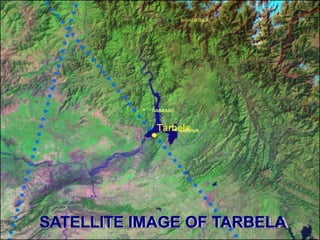
SATELLITE IMAGE OF TARBELA
• DARBAND
▪ HARIPUR
◼ BISHAM QILA
.S!1'AN f HU!T"
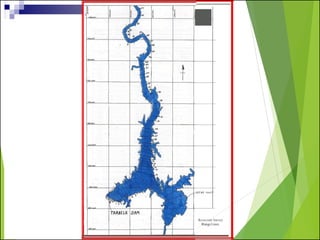
Reservoir Survey
RangeLines
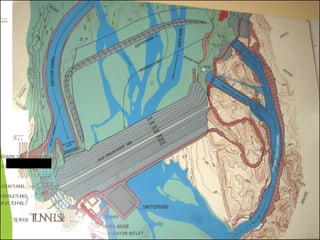
ATIONTUNNEL
HSTRUCTURES: /
ff/OP/ TUHHELJ
/ / 0 J
"'P,,OWER TUNNELS'eil ;..
IttrTllr
lllf f f i
sO
;O
;00
IERINTAK S._c. :=+--t-t"n
AKE
1
..'.- - 100' ---ef 00
r,z..COrTlllDA/11. C
MINIMUM POOL El.l!Joef
--= : = 101
SE£ DETAIL A
151 zo' ZS' 30'
-NOR
-MAL '-U.LL POOL £/. 1 5 (
5'
,noo' 16001
zgoo' z400' 19601 16001 12901
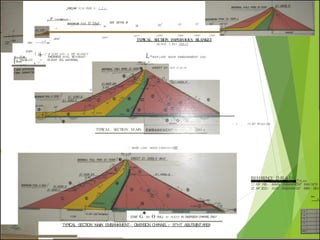
TYPICAL SECTION IMPERVIOUS BLANKET
SCALE I IN • 200 rT
Z1IIIN
l {' -,- AT LEAST HAU Of THC BLANKCT
U • 1111u , + THICKNESS SHALL BCFORMED
U a 11uOIi UC I• Of ZDN! BZa MATERIAL
1--- ,- f - I
• • OIi NJ.
L-BAff LINC MAIN EMBANKMENT DAM
,,s·
/SOS O M A¥
5
/ L _ 1/UIET WCLLS LIi/£
TYPICAL SECTION M AIN
, r BASE LINC MAIN CMBANKMU,
REHRENCE D R A I NII NY 200 - G£N£RAL ROJ TPLAN
22 NY 150- MAIN EMBANKMCNT IMM D£TA
ZZ NY ZOO- MAIN EMBANKIICNT DAM- DIA
TYPICAL SECTION MAIN EMBANKMENT- DIVERSION CHANNEL t ' R"HT ABUTM[NTAREA
-............
ZONE G•AND O WILL Bl PLACCO IN DIVERSION CHANNELONLY
Hydraulics & Civil Engineers
◼ Storage and Diversion Structures & Their Components
 Spillways, Tunnels, Hydropower, Navigational locks, Fish Ladder
◼ Conveyance Structures
 Canals, Pipes, Aqueducts, Flumes, Outlets, Head regulators, Cross
Regulators
◼ Mechanized Transfer
 Pumps, Tubewells
◼ Hydropower
 Water Wheels and Turbines
◼ Drainage
 Ditches and Drains, Open Drains, Tubewells, Tile Drains
◼ Sediment Erosion, Transport, and Deposition
◼ Flood Control Structures
◼ Drinking Water Supply
◼ Water Treatment
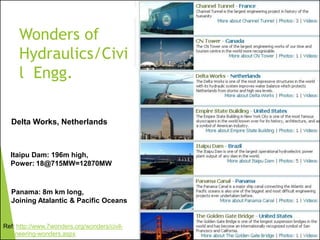
Wonders of
Hydraulics/Civi
l Engg.
Itaipu Dam: 196m high,
Power: 18@715MW=12870MW
Panama: 8m km long,
Joining Atalantic & Pacific Oceans
Ref: http://www.7wonders.org/wonders/civil-
engineering-wonders.aspx
Delta Works, Netherlands
22
“The roots of education are bitter, but the fruit is sweet.”
Aristotle
THE END

Introduction to Hydraulics engineering

  • 1.
  • 2.
    Hydraulics Engineering The term"hydraulics‟ is related to the application of the Fluid Mechanics principles to water engineering structures, civil and environmental engineering facilities, especially hydraulic structures (e.g. canal, river, dam, reservoir and water treatment plant) [1]. ◼Definition  Branch of Civil Engineering concerned with the flow and conveyance of the fluid, especially water. [Wikipedia] Highly related to design of bridges, dams, canals, levees, water supply system, sanitation, irrigation system ◼Difference between Hydraulics and Hydrology ◼History of Hydraulics [1.] The Hydraulics of Open Channel Flow: An Introduction, Second Edition, by Hubert Chanson. 2004. Elsevier Butterworth-Heinemann.
  • 3.
  • 4.
    I -3 . .F. / ..Ftuut am11m1111111111111m1111Mmmmmmm1111111 i • .; • 1 ..I I I I C 11 A A C
  • 5.
    History ◼ Egyptian:  Signsof use of canals for water supply and irrigation by Egyptian  One of major contribution by Pharohs was construction of canals  Draw water from canal/river by Swape or Shuduf ◼ Shuduf is a bucket attached to a pivoted boom through a string. The boom is balanced by a counter weight on far end.
  • 6.
  • 7.
    ◼ Mesopotamia  Mesopotamiais Greek Word meaning “Land between two rivers” i.e. Tigris and Euphrates  Sumerian (~ 2500 BC) built walled cities and for that dug canals, which are considered as first engineering works  They fought over water rights  They had written rules about maintenance of canals. e.g. rule below is 6th c. BC rule:  Mesopotamian agriculture declined because of salty soils.  Tigris & Euphtates carried silt 6 times more than Nile, and such posed bigger problems of flooding and course changes than that in Egypt (Nile valley)  Mangols destroyed their irrigation system in 1258 AD History
  • 8.
    Qanat or Karaiz Ref:Hyd. Des. Hand Book by Larry W Mays Karaiz: A system of tunnelsused to bring water from an underground source in the hills down to the foothills. ◼ Developed by Armenian ◼ Asyrian (Mesopotamia) Ruler Saragon Destroyed it in Armenia and brought it to Asyria in 715 BC ◼ Spread in Africa, and Persia ◼ Still in use in Pakistan, Afghanistan, Iran
  • 9.
    Dams ◼ The Sadd-el-Kafaradam (Dam of the Pagans) in Egypt, situated on the eastern bank of the Nile near Heluan approximately 30 km south of Cairo, in the Wadi Garawi, has been referred to as the world‟s oldest large dam (Garbrecht, 1985). ◼ It was built between 2,950 and 2,690 B.C. ◼ Although the Jass drinking-water reservoir in Jordon and the diversion dams on the Kasakh River in Russia are probably older, they are much smaller than the Sadd-el-Kafara (Dam of the Pagans). ◼ It is unlikely that the Sadd-el-Kafara dam was built to supply water for drinking or irrigation because the dam lies too far from the Alabaster quarries situated upstream to have supplied the labor force with drinking water. Furthermore, there is a vast supply of water and fertile land in the nearby Nile valley. ◼ The apparent purpose of the dam was to protect installations in the lower wadi and the Nile valley from frequent, sudden floods. ◼ The dam was destroyed during construction by a flood; consequently, it was never completed. ◼ To date, the dam‟s abutments still exist.
  • 10.
  • 11.
  • 12.
  • 13.
    The boats leavingthe final shiplock at 113 meters lower level.
  • 14.
  • 15.
  • 16.
    SATELLITE IMAGE OFTARBELA • DARBAND ▪ HARIPUR ◼ BISHAM QILA
  • 17.
    .S!1'AN f HU!T" ReservoirSurvey RangeLines
  • 18.
    ATIONTUNNEL HSTRUCTURES: / ff/OP/ TUHHELJ // 0 J "'P,,OWER TUNNELS'eil ;.. IttrTllr lllf f f i sO ;O ;00 IERINTAK S._c. :=+--t-t"n AKE
  • 19.
    1 ..'.- - 100'---ef 00 r,z..COrTlllDA/11. C MINIMUM POOL El.l!Joef --= : = 101 SE£ DETAIL A 151 zo' ZS' 30' -NOR -MAL '-U.LL POOL £/. 1 5 ( 5' ,noo' 16001 zgoo' z400' 19601 16001 12901 TYPICAL SECTION IMPERVIOUS BLANKET SCALE I IN • 200 rT Z1IIIN l {' -,- AT LEAST HAU Of THC BLANKCT U • 1111u , + THICKNESS SHALL BCFORMED U a 11uOIi UC I• Of ZDN! BZa MATERIAL 1--- ,- f - I • • OIi NJ. L-BAff LINC MAIN EMBANKMENT DAM ,,s· /SOS O M A¥ 5 / L _ 1/UIET WCLLS LIi/£ TYPICAL SECTION M AIN , r BASE LINC MAIN CMBANKMU, REHRENCE D R A I NII NY 200 - G£N£RAL ROJ TPLAN 22 NY 150- MAIN EMBANKMCNT IMM D£TA ZZ NY ZOO- MAIN EMBANKIICNT DAM- DIA TYPICAL SECTION MAIN EMBANKMENT- DIVERSION CHANNEL t ' R"HT ABUTM[NTAREA -............ ZONE G•AND O WILL Bl PLACCO IN DIVERSION CHANNELONLY
  • 20.
    Hydraulics & CivilEngineers ◼ Storage and Diversion Structures & Their Components  Spillways, Tunnels, Hydropower, Navigational locks, Fish Ladder ◼ Conveyance Structures  Canals, Pipes, Aqueducts, Flumes, Outlets, Head regulators, Cross Regulators ◼ Mechanized Transfer  Pumps, Tubewells ◼ Hydropower  Water Wheels and Turbines ◼ Drainage  Ditches and Drains, Open Drains, Tubewells, Tile Drains ◼ Sediment Erosion, Transport, and Deposition ◼ Flood Control Structures ◼ Drinking Water Supply ◼ Water Treatment
  • 21.
    Wonders of Hydraulics/Civi l Engg. ItaipuDam: 196m high, Power: 18@715MW=12870MW Panama: 8m km long, Joining Atalantic & Pacific Oceans Ref: http://www.7wonders.org/wonders/civil- engineering-wonders.aspx Delta Works, Netherlands
  • 22.
    22 “The roots ofeducation are bitter, but the fruit is sweet.” Aristotle THE END