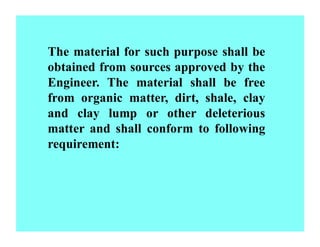
HIGHWAY MATERIALS
•Soils
•Aggregates
•Bituminous materials
AGGREGATES
The term "aggregate" refers to granular
mineral particles that are widely used for
highway bases, subbases, and backfill.
Aggregates are also used in combination with
a cementing material to form concretes for
bases, subbases, wearing surface and drainage
structures. Sources of aggregates include
natural deposits of sand and gravel,
pulverized concrete and asphalt pavements,
crushed stone, and blastfurnace slag.
Properties of Aggregates
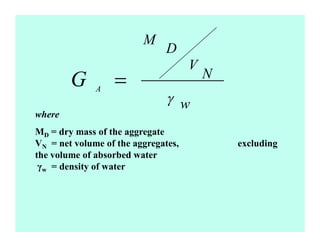
The most important properties of aggregates
used for highway construction are
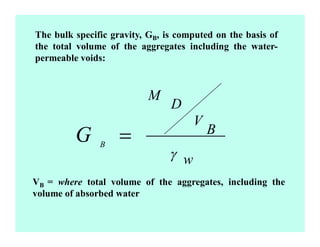
•particle size and gradation.
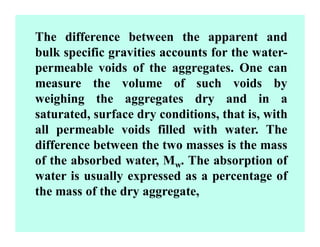
•hardness or resistance to wear.
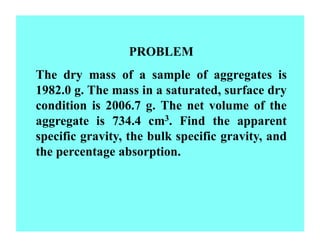
•durability or resistance to weathering.
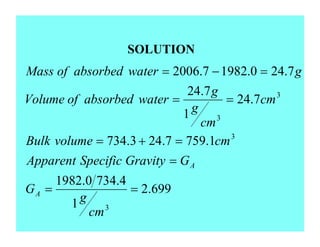
•specific gravity and absorption.
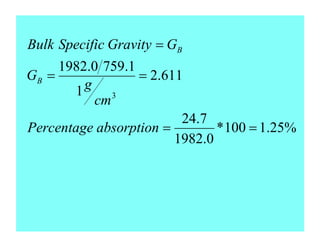
•chemical stability.
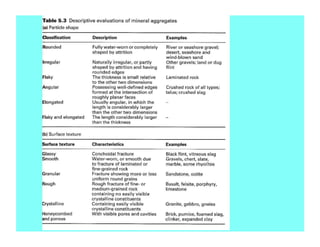
•particle shape and surface texture.
•freedom from deleterious particles or
substances
Particle Size and Gradation of Aggregates
A key property of aggregates used for highway
bases and surfaces is the distribution of
particle sizes in the aggregate mix.
The gradation of aggregates, that is the blend
of particle sizes in the mix, affects the density,
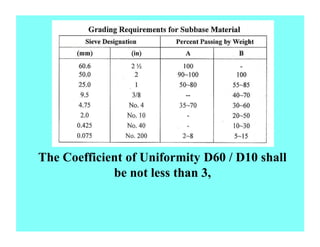
strength, and economy of the pavement
structure. A grain-size analysis is used to
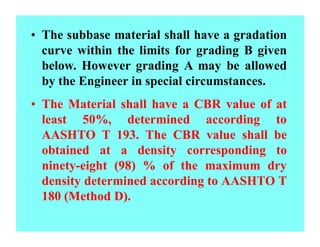
determine the relative proportions of various
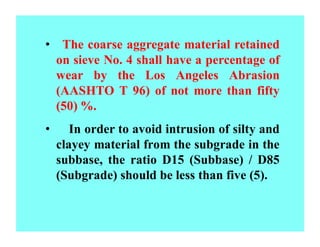
particle sizes in a mineral aggregate mix.
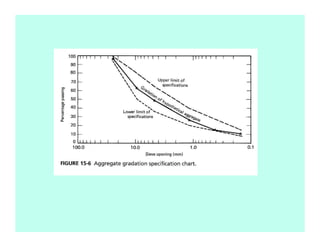
The grain-size analysis data are usually
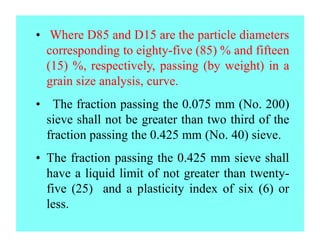
plotted on an aggregate grading chart, as
shown in Figure. With the aid of such a
chart, engineers determine a preferred
aggregate gradation and require that the
gradation of aggregates used for highway
projects conform to the limits of a
specification band.
Testing sieves commonly used for highway
projects are those with 2-1/2, 2, 1-1/2, 1, 3/4,
1/2, and 3/8 in. square openings for the large
fractions and those with 4, 8, 16, 30, 50, 100,
and 200 meshes per inch for the smaller
fractions. The latter sieves are designated
No.4, No. 10, and so on.
Resistance to Wear
Materials used in highway pavements should
be hard and resist wear due to the loading
from compaction equipment, the polishing
effects of traffic, and the internal abrasive
effects of repeated loadings. The most
commonly accepted measure of the hardness
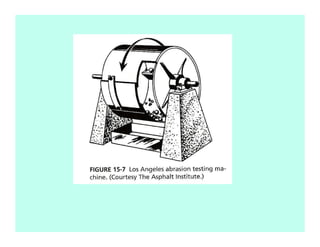
of aggregates is the Los Angeles abrasion test.
The machine used in the Los Angeles abrasion
test consists of a hollow steel cylinder, closed
at both ends and mounted on shafts in a
horizontal position .
A removable steel shelf extending the length of
the cylinder is mounted on the interior surface
of the cylinder.
To perform the Los Angeles abrasion test, a
clean sample of the aggregate to be tested is
placed in the cylinder along with a standard
weight of steel spheres as an abrasive charge.
The drum is then rotated at a speed of 30 to 33
rpm for 500 revolutions, after which the
aggregate sample is removed and sieved on a
No. 12 (1.70 mm) sieve.
The material retained on the sieve is
washed, dried to a constant mass, and
weighed. The difference between the
original mass and the final mass of the
sample, expressed as a percentage of the
original mass, is reported as the percentage
of wear. A detailed procedure for this test is
given by AASHTO Method T96 (2).
Durability or Resistance to Weathering
The durability of aggregates is commonly
measured by a soundness test, as described in
AASHTO Method Tl04 (2). This test measures
the resistance of aggregates to disintegration in
a saturated solution of sodium or magnesium
sulfate. It simulates the weathering of
aggregates that occur in nature.
The test is made by immersing sized fractions of the
aggregate to be tested in a saturated solution of sodium or
magnesium sulfate. The aggregate is then removed and
dried in an oven to a constant mass. This process is
repeated for a specified number of cycles, typically five.
After the repeated cycle of alternate wetting and drying,
the aggregate is divided into fractions by sieving, and the
percentage weight loss is determined for each fraction.
The percentage loss is expressed as a
weighted average. For a given sieve size, the
percentage weighted average loss is the
product of the percentage passing that sieve
and the percentage passing that sieve in the
original material. The total of such values is
th percent loss test value.
Specific Gravity and Absorption
The specific gravity and absorption of aggregates are
important properties that are required for the design of
concrete and bituminous mixes. The specific gravity of a
solid is the ratio of its mass to that of an equal volume of
distilled water at a specified temperature. Because
aggregates may contain water-permeable voids, two
measures of specific gravity of aggregates are used:
apparent specific gravity and bulk specific gravity.
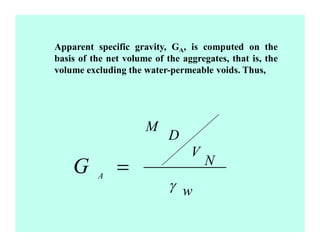
Apparent specific gravity, GA, is computed on the
basis of the net volume of the aggregates, that is, the
volume excluding the water-permeable voids. Thus,
w
N
V
D
M
A
=
where
MD = dry mass of the aggregate
VN = net volume of the aggregates, excluding
the volume of absorbed water
w = density of water
w
N
V
D
M
A
=
The bulk specific gravity, GB, is computed on the basis of
the total volume of the aggregates including the water-
permeable voids:
w
B
V
D
M
B
=
VB = where total volume of the aggregates, including the
volume of absorbed water
The difference between the apparent and
bulk specific gravities accounts for the water-
permeable voids of the aggregates. One can
measure the volume of such voids by
weighing the aggregates dry and in a
saturated, surface dry conditions, that is, with
all permeable voids filled with water. The
difference between the two masses is the mass
of the absorbed water, Mw. The absorption of
water is usually expressed as a percentage of
the mass of the dry aggregate,
R LEM
T o l o i
T i
o i io i T ol o
i i
i i i l i i i
o io
S L TI
699.2
1
4.734.19 2
1.7 97.243.734
7.24
1
7.24
7.24.19 27.2 6
3
3
3
3
==
=
==
==
==
cm
g
G
GGrc cr
cmm
cm
cm
g
g
rrm
grr
2.11
.19 2
7.24
611.2
1
1.7 9.19 2
3
==
==
=
rrc g
cm
g
G
GGrc c
i l S ili o A
i i l o
i l i o io li io
o i l o o i io o
i l
I l i i
i i i o
o i o i o il i i
l i o i i io o l o
A i o o i i
i o o i i i
i o i o il i i i
o
T i i o i i i o
i ll o
i o o i il o i
i l illi o i ll
illi oi
i l
H o o i H o ili A
T i il o i i o i l o
o o l o i
o i i o i i
i ll o i o
o io o i
o i o o i i
l o o o i i l i i o i
o i i i o i i
o loo i i o
o i o io
i il o l o i i o il
o i i l i i il
il o
A i i i o
i l
o ili o ili
i lo i o l
o li l o o i
o il i i ll
o o i o i
I i l i i o il
i i o l i
l o o o
i l i io i io i i
ASTM S i
I io T io i io
i l ASTM I
I io o io T
I io T
o i o A
S i i io o i
i o io o o l
i l o i l
l li o
S i i io o i
i i o i ll i
l o l i
o o o l o
lo i l ll o
o io l i l
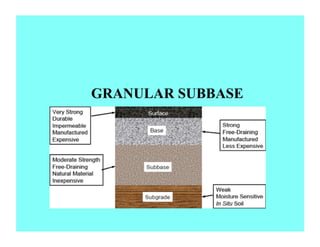
GRA LAR S ASE
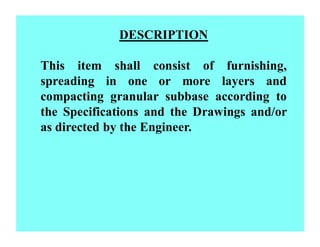
ES RI TI
T i i ll o i o i i
i i o o o l
o i l o i o
S i i io i o
i E i
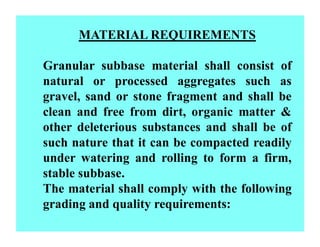
MATERIAL RE IREME TS
G l i l ll o i o
l o o
l o o ll
l o i o i
o l io ll o
i o il
i olli o o i
l
T i l ll o l i ollo i
i li i
T o i i o i o i ll
o l
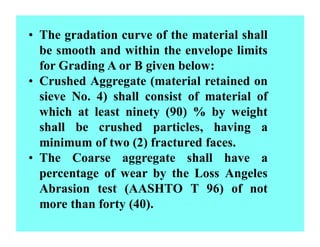
• T i l ll io
i i li i o i i
lo Ho i A llo
E i i i l i
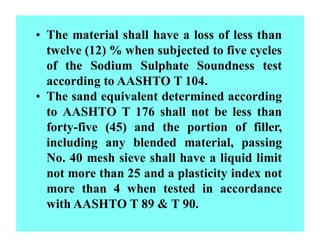
• T M i l ll R l o
l i o i o
AASHT T T R l ll
o i i o o i o
i i o i
i i o i o AASHT T
M o
T o i l i
o i o ll o
Lo A l A io
AASHT T o o o i
I o o oi i io o il
l i l o i
io S
S o l l i
• 1
1
.
• . 7 . 2
.42 . 4 .
• .42
2 6
.
• I o i i o i o
i l o ll i i l o
o i i ll llo o
i i llo
E i i o i i i l
i o o l
• S i l o ll l ll
i i i
R SHE AGGREGATE ASE
RSE
ES RI TI
T i i ll o i o i i
i o i o o
o l o A
o o
o i i o i o
i S i i io i
o i E i
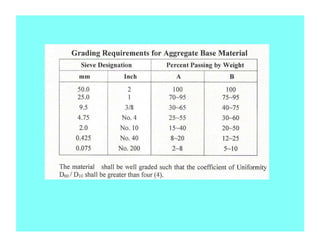
MATERIAL RE IREME TS
M i l o o
ll o i o l l
o o o I ll l
o o i l o l
o l io T i l ll
o i o
il i olli o o
i l o o l i l i i
T o
ll o l i ollo i i
li i
• T io o i l ll
oo i i lo li i
o G i A o i lo
• A i l i o
i o ll o i o i l o
i l i i
ll i l i
i i o o
• T o ll
o Lo A l
A io AASHT T o o
o o
• T i l ll lo o l
l o i l
o So i S l So
o i o AASHT T
• T i l i o i
o AASHT T ll o l
o i o io o ill
i l i l i l i
o i ll li i li i
o o l i i i o
o i o
i AASHT T T
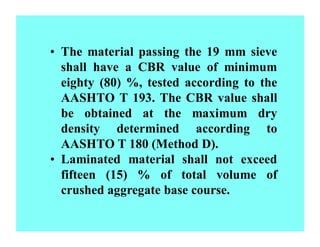
• T i l i i
ll R l o i i
i o i o
AASHT T T R l ll
o i i
i i o i o
AASHT T M o
• L i i l ll o
i o o l ol o
o
ill o l i
I ill i i io o ll
i o i l
i o i i
i o o i o o i o
i l i ll i o l l i
o i l i l
o i ill l o i o
T i l o o ll
o i o o o
E i T i l ll
o o i i l l
l l o o l io
ll o o o ollo i
i
Ho o i
i i o i l ill ll i
i io o
IT MI S MATERIALS
i i o i l i l o
o o io i il o
i ll i i o i o
i oo i o i ll
i l i l lo o i i o
i l o i i il o i
i o i o ASTM i l o
l o d d oli o i o
i io o o i l o
i ol l i o o
i i io i i ol l i o i l i
i i o i l i i i o o
o o i
as a s
a s
•A l i o ol
oil A o i o l
o i o i
o oil l o l
o i ll i l
•T i o i
i ill io o o i o l
oo o ol T o i o
i i ill io i
o i o o
o
A l o o o o i o
i l i l o
i o o li
o o o i
A l ill i ol i ol oil
ill o T o
o l o
o l o i o oil i o l
A l l i olo
ll o l i olo
To o i l i
o i
So o o i i A l
ol A l o io
i i
i o i i i ll o
ol ll d
l i o
i i
l l I i l ollo i
•L A l
•Ro A l
L A l
T l l o i o a as a
o o I l o T i i o o
o o So A i T i l o
l o o o l
o o i i o
o i o illio o o i l
ollo i io l i o
o i o oi
o i o o l
i o i o i o oo l
o o T i i E o
R i T i i L A l
T i l l o i ll
o i o i
i l
o i
ollo i i o i l i o
E l i i i l i
o o io il i o io o
i i i i l o
i i
o l i i i il li i
i i l l
T i i L A l
a a as a s
a a as a s i l li o
o i i
i ll o l i
Hi o i ll l o l i
i o o l T
io i S i l o G
io i
W il i i o i i
S l o l l
lo i o o io i
o
R TI AS HALT
A io li l i
o o i o ol oil A
i i o i o
i i ill io o ol
l i o ol io
o o o l o
i o i o i l
o i i o o
i i o oil o
o i o l i o o
o i o lo
A l
A l o o
i ill io i se s
oo ll o
o ili i i
l o o o
o o li i I o
o l o o i o ili
oo
li i oo
T o o li l
i o o i o
• i ol l i ol
• E l i i i
W ol il ol i i
l o li i o
i i ll l
A l i o o i
ol il ol o l
i i i i o i i l
i i i o
ol ili o ol o
i o l o
i o l ollo i
o l
ol
R i i R oli o
M i i M o
Slo i S o oil
l i o i ll il l i
i o i T l T
i o l M
i i i i i o i i i o
o i l
e s o R M S i
i ASTM
i l l i i i l
i l l i i l i
o i l
E l i i A l
E l i i l i i o l
l i i
T o i
i l o l i o olloi ill o o
l ll lo l o l
i i
T l i i i l i
io i o io i o o
l i l i o
l o o l i l
o o o l
T l i i l o i i
l o l l li o l
o
W l i i l i o o
i lo o i i i
o l lo l
i i o i
o l i o
T o io o i i
i i ll io i
l i i l o
El o i l o i
i io i
l i i l o
E l i i l o i
i o io i l l i
oi o i A
l i i l o o i ol
o i li i i l i l
oll io l i i l
lo i o i i
i ll
i o i io l T o
o l i i l o
i i l o l l
AS HALTI MATERIALS
AS HALT EME T
A l ll oil l o
i o i li i l
i oli l o
l i ol I ll o
i i i o i
i i i l i ill io o o l o l o
i ll o o o
o
A l ll l i i
io i o
i o o o
AASHT o l ll
o o o i o i
T l
T o l o ll i
o i S i i io o
S i l o i io o i
E i
E IR ME TAL A T RS
I i l o i l oil
lo o i io
o i o o
l oil i l o o
o o io io o
o io I l o li
l i o l i o i
i i i i i
l i i l
i i o
i l
i o i io il
T l lo i o l
o io
o i io
o i i MS lo i SS
l i i l i l i i l
i T i o o io i ASTM
o AASHT M o io i ASTM o
AASHT M S l i o o o ll
o o o i i
T o l i i l i l i il o
i o i ili o i o il o
T i i i o i ili
ASTM AASHT T o
i o i l io il ili
o i i i i o
o io i i o o
i
Highway materials (transportation engineering)

Highway materials (transportation engineering)

  • 1.
  • 2.
    AGGREGATES The term "aggregate"refers to granular mineral particles that are widely used for highway bases, subbases, and backfill. Aggregates are also used in combination with a cementing material to form concretes for bases, subbases, wearing surface and drainage structures. Sources of aggregates include natural deposits of sand and gravel, pulverized concrete and asphalt pavements, crushed stone, and blastfurnace slag.
  • 3.
    Properties of Aggregates Themost important properties of aggregates used for highway construction are •particle size and gradation. •hardness or resistance to wear. •durability or resistance to weathering. •specific gravity and absorption. •chemical stability. •particle shape and surface texture. •freedom from deleterious particles or substances
  • 4.
    Particle Size andGradation of Aggregates A key property of aggregates used for highway bases and surfaces is the distribution of particle sizes in the aggregate mix. The gradation of aggregates, that is the blend of particle sizes in the mix, affects the density, strength, and economy of the pavement structure. A grain-size analysis is used to determine the relative proportions of various particle sizes in a mineral aggregate mix.
  • 5.
    The grain-size analysisdata are usually plotted on an aggregate grading chart, as shown in Figure. With the aid of such a chart, engineers determine a preferred aggregate gradation and require that the gradation of aggregates used for highway projects conform to the limits of a specification band.
  • 7.
    Testing sieves commonlyused for highway projects are those with 2-1/2, 2, 1-1/2, 1, 3/4, 1/2, and 3/8 in. square openings for the large fractions and those with 4, 8, 16, 30, 50, 100, and 200 meshes per inch for the smaller fractions. The latter sieves are designated No.4, No. 10, and so on.
  • 8.
    Resistance to Wear Materialsused in highway pavements should be hard and resist wear due to the loading from compaction equipment, the polishing effects of traffic, and the internal abrasive effects of repeated loadings. The most commonly accepted measure of the hardness of aggregates is the Los Angeles abrasion test. The machine used in the Los Angeles abrasion test consists of a hollow steel cylinder, closed at both ends and mounted on shafts in a horizontal position .
  • 10.
    A removable steelshelf extending the length of the cylinder is mounted on the interior surface of the cylinder. To perform the Los Angeles abrasion test, a clean sample of the aggregate to be tested is placed in the cylinder along with a standard weight of steel spheres as an abrasive charge. The drum is then rotated at a speed of 30 to 33 rpm for 500 revolutions, after which the aggregate sample is removed and sieved on a No. 12 (1.70 mm) sieve.
  • 11.
    The material retainedon the sieve is washed, dried to a constant mass, and weighed. The difference between the original mass and the final mass of the sample, expressed as a percentage of the original mass, is reported as the percentage of wear. A detailed procedure for this test is given by AASHTO Method T96 (2).
  • 12.
    Durability or Resistanceto Weathering The durability of aggregates is commonly measured by a soundness test, as described in AASHTO Method Tl04 (2). This test measures the resistance of aggregates to disintegration in a saturated solution of sodium or magnesium sulfate. It simulates the weathering of aggregates that occur in nature.
  • 13.
    The test ismade by immersing sized fractions of the aggregate to be tested in a saturated solution of sodium or magnesium sulfate. The aggregate is then removed and dried in an oven to a constant mass. This process is repeated for a specified number of cycles, typically five. After the repeated cycle of alternate wetting and drying, the aggregate is divided into fractions by sieving, and the percentage weight loss is determined for each fraction.
  • 14.
    The percentage lossis expressed as a weighted average. For a given sieve size, the percentage weighted average loss is the product of the percentage passing that sieve and the percentage passing that sieve in the original material. The total of such values is th percent loss test value.
  • 15.
    Specific Gravity andAbsorption The specific gravity and absorption of aggregates are important properties that are required for the design of concrete and bituminous mixes. The specific gravity of a solid is the ratio of its mass to that of an equal volume of distilled water at a specified temperature. Because aggregates may contain water-permeable voids, two measures of specific gravity of aggregates are used: apparent specific gravity and bulk specific gravity.
  • 16.
    Apparent specific gravity,GA, is computed on the basis of the net volume of the aggregates, that is, the volume excluding the water-permeable voids. Thus, w N V D M A =
  • 17.
    where MD = drymass of the aggregate VN = net volume of the aggregates, excluding the volume of absorbed water w = density of water w N V D M A =
  • 18.
    The bulk specificgravity, GB, is computed on the basis of the total volume of the aggregates including the water- permeable voids: w B V D M B = VB = where total volume of the aggregates, including the volume of absorbed water
  • 19.
    The difference betweenthe apparent and bulk specific gravities accounts for the water- permeable voids of the aggregates. One can measure the volume of such voids by weighing the aggregates dry and in a saturated, surface dry conditions, that is, with all permeable voids filled with water. The difference between the two masses is the mass of the absorbed water, Mw. The absorption of water is usually expressed as a percentage of the mass of the dry aggregate,
  • 20.
    R LEM T ol o i T i o i io i T ol o i i i i i l i i i o io
  • 21.
    S L TI 699.2 1 4.734.192 1.7 97.243.734 7.24 1 7.24 7.24.19 27.2 6 3 3 3 3 == = == == == cm g G GGrc cr cmm cm cm g g rrm grr
  • 22.
    2.11 .19 2 7.24 611.2 1 1.7 9.192 3 == == = rrc g cm g G GGrc c
  • 23.
    i l Sili o A i i l o i l i o io li io o i l o o i io o i l I l i i i i i o o i o i o il i i l i o i i io o l o
  • 24.
    A i oo i i i o o i i i i o i o il i i i o T i i o i i i o i ll o i o o i il o i i l illi o i ll illi oi i l H o o i H o ili A
  • 25.
    T i ilo i i o i l o o o l o i o i i o i i i ll o i o o io o i o i o o i i l o o o i i l i i o i o i i i o i i o loo i i o o i o io i il o l o i i o il o i i l i i il il o
  • 26.
    A i ii o i l o ili o ili i lo i o l o li l o o i o il i i ll o o i o i
  • 27.
    I i li i o il i i o l i l o o o i l i io i io i i ASTM S i I io T io i io i l ASTM I I io o io T I io T
  • 28.
    o i oA S i i io o i i o io o o l i l o i l l li o S i i io o i i i o i ll i l o l i o o o l o lo i l ll o o io l i l
  • 30.
  • 31.
    ES RI TI Ti i ll o i o i i i i o o o l o i l o i o S i i io i o i E i
  • 32.
    MATERIAL RE IREMETS G l i l ll o i o l o o l o o ll l o i o i o l io ll o i o il i olli o o i l T i l ll o l i ollo i i li i
  • 33.
    T o ii o i o i ll o l
  • 34.
    • T il ll io i i li i o i i lo Ho i A llo E i i i l i • T M i l ll R l o l i o i o AASHT T T R l ll o i i o o i o i i o i i i o i o AASHT T M o
  • 35.
    T o il i o i o ll o Lo A l A io AASHT T o o o i I o o oi i io o il l i l o i io S S o l l i
  • 36.
    • 1 1 . • .7 . 2 .42 . 4 . • .42 2 6 .
  • 37.
    • I oi i o i o i l o ll i i l o o i i ll llo o i i llo E i i o i i i l i o o l • S i l o ll l ll i i i
  • 38.
  • 39.
    ES RI TI Ti i ll o i o i i i o i o o o l o A o o o i i o i o i S i i io i o i E i
  • 40.
    MATERIAL RE IREMETS M i l o o ll o i o l l o o o I ll l o o i l o l o l io T i l ll o i o il i olli o o i l o o l i l i i T o ll o l i ollo i i li i
  • 42.
    • T ioo i l ll oo i i lo li i o G i A o i lo • A i l i o i o ll o i o i l o i l i i ll i l i i i o o • T o ll o Lo A l A io AASHT T o o o o
  • 43.
    • T il ll lo o l l o i l o So i S l So o i o AASHT T • T i l i o i o AASHT T ll o l o i o io o ill i l i l i l i o i ll li i li i o o l i i i o o i o i AASHT T T
  • 44.
    • T il i i ll R l o i i i o i o AASHT T T R l ll o i i i i o i o AASHT T M o • L i i l ll o i o o l ol o o
  • 45.
    ill o li I ill i i io o ll i o i l i o i i i o o i o o i o i l i ll i o l l i o i l i l o i ill l o i o
  • 46.
    T i lo o ll o i o o o E i T i l ll o o i i l l l l o o l io ll o o o ollo i i
  • 47.
    Ho o i ii o i l ill ll i i io o
  • 48.
    IT MI SMATERIALS i i o i l i l o o o io i il o i ll i i o i o i oo i o i ll i l i l lo o i i o i l o i i il o i i o i o ASTM i l o l o d d oli o i o i io o o i l o i ol l i o o i i io i i ol l i o i l i
  • 49.
    i i oi l i i i o o o o i as a s a s
  • 50.
    •A l io ol oil A o i o l o i o i o oil l o l o i ll i l •T i o i i ill io o o i o l oo o ol T o i o i i ill io i o i o o o
  • 51.
    A l oo o o i o i l i l o i o o li o o o i A l ill i ol i ol oil ill o T o o l o o l o i o oil i o l A l l i olo ll o l i olo To o i l i o i
  • 52.
    So o oi i A l ol A l o io i i i o i i i ll o ol ll d l i o i i
  • 53.
    l l Ii l ollo i •L A l •Ro A l
  • 54.
    L A l Tl l o i o a as a o o I l o T i i o o o o So A i T i l o l o o o l o o i i o o i o illio o o i l ollo i io l i o o i o oi o i o o l i o i o i o oo l o o T i i E o R i T i i L A l
  • 55.
    T i ll o i ll o i o i i l o i ollo i i o i l i o E l i i i l i o o io il i o io o i i i i l o i i o l i i i il li i
  • 56.
  • 57.
    T i iL A l
  • 58.
    a a asa s a a as a s i l li o o i i i ll o l i Hi o i ll l o l i i o o l T io i S i l o G io i W il i i o i i S l o l l lo i o o io i o
  • 60.
    R TI ASHALT A io li l i o o i o ol oil A i i o i o i i ill io o ol l i o ol io o o o l o i o i o i l o i i o o i i o oil o o i o l i o o o i o lo
  • 61.
    A l A lo o i ill io i se s oo ll o o ili i i l o o o o o li i I o o l o o i o ili oo li i oo
  • 62.
    T o oli l i o o i o • i ol l i ol • E l i i i
  • 63.
    W ol ilol i i l o li i o i i ll l A l i o o i ol il ol o l i i i i o i i l i i i o ol ili o ol o i o l o i o l ollo i o l ol
  • 64.
    R i iR oli o M i i M o Slo i S o oil l i o i ll il l i i o i T l T i o l M i i i i i o i i i o o i l e s o R M S i i ASTM i l l i i i l i l l i i l i o i l
  • 65.
    E l ii A l E l i i l i i o l l i i T o i i l o l i o olloi ill o o l ll lo l o l i i T l i i i l i io i o io i o o l i l i o l o o l i l o o o l
  • 66.
    T l ii l o i i l o l l li o l o W l i i l i o o i lo o i i i o l lo l i i o i o l i o
  • 67.
    T o ioo i i i i ll io i l i i l o El o i l o i i io i l i i l o
  • 68.
    E l ii l o i i o io i l l i oi o i A l i i l o o i ol o i li i i l i l oll io l i i l lo i o i i i ll i o i io l T o o l i i l o i i l o l l
  • 70.
  • 71.
    AS HALT EMET A l ll oil l o i o i li i l i oli l o l i ol I ll o i i i o i i i i l i ill io o o l o l o i ll o o o o
  • 72.
    A l lll i i io i o i o o o AASHT o l ll o o o i o i T l T o l o ll i o i S i i io o S i l o i io o i E i
  • 73.
    E IR METAL A T RS I i l o i l oil lo o i io o i o o l oil i l o o o o io io o o io I l o li l i o l i o i i i i i i
  • 74.
    l i il i i o i l i o i io il T l lo i o l o io o i io
  • 76.
    o i iMS lo i SS l i i l i l i i l i T i o o io i ASTM o AASHT M o io i ASTM o AASHT M S l i o o o ll o o o i i T o l i i l i l i il o i o i ili o i o il o T i i i o i ili ASTM AASHT T o i o i l io il ili o i i i i o o io i i o o i