


DAMS
TERMINOLOGY for DAMS
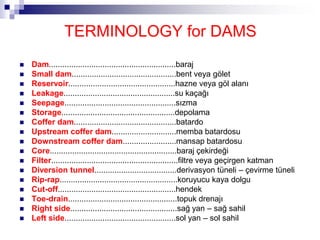
 Dam.........................................................baraj
 Small dam...............................................bent veya gölet
 Reservoir................................................hazne veya göl alanı
 Leakage..................................................su kaçağı
 Seepage..................................................sızma
 Storage...................................................depolama
 Coffer dam..............................................batardo
 Upstream coffer dam.............................memba batardosu
 Downstream coffer dam........................mansap batardosu
 Core.........................................................baraj çekirdeği
 Filter.........................................................filtre veya geçirgen katman
 Diversion tunnel.....................................derivasyon tüneli – çevirme tüneli
 Rip-rap.....................................................koruyucu kaya dolgu
 Cut-off.....................................................hendek
 Toe-drain.................................................topuk drenajı
 Right side................................................sağ yan – sağ sahil
 Left side..................................................sol yan – sol sahil
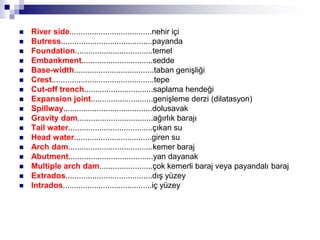
 River side.....................................nehir içi
 Butress.........................................payanda
 Foundation...................................temel
 Embankment................................sedde
 Base-width....................................taban genişliği
 Crest..............................................tepe
 Cut-off trench...............................saplama hendeği
 Expansion joint............................genişleme derzi (dilatasyon)
 Spillway........................................dolusavak
 Gravity dam..................................ağırlık barajı
 Tail water......................................çıkan su
 Head water...................................giren su
 Arch dam......................................kemer baraj
 Abutment......................................yan dayanak
 Multiple arch dam........................çok kemerli baraj veya payandalı baraj
 Extrados.......................................dış yüzey
 Intrados........................................iç yüzey
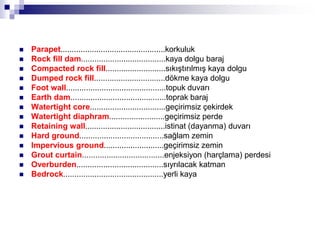
 Parapet...............................................korkuluk
 Rock fill dam......................................kaya dolgu baraj
 Compacted rock fill...........................sıkıştırılmış kaya dolgu
 Dumped rock fill................................dökme kaya dolgu
 Foot wall.............................................topuk duvarı
 Earth dam...........................................toprak baraj
 Watertight core..................................geçirimsiz çekirdek
 Watertight diaphram.........................geçirimsiz perde
 Retaining wall....................................istinat (dayanma) duvarı
 Hard ground......................................sağlam zemin
 Impervious ground...........................geçirimsiz zemin
 Grout curtain.....................................enjeksiyon (harçlama) perdesi
 Overburden.......................................sıyrılacak katman
 Bedrock.............................................yerli kaya
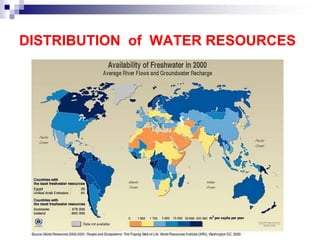
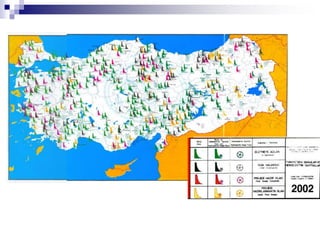
DISTRIBUTION of WATER RESOURCES
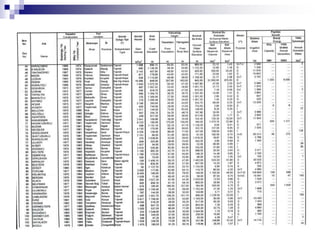
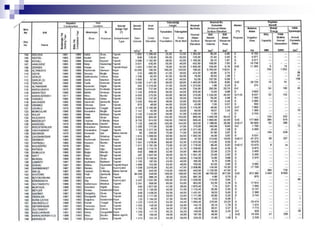
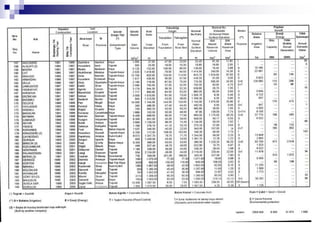
 In Turkey, 536 large dams have been built and
being operated. On the other hand, Small
Hydraulic Works Department has built 42 small
dams.
 Here, 50 storage facilities that are not considered
as dam due to their low heights (<15m) and low
storage capatcities (<2 hm3) have not been taken
into account.
 By now, construction of 100 dams and
hydroelectric powerplants is going on.
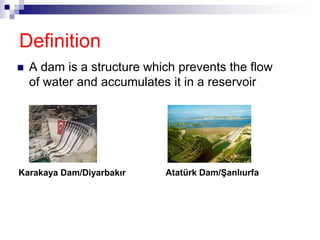
Definition
 A dam is a structure which prevents the flow
of water and accumulates it in a reservoir
Karakaya Dam/Diyarbakır Atatürk Dam/Şanlıurfa
Needs for Dam Construction
1. Drinking and domestic water supply
2. Flood control
3. Irrigation
4. Industrial water supply
5. Hydroelectric energy production
6. Retention and control of sediments
and Inland navigation, Improvement of water quality,
Fish Farming, Recreation facilities
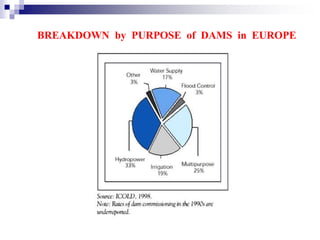
BREAKDOWN by PURPOSE of DAMS in EUROPE
CLASSIFICATION OF
DAMS
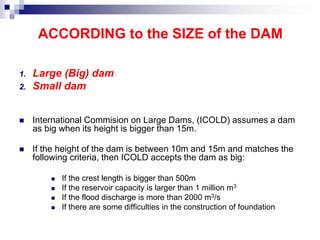
ACCORDING to the SIZE of the DAM
1. Large (Big) dam
2. Small dam
 International Commision on Large Dams, (ICOLD) assumes a dam
as big when its height is bigger than 15m.
 If the height of the dam is between 10m and 15m and matches the
following criteria, then ICOLD accepts the dam as big:
 If the crest length is bigger than 500m
 If the reservoir capacity is larger than 1 million m3
 If the flood discharge is more than 2000 m3/s
 If there are some difficulties in the construction of foundation
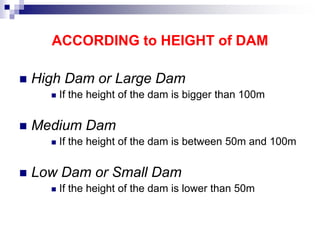
ACCORDING to HEIGHT of DAM
 High Dam or Large Dam
 If the height of the dam is bigger than 100m
 Medium Dam
 If the height of the dam is between 50m and 100m
 Low Dam or Small Dam
 If the height of the dam is lower than 50m
ACCORDING to the STATICAL DESIGN of
DAM BODY
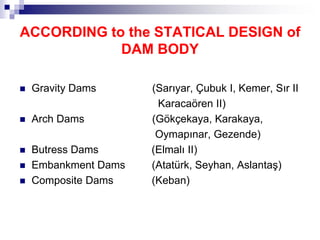
 Gravity Dams (Sarıyar, Çubuk I, Kemer, Sır II
Karacaören II)
 Arch Dams (Gökçekaya, Karakaya,
Oymapınar, Gezende)
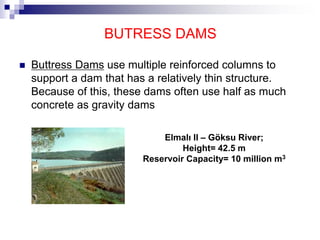
 Butress Dams (Elmalı II)
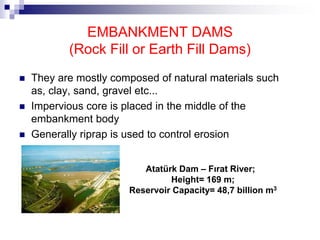
 Embankment Dams (Atatürk, Seyhan, Aslantaş)
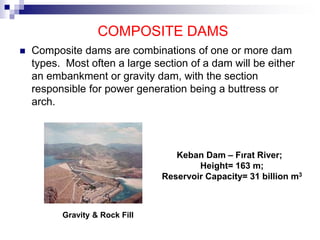
 Composite Dams (Keban)
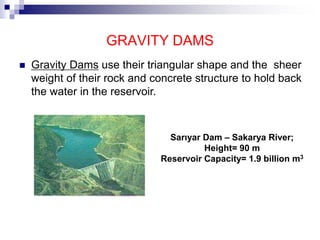
GRAVITY DAMS
 Gravity Dams use their triangular shape and the sheer
weight of their rock and concrete structure to hold back
the water in the reservoir.
Sarıyar Dam – Sakarya River;
Height= 90 m
Reservoir Capacity= 1.9 billion m3
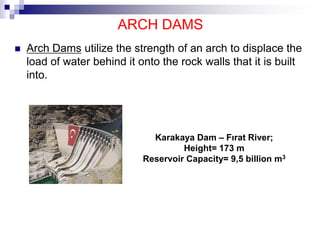
ARCH DAMS
 Arch Dams utilize the strength of an arch to displace the
load of water behind it onto the rock walls that it is built
into.
Karakaya Dam – Fırat River;
Height= 173 m
Reservoir Capacity= 9,5 billion m3
BUTRESS DAMS
 Buttress Dams use multiple reinforced columns to
support a dam that has a relatively thin structure.
Because of this, these dams often use half as much
concrete as gravity dams
Elmalı II – Göksu River;
Height= 42.5 m
Reservoir Capacity= 10 million m3
EMBANKMENT DAMS
(Rock Fill or Earth Fill Dams)
 They are mostly composed of natural materials such
as, clay, sand, gravel etc...
 Impervious core is placed in the middle of the
embankment body
 Generally riprap is used to control erosion
Atatürk Dam – Fırat River;
Height= 169 m;
Reservoir Capacity= 48,7 billion m3
COMPOSITE DAMS
 Composite dams are combinations of one or more dam
types. Most often a large section of a dam will be either
an embankment or gravity dam, with the section
responsible for power generation being a buttress or
arch.
Keban Dam – Fırat River;
Height= 163 m;
Reservoir Capacity= 31 billion m3
Gravity & Rock Fill
ENGINEERING GEOLOGICAL
STUDIES for DAM
CONSTRUCTION
1. RECONNAISSANCE STUDY
1. Evaluation of the data having at archives of MTA, DSI, EIE,
Universities,......etc
2. Field investigation for limited time (Reconnaissance Study)
3. Some maps in small scale, for example 1/25.000 or 1/50.000
4. Some hydraulic data about
a. Basin
b. Precipitation area
c. Runoff, maximum discharge {Q=R/t (m3/s)}
d. Modulus of Runoff (R/t/m2 ~ R/t/km2)
5. Some approach to the reservoir area, dam site and type of dam
and height of dam...etc
6. Photogeological studies
7. A preliminary report
2. PRELIMINARY STUDIES at the
RESERVOIR AREA and DAM SITE
1. Dam site investigations
1. Location of dam axis
2. Location of diversion tunnel
3. Location of spillway
4. Location of powerhouse...etc
2. Geological studies
3. Geophysical surveying
4. Underground investigations
1. Boreholes
2. Investigation galleries
3. Pitholes
5. Surveying for materials
1. Field surveying
2. Laboratory tests
6. Slope stability investigations
7. Earthquake hazard & risk analysis
8. Environmental studies
9. Leakage possibilities from reservoir area
10. Leakage possibilities from dam site
11. Erosion, sedimentation & siltation
DETAILED INVESTIGATION at DAM SITE
1. Topographic surveyings
2. Geological mappings
1/5000 – 1/1000 or 1/500
3. Underground explorations
Boreholes, adits....etc
4. Hydrogeological studies
5. Slope stability analysis
FACTORS AFFECTING to the DAM TYPE
SELECTION
 Topography
 Geology
 Bearing capacity of the underlying soil
 Foundation settlements
 Permeability of the foundation soil
 Material availability
 Spillway position
 Earthquakes
 Safety
 Height
 Aesthetic view
 Qualified labour
 Cost
FACTORS AFFECTING to the PLACE of
the DAM AXIS
 Topography
 Geology
 Materials
 Spillway location availability
 Derivation
 Sediments in the flowing water
 Water quality
 Expropriation costs
 Earthquake possibility
 Downstream water rights
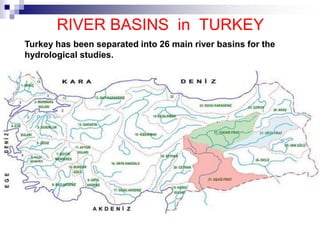
RIVER BASINS in TURKEY
Turkey has been separated into 26 main river basins for the
hydrological studies.
ENVIRONMENTAL
IMPACTS OF DAMS
ENVIRONMENTAL IMPACTS of
CONSTRUCTION PHASE of DAMS
 River pollution
 Erosion
 Loss of aesthetic view
 Air pollution
 Noise pollution
 Dust
ENVIRONMENTAL IMPACTS of
RESERVOIRS
 Loss of land
 Habitat Destruction :
 The area that is covered by the reservoir is destroyed, killing
whatever habitat existed there beforehand.
 Loss of archeological and histrorical places
 Loss of mineral deposits
 Loss of special geological formations
 Aesthetic view reduction
 Sedimentation
 Change in river flow regime and flood effects
 Reservoir induced seismicity
 Change in climate and plant species
EFFECTS of DAMS to WATER QUALITY
 Change in temperature
 Turbidity
 Dissolved gases in the water
 Water discharged from the spillway contains 110-120%
saturated nitrogen. This amount may be destructive for fish
life.
 Eutrophication
 It means increase in vegetation. If moss and other plants
exist in water, quality of that water gets worse.
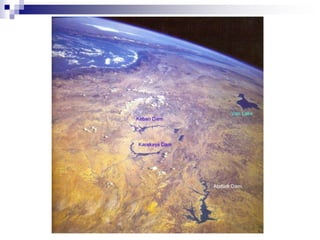
SOME DAMS from SPACE
Dams
Dams
Dams
Dams
Dams

Dams

  • 1.
  • 2.
    TERMINOLOGY for DAMS Dam.........................................................baraj  Small dam...............................................bent veya gölet  Reservoir................................................hazne veya göl alanı  Leakage..................................................su kaçağı  Seepage..................................................sızma  Storage...................................................depolama  Coffer dam..............................................batardo  Upstream coffer dam.............................memba batardosu  Downstream coffer dam........................mansap batardosu  Core.........................................................baraj çekirdeği  Filter.........................................................filtre veya geçirgen katman  Diversion tunnel.....................................derivasyon tüneli – çevirme tüneli  Rip-rap.....................................................koruyucu kaya dolgu  Cut-off.....................................................hendek  Toe-drain.................................................topuk drenajı  Right side................................................sağ yan – sağ sahil  Left side..................................................sol yan – sol sahil
  • 3.
     River side.....................................nehiriçi  Butress.........................................payanda  Foundation...................................temel  Embankment................................sedde  Base-width....................................taban genişliği  Crest..............................................tepe  Cut-off trench...............................saplama hendeği  Expansion joint............................genişleme derzi (dilatasyon)  Spillway........................................dolusavak  Gravity dam..................................ağırlık barajı  Tail water......................................çıkan su  Head water...................................giren su  Arch dam......................................kemer baraj  Abutment......................................yan dayanak  Multiple arch dam........................çok kemerli baraj veya payandalı baraj  Extrados.......................................dış yüzey  Intrados........................................iç yüzey
  • 4.
     Parapet...............................................korkuluk  Rockfill dam......................................kaya dolgu baraj  Compacted rock fill...........................sıkıştırılmış kaya dolgu  Dumped rock fill................................dökme kaya dolgu  Foot wall.............................................topuk duvarı  Earth dam...........................................toprak baraj  Watertight core..................................geçirimsiz çekirdek  Watertight diaphram.........................geçirimsiz perde  Retaining wall....................................istinat (dayanma) duvarı  Hard ground......................................sağlam zemin  Impervious ground...........................geçirimsiz zemin  Grout curtain.....................................enjeksiyon (harçlama) perdesi  Overburden.......................................sıyrılacak katman  Bedrock.............................................yerli kaya
  • 5.
  • 7.
     In Turkey,536 large dams have been built and being operated. On the other hand, Small Hydraulic Works Department has built 42 small dams.  Here, 50 storage facilities that are not considered as dam due to their low heights (<15m) and low storage capatcities (<2 hm3) have not been taken into account.  By now, construction of 100 dams and hydroelectric powerplants is going on.
  • 8.
    Definition  A damis a structure which prevents the flow of water and accumulates it in a reservoir Karakaya Dam/Diyarbakır Atatürk Dam/Şanlıurfa
  • 9.
    Needs for DamConstruction 1. Drinking and domestic water supply 2. Flood control 3. Irrigation 4. Industrial water supply 5. Hydroelectric energy production 6. Retention and control of sediments and Inland navigation, Improvement of water quality, Fish Farming, Recreation facilities
  • 10.
    BREAKDOWN by PURPOSEof DAMS in EUROPE
  • 11.
  • 12.
    ACCORDING to theSIZE of the DAM 1. Large (Big) dam 2. Small dam  International Commision on Large Dams, (ICOLD) assumes a dam as big when its height is bigger than 15m.  If the height of the dam is between 10m and 15m and matches the following criteria, then ICOLD accepts the dam as big:  If the crest length is bigger than 500m  If the reservoir capacity is larger than 1 million m3  If the flood discharge is more than 2000 m3/s  If there are some difficulties in the construction of foundation
  • 13.
    ACCORDING to HEIGHTof DAM  High Dam or Large Dam  If the height of the dam is bigger than 100m  Medium Dam  If the height of the dam is between 50m and 100m  Low Dam or Small Dam  If the height of the dam is lower than 50m
  • 14.
    ACCORDING to theSTATICAL DESIGN of DAM BODY  Gravity Dams (Sarıyar, Çubuk I, Kemer, Sır II Karacaören II)  Arch Dams (Gökçekaya, Karakaya, Oymapınar, Gezende)  Butress Dams (Elmalı II)  Embankment Dams (Atatürk, Seyhan, Aslantaş)  Composite Dams (Keban)
  • 15.
    GRAVITY DAMS  GravityDams use their triangular shape and the sheer weight of their rock and concrete structure to hold back the water in the reservoir. Sarıyar Dam – Sakarya River; Height= 90 m Reservoir Capacity= 1.9 billion m3
  • 17.
    ARCH DAMS  ArchDams utilize the strength of an arch to displace the load of water behind it onto the rock walls that it is built into. Karakaya Dam – Fırat River; Height= 173 m Reservoir Capacity= 9,5 billion m3
  • 18.
    BUTRESS DAMS  ButtressDams use multiple reinforced columns to support a dam that has a relatively thin structure. Because of this, these dams often use half as much concrete as gravity dams Elmalı II – Göksu River; Height= 42.5 m Reservoir Capacity= 10 million m3
  • 19.
    EMBANKMENT DAMS (Rock Fillor Earth Fill Dams)  They are mostly composed of natural materials such as, clay, sand, gravel etc...  Impervious core is placed in the middle of the embankment body  Generally riprap is used to control erosion Atatürk Dam – Fırat River; Height= 169 m; Reservoir Capacity= 48,7 billion m3
  • 20.
    COMPOSITE DAMS  Compositedams are combinations of one or more dam types. Most often a large section of a dam will be either an embankment or gravity dam, with the section responsible for power generation being a buttress or arch. Keban Dam – Fırat River; Height= 163 m; Reservoir Capacity= 31 billion m3 Gravity & Rock Fill
  • 21.
  • 22.
    1. RECONNAISSANCE STUDY 1.Evaluation of the data having at archives of MTA, DSI, EIE, Universities,......etc 2. Field investigation for limited time (Reconnaissance Study) 3. Some maps in small scale, for example 1/25.000 or 1/50.000 4. Some hydraulic data about a. Basin b. Precipitation area c. Runoff, maximum discharge {Q=R/t (m3/s)} d. Modulus of Runoff (R/t/m2 ~ R/t/km2) 5. Some approach to the reservoir area, dam site and type of dam and height of dam...etc 6. Photogeological studies 7. A preliminary report
  • 23.
    2. PRELIMINARY STUDIESat the RESERVOIR AREA and DAM SITE 1. Dam site investigations 1. Location of dam axis 2. Location of diversion tunnel 3. Location of spillway 4. Location of powerhouse...etc 2. Geological studies 3. Geophysical surveying 4. Underground investigations 1. Boreholes 2. Investigation galleries 3. Pitholes 5. Surveying for materials 1. Field surveying 2. Laboratory tests
  • 24.
    6. Slope stabilityinvestigations 7. Earthquake hazard & risk analysis 8. Environmental studies 9. Leakage possibilities from reservoir area 10. Leakage possibilities from dam site 11. Erosion, sedimentation & siltation
  • 25.
    DETAILED INVESTIGATION atDAM SITE 1. Topographic surveyings 2. Geological mappings 1/5000 – 1/1000 or 1/500 3. Underground explorations Boreholes, adits....etc 4. Hydrogeological studies 5. Slope stability analysis
  • 26.
    FACTORS AFFECTING tothe DAM TYPE SELECTION  Topography  Geology  Bearing capacity of the underlying soil  Foundation settlements  Permeability of the foundation soil  Material availability  Spillway position  Earthquakes  Safety  Height  Aesthetic view  Qualified labour  Cost
  • 27.
    FACTORS AFFECTING tothe PLACE of the DAM AXIS  Topography  Geology  Materials  Spillway location availability  Derivation  Sediments in the flowing water  Water quality  Expropriation costs  Earthquake possibility  Downstream water rights
  • 28.
    RIVER BASINS inTURKEY Turkey has been separated into 26 main river basins for the hydrological studies.
  • 29.
  • 30.
    ENVIRONMENTAL IMPACTS of CONSTRUCTIONPHASE of DAMS  River pollution  Erosion  Loss of aesthetic view  Air pollution  Noise pollution  Dust
  • 31.
    ENVIRONMENTAL IMPACTS of RESERVOIRS Loss of land  Habitat Destruction :  The area that is covered by the reservoir is destroyed, killing whatever habitat existed there beforehand.  Loss of archeological and histrorical places  Loss of mineral deposits  Loss of special geological formations  Aesthetic view reduction  Sedimentation  Change in river flow regime and flood effects  Reservoir induced seismicity  Change in climate and plant species
  • 32.
    EFFECTS of DAMSto WATER QUALITY  Change in temperature  Turbidity  Dissolved gases in the water  Water discharged from the spillway contains 110-120% saturated nitrogen. This amount may be destructive for fish life.  Eutrophication  It means increase in vegetation. If moss and other plants exist in water, quality of that water gets worse.
  • 33.