Electrolysis
the passage of a direct electric current
through an ionic substance that is
either molten or dissolved in a suitable
solvent, resulting in chemical
reactions at electrodes and separation
of materials.

08/03/14
Requirements of electrolysis

08/03/14

An electrolyte - It is a substance containing
free ions which are the carriers of electric
current in the electrolyte
A direct current (DC) supply - It provides
the electrical energy necessary to create or
discharge the ions in the electrolyte.
Electrical current is carried by electrons in
the external circuit.
Requirements of electrolysis

08/03/14

Two electrodes - Electrode is an electrical
conductor which provides the physical
interface between the electrical circuit
providing the energy and the electrolyte.
Requirements of electrolysis

08/03/14

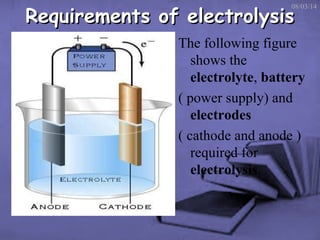
The following figure
shows the
electrolyte, battery
( power supply) and
electrodes
( cathode and anode )
required for
electrolysis.
Electrolysis

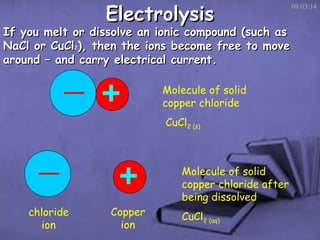
If you melt or dissolve an ionic compound (such as
NaCl or CuCl2), then the ions become free to move
around – and carry electrical current.
Molecule of solid
copper chloride
CuCl2 (s)

Molecule of solid
copper chloride after
being dissolved
chloride
ion

Copper
ion

CuCl2 (aq)

08/03/14
Electrolysis
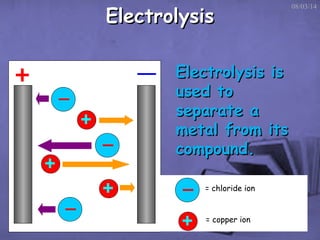
Electrolysis is
used to
separate a
metal from its
compound.
= chloride ion

= copper ion

08/03/14
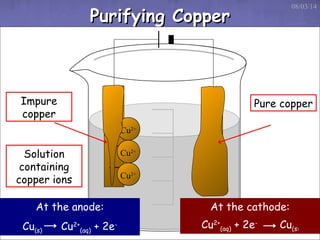
Purifying Copper

Impure
copper
Solution
containing
copper ions

+
+ Cu
+ Cu
+ Cu

At the anode:
Cu(s)

Cu2+(aq) + 2e-

2+

---

08/03/14

Pure copper

2+

2+

At the cathode:
Cu2+(aq) + 2e-

Cu(s)
Electrolysis equations

08/03/14

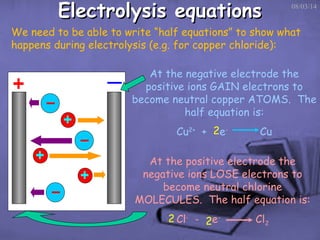
We need to be able to write “half equations” to show what
happens during electrolysis (e.g. for copper chloride):
At the negative electrode the
positive ions GAIN electrons to
become neutral copper ATOMS. The
half equation is:
Cu2+ + 2e-

Cu

At the positive electrode the
negative ions LOSE electrons to
become neutral chlorine
MOLECULES. The half equation is:
2 Cl- - 2e-

Cl2
08/03/14

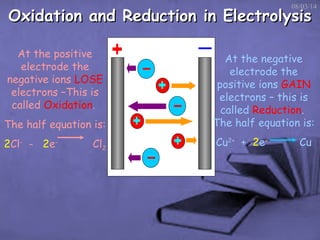
Oxidation and Reduction in Electrolysis
At the positive
electrode the
negative ions LOSE
electrons –This is
called Oxidation.
The half equation is:

At the negative
electrode the
positive ions GAIN
electrons – this is
called Reduction.
The half equation is:

2Cl- - 2e-

Cu2+ + 2e-

Cl2

Cu
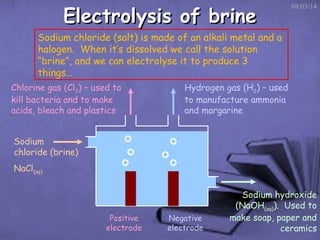
Electrolysis of brine

08/03/14

Sodium chloride (salt) is made of an alkali metal and a
halogen. When it’s dissolved we call the solution
“brine”, and we can electrolyse it to produce 3
things…
Chlorine gas (Cl2) – used to
kill bacteria and to make
acids, bleach and plastics

Hydrogen gas (H2) – used
to manufacture ammonia
and margarine

Sodium
chloride (brine)
NaCl(aq)

Positive
electrode

Negative
electrode

Sodium hydroxide
(NaOH(aq)). Used to
make soap, paper and
ceramics

Electrolysis

  • 1.
    Electrolysis the passage ofa direct electric current through an ionic substance that is either molten or dissolved in a suitable solvent, resulting in chemical reactions at electrodes and separation of materials. 08/03/14
  • 2.
    Requirements of electrolysis 08/03/14 Anelectrolyte - It is a substance containing free ions which are the carriers of electric current in the electrolyte A direct current (DC) supply - It provides the electrical energy necessary to create or discharge the ions in the electrolyte. Electrical current is carried by electrons in the external circuit.
  • 3.
    Requirements of electrolysis 08/03/14 Twoelectrodes - Electrode is an electrical conductor which provides the physical interface between the electrical circuit providing the energy and the electrolyte.
  • 4.
    Requirements of electrolysis 08/03/14 Thefollowing figure shows the electrolyte, battery ( power supply) and electrodes ( cathode and anode ) required for electrolysis.
  • 5.
    Electrolysis If you meltor dissolve an ionic compound (such as NaCl or CuCl2), then the ions become free to move around – and carry electrical current. Molecule of solid copper chloride CuCl2 (s) Molecule of solid copper chloride after being dissolved chloride ion Copper ion CuCl2 (aq) 08/03/14
  • 6.
    Electrolysis Electrolysis is used to separatea metal from its compound. = chloride ion = copper ion 08/03/14
  • 7.
    Purifying Copper Impure copper Solution containing copper ions + +Cu + Cu + Cu At the anode: Cu(s) Cu2+(aq) + 2e- 2+ --- 08/03/14 Pure copper 2+ 2+ At the cathode: Cu2+(aq) + 2e- Cu(s)
  • 8.
    Electrolysis equations 08/03/14 We needto be able to write “half equations” to show what happens during electrolysis (e.g. for copper chloride): At the negative electrode the positive ions GAIN electrons to become neutral copper ATOMS. The half equation is: Cu2+ + 2e- Cu At the positive electrode the negative ions LOSE electrons to become neutral chlorine MOLECULES. The half equation is: 2 Cl- - 2e- Cl2
  • 9.
    08/03/14 Oxidation and Reductionin Electrolysis At the positive electrode the negative ions LOSE electrons –This is called Oxidation. The half equation is: At the negative electrode the positive ions GAIN electrons – this is called Reduction. The half equation is: 2Cl- - 2e- Cu2+ + 2e- Cl2 Cu
  • 10.
    Electrolysis of brine 08/03/14 Sodiumchloride (salt) is made of an alkali metal and a halogen. When it’s dissolved we call the solution “brine”, and we can electrolyse it to produce 3 things… Chlorine gas (Cl2) – used to kill bacteria and to make acids, bleach and plastics Hydrogen gas (H2) – used to manufacture ammonia and margarine Sodium chloride (brine) NaCl(aq) Positive electrode Negative electrode Sodium hydroxide (NaOH(aq)). Used to make soap, paper and ceramics