INTRODUCTION
INTRODUCTION. 
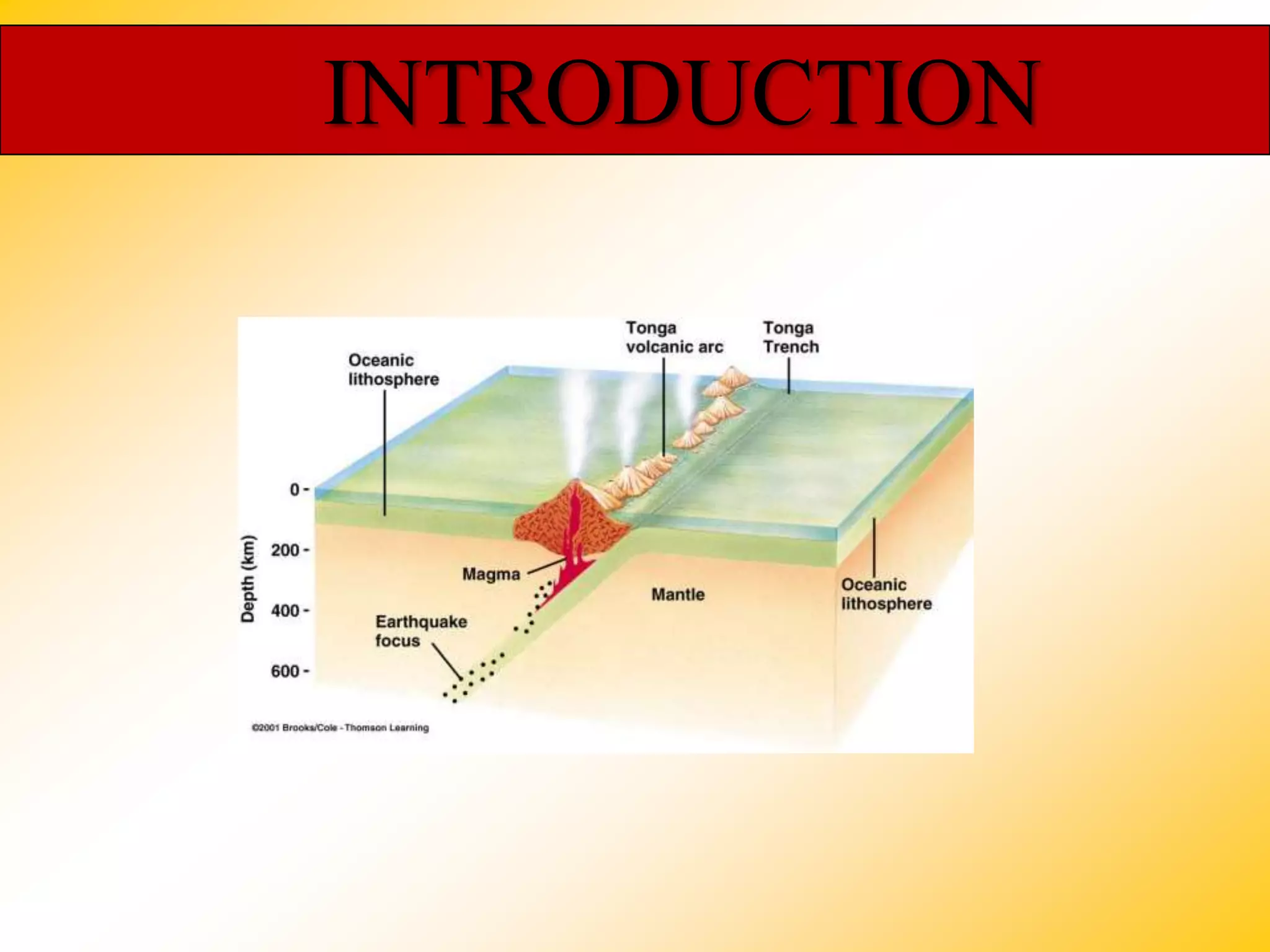
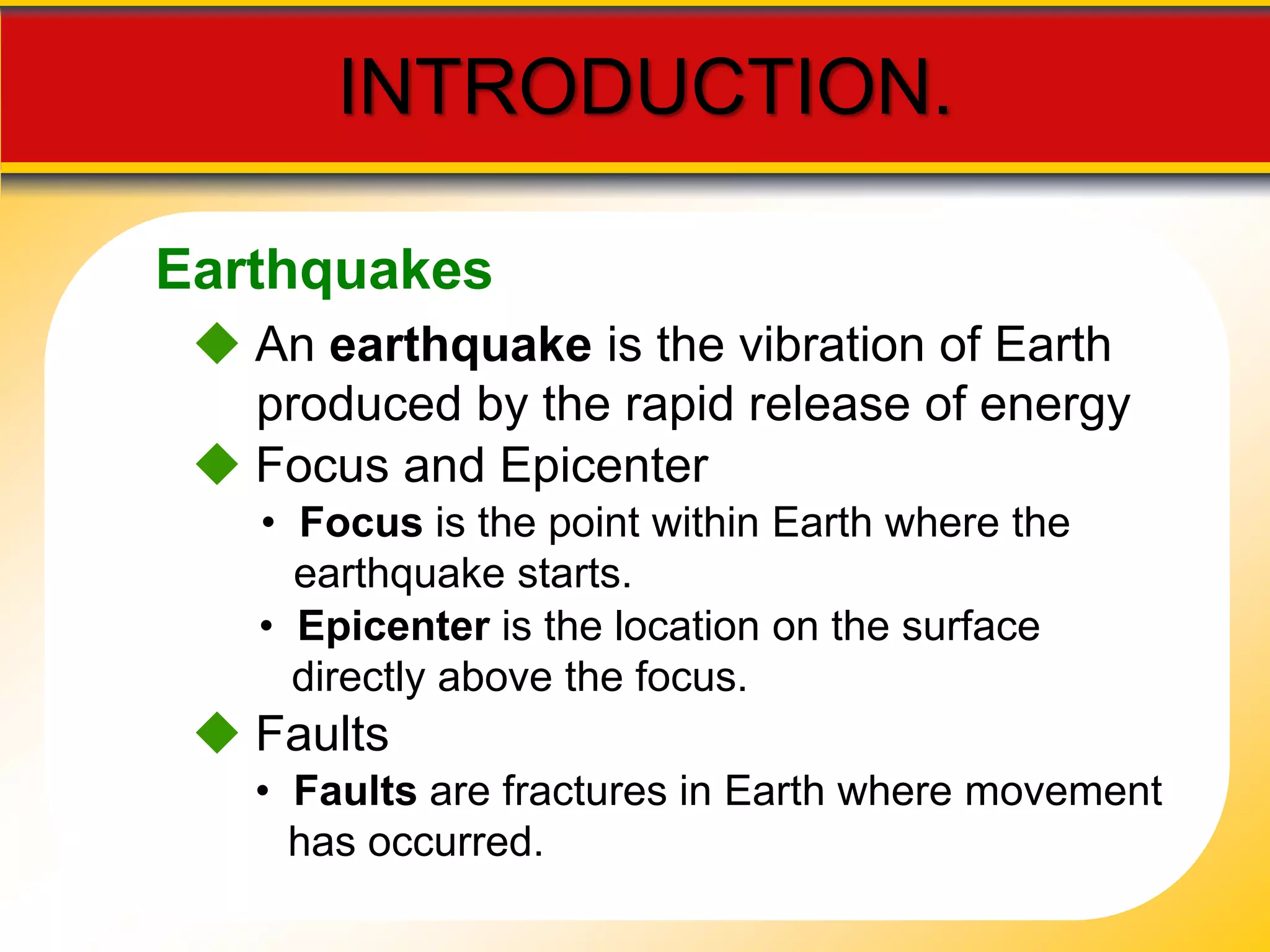
Earthquakes 
 An earthquake is the vibration of Earth 
produced by the rapid release of energy 
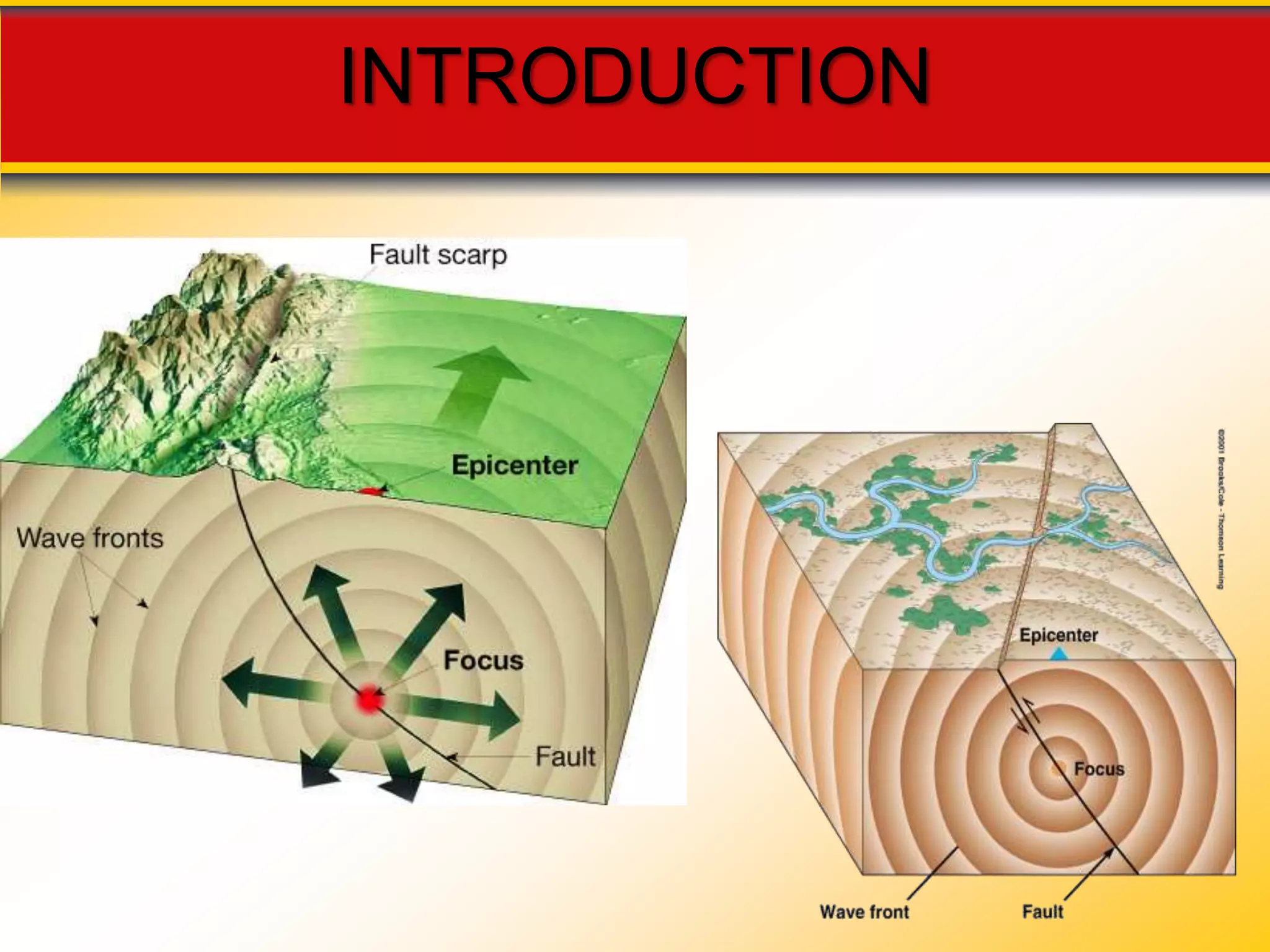
 Focus and Epicenter 
• Focus is the point within Earth where the 
earthquake starts. 
• Epicenter is the location on the surface 
directly above the focus. 
 Faults 
• Faults are fractures in Earth where movement 
has occurred.
INTRODUCTION
CONCEPT ABOUT EPICENTER 
Epicenter is the exact 
place above the 
focus from where the 
energy is releasing or 
waves are producing
INTRODUCTION
What Is an Earthquake? 
Cause of Earthquakes 
          
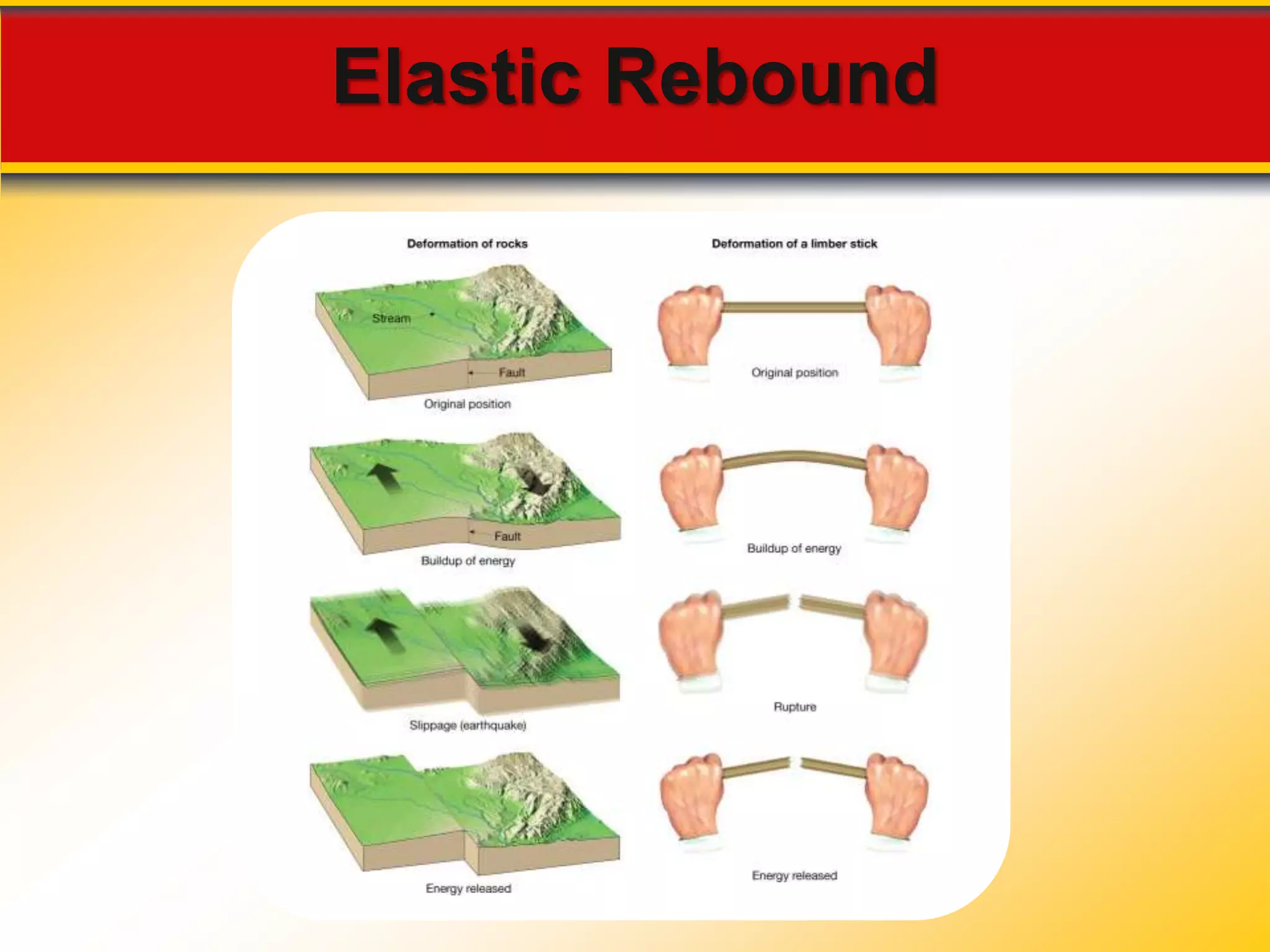
• Most earthquakes are produced by the rapid 
release of elastic energy stored in rock that 
has been subjected to great forces. 
• When the strength of the rock is exceeded, it 
suddenly breaks, causing the vibrations of an 
earthquake.
Elastic Rebound
What Is an Earthquake? 
Cause of Earthquakes 
 Aftershocks and Foreshocks 
• An aftershock is a small earthquake that 
follows the main earthquake. 
• A foreshock is a small earthquake that often 
precedes a major earthquake.
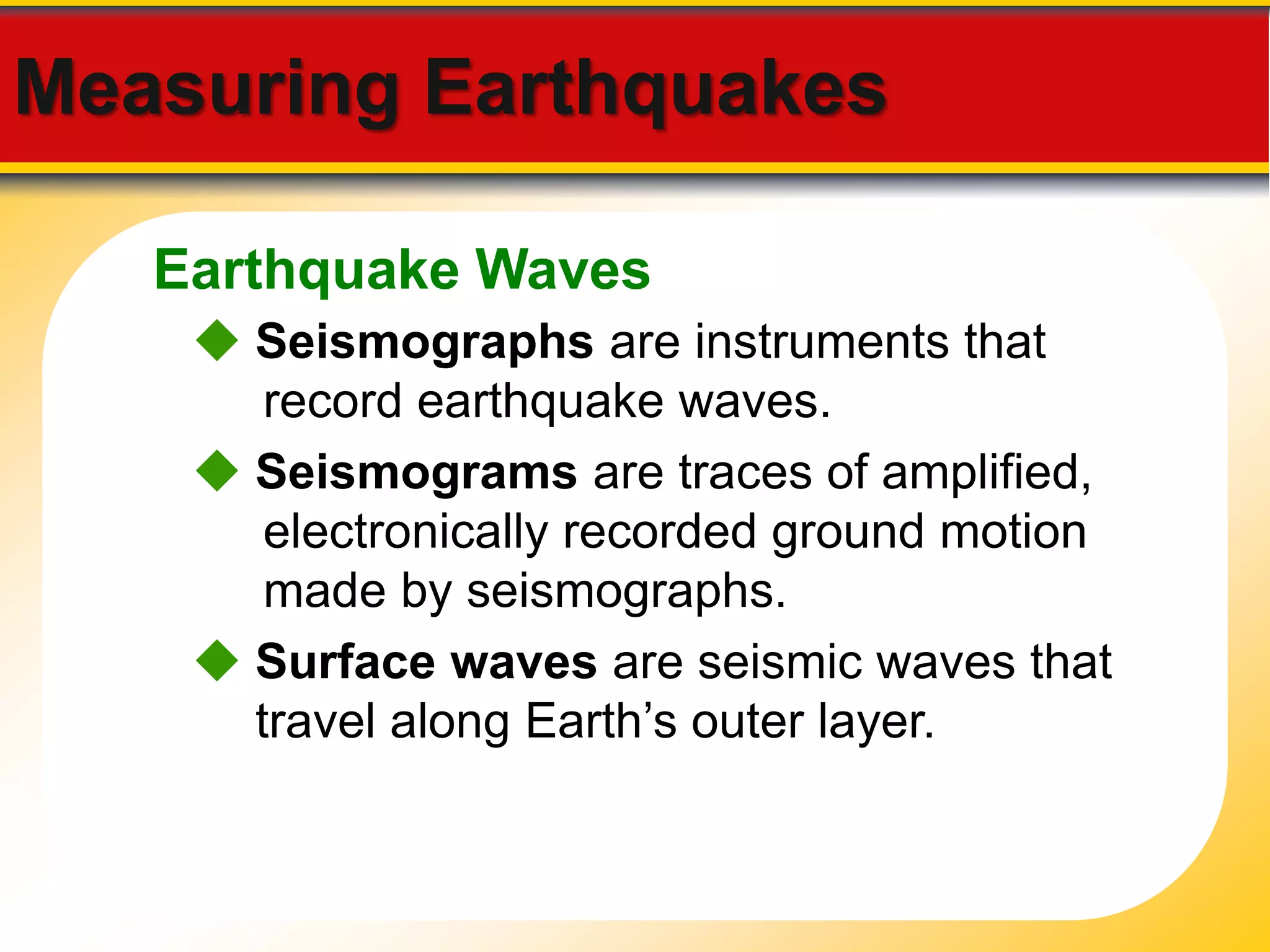
Measuring Earthquakes 
Earthquake Waves 
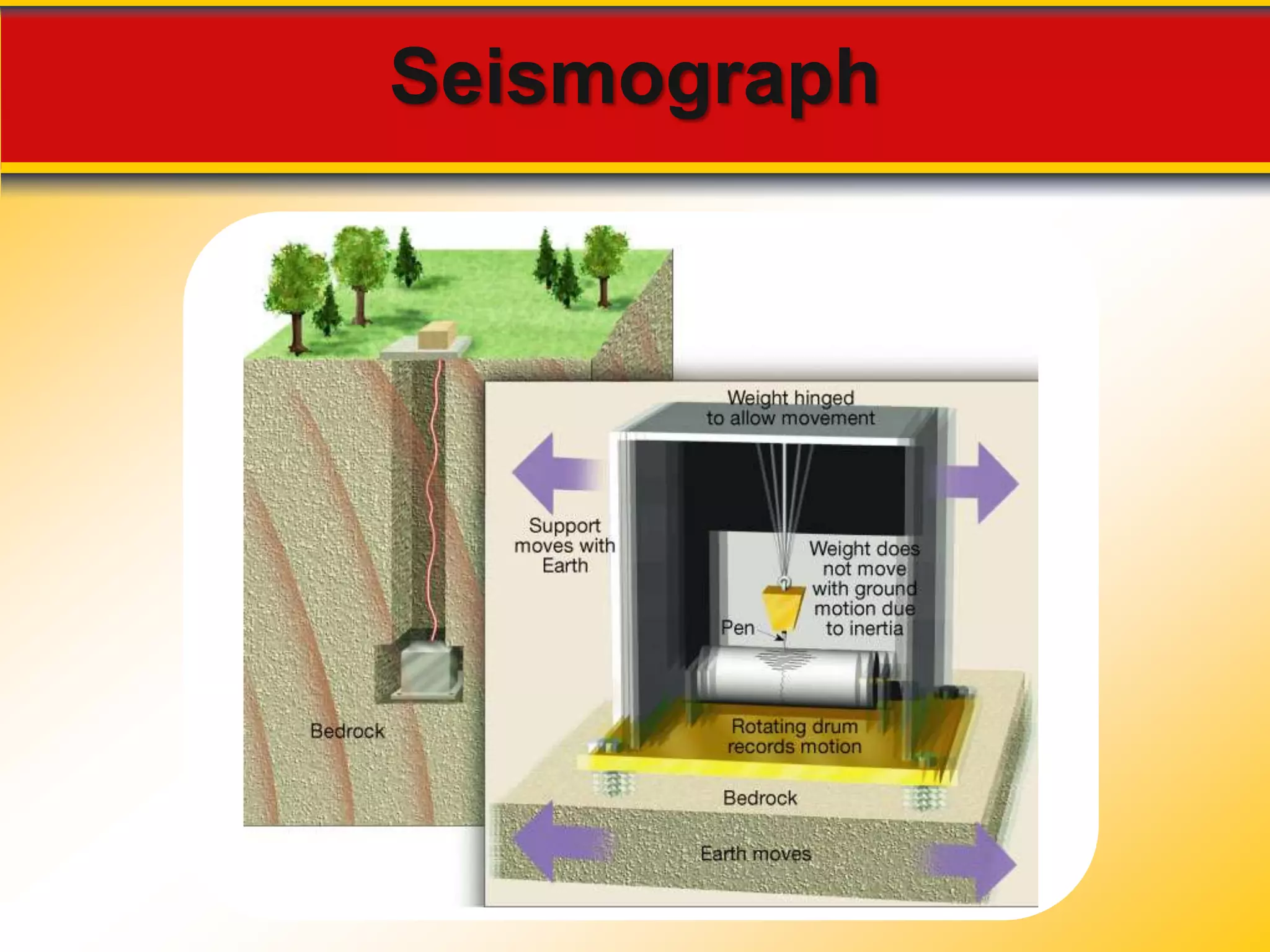
 Seismographs are instruments that 
record earthquake waves. 
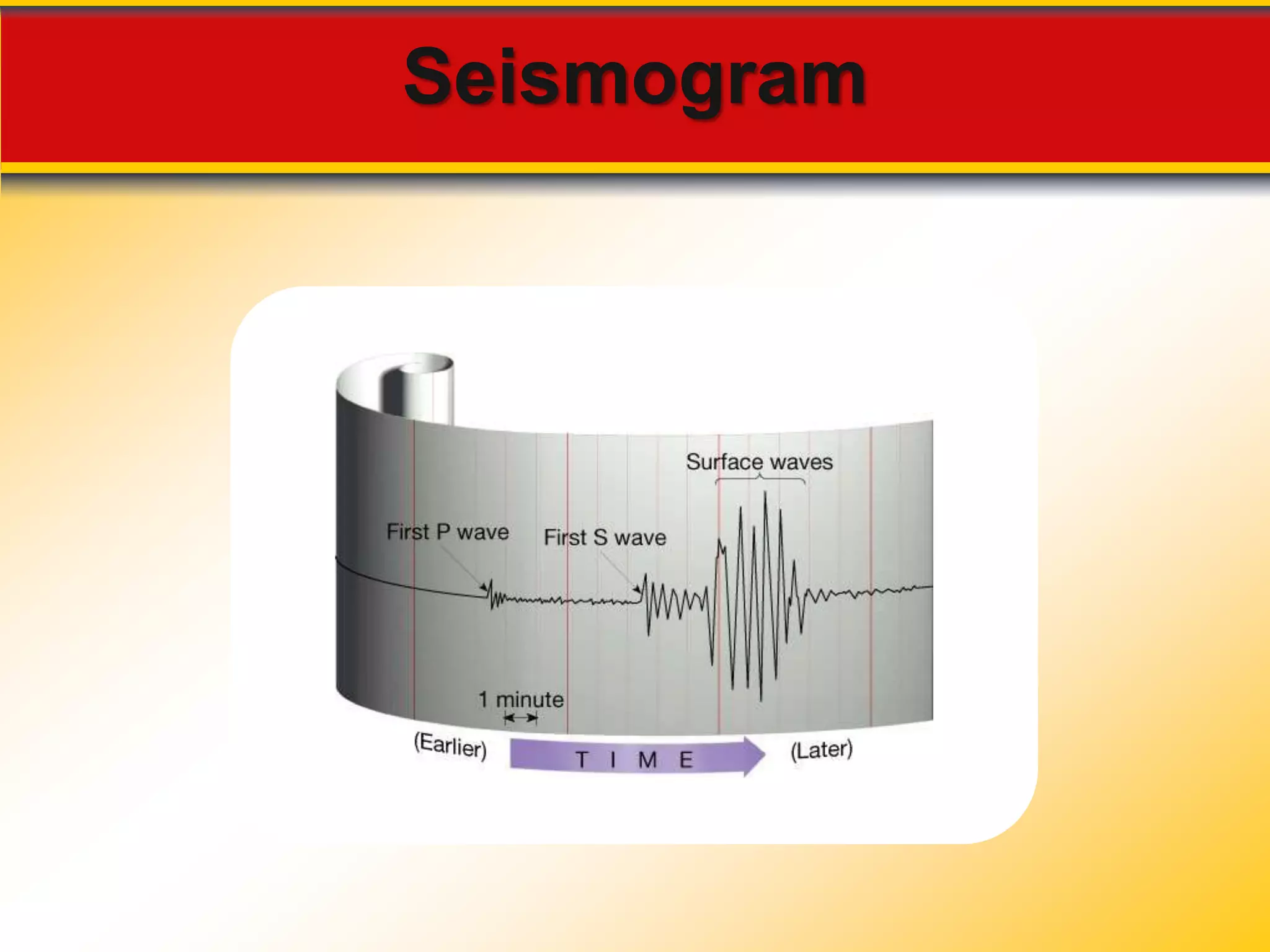
 Seismograms are traces of amplified, 
electronically recorded ground motion 
made by seismographs. 
 Surface waves are seismic waves that 
travel along Earth’s outer layer.
Seismograph
Seismogram
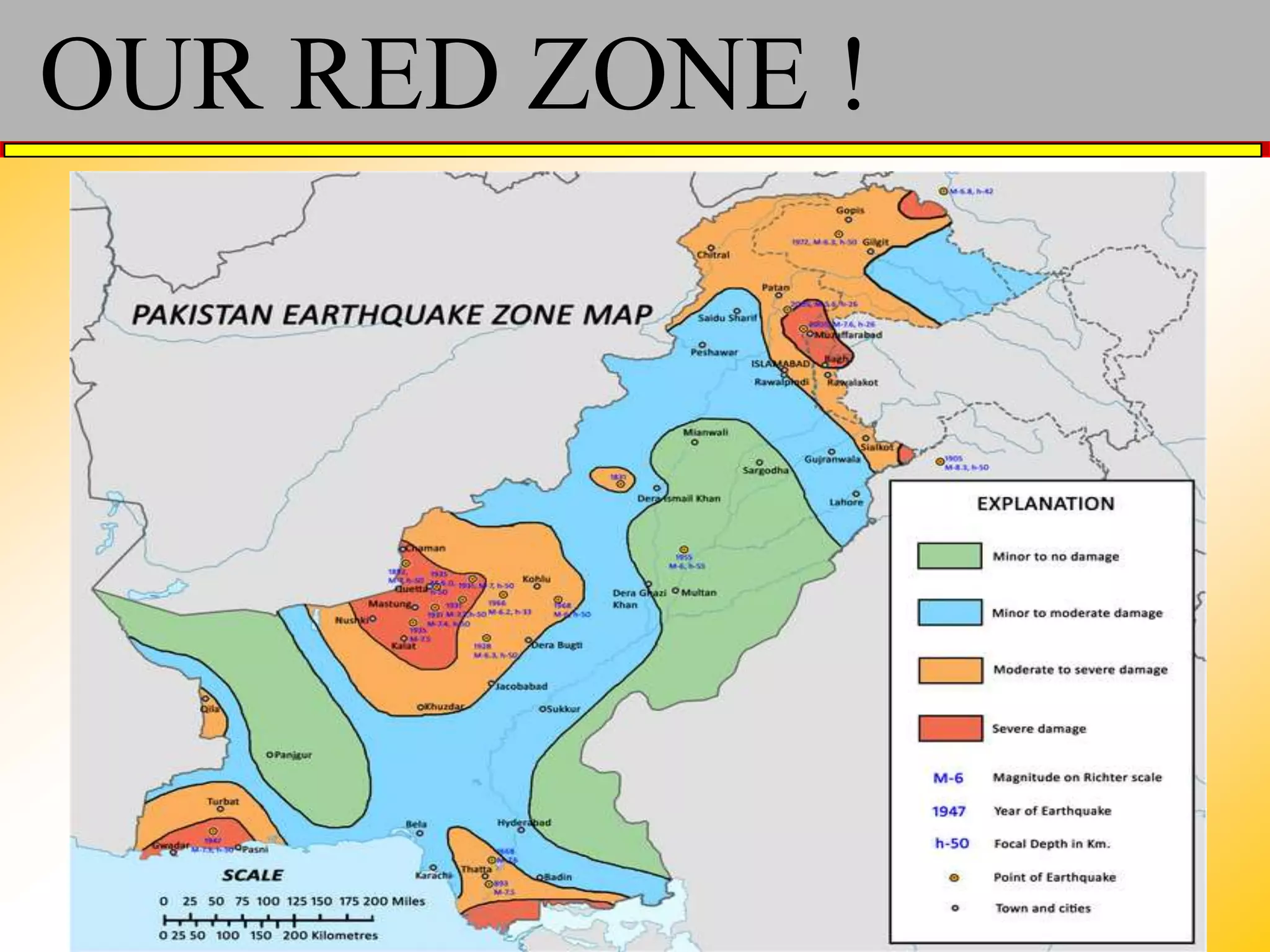
OUR RED ZONE !
Measuring Earthquakes 
Earthquake Waves 
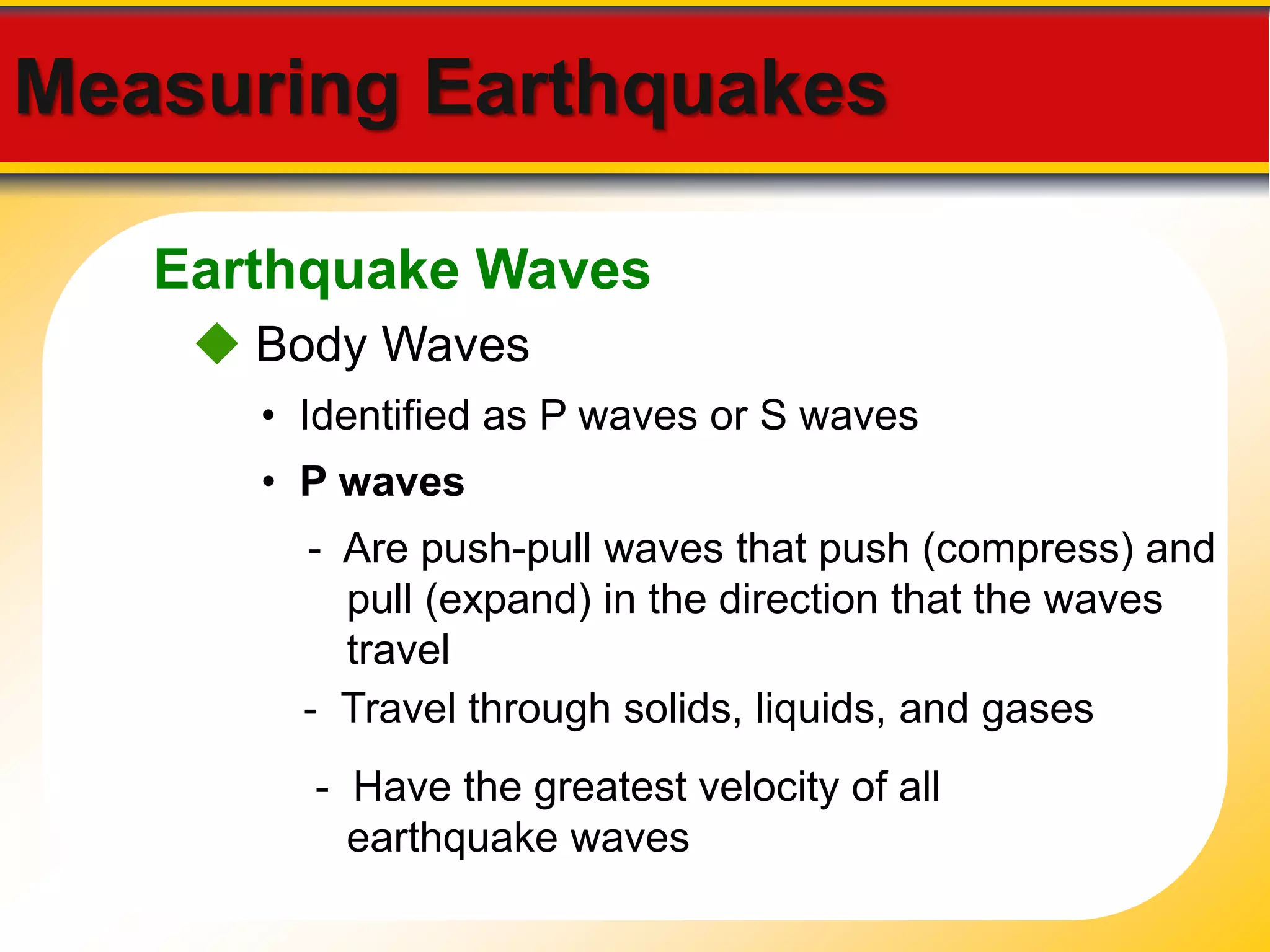
 Body Waves 
• Identified as P waves or S waves 
• P waves 
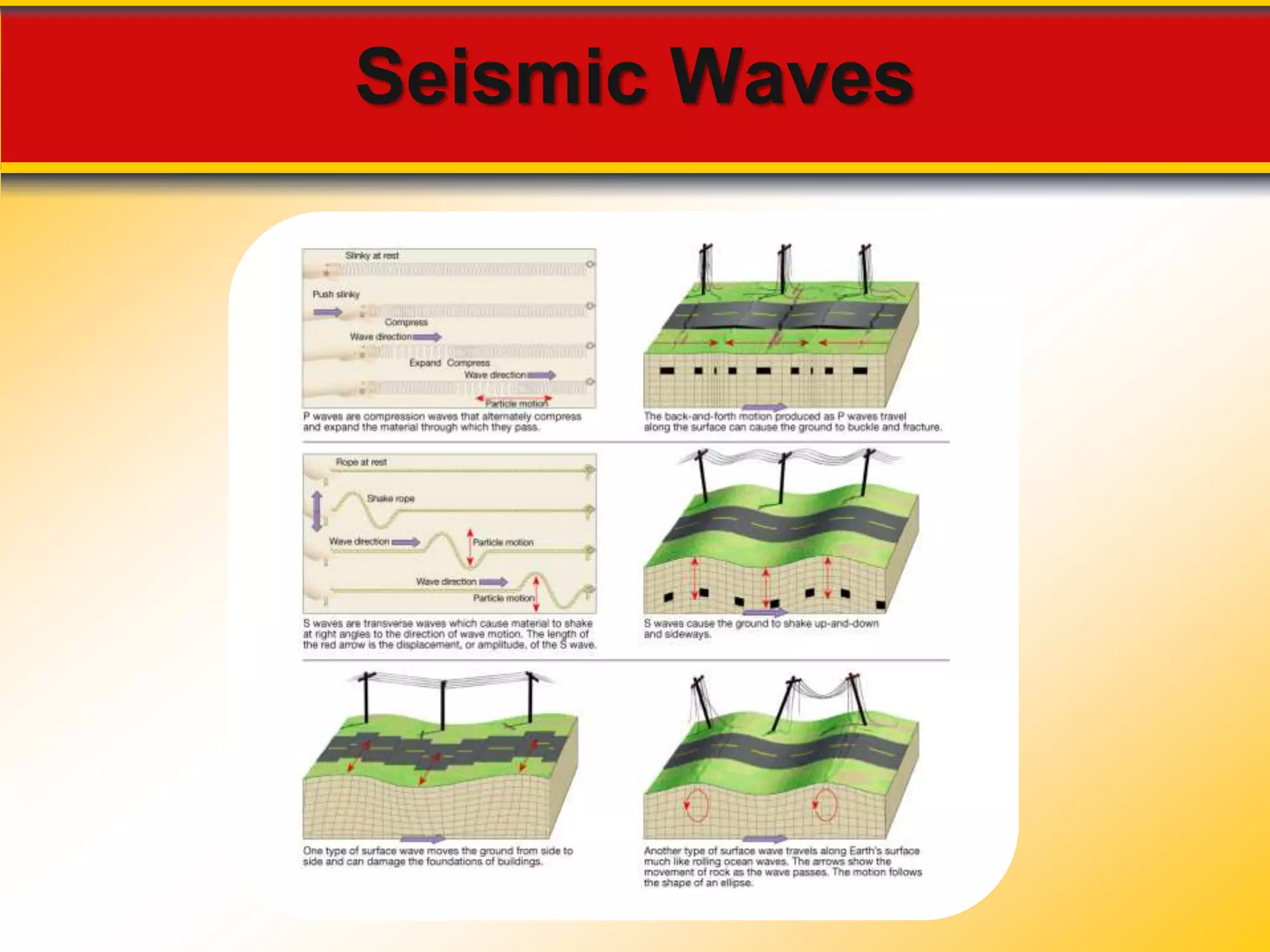
- Are push-pull waves that push (compress) and 
pull (expand) in the direction that the waves 
travel 
- Travel through solids, liquids, and gases 
- Have the greatest velocity of all 
earthquake waves
Measuring Earthquakes 
Earthquake Waves 
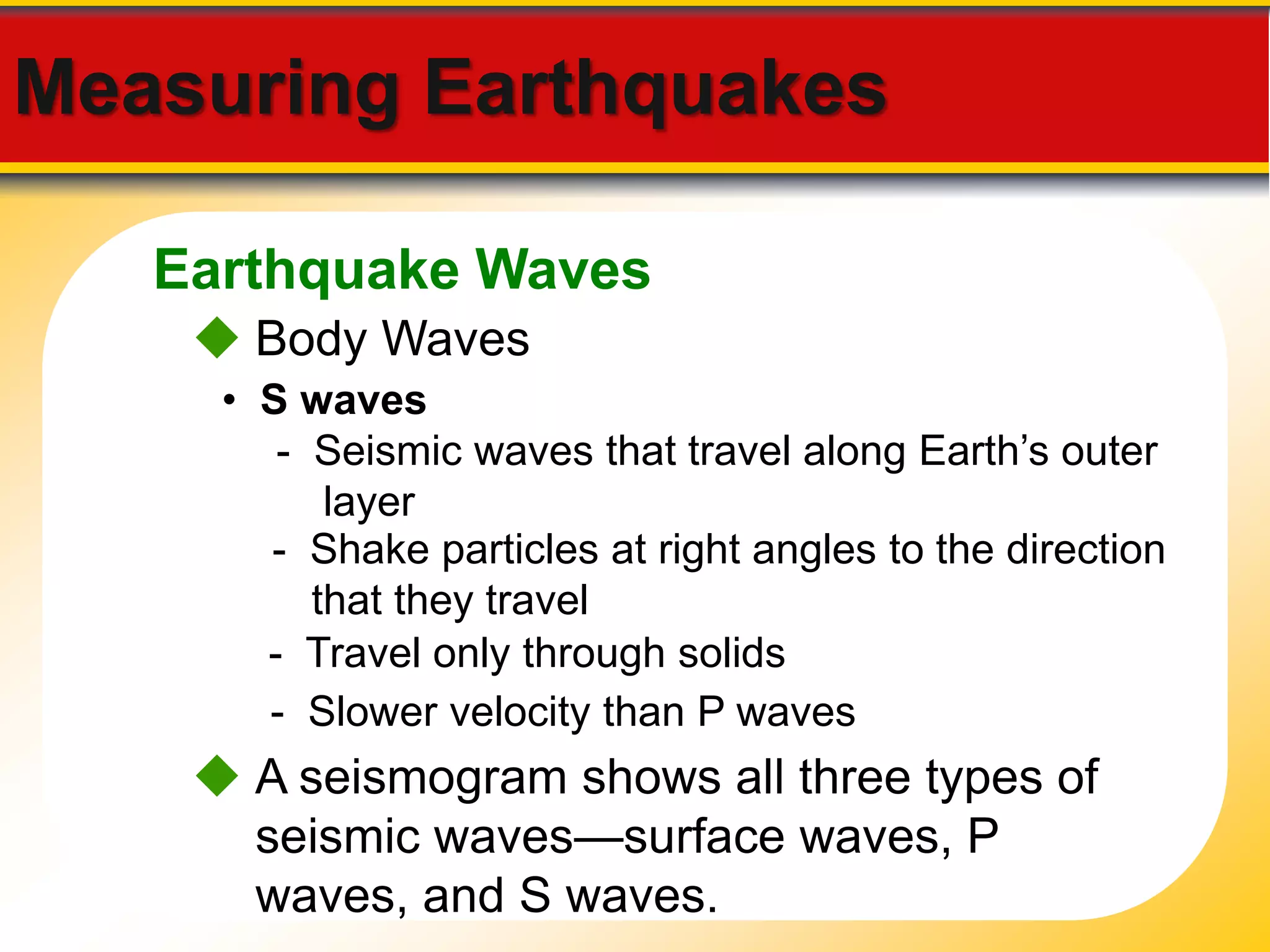
 Body Waves 
• S waves 
- Seismic waves that travel along Earth’s outer 
layer 
- Shake particles at right angles to the direction 
that they travel 
- Travel only through solids 
- Slower velocity than P waves 
 A seismogram shows all three types of 
seismic waves—surface waves, P 
waves, and S waves.
Seismic Waves
Measuring Earthquakes 
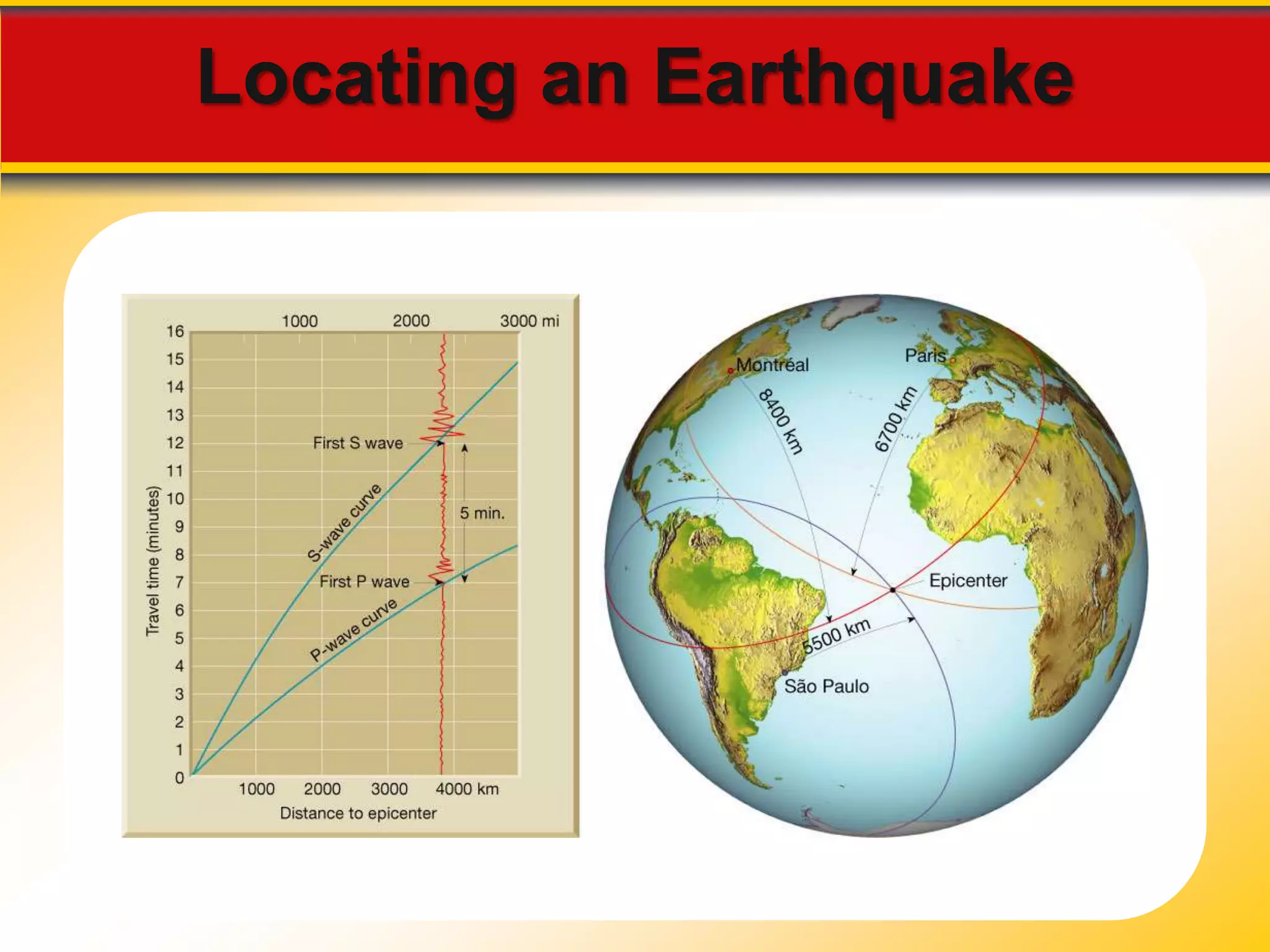
Locating an Earthquake 
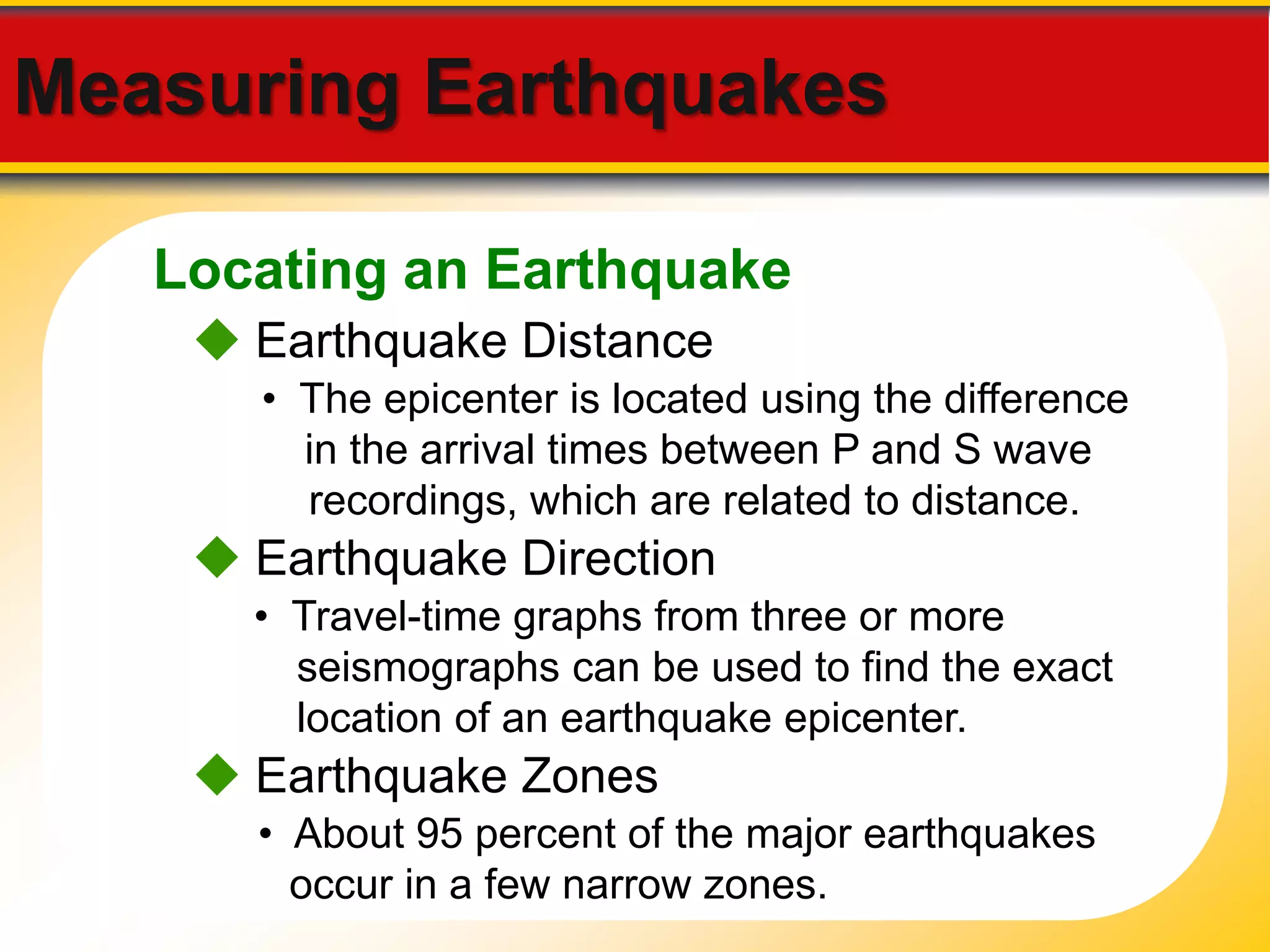
 Earthquake Distance 
• The epicenter is located using the difference 
in the arrival times between P and S wave 
recordings, which are related to distance. 
 Earthquake Direction 
• Travel-time graphs from three or more 
seismographs can be used to find the exact 
location of an earthquake epicenter. 
 Earthquake Zones 
• About 95 percent of the major earthquakes 
occur in a few narrow zones.
Locating an Earthquake
Measuring Earthquakes 
 Historically, scientists have used two 
different types of measurements to 
describe the size of an earthquake 
—intensity and magnitude. 
 Richter Scale 
• Based on the amplitude of the largest seismic 
wave 
• Each unit of Richter magnitude equates to 
roughly a 32-fold energy increase 
• Does not estimate adequately the size of 
very large earthquakes
Measuring Earthquakes 
 Momentum Magnitude 
• Derived from the amount of displacement 
that occurs along the fault zone 
• Moment magnitude is the most widely used 
measurement for earthquakes because it is the 
only magnitude scale that estimates the energy 
released by earthquakes. 
• Measures very large earthquakes
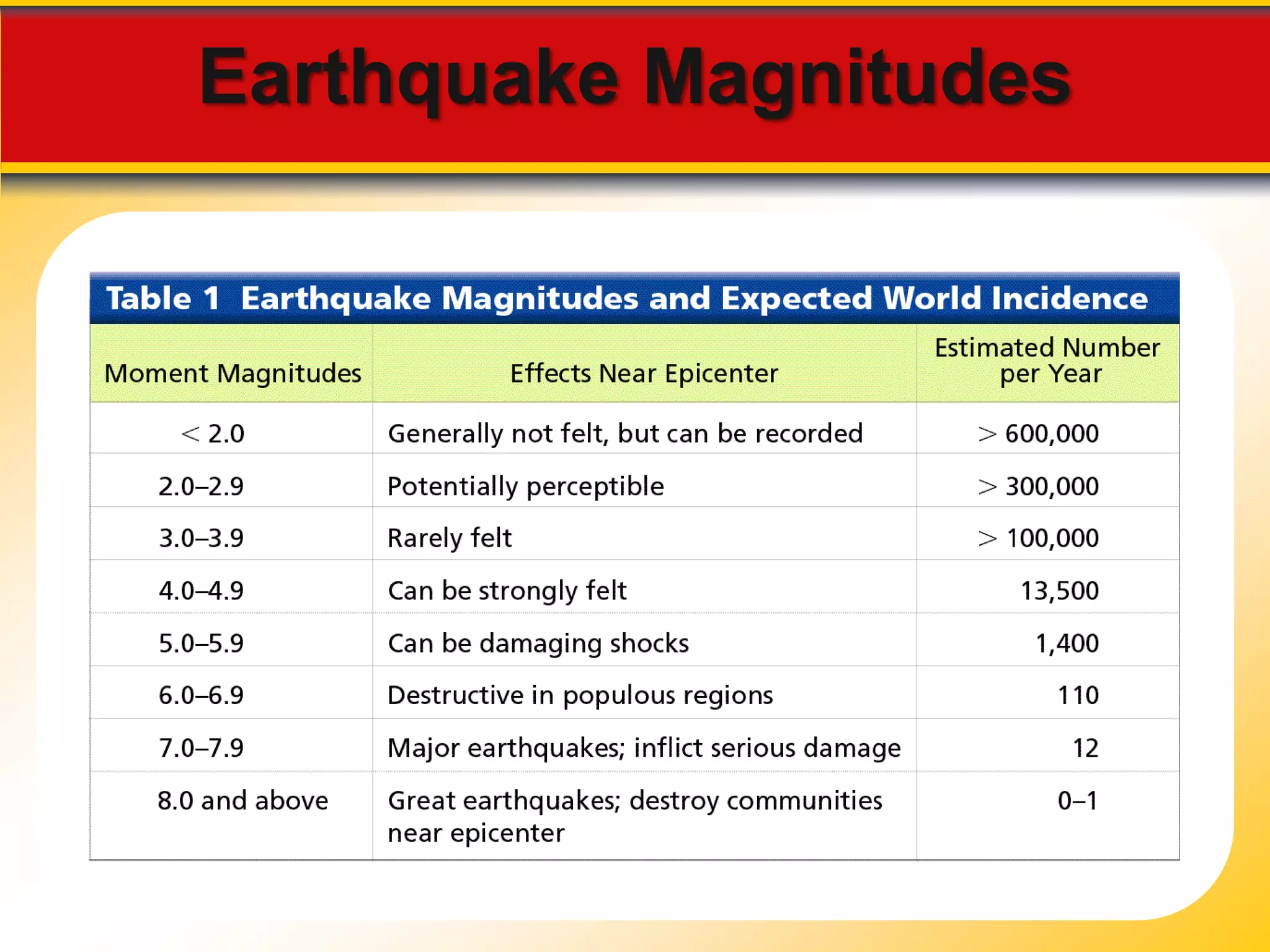
Earthquake Magnitudes
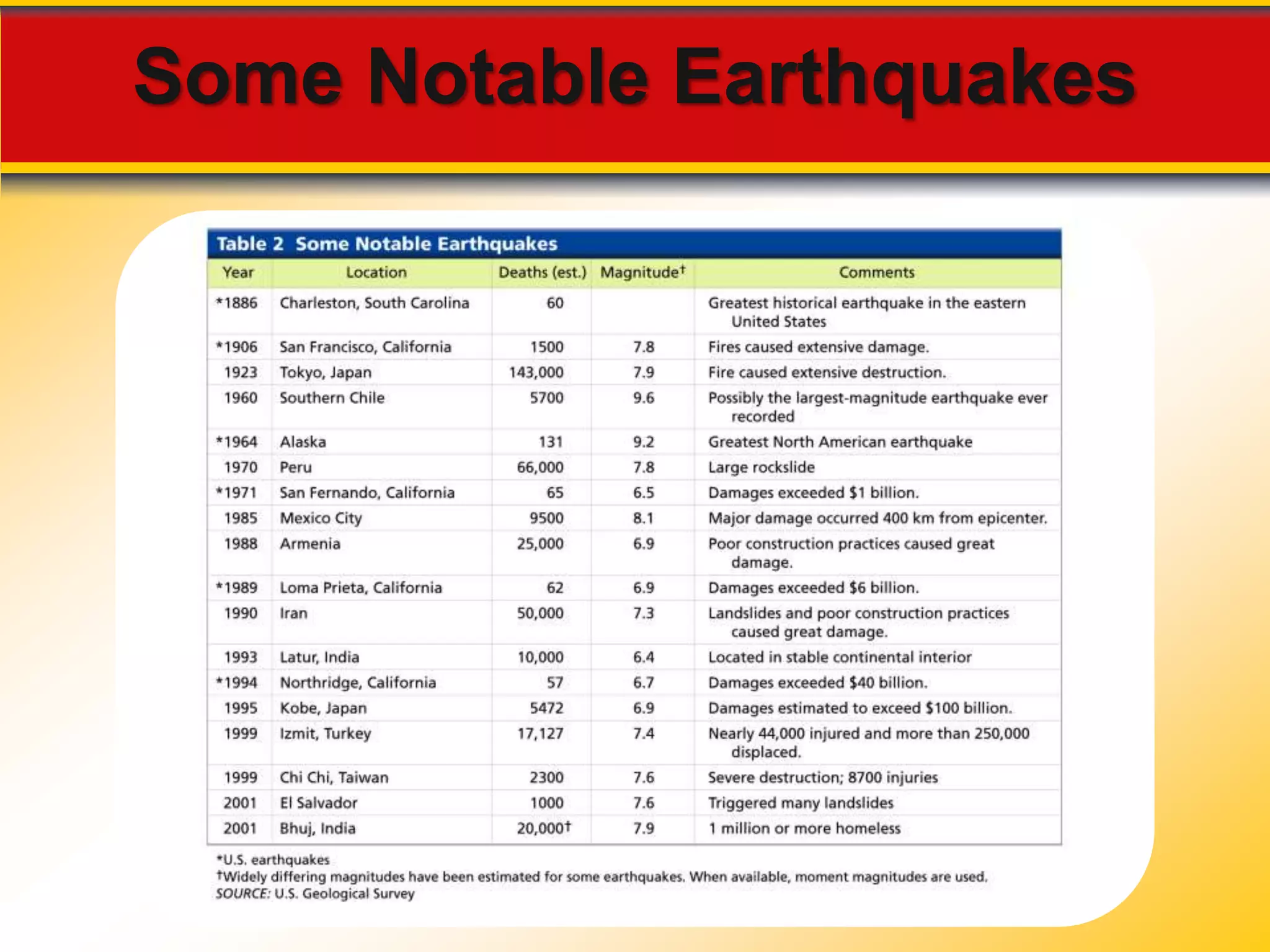
Some Notable Earthquakes
Destruction from Earthquakes 
Seismic Vibrations 
 The damage to buildings and other 
structures from earthquake waves depends 
on several factors. These factors include 
the intensity and duration of the vibrations, 
the nature of the material on which the 
structure is built, and the design of the 
structure.
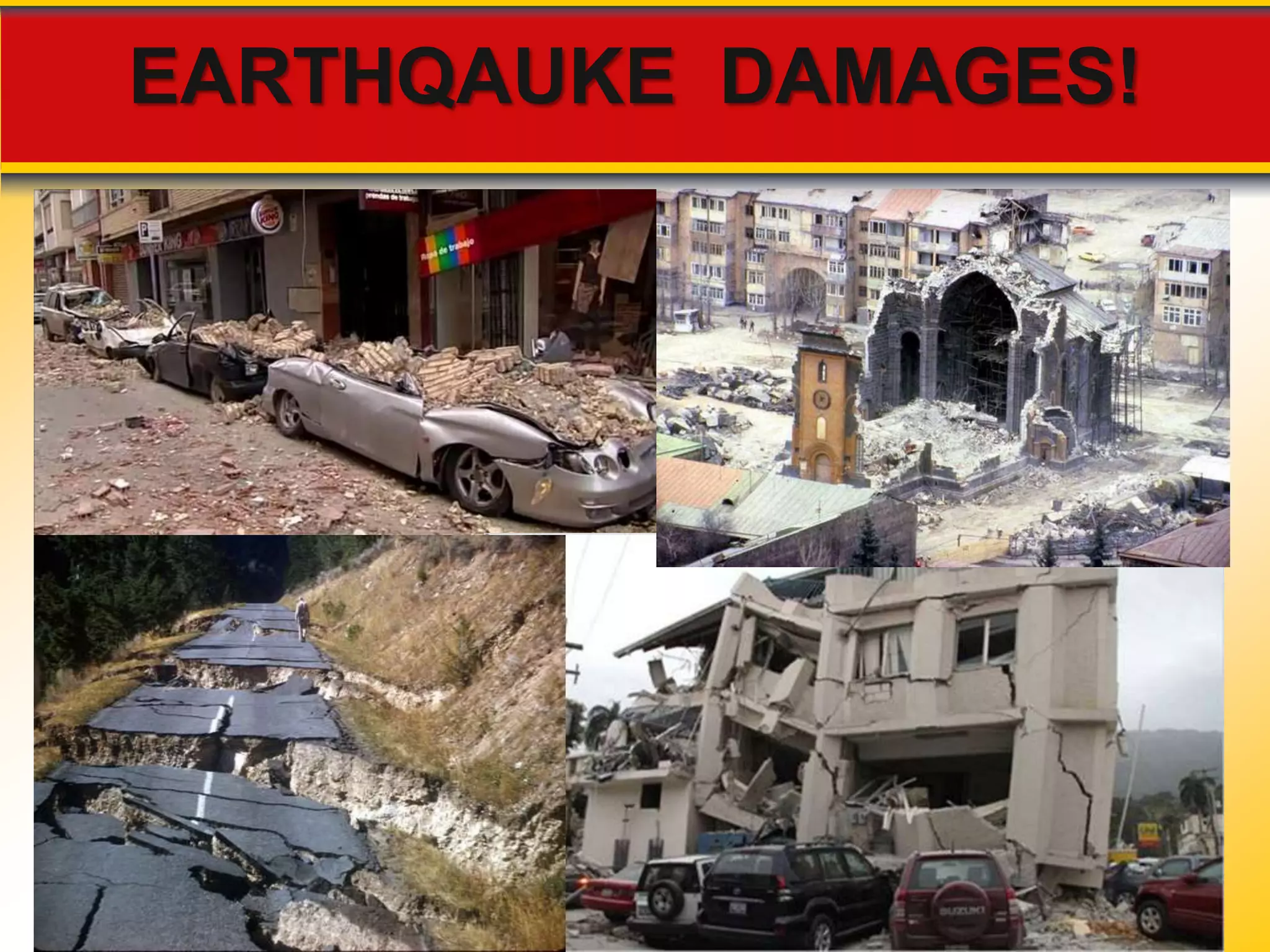
EARTHQAUKE DAMAGES!
Destruction from Earthquakes 
Seismic Vibrations 
 Building Design 
• Factors that determine structural damage 
- Intensity of the earthquake 
- Unreinforced stone or brick buildings are 
the most serious safety threats 
- Nature of the material upon which the 
structure rests 
- The design of the structure
Destruction from Earthquakes 
Seismic Vibrations 
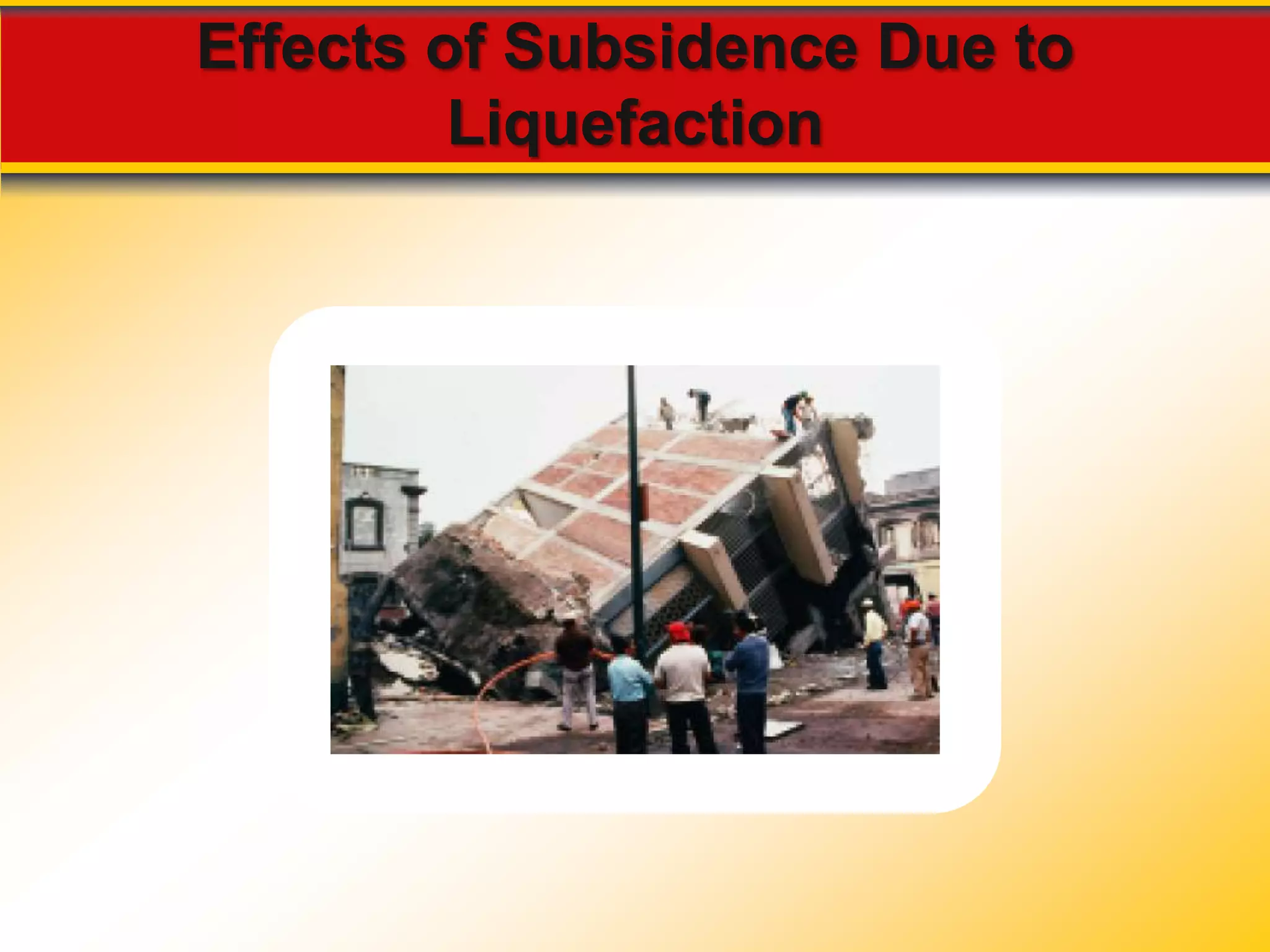
 Liquefaction 
• Saturated material turns fluid 
• Underground objects may float to surface
Effects of Subsidence Due to 
Liquefaction
Destruction from Earthquakes 
Tsunamis 
 Cause of Tsunamis 
• A tsunami triggered by an earthquake occurs 
where a slab of the ocean floor is displaced 
vertically along a fault. 
• A tsunami also can occur when the vibration of a 
quake sets an underwater landslide into motion. 
• Tsunami is the Japanese word for “seismic sea 
wave.”
Movement of a Tsunami
Destrution due to Earthquake 
Tsunamis 
 Tsunami Warning System 
• Large earthquakes are reported to Hawaii from 
Pacific seismic stations. 
• Although tsunamis travel quickly, there is 
sufficient time to evacuate all but the area 
closest to the epicenter.
Destruction from Earthquakes 
Other Dangers 
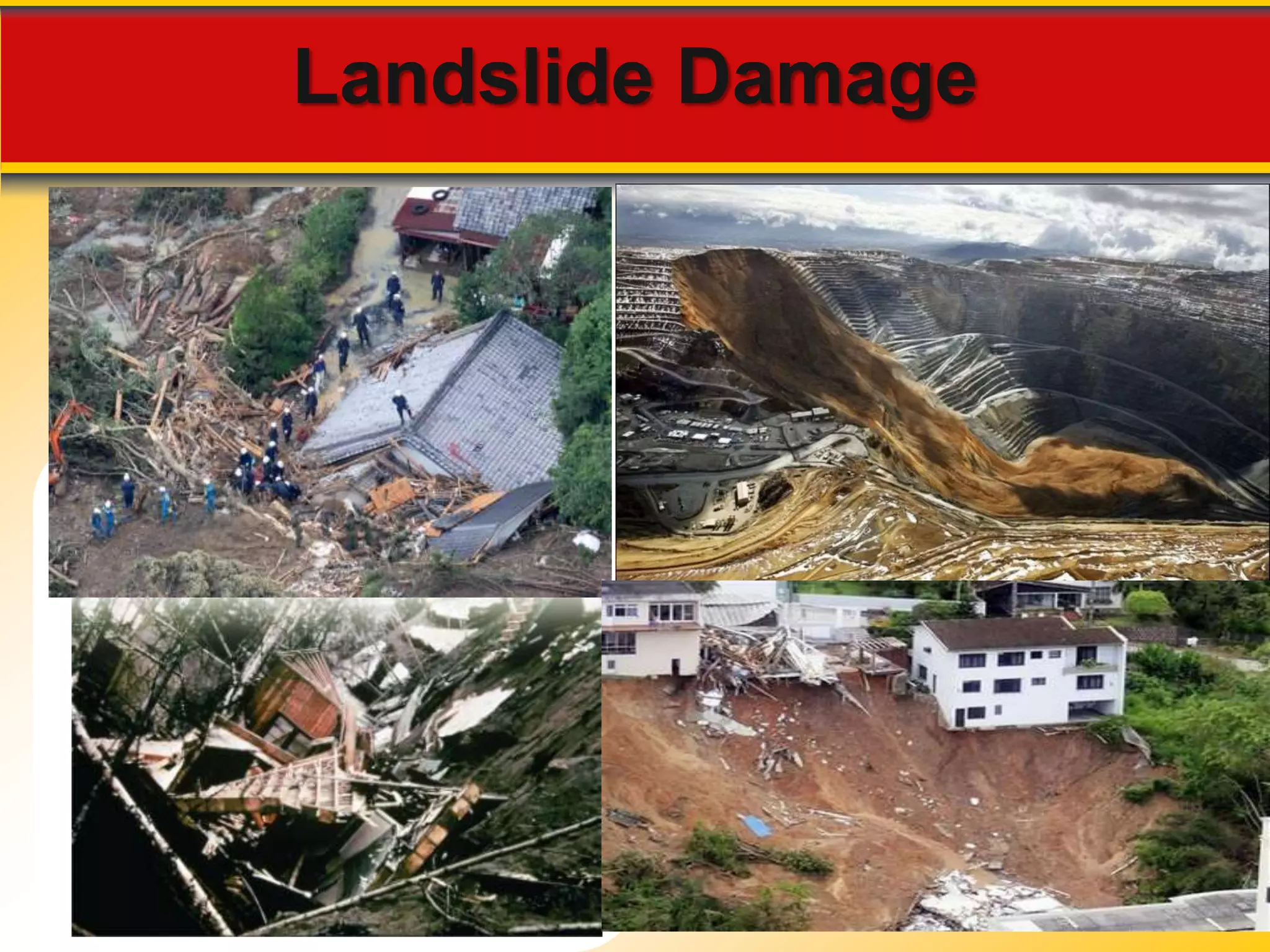
 Landslides 
• With many earthquakes, the greatest damage 
to structures is from landslides and ground 
subsidence, or the sinking of the ground 
triggered by vibrations. 
 Fire 
• In the San Francisco earthquake of 1906, most 
of the destruction was caused by fires that 
started when gas and electrical lines were cut.
Landslide Damage
JAWAD AHMED 

Introduction to Earthquake by JAWAD AHMED

  • 2.
  • 3.
    INTRODUCTION. Earthquakes An earthquake is the vibration of Earth produced by the rapid release of energy  Focus and Epicenter • Focus is the point within Earth where the earthquake starts. • Epicenter is the location on the surface directly above the focus.  Faults • Faults are fractures in Earth where movement has occurred.
  • 4.
  • 5.
    CONCEPT ABOUT EPICENTER Epicenter is the exact place above the focus from where the energy is releasing or waves are producing
  • 6.
  • 7.
    What Is anEarthquake? Cause of Earthquakes           • Most earthquakes are produced by the rapid release of elastic energy stored in rock that has been subjected to great forces. • When the strength of the rock is exceeded, it suddenly breaks, causing the vibrations of an earthquake.
  • 8.
  • 9.
    What Is anEarthquake? Cause of Earthquakes  Aftershocks and Foreshocks • An aftershock is a small earthquake that follows the main earthquake. • A foreshock is a small earthquake that often precedes a major earthquake.
  • 10.
    Measuring Earthquakes EarthquakeWaves  Seismographs are instruments that record earthquake waves.  Seismograms are traces of amplified, electronically recorded ground motion made by seismographs.  Surface waves are seismic waves that travel along Earth’s outer layer.
  • 11.
  • 12.
  • 13.
  • 14.
    Measuring Earthquakes EarthquakeWaves  Body Waves • Identified as P waves or S waves • P waves - Are push-pull waves that push (compress) and pull (expand) in the direction that the waves travel - Travel through solids, liquids, and gases - Have the greatest velocity of all earthquake waves
  • 15.
    Measuring Earthquakes EarthquakeWaves  Body Waves • S waves - Seismic waves that travel along Earth’s outer layer - Shake particles at right angles to the direction that they travel - Travel only through solids - Slower velocity than P waves  A seismogram shows all three types of seismic waves—surface waves, P waves, and S waves.
  • 16.
  • 17.
    Measuring Earthquakes Locatingan Earthquake  Earthquake Distance • The epicenter is located using the difference in the arrival times between P and S wave recordings, which are related to distance.  Earthquake Direction • Travel-time graphs from three or more seismographs can be used to find the exact location of an earthquake epicenter.  Earthquake Zones • About 95 percent of the major earthquakes occur in a few narrow zones.
  • 18.
  • 19.
    Measuring Earthquakes MeasuringEarthquakes  Historically, scientists have used two different types of measurements to describe the size of an earthquake —intensity and magnitude.  Richter Scale • Based on the amplitude of the largest seismic wave • Each unit of Richter magnitude equates to roughly a 32-fold energy increase • Does not estimate adequately the size of very large earthquakes
  • 20.
    Measuring Earthquakes MeasuringEarthquakes  Momentum Magnitude • Derived from the amount of displacement that occurs along the fault zone • Moment magnitude is the most widely used measurement for earthquakes because it is the only magnitude scale that estimates the energy released by earthquakes. • Measures very large earthquakes
  • 21.
  • 22.
  • 23.
    Destruction from Earthquakes Seismic Vibrations  The damage to buildings and other structures from earthquake waves depends on several factors. These factors include the intensity and duration of the vibrations, the nature of the material on which the structure is built, and the design of the structure.
  • 24.
  • 25.
    Destruction from Earthquakes Seismic Vibrations  Building Design • Factors that determine structural damage - Intensity of the earthquake - Unreinforced stone or brick buildings are the most serious safety threats - Nature of the material upon which the structure rests - The design of the structure
  • 26.
    Destruction from Earthquakes Seismic Vibrations  Liquefaction • Saturated material turns fluid • Underground objects may float to surface
  • 27.
    Effects of SubsidenceDue to Liquefaction
  • 28.
    Destruction from Earthquakes Tsunamis  Cause of Tsunamis • A tsunami triggered by an earthquake occurs where a slab of the ocean floor is displaced vertically along a fault. • A tsunami also can occur when the vibration of a quake sets an underwater landslide into motion. • Tsunami is the Japanese word for “seismic sea wave.”
  • 29.
  • 30.
    Destrution due toEarthquake Tsunamis  Tsunami Warning System • Large earthquakes are reported to Hawaii from Pacific seismic stations. • Although tsunamis travel quickly, there is sufficient time to evacuate all but the area closest to the epicenter.
  • 31.
    Destruction from Earthquakes Other Dangers  Landslides • With many earthquakes, the greatest damage to structures is from landslides and ground subsidence, or the sinking of the ground triggered by vibrations.  Fire • In the San Francisco earthquake of 1906, most of the destruction was caused by fires that started when gas and electrical lines were cut.
  • 32.
  • 33.