UNIT 1
E- MARKETING
E- MARKETING (MEANING)
Strategies & techniques which are utilised to
reach to customers.
It includes both direct response marketing &
indirect response elements and users a range of
technologies to help connect business to their
consumers
As millions of users are visiting different websites as
per their part of interest, marketer can go for their
targeting.
Every business now a days jumping in online
marketing
Definition :
It is the process of advertising and selling
products and services on internet.
It is the marketing of products using electronic
technology to determine the consumer
market.
E-marketing compasses all the activities a
business conduct via World Wide Web (www)
with the aim of attracting new business,
retaining current developing brand identity.
Features of E- marketing
It allows global marketing facility.
It is less expensive.
It makes marketing easier.
You can sell your product and services, and
encash your bill from anywhere.
It increases the choice of product, services &
sellers.
Vast availability of information.
Scope of e- marketing
 Distribution
 Customer relationship
 Money collection
 Lead generation
 Advertisement
 Feedback tool
Challenges
 Low percentage of computer penetration
 Internet connectivity
 Low percentage of surface entering into online
transactions
 Credit cards
 Cyber security
 Cyber crime
 Loss of personal touch with shopping
 Legal issues (Trade Mark, Domain name, copyright,
jurisdiction issue, etc.)
 Mistaken purchase or auction
Opportunities
 Internationally more than 33% of surface buy online
 E- marketing reduces price
 Huge potential for growth (70% rural population)
 E intermediaries
 Affordable computers and internet connectivity
 Desire of the customers
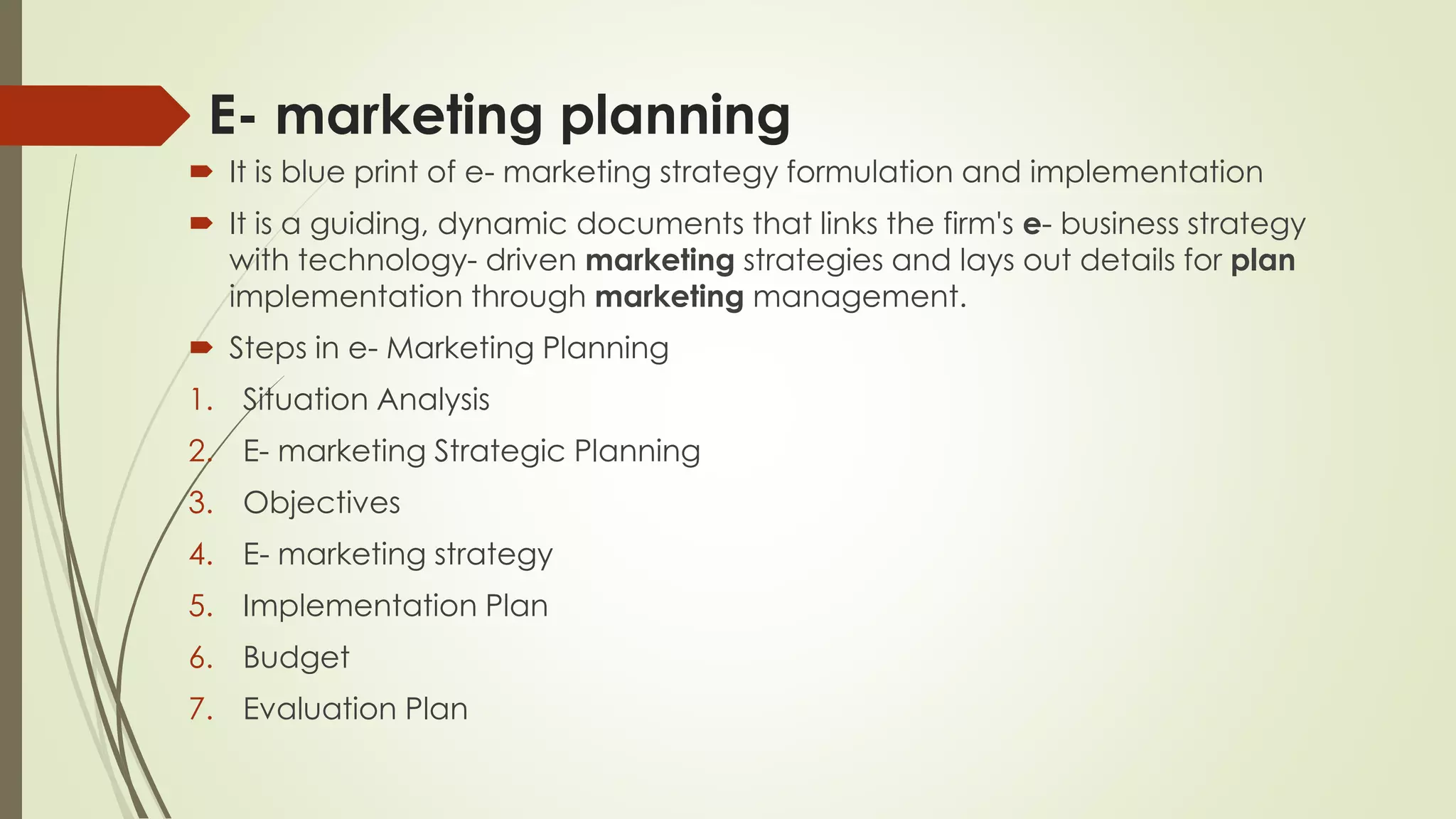
E- marketing planning
 It is blue print of e- marketing strategy formulation and implementation
 It is a guiding, dynamic documents that links the firm's e- business strategy
with technology- driven marketing strategies and lays out details for plan
implementation through marketing management.
 Steps in e- Marketing Planning
1. Situation Analysis
2. E- marketing Strategic Planning
3. Objectives
4. E- marketing strategy
5. Implementation Plan
6. Budget
7. Evaluation Plan
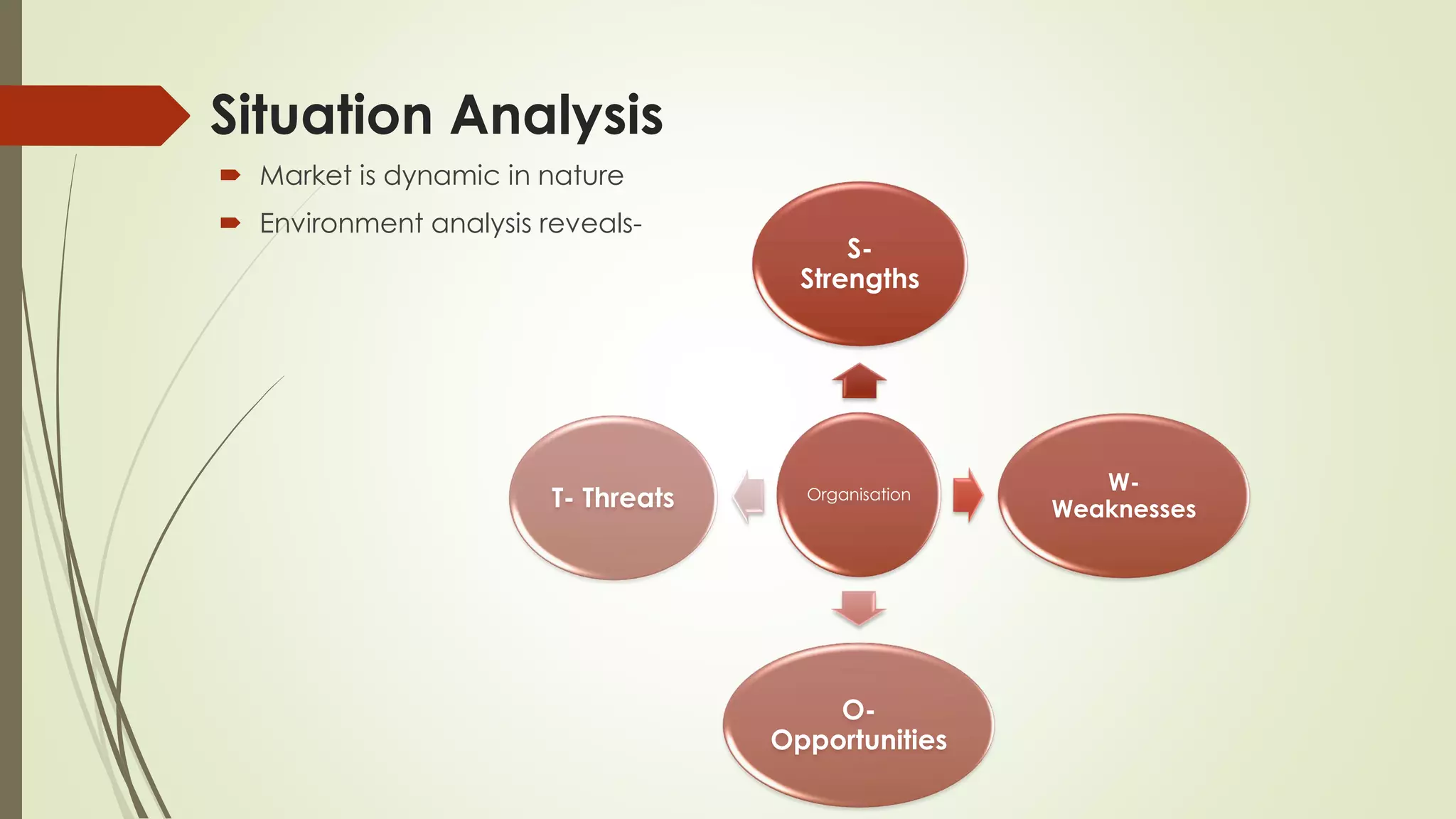
Situation Analysis
 Market is dynamic in nature
 Environment analysis reveals-
Organisation
S-
Strengths
W-
Weaknesses
O-
Opportunities
T- Threats
E- marketing Strategic Planning
 Determining the fit between organisation’s objectives, resources
and skills with changing opportunities
 Tasks for creating the fit can be named as ‘Tier 1’ strategy viz.,
segmentation, targeting, differentiating, positioning.
 Tier 2 will be Offers, Values, Distribution, Communication and
CRM.
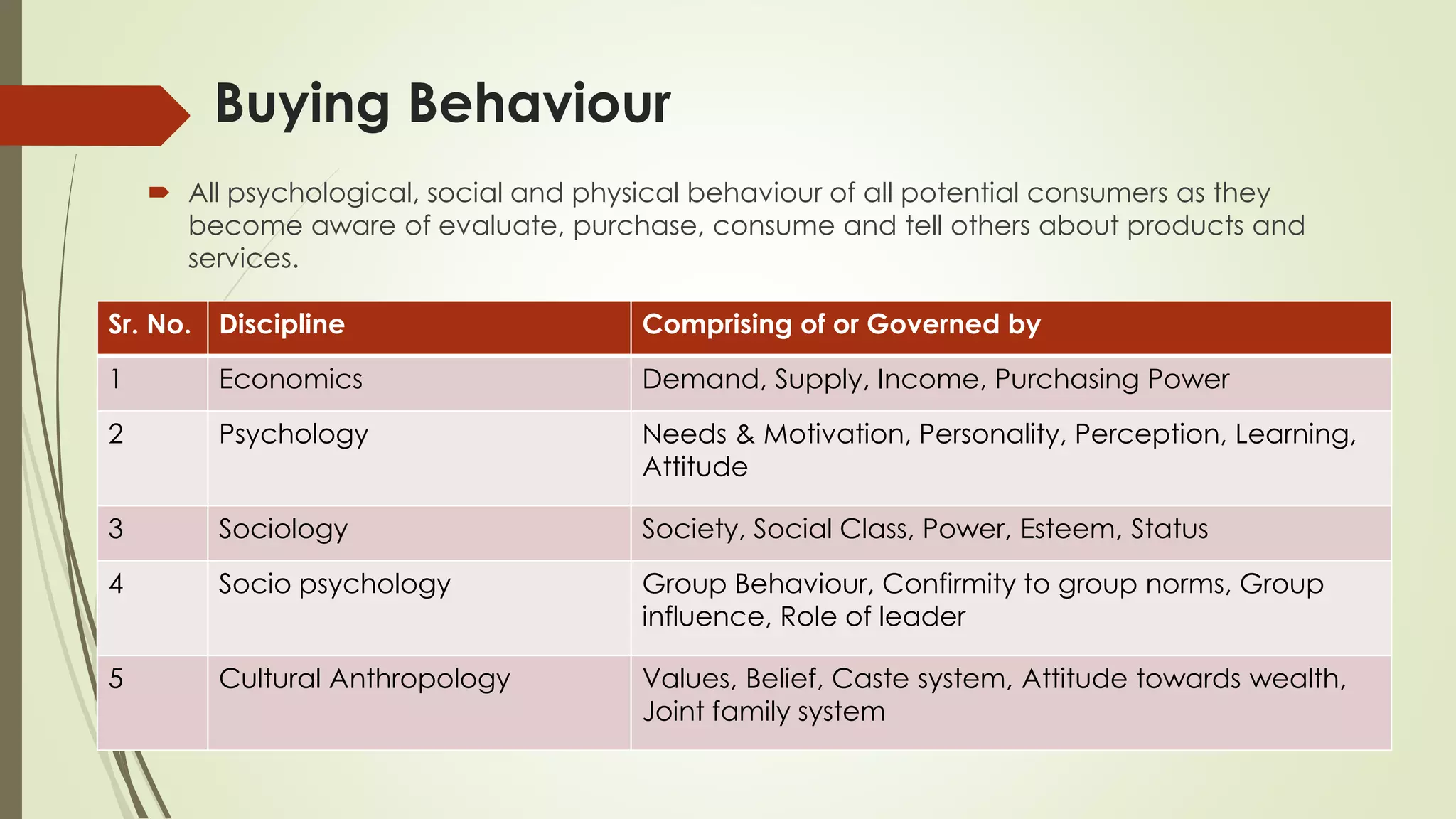
Buying Behaviour
 All psychological, social and physical behaviour of all potential consumers as they
become aware of evaluate, purchase, consume and tell others about products and
services.
Sr. No. Discipline Comprising of or Governed by
1 Economics Demand, Supply, Income, Purchasing Power
2 Psychology Needs & Motivation, Personality, Perception, Learning,
Attitude
3 Sociology Society, Social Class, Power, Esteem, Status
4 Socio psychology Group Behaviour, Confirmity to group norms, Group
influence, Role of leader
5 Cultural Anthropology Values, Belief, Caste system, Attitude towards wealth,
Joint family system
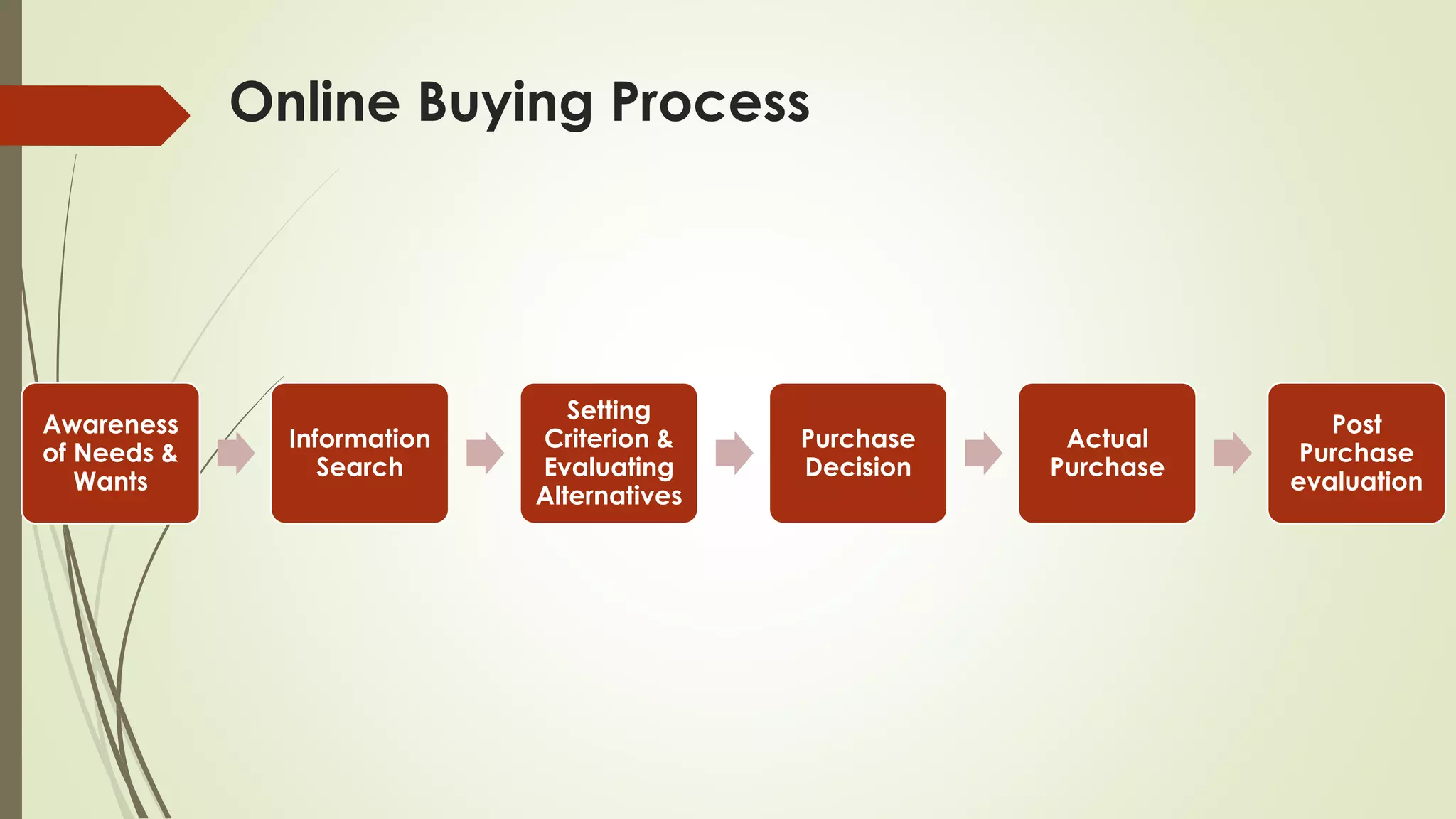
Online Buying Process
Awareness
of Needs &
Wants
Information
Search
Setting
Criterion &
Evaluating
Alternatives
Purchase
Decision
Actual
Purchase
Post
Purchase
evaluation
Segmentation for E- Marketing
Targeting for E- Marketing
Positioning for E- Marketing
Justifying E- Marketing
Techniques of E- Marketing

Introduction to e marketing

  • 1.
  • 2.
    E- MARKETING (MEANING) Strategies& techniques which are utilised to reach to customers. It includes both direct response marketing & indirect response elements and users a range of technologies to help connect business to their consumers As millions of users are visiting different websites as per their part of interest, marketer can go for their targeting. Every business now a days jumping in online marketing
  • 3.
    Definition : It isthe process of advertising and selling products and services on internet. It is the marketing of products using electronic technology to determine the consumer market. E-marketing compasses all the activities a business conduct via World Wide Web (www) with the aim of attracting new business, retaining current developing brand identity.
  • 4.
    Features of E-marketing It allows global marketing facility. It is less expensive. It makes marketing easier. You can sell your product and services, and encash your bill from anywhere. It increases the choice of product, services & sellers. Vast availability of information.
  • 5.
    Scope of e-marketing  Distribution  Customer relationship  Money collection  Lead generation  Advertisement  Feedback tool
  • 6.
    Challenges  Low percentageof computer penetration  Internet connectivity  Low percentage of surface entering into online transactions  Credit cards  Cyber security  Cyber crime  Loss of personal touch with shopping  Legal issues (Trade Mark, Domain name, copyright, jurisdiction issue, etc.)  Mistaken purchase or auction
  • 7.
    Opportunities  Internationally morethan 33% of surface buy online  E- marketing reduces price  Huge potential for growth (70% rural population)  E intermediaries  Affordable computers and internet connectivity  Desire of the customers
  • 8.
    E- marketing planning It is blue print of e- marketing strategy formulation and implementation  It is a guiding, dynamic documents that links the firm's e- business strategy with technology- driven marketing strategies and lays out details for plan implementation through marketing management.  Steps in e- Marketing Planning 1. Situation Analysis 2. E- marketing Strategic Planning 3. Objectives 4. E- marketing strategy 5. Implementation Plan 6. Budget 7. Evaluation Plan
  • 9.
    Situation Analysis  Marketis dynamic in nature  Environment analysis reveals- Organisation S- Strengths W- Weaknesses O- Opportunities T- Threats
  • 10.
    E- marketing StrategicPlanning  Determining the fit between organisation’s objectives, resources and skills with changing opportunities  Tasks for creating the fit can be named as ‘Tier 1’ strategy viz., segmentation, targeting, differentiating, positioning.  Tier 2 will be Offers, Values, Distribution, Communication and CRM.
  • 11.
    Buying Behaviour  Allpsychological, social and physical behaviour of all potential consumers as they become aware of evaluate, purchase, consume and tell others about products and services. Sr. No. Discipline Comprising of or Governed by 1 Economics Demand, Supply, Income, Purchasing Power 2 Psychology Needs & Motivation, Personality, Perception, Learning, Attitude 3 Sociology Society, Social Class, Power, Esteem, Status 4 Socio psychology Group Behaviour, Confirmity to group norms, Group influence, Role of leader 5 Cultural Anthropology Values, Belief, Caste system, Attitude towards wealth, Joint family system
  • 12.
    Online Buying Process Awareness ofNeeds & Wants Information Search Setting Criterion & Evaluating Alternatives Purchase Decision Actual Purchase Post Purchase evaluation
  • 13.
  • 14.
  • 15.
  • 16.
  • 17.