INTESTINES
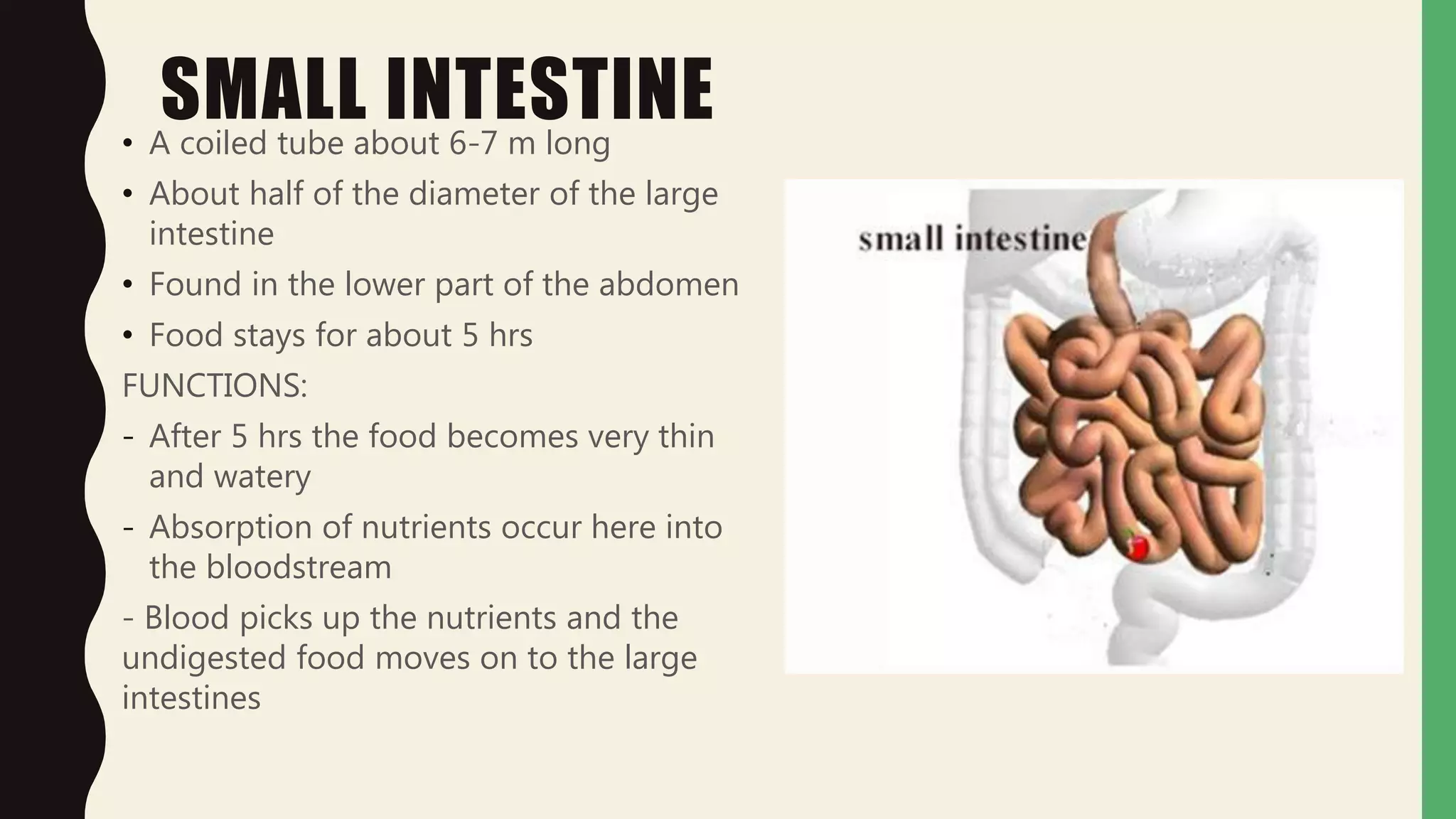
SMALL INTESTINE• A coiled tube about 6-7 m long
• About half of the diameter of the large
intestine
• Found in the lower part of the abdomen
• Food stays for about 5 hrs
FUNCTIONS:
- After 5 hrs the food becomes very thin
and watery
- Absorption of nutrients occur here into
the bloodstream
- Blood picks up the nutrients and the
undigested food moves on to the large
intestines
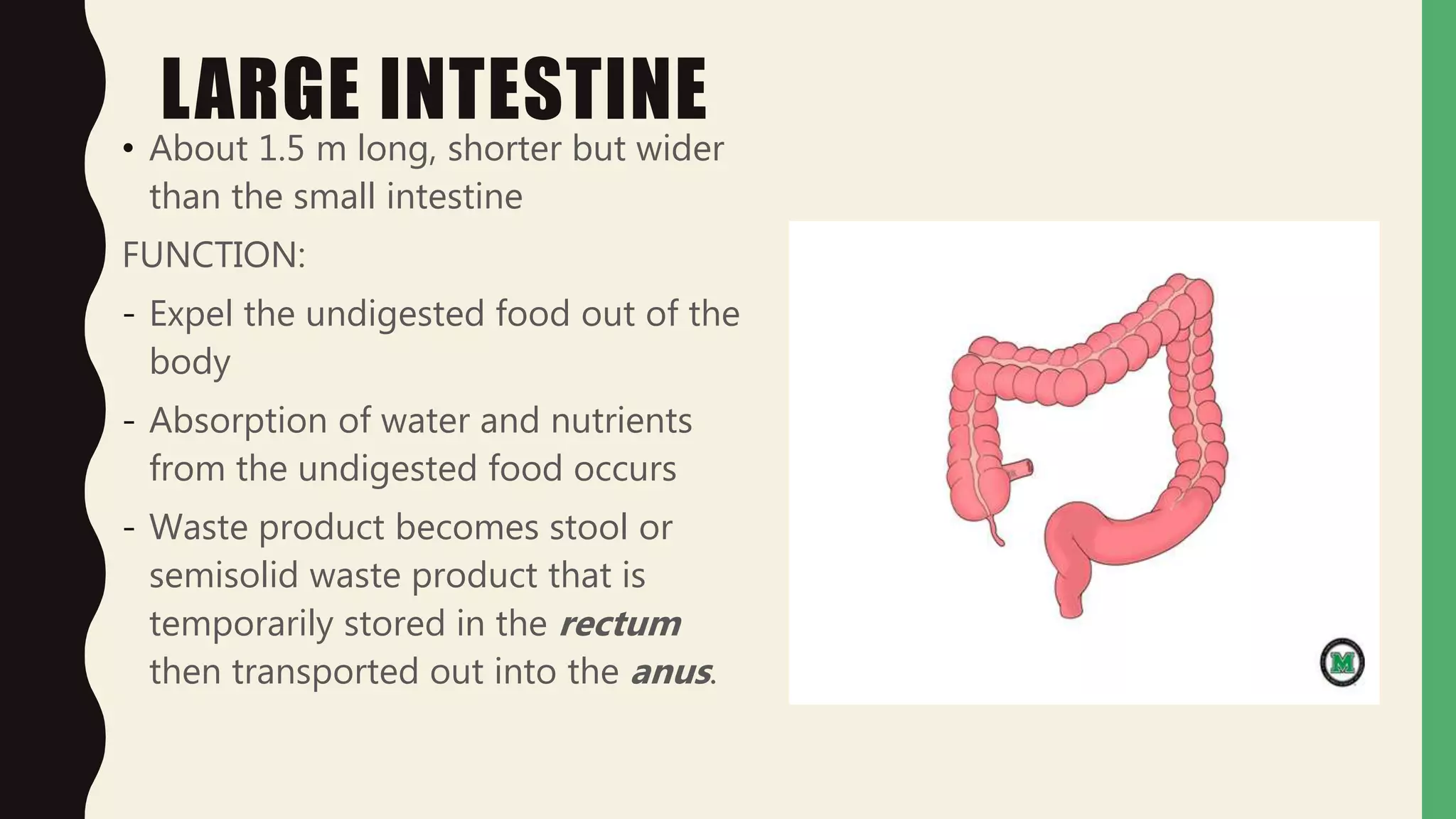
LARGE INTESTINE
• About 1.5 m long, shorter but wider
than the small intestine
FUNCTION:
- Expel the undigested food out of the
body
- Absorption of water and nutrients
from the undigested food occurs
- Waste product becomes stool or
semisolid waste product that is
temporarily stored in the rectum
then transported out into the anus.
DISEASES
• The frequent and repeated passage
of loose and watery stools
• Due to infection caused by ingesting
contaminated food or water
SYMPTOMS:
- Abdominal cramps and pain,
bloating, nausea, and vomiting
- (severe cases) stools with blood and
mucus
TREATMENT:
- (mild cases) no need medication
- May take antidiarrheal medicines
- (severe cases) brought to the
hospital to prevent dehydration
- To avoid dehydration, the sick
person has to drink lots of water or
take oral rehydration tablets to
replenish the body’s lost fluids.
Diarrhea
• Characterized by changes n how the
intestines normally function, causes
are unknown.
SYMPTOMS:
- Stomach pain, constipation or
diarrhea, and swelling and pain in
the belly
- (severe cases) blood in the stool and
weight loss
TREATMENT:
- Medications and change in
person’s diet (antidiarrheal for
loose bowels, and laxatives for
constipation)
Irritable Bowel Syndrome
LIVER
LIVER
• Biggest digestive organ in the body
• Found in the right side of the
abdomen just above the stomach and
intestines
FUNCTIONS:
- Digest food by releasing bile
(enzymes that breaks down fats in
food and prepares for further
digestion and absorption)
- Cleans the blood as it takes out toxins
or waste in the blood
- Stores energy in the form of sugar
called glycogen
DISEASES
• Inflammation of the liver, with 5
types hepatitis: A, B, C, D, and E.
• Hepatitis A and E caused by eating
food and drinking water infected
with Hepatitis A Virus (HAV), and
Hepatitis E Virus (HEV) respectively
• Hepatitis B, C, and D caused by
Hepatitis B, C, and D Virus and
contracted through direct contact
with an infected person’s blood and
other body fluids such as saliva and
semen.
• Types B and C are chronic
conditions means even after periods
of treatment the disease may recurs.
SYMPTOMS:
- Hepatitis B and C, may not manifest
until liver damage is serious
- Other types: fatique, hoint pains,
abdominal pains, dark urine, light-
colored stool, loss of appetite,
weakness, mild fever, and jaundice.
Jaundice – yellowish tint in the skin
and eyes of a person with liver
disease.
Hepatitis
TREATMENT:
- Hepa A and E, may not need treatment and advised to eat nutritious food,
food, increase intake of fluids, gets lots of rest, and avoid alcohol.
- Hepa B and C treated using antiviral medications, and since both are
chronic treatment may lasts for a period of time.
- Hepa D treated with special drug called alpha interferon. However, the
disease is known to recur despite treatment.
- There are safe and effective vaccines for Hepa A, B, and D, limited vaccines
fro Hepa E, and no vaccine yet developed for Hepa C.
Hepatitis
• Characterized by scarring and
damaging of the liver caused by
excessive intake of alcohol and other
liver diseases like hepatitis.
• It hardens the liver and affects the flow
of blood in the liver
• Cause to liver malfunction
SYMPTOMS:
- Loss of appetite, fatigue, weight loss,
bruising, jaundice, skin itchiness, and
light-colored stool
TREATMENT:
- No treatment because liver scarring
cannot be reversed
- But can be manage to prevent further
damage
- Certain drugs are prescribed to relieve
pain and discomfort
AVOID:
- Drinking alcoholic drinks
ADVISED: lifestyle changes
Cirrhosis
PROPER CARE OF STOMACH, SMALL
AND LARGE INTESTINE, AND LIVER
1. Eat at least seven serving of fruits and vegetables everyday. They are rich in
fiber (a carbohydrate that does not dissolve in water so it cannot be
digested) helping the food to move smoothly and keeps one from
constipation. Another food that is rich in fiber is legumes and whole grains.
2. Drink at least eight glasses of water everyday
3. Take time to chew the food and relax during and after meals.
4. Lessen the intake of fats. High-fat food is hard to digest and increase the
risk of diabetes, hypertension, and heart disease.
5. Have at least 30 minutes of exercise everyday to increase flow of blood to
the digestive organs and helps carry out their functions.

Intestines and liver

  • 1.
  • 2.
    SMALL INTESTINE• Acoiled tube about 6-7 m long • About half of the diameter of the large intestine • Found in the lower part of the abdomen • Food stays for about 5 hrs FUNCTIONS: - After 5 hrs the food becomes very thin and watery - Absorption of nutrients occur here into the bloodstream - Blood picks up the nutrients and the undigested food moves on to the large intestines
  • 3.
    LARGE INTESTINE • About1.5 m long, shorter but wider than the small intestine FUNCTION: - Expel the undigested food out of the body - Absorption of water and nutrients from the undigested food occurs - Waste product becomes stool or semisolid waste product that is temporarily stored in the rectum then transported out into the anus.
  • 4.
  • 5.
    • The frequentand repeated passage of loose and watery stools • Due to infection caused by ingesting contaminated food or water SYMPTOMS: - Abdominal cramps and pain, bloating, nausea, and vomiting - (severe cases) stools with blood and mucus TREATMENT: - (mild cases) no need medication - May take antidiarrheal medicines - (severe cases) brought to the hospital to prevent dehydration - To avoid dehydration, the sick person has to drink lots of water or take oral rehydration tablets to replenish the body’s lost fluids. Diarrhea
  • 6.
    • Characterized bychanges n how the intestines normally function, causes are unknown. SYMPTOMS: - Stomach pain, constipation or diarrhea, and swelling and pain in the belly - (severe cases) blood in the stool and weight loss TREATMENT: - Medications and change in person’s diet (antidiarrheal for loose bowels, and laxatives for constipation) Irritable Bowel Syndrome
  • 7.
  • 8.
    LIVER • Biggest digestiveorgan in the body • Found in the right side of the abdomen just above the stomach and intestines FUNCTIONS: - Digest food by releasing bile (enzymes that breaks down fats in food and prepares for further digestion and absorption) - Cleans the blood as it takes out toxins or waste in the blood - Stores energy in the form of sugar called glycogen
  • 9.
  • 10.
    • Inflammation ofthe liver, with 5 types hepatitis: A, B, C, D, and E. • Hepatitis A and E caused by eating food and drinking water infected with Hepatitis A Virus (HAV), and Hepatitis E Virus (HEV) respectively • Hepatitis B, C, and D caused by Hepatitis B, C, and D Virus and contracted through direct contact with an infected person’s blood and other body fluids such as saliva and semen. • Types B and C are chronic conditions means even after periods of treatment the disease may recurs. SYMPTOMS: - Hepatitis B and C, may not manifest until liver damage is serious - Other types: fatique, hoint pains, abdominal pains, dark urine, light- colored stool, loss of appetite, weakness, mild fever, and jaundice. Jaundice – yellowish tint in the skin and eyes of a person with liver disease. Hepatitis
  • 11.
    TREATMENT: - Hepa Aand E, may not need treatment and advised to eat nutritious food, food, increase intake of fluids, gets lots of rest, and avoid alcohol. - Hepa B and C treated using antiviral medications, and since both are chronic treatment may lasts for a period of time. - Hepa D treated with special drug called alpha interferon. However, the disease is known to recur despite treatment. - There are safe and effective vaccines for Hepa A, B, and D, limited vaccines fro Hepa E, and no vaccine yet developed for Hepa C. Hepatitis
  • 12.
    • Characterized byscarring and damaging of the liver caused by excessive intake of alcohol and other liver diseases like hepatitis. • It hardens the liver and affects the flow of blood in the liver • Cause to liver malfunction SYMPTOMS: - Loss of appetite, fatigue, weight loss, bruising, jaundice, skin itchiness, and light-colored stool TREATMENT: - No treatment because liver scarring cannot be reversed - But can be manage to prevent further damage - Certain drugs are prescribed to relieve pain and discomfort AVOID: - Drinking alcoholic drinks ADVISED: lifestyle changes Cirrhosis
  • 13.
    PROPER CARE OFSTOMACH, SMALL AND LARGE INTESTINE, AND LIVER 1. Eat at least seven serving of fruits and vegetables everyday. They are rich in fiber (a carbohydrate that does not dissolve in water so it cannot be digested) helping the food to move smoothly and keeps one from constipation. Another food that is rich in fiber is legumes and whole grains. 2. Drink at least eight glasses of water everyday 3. Take time to chew the food and relax during and after meals. 4. Lessen the intake of fats. High-fat food is hard to digest and increase the risk of diabetes, hypertension, and heart disease. 5. Have at least 30 minutes of exercise everyday to increase flow of blood to the digestive organs and helps carry out their functions.