Secrets to a
                                                       Great Interview
                                                        Carolyn Cannuscio and Eve Weiss


With support from the Robert Wood Johnson Foundation Health & Society Scholars Program, the Mixed Methods Research Lab, The Leonard
Davis Institute of Health Economics, and the Center for Public Health Initiatives at the University of Pennsylvania and the Center for Health
Equity Research and Promotion at the Philadelphia VA Medical Center.

Visit the Health of Philadelphia Photo-Documentation Project Online at www.visualepi.com
The basics: presentation and professionalism


•   Come early, leave on time

•   Use your best social skills
    Be mindful of the person’s privacy and time.


•   Consider your self-presentation
    Including how to dress, how to enter into interview setting, how and
    where to sit, body language.
The basics: presentation and professionalism


 •   Know equipment and come prepared for it to work or fail
     In other words, no matter how much faith you have in technology,
     always bring a notebook and pen as a backup.


 •   Come prepared with your paperwork and have it well-
     organized
The basics: presentation and professionalism


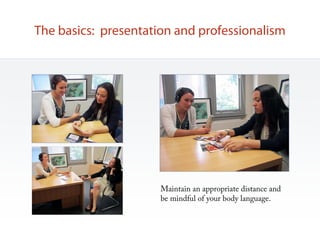
                      Maintain an appropriate distance and
                      be mindful of your body language.
The basics: presentation and professionalism


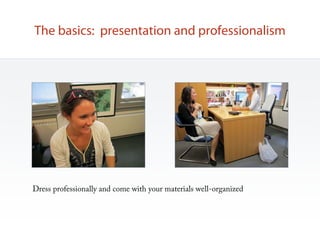
Dress professionally and come with your materials well-organized
The basics: presentation and professionalism


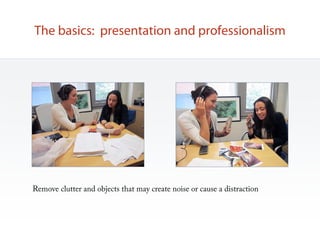
Remove clutter and objects that may create noise or cause a distraction
Respecting the interviewee
                and getting what you want


•   Your job as an interviewer is not simply to ask questions
    Your job is to elicit the person’s story and to listen closely to that story.


•   Probe for information…
    but respect signals from the interviewee and know when to back off.
    Defer to the interviewee if he or she expresses discomfort or concern
    regarding any aspect of the interview.


•   Remain neutral, don’t judge
Respecting the interviewee
               and getting what you want


•   If you don’t understand an answer, ask clarifying questions
    Restating what you think you heard is one strategy. It’s ok to reveal that
    you are not familiar with a term that is being used. Chances are, other
    members of the team will also not understand.


•   Be patient when the interviewee is responding
    Give him/her time to think and answer slowly, if that’s their pace.


•   Don’t forget to thank the interviewee for his or her time,
    and for sharing his or her story with you
Guiding the interview


•   Always be aware of the background question and
    mission of the project.
    This will help you tune into what is relevant and what is not. If
    you’re not sure what the main point is, then ask the principal
    investigator or your supervisor until you know. Don’t head to an
    interview without clarity on this point.


•   Know the interview guide inside and out before you
    head into your first interview.
    Also bring a clear, easily read copy of the interview guide, so that
    you can glance at it to get on track.
Guiding the interview


•   Pace yourself so that you allow time for all questions in
    your guide
    (Confirm at the start of the interview how long you expect the whole
    process to take.)


•   Guide the interview to useful terrain
    You will encounter people who derail the interview, veering into areas
    that fascinate them but barely pertain to the questions you ask. Keep the
    mission in mind, and keep going back to it.


•   Ask the question once, clearly, and then let the interviewee
    answer
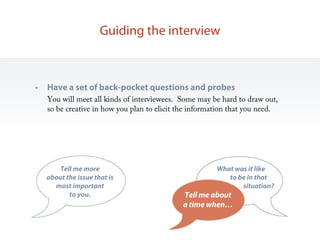
Guiding the interview


•   Have a set of back-pocket questions and probes
    You will meet all kinds of interviewees. Some may be hard to draw out,
    so be creative in how you plan to elicit the information that you need.


       Tell me more                                     What was it like….
    about the issue that is                                to be in that…
      most important                                           situation?
           to you.                           Tell me about
                                             a time when…
Guiding the interview


•   Confirm that you’ve addressed all important questions
    It’s ok at the end of the interview to tell the interviewee that you’d like to
    take a minute look at the interview guide to make sure you’ve touched on
    all questions.
Guiding the interview


•   Always end by asking the interviewee if there
    is anything more he or she would like to add

•   Understand who is sponsoring the study and
    how they intend to use the data
    Make only promises that you can keep. For example, if
    you know the data will be de-identified, state this clearly.
    If the person may be recognizable in your report, be
    honest about that.
Secrets to a
                                                      Great Interview
                                                       Carolyn Cannuscio and Eve Weiss


With support from the Robert Wood Johnson Foundation Health & Society Scholars Program, the Mixed Methods Research Lab, The Leonard
                                              Health & Society Scholars Program, the Mixed Methods Research Lab, The Leonard Davis Institute
Davis Institute of Health Economics, for the Center for Public Health Initiatives at the University of Pennsylvania for the Center for Health
of Health Economics, and the CenterandPublic Health Initiatives at the University of Pennsylvania and the Centerand Health Equity Research and
Promotion at the Philadelphia VA Medical Center. VA Medical Center.
Equity Research and Promotion at the Philadelphia

Visit the Health of Philadelphia Photo-Documentation Project Online at www.visualepi.com

Secrets to a great interview

  • 1.
    Secrets to a Great Interview Carolyn Cannuscio and Eve Weiss With support from the Robert Wood Johnson Foundation Health & Society Scholars Program, the Mixed Methods Research Lab, The Leonard Davis Institute of Health Economics, and the Center for Public Health Initiatives at the University of Pennsylvania and the Center for Health Equity Research and Promotion at the Philadelphia VA Medical Center. Visit the Health of Philadelphia Photo-Documentation Project Online at www.visualepi.com
  • 2.
    The basics: presentationand professionalism • Come early, leave on time • Use your best social skills Be mindful of the person’s privacy and time. • Consider your self-presentation Including how to dress, how to enter into interview setting, how and where to sit, body language.
  • 3.
    The basics: presentationand professionalism • Know equipment and come prepared for it to work or fail In other words, no matter how much faith you have in technology, always bring a notebook and pen as a backup. • Come prepared with your paperwork and have it well- organized
  • 4.
    The basics: presentationand professionalism Maintain an appropriate distance and be mindful of your body language.
  • 5.
    The basics: presentationand professionalism Dress professionally and come with your materials well-organized
  • 6.
    The basics: presentationand professionalism Remove clutter and objects that may create noise or cause a distraction
  • 7.
    Respecting the interviewee and getting what you want • Your job as an interviewer is not simply to ask questions Your job is to elicit the person’s story and to listen closely to that story. • Probe for information… but respect signals from the interviewee and know when to back off. Defer to the interviewee if he or she expresses discomfort or concern regarding any aspect of the interview. • Remain neutral, don’t judge
  • 8.
    Respecting the interviewee and getting what you want • If you don’t understand an answer, ask clarifying questions Restating what you think you heard is one strategy. It’s ok to reveal that you are not familiar with a term that is being used. Chances are, other members of the team will also not understand. • Be patient when the interviewee is responding Give him/her time to think and answer slowly, if that’s their pace. • Don’t forget to thank the interviewee for his or her time, and for sharing his or her story with you
  • 9.
    Guiding the interview • Always be aware of the background question and mission of the project. This will help you tune into what is relevant and what is not. If you’re not sure what the main point is, then ask the principal investigator or your supervisor until you know. Don’t head to an interview without clarity on this point. • Know the interview guide inside and out before you head into your first interview. Also bring a clear, easily read copy of the interview guide, so that you can glance at it to get on track.
  • 10.
    Guiding the interview • Pace yourself so that you allow time for all questions in your guide (Confirm at the start of the interview how long you expect the whole process to take.) • Guide the interview to useful terrain You will encounter people who derail the interview, veering into areas that fascinate them but barely pertain to the questions you ask. Keep the mission in mind, and keep going back to it. • Ask the question once, clearly, and then let the interviewee answer
  • 11.
    Guiding the interview • Have a set of back-pocket questions and probes You will meet all kinds of interviewees. Some may be hard to draw out, so be creative in how you plan to elicit the information that you need. Tell me more What was it like…. about the issue that is to be in that… most important situation? to you. Tell me about a time when…
  • 12.
    Guiding the interview • Confirm that you’ve addressed all important questions It’s ok at the end of the interview to tell the interviewee that you’d like to take a minute look at the interview guide to make sure you’ve touched on all questions.
  • 13.
    Guiding the interview • Always end by asking the interviewee if there is anything more he or she would like to add • Understand who is sponsoring the study and how they intend to use the data Make only promises that you can keep. For example, if you know the data will be de-identified, state this clearly. If the person may be recognizable in your report, be honest about that.
  • 14.
    Secrets to a Great Interview Carolyn Cannuscio and Eve Weiss With support from the Robert Wood Johnson Foundation Health & Society Scholars Program, the Mixed Methods Research Lab, The Leonard Health & Society Scholars Program, the Mixed Methods Research Lab, The Leonard Davis Institute Davis Institute of Health Economics, for the Center for Public Health Initiatives at the University of Pennsylvania for the Center for Health of Health Economics, and the CenterandPublic Health Initiatives at the University of Pennsylvania and the Centerand Health Equity Research and Promotion at the Philadelphia VA Medical Center. VA Medical Center. Equity Research and Promotion at the Philadelphia Visit the Health of Philadelphia Photo-Documentation Project Online at www.visualepi.com