RECRUITMENT & SELECTION
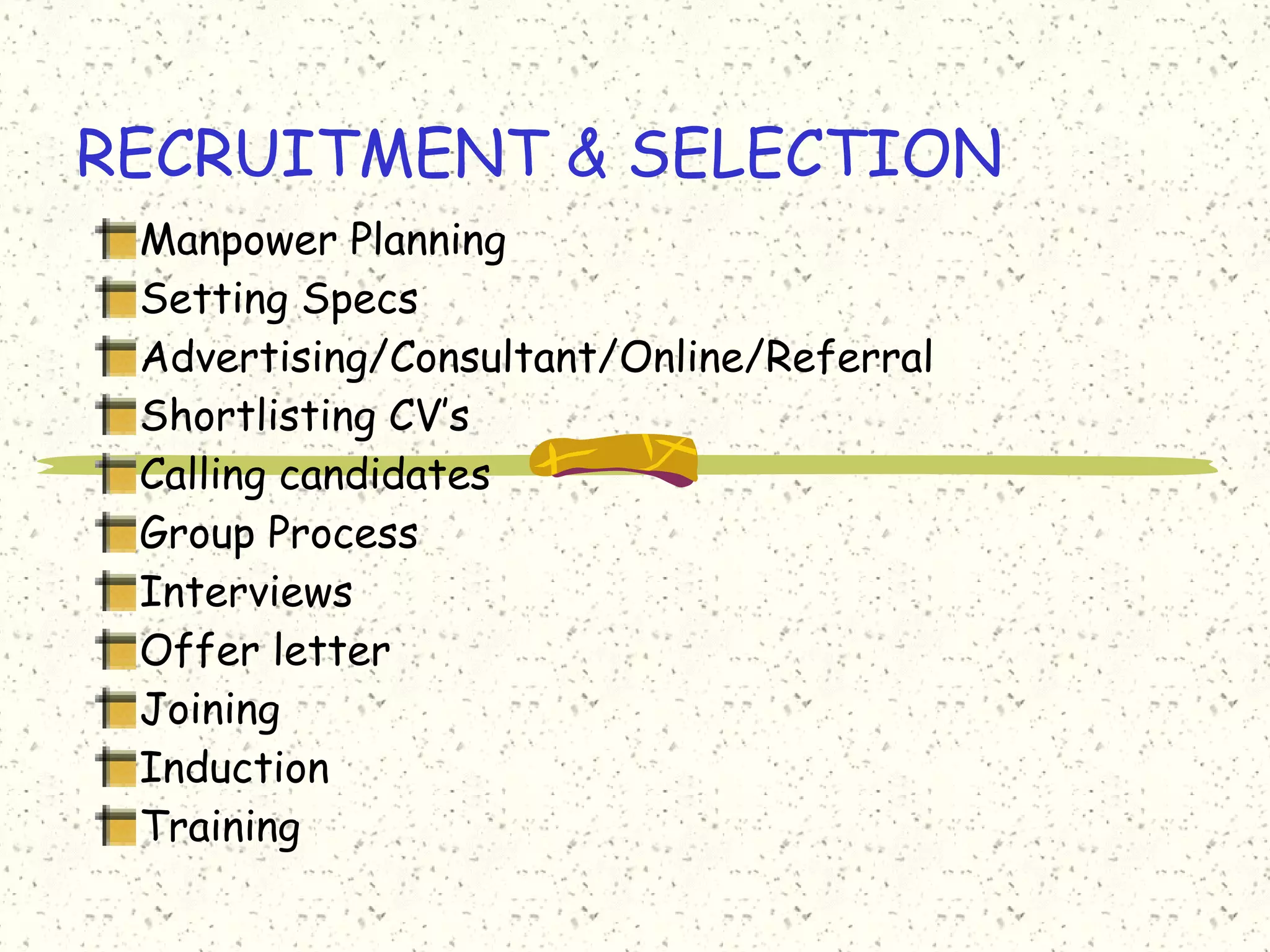
Manpower Planning
Setting Specs
Advertising/Consultant/Online/Referral
Shortlisting CV’s
Calling candidates
Group Process
Interviews
Offer letter
Joining
Induction
Training
Selection Techniques
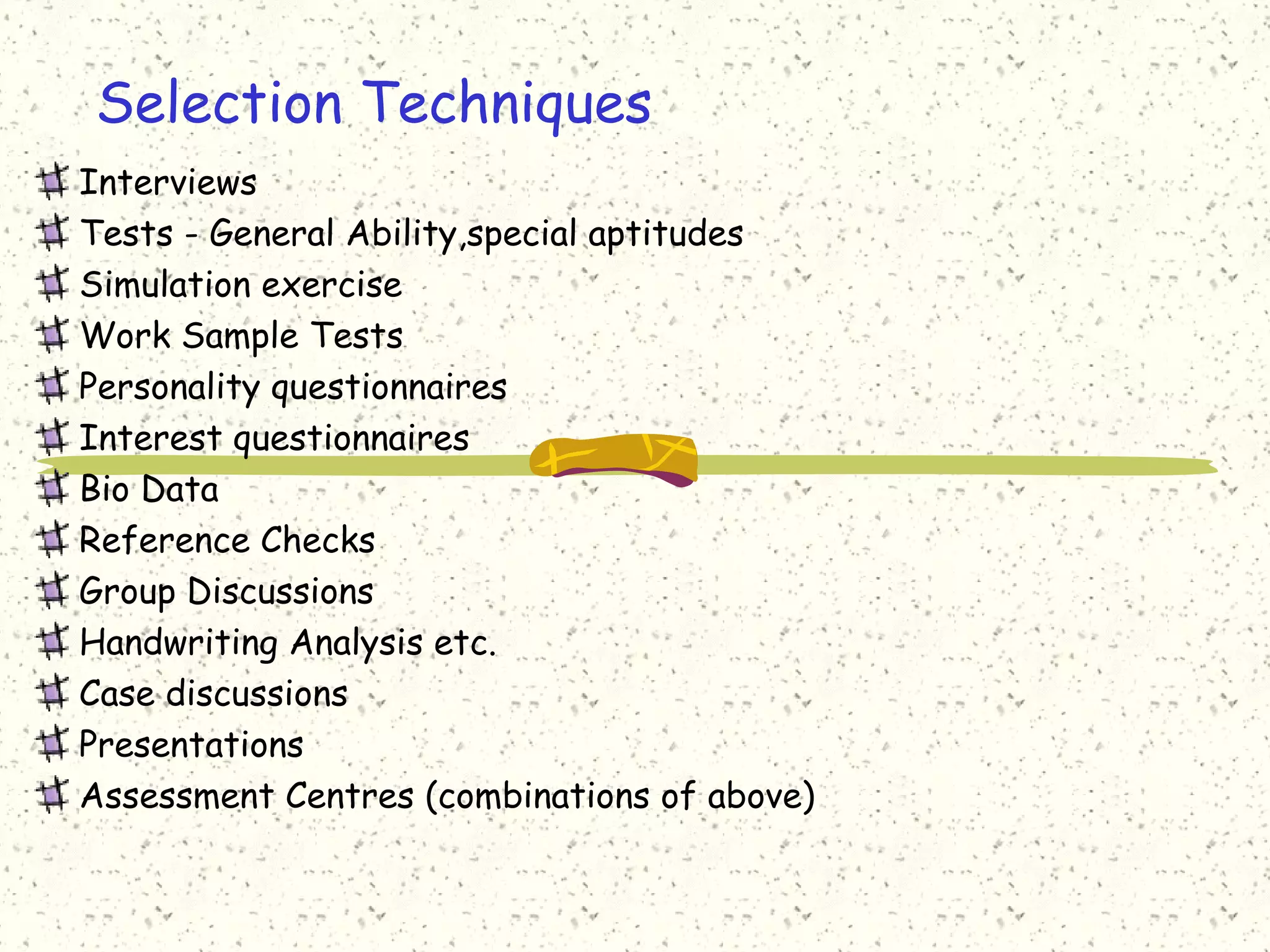
Interviews
Tests - General Ability,special aptitudes
Simulation exercise
Work Sample Tests
Personality questionnaires
Interest questionnaires
Bio Data
Reference Checks
Group Discussions
Handwriting Analysis etc.
Case discussions
Presentations
Assessment Centres (combinations of above)
Interview Skills
By
Bonala Kondal
Interviewing-What is it?
- A structured meeting between you and
an employer
- Interview is a pre-arranged and
planned conversation used for
evaluating the suitability of a
candidate for a particular position.
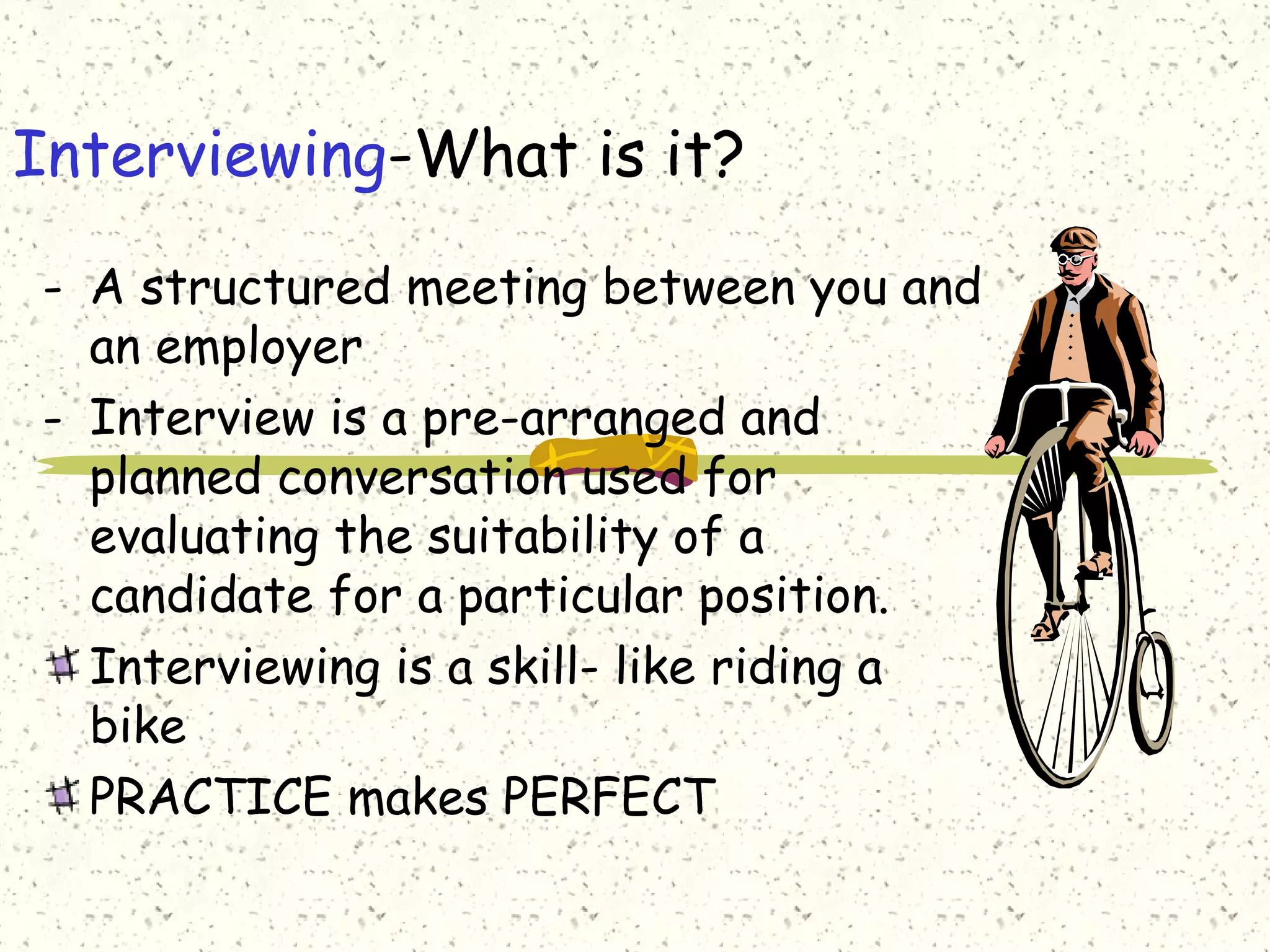
Interviewing is a skill- like riding a
bike
PRACTICE makes PERFECT
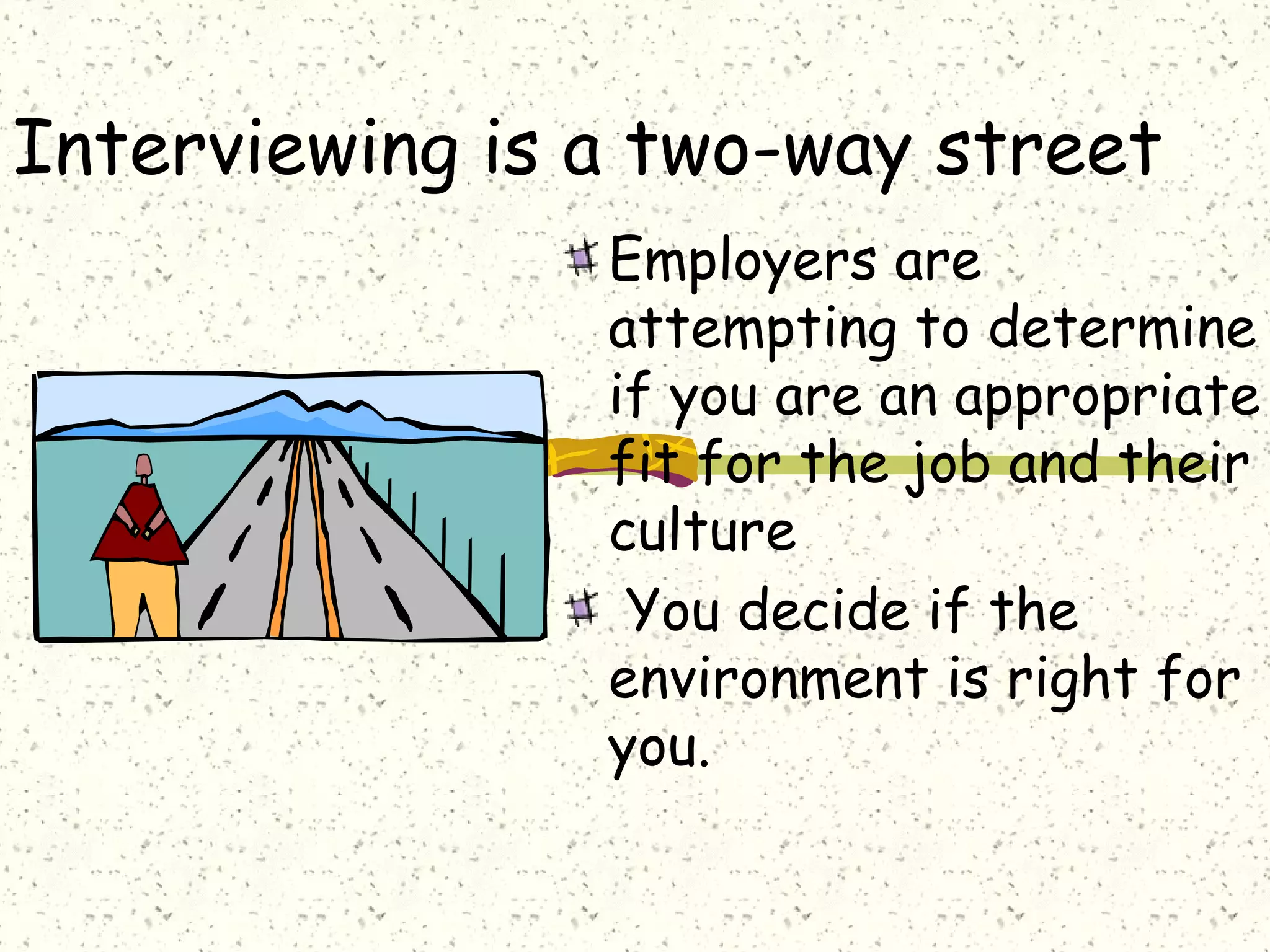
Interviewing is a two-way street
Employers are
attempting to determine
if you are an appropriate
fit for the job and their
culture
You decide if the
environment is right for
you.
..
It’s a complex means of gathering
relevant data about a candidate for a
particular job, promotion, or making
selection panel.
Structured mechanism for professional
evaluation for employment as well as
promotion.
Interview Process
Growing competition in the job market
Changing demands of the job market
Growing professionalism of the business
world
Increasing focus on the candidate’s
personal qualities
Changes in the interviewing techniques
Types of Interviews
Phone: used as an initial screen of
candidates or to narrow the pool of
applicants
One-on-One: most common interview
style and incorporates you with the
potential employer
Panel or Group: allows many individuals
to interview you at once
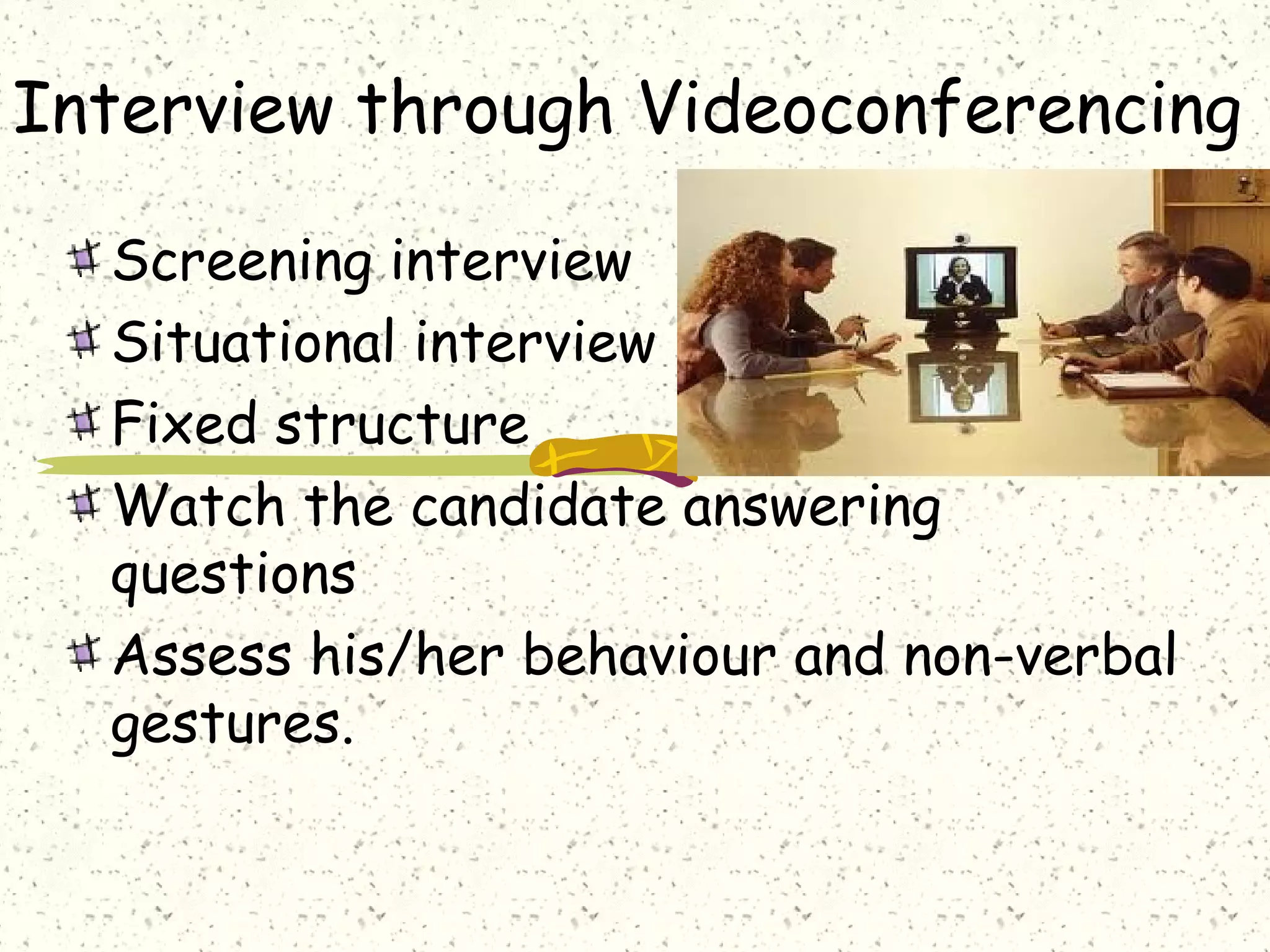
Videoconferencing: allows far away
candidates to interact with highly placed
people
Mind set and mental
preparation for interview
For what you would like to work ?
For “Money” ?
For “Job satisfaction” ?
For making use of knowledge?
For building your career ?
Pre-Interview Planning
Analysing yourself
Identifying your skills
Researching the organisation
Analysing the job position
Revising your subject knowledge and
brushing up your general awareness
Developing the interview file
Analysing yourself
Educational and professional background
Accomplishments
Achievements
Special Interests and Hobbies
Analyse your skills
Learned Skills such as Computer
programming, data processing, foreign
language, interpersonal skills, public
relations, time management, supervising
etc.
Intuitive skills like Boldness, broad-
mindedness, Creativity, decision making,
leadership, motivating, patience,
sincerity, teambuilding etc.
Research the Organisation
Major areas of operation
Products/services
Focus of the activities
Growth rate
Work culture
Recent developments
Job Analysis
What does this job involve?
What are the responsibilities associated with
this job?
How is this position different from similar
positions at other organisations?
What are the skills and abilities needed for
this job?
What is the level of professional knowledge
needed?
What are the chances of career enhancement?
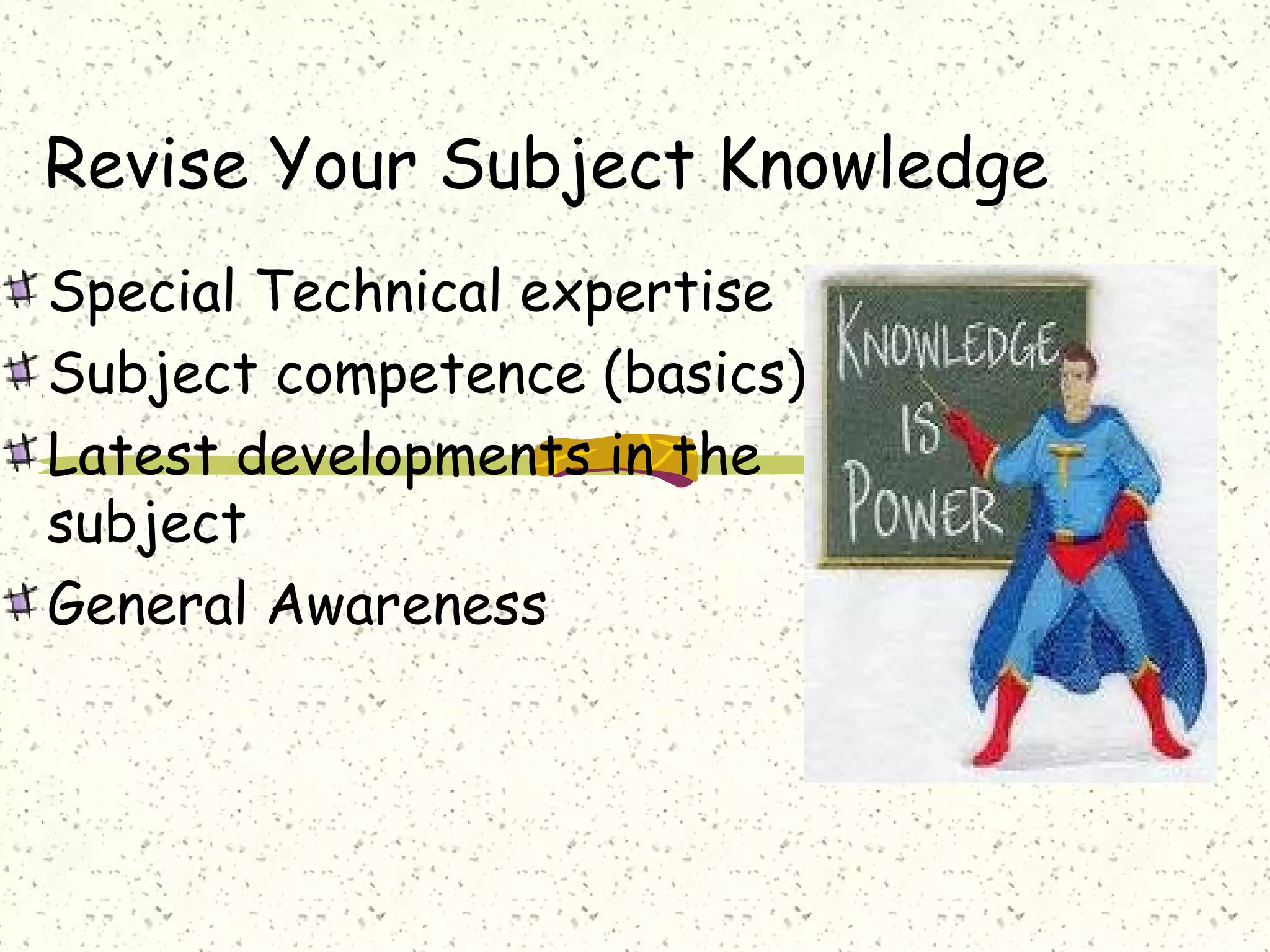
Revise Your Subject Knowledge
Special Technical expertise
Subject competence (basics)
Latest developments in the
subject
General Awareness
Develop the Interview File
Interview letter
Original Certificates
Experience Certificates
References
Certificates of merit
Copies of your Resume
Other relevant papers
Arriving
Be sure to allow yourself plenty of time
to arrive at your destination
Try to arrive 15-30 minutes early at the
site to allow you to relax, walk to the
interview, use the restroom, or just
gather yourself
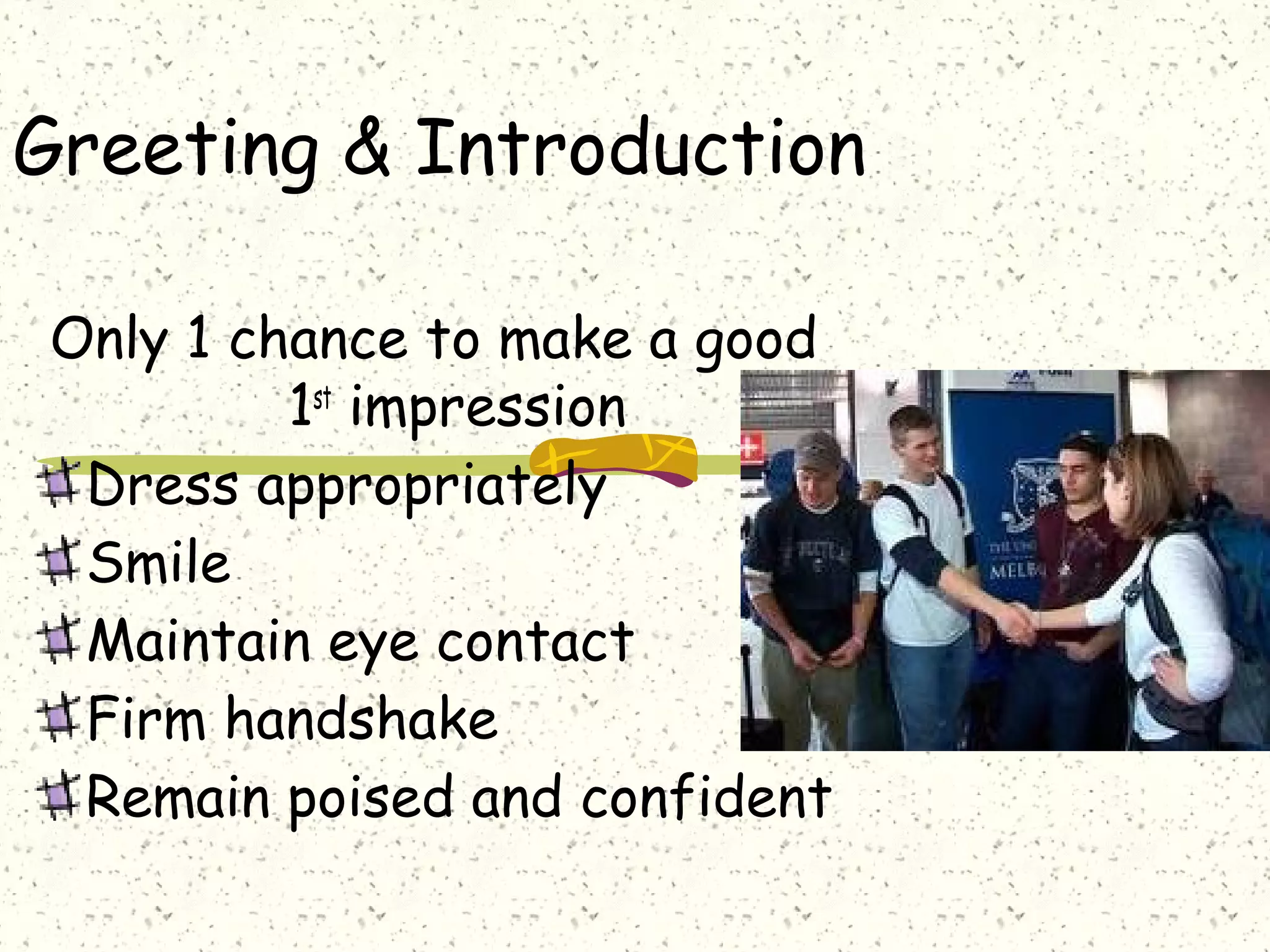
Greeting & Introduction
Only 1 chance to make a good
1st
impression
Dress appropriately
Smile
Maintain eye contact
Firm handshake
Remain poised and confident
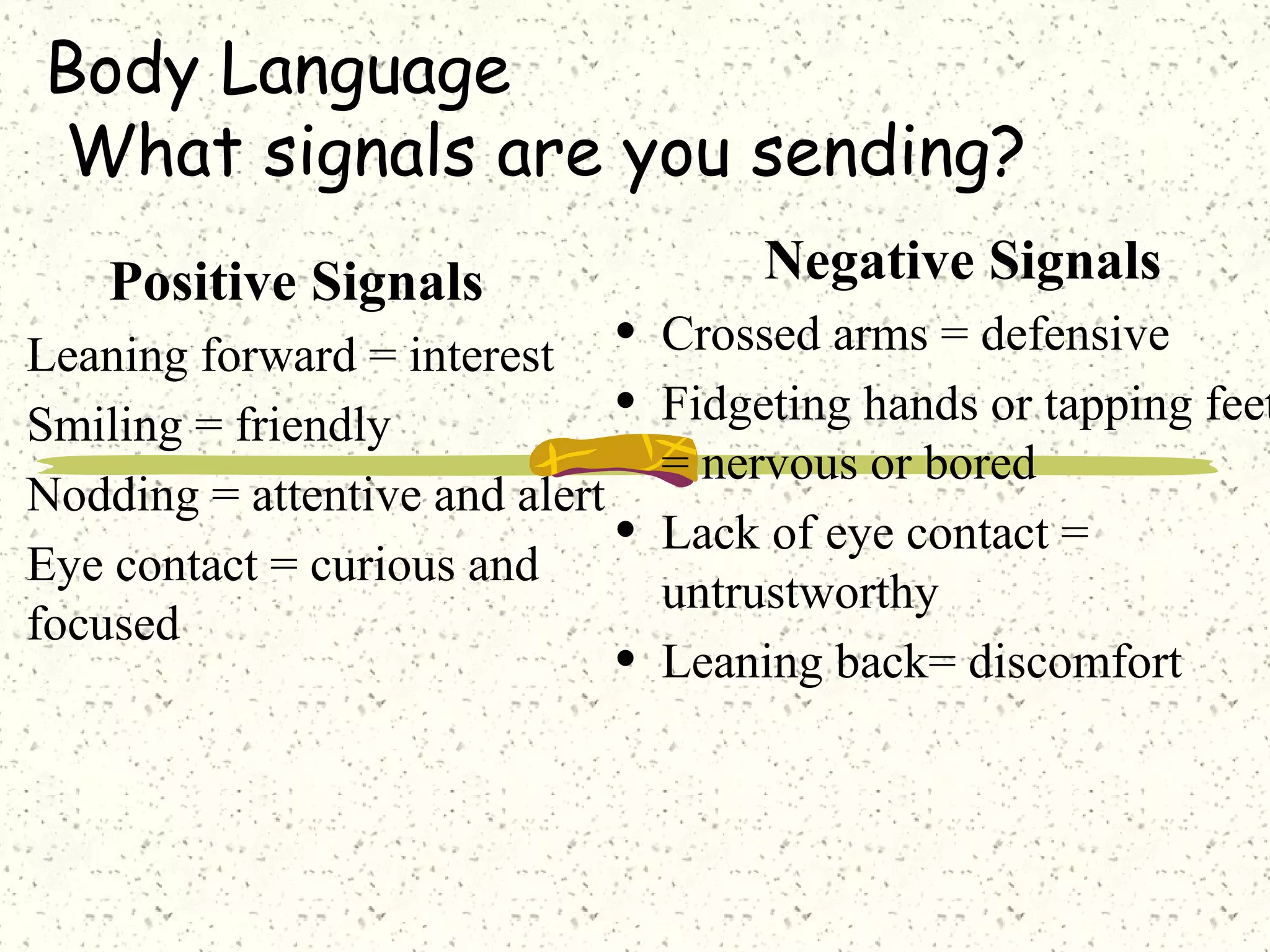
Body Language
What signals are you sending?
Positive Signals
• Leaning forward = interest
• Smiling = friendly
• Nodding = attentive and alert
• Eye contact = curious and
focused
Negative Signals
• Crossed arms = defensive
• Fidgeting hands or tapping feet
= nervous or bored
• Lack of eye contact =
untrustworthy
• Leaning back= discomfort
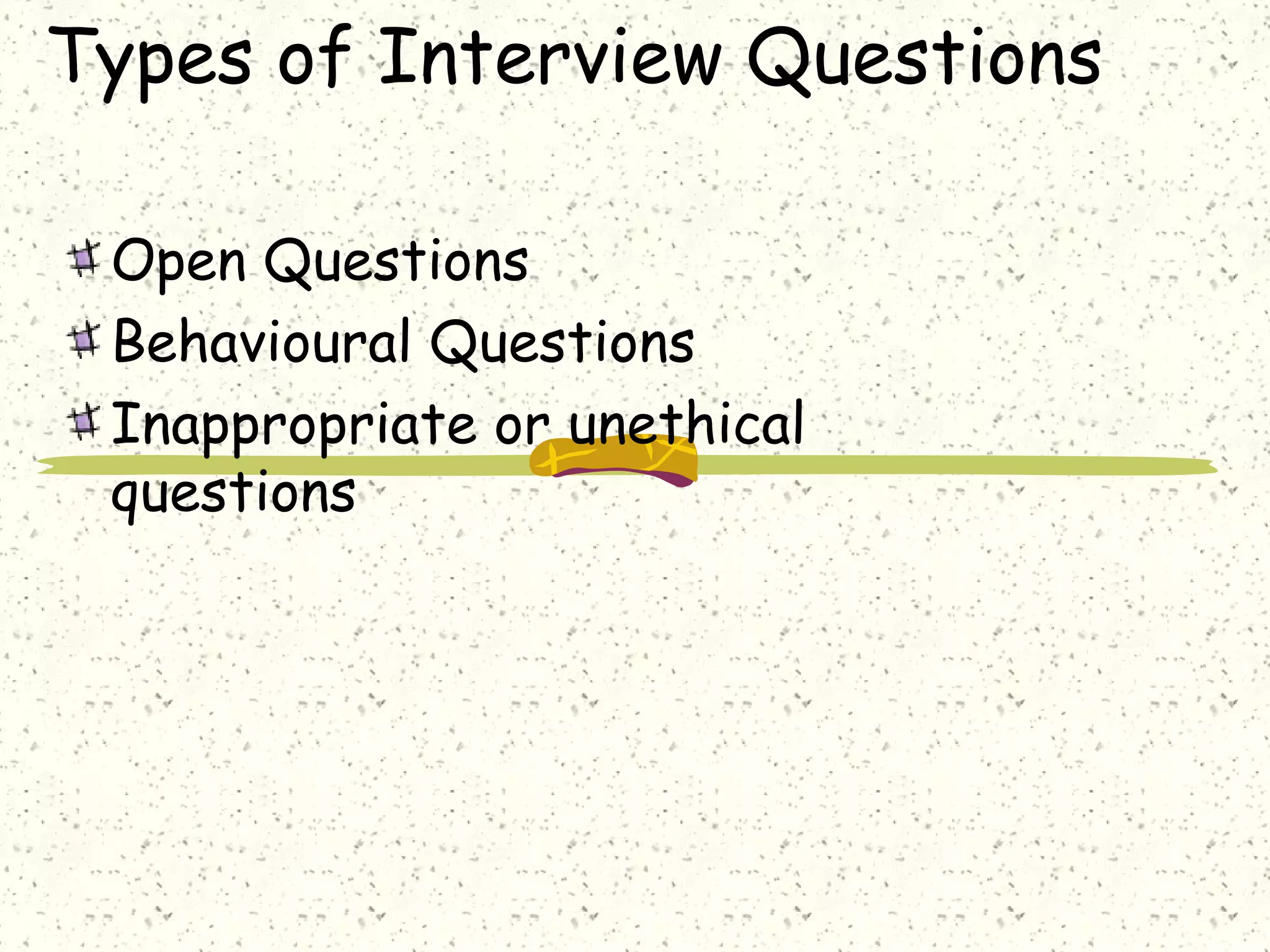
Types of Interview Questions
Open Questions
Behavioural Questions
Inappropriate or unethical
questions
Types of Interview Questions
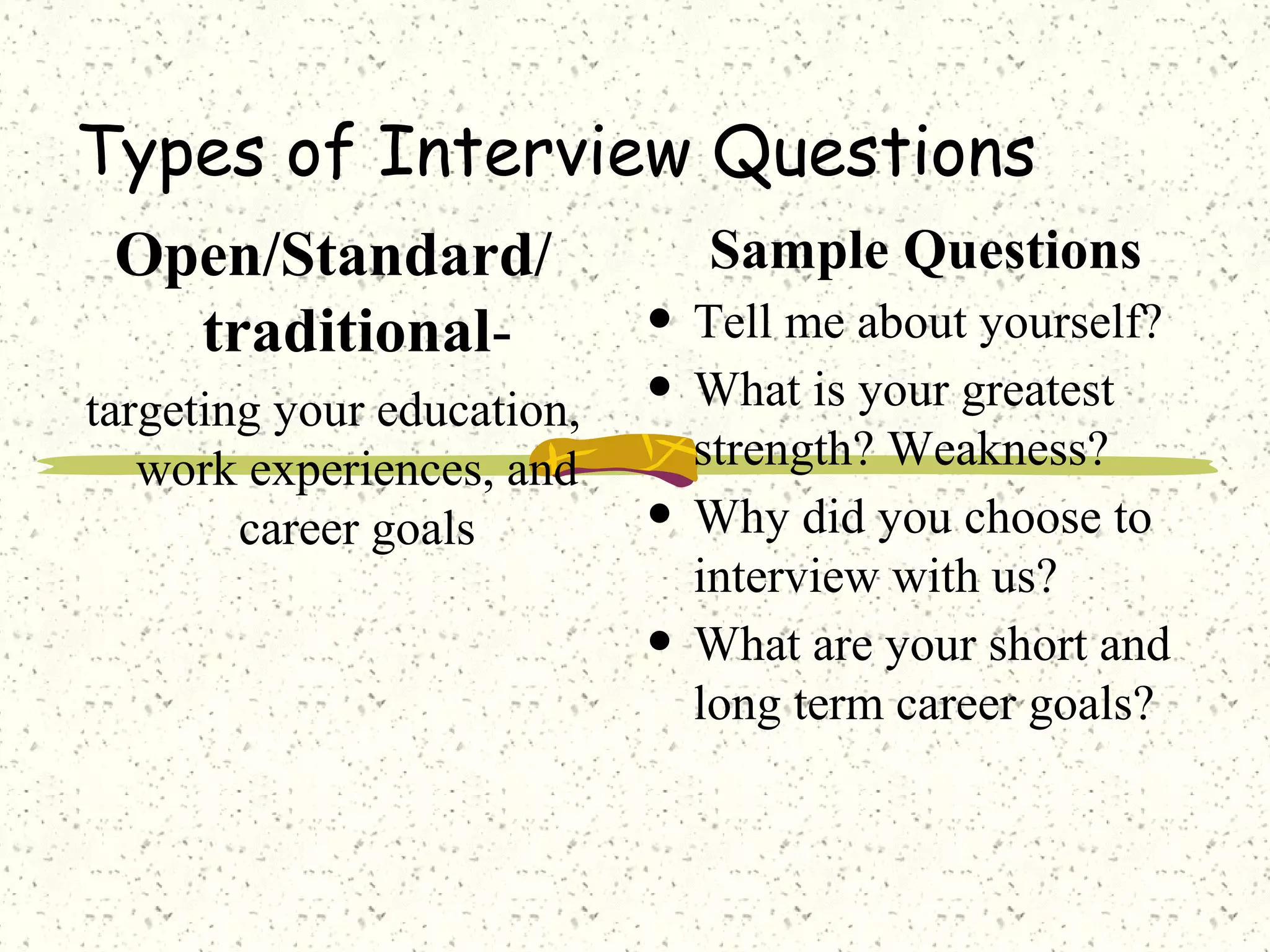
Open/Standard/
traditional-
targeting your education,
work experiences, and
career goals
Sample Questions
• Tell me about yourself?
• What is your greatest
strength? Weakness?
• Why did you choose to
interview with us?
• What are your short and
long term career goals?
Types of Interview Questions
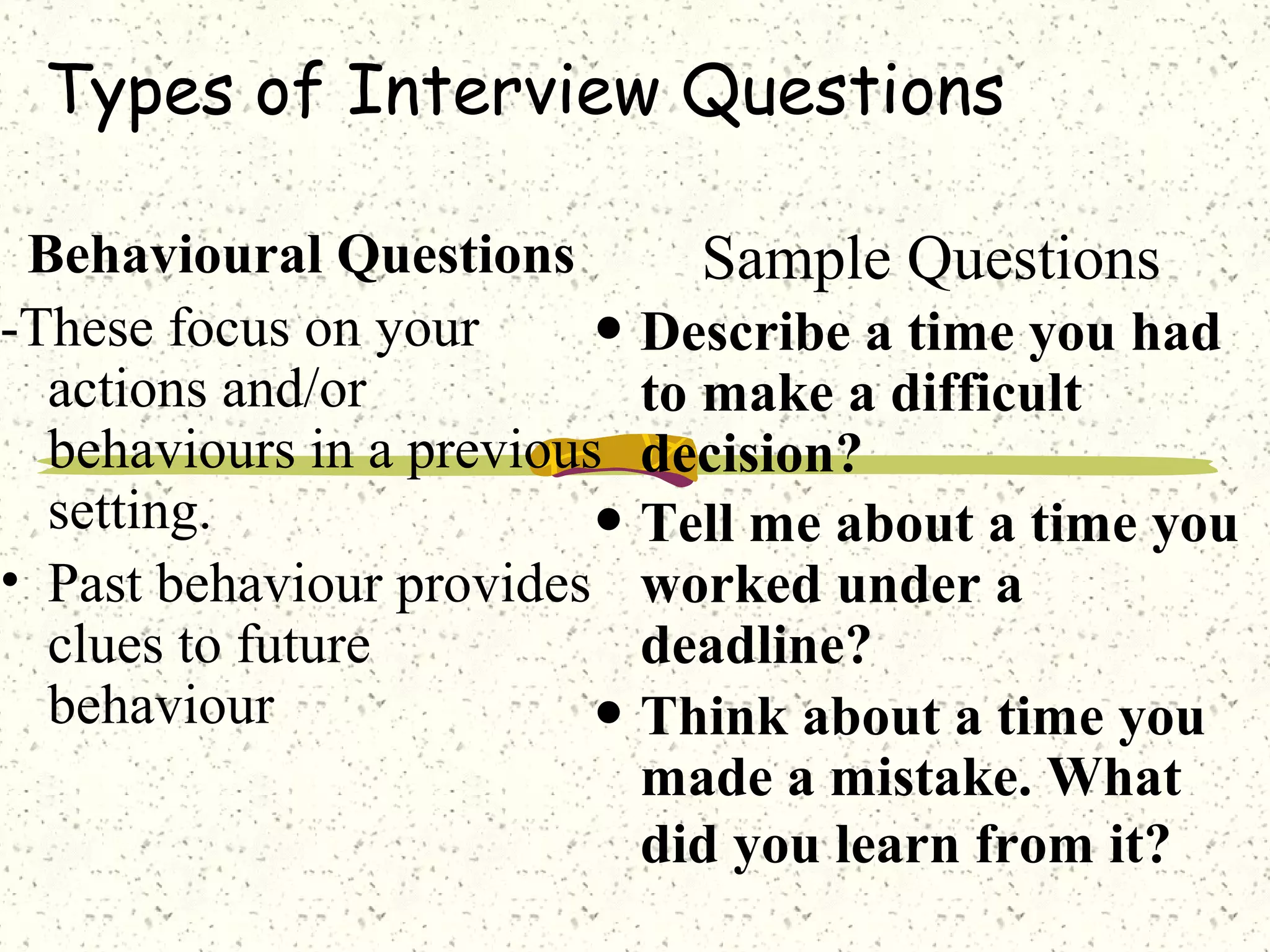
Behavioural Questions
-These focus on your
actions and/or
behaviours in a previous
setting.
• Past behaviour provides
clues to future
behaviour
Sample Questions
• Describe a time you had
to make a difficult
decision?
• Tell me about a time you
worked under a
deadline?
• Think about a time you
made a mistake. What
did you learn from it?
Types of Interview Questions
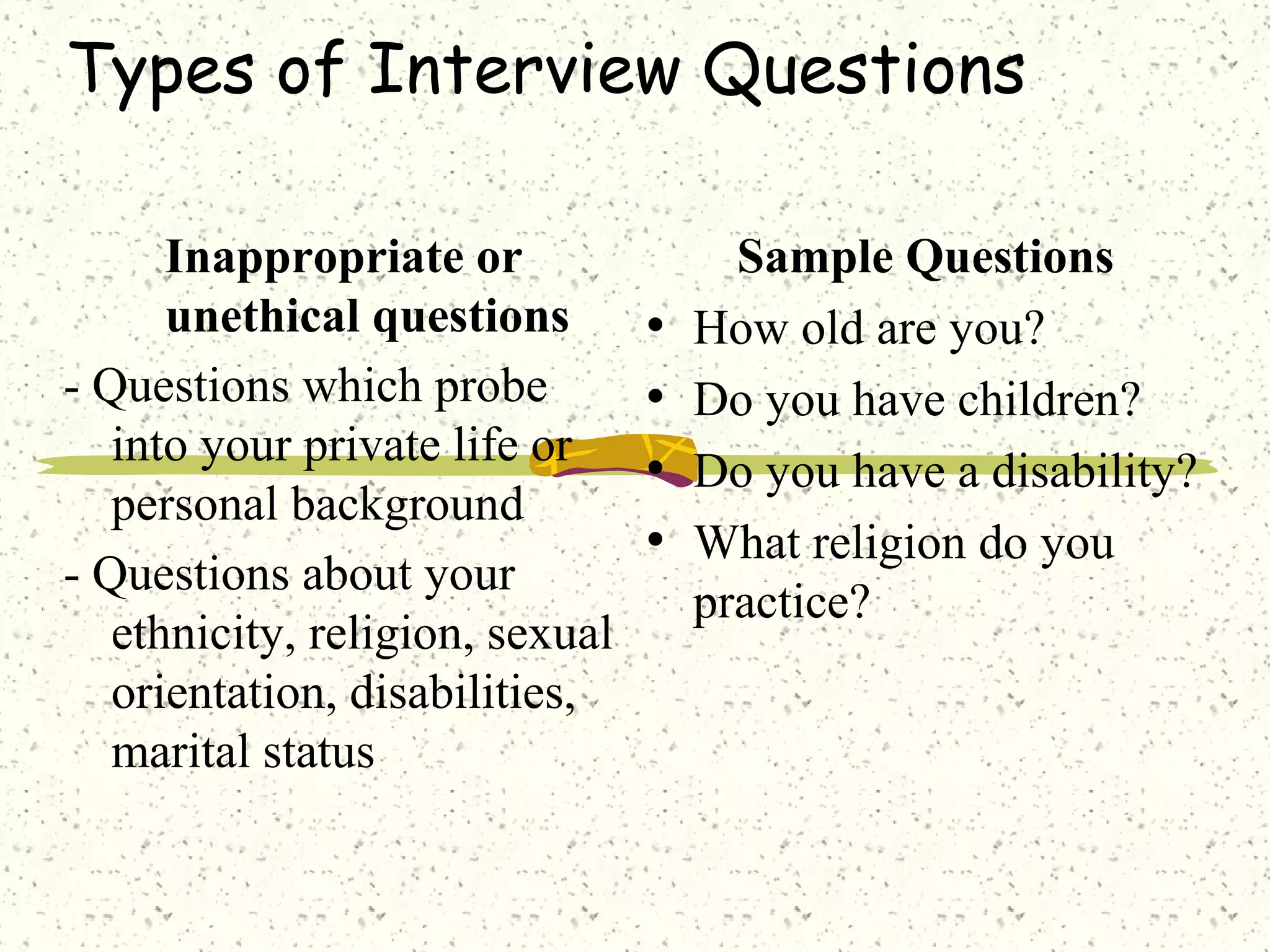
Inappropriate or
unethical questions
- Questions which probe
into your private life or
personal background
- Questions about your
ethnicity, religion, sexual
orientation, disabilities,
marital status
Sample Questions
• How old are you?
• Do you have children?
• Do you have a disability?
• What religion do you
practice?
Types of Interview Questions
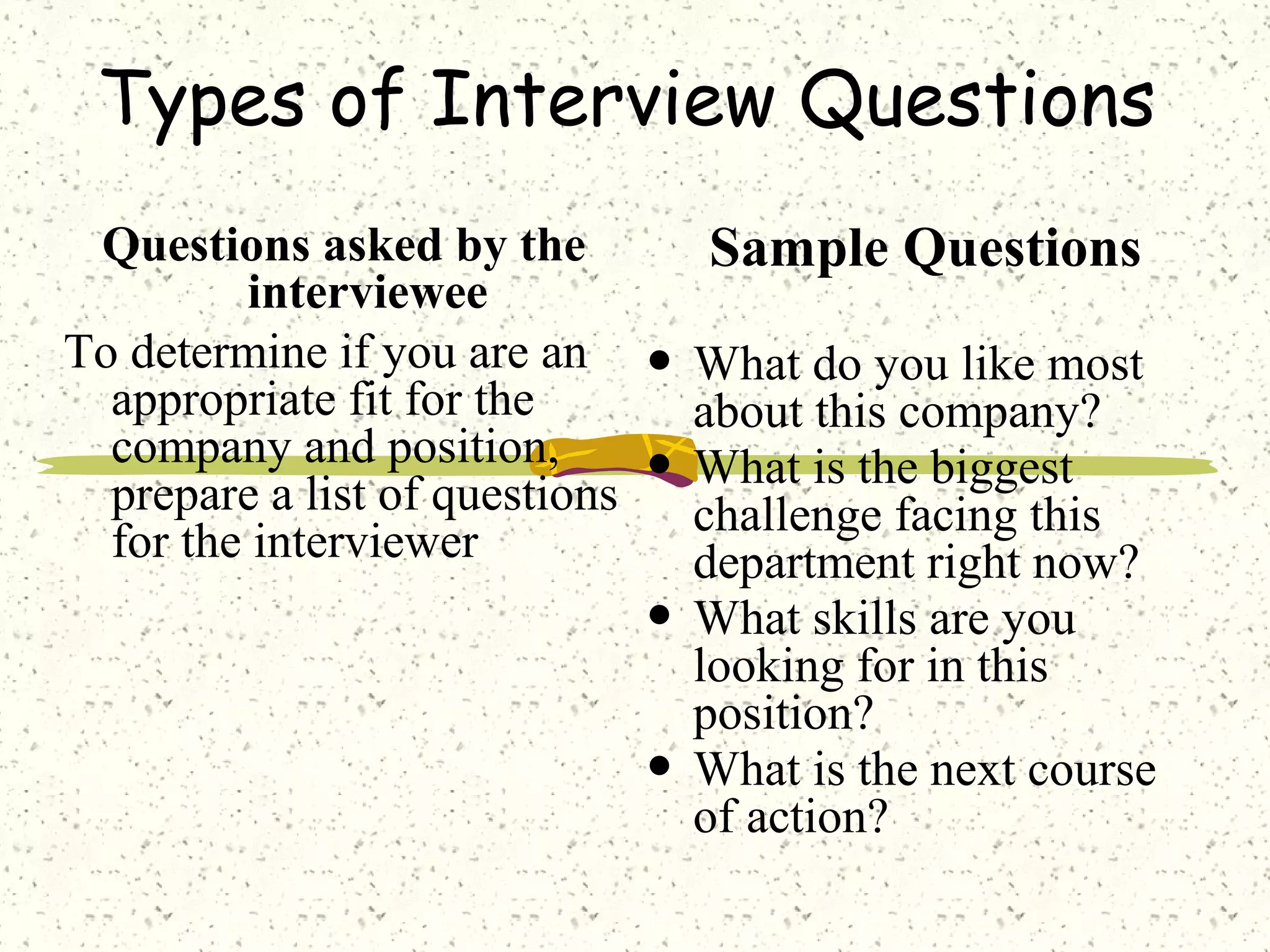
Questions asked by the
interviewee
To determine if you are an
appropriate fit for the
company and position,
prepare a list of questions
for the interviewer
Sample Questions
• What do you like most
about this company?
• What is the biggest
challenge facing this
department right now?
• What skills are you
looking for in this
position?
• What is the next course
of action?
General Interview Strategies
-Be prepared to talk about yourself and
your experiences
-Master the art of storytelling
-Provide specific and concrete examples of
your results/accomplishments
-Remain positive, enthusiastic, poised, and
confident throughout the interview
process
General Interview Strategies
Remember an interview is a formal
conversation--avoid filler words like “Um”,
“Ah”, & “You know”
Avoid indecisive phrases like: “I think,” “I
guess,” “probably,” or “pretty good”
Think before speaking
Avoid long verbose answers--limit your
response to 1-2 minutes
If you do not hear or understand a question,
ask them to repeat or clarify it for you
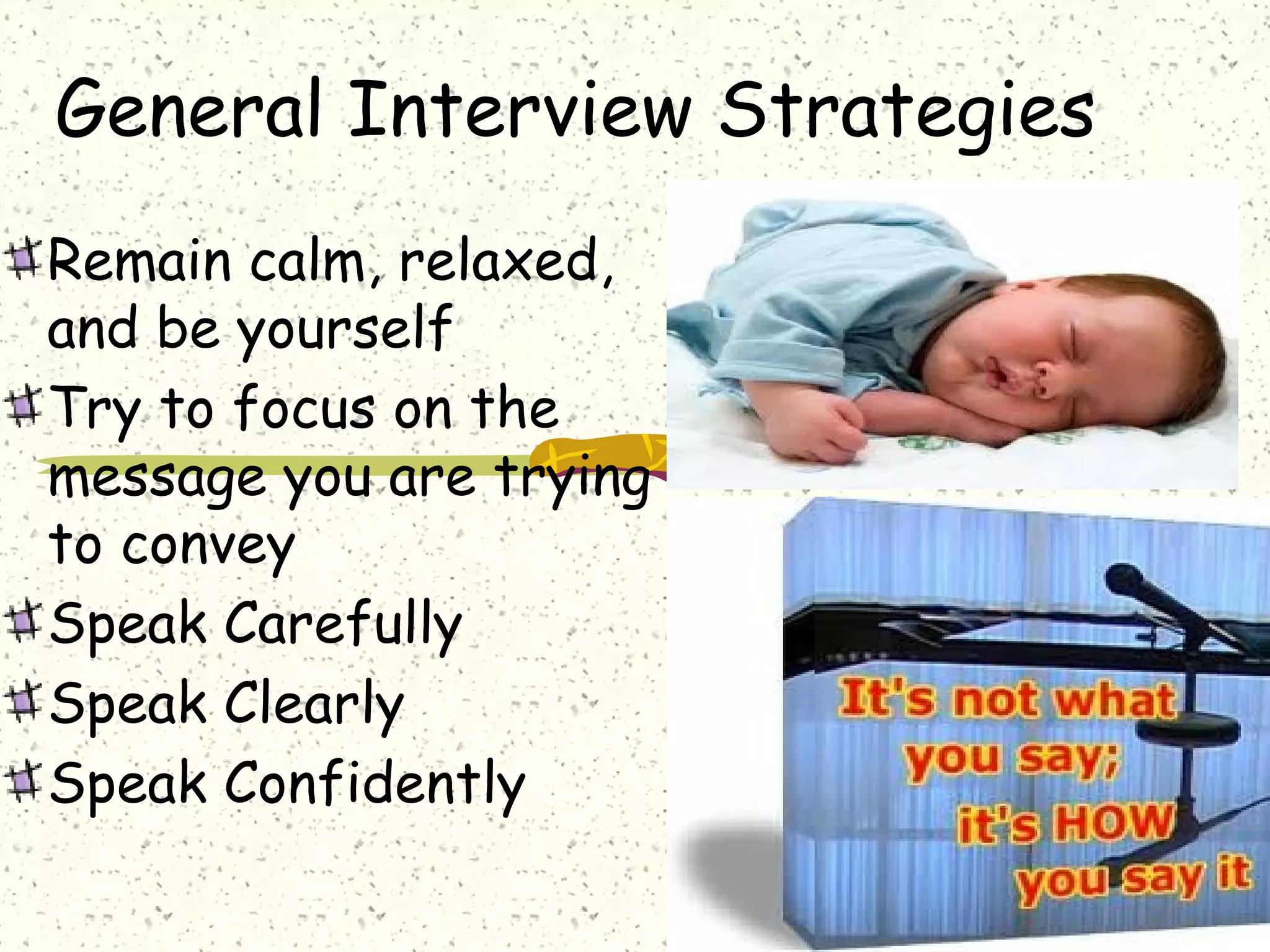
General Interview Strategies
Remain calm, relaxed,
and be yourself
Try to focus on the
message you are trying
to convey
Speak Carefully
Speak Clearly
Speak Confidently
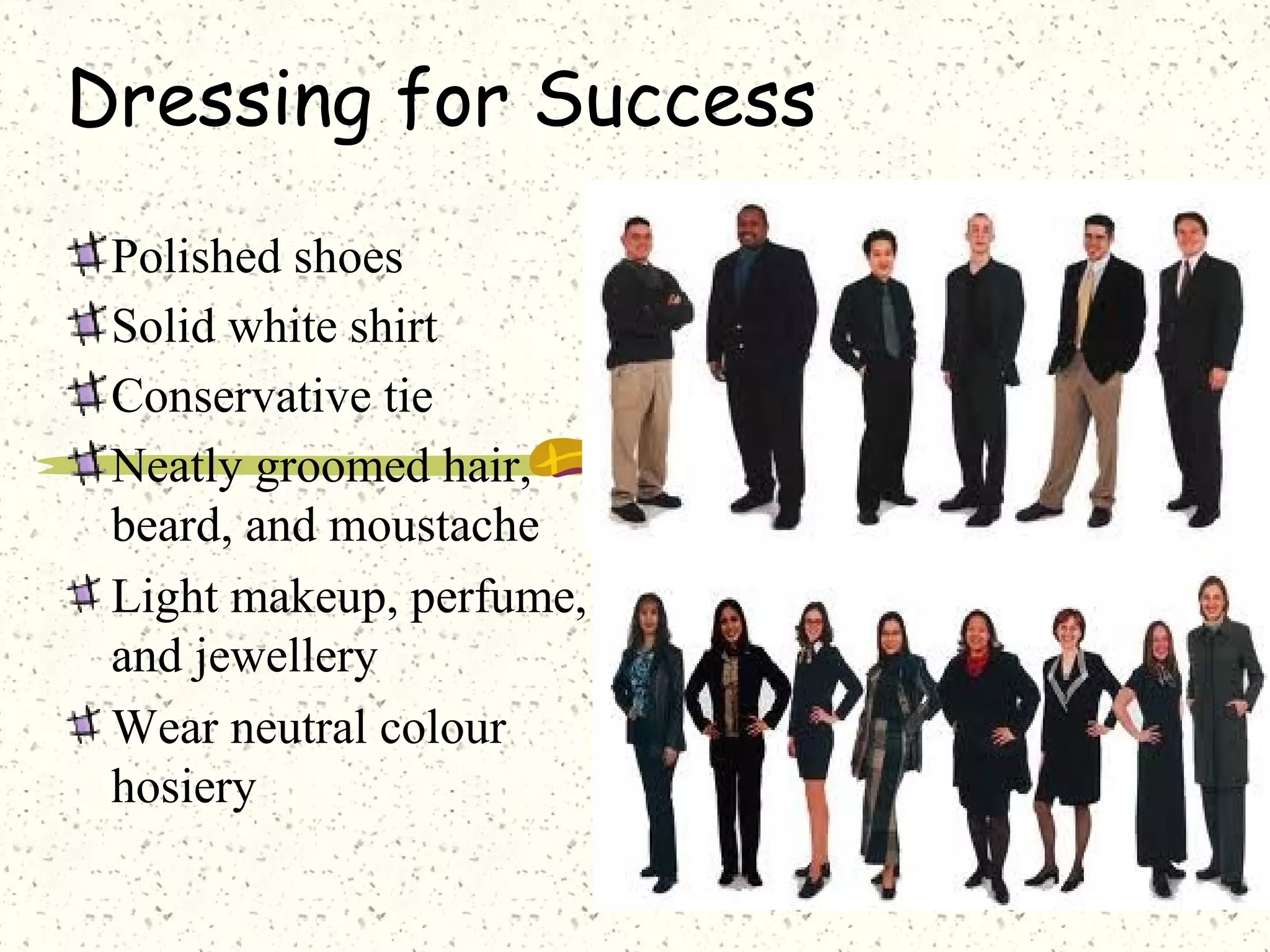
Dressing for Success
Polished shoes
Solid white shirt
Conservative tie
Neatly groomed hair,
beard, and moustache
Light makeup, perfume,
and jewellery
Wear neutral colour
hosiery
Practice
Mock Interviews
Audio/Video Practice
Rehearse Questions
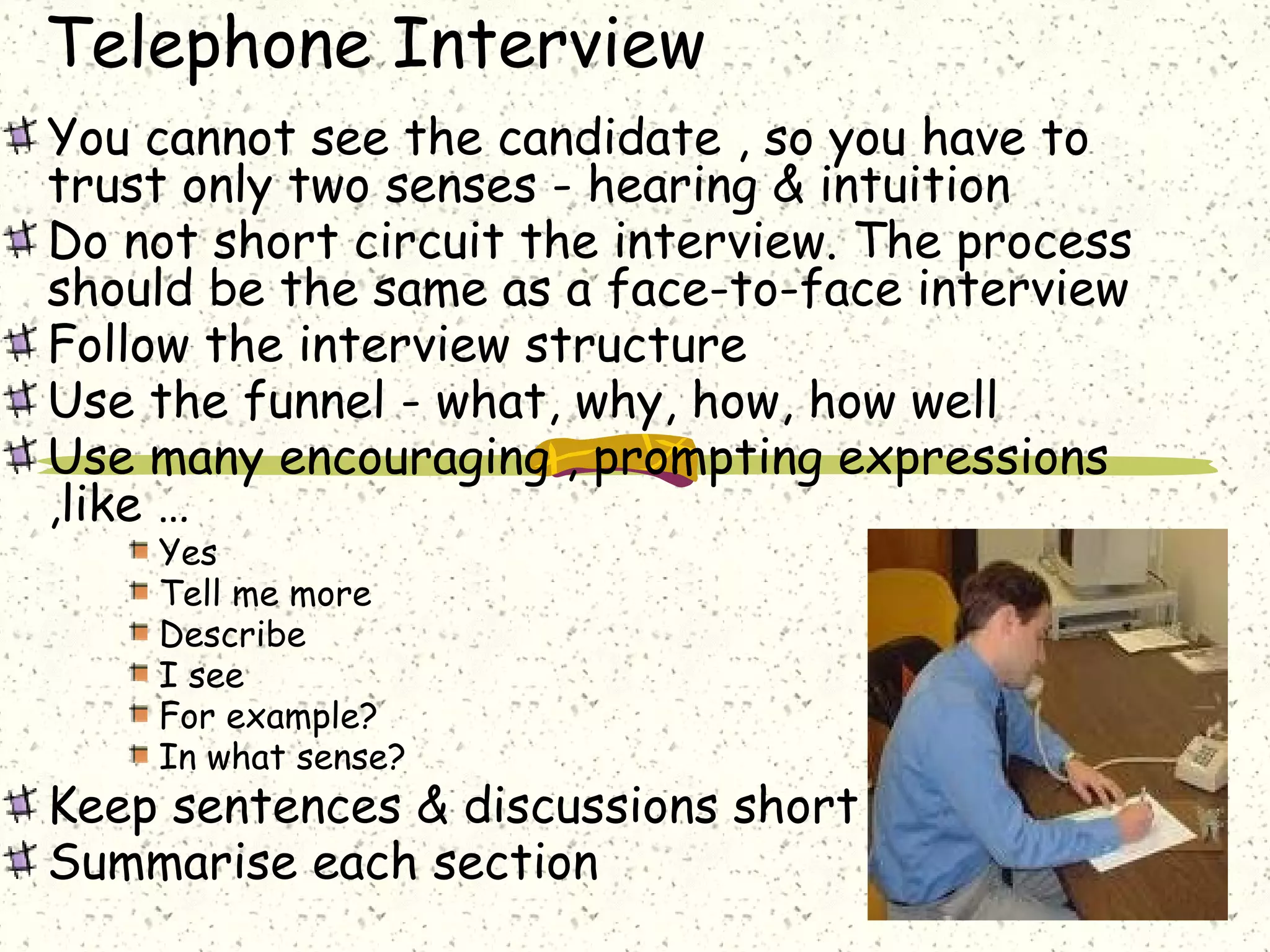
Telephone Interview
You cannot see the candidate , so you have to
trust only two senses - hearing & intuition
Do not short circuit the interview. The process
should be the same as a face-to-face interview
Follow the interview structure
Use the funnel - what, why, how, how well
Use many encouraging , prompting expressions
,like …
Yes
Tell me more
Describe
I see
For example?
In what sense?
Keep sentences & discussions short
Summarise each section
Interview through Videoconferencing
Screening interview
Situational interview
Fixed structure
Watch the candidate answering
questions
Assess his/her behaviour and non-verbal
gestures.
FOLLOW-UP
Ask good questions
Thank the interviewer
Inquire about next steps in the process
Send a thank you note within 24 hours
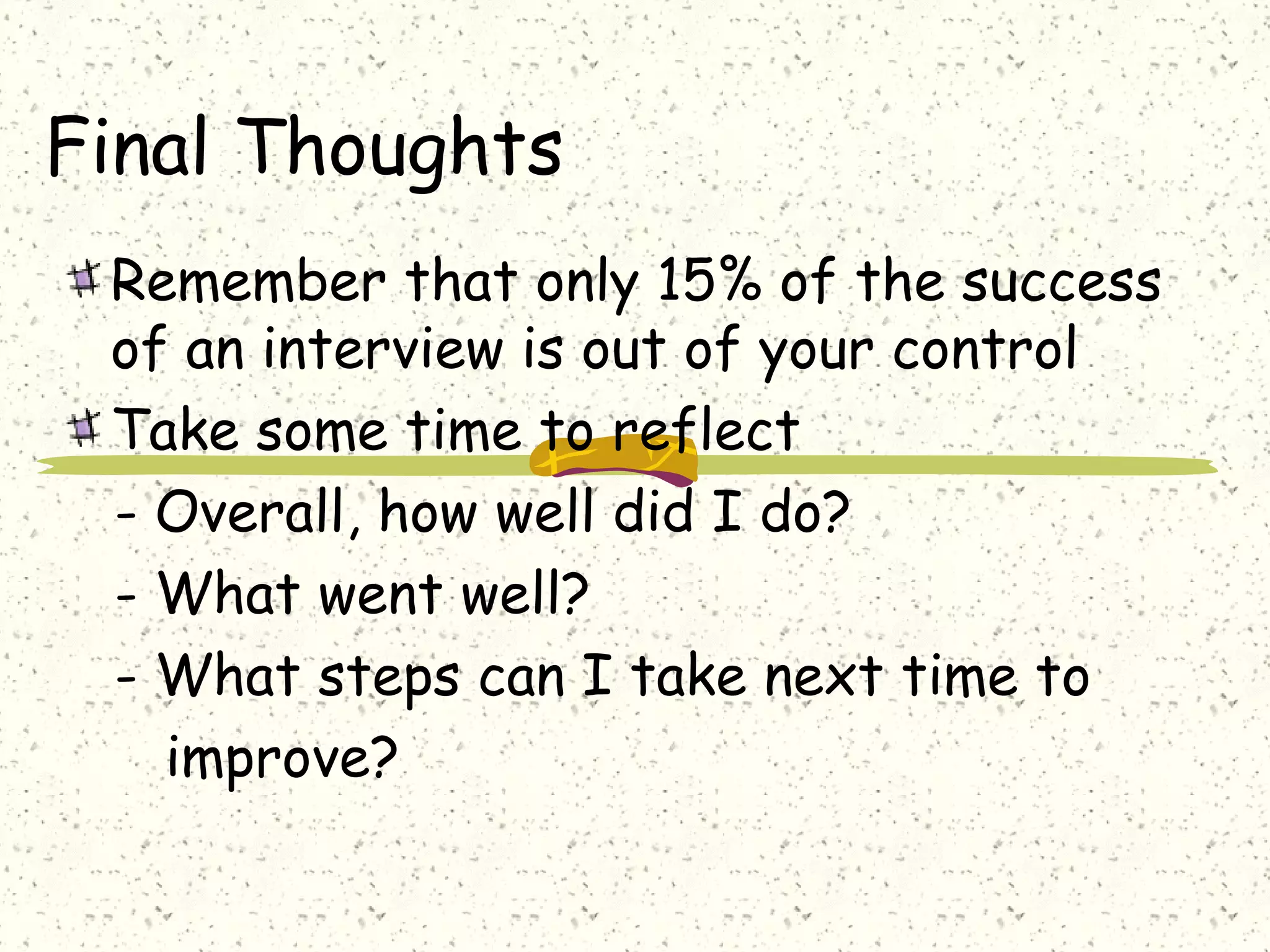
Final Thoughts
Remember that only 15% of the success
of an interview is out of your control
Take some time to reflect
- Overall, how well did I do?
- What went well?
- What steps can I take next time to
improve?
Suggestions
Practice! Practice! Practice!
•Obtain a list of practice interview questions
and jot down short answers
• Stand in front of a mirror and rehearse your
answers
•Schedule an appointment for a mock interview
with Career Services/friend/well wisher
Get a good night’s sleep-be well rested and
alert for the interview
Be relaxed and be yourself!
All the Best
.
Interview skills

Interview skills

  • 1.
    RECRUITMENT & SELECTION ManpowerPlanning Setting Specs Advertising/Consultant/Online/Referral Shortlisting CV’s Calling candidates Group Process Interviews Offer letter Joining Induction Training
  • 2.
    Selection Techniques Interviews Tests -General Ability,special aptitudes Simulation exercise Work Sample Tests Personality questionnaires Interest questionnaires Bio Data Reference Checks Group Discussions Handwriting Analysis etc. Case discussions Presentations Assessment Centres (combinations of above)
  • 3.
  • 4.
    Interviewing-What is it? -A structured meeting between you and an employer - Interview is a pre-arranged and planned conversation used for evaluating the suitability of a candidate for a particular position. Interviewing is a skill- like riding a bike PRACTICE makes PERFECT
  • 5.
    Interviewing is atwo-way street Employers are attempting to determine if you are an appropriate fit for the job and their culture You decide if the environment is right for you.
  • 6.
    .. It’s a complexmeans of gathering relevant data about a candidate for a particular job, promotion, or making selection panel. Structured mechanism for professional evaluation for employment as well as promotion.
  • 7.
    Interview Process Growing competitionin the job market Changing demands of the job market Growing professionalism of the business world Increasing focus on the candidate’s personal qualities Changes in the interviewing techniques
  • 8.
    Types of Interviews Phone:used as an initial screen of candidates or to narrow the pool of applicants One-on-One: most common interview style and incorporates you with the potential employer Panel or Group: allows many individuals to interview you at once Videoconferencing: allows far away candidates to interact with highly placed people
  • 9.
    Mind set andmental preparation for interview For what you would like to work ? For “Money” ? For “Job satisfaction” ? For making use of knowledge? For building your career ?
  • 10.
    Pre-Interview Planning Analysing yourself Identifyingyour skills Researching the organisation Analysing the job position Revising your subject knowledge and brushing up your general awareness Developing the interview file
  • 11.
    Analysing yourself Educational andprofessional background Accomplishments Achievements Special Interests and Hobbies
  • 12.
    Analyse your skills LearnedSkills such as Computer programming, data processing, foreign language, interpersonal skills, public relations, time management, supervising etc. Intuitive skills like Boldness, broad- mindedness, Creativity, decision making, leadership, motivating, patience, sincerity, teambuilding etc.
  • 13.
    Research the Organisation Majorareas of operation Products/services Focus of the activities Growth rate Work culture Recent developments
  • 14.
    Job Analysis What doesthis job involve? What are the responsibilities associated with this job? How is this position different from similar positions at other organisations? What are the skills and abilities needed for this job? What is the level of professional knowledge needed? What are the chances of career enhancement?
  • 15.
    Revise Your SubjectKnowledge Special Technical expertise Subject competence (basics) Latest developments in the subject General Awareness
  • 16.
    Develop the InterviewFile Interview letter Original Certificates Experience Certificates References Certificates of merit Copies of your Resume Other relevant papers
  • 17.
    Arriving Be sure toallow yourself plenty of time to arrive at your destination Try to arrive 15-30 minutes early at the site to allow you to relax, walk to the interview, use the restroom, or just gather yourself
  • 18.
    Greeting & Introduction Only1 chance to make a good 1st impression Dress appropriately Smile Maintain eye contact Firm handshake Remain poised and confident
  • 19.
    Body Language What signalsare you sending? Positive Signals • Leaning forward = interest • Smiling = friendly • Nodding = attentive and alert • Eye contact = curious and focused Negative Signals • Crossed arms = defensive • Fidgeting hands or tapping feet = nervous or bored • Lack of eye contact = untrustworthy • Leaning back= discomfort
  • 20.
    Types of InterviewQuestions Open Questions Behavioural Questions Inappropriate or unethical questions
  • 21.
    Types of InterviewQuestions Open/Standard/ traditional- targeting your education, work experiences, and career goals Sample Questions • Tell me about yourself? • What is your greatest strength? Weakness? • Why did you choose to interview with us? • What are your short and long term career goals?
  • 22.
    Types of InterviewQuestions Behavioural Questions -These focus on your actions and/or behaviours in a previous setting. • Past behaviour provides clues to future behaviour Sample Questions • Describe a time you had to make a difficult decision? • Tell me about a time you worked under a deadline? • Think about a time you made a mistake. What did you learn from it?
  • 23.
    Types of InterviewQuestions Inappropriate or unethical questions - Questions which probe into your private life or personal background - Questions about your ethnicity, religion, sexual orientation, disabilities, marital status Sample Questions • How old are you? • Do you have children? • Do you have a disability? • What religion do you practice?
  • 24.
    Types of InterviewQuestions Questions asked by the interviewee To determine if you are an appropriate fit for the company and position, prepare a list of questions for the interviewer Sample Questions • What do you like most about this company? • What is the biggest challenge facing this department right now? • What skills are you looking for in this position? • What is the next course of action?
  • 25.
    General Interview Strategies -Beprepared to talk about yourself and your experiences -Master the art of storytelling -Provide specific and concrete examples of your results/accomplishments -Remain positive, enthusiastic, poised, and confident throughout the interview process
  • 26.
    General Interview Strategies Rememberan interview is a formal conversation--avoid filler words like “Um”, “Ah”, & “You know” Avoid indecisive phrases like: “I think,” “I guess,” “probably,” or “pretty good” Think before speaking Avoid long verbose answers--limit your response to 1-2 minutes If you do not hear or understand a question, ask them to repeat or clarify it for you
  • 27.
    General Interview Strategies Remaincalm, relaxed, and be yourself Try to focus on the message you are trying to convey Speak Carefully Speak Clearly Speak Confidently
  • 28.
    Dressing for Success Polishedshoes Solid white shirt Conservative tie Neatly groomed hair, beard, and moustache Light makeup, perfume, and jewellery Wear neutral colour hosiery
  • 29.
  • 30.
    Telephone Interview You cannotsee the candidate , so you have to trust only two senses - hearing & intuition Do not short circuit the interview. The process should be the same as a face-to-face interview Follow the interview structure Use the funnel - what, why, how, how well Use many encouraging , prompting expressions ,like … Yes Tell me more Describe I see For example? In what sense? Keep sentences & discussions short Summarise each section
  • 31.
    Interview through Videoconferencing Screeninginterview Situational interview Fixed structure Watch the candidate answering questions Assess his/her behaviour and non-verbal gestures.
  • 32.
    FOLLOW-UP Ask good questions Thankthe interviewer Inquire about next steps in the process Send a thank you note within 24 hours
  • 33.
    Final Thoughts Remember thatonly 15% of the success of an interview is out of your control Take some time to reflect - Overall, how well did I do? - What went well? - What steps can I take next time to improve?
  • 34.
    Suggestions Practice! Practice! Practice! •Obtaina list of practice interview questions and jot down short answers • Stand in front of a mirror and rehearse your answers •Schedule an appointment for a mock interview with Career Services/friend/well wisher Get a good night’s sleep-be well rested and alert for the interview Be relaxed and be yourself!
  • 35.