BY
Saiprakash. B
MBA(IM)
PondicherryUniversity
 Internal Record Systems is a system under
which marketing information is
stored, retrieved.
 Marketing managers relay on internal reports
on orders, sales, prices, costs, inventory
levels, receivables, payables, and so on. By
analyzing this information, they can spot
important opportunities and problems.
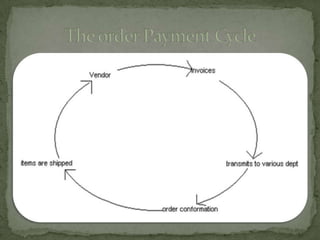
 The heart of the internal records system is the order-
to-payment cycle.
 Sales representatives,dealers, and customers dispatch
orders to the firm.
 The sales department prepares invoices and transmits
copies to various departments.
 Out-of-stock items are back ordered.
 Shipped items are accompanied by shipping and
billing documents that are sent to various
departments.
 Now days improved order payment cycle is
required .
 Customers favour firms that can promise timely
delivery.
 Order-Pay can also be done online. This process is
called as EDI-Electronic Data Interface.
 E.G.,
 Marketing managers need up-to-the-minute
reports on current sales.
 Armed with laptop, computers, sales
representives can access information about
prospects and customers and provide
immediate feedback and sales reports.
 Eg : An ad for Sales CTRL, a sales force automation
software package, boasts, “Your salesperson in St.
Louis knows what Customer Service in Chicago told
their customer in Atlanta this morning.
 Sales managers can monitor everything in their
territories and get current sales forecasts any
time.”Sales force automation (SFA) software has come
a long way.
 A database is an organized collection of data.
 The data is typically organized to model relevant
aspects of reality in a way that supports processes
requiring this information .
 Today company organise their information in
databases such as customer databases,product
databases,sales person data bases and combinedata
from different databases.
 Data warehouse means where all the databases are
kept.
 Data warehouses store current as well as
historical data.
 Company warehouse these data and make
them easily accessible to decision makers.
 The the data mining process is to extract
information from a data set and transform it
into an understandable structure for further
use.
Internal Record System

Internal Record System

  • 1.
  • 3.
     Internal RecordSystems is a system under which marketing information is stored, retrieved.  Marketing managers relay on internal reports on orders, sales, prices, costs, inventory levels, receivables, payables, and so on. By analyzing this information, they can spot important opportunities and problems.
  • 4.
     The heartof the internal records system is the order- to-payment cycle.  Sales representatives,dealers, and customers dispatch orders to the firm.  The sales department prepares invoices and transmits copies to various departments.  Out-of-stock items are back ordered.  Shipped items are accompanied by shipping and billing documents that are sent to various departments.
  • 6.
     Now daysimproved order payment cycle is required .  Customers favour firms that can promise timely delivery.  Order-Pay can also be done online. This process is called as EDI-Electronic Data Interface.  E.G.,
  • 7.
     Marketing managersneed up-to-the-minute reports on current sales.  Armed with laptop, computers, sales representives can access information about prospects and customers and provide immediate feedback and sales reports.
  • 8.
     Eg :An ad for Sales CTRL, a sales force automation software package, boasts, “Your salesperson in St. Louis knows what Customer Service in Chicago told their customer in Atlanta this morning.  Sales managers can monitor everything in their territories and get current sales forecasts any time.”Sales force automation (SFA) software has come a long way.
  • 9.
     A databaseis an organized collection of data.  The data is typically organized to model relevant aspects of reality in a way that supports processes requiring this information .  Today company organise their information in databases such as customer databases,product databases,sales person data bases and combinedata from different databases.
  • 10.
     Data warehousemeans where all the databases are kept.  Data warehouses store current as well as historical data.  Company warehouse these data and make them easily accessible to decision makers.
  • 11.
     The thedata mining process is to extract information from a data set and transform it into an understandable structure for further use.