Interactive Learning Strategies using Technology in
Teaching Science
FERNANDO C. ALTARES, JR.
MAEd Physical Science
a practical approach to help students to be
more involved in retaining more information to
improve their skills by promoting collaboration
and interaction
“
”
Interactivity as a pedagogical technique requires a fundamental change
in the way education is delivered.
• From linear to hypermedia learning
• From the teacher as transmitter to the teacher as facilitator
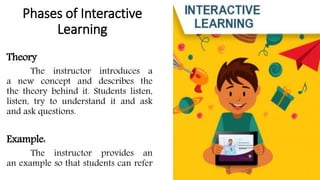
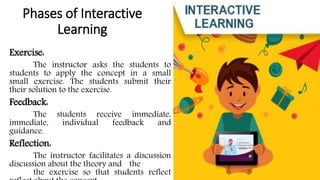
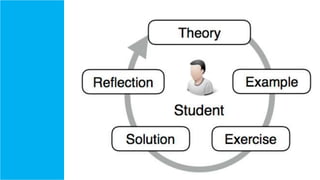
Phases of Interactive
Learning
Theory
The instructor introduces a
a new concept and describes the
the theory behind it. Students listen,
listen, try to understand it and ask
and ask questions.
Example:
The instructor provides an
an example so that students can refer
Exercise:
The instructor asks the students to
students to apply the concept in a small
small exercise. The students submit their
their solution to the exercise.
Feedback:
The students receive immediate,
immediate, individual feedback and
guidance.
Reflection:
The instructor facilitates a discussion
discussion about the theory and the
the exercise so that students reflect
Phases of Interactive
Learning
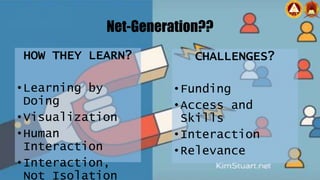
Net-Generation??
HOW THEY LEARN?
•Learning by
Doing
•Visualization
•Human
Interaction
•Interaction,
Not Isolation
CHALLENGES?
•Funding
•Access and
Skills
•Interaction
•Relevance
INTERACTIVE
STRATEGIES USING
TECHNOLOGY
VIRTUAL
FIELD
TRIP
Google Earth
Videos, Projector
VR Box
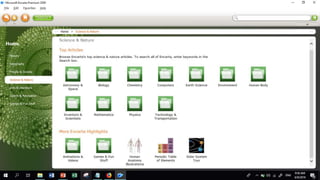
Encarta Premium
https://www.airpano.com/360video/vr-underwater-cuba-5/
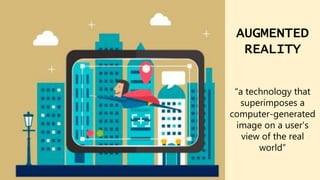
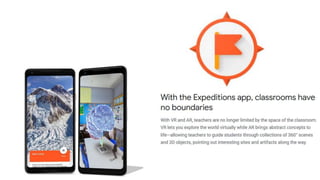
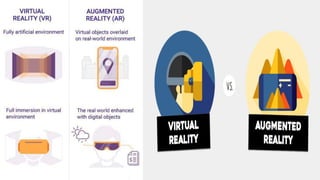
AUGMENTED
REALITY
“a technology that
superimposes a
computer-generated
image on a user's
view of the real
world”
LIVE VIDEO COORDINATION
• Skype, Appear.in, Gruveo.com
• BigBlueButton
VIRTUAL
MANIPULAT
IVES
Manipulatives are objects
used to help better
understand abstract concepts
or properties, and are found
in two varieties: physical or
concrete, and virtual or
computer generated
manipulatives
....SHS MaterialsPhysical Science MaterialsMaterialsacid-base-solutions_en.html
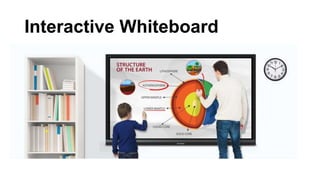
Interactive Whiteboard

Interactive learning strategies using technology in teaching science