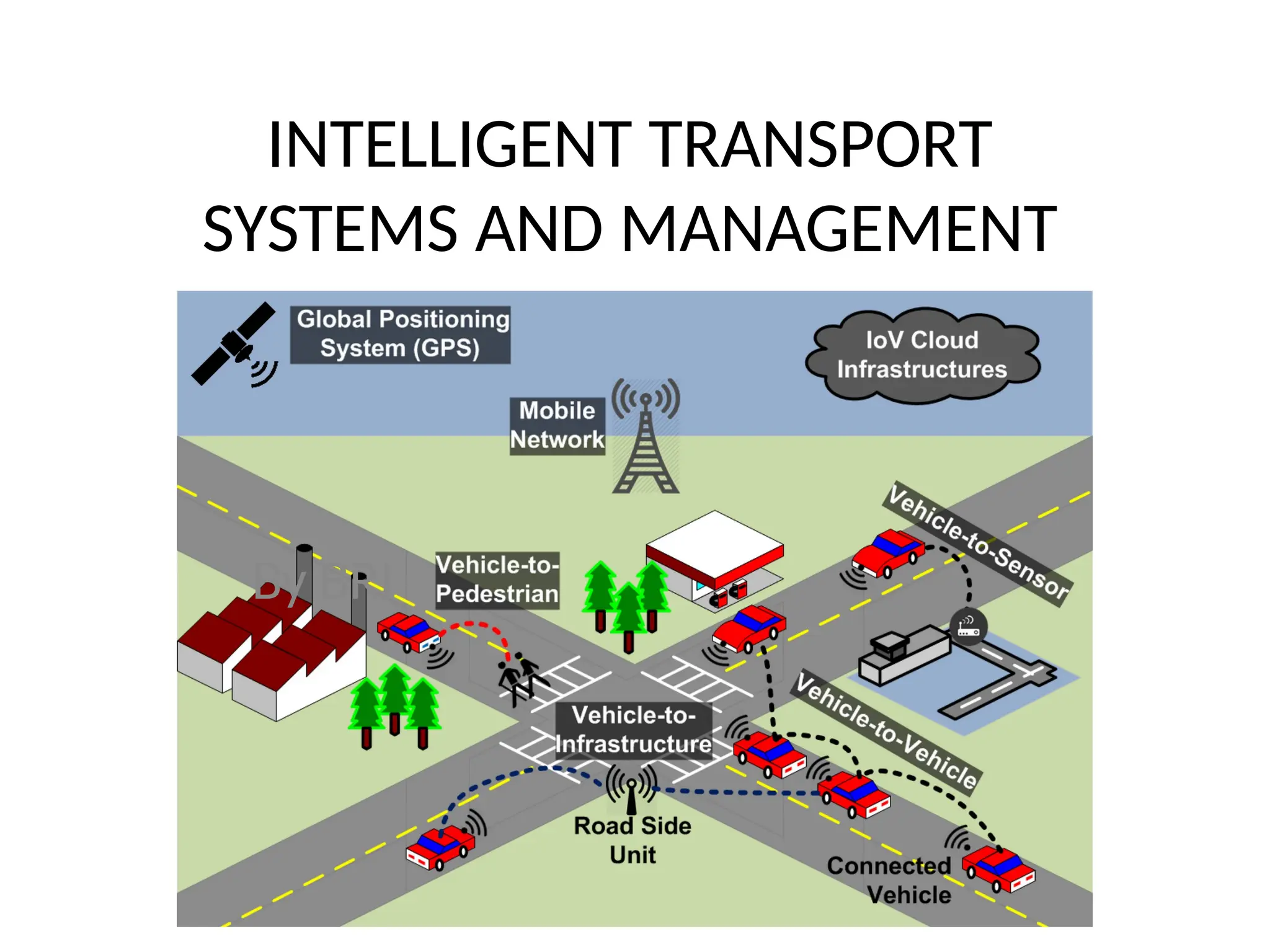
INTELLIGENT TRANSPORT
SYSTEMS AND MANAGEMENT
By BRI
Definition of ITS
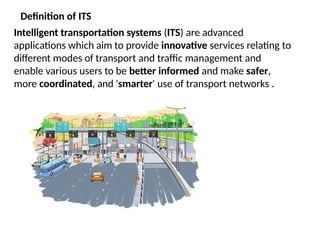
Intelligent transportation systems (ITS) are advanced
applications which aim to provide innovative services relating to
different modes of transport and traffic management and
enable various users to be better informed and make safer,
more coordinated, and 'smarter' use of transport networks .
• Although ITS may refer to all modes of transport,
EU Directive 2010/40/EU (7 July 2010) defines ITS
as ‘systems in which information and
communication technologies are applied in the
field of road transport, including
1) infrastructure,
2) vehicles and users, and in
3)traffic management and mobility
management, as well as for interfaces with other
modes of transport.
ITS Technologies
4 technologies are involved in ITS:
• Sensors - Roadway Sensors, Microwave Radar Detectors, Infrared
Sensors, Ultrasonic Detectors, Acoustic Detectors,
Magnetometers.
• Communication - electronic road pricing, online
travel information, vehicle-to-vehicle communication.
• Computing - computerised traffic signalling and automatic and
eco-driver assistance
• Algorithms – computer vision algorithms, traffic flow guidance
algorithms, etc
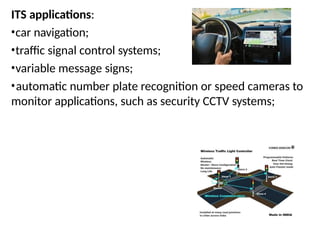
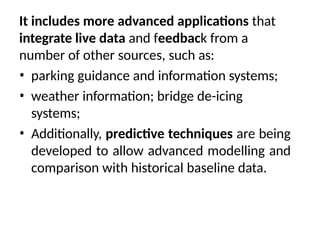
ITS applications:
•car navigation;
•traffic signal control systems;
•variable message signs;
•automatic number plate recognition or speed cameras to
monitor applications, such as security CCTV systems;
It includes more advanced applications that
integrate live data and feedback from a
number of other sources, such as:
• parking guidance and information systems;
• weather information; bridge de-icing
systems;
• Additionally, predictive techniques are being
developed to allow advanced modelling and
comparison with historical baseline data.
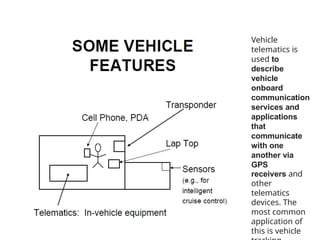
Vehicle
telematics is
used to
describe
vehicle
onboard
communication
services and
applications
that
communicate
with one
another via
GPS
receivers and
other
telematics
devices. The
most common
application of
this is vehicle
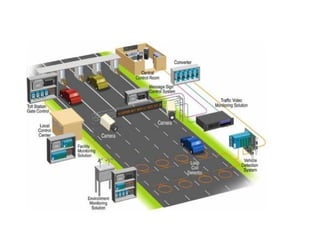
• Intelligent Transportation System integrates current and
growing communication technologies.
• Due to emergence of many technologies, the
transportation system is able to improve transportation
conditions, safety and services.
1) Wireless communications
2) Computational technologies
3) Floating car data/floating cellular data
4) Sensing technologies
5) Inductive loop detection
6) Video vehicle detection
7) Bluetooth detection
Enabling technologies
Potential DSRC Transportation Applications for
Public Safety and Traffic Management
• Blind spot warnings
• Forward collision warnings
• Sudden braking ahead warnings
• Do not pass warnings
• Intersection collision avoidance and movement assistance
• Approaching emergency vehicle warning
• Vehicle safety inspection
• Transit or emergency vehicle signal priority
• Electronic parking and toll payments
• Commercial vehicle clearance and safety inspections
• In-vehicle signing
• Rollover warning
• Traffic and travel condition data to improve traveler
information and maintenance services
Goals for ITS
• Improved Safety
• Reduced Congestion
• Increased and Higher Quality Mobility
• Reduced Environmental Impact
• Improved Energy Efficiency
• Improved Economic Productivity

ITS manage presentation.pptx .pptx

  • 1.
  • 2.
    Definition of ITS Intelligenttransportation systems (ITS) are advanced applications which aim to provide innovative services relating to different modes of transport and traffic management and enable various users to be better informed and make safer, more coordinated, and 'smarter' use of transport networks .
  • 3.
    • Although ITSmay refer to all modes of transport, EU Directive 2010/40/EU (7 July 2010) defines ITS as ‘systems in which information and communication technologies are applied in the field of road transport, including 1) infrastructure, 2) vehicles and users, and in 3)traffic management and mobility management, as well as for interfaces with other modes of transport.
  • 5.
    ITS Technologies 4 technologiesare involved in ITS: • Sensors - Roadway Sensors, Microwave Radar Detectors, Infrared Sensors, Ultrasonic Detectors, Acoustic Detectors, Magnetometers. • Communication - electronic road pricing, online travel information, vehicle-to-vehicle communication. • Computing - computerised traffic signalling and automatic and eco-driver assistance • Algorithms – computer vision algorithms, traffic flow guidance algorithms, etc
  • 6.
    ITS applications: •car navigation; •trafficsignal control systems; •variable message signs; •automatic number plate recognition or speed cameras to monitor applications, such as security CCTV systems;
  • 7.
    It includes moreadvanced applications that integrate live data and feedback from a number of other sources, such as: • parking guidance and information systems; • weather information; bridge de-icing systems; • Additionally, predictive techniques are being developed to allow advanced modelling and comparison with historical baseline data.
  • 8.
    Vehicle telematics is used to describe vehicle onboard communication servicesand applications that communicate with one another via GPS receivers and other telematics devices. The most common application of this is vehicle
  • 10.
    • Intelligent TransportationSystem integrates current and growing communication technologies. • Due to emergence of many technologies, the transportation system is able to improve transportation conditions, safety and services. 1) Wireless communications 2) Computational technologies 3) Floating car data/floating cellular data 4) Sensing technologies 5) Inductive loop detection 6) Video vehicle detection 7) Bluetooth detection Enabling technologies
  • 11.
    Potential DSRC TransportationApplications for Public Safety and Traffic Management • Blind spot warnings • Forward collision warnings • Sudden braking ahead warnings • Do not pass warnings • Intersection collision avoidance and movement assistance • Approaching emergency vehicle warning • Vehicle safety inspection • Transit or emergency vehicle signal priority • Electronic parking and toll payments • Commercial vehicle clearance and safety inspections • In-vehicle signing • Rollover warning • Traffic and travel condition data to improve traveler information and maintenance services
  • 12.
    Goals for ITS •Improved Safety • Reduced Congestion • Increased and Higher Quality Mobility • Reduced Environmental Impact • Improved Energy Efficiency • Improved Economic Productivity