RAJAN BAIRASRIYA ECE/07/13
Abstract
 Automatic Toll collection system uses RFID
technology.
 RFID based automatic Toll collection system
provides paperless passage of Toll gates with fully
automated Toll collection.
 They help in reducing Toll gate traffic and
avoid illegal passage of vehicles through a Toll
gate.
Objective
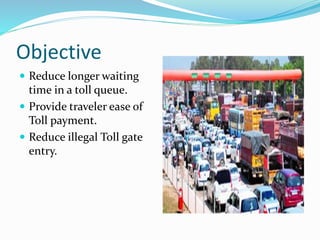
 Reduce longer waiting
time in a toll queue.
 Provide traveler ease of
Toll payment.
 Reduce illegal Toll gate
entry.
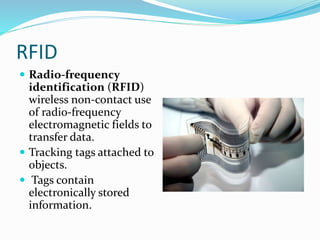
RFID
 Radio-frequency
identification (RFID)
wireless non-contact use
of radio-frequency
electromagnetic fields to
transfer data.
 Tracking tags attached to
objects.
 Tags contain
electronically stored
information.
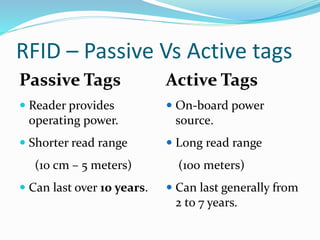
RFID – Passive Vs Active tags
Passive Tags
 Reader provides
operating power.
 Shorter read range
(10 cm – 5 meters)
 Can last over 10 years.
Active Tags
 On-board power
source.
 Long read range
(100 meters)
 Can last generally from
2 to 7 years.
Data Acquisition
 RFID tags are intelligent bar codes that can talk to a
networked system to track every product you attach.
Tags Host ComputerAntenna Reader
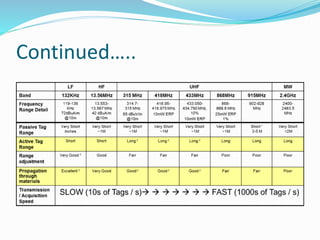
Continued…..
 They consist of a tiny processor, memory, and
antenna.
 RFID tags can be read and written wirelessly.
 Vary in complexity and cost based upon frequency,
memory, sensor integration, size, antenna, and
power.
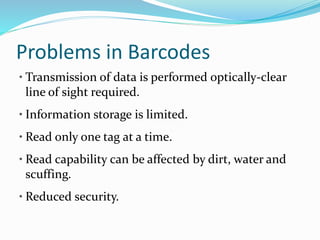
Problems in Barcodes
• Transmission of data is performed optically-clear
line of sight required.
• Information storage is limited.
• Read only one tag at a time.
• Read capability can be affected by dirt, water and
scuffing.
• Reduced security.
Need for RFID
• Communicates through radio waves, line of sight
not required.
• RFID tags store significantly more information.
• RFID is dynamic and information can be added or
deleted at every step in the supply chain.
• Increased functionality: covert and difficult to
counterfeit.
• Read multiple tags at once.
Continued…..
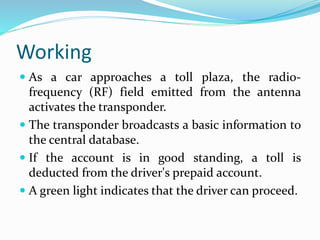
Working
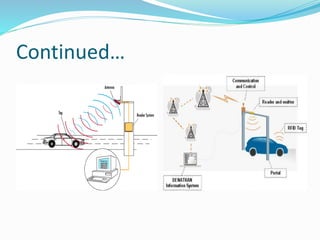
 As a car approaches a toll plaza, the radio-
frequency (RF) field emitted from the antenna
activates the transponder.
 The transponder broadcasts a basic information to
the central database.
 If the account is in good standing, a toll is
deducted from the driver's prepaid account.
 A green light indicates that the driver can proceed.
Continued…
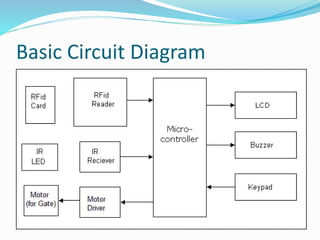
Basic Circuit Diagram
Advantages
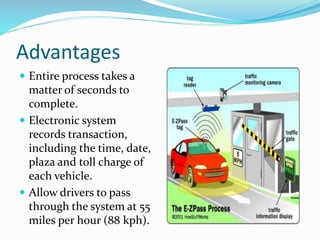
 Entire process takes a
matter of seconds to
complete.
 Electronic system
records transaction,
including the time, date,
plaza and toll charge of
each vehicle.
 Allow drivers to pass
through the system at 55
miles per hour (88 kph).
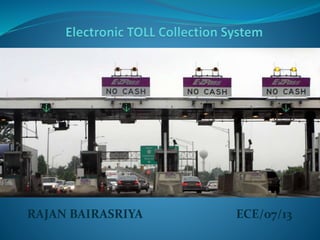
Electronic Toll Collection System

Electronic Toll Collection System

  • 1.
  • 2.
    Abstract  Automatic Tollcollection system uses RFID technology.  RFID based automatic Toll collection system provides paperless passage of Toll gates with fully automated Toll collection.  They help in reducing Toll gate traffic and avoid illegal passage of vehicles through a Toll gate.
  • 3.
    Objective  Reduce longerwaiting time in a toll queue.  Provide traveler ease of Toll payment.  Reduce illegal Toll gate entry.
  • 4.
    RFID  Radio-frequency identification (RFID) wirelessnon-contact use of radio-frequency electromagnetic fields to transfer data.  Tracking tags attached to objects.  Tags contain electronically stored information.
  • 5.
    RFID – PassiveVs Active tags Passive Tags  Reader provides operating power.  Shorter read range (10 cm – 5 meters)  Can last over 10 years. Active Tags  On-board power source.  Long read range (100 meters)  Can last generally from 2 to 7 years.
  • 6.
    Data Acquisition  RFIDtags are intelligent bar codes that can talk to a networked system to track every product you attach. Tags Host ComputerAntenna Reader
  • 7.
    Continued…..  They consistof a tiny processor, memory, and antenna.  RFID tags can be read and written wirelessly.  Vary in complexity and cost based upon frequency, memory, sensor integration, size, antenna, and power.
  • 8.
    Problems in Barcodes •Transmission of data is performed optically-clear line of sight required. • Information storage is limited. • Read only one tag at a time. • Read capability can be affected by dirt, water and scuffing. • Reduced security.
  • 9.
    Need for RFID •Communicates through radio waves, line of sight not required. • RFID tags store significantly more information. • RFID is dynamic and information can be added or deleted at every step in the supply chain. • Increased functionality: covert and difficult to counterfeit. • Read multiple tags at once.
  • 10.
  • 11.
    Working  As acar approaches a toll plaza, the radio- frequency (RF) field emitted from the antenna activates the transponder.  The transponder broadcasts a basic information to the central database.  If the account is in good standing, a toll is deducted from the driver's prepaid account.  A green light indicates that the driver can proceed.
  • 12.
  • 13.
  • 14.
    Advantages  Entire processtakes a matter of seconds to complete.  Electronic system records transaction, including the time, date, plaza and toll charge of each vehicle.  Allow drivers to pass through the system at 55 miles per hour (88 kph).