INSULIN
By:
Nancy Saber
Roba shaat
Mohamed El-Asaly
Under the supervision of:
Prof. dr. Aziza mahrous
Prof. dr. Ahmed abd elmaksoud
• Introduction
• Structure of the insulin
• Insulin gene
• Insulin processing in the body
• Disease
• Treatment
• Recombinant Insulin and process
• Host cells
• Vectors
• Bioreactors
INSULIN
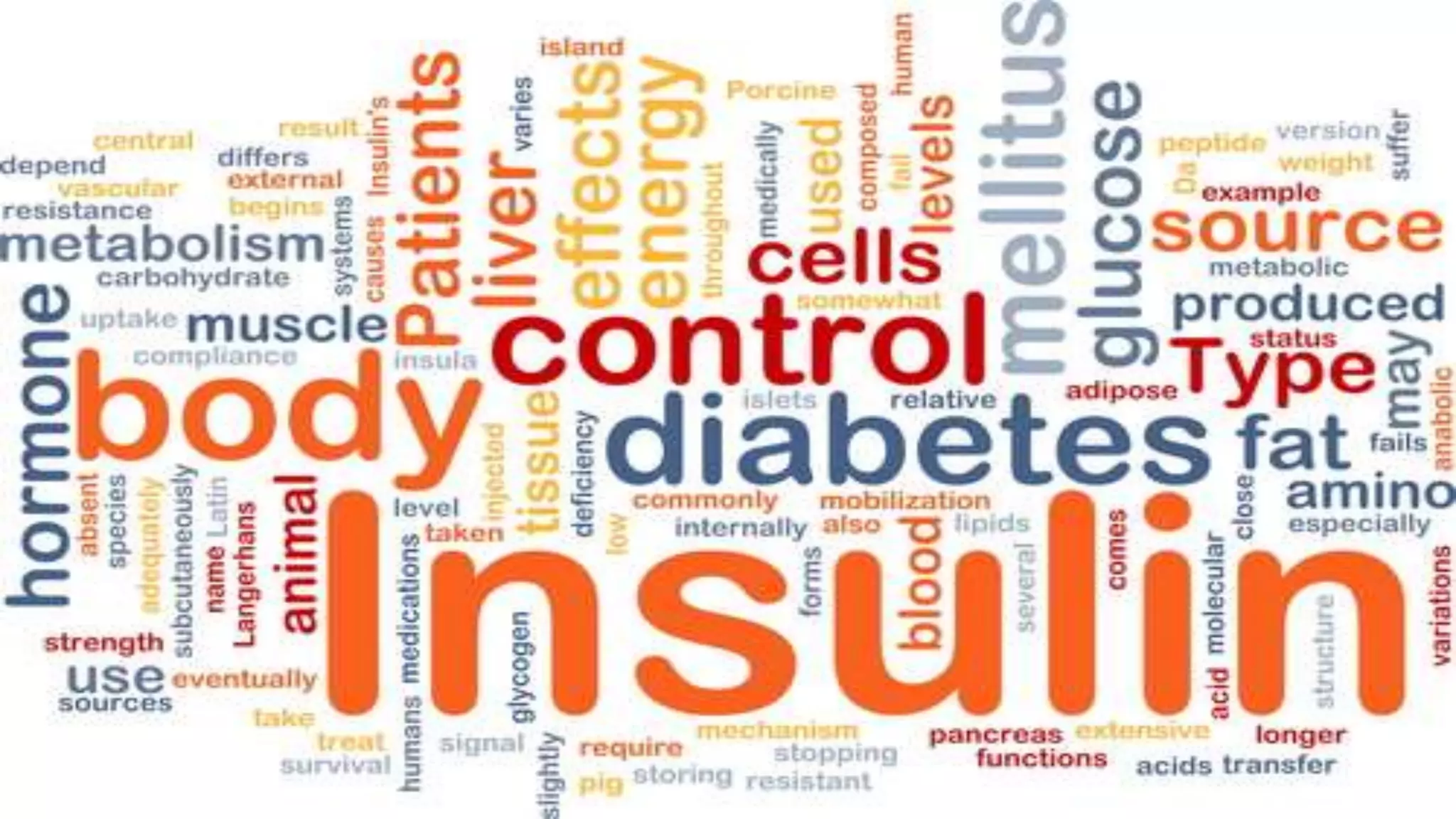
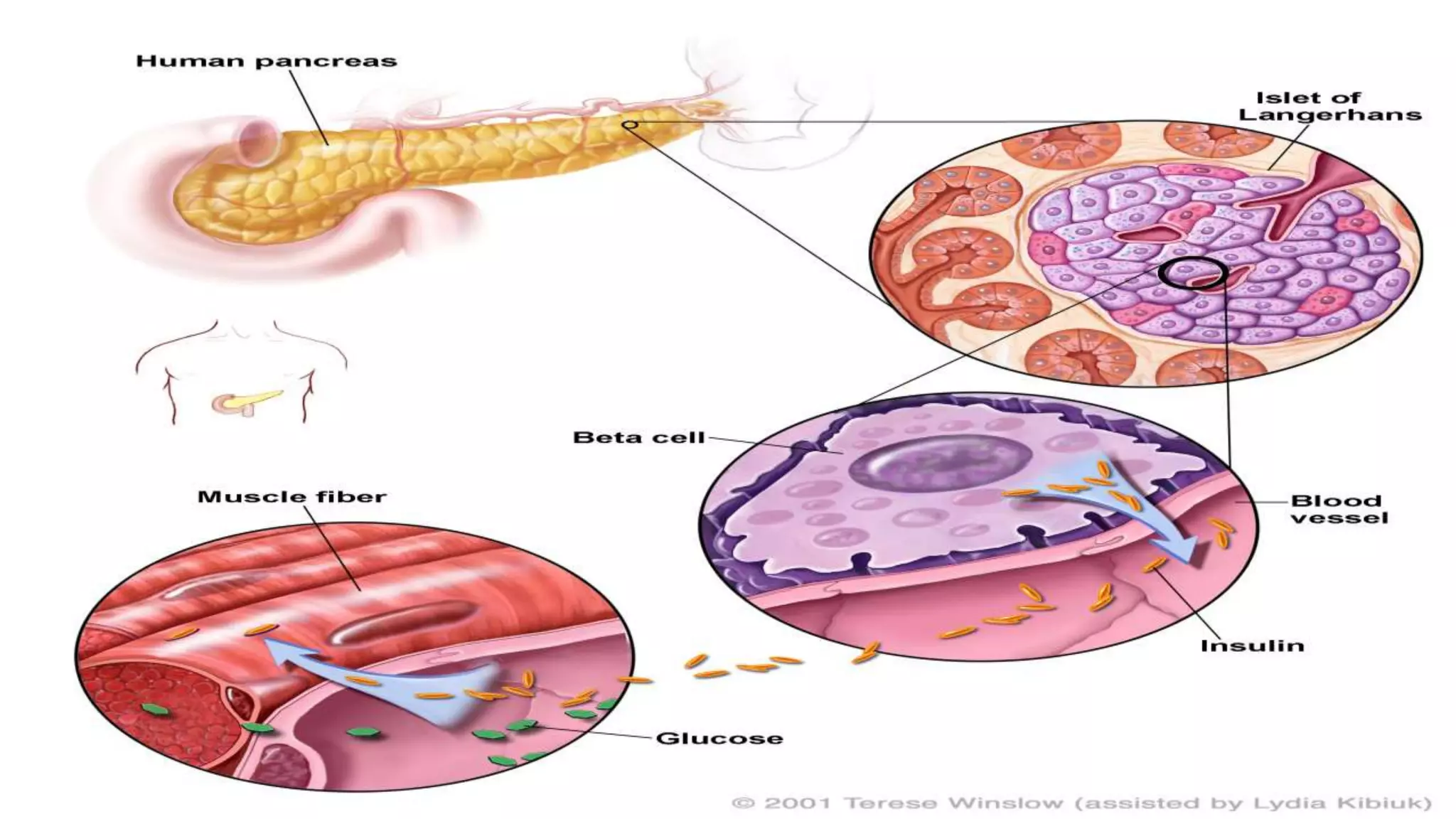
• Is a polypeptide hormone produced
by the β cells of the islets of
Langerhans in the pancreas
• Its main function is enabling the
cells to take up glucose ( providing
it with energy it needs).
• It is required for normal glucose
homeostasis.
INS: INSULIN GENE
Which Chromosome Insulin Gene Is
Found On?
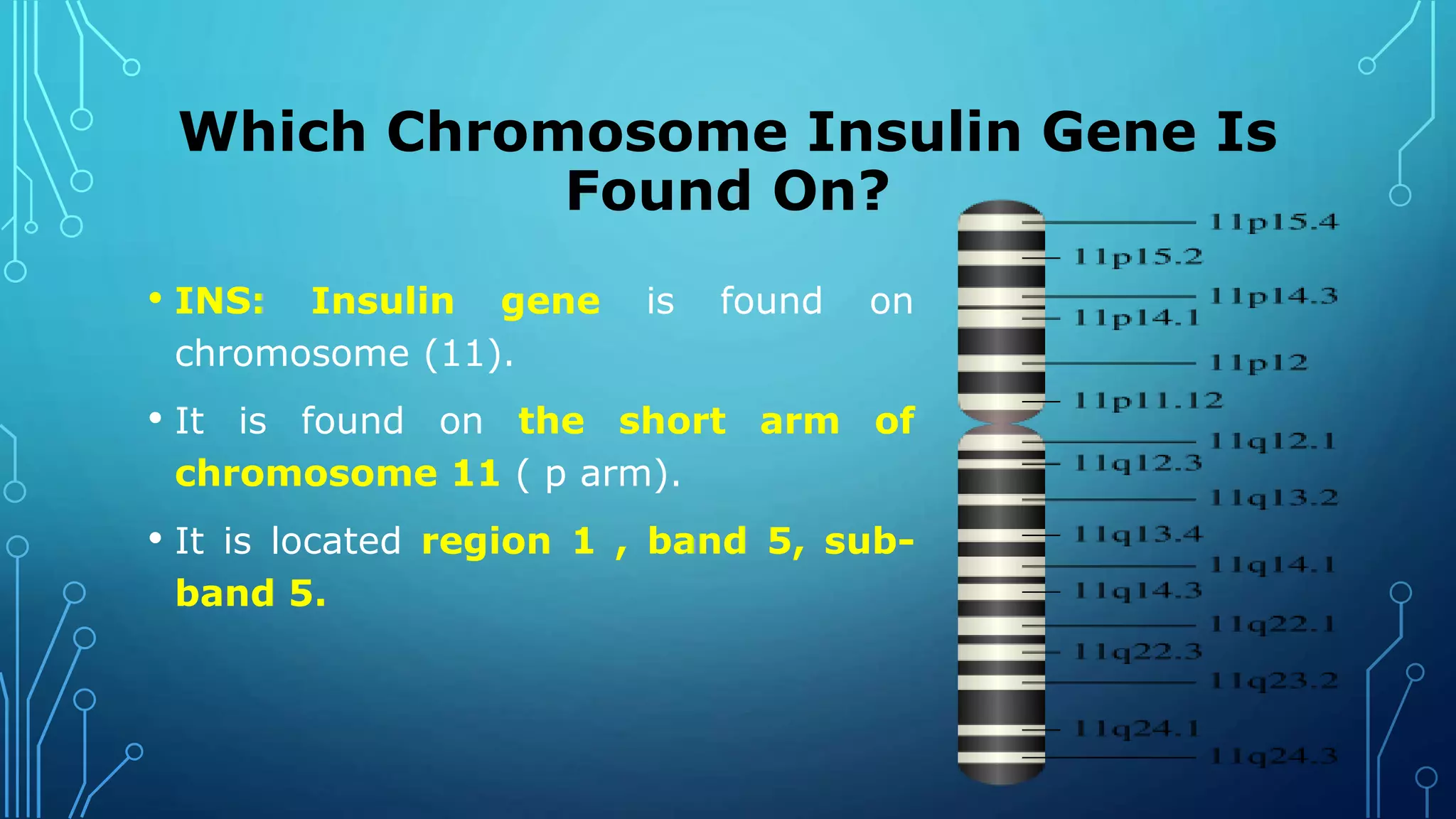
• INS: Insulin gene is found on
chromosome (11).
• It is found on the short arm of
chromosome 11 ( p arm).
• It is located region 1 , band 5, sub-
band 5.
The Structure Of Insulin
• Insulin is composed of two peptide
chains referred to as the α chain and
β chain.
• α and βchains are linked together by
two disulfide bonds, and an
additional disulfide is formed within
the α chain.
• α chain consists of 21 amino acids
and the β chain of 30 amino acids.
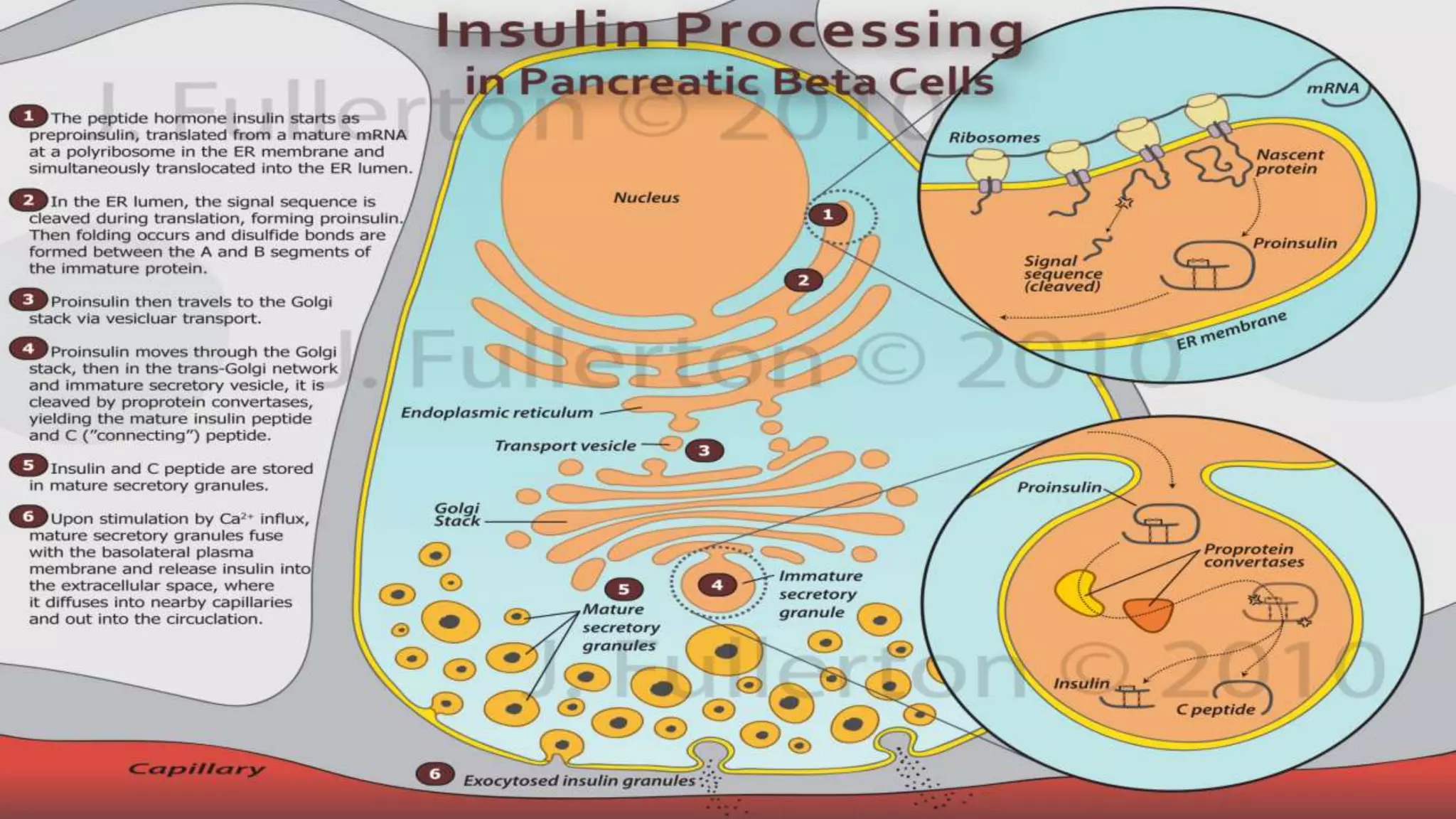
Insulin Processing
Failure To Produce Or Use Insulin
Importance Of Insulin
• Without insulin, the blood glucose builds up in the blood and the cells
are starved of their energy source.
• Some of the symptoms that may occur include fatigue, constant
infections, blurred eye sight, numbness, tingling in the hands or legs,
increased thirst, and slowed healing of bruises or cuts.
• The cells will begin to use fat, the energy source stored for
emergencies.
• When this happens for too long a time the body produces ketones,
chemicals produced by the liver.
• Ketones can poison and kill cells if they build up in the body over an
extended period of time. This can lead to serious illness and coma.
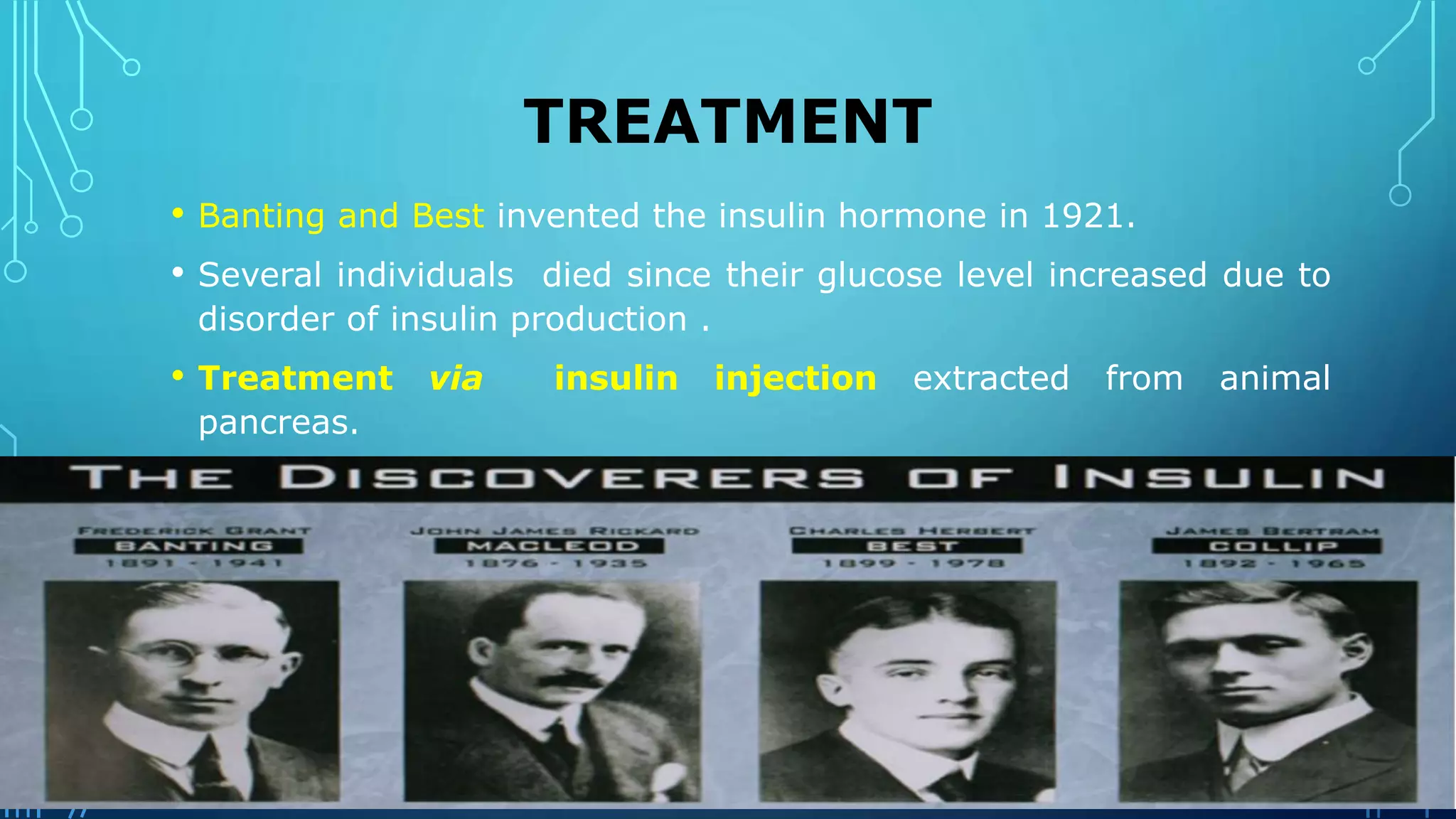
TREATMENT
• Banting and Best invented the insulin hormone in 1921.
• Several individuals died since their glucose level increased due to
disorder of insulin production .
• Treatment via insulin injection extracted from animal
pancreas.
PROBLEM?
Animal Insulin swine and cow.
Synthetic Human Insulin Slight difference in composition
As a consequence
• Human body produces antibodies against the animal insulin;
inflammation at the area of injection.
• Long-term complications occurred
• Decrease in animal insulin production
New technology Introduced
through the
new field of Biotechnology
Recombinant DNA technology
THE BREAKTHROUGH
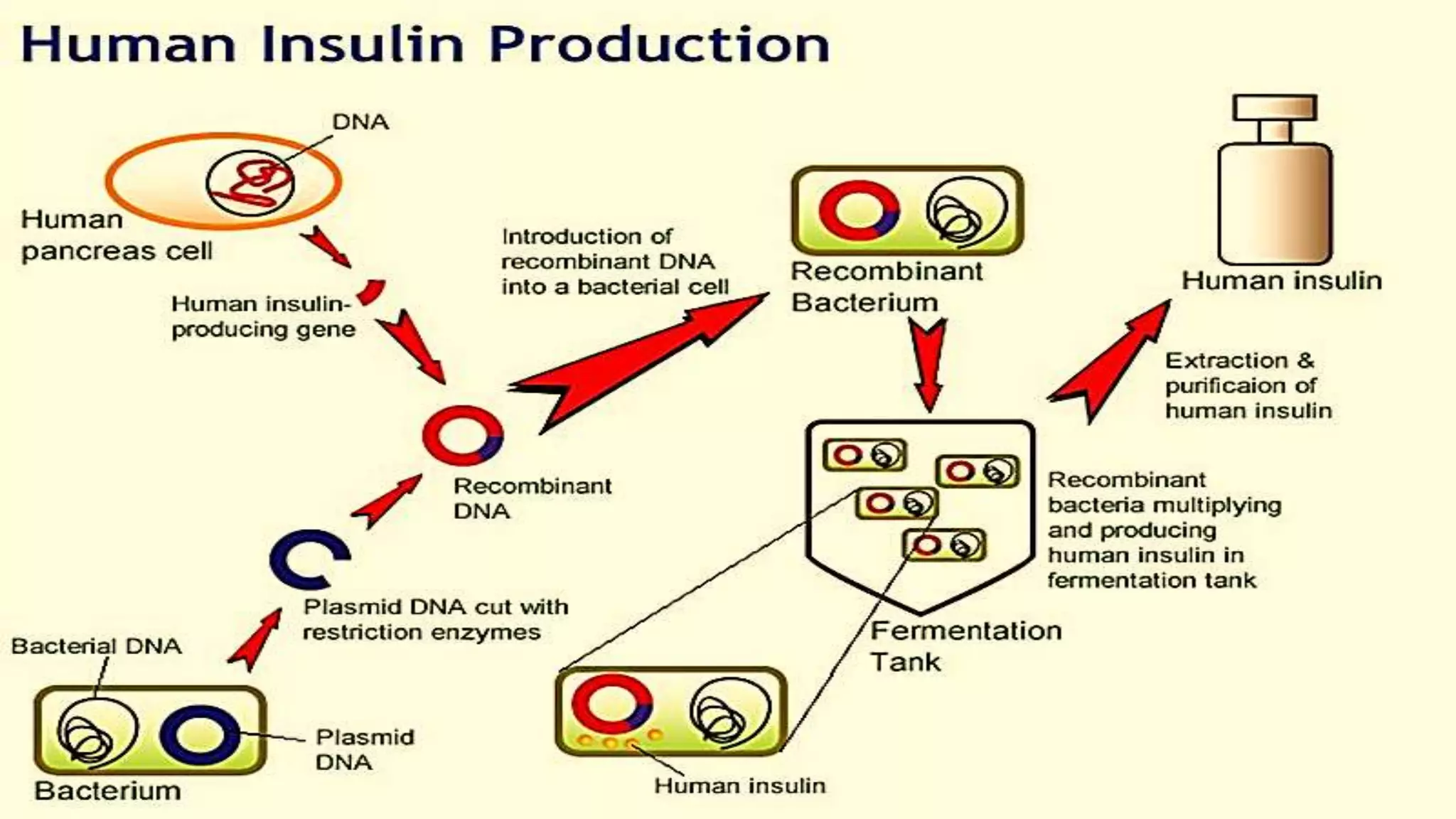
•Recombinant human insulin :a
form of insulin (trade name
Humulin) made from recombinant
DNA which is human insulin.
RECOMBINANT INSULIN
APPROACHES
Eli Lilly
( bacterial host)
Novo nordisk
(Yeast host)
HOST CELL USED FOR INSULIN
PRODUCTION
ADVANTAGES OF USING E.COLI AS A
SYSTEM
• Simple, well-understood genetics
• Ease of genetic manipulation
• Minimal culturing cost
• Fast expression (doubling time is only 20 - 30 mins).
• Well established labeling protocols for stability studies.
• Established regulatory track record.
• Fermentation: ease of scaling up.
• Ease of Inclusion bodies purification.
DISADVANTAGES OF USING E.COLI
AS A SYSTEM
• Loss of plasmid and antibiotic property
• Unsolicited inducers for gene expression
• Intracellular accumulation of heterologous proteins as inclusion bodies
• Improper protein refolding
• Lack of post- translational modifications (including unable to form disulphide bonds)
• Protein-mediated metabolic burden and stress
• Endotoxin contamination
• Poor secretion
• Proteolytic digestion complexity in downstream processing
EXPRESSION VECTOR
• A circle of double-
stranded DNA that is
separate from the
chromosomes, which is
found in bacteria.
ADVANTAGES OF USING
BACTERIAL PLASMID
•Small, easy to handle
•Straightforward selection strategies
•Useful for cloning small DNA fragments
•(< 10kbp)
DISADVANTAGES OF USING
BACTERIAL PLASMID
•Can’t uptake large DNA molecules.
Finding another
cloning
system !
HOST CELL USED FOR INSULIN
PRODUCTION
•Saccharomyces
cerevisiae is an
eukaryotic microbe
system that is widely
used for protein
expression that require
post-translational
modification.
ADVANTAGES OF USING
SACCHAROMYCES CEREVISIAE
• Nonpathogenic
• Rapid growth (generation time ca. 80 min)
• Dispersed cells
• Ease of replica plating and mutant isolation
• Can be grown on defined media giving the investigator complete
control over environmental parameters
• Well-defined genetic system
• Highly versatile DNA transformation system
DISADVANTAGES OF USING
SACCHAROMYCES CEREVISIAE
•S. cerevisiae is not as productive as the
E. coli.
EXPRESSION VECTOR USED IN
SACCHAROMYCES CEREVISIAE
• Yeast artificial chromosome (YAC) is a
human-engineered DNA molecule used to
clone DNA sequences in bacterial and
yeast cells.
• It is a plasmid vector used to clone DNA
fragments larger than 100 kb and up to
3000 kb.
• Circular form when they are amplified or
manipulated in E. coli
• Rendered linear and of very large size when
introduced as cloning vectors in yeast
YAC CONSTITUENTS
It consists of several important regions
• TEL: the telomere which is located at each chromosome end, protects the
linear DNA from degradation by the nucleases.
• CEN: the centromere which is the attachment site for the mitotic spindle
fibers , “pulls” one copy of each duplicated chromosome into each new
daughter cell.
• ORI: the replication origin sequences which are specific DNA sequences that
allow DNA replication machinery to assemble on the DNA .
• - It is also know as ARS: autonomously replicating sequence vectors in yeast
YAC CONSTITUENTS
It also consists of specific sequences:
• Yeast selectable marker A and B: Selectable markers allow
easy isolation of yeast cells that have taken up the artificial
chromosome.
• Bacterial selectable marker: Such as ampicillin resistance ; for
screening and selection purposes.
• Recognition site: For restriction enzyme ligation such as EcoR1 ,
BamHi
ADVANTAGES OF YAC
• Extremely large DNA molecules (up to more than 1 Mb) can be
introduced and propagated in the form of yeast artificial chromosomes
(YACs) in S. cerevisiae.
• It can be used to express eukaryotic proteins that require
posttranslational modification.
• Screening and selection properties.
• YACs can be utilized to clone and assemble the entire genomes of an
organism.
• Physical mapping.
DISADVANTAGES OF YAC
• Low transformation efficiencies.
• YACs are very difficult to manipulate.
• Approximately 40 % of the YACs from most libraries
are deleted.
• Approximately 40-60% of the YACs from most
libraries are chimeric.
Scaling up
PHASES INVOLVED IN INSULIN
PRODUCTION
Upstream
Process
Downstream
Process
UPSTREAM PROCESS PHASE
Shaking bioreactor
Advantages:
Easy ,Visible ,Cheap, Depyrogenation feasible
Disadvantage:
Poor aeration
Impeller jams
Requires cleaning siliconizing & sterilization
lHigh space requirements in incubator
UPSTREAM PROCESS PHASE
Stir tank bioreactor
• Continuous bioreactor
processes continually feed
nutrients and medium into the
bioreactor while also
continually harvesting material
from the bioreactor.
UPSTREAM PROCESS PHASE
Stir tank bioreactor
• Agitator is introduced to disperse the
reactants thoroughly into the reaction
mixture immediately as they enter the
reactor.
• Product is continuously drawn out and
that’s why known for perfect mixing.
• Compositions at outlet and inside reactor
are the same.
ADVANTAGES OF STIR TANK BIOREACTOR
• Multi-gas and pH control
• Increased Capacity( 5 L to 500 L)
• Versatility
DISADVANTAGES OF STIR TANK
BIOREACTOR
• Costly
• High power due the presence of mechanical pumps
• Limitation of Weight Preparation
• Requires siliconizing
• Requires constant cleaning,
• Sterilization, depyrogenation
• Requires high Maintenance -Chiller, parts
BIOREACTOR CONDITIONS
•10L total working volume
•31 hour growth phase
•pH 7
•37 °C
DOWNSTREAM PROCESS
• Removal of insolubles is the first step and involves the capture
of the product as a solute in a particulate-free liquid. Typical
operations to achieve this are filtration, centrifugation.
• Product isolation is the removal of those components whose
properties vary considerably from that of the desired product.
Solvent extraction, adsorption, ultrafiltration, and precipitation are
some of the unit operations involved.
DOWNSTREAM PROCESS
• Product purification is done to separate those contaminants that
resemble the product very closely in physical and chemical
properties. operations include affinity, size exclusion, reversed
phase chromatography, ion-exchange chromatography,
crystallization and fractional precipitation.
• Product polishing describes the final processing steps which end
with packaging of the product in a form that is stable, easily
transportable and convenient.
Insulin production and synthesis

Insulin production and synthesis

  • 1.
    INSULIN By: Nancy Saber Roba shaat MohamedEl-Asaly Under the supervision of: Prof. dr. Aziza mahrous Prof. dr. Ahmed abd elmaksoud
  • 3.
    • Introduction • Structureof the insulin • Insulin gene • Insulin processing in the body • Disease • Treatment • Recombinant Insulin and process • Host cells • Vectors • Bioreactors
  • 4.
    INSULIN • Is apolypeptide hormone produced by the β cells of the islets of Langerhans in the pancreas • Its main function is enabling the cells to take up glucose ( providing it with energy it needs). • It is required for normal glucose homeostasis.
  • 6.
  • 7.
    Which Chromosome InsulinGene Is Found On? • INS: Insulin gene is found on chromosome (11). • It is found on the short arm of chromosome 11 ( p arm). • It is located region 1 , band 5, sub- band 5.
  • 8.
    The Structure OfInsulin • Insulin is composed of two peptide chains referred to as the α chain and β chain. • α and βchains are linked together by two disulfide bonds, and an additional disulfide is formed within the α chain. • α chain consists of 21 amino acids and the β chain of 30 amino acids.
  • 10.
  • 11.
    Failure To ProduceOr Use Insulin
  • 12.
    Importance Of Insulin •Without insulin, the blood glucose builds up in the blood and the cells are starved of their energy source. • Some of the symptoms that may occur include fatigue, constant infections, blurred eye sight, numbness, tingling in the hands or legs, increased thirst, and slowed healing of bruises or cuts. • The cells will begin to use fat, the energy source stored for emergencies. • When this happens for too long a time the body produces ketones, chemicals produced by the liver. • Ketones can poison and kill cells if they build up in the body over an extended period of time. This can lead to serious illness and coma.
  • 15.
    TREATMENT • Banting andBest invented the insulin hormone in 1921. • Several individuals died since their glucose level increased due to disorder of insulin production . • Treatment via insulin injection extracted from animal pancreas.
  • 16.
    PROBLEM? Animal Insulin swineand cow. Synthetic Human Insulin Slight difference in composition As a consequence • Human body produces antibodies against the animal insulin; inflammation at the area of injection. • Long-term complications occurred • Decrease in animal insulin production
  • 17.
    New technology Introduced throughthe new field of Biotechnology Recombinant DNA technology
  • 18.
    THE BREAKTHROUGH •Recombinant humaninsulin :a form of insulin (trade name Humulin) made from recombinant DNA which is human insulin.
  • 20.
    RECOMBINANT INSULIN APPROACHES Eli Lilly (bacterial host) Novo nordisk (Yeast host)
  • 21.
    HOST CELL USEDFOR INSULIN PRODUCTION
  • 22.
    ADVANTAGES OF USINGE.COLI AS A SYSTEM • Simple, well-understood genetics • Ease of genetic manipulation • Minimal culturing cost • Fast expression (doubling time is only 20 - 30 mins). • Well established labeling protocols for stability studies. • Established regulatory track record. • Fermentation: ease of scaling up. • Ease of Inclusion bodies purification.
  • 23.
    DISADVANTAGES OF USINGE.COLI AS A SYSTEM • Loss of plasmid and antibiotic property • Unsolicited inducers for gene expression • Intracellular accumulation of heterologous proteins as inclusion bodies • Improper protein refolding • Lack of post- translational modifications (including unable to form disulphide bonds) • Protein-mediated metabolic burden and stress • Endotoxin contamination • Poor secretion • Proteolytic digestion complexity in downstream processing
  • 24.
    EXPRESSION VECTOR • Acircle of double- stranded DNA that is separate from the chromosomes, which is found in bacteria.
  • 25.
    ADVANTAGES OF USING BACTERIALPLASMID •Small, easy to handle •Straightforward selection strategies •Useful for cloning small DNA fragments •(< 10kbp)
  • 26.
    DISADVANTAGES OF USING BACTERIALPLASMID •Can’t uptake large DNA molecules.
  • 27.
  • 28.
    HOST CELL USEDFOR INSULIN PRODUCTION •Saccharomyces cerevisiae is an eukaryotic microbe system that is widely used for protein expression that require post-translational modification.
  • 29.
    ADVANTAGES OF USING SACCHAROMYCESCEREVISIAE • Nonpathogenic • Rapid growth (generation time ca. 80 min) • Dispersed cells • Ease of replica plating and mutant isolation • Can be grown on defined media giving the investigator complete control over environmental parameters • Well-defined genetic system • Highly versatile DNA transformation system
  • 30.
    DISADVANTAGES OF USING SACCHAROMYCESCEREVISIAE •S. cerevisiae is not as productive as the E. coli.
  • 31.
    EXPRESSION VECTOR USEDIN SACCHAROMYCES CEREVISIAE • Yeast artificial chromosome (YAC) is a human-engineered DNA molecule used to clone DNA sequences in bacterial and yeast cells. • It is a plasmid vector used to clone DNA fragments larger than 100 kb and up to 3000 kb. • Circular form when they are amplified or manipulated in E. coli • Rendered linear and of very large size when introduced as cloning vectors in yeast
  • 32.
    YAC CONSTITUENTS It consistsof several important regions • TEL: the telomere which is located at each chromosome end, protects the linear DNA from degradation by the nucleases. • CEN: the centromere which is the attachment site for the mitotic spindle fibers , “pulls” one copy of each duplicated chromosome into each new daughter cell. • ORI: the replication origin sequences which are specific DNA sequences that allow DNA replication machinery to assemble on the DNA . • - It is also know as ARS: autonomously replicating sequence vectors in yeast
  • 33.
    YAC CONSTITUENTS It alsoconsists of specific sequences: • Yeast selectable marker A and B: Selectable markers allow easy isolation of yeast cells that have taken up the artificial chromosome. • Bacterial selectable marker: Such as ampicillin resistance ; for screening and selection purposes. • Recognition site: For restriction enzyme ligation such as EcoR1 , BamHi
  • 34.
    ADVANTAGES OF YAC •Extremely large DNA molecules (up to more than 1 Mb) can be introduced and propagated in the form of yeast artificial chromosomes (YACs) in S. cerevisiae. • It can be used to express eukaryotic proteins that require posttranslational modification. • Screening and selection properties. • YACs can be utilized to clone and assemble the entire genomes of an organism. • Physical mapping.
  • 35.
    DISADVANTAGES OF YAC •Low transformation efficiencies. • YACs are very difficult to manipulate. • Approximately 40 % of the YACs from most libraries are deleted. • Approximately 40-60% of the YACs from most libraries are chimeric.
  • 36.
  • 37.
    PHASES INVOLVED ININSULIN PRODUCTION Upstream Process Downstream Process
  • 38.
    UPSTREAM PROCESS PHASE Shakingbioreactor Advantages: Easy ,Visible ,Cheap, Depyrogenation feasible Disadvantage: Poor aeration Impeller jams Requires cleaning siliconizing & sterilization lHigh space requirements in incubator
  • 39.
    UPSTREAM PROCESS PHASE Stirtank bioreactor • Continuous bioreactor processes continually feed nutrients and medium into the bioreactor while also continually harvesting material from the bioreactor.
  • 40.
    UPSTREAM PROCESS PHASE Stirtank bioreactor • Agitator is introduced to disperse the reactants thoroughly into the reaction mixture immediately as they enter the reactor. • Product is continuously drawn out and that’s why known for perfect mixing. • Compositions at outlet and inside reactor are the same.
  • 41.
    ADVANTAGES OF STIRTANK BIOREACTOR • Multi-gas and pH control • Increased Capacity( 5 L to 500 L) • Versatility
  • 42.
    DISADVANTAGES OF STIRTANK BIOREACTOR • Costly • High power due the presence of mechanical pumps • Limitation of Weight Preparation • Requires siliconizing • Requires constant cleaning, • Sterilization, depyrogenation • Requires high Maintenance -Chiller, parts
  • 43.
    BIOREACTOR CONDITIONS •10L totalworking volume •31 hour growth phase •pH 7 •37 °C
  • 44.
    DOWNSTREAM PROCESS • Removalof insolubles is the first step and involves the capture of the product as a solute in a particulate-free liquid. Typical operations to achieve this are filtration, centrifugation. • Product isolation is the removal of those components whose properties vary considerably from that of the desired product. Solvent extraction, adsorption, ultrafiltration, and precipitation are some of the unit operations involved.
  • 45.
    DOWNSTREAM PROCESS • Productpurification is done to separate those contaminants that resemble the product very closely in physical and chemical properties. operations include affinity, size exclusion, reversed phase chromatography, ion-exchange chromatography, crystallization and fractional precipitation. • Product polishing describes the final processing steps which end with packaging of the product in a form that is stable, easily transportable and convenient.