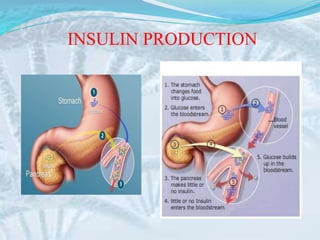
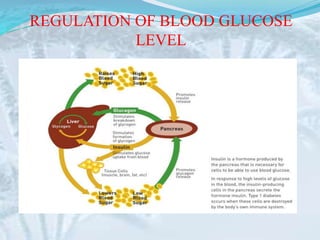
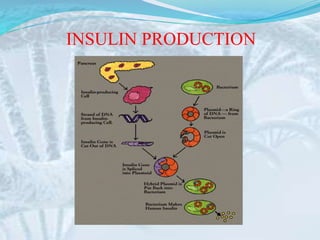
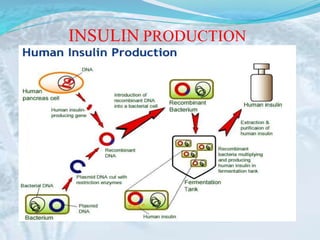
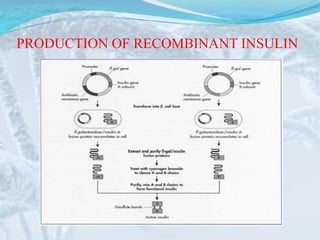
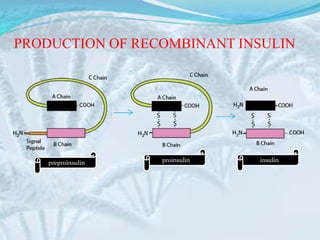
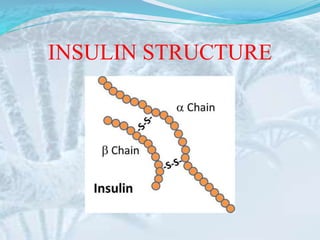
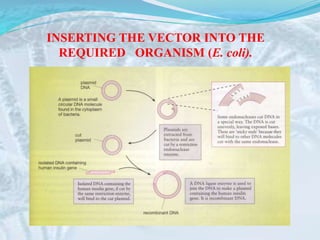
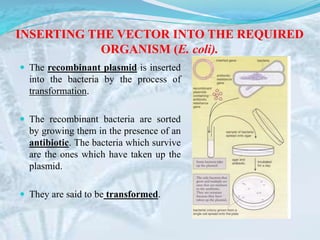
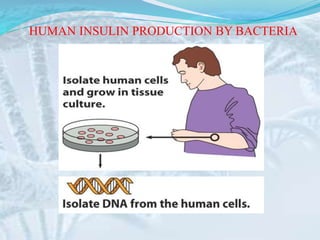
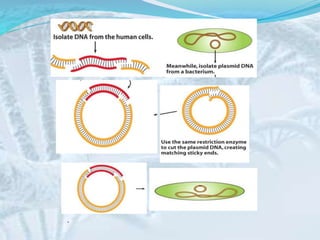
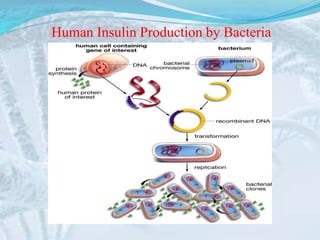
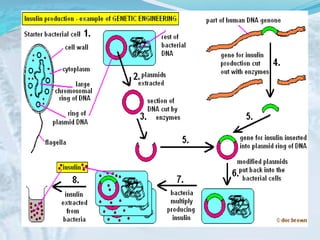
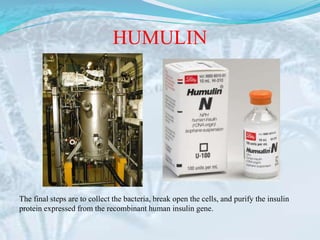
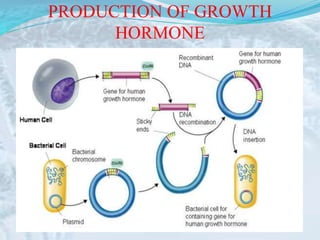
The document discusses the production of recombinant human insulin from bacteria. It describes how insulin is normally produced in the pancreas and its functions. It then explains that E. coli cannot properly produce insulin due to its inability to cleave proinsulin's C-peptide chain. The process used involves fusing the human insulin A and B chain genes separately to bacterial genes, expressing each chain in E. coli, then combining and refolding the purified chains to form active insulin. This recombinant technique allows for large-scale commercial production of human insulin for diabetes treatment.