What Is Teaching?
 Instructional Methods
Prepared By:
Catherine A. Matias
BSED-III Social Science
 Instructional Technique
DIFERENT CHILDREN HAVE DIFFERENT NEEDS
AND ADDRESSING THOSE DIFFERENT NEEDS
IS THE BEST WAY TO DEAL WITH THEM
EQUITABLY.
Gloria Ladson
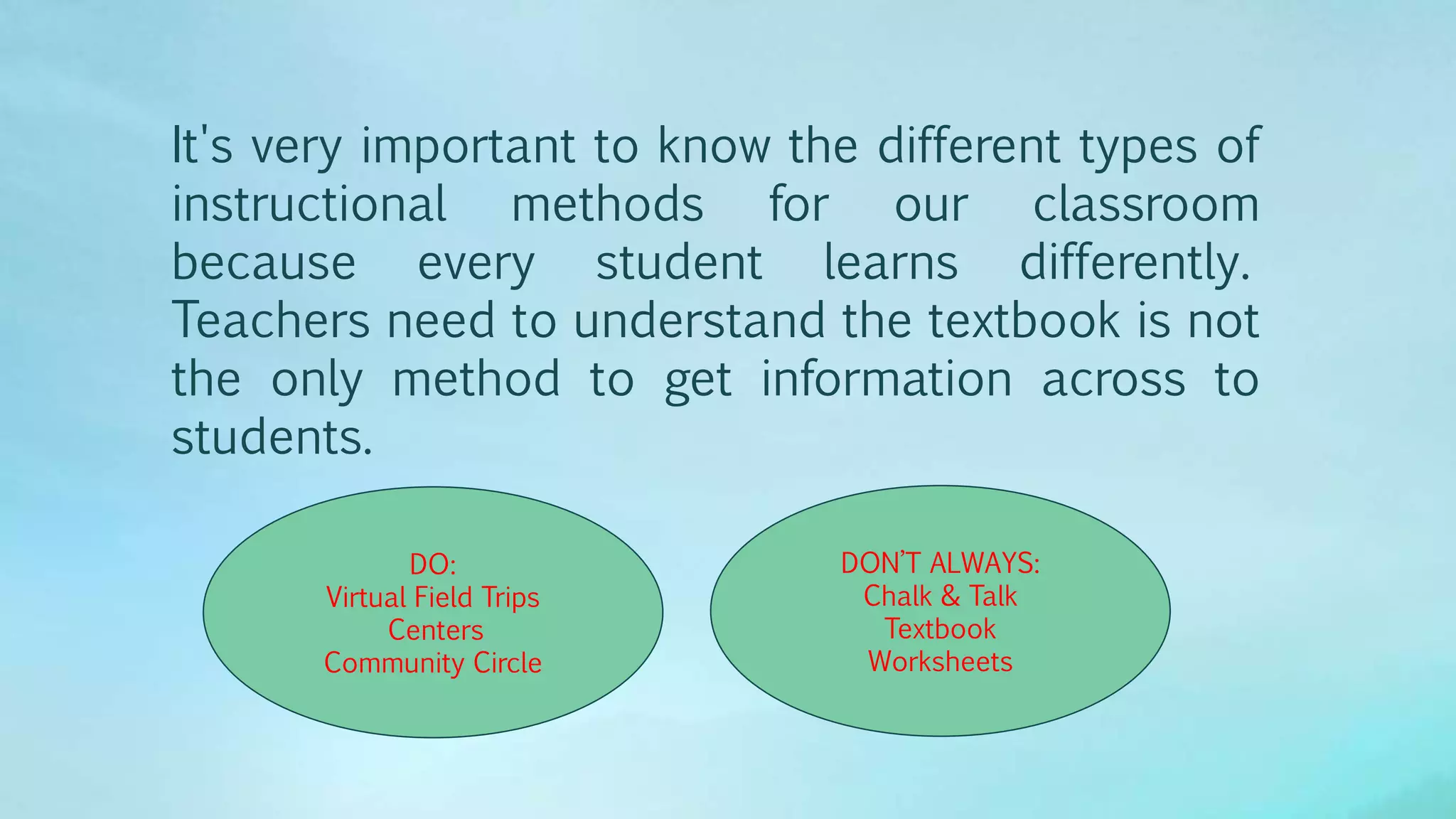
It's very important to know the different types of
instructional methods for our classroom
because every student learns differently.
Teachers need to understand the textbook is not
the only method to get information across to
students.
DO:
Virtual Field Trips
Centers
Community Circle
DON’T ALWAYS:
Chalk & Talk
Textbook
Worksheets
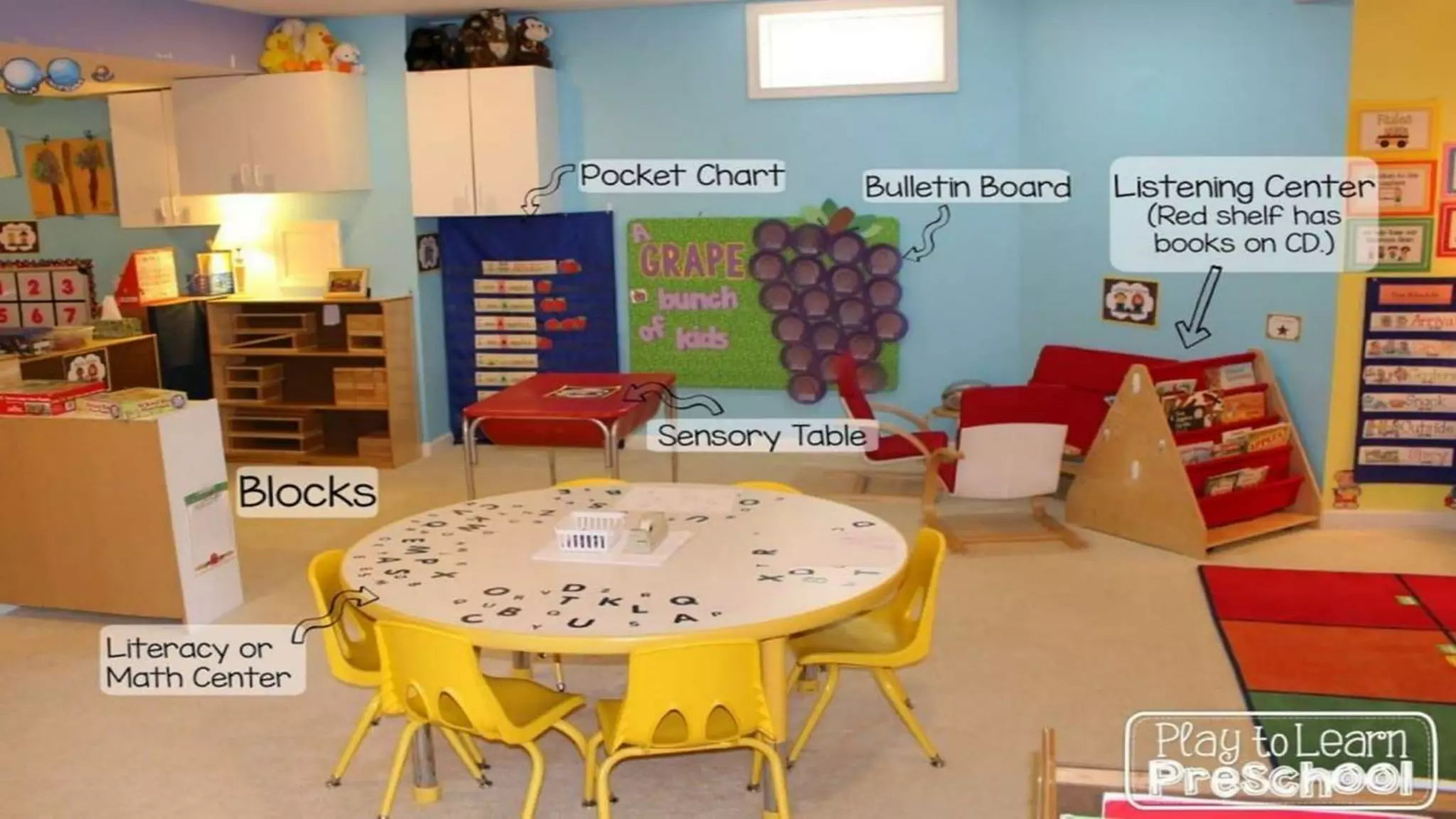
Centers are a great way to have students
work independently or in groups. Centers
help the teacher by giving them idea about
where the child might be needing help.
Centers
When learning about digraphs, I will have a
station during centers that will require students
to extend their knowledge on digraphs. Students
will work individually on this activity. After
learning about digraphs, students will go to their
assigned station and practice on digraphs.
CENTERS CONTINUED...
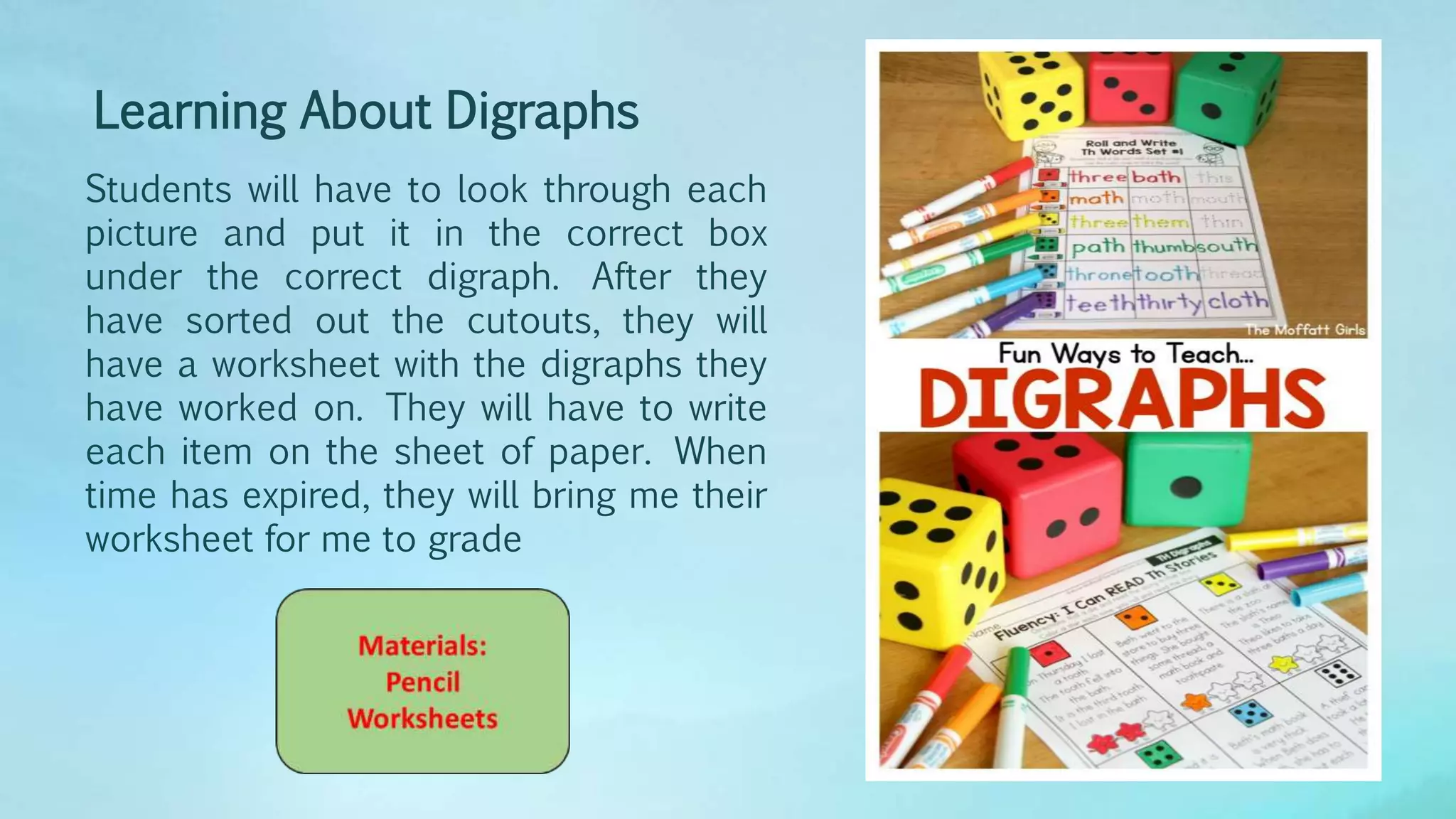
Learning About Digraphs
Students will have to look through each
picture and put it in the correct box
under the correct digraph. After they
have sorted out the cutouts, they will
have a worksheet with the digraphs they
have worked on. They will have to write
each item on the sheet of paper. When
time has expired, they will bring me their
worksheet for me to grade
COMMUNITY CIRCLES
 Community circles are a little intimidating because students
are required to talk in front of other students.
It's important teachers encourage students to speak because
what they might be thinking another student might be thinking
about too.
Students get to speak their mind about a topic the teacher
gives them. In other words, they are giving their opinion about a
subject.
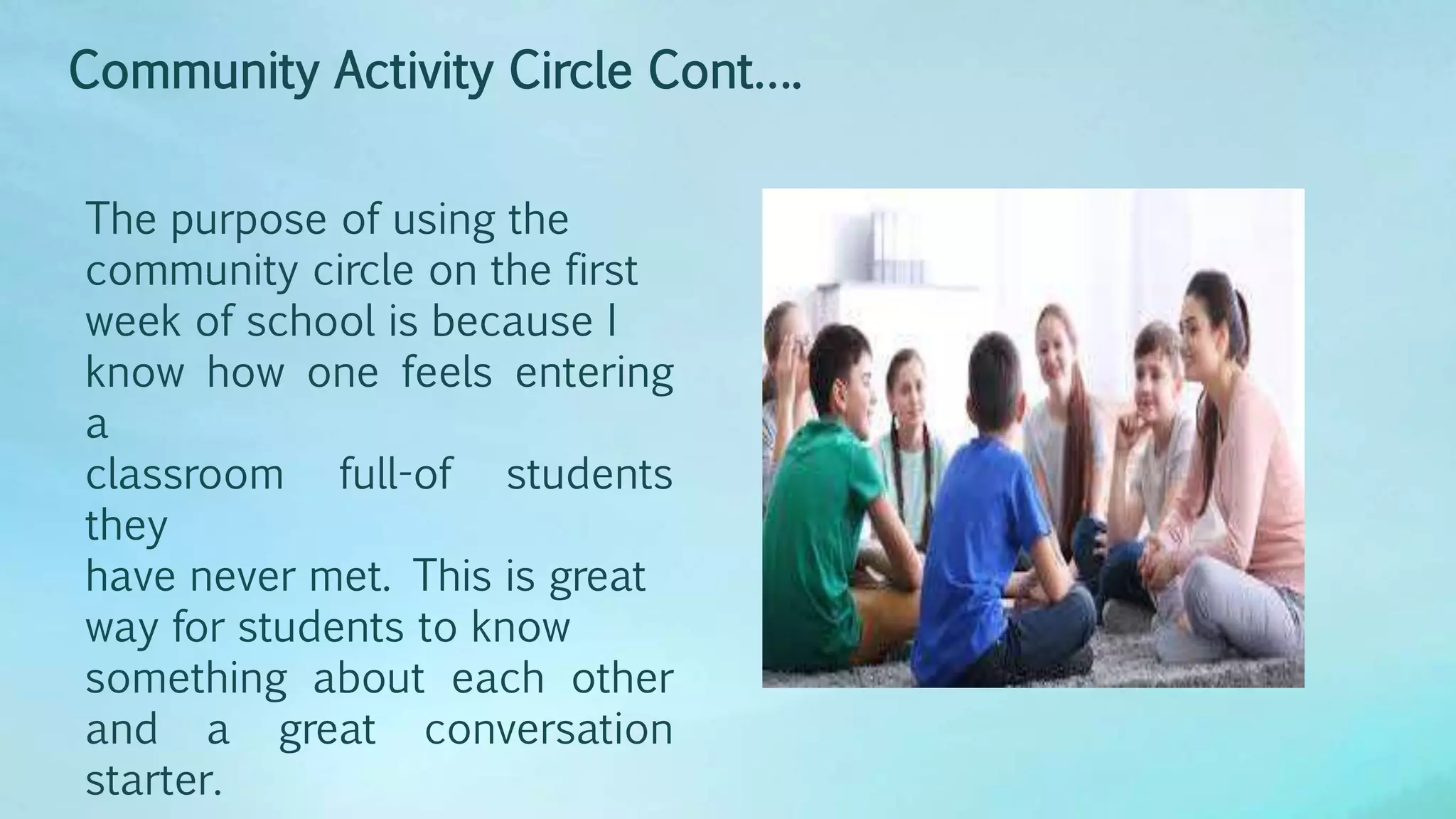
Community Activity Circle Cont….
The purpose of using the
community circle on the first
week of school is because I
know how one feels entering
a
classroom full-of students
they
have never met. This is great
way for students to know
something about each other
and a great conversation
starter.
 Debates require Students to do a little research
about a topic they will be giving their opinion about.
 Debates engage all students and every students has
an opportunity to speak.
 Debates improve students social skills and critical
thinking skills.
Debates
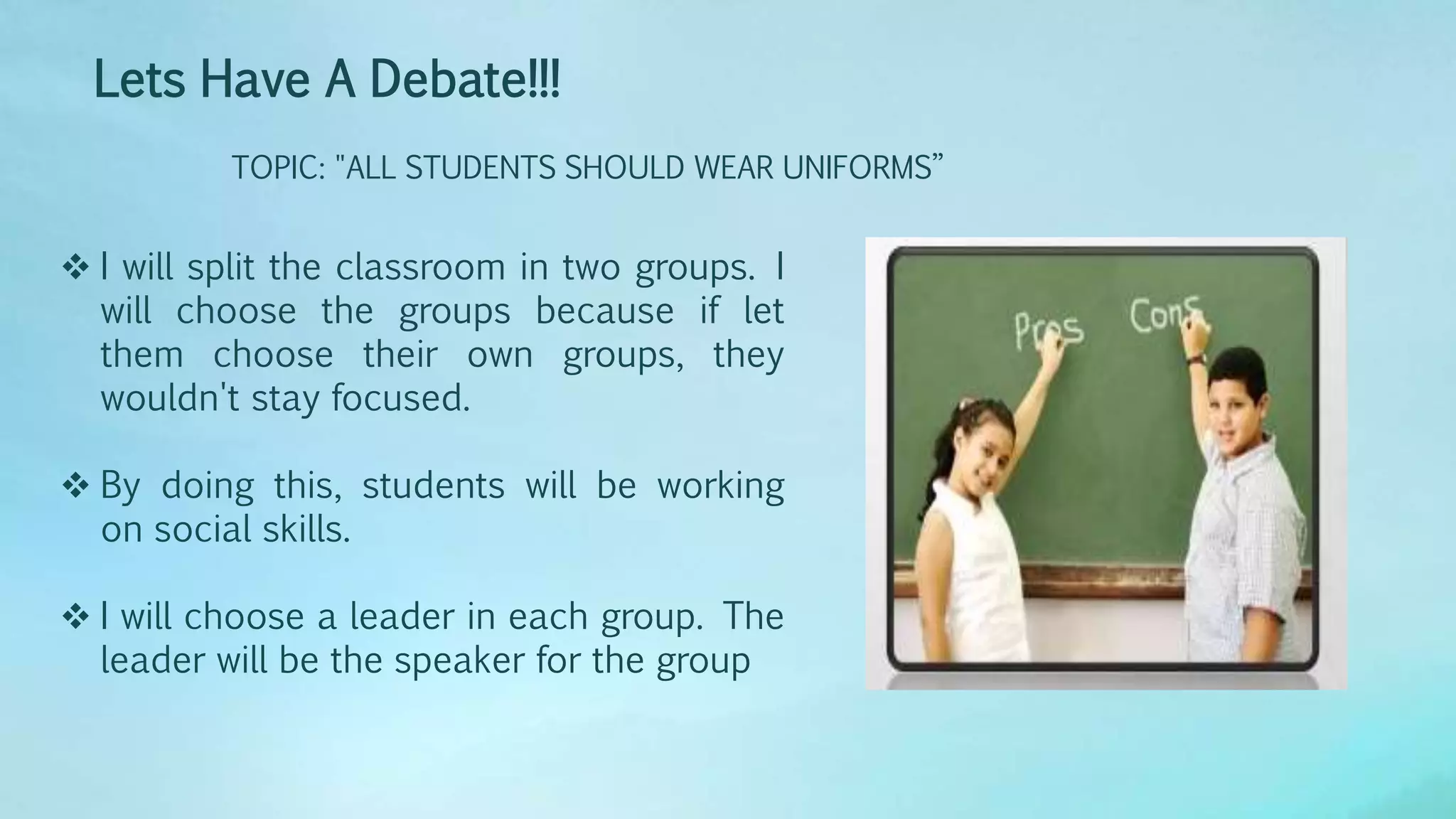
Lets Have A Debate!!!
TOPIC: "ALL STUDENTS SHOULD WEAR UNIFORMS”
 I will split the classroom in two groups. I
will choose the groups because if let
them choose their own groups, they
wouldn't stay focused.
 By doing this, students will be working
on social skills.
 I will choose a leader in each group. The
leader will be the speaker for the group
Teacher's role
Throughout the whole debate. I will only say something
when I feel students are getting off task and if the
debate is getting out of hand.
I will make it clear to students that we are all here to
have fun and respect everyone and their opinions.
I will also be keeping an eye on who is participating in
discussion and who is not.
Dramatic Activities
Not only do the students learn about hoe people lived
in the past, but they get to have fun during the process.
In dramatic activities, students are challenged to take
the perspective of the people they are studying ( Parker
2012)
Hands-out and everyone is learning during the process
in one way or another.
If the student doesn’t get the lesson through reading,
like most of us do, they will learn through dramatic
activity.
“STUDENTS LEARN SO MUCH MORE WHEN THEY
BECOME THE CHARACTERISTICS INSTEAD OF READING
FROM THE BOOK. WE NEED TO GIVE ALL STUDENTS AN
OPPORTUNITY TO LEARN”
Cornet 2015
Instructional Technique/Instructional Strategies
Instructional Strategies
Instructional strategies are techniques that teachers use
to help students become independent, strategic learners.
These strategies become learning strategies when
students independently select the appropriate ones and
use them effectively to accomplish tasks or meet goals.
Instructional strategies can:
• motivate students and help them focus attention
• organize information for understanding and remembering
• monitor and assess learning.
Examples of Instructional Strategies/Techniques
1. Create Learning Stations
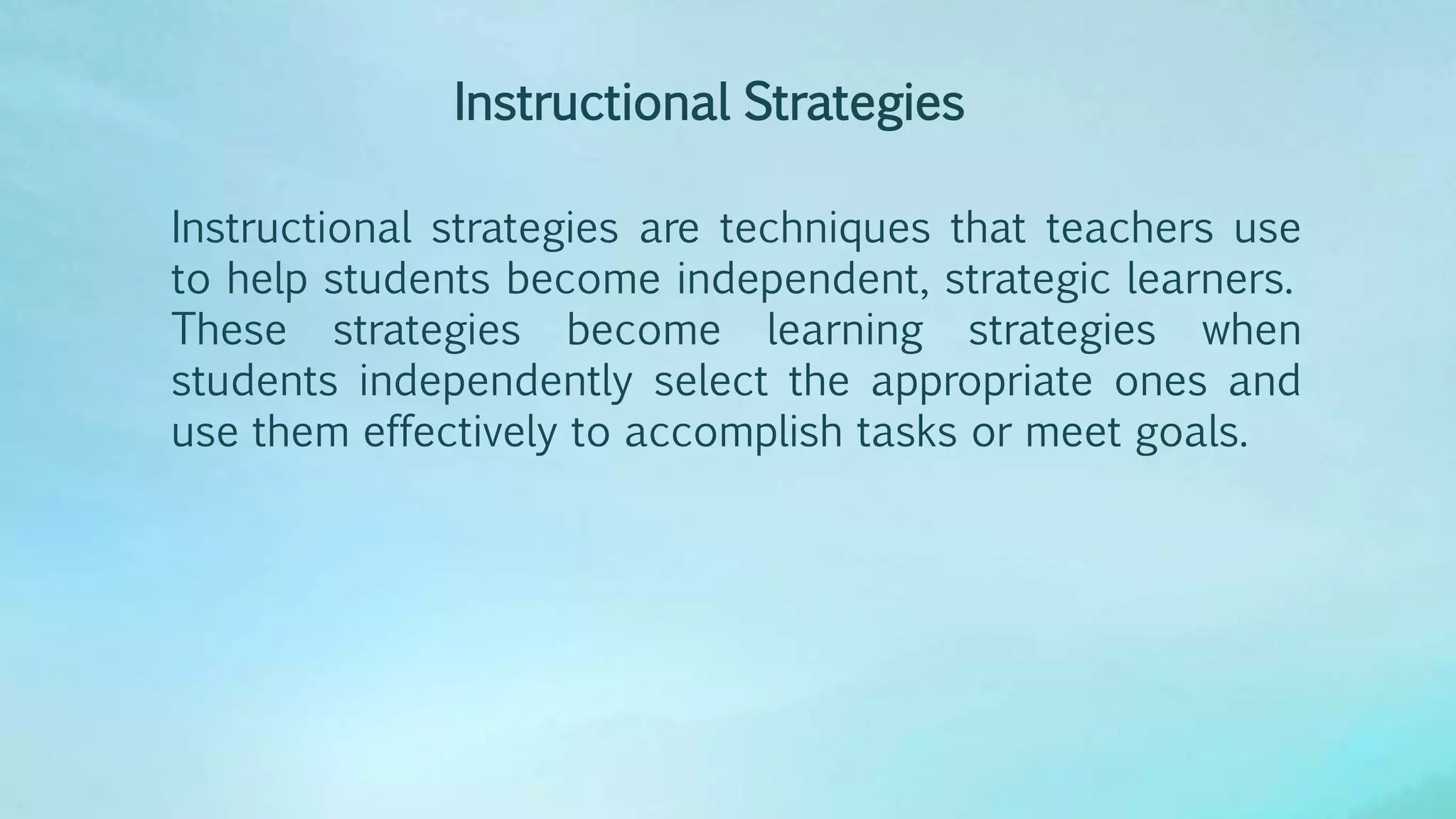
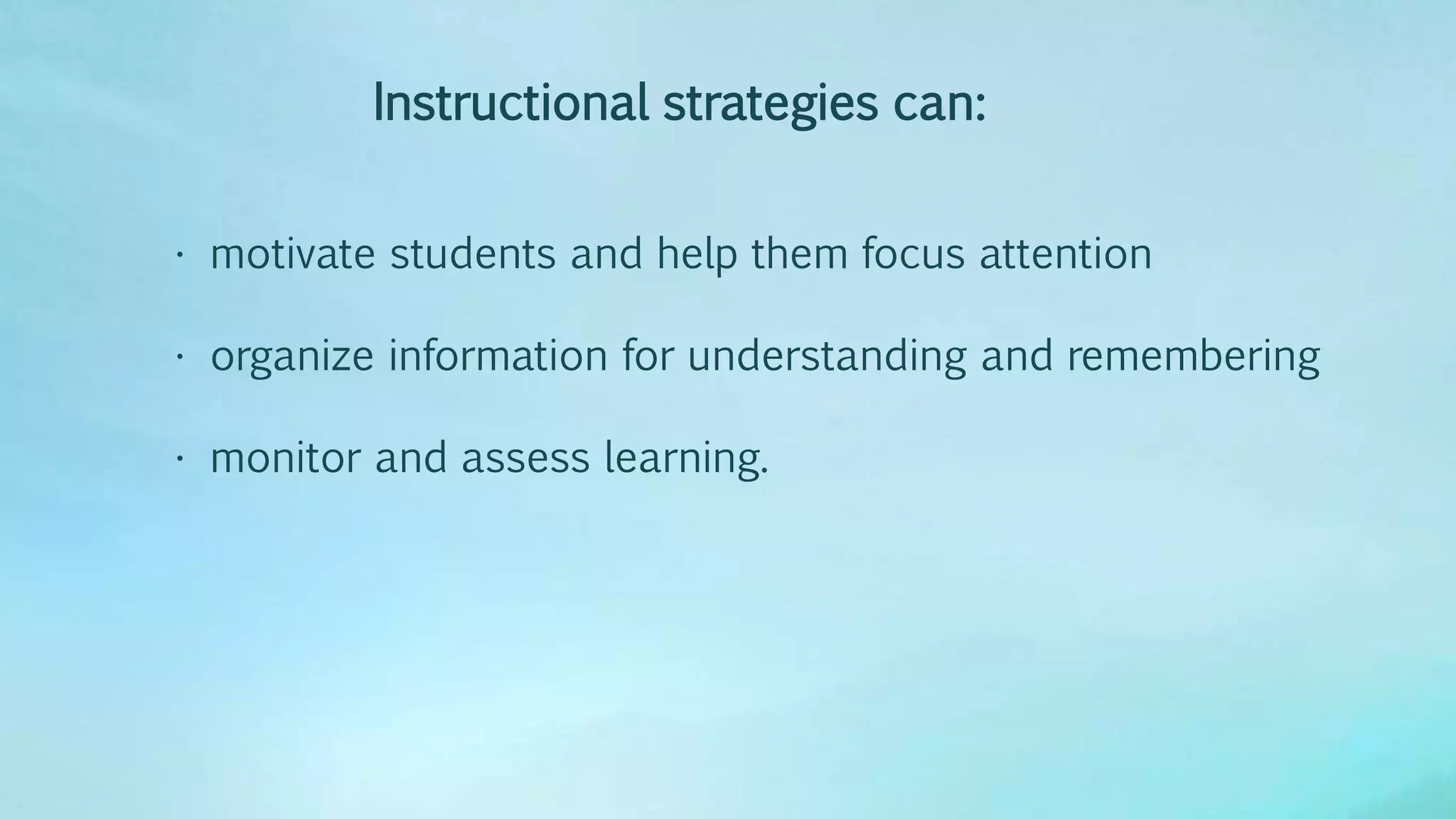
Provide different types of content by setting up learning stations — divided sections of
your classroom through which groups of students rotate. You can facilitate this with a
flexible seating plan.
Each station should use a unique method of teaching a skill or concept related to your
lesson.
For example, students can rotate between stations that involve:
 Watching a video
 Creating artwork
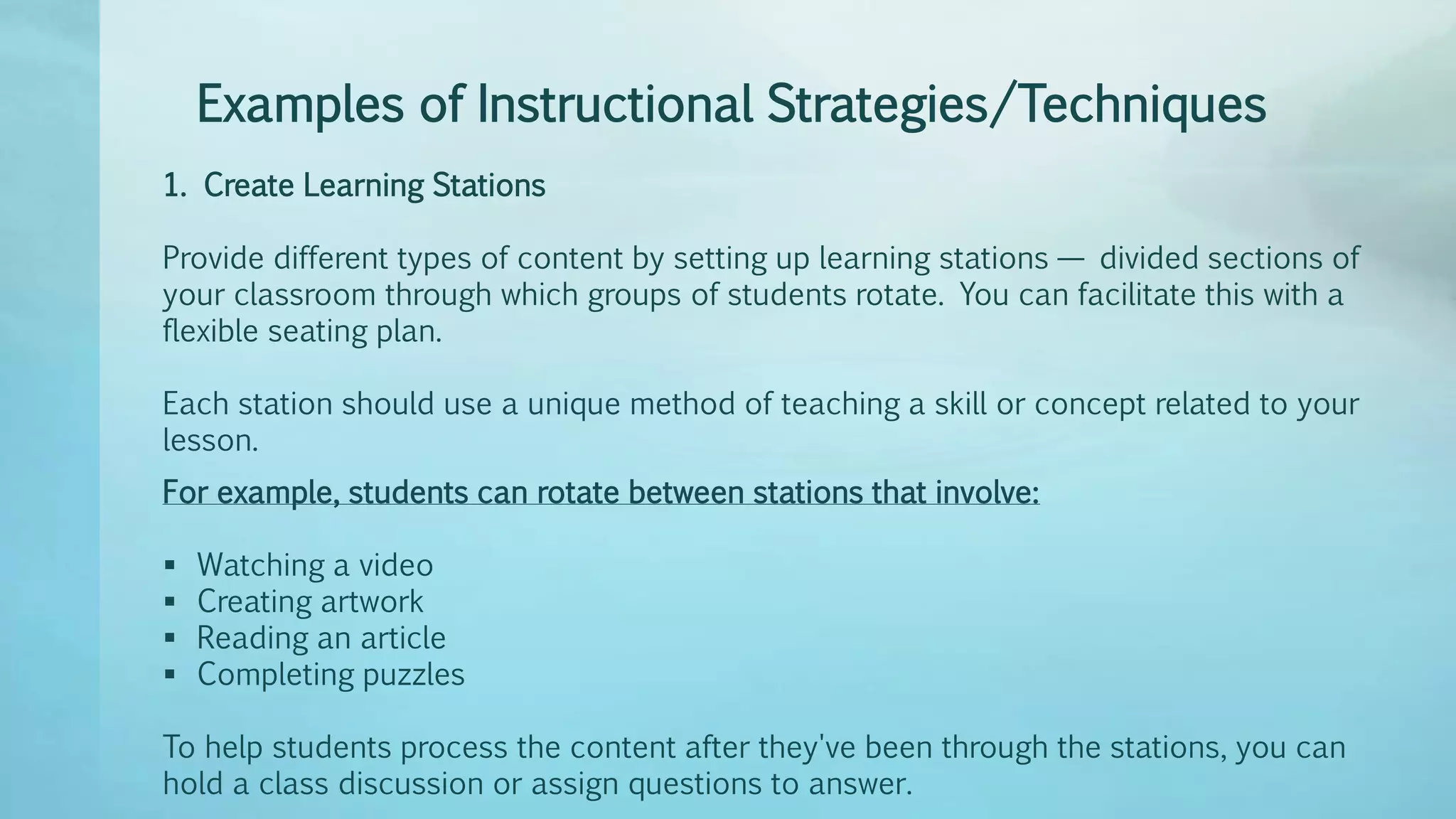
 Reading an article
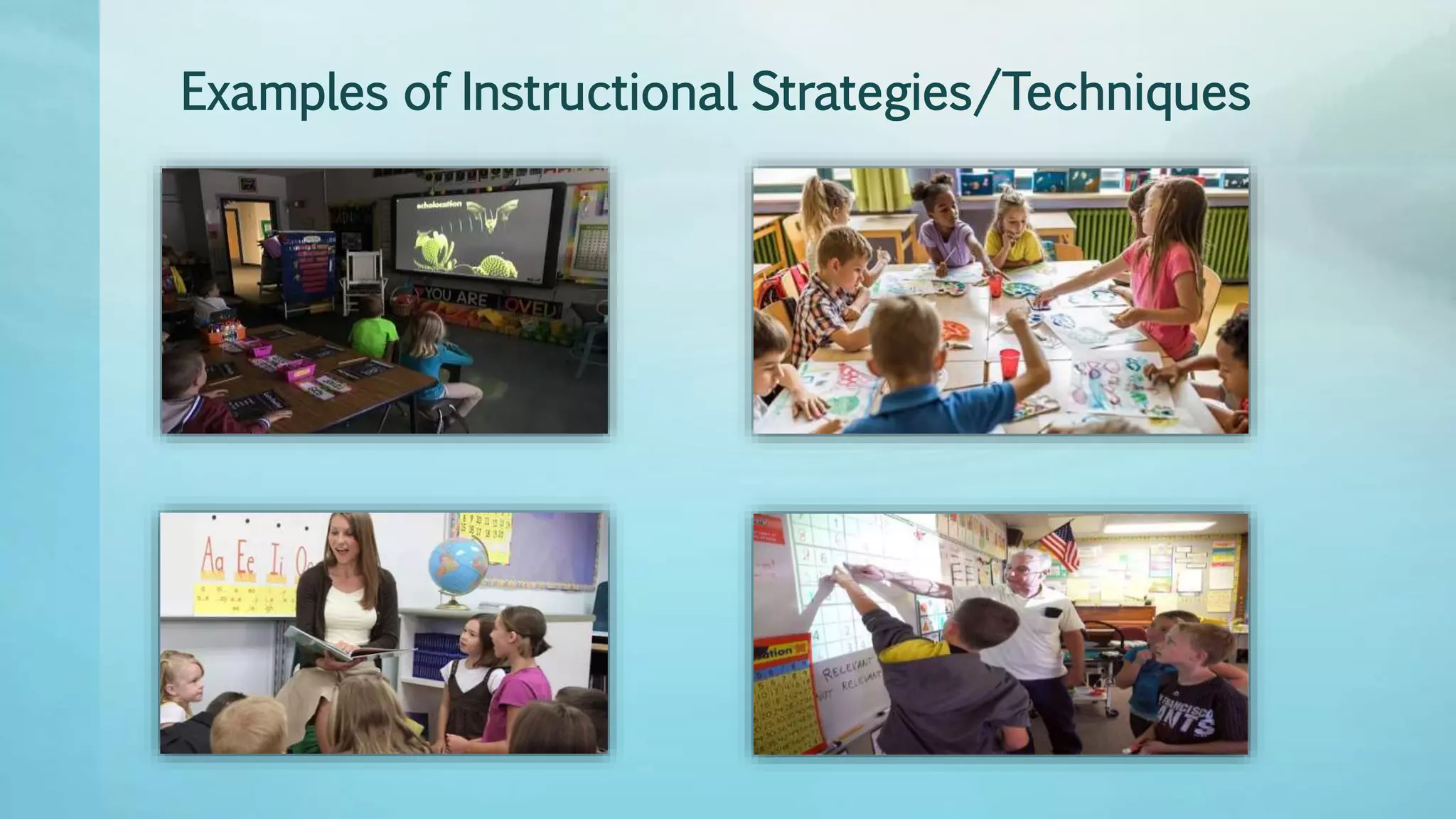
 Completing puzzles
To help students process the content after they've been through the stations, you can
hold a class discussion or assign questions to answer.
Examples of Instructional Strategies/Techniques
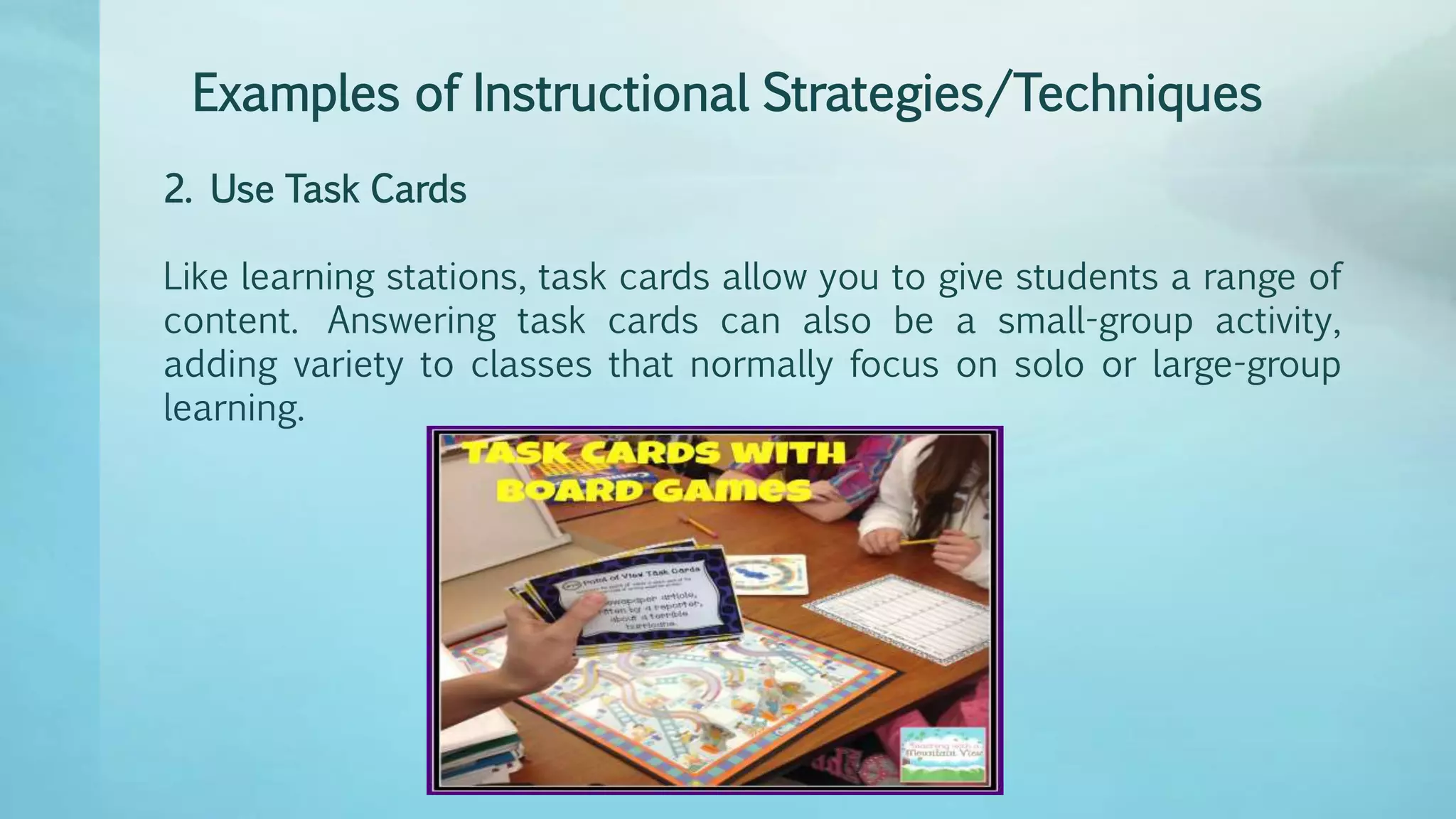
2. Use Task Cards
Like learning stations, task cards allow you to give students a range of
content. Answering task cards can also be a small-group activity,
adding variety to classes that normally focus on solo or large-group
learning.
Examples of Instructional Strategies/Techniques
3. Interview Students
Asking questions about learning and studying styles can help you
pinpoint the kinds of content that will meet your class’s needs.
While running learning stations or a large-group activity, pull each
student aside for a few minutes. Ask about:
 Their favorite types of lessons
 Their favorite in-class activities
 Which projects they’re most proud of
 Which kinds of exercises help them remember key lesson points
Examples of Instructional Strategies/Techniques
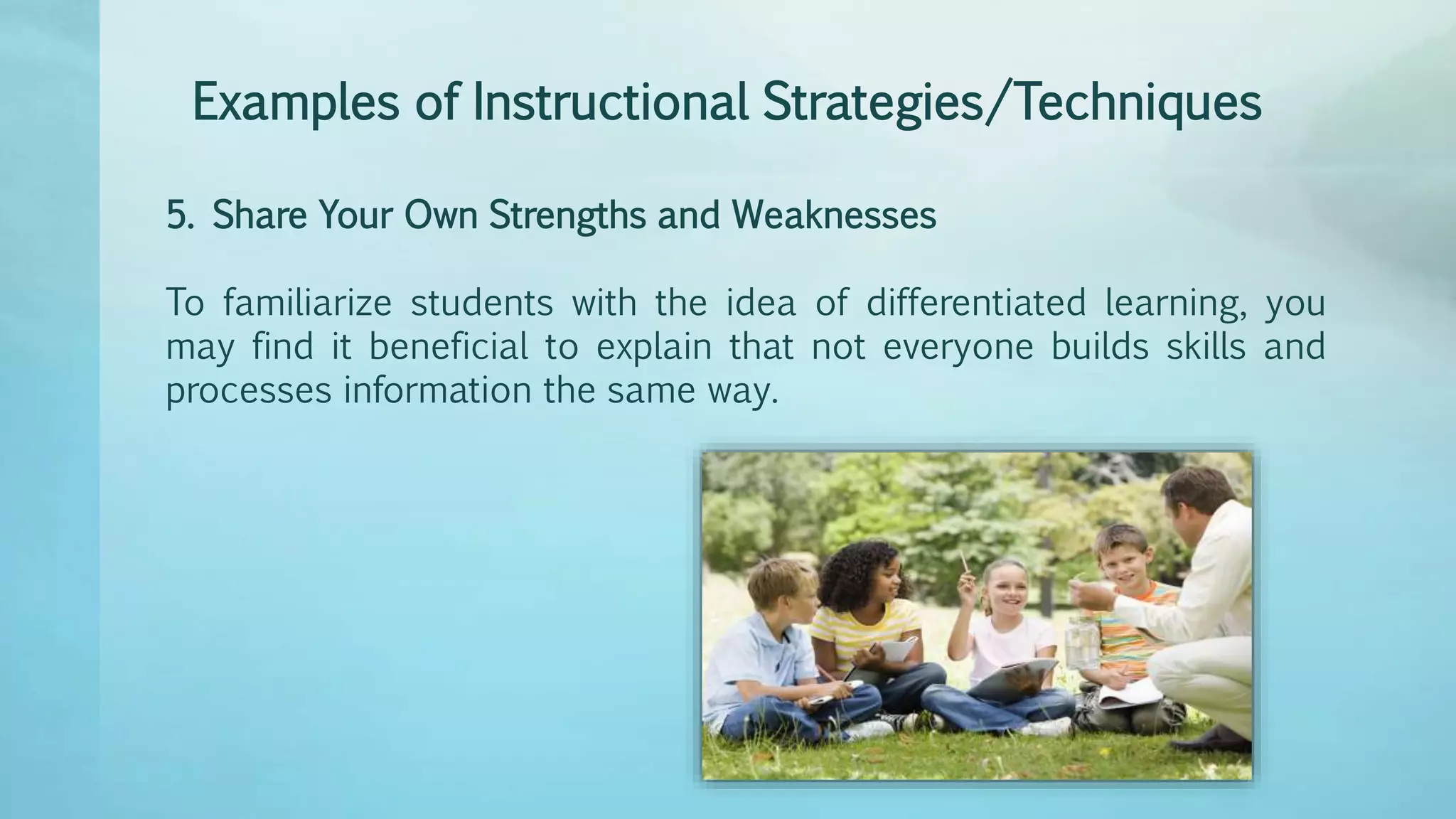
5. Share Your Own Strengths and Weaknesses
To familiarize students with the idea of differentiated learning, you
may find it beneficial to explain that not everyone builds skills and
processes information the same way.
What is teaching

What is teaching

  • 1.
    What Is Teaching? Instructional Methods Prepared By: Catherine A. Matias BSED-III Social Science  Instructional Technique
  • 2.
    DIFERENT CHILDREN HAVEDIFFERENT NEEDS AND ADDRESSING THOSE DIFFERENT NEEDS IS THE BEST WAY TO DEAL WITH THEM EQUITABLY. Gloria Ladson
  • 3.
    It's very importantto know the different types of instructional methods for our classroom because every student learns differently. Teachers need to understand the textbook is not the only method to get information across to students. DO: Virtual Field Trips Centers Community Circle DON’T ALWAYS: Chalk & Talk Textbook Worksheets
  • 5.
    Centers are agreat way to have students work independently or in groups. Centers help the teacher by giving them idea about where the child might be needing help. Centers
  • 7.
    When learning aboutdigraphs, I will have a station during centers that will require students to extend their knowledge on digraphs. Students will work individually on this activity. After learning about digraphs, students will go to their assigned station and practice on digraphs. CENTERS CONTINUED...
  • 8.
    Learning About Digraphs Studentswill have to look through each picture and put it in the correct box under the correct digraph. After they have sorted out the cutouts, they will have a worksheet with the digraphs they have worked on. They will have to write each item on the sheet of paper. When time has expired, they will bring me their worksheet for me to grade
  • 9.
    COMMUNITY CIRCLES  Communitycircles are a little intimidating because students are required to talk in front of other students. It's important teachers encourage students to speak because what they might be thinking another student might be thinking about too. Students get to speak their mind about a topic the teacher gives them. In other words, they are giving their opinion about a subject.
  • 10.
    Community Activity CircleCont…. The purpose of using the community circle on the first week of school is because I know how one feels entering a classroom full-of students they have never met. This is great way for students to know something about each other and a great conversation starter.
  • 11.
     Debates requireStudents to do a little research about a topic they will be giving their opinion about.  Debates engage all students and every students has an opportunity to speak.  Debates improve students social skills and critical thinking skills. Debates
  • 12.
    Lets Have ADebate!!! TOPIC: "ALL STUDENTS SHOULD WEAR UNIFORMS”  I will split the classroom in two groups. I will choose the groups because if let them choose their own groups, they wouldn't stay focused.  By doing this, students will be working on social skills.  I will choose a leader in each group. The leader will be the speaker for the group
  • 13.
    Teacher's role Throughout thewhole debate. I will only say something when I feel students are getting off task and if the debate is getting out of hand. I will make it clear to students that we are all here to have fun and respect everyone and their opinions. I will also be keeping an eye on who is participating in discussion and who is not.
  • 14.
    Dramatic Activities Not onlydo the students learn about hoe people lived in the past, but they get to have fun during the process. In dramatic activities, students are challenged to take the perspective of the people they are studying ( Parker 2012) Hands-out and everyone is learning during the process in one way or another. If the student doesn’t get the lesson through reading, like most of us do, they will learn through dramatic activity.
  • 15.
    “STUDENTS LEARN SOMUCH MORE WHEN THEY BECOME THE CHARACTERISTICS INSTEAD OF READING FROM THE BOOK. WE NEED TO GIVE ALL STUDENTS AN OPPORTUNITY TO LEARN” Cornet 2015
  • 16.
  • 17.
    Instructional Strategies Instructional strategiesare techniques that teachers use to help students become independent, strategic learners. These strategies become learning strategies when students independently select the appropriate ones and use them effectively to accomplish tasks or meet goals.
  • 18.
    Instructional strategies can: •motivate students and help them focus attention • organize information for understanding and remembering • monitor and assess learning.
  • 19.
    Examples of InstructionalStrategies/Techniques 1. Create Learning Stations Provide different types of content by setting up learning stations — divided sections of your classroom through which groups of students rotate. You can facilitate this with a flexible seating plan. Each station should use a unique method of teaching a skill or concept related to your lesson. For example, students can rotate between stations that involve:  Watching a video  Creating artwork  Reading an article  Completing puzzles To help students process the content after they've been through the stations, you can hold a class discussion or assign questions to answer.
  • 20.
    Examples of InstructionalStrategies/Techniques
  • 21.
    Examples of InstructionalStrategies/Techniques 2. Use Task Cards Like learning stations, task cards allow you to give students a range of content. Answering task cards can also be a small-group activity, adding variety to classes that normally focus on solo or large-group learning.
  • 22.
    Examples of InstructionalStrategies/Techniques 3. Interview Students Asking questions about learning and studying styles can help you pinpoint the kinds of content that will meet your class’s needs. While running learning stations or a large-group activity, pull each student aside for a few minutes. Ask about:  Their favorite types of lessons  Their favorite in-class activities  Which projects they’re most proud of  Which kinds of exercises help them remember key lesson points
  • 23.
    Examples of InstructionalStrategies/Techniques 5. Share Your Own Strengths and Weaknesses To familiarize students with the idea of differentiated learning, you may find it beneficial to explain that not everyone builds skills and processes information the same way.