ICTPEDAGOGYINTEGRATIONIN
LEARNINGPLANS
Integrating Technology in Instructions
Models of Technology Integration
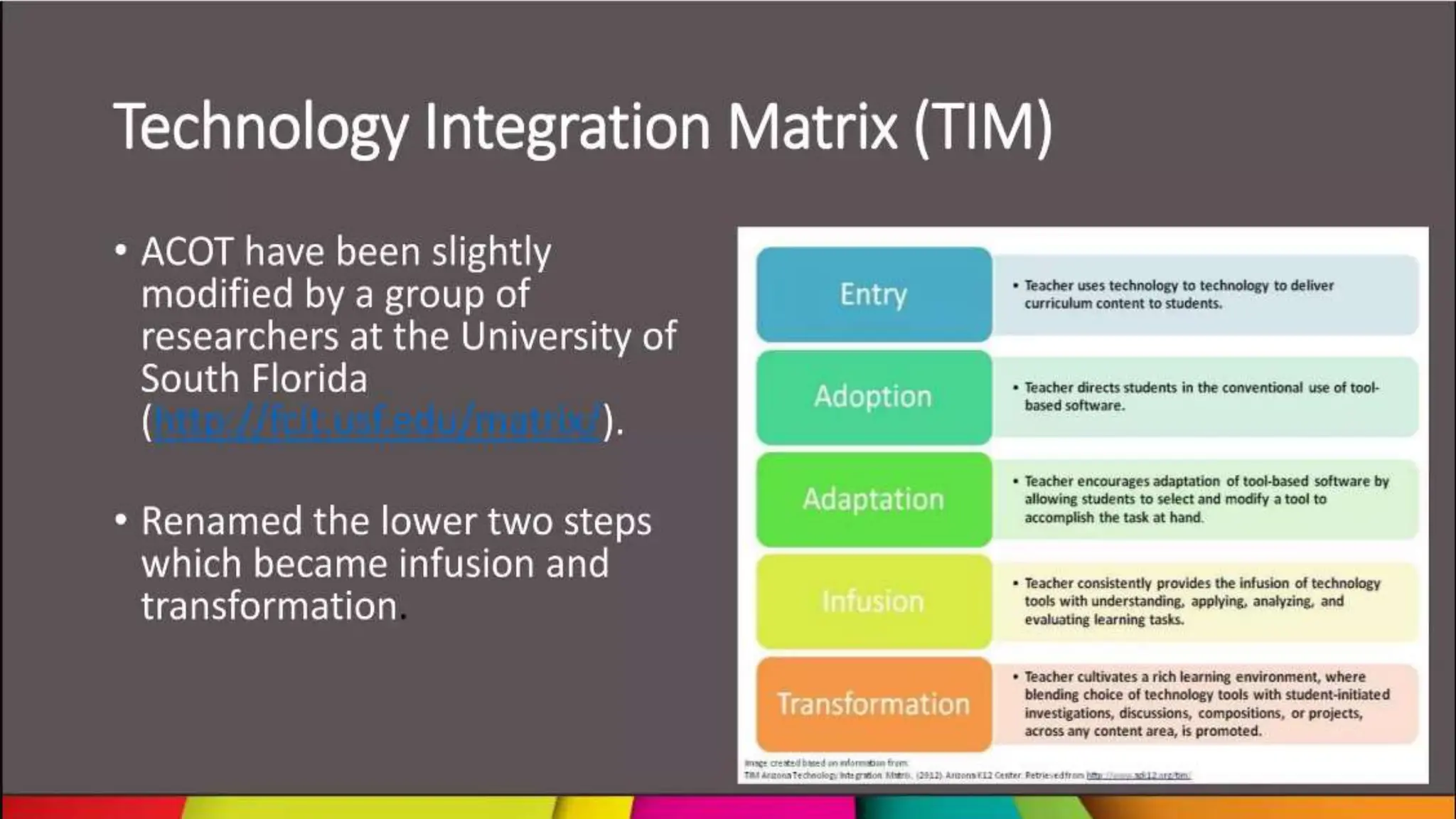
Stages of Technology Integration in Teaching and Learning
Integrating Technology in
Instructions
Integrating Technology in Instruction
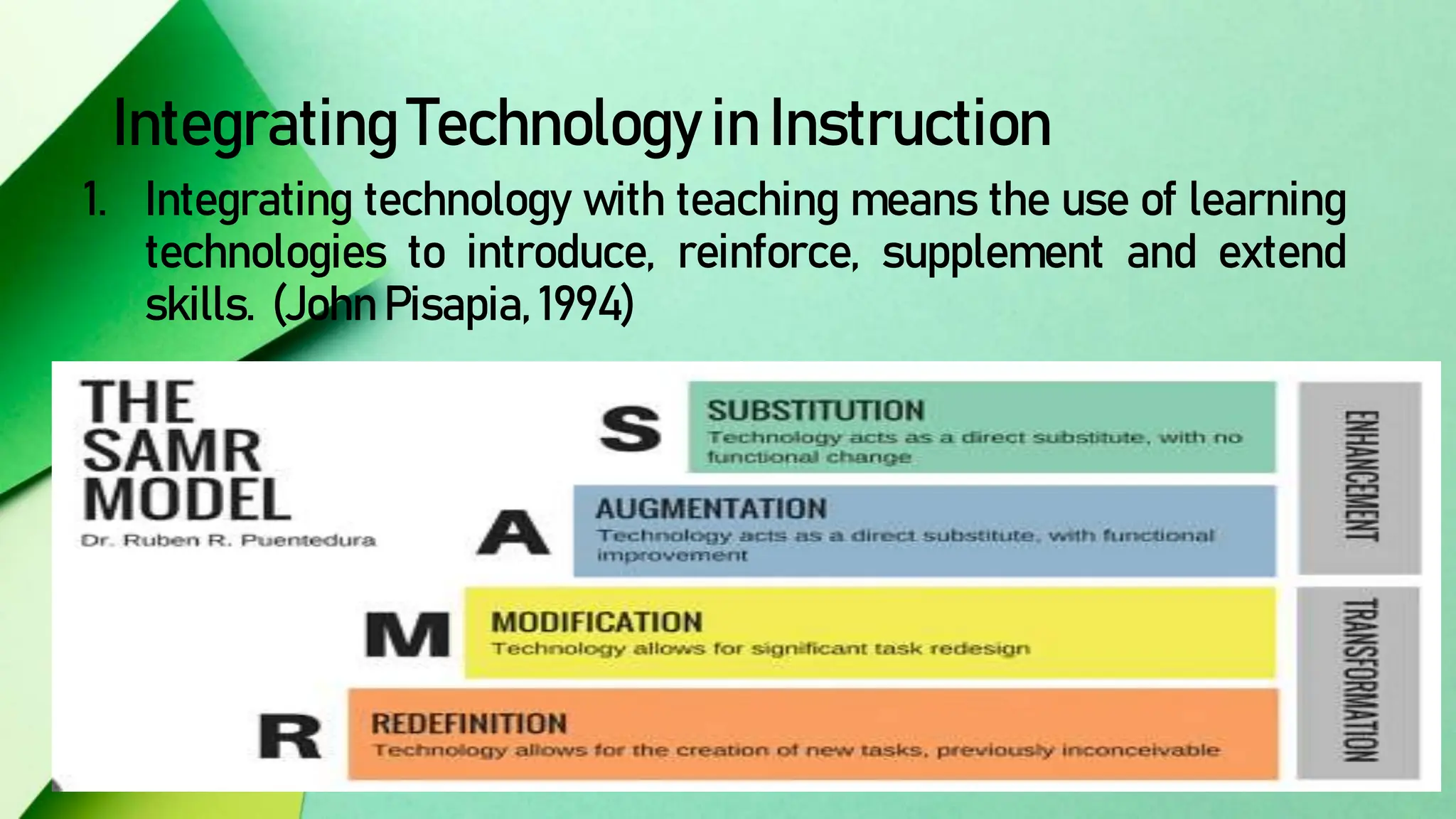
1. Integrating technology with teaching means the use of learning
technologies to introduce, reinforce, supplement and extend
skills. (John Pisapia, 1994)
Integrating Technology in Instruction
2. Effective integration of technology is achieved when students are
able to select technology tools to help them obtain information in a
timely manner; analyze and synthesize the information; and present it
professionally. (ISTE)
3. ICT integration encompasses an integral part of broader curriculum
reforms which include both infrastructural as well as pedagogical
considerations that are changing not only on how learning occurs but
what is learned. (Margeret Lloyd,2005)
Integrating Technology in Instruction
4. Integrating ICT into teaching and learning is a growing area that has
attracted many educators’ efforts in recent years.
Based on the scope of content covered, ICT integration can
happen in three different areas: curriculum, topic, and lessons. (Qiyun
Wang & Huay Lit Woo, 2007)
5. The process of integrating ICT in teaching and learning has to be
done at both pedagogical and technological levels with much
emphasis put on pedagogy.
ICT integration into teaching and learning has to be
underpinned by sound pedagogical principles. (Bernard Bahati, 2010)
Integrating Technology in Instruction
6. ICT integration is not merely mastering the hardware and software
skills. Teachers need to realize how to organize the classroom to
structure the learning tasks so that ICT resources become automatic
and natural response to the requirements for learning environments
in the same way as teachers use markers and whiteboards in the
classroom. (UNESCO, 2005)
Information and Communication Technology
Moursund (2005)
• ICT includes all the full range of computer hardware, computer
software,and telecommunicationsfacilities(Mourund, 2005).
Ex.: computerdevices,handlheldcalculators, supercomputers
• It includes the full range of display and projection devices used to
view computeroutput.
Ex.: digital cameras, computer games, CDs, DVDs, cell phones,
telecommunication satellites, and fiberoptics.
• It includescomputerizedmachineries andcomputerizedrobots.
Information and Communication Technology
Tinio (2009)
ICT is a diverse set of technological tools and resources
used to communicate, create, disseminate, store, and
manage information.
Ex.: hardware devices, software applications,
internet connectivity, broadcasting technologies,
and telephony.
Information and Communication Technology
UNESCO (2020)
ICT is a diverse set of technological tools and resources used to
transmit, store, create, share or exchange information.
Ex.: computers, the internet and worldwide web, live
broadcasting technologies (e.g. radio, tv, webcasting), recorded
broadcasting technologies (e.g. podcasting, audio video players
and storage, and telephony (e.g. fixed or mobiles phones,
satellites, audio-video conferencing..etc.)
Information and Communication Technology
Ratheeswari (2018)
Information Communication Technologies influence every
aspect of human life.
• They play salient roles in workplaces, in business, in
education, and entertainment.
• Many people recognize ICTs as catalysts for change that
include change in working conditions, handling and
exchanging information, teaching methods, learning
approaches, scientific research, and in accessing
informationcommunicationtechnologies.
Information and Communication Technology
• In this digital era, ICT is important in the classroom, for
giving students opportunities to learn and apply the
required 21st Century skills.
• ICT improves teaching and learning and helps teachers
perform their role as creators of pedagogical
environments.
• ICT helps teachers to present teaching attractively and
enables learners to learn at any level of an educational
program.
ICT Integration Framework
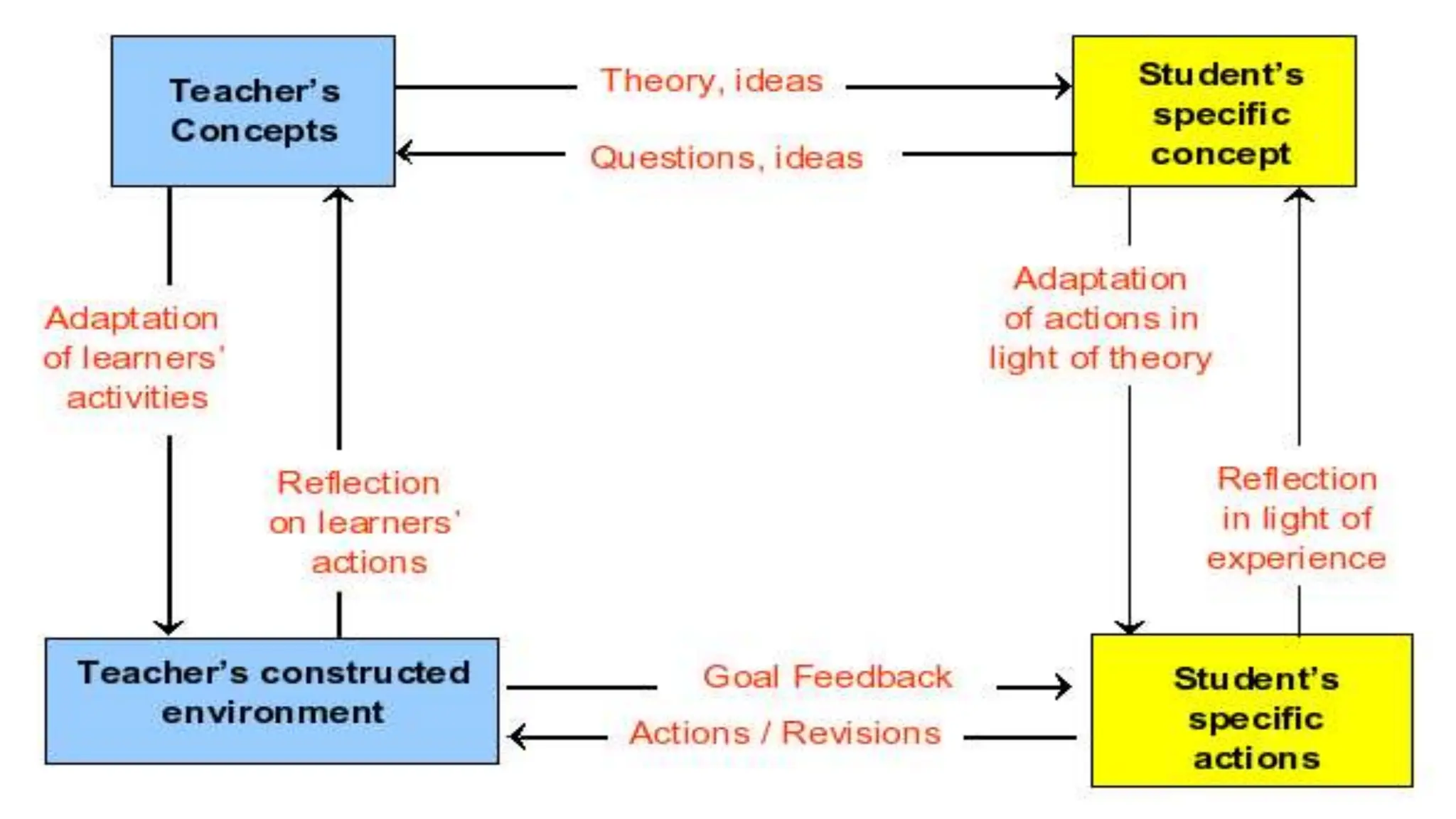
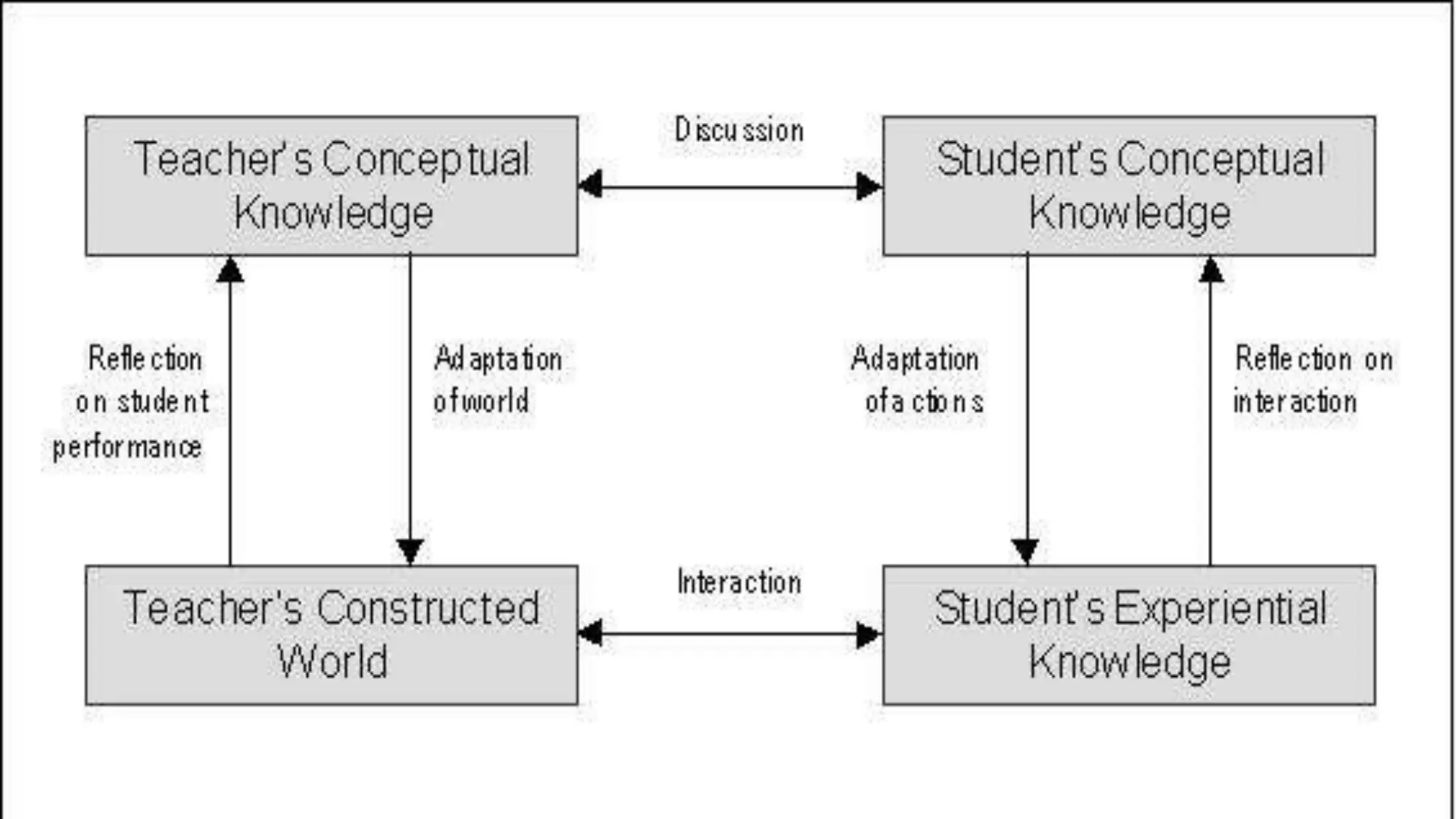
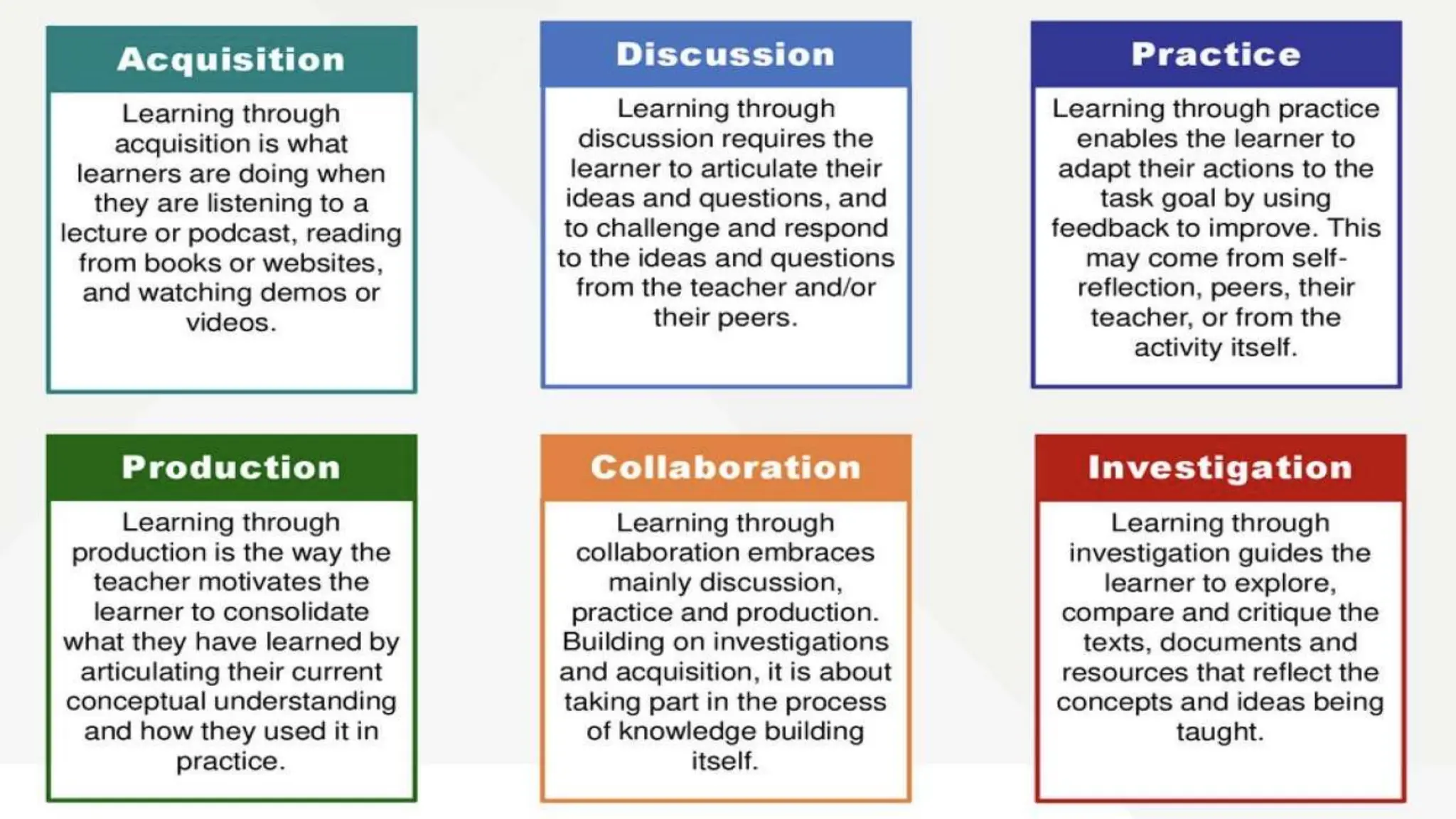
Conversational Framework of Laurillard (2002)
The Conversational Framework postulates a way of
presenting teaching and learning in terms of events.
There are 5 key teaching and learning events in the
framework: acquisition, discovery, dialogue, practice,
creation
ICT Integration Framework
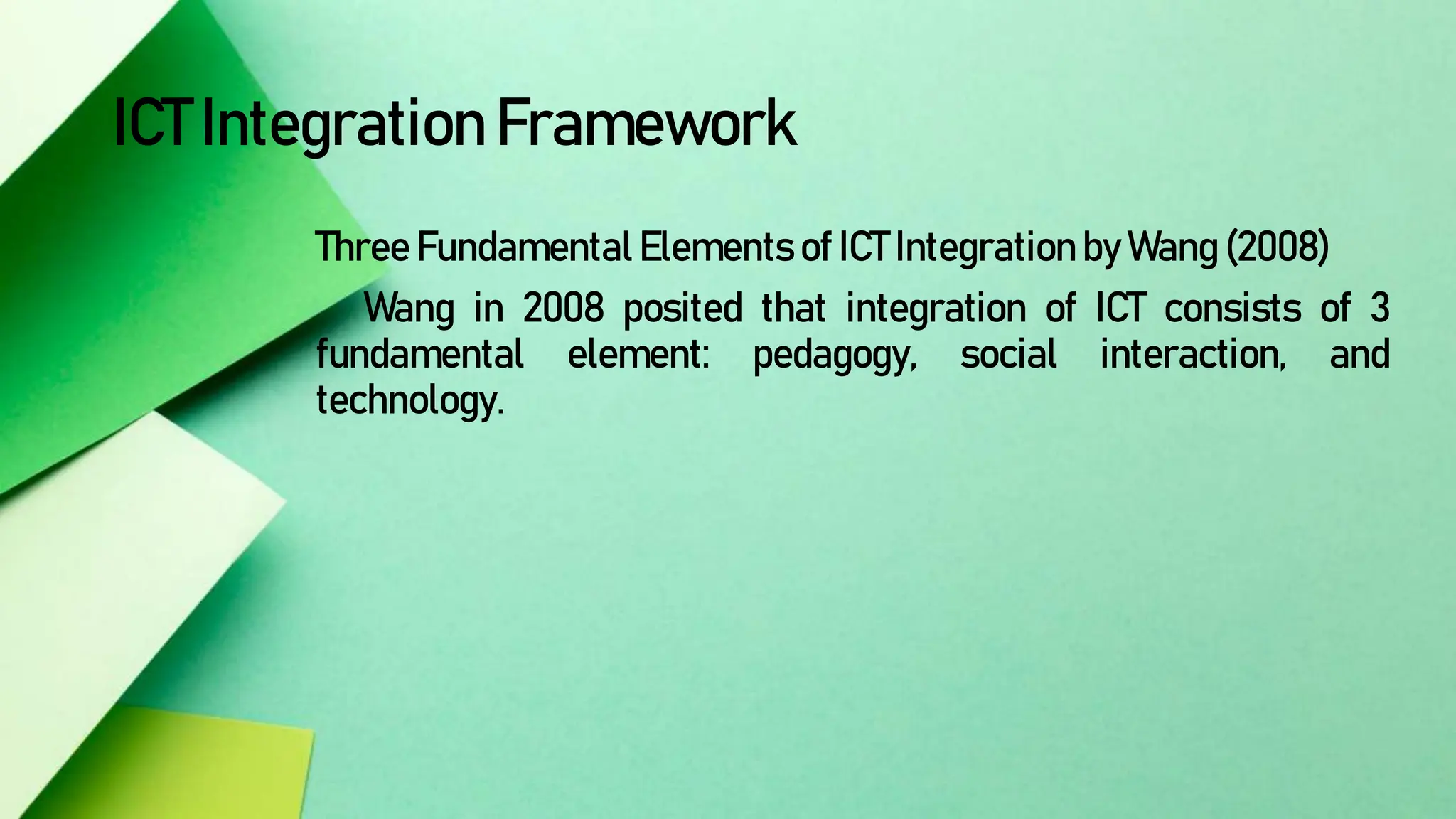
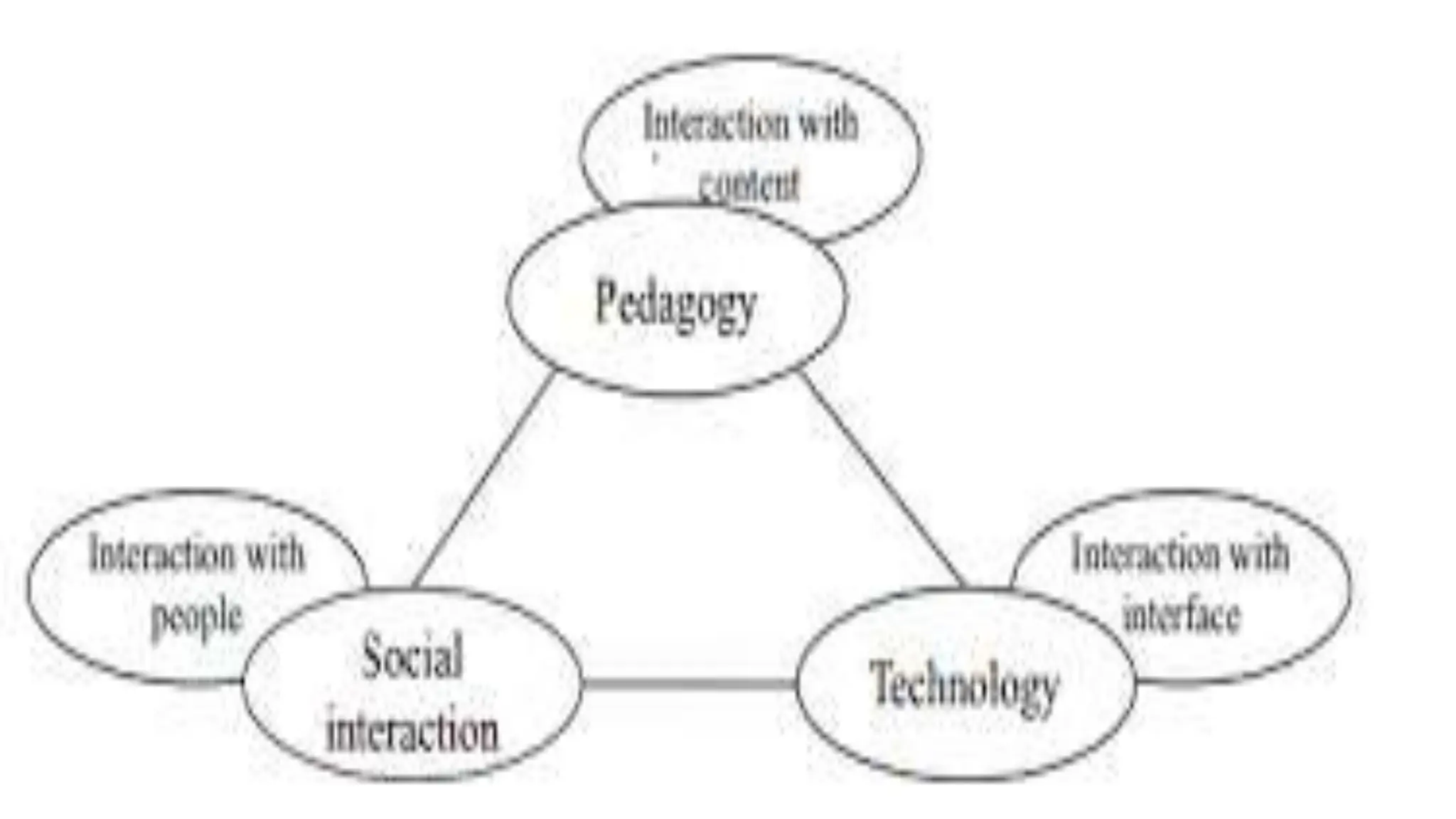
Three Fundamental Elements of ICT Integration by Wang (2008)
Wang in 2008 posited that integration of ICT consists of 3
fundamental element: pedagogy, social interaction, and
technology.
ICT Integration Framework
Three Fundamental Elements of ICT Integrationby Wang (2008)
1. Pedagogy often refers to the teaching strategies or techniques that teachers
use to deliver their lessons and to allow their learners to demonstrate the
competencies.
The pedagogical element is very important as it primarily reflects the art of
teaching a teacher will employ in the learning process.
• Pedagogical design a teacher will use needs to include proper selection of
appropriate content and learning activities.
• In the design, the teacher needs to look into how the available resources will
help provide scaffolds that will assist the learners during the process.
ICT Integration Framework
ThreeFundamentalElementsof ICT Integrationby Wang (2008)
2. Social interactionas one of the elementsin the framework is crucial in learning.
• Learners will naturally acquire and develop knowledge skills that are important for
them to live and work in various communities.
• The teacher may use computers which may allow learners to interact and
demonstrate the skills and competenciesrequiredfromthe.
• The teacher and the learners may use computers to connect and learn through the
computersthat are connectedworldwide.
• Planned social interaction activities that aim to enhance learning becomes
convenientand flexible.
• To engage the learners in the process the social design of the ICT based learning
needsto deliver a secureand comfortable space.
ICT Integration Framework
Three Fundamental Elements of ICT Integrationby Wang (2008)
3. Technological component generally uses computers to support various
learning events and activities. Through the use of computers, various teaching
modes may happen.
• Interaction does not solely happen in a F2F environment, it may also happen
online.
• In order for any online interaction activities to be effective, there is a need to
consider the availability of facilities they require and ease of access.
• The human-computer interface design is critical because this will define the
utility of technology-based learning environment. The ease of learning in the
interface design is essential, it needs to motivate the learners to fuly
participate.
ICT Integration Framework
Categories for ICT in Teacher Training
There is a lot of researches that will prove that the integration
of ICTs can fully transform classroom instructions.
Haddad (2003) states that the teacher’s use of ICT supports the
development of higher order thinking skills (HOTS) and promotes
collaboration. The reason why teacher trainings in ICT-pedagogy
integration are promoted.
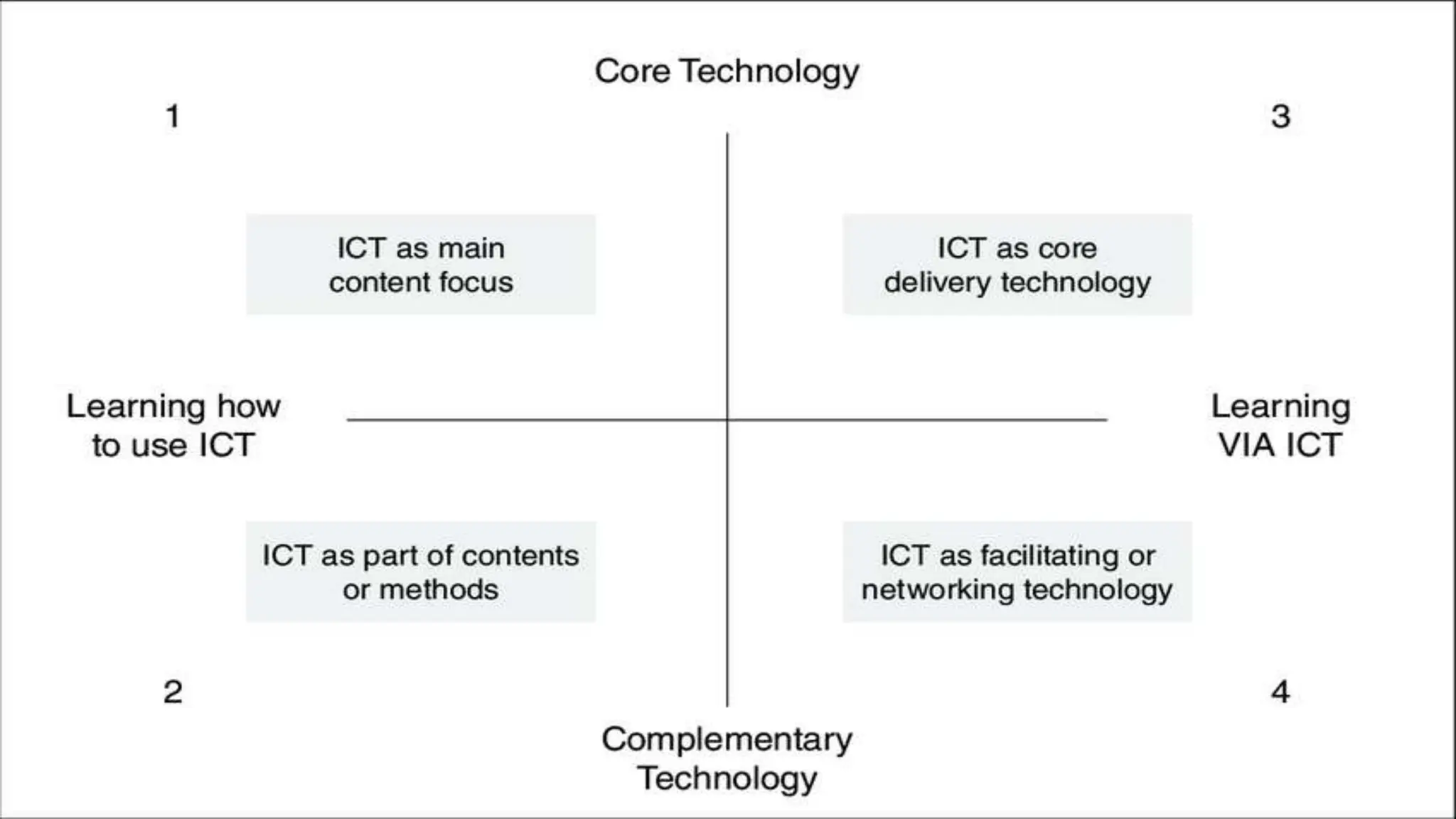
Jung (2005) was able to organize various ICT teacher training
efforts into four categories:
ICT Integration Framework
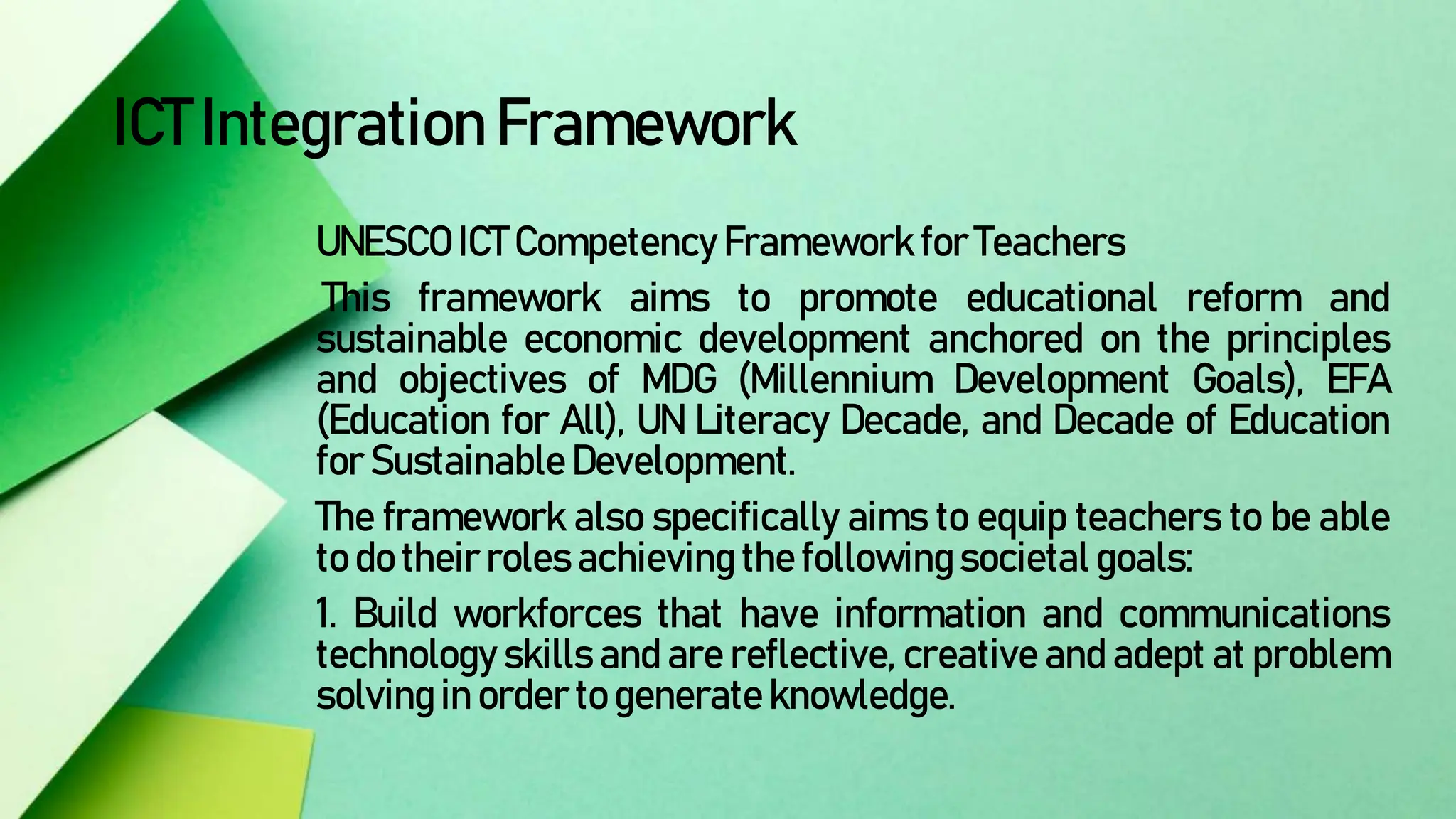
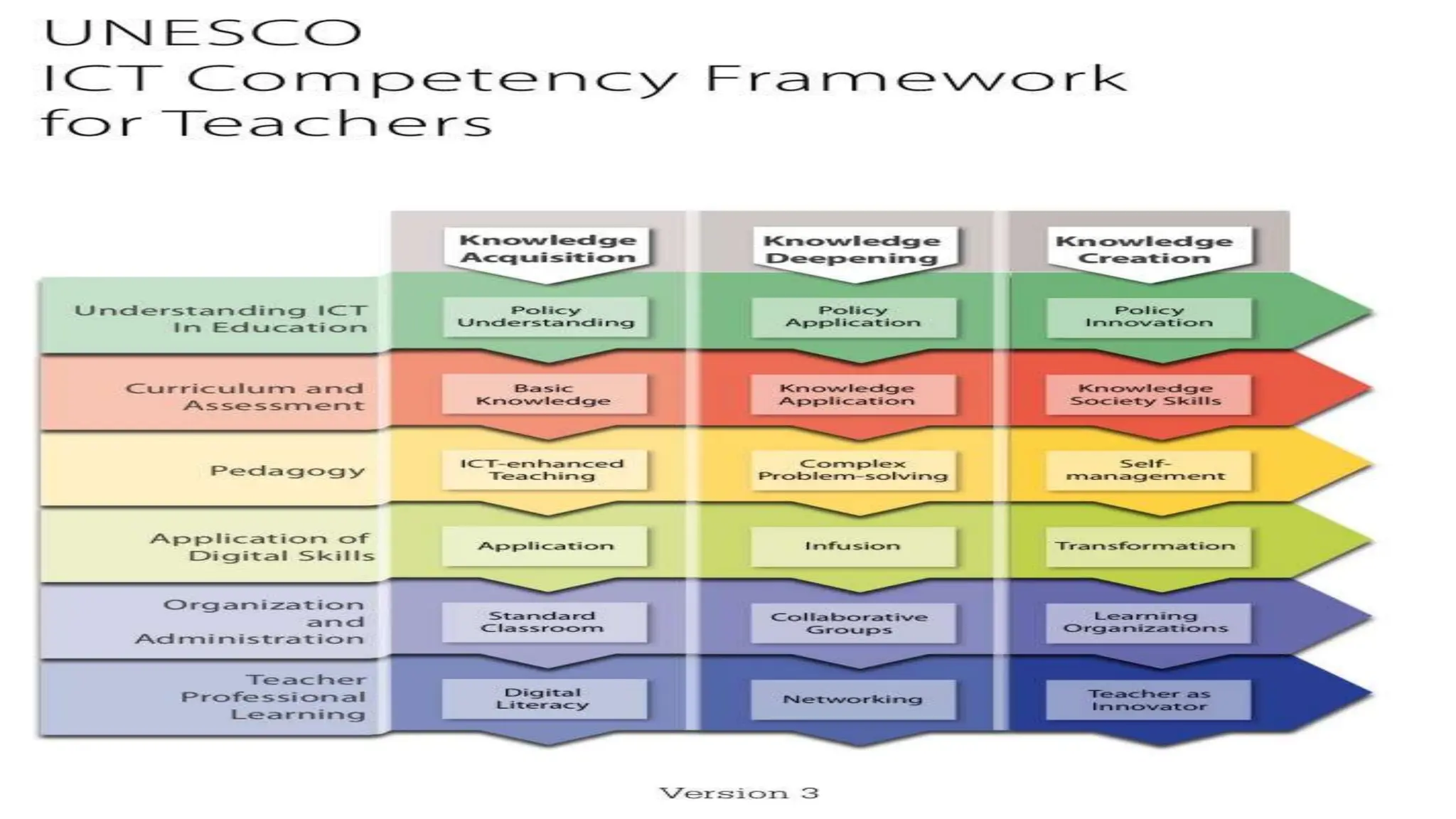
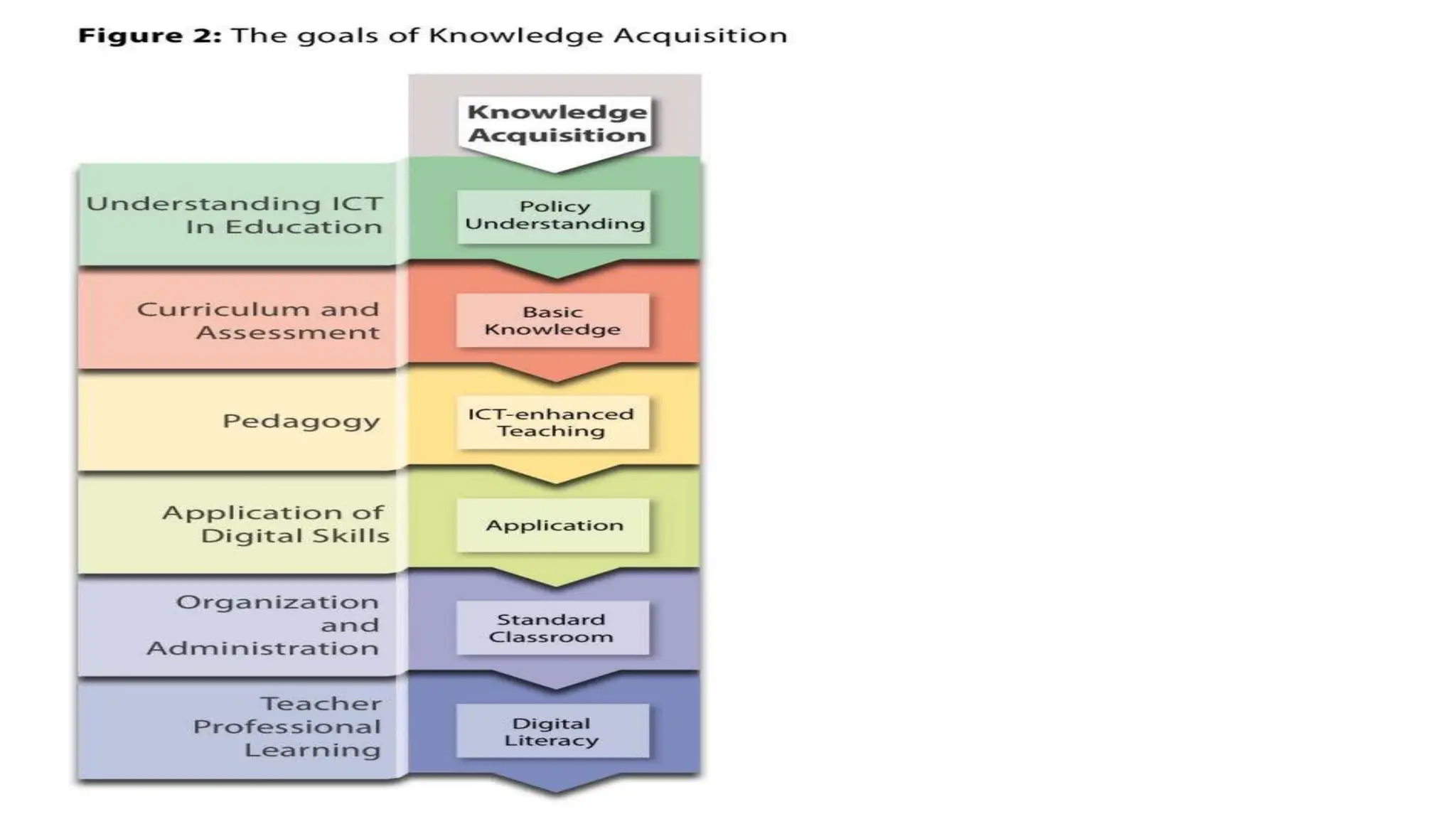
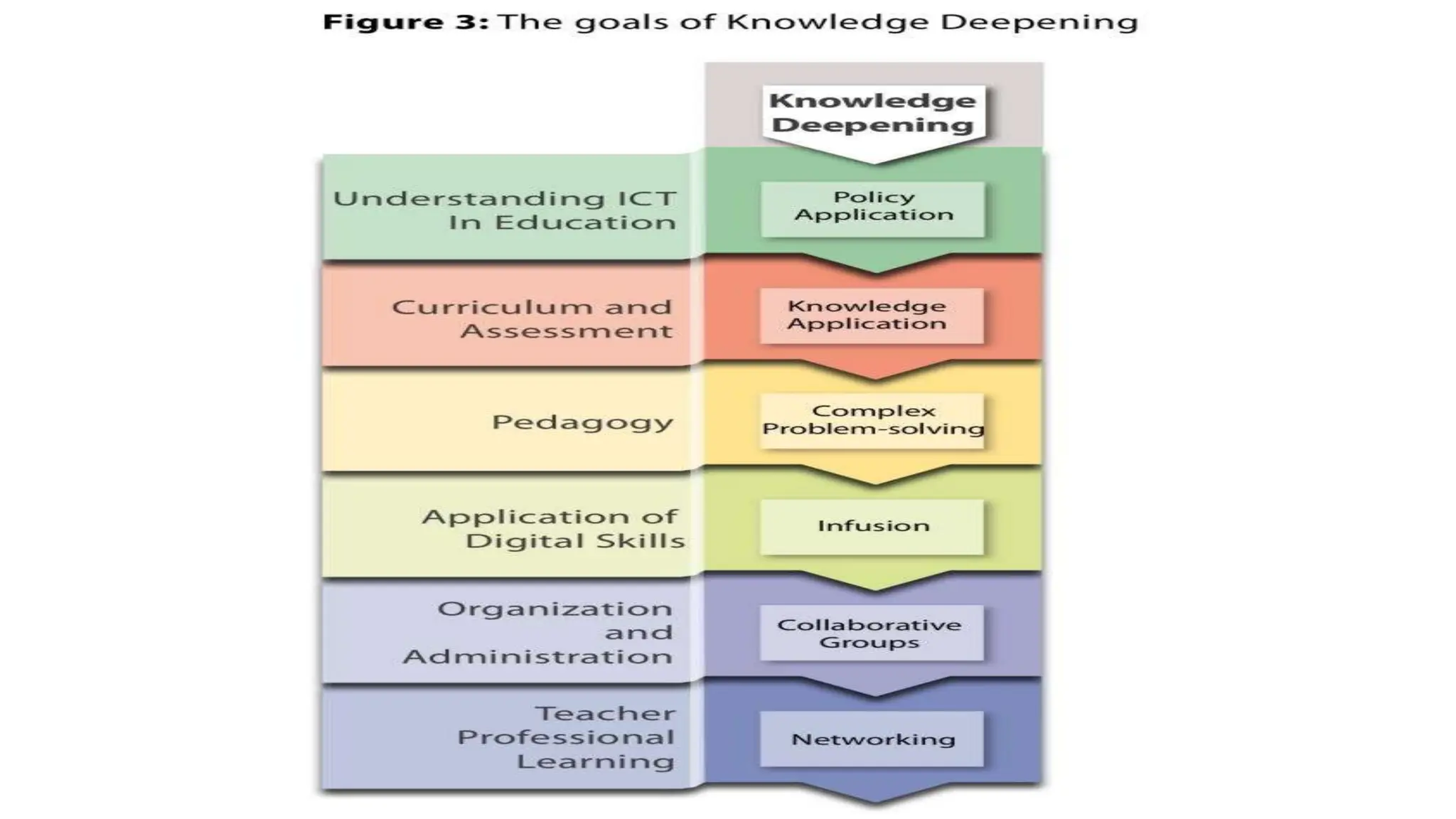
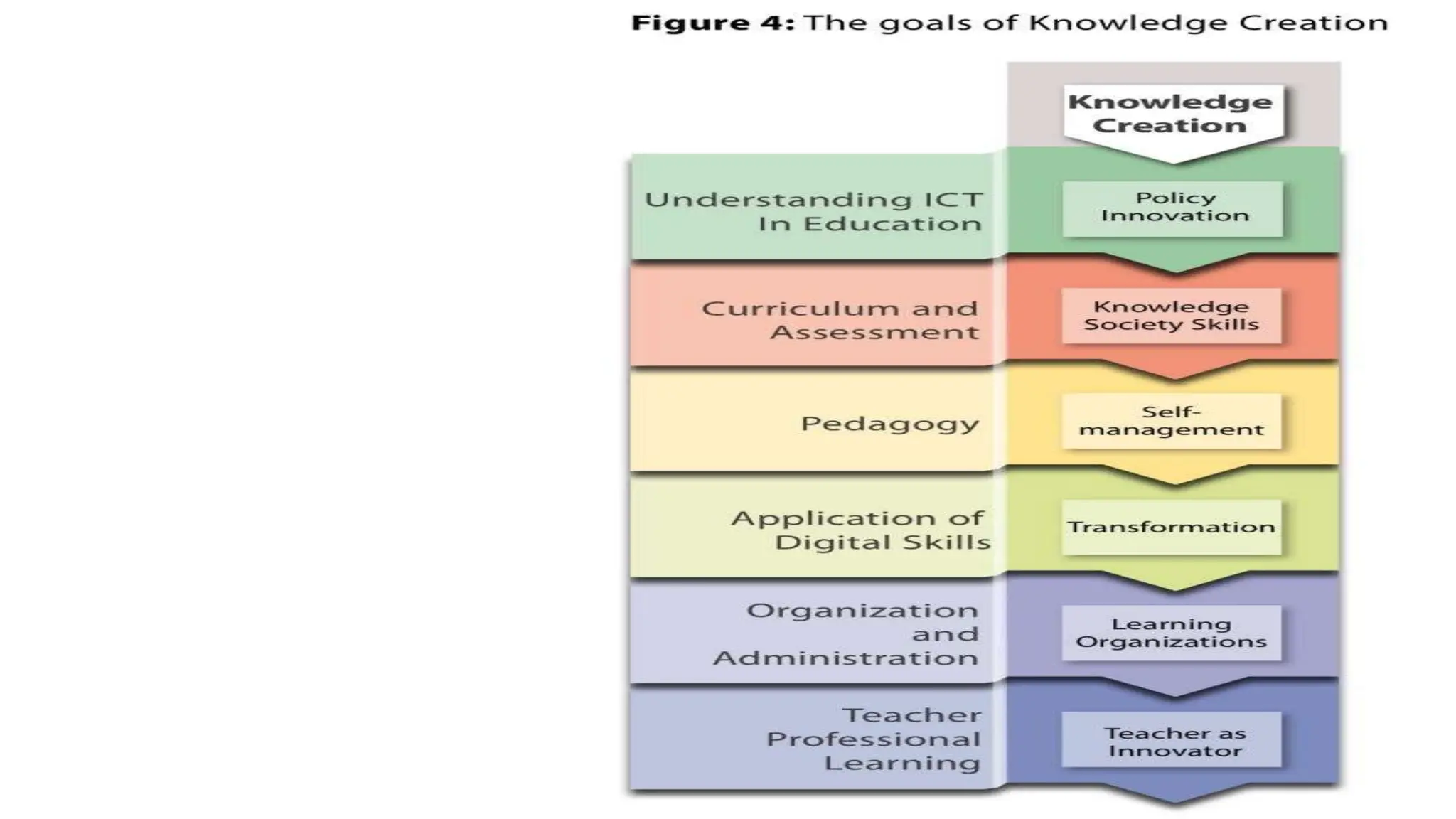
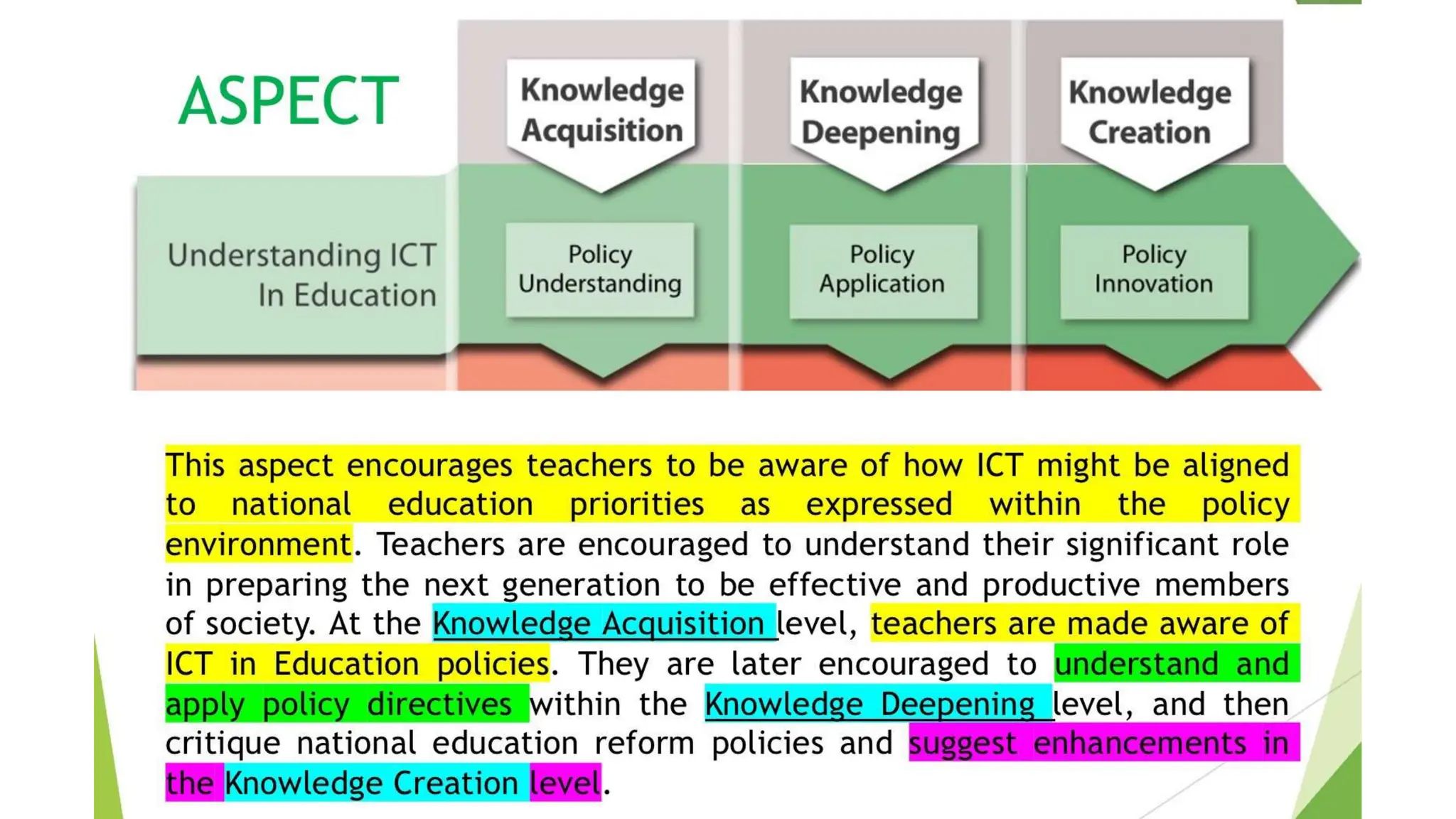
UNESCO ICT Competency Framework for Teachers
This framework aims to promote educational reform and
sustainable economic development anchored on the principles
and objectives of MDG (Millennium Development Goals), EFA
(Education for All), UN Literacy Decade, and Decade of Education
for Sustainable Development.
The framework also specifically aims to equip teachers to be able
to do their roles achieving the followingsocietal goals:
1. Build workforces that have information and communications
technology skills and are reflective, creative and adept at problem
solving in order to generate knowledge.
ICT Integration Framework
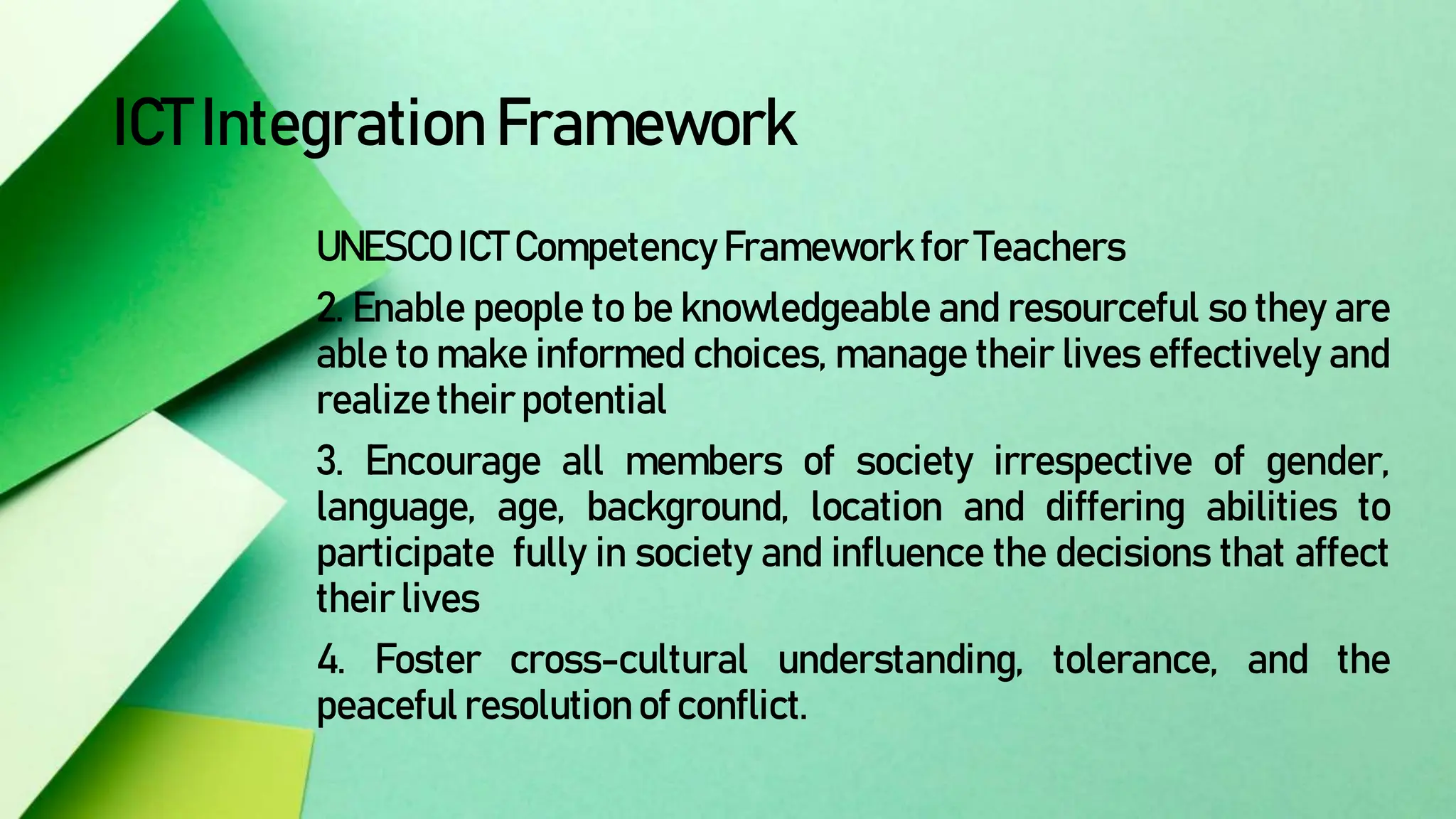
UNESCO ICT Competency Framework for Teachers
2. Enable people to be knowledgeable and resourceful so they are
able to make informed choices, manage their lives effectively and
realize their potential
3. Encourage all members of society irrespective of gender,
language, age, background, location and differing abilities to
participate fully in society and influence the decisions that affect
their lives
4. Foster cross-cultural understanding, tolerance, and the
peaceful resolution of conflict.
ICT Integration Framework
The Commission of Higher Education through its Policies, Standards
and Guidelinesrequiresthe integration ofICT in teachingand learning
The ICT Competency Framework for Teachers is very useful to support
the standards as they will serves as guide to assist the teachers to
successfullyintegrateICT
The teachers may create and structure their learning environment in
new ways, merge new technology and pedagogy, develop socially
active classrooms, and encourage cooperative interactions,
collaborativelearning and group work.
Models of Technology Integration
Technology integration models are theoretical models that are
designed to help teachers, researchers, and others in the
education field to think about technology integration in
meaningful ways.
Teaching as a Profession
https://www.google.com/url?sa=i&url=https%3A%2F%2Fwww.r
esearchgate.net%2Ffigure%2FTheoretical-framework-
conceptualising-ICT-implementation-in-
schools_fig1_235719694&psig=AOvVaw11uS7qHWaeYeWVU4T3
0aPz&ust=1709086199450000&source=images&cd=vfe&opi=89
978449&ved=0CBUQjhxqFwoTCJigqaS3yoQDFQAAAAAdAAAAAB
AI
Stages of Technology Integration in
Teaching and Learning
BEGINNING STAGE
Stage 1: Learners are directed in their use of technology
Asynchronous access to information and peer networks. Some ability for learner to select
platform, technology, or even content. Traditional classroom learning begins to be disrupted.
DEVELOPING STAGE Stage 2: This stage is characterized by powerful access to information,
networks, and communities, but is mostly unable to leverage that access without supporting
frameworks or planning.
Learners are directed in their selection and constructivist use of technology in the learning
process, traditionally to accomplish purely academic tasks that are fully accessible without
the technology.
PROFICIENT STAGE
Stage 3: Mobile technology erodes traditional classroom. Truly mobile learners should disrupt non-flexible
curriculum.
Mobile learning experiences are inherently unpredictable, requiring varied communication, critical thinking,
and aggressive resourcefulness. Standards-based academic work struggles for gravity working against this
stage of technology integration.
PROFICIENT STAGE
TRANSFORMATIVE STAGE Stage 4: This final stage of technology
implementation necessitates learners to consistently self-direct
critical, core components of learning experiences.
TRANSFORMATIVE STAGE
ICT PEDAGOGY INTEGRATION IN LEARNING PLANS.pptx

ICT PEDAGOGY INTEGRATION IN LEARNING PLANS.pptx

  • 1.
    ICTPEDAGOGYINTEGRATIONIN LEARNINGPLANS Integrating Technology inInstructions Models of Technology Integration Stages of Technology Integration in Teaching and Learning
  • 2.
  • 3.
    Integrating Technology inInstruction 1. Integrating technology with teaching means the use of learning technologies to introduce, reinforce, supplement and extend skills. (John Pisapia, 1994)
  • 4.
    Integrating Technology inInstruction 2. Effective integration of technology is achieved when students are able to select technology tools to help them obtain information in a timely manner; analyze and synthesize the information; and present it professionally. (ISTE) 3. ICT integration encompasses an integral part of broader curriculum reforms which include both infrastructural as well as pedagogical considerations that are changing not only on how learning occurs but what is learned. (Margeret Lloyd,2005)
  • 5.
    Integrating Technology inInstruction 4. Integrating ICT into teaching and learning is a growing area that has attracted many educators’ efforts in recent years. Based on the scope of content covered, ICT integration can happen in three different areas: curriculum, topic, and lessons. (Qiyun Wang & Huay Lit Woo, 2007) 5. The process of integrating ICT in teaching and learning has to be done at both pedagogical and technological levels with much emphasis put on pedagogy. ICT integration into teaching and learning has to be underpinned by sound pedagogical principles. (Bernard Bahati, 2010)
  • 6.
    Integrating Technology inInstruction 6. ICT integration is not merely mastering the hardware and software skills. Teachers need to realize how to organize the classroom to structure the learning tasks so that ICT resources become automatic and natural response to the requirements for learning environments in the same way as teachers use markers and whiteboards in the classroom. (UNESCO, 2005)
  • 7.
    Information and CommunicationTechnology Moursund (2005) • ICT includes all the full range of computer hardware, computer software,and telecommunicationsfacilities(Mourund, 2005). Ex.: computerdevices,handlheldcalculators, supercomputers • It includes the full range of display and projection devices used to view computeroutput. Ex.: digital cameras, computer games, CDs, DVDs, cell phones, telecommunication satellites, and fiberoptics. • It includescomputerizedmachineries andcomputerizedrobots.
  • 8.
    Information and CommunicationTechnology Tinio (2009) ICT is a diverse set of technological tools and resources used to communicate, create, disseminate, store, and manage information. Ex.: hardware devices, software applications, internet connectivity, broadcasting technologies, and telephony.
  • 9.
    Information and CommunicationTechnology UNESCO (2020) ICT is a diverse set of technological tools and resources used to transmit, store, create, share or exchange information. Ex.: computers, the internet and worldwide web, live broadcasting technologies (e.g. radio, tv, webcasting), recorded broadcasting technologies (e.g. podcasting, audio video players and storage, and telephony (e.g. fixed or mobiles phones, satellites, audio-video conferencing..etc.)
  • 10.
    Information and CommunicationTechnology Ratheeswari (2018) Information Communication Technologies influence every aspect of human life. • They play salient roles in workplaces, in business, in education, and entertainment. • Many people recognize ICTs as catalysts for change that include change in working conditions, handling and exchanging information, teaching methods, learning approaches, scientific research, and in accessing informationcommunicationtechnologies.
  • 11.
    Information and CommunicationTechnology • In this digital era, ICT is important in the classroom, for giving students opportunities to learn and apply the required 21st Century skills. • ICT improves teaching and learning and helps teachers perform their role as creators of pedagogical environments. • ICT helps teachers to present teaching attractively and enables learners to learn at any level of an educational program.
  • 12.
    ICT Integration Framework ConversationalFramework of Laurillard (2002) The Conversational Framework postulates a way of presenting teaching and learning in terms of events. There are 5 key teaching and learning events in the framework: acquisition, discovery, dialogue, practice, creation
  • 16.
    ICT Integration Framework ThreeFundamental Elements of ICT Integration by Wang (2008) Wang in 2008 posited that integration of ICT consists of 3 fundamental element: pedagogy, social interaction, and technology.
  • 18.
    ICT Integration Framework ThreeFundamental Elements of ICT Integrationby Wang (2008) 1. Pedagogy often refers to the teaching strategies or techniques that teachers use to deliver their lessons and to allow their learners to demonstrate the competencies. The pedagogical element is very important as it primarily reflects the art of teaching a teacher will employ in the learning process. • Pedagogical design a teacher will use needs to include proper selection of appropriate content and learning activities. • In the design, the teacher needs to look into how the available resources will help provide scaffolds that will assist the learners during the process.
  • 19.
    ICT Integration Framework ThreeFundamentalElementsofICT Integrationby Wang (2008) 2. Social interactionas one of the elementsin the framework is crucial in learning. • Learners will naturally acquire and develop knowledge skills that are important for them to live and work in various communities. • The teacher may use computers which may allow learners to interact and demonstrate the skills and competenciesrequiredfromthe. • The teacher and the learners may use computers to connect and learn through the computersthat are connectedworldwide. • Planned social interaction activities that aim to enhance learning becomes convenientand flexible. • To engage the learners in the process the social design of the ICT based learning needsto deliver a secureand comfortable space.
  • 20.
    ICT Integration Framework ThreeFundamental Elements of ICT Integrationby Wang (2008) 3. Technological component generally uses computers to support various learning events and activities. Through the use of computers, various teaching modes may happen. • Interaction does not solely happen in a F2F environment, it may also happen online. • In order for any online interaction activities to be effective, there is a need to consider the availability of facilities they require and ease of access. • The human-computer interface design is critical because this will define the utility of technology-based learning environment. The ease of learning in the interface design is essential, it needs to motivate the learners to fuly participate.
  • 21.
    ICT Integration Framework Categoriesfor ICT in Teacher Training There is a lot of researches that will prove that the integration of ICTs can fully transform classroom instructions. Haddad (2003) states that the teacher’s use of ICT supports the development of higher order thinking skills (HOTS) and promotes collaboration. The reason why teacher trainings in ICT-pedagogy integration are promoted. Jung (2005) was able to organize various ICT teacher training efforts into four categories:
  • 23.
    ICT Integration Framework UNESCOICT Competency Framework for Teachers This framework aims to promote educational reform and sustainable economic development anchored on the principles and objectives of MDG (Millennium Development Goals), EFA (Education for All), UN Literacy Decade, and Decade of Education for Sustainable Development. The framework also specifically aims to equip teachers to be able to do their roles achieving the followingsocietal goals: 1. Build workforces that have information and communications technology skills and are reflective, creative and adept at problem solving in order to generate knowledge.
  • 24.
    ICT Integration Framework UNESCOICT Competency Framework for Teachers 2. Enable people to be knowledgeable and resourceful so they are able to make informed choices, manage their lives effectively and realize their potential 3. Encourage all members of society irrespective of gender, language, age, background, location and differing abilities to participate fully in society and influence the decisions that affect their lives 4. Foster cross-cultural understanding, tolerance, and the peaceful resolution of conflict.
  • 36.
    ICT Integration Framework TheCommission of Higher Education through its Policies, Standards and Guidelinesrequiresthe integration ofICT in teachingand learning The ICT Competency Framework for Teachers is very useful to support the standards as they will serves as guide to assist the teachers to successfullyintegrateICT The teachers may create and structure their learning environment in new ways, merge new technology and pedagogy, develop socially active classrooms, and encourage cooperative interactions, collaborativelearning and group work.
  • 37.
  • 38.
    Models of TechnologyIntegration Technology integration models are theoretical models that are designed to help teachers, researchers, and others in the education field to think about technology integration in meaningful ways.
  • 43.
    Teaching as aProfession
  • 58.
  • 59.
    Stages of TechnologyIntegration in Teaching and Learning
  • 60.
    BEGINNING STAGE Stage 1:Learners are directed in their use of technology Asynchronous access to information and peer networks. Some ability for learner to select platform, technology, or even content. Traditional classroom learning begins to be disrupted.
  • 61.
    DEVELOPING STAGE Stage2: This stage is characterized by powerful access to information, networks, and communities, but is mostly unable to leverage that access without supporting frameworks or planning. Learners are directed in their selection and constructivist use of technology in the learning process, traditionally to accomplish purely academic tasks that are fully accessible without the technology.
  • 62.
    PROFICIENT STAGE Stage 3:Mobile technology erodes traditional classroom. Truly mobile learners should disrupt non-flexible curriculum. Mobile learning experiences are inherently unpredictable, requiring varied communication, critical thinking, and aggressive resourcefulness. Standards-based academic work struggles for gravity working against this stage of technology integration.
  • 63.
  • 64.
    TRANSFORMATIVE STAGE Stage4: This final stage of technology implementation necessitates learners to consistently self-direct critical, core components of learning experiences.
  • 65.