INNATE AND ADAPTIVE
IMMUNITY
K. Sharma
PG Student (Zoology)
Dept. of Zoology and Wildlife Biology
A.V.C College (Autonomous)
• Immune system shields our body againt invaders,such as viruses,
bacteria, and foreign bodies.
• Molecular and cellular components make up the immune system.
• Our immune system is essential for our survival. It monitoring our
body 24*7 against pathogen invasion.
• when our immune system balance got disturbed, we found sick.
IMMUNE SYSTEM:
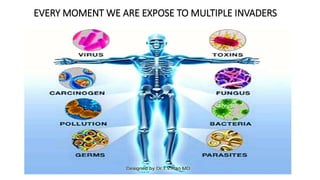
EVERY MOMENT WE ARE EXPOSE TO MULTIPLE INVADERS
• Innate immunity is the first layer of defence and it is non-specific
immune. It is often called as a antigen independent immunity.
• It performs rapid immune response against invaders.
• Those responses are the same for all potential pathogens, no matter
how different they may be. Innate immunity includes physical barriers
(e.g. skin, saliva etc) and cells (e.g. macrophages, neutrophils,
basophils, mast cells etc).
• It has no immunologic memory.
CONTI..
• It operates through factors such as,
1.Physical &mechanical factors
2.Biochemical factors
3.Cellular factors
4.Genetic factors
1.Physical and mechanical factors:
Skin
Mucous membrane
Cilia
Coughing and sneezing
2.Biochemical factors:
Tears secretion
Saliva secretion
Ear wax
Sweat secretion
3. Genetic factors:
i.species immunity:
This refers to the resistance to a pathogen exhibited by all
members of species.measles attacks only human beings cannot infect
non-primates.
ii.Racial immunity:
within a species, different races may show difference in
susceptibility to infections and is known as racial immunity.
• Adaptive immunity is the second layer of defence.
• It’s response is specific to the pathogen. Hence it is often called
Antigen-dependent immunity
• which involves in building up memory of encountered infections and
keep it as references. If that same antigen re-exposure to the individual
those memory cell initiates the immune response more rapid and
precise.
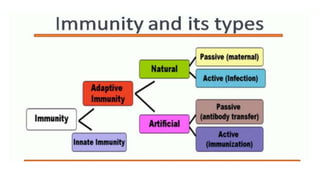
Nature adaptive
Artificial adaptive
Natural adaptive immunity:
 Active acquired immunity occurs when a person is exposed to a live pathogens
and foreign bodies, likewise it develops immunity against a particular invader.
Performance is long-lasting.
Example:
Experience through infections
 Passive acquired immunity is the translocation of active humoral immunity from
one individual to another in the forms of custom-made antibodies. Performance
until the development of their own immune.
Example:
IgG and IgA from mother to fetus.
Artificial adaptive immunity:
Artificial immunity is mean by which the body is given immunity to a
disease by intentional exposure to weakend and small quantities of it.
 Active adapted immunity is immunization where the microbe, or parts of it,
are injected into a person before they are able to take naturally.
For example: Vaccines
 Passive adapted immunity immunization through “serum therapy” the
antibodies can be produced then it transfered to human.
Due to some demerits the humanized antibodies are produced in vitro by cell
culture are used instead.
For Example: Monoclonal antibodies
Thank you

Innate & Adaptive Immunity

  • 1.
    INNATE AND ADAPTIVE IMMUNITY K.Sharma PG Student (Zoology) Dept. of Zoology and Wildlife Biology A.V.C College (Autonomous)
  • 2.
    • Immune systemshields our body againt invaders,such as viruses, bacteria, and foreign bodies. • Molecular and cellular components make up the immune system. • Our immune system is essential for our survival. It monitoring our body 24*7 against pathogen invasion. • when our immune system balance got disturbed, we found sick. IMMUNE SYSTEM:
  • 3.
    EVERY MOMENT WEARE EXPOSE TO MULTIPLE INVADERS
  • 5.
    • Innate immunityis the first layer of defence and it is non-specific immune. It is often called as a antigen independent immunity. • It performs rapid immune response against invaders. • Those responses are the same for all potential pathogens, no matter how different they may be. Innate immunity includes physical barriers (e.g. skin, saliva etc) and cells (e.g. macrophages, neutrophils, basophils, mast cells etc). • It has no immunologic memory.
  • 6.
    CONTI.. • It operatesthrough factors such as, 1.Physical &mechanical factors 2.Biochemical factors 3.Cellular factors 4.Genetic factors
  • 7.
    1.Physical and mechanicalfactors: Skin Mucous membrane Cilia Coughing and sneezing 2.Biochemical factors: Tears secretion Saliva secretion Ear wax Sweat secretion
  • 8.
    3. Genetic factors: i.speciesimmunity: This refers to the resistance to a pathogen exhibited by all members of species.measles attacks only human beings cannot infect non-primates. ii.Racial immunity: within a species, different races may show difference in susceptibility to infections and is known as racial immunity.
  • 9.
    • Adaptive immunityis the second layer of defence. • It’s response is specific to the pathogen. Hence it is often called Antigen-dependent immunity • which involves in building up memory of encountered infections and keep it as references. If that same antigen re-exposure to the individual those memory cell initiates the immune response more rapid and precise. Nature adaptive Artificial adaptive
  • 10.
    Natural adaptive immunity: Active acquired immunity occurs when a person is exposed to a live pathogens and foreign bodies, likewise it develops immunity against a particular invader. Performance is long-lasting. Example: Experience through infections  Passive acquired immunity is the translocation of active humoral immunity from one individual to another in the forms of custom-made antibodies. Performance until the development of their own immune. Example: IgG and IgA from mother to fetus.
  • 11.
    Artificial adaptive immunity: Artificialimmunity is mean by which the body is given immunity to a disease by intentional exposure to weakend and small quantities of it.  Active adapted immunity is immunization where the microbe, or parts of it, are injected into a person before they are able to take naturally. For example: Vaccines  Passive adapted immunity immunization through “serum therapy” the antibodies can be produced then it transfered to human. Due to some demerits the humanized antibodies are produced in vitro by cell culture are used instead. For Example: Monoclonal antibodies
  • 12.