INHALANTS
Presentation By:
Ms. Krutika H. Pardeshi.
WHAT ARE INHALANTS?
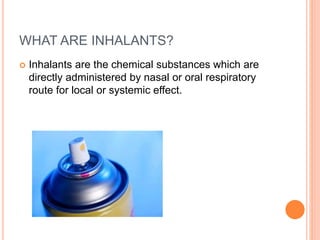
 Inhalants are the chemical substances which are
directly administered by nasal or oral respiratory
route for local or systemic effect.
COMMONLY USED INHALANTS
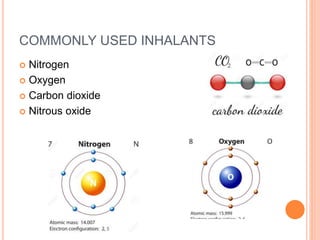
 Nitrogen
 Oxygen
 Carbon dioxide
 Nitrous oxide
1.OXYGEN
 Formula – O2
 Important air constituent. 21% of total air volume.
 According to IP, oxygen contains not less than 99%
v/v of O2
 It is available and supplied in metallic cylinder in
compressed form.
I. PREPARATION
 By fractionation of air
-air is purified by removing moisture, dust and carbon
dioxide and compressed to get liquefied air. That air
is then fractionated to obtain oxygen by distillation
method. Compressed oxygen is supplied in metallic
cylinder.
 By electrolysis of water
- Direct current is passed through a cell between iron
or steel electrode immersed in 10% of potassium
hydroxide.
- Oxygen is librated at anode and hydrogen is librated
at cathode.
II. PROPERTIES
 Colorless gas
 Odourless
 Tasteless
 Soluble in water
 Soluble in alcohol
 Freely soluble in silver solution
 Slightly heavier than air
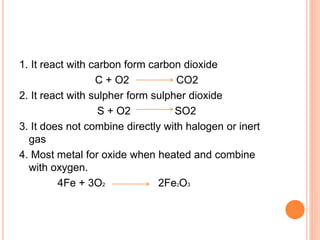
1. It react with carbon form carbon dioxide
C + O2 CO2
2. It react with sulpher form sulpher dioxide
S + O2 SO2
3. It does not combine directly with halogen or inert
gas
4. Most metal for oxide when heated and combine
with oxygen.
4Fe + 3O2 2Fe2O3
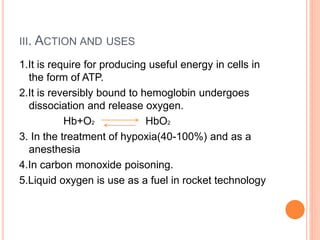
III. ACTION AND USES
1.It is require for producing useful energy in cells in
the form of ATP.
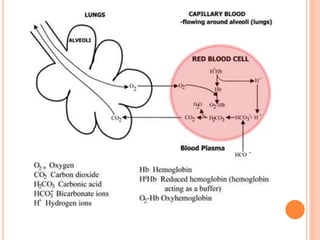
2.It is reversibly bound to hemoglobin undergoes
dissociation and release oxygen.
Hb+O2 HbO2
3. In the treatment of hypoxia(40-100%) and as a
anesthesia
4.In carbon monoxide poisoning.
5.Liquid oxygen is use as a fuel in rocket technology
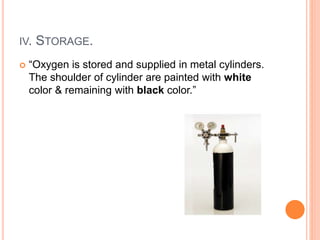
IV. STORAGE.
 “Oxygen is stored and supplied in metal cylinders.
The shoulder of cylinder are painted with white
color & remaining with black color.”
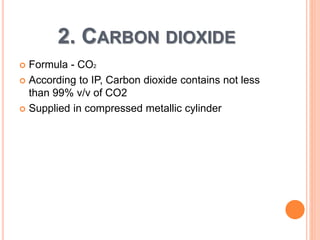
2. CARBON DIOXIDE
 Formula - CO2
 According to IP, Carbon dioxide contains not less
than 99% v/v of CO2
 Supplied in compressed metallic cylinder
I. PREPARATION
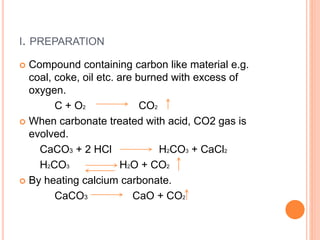
 Compound containing carbon like material e.g.
coal, coke, oil etc. are burned with excess of
oxygen.
C + O2 CO2
 When carbonate treated with acid, CO2 gas is
evolved.
CaCO3 + 2 HCl H2CO3 + CaCl2
H2CO3 H2O + CO2
 By heating calcium carbonate.
CaCO3 CaO + CO2
II. PROPERTIES
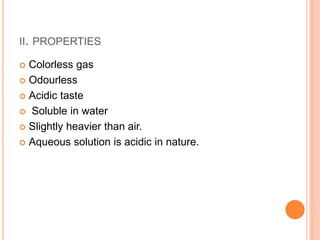
 Colorless gas
 Odourless
 Acidic taste
 Soluble in water
 Slightly heavier than air.
 Aqueous solution is acidic in nature.
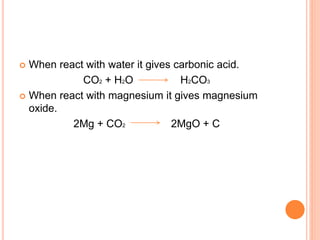
 When react with water it gives carbonic acid.
CO2 + H2O H2CO3
 When react with magnesium it gives magnesium
oxide.
2Mg + CO2 2MgO + C
III. ACTION AND USES
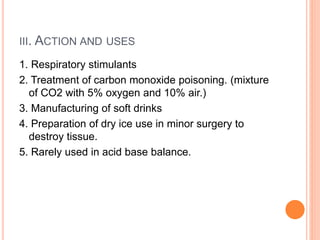
1. Respiratory stimulants
2. Treatment of carbon monoxide poisoning. (mixture
of CO2 with 5% oxygen and 10% air.)
3. Manufacturing of soft drinks
4. Preparation of dry ice use in minor surgery to
destroy tissue.
5. Rarely used in acid base balance.
IV. STORAGE
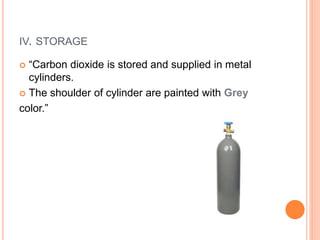
 “Carbon dioxide is stored and supplied in metal
cylinders.
 The shoulder of cylinder are painted with Grey
color.”
3. NITROUS OXIDE
 Also called as “laughing gas”
 NLT 95% of N2O
I. PREPARATION
 By heating (double decomposition) ammonium
nitrate.
NH4NO3 N2O + 2H2O
 Gas is purified by washing with sodium chromate,
sodium hydroxide and water.
II. PROPERTIES
1.Colorless, Odourless, Tasteless gas.
2. Soluble in water.
3. Soluble in ether.
4. Soluble in oils.
5. Soluble in alcohol.
6. Slightly heavier than air.
7. Aqueous solution is neutral in nature.
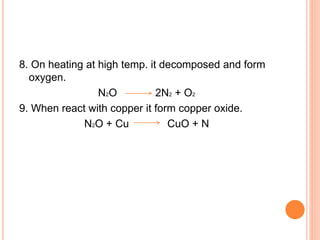
8. On heating at high temp. it decomposed and form
oxygen.
N2O 2N2 + O2
9. When react with copper it form copper oxide.
N2O + Cu CuO + N
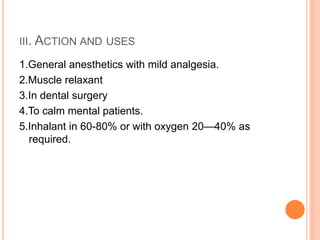
III. ACTION AND USES
1.General anesthetics with mild analgesia.
2.Muscle relaxant
3.In dental surgery
4.To calm mental patients.
5.Inhalant in 60-80% or with oxygen 20—40% as
required.
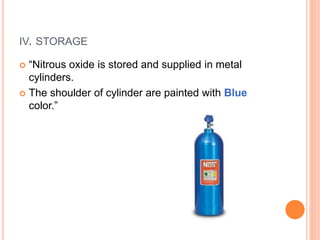
IV. STORAGE
 “Nitrous oxide is stored and supplied in metal
cylinders.
 The shoulder of cylinder are painted with Blue
color.”
Inhalants notes for diploma in pharmacy students

Inhalants notes for diploma in pharmacy students

  • 1.
  • 2.
    WHAT ARE INHALANTS? Inhalants are the chemical substances which are directly administered by nasal or oral respiratory route for local or systemic effect.
  • 3.
    COMMONLY USED INHALANTS Nitrogen  Oxygen  Carbon dioxide  Nitrous oxide
  • 6.
    1.OXYGEN  Formula –O2  Important air constituent. 21% of total air volume.  According to IP, oxygen contains not less than 99% v/v of O2  It is available and supplied in metallic cylinder in compressed form.
  • 7.
    I. PREPARATION  Byfractionation of air -air is purified by removing moisture, dust and carbon dioxide and compressed to get liquefied air. That air is then fractionated to obtain oxygen by distillation method. Compressed oxygen is supplied in metallic cylinder.  By electrolysis of water - Direct current is passed through a cell between iron or steel electrode immersed in 10% of potassium hydroxide. - Oxygen is librated at anode and hydrogen is librated at cathode.
  • 8.
    II. PROPERTIES  Colorlessgas  Odourless  Tasteless  Soluble in water  Soluble in alcohol  Freely soluble in silver solution  Slightly heavier than air
  • 9.
    1. It reactwith carbon form carbon dioxide C + O2 CO2 2. It react with sulpher form sulpher dioxide S + O2 SO2 3. It does not combine directly with halogen or inert gas 4. Most metal for oxide when heated and combine with oxygen. 4Fe + 3O2 2Fe2O3
  • 10.
    III. ACTION ANDUSES 1.It is require for producing useful energy in cells in the form of ATP. 2.It is reversibly bound to hemoglobin undergoes dissociation and release oxygen. Hb+O2 HbO2 3. In the treatment of hypoxia(40-100%) and as a anesthesia 4.In carbon monoxide poisoning. 5.Liquid oxygen is use as a fuel in rocket technology
  • 11.
    IV. STORAGE.  “Oxygenis stored and supplied in metal cylinders. The shoulder of cylinder are painted with white color & remaining with black color.”
  • 12.
    2. CARBON DIOXIDE Formula - CO2  According to IP, Carbon dioxide contains not less than 99% v/v of CO2  Supplied in compressed metallic cylinder
  • 13.
    I. PREPARATION  Compoundcontaining carbon like material e.g. coal, coke, oil etc. are burned with excess of oxygen. C + O2 CO2  When carbonate treated with acid, CO2 gas is evolved. CaCO3 + 2 HCl H2CO3 + CaCl2 H2CO3 H2O + CO2  By heating calcium carbonate. CaCO3 CaO + CO2
  • 14.
    II. PROPERTIES  Colorlessgas  Odourless  Acidic taste  Soluble in water  Slightly heavier than air.  Aqueous solution is acidic in nature.
  • 15.
     When reactwith water it gives carbonic acid. CO2 + H2O H2CO3  When react with magnesium it gives magnesium oxide. 2Mg + CO2 2MgO + C
  • 16.
    III. ACTION ANDUSES 1. Respiratory stimulants 2. Treatment of carbon monoxide poisoning. (mixture of CO2 with 5% oxygen and 10% air.) 3. Manufacturing of soft drinks 4. Preparation of dry ice use in minor surgery to destroy tissue. 5. Rarely used in acid base balance.
  • 17.
    IV. STORAGE  “Carbondioxide is stored and supplied in metal cylinders.  The shoulder of cylinder are painted with Grey color.”
  • 18.
    3. NITROUS OXIDE Also called as “laughing gas”  NLT 95% of N2O
  • 19.
    I. PREPARATION  Byheating (double decomposition) ammonium nitrate. NH4NO3 N2O + 2H2O  Gas is purified by washing with sodium chromate, sodium hydroxide and water.
  • 20.
    II. PROPERTIES 1.Colorless, Odourless,Tasteless gas. 2. Soluble in water. 3. Soluble in ether. 4. Soluble in oils. 5. Soluble in alcohol. 6. Slightly heavier than air. 7. Aqueous solution is neutral in nature.
  • 21.
    8. On heatingat high temp. it decomposed and form oxygen. N2O 2N2 + O2 9. When react with copper it form copper oxide. N2O + Cu CuO + N
  • 22.
    III. ACTION ANDUSES 1.General anesthetics with mild analgesia. 2.Muscle relaxant 3.In dental surgery 4.To calm mental patients. 5.Inhalant in 60-80% or with oxygen 20—40% as required.
  • 23.
    IV. STORAGE  “Nitrousoxide is stored and supplied in metal cylinders.  The shoulder of cylinder are painted with Blue color.”