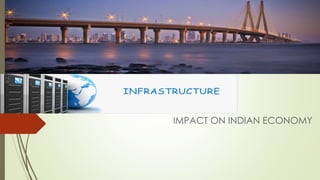
IMPACT ON INDIAN ECONOMY
Introduction 
 Infrastructure, in general, defines as a set of facilities 
through which goods and services are provided to the 
public. Infrastructure is the stock of basic facilities and 
capital equipment needed for the functioning of a 
country or area; the term to refer collectively to the 
roads, bridges, rail lines, and similar public works that are 
required for an industrial economy, or a portion of it, to 
function.
Objectives of the study 
 To examine the theoretical framework of infrastructure. 
 To analyse the socio economic relationship between 
infrastructure development and economic growth.
Need of the study 
 Every economy either developing or developed has two 
kinds of main basic objectives one providing basic 
needs and facilities to their population second 
achieving higher growth rates. The present paper 
provides how infrastructure impacts growth and 
development. How infrastructure plays a dynamic role 
to fulfil their growth targets as well as achieving higher 
living standards of their mass population.
Methodology of the study 
 The present study based on the secondary data, collected from the 
different sources like World Development Reports of various years, Human 
Development Report of India (2011), majority of data and literature 
collected from the existing growth theories, empirical studies. Particularly 
this study is not related to any region, state but its concern India’s socio 
economic perspective. Why infrastructure is more important other than the 
growth determinants and how infrastructure influences the different sectors 
of the economy, than it studied the global and Indian experience of 
infrastructure and growth through empirical evidences and establish the 
relationship between infrastructure and growth.
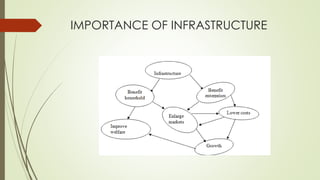
IMPORTANCE OF INFRASTRUCTURE
ADVANTAGES OF PROMOTING INFRASTRUCTURE 
People living standards improves 
B 
E 
F 
O 
R 
E 
A 
F 
T 
E 
R
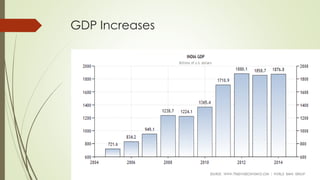
GDP Increases
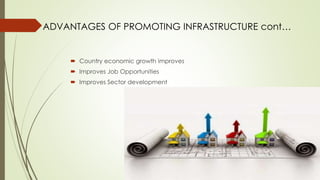
ADVANTAGES OF PROMOTING INFRASTRUCTURE cont… 
 Country economic growth improves 
 Improves Job Opportunities 
 Improves Sector development
DIFFICULTIES IN PROMOTING INFRASTRUCTURE 
The Urban infrastructure 
problems in India are: 
 Urban residence 
 Business premises 
 Power 
 Urban transport 
 Water 
 Airports 
 Railways 
 Seaports 
 Roads 
 Bridges 
 Solid waste management 
 Health care 
 Entertainment 
 Communications 
The Rural infrastructure problems in 
India are: 
Power 
 Irrigation 
 Drinking Water 
Rural housing 
Roads 
Health care 
Education 
Telecommunication
CONCLUSION 
 Development of the infrastructure sector is crucial to the growth of the Indian 
economy. Sustainable development can only be attained through a careful analysis 
of the factors that have mitigated growth in the past, and thereafter, taking the 
appropriate corrective measures. 
 Over the last decade, the Indian government has made significant efforts to 
eliminate bottlenecks in these areas. It has initiated policies and schemes such as 
ECs/EIs and Model Concession Agreements to increase the inflow of private sector 
investments and make the bidding process for projects more transparent.
ANY ?
By 
D. Taraka Siva Srinivas Reddy

Infrastructure impact on Indian economy

  • 1.
  • 2.
    Introduction  Infrastructure,in general, defines as a set of facilities through which goods and services are provided to the public. Infrastructure is the stock of basic facilities and capital equipment needed for the functioning of a country or area; the term to refer collectively to the roads, bridges, rail lines, and similar public works that are required for an industrial economy, or a portion of it, to function.
  • 3.
    Objectives of thestudy  To examine the theoretical framework of infrastructure.  To analyse the socio economic relationship between infrastructure development and economic growth.
  • 4.
    Need of thestudy  Every economy either developing or developed has two kinds of main basic objectives one providing basic needs and facilities to their population second achieving higher growth rates. The present paper provides how infrastructure impacts growth and development. How infrastructure plays a dynamic role to fulfil their growth targets as well as achieving higher living standards of their mass population.
  • 5.
    Methodology of thestudy  The present study based on the secondary data, collected from the different sources like World Development Reports of various years, Human Development Report of India (2011), majority of data and literature collected from the existing growth theories, empirical studies. Particularly this study is not related to any region, state but its concern India’s socio economic perspective. Why infrastructure is more important other than the growth determinants and how infrastructure influences the different sectors of the economy, than it studied the global and Indian experience of infrastructure and growth through empirical evidences and establish the relationship between infrastructure and growth.
  • 6.
  • 7.
    ADVANTAGES OF PROMOTINGINFRASTRUCTURE People living standards improves B E F O R E A F T E R
  • 8.
  • 9.
    ADVANTAGES OF PROMOTINGINFRASTRUCTURE cont…  Country economic growth improves  Improves Job Opportunities  Improves Sector development
  • 10.
    DIFFICULTIES IN PROMOTINGINFRASTRUCTURE The Urban infrastructure problems in India are:  Urban residence  Business premises  Power  Urban transport  Water  Airports  Railways  Seaports  Roads  Bridges  Solid waste management  Health care  Entertainment  Communications The Rural infrastructure problems in India are: Power  Irrigation  Drinking Water Rural housing Roads Health care Education Telecommunication
  • 11.
    CONCLUSION  Developmentof the infrastructure sector is crucial to the growth of the Indian economy. Sustainable development can only be attained through a careful analysis of the factors that have mitigated growth in the past, and thereafter, taking the appropriate corrective measures.  Over the last decade, the Indian government has made significant efforts to eliminate bottlenecks in these areas. It has initiated policies and schemes such as ECs/EIs and Model Concession Agreements to increase the inflow of private sector investments and make the bidding process for projects more transparent.
  • 12.
  • 13.
    By D. TarakaSiva Srinivas Reddy