Government budget is an annual
statement, showing item wise
estimates of receipts and
expenditure during fiscal year i.e.
financial year. The receipts and
expenditure, shown in the budget,
are not the actual figure, but the
estimated values for the coming
fiscal year.
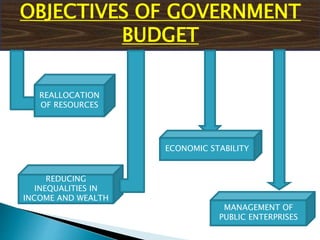
OBJECTIVES OF GOVERNMENT
BUDGET
REALLOCATION
OF RESOURCES
MANAGEMENT OF
PUBLIC ENTERPRISES
ECONOMIC STABILITY
REDUCING
INEQUALITIES IN
INCOME AND WEALTH
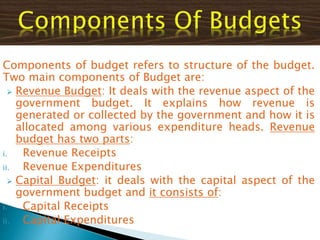
Components of budget refers to structure of the budget.
Two main components of Budget are:
 Revenue Budget: It deals with the revenue aspect of the
government budget. It explains how revenue is
generated or collected by the government and how it is
allocated among various expenditure heads. Revenue
budget has two parts:
i. Revenue Receipts
ii. Revenue Expenditures
 Capital Budget: it deals with the capital aspect of the
government budget and it consists of:
i. Capital Receipts
ii. Capital Expenditures
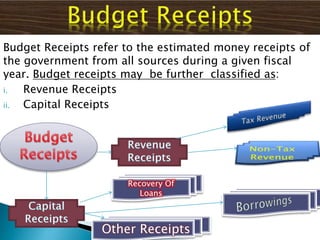
Budget Receipts refer to the estimated money receipts of
the government from all sources during a given fiscal
year. Budget receipts may be further classified as:
i. Revenue Receipts
ii. Capital Receipts
Other Receipts
Recovery Of
Loans
Revenue receipts refer to those receipts which
neither create any liability nor cause any
reduction in the assets of the government. They
are regular and recurring in nature and
government receives them in its normal course of
activities.
A receipts Is revenue receipt, if it satisfies the
following two essential conditions:
 The receipts must not create a liability for the
government.
 The receipts must not cause decrease in the
assets.
Capital receipts refer to those receipts
which either create a liability or cause a
reduction in the assets of the government.
They are non-recurring and non-routine in
nature. A receipt is a capital receipt if it
satisfies any one of the two conditions:
The receipt must create a liability for the
government
The receipts must cause a decrease in
the assets
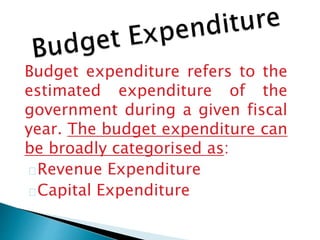
Budget expenditure refers to the
estimated expenditure of the
government during a given fiscal
year. The budget expenditure can
be broadly categorised as:
Revenue Expenditure
Capital Expenditure
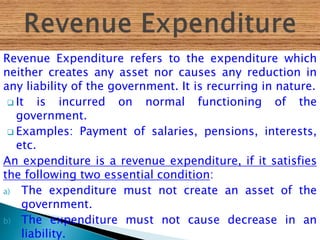
Revenue Expenditure refers to the expenditure which
neither creates any asset nor causes any reduction in
any liability of the government. It is recurring in nature.
 It is incurred on normal functioning of the
government.
 Examples: Payment of salaries, pensions, interests,
etc.
An expenditure is a revenue expenditure, if it satisfies
the following two essential condition:
a) The expenditure must not create an asset of the
government.
b) The expenditure must not cause decrease in an
liability.
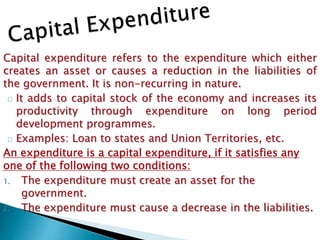
Capital expenditure refers to the expenditure which either
creates an asset or causes a reduction in the liabilities of
the government. It is non-recurring in nature.
It adds to capital stock of the economy and increases its
productivity through expenditure on long period
development programmes.
Examples: Loan to states and Union Territories, etc.
An expenditure is a capital expenditure, if it satisfies any
one of the following two conditions:
1. The expenditure must create an asset for the
government.
2. The expenditure must cause a decrease in the liabilities.
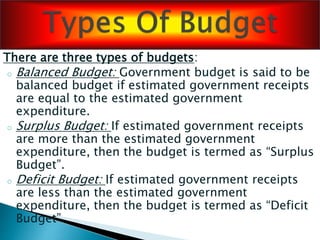
There are three types of budgets:
o Balanced Budget: Government budget is said to be
balanced budget if estimated government receipts
are equal to the estimated government
expenditure.
o Surplus Budget: If estimated government receipts
are more than the estimated government
expenditure, then the budget is termed as “Surplus
Budget”.
o Deficit Budget: If estimated government receipts
are less than the estimated government
expenditure, then the budget is termed as “Deficit
Budget”.
Budgetary deficit is defined as the excess of
total estimated over total estimated revenue.
When the government spends more than it
collects, then it incurs a budgetary deficit.
With reference to budget of Indian
government, budgetary deficit can be of 3
types:
1) Revenue Deficit
2) Fiscal Deficit
3) Primary Deficit
Revenue Deficit is concerned with the
revenue expenditures and receipts of the
government. It refers to excess of revenue
expenditure over revenue receipts during the
given fiscal year.
Revenue Deficit = Revenue Expenditure – Revenue
Receipts
It signifies that government’s own revenue is
insufficient to meet the expenditures on
normal functioning of government
departments and provisions for various
services.
Fiscal deficit presents a more comprehensive view of
budgetary imbalances. Fiscal Deficit refers to the
excess of total expenditure over total receipts
(excluding borrowings) during the given fiscal year.
Fiscal Deficit= Total Expenditure – Total Receipts
excluding borrowings
Sources Of Financial Fiscal Deficit:
Government has to look out for different options to
finance the fiscal deficit. The main two sources are:
 Borrowings: Fiscal Deficit can be met by borrowings
from the internal sources or external sources.
 Deficit Financing: Government may borrow from RBI
against its securities to meet the fiscal deficit. RBI
issues new currency for this purpose. This process
is known as deficit financing.
Primary deficit refers to difference between fiscal
deficit of the current year and interest payments on the
previous borrowings.
Primary Deficit = Fiscal Deficit – Interest Payments
Implications Of Primary Deficit:
It indicates, how much of the government borrowings
are going to meet expenses other than the interest
payments. The difference between fiscal deficit and
primary deficit shows the amount of interest payments
on the borrowings made in past. So, a low or zero
primary deficit indicates that interest commitments
have forced the government to borrow.
ppt on government budget

ppt on government budget

  • 2.
    Government budget isan annual statement, showing item wise estimates of receipts and expenditure during fiscal year i.e. financial year. The receipts and expenditure, shown in the budget, are not the actual figure, but the estimated values for the coming fiscal year.
  • 3.
    OBJECTIVES OF GOVERNMENT BUDGET REALLOCATION OFRESOURCES MANAGEMENT OF PUBLIC ENTERPRISES ECONOMIC STABILITY REDUCING INEQUALITIES IN INCOME AND WEALTH
  • 4.
    Components of budgetrefers to structure of the budget. Two main components of Budget are:  Revenue Budget: It deals with the revenue aspect of the government budget. It explains how revenue is generated or collected by the government and how it is allocated among various expenditure heads. Revenue budget has two parts: i. Revenue Receipts ii. Revenue Expenditures  Capital Budget: it deals with the capital aspect of the government budget and it consists of: i. Capital Receipts ii. Capital Expenditures
  • 5.
    Budget Receipts referto the estimated money receipts of the government from all sources during a given fiscal year. Budget receipts may be further classified as: i. Revenue Receipts ii. Capital Receipts Other Receipts Recovery Of Loans
  • 6.
    Revenue receipts referto those receipts which neither create any liability nor cause any reduction in the assets of the government. They are regular and recurring in nature and government receives them in its normal course of activities. A receipts Is revenue receipt, if it satisfies the following two essential conditions:  The receipts must not create a liability for the government.  The receipts must not cause decrease in the assets.
  • 7.
    Capital receipts referto those receipts which either create a liability or cause a reduction in the assets of the government. They are non-recurring and non-routine in nature. A receipt is a capital receipt if it satisfies any one of the two conditions: The receipt must create a liability for the government The receipts must cause a decrease in the assets
  • 8.
    Budget expenditure refersto the estimated expenditure of the government during a given fiscal year. The budget expenditure can be broadly categorised as: Revenue Expenditure Capital Expenditure
  • 9.
    Revenue Expenditure refersto the expenditure which neither creates any asset nor causes any reduction in any liability of the government. It is recurring in nature.  It is incurred on normal functioning of the government.  Examples: Payment of salaries, pensions, interests, etc. An expenditure is a revenue expenditure, if it satisfies the following two essential condition: a) The expenditure must not create an asset of the government. b) The expenditure must not cause decrease in an liability.
  • 10.
    Capital expenditure refersto the expenditure which either creates an asset or causes a reduction in the liabilities of the government. It is non-recurring in nature. It adds to capital stock of the economy and increases its productivity through expenditure on long period development programmes. Examples: Loan to states and Union Territories, etc. An expenditure is a capital expenditure, if it satisfies any one of the following two conditions: 1. The expenditure must create an asset for the government. 2. The expenditure must cause a decrease in the liabilities.
  • 11.
    There are threetypes of budgets: o Balanced Budget: Government budget is said to be balanced budget if estimated government receipts are equal to the estimated government expenditure. o Surplus Budget: If estimated government receipts are more than the estimated government expenditure, then the budget is termed as “Surplus Budget”. o Deficit Budget: If estimated government receipts are less than the estimated government expenditure, then the budget is termed as “Deficit Budget”.
  • 12.
    Budgetary deficit isdefined as the excess of total estimated over total estimated revenue. When the government spends more than it collects, then it incurs a budgetary deficit. With reference to budget of Indian government, budgetary deficit can be of 3 types: 1) Revenue Deficit 2) Fiscal Deficit 3) Primary Deficit
  • 13.
    Revenue Deficit isconcerned with the revenue expenditures and receipts of the government. It refers to excess of revenue expenditure over revenue receipts during the given fiscal year. Revenue Deficit = Revenue Expenditure – Revenue Receipts It signifies that government’s own revenue is insufficient to meet the expenditures on normal functioning of government departments and provisions for various services.
  • 14.
    Fiscal deficit presentsa more comprehensive view of budgetary imbalances. Fiscal Deficit refers to the excess of total expenditure over total receipts (excluding borrowings) during the given fiscal year. Fiscal Deficit= Total Expenditure – Total Receipts excluding borrowings Sources Of Financial Fiscal Deficit: Government has to look out for different options to finance the fiscal deficit. The main two sources are:  Borrowings: Fiscal Deficit can be met by borrowings from the internal sources or external sources.  Deficit Financing: Government may borrow from RBI against its securities to meet the fiscal deficit. RBI issues new currency for this purpose. This process is known as deficit financing.
  • 15.
    Primary deficit refersto difference between fiscal deficit of the current year and interest payments on the previous borrowings. Primary Deficit = Fiscal Deficit – Interest Payments Implications Of Primary Deficit: It indicates, how much of the government borrowings are going to meet expenses other than the interest payments. The difference between fiscal deficit and primary deficit shows the amount of interest payments on the borrowings made in past. So, a low or zero primary deficit indicates that interest commitments have forced the government to borrow.