Infrastructure
Development in India
PROJECT FILE
ON
By:- Jashanpreet Kaur (Roll No. 51)
“Expanding investment in infrastructure can play
an important role counter cyclical role. Projects
and programmes (are) to be reviewed in the area of
infrastructure development , including pure public
private partnerships, to ensure that their
implementation is expedited and does not suffer
from (the) fund crunch.”
Mr. Manmohan Singh , Indian Prime Minister
Meaning of Infrastructure
• Infrastructure refers to the facilities, activities and services which support
operation and development of other sectors of the economy. These facilities,
activities and services help in increasing the overall productivity of the economy.
They also play an essential role in facilitating the smooth running of all the
sectors of the economy.
• In addition, infrastructures are such basic requirements like railways, roads,
ships, airways, communication, etc. They also include energy, banking, science,
technology, health, education and other public utility concerns. Without the
existence and presence of economic infrastructures, the growth and fast pace of
the economy is impossible. Moreover, infrastructures of an economy are also
termed as ‘social and economic overheads‘
Importance of Infrastructure
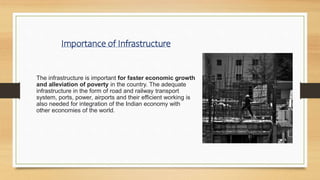
The infrastructure is important for faster economic growth
and alleviation of poverty in the country. The adequate
infrastructure in the form of road and railway transport
system, ports, power, airports and their efficient working is
also needed for integration of the Indian economy with
other economies of the world.
1.It also facilitates large-scale production for the purpose of smooth functioning of the
economy.
2.They help in the development of the market and all the elements within.
3.They result in the territorial division of labour which is great.
4.They also ensure price stability in the market.
5.Economic infrastructure definitely ensures the mobility of labour and capital within/from
the economy.
6.It results in the overall growth of towns and cities.
7.Infrastructures provide for a lot of employment generation and employment
opportunities.
Importance
Types of Infrastructures
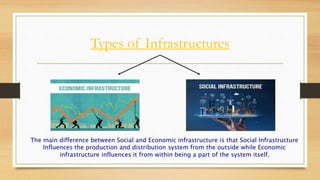
The main difference between Social and Economic infrastructure is that Social Infrastructure
Influences the production and distribution system from the outside while Economic
infrastructure influences it from within being a part of the system itself.
Economic Infrastructure
Economic infrastructure means those basic facilities and
services which directly benefit the process of production and
distribution of an economy. Irrigation, power, transport and
communication are the examples of economic infrastructure.
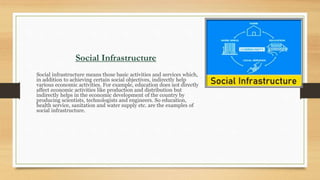
Social Infrastructure
Social infrastructure means those basic activities and services which,
in addition to achieving certain social objectives, indirectly help
various economic activities. For example, education does not directly
affect economic activities like production and distribution but
indirectly helps in the economic development of the country by
producing scientists, technologists and engineers. So education,
health service, sanitation and water supply etc. are the examples of
social infrastructure.
Conclusion
India needs to urgently bridge the infrastructure gaps that industry and people faces every day.
The slow pace of infrastructure development is quite evident from the list of eleventh plans
targets that are unmet. MSMEs that provide employment to 60 million people in the country
are the worst-hit by the delay. Lack of adequate power supply and transport infrastructure
proves to be a deterrent to the growth of this sector.

Infrastructure Development in India.pptx

  • 1.
    Infrastructure Development in India PROJECTFILE ON By:- Jashanpreet Kaur (Roll No. 51)
  • 2.
    “Expanding investment ininfrastructure can play an important role counter cyclical role. Projects and programmes (are) to be reviewed in the area of infrastructure development , including pure public private partnerships, to ensure that their implementation is expedited and does not suffer from (the) fund crunch.” Mr. Manmohan Singh , Indian Prime Minister
  • 3.
    Meaning of Infrastructure •Infrastructure refers to the facilities, activities and services which support operation and development of other sectors of the economy. These facilities, activities and services help in increasing the overall productivity of the economy. They also play an essential role in facilitating the smooth running of all the sectors of the economy. • In addition, infrastructures are such basic requirements like railways, roads, ships, airways, communication, etc. They also include energy, banking, science, technology, health, education and other public utility concerns. Without the existence and presence of economic infrastructures, the growth and fast pace of the economy is impossible. Moreover, infrastructures of an economy are also termed as ‘social and economic overheads‘
  • 4.
    Importance of Infrastructure Theinfrastructure is important for faster economic growth and alleviation of poverty in the country. The adequate infrastructure in the form of road and railway transport system, ports, power, airports and their efficient working is also needed for integration of the Indian economy with other economies of the world.
  • 5.
    1.It also facilitateslarge-scale production for the purpose of smooth functioning of the economy. 2.They help in the development of the market and all the elements within. 3.They result in the territorial division of labour which is great. 4.They also ensure price stability in the market. 5.Economic infrastructure definitely ensures the mobility of labour and capital within/from the economy. 6.It results in the overall growth of towns and cities. 7.Infrastructures provide for a lot of employment generation and employment opportunities. Importance
  • 6.
    Types of Infrastructures Themain difference between Social and Economic infrastructure is that Social Infrastructure Influences the production and distribution system from the outside while Economic infrastructure influences it from within being a part of the system itself.
  • 7.
    Economic Infrastructure Economic infrastructuremeans those basic facilities and services which directly benefit the process of production and distribution of an economy. Irrigation, power, transport and communication are the examples of economic infrastructure.
  • 8.
    Social Infrastructure Social infrastructuremeans those basic activities and services which, in addition to achieving certain social objectives, indirectly help various economic activities. For example, education does not directly affect economic activities like production and distribution but indirectly helps in the economic development of the country by producing scientists, technologists and engineers. So education, health service, sanitation and water supply etc. are the examples of social infrastructure.
  • 12.
    Conclusion India needs tourgently bridge the infrastructure gaps that industry and people faces every day. The slow pace of infrastructure development is quite evident from the list of eleventh plans targets that are unmet. MSMEs that provide employment to 60 million people in the country are the worst-hit by the delay. Lack of adequate power supply and transport infrastructure proves to be a deterrent to the growth of this sector.